避险情绪

Search documents
KVB PRIME:美国9月CPI数据即将公布,或成美元四季度走势关键
Sou Hu Cai Jing· 2025-10-23 02:59
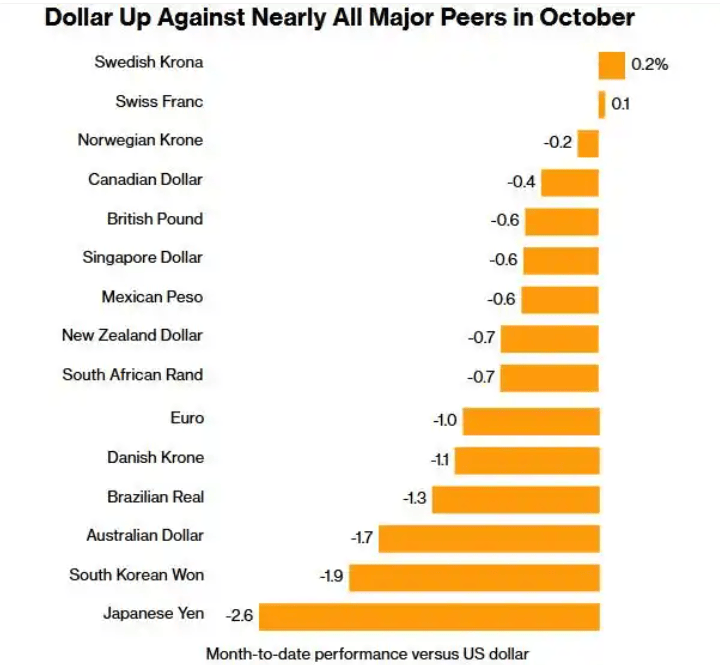
Group 1 - The US dollar has shown a strong start in the foreign exchange market, supported by risk aversion due to the government shutdown and heightened attention on the upcoming September CPI data [1][2] - The government shutdown has led to a "data vacuum," increasing the appeal of the US dollar as a traditional global safe-haven asset, resulting in sustained buying support [2][6] - The September CPI data, set to be released soon, is crucial as it is one of the first significant data points post-shutdown and provides insight into the true inflation situation [4] Group 2 - Economists predict a year-on-year increase of 3.1% in the September CPI, which would be the highest level since May 2024, potentially impacting the Federal Reserve's policy path in 2026 [4][6] - There is an asymmetry in the market's response to the CPI data; if the data meets or falls below expectations, the dollar may only see minor fluctuations, but a higher-than-expected figure could drive the dollar significantly higher [6][8] - Recent Canadian inflation data exceeding expectations has raised caution among traders, suggesting that US inflation may also remain resilient [6] Group 3 - Despite a cumulative decline of about 7% in the Bloomberg Dollar Spot Index for 2025, most of the losses occurred in the first half of the year, with the dollar showing resilience in the latter half [7] - The options market indicates optimism, with traders favoring the purchase of bullish dollar options, reflecting a belief that the dollar will continue to strengthen in the next three months [7] - There is a growing perspective that the market may be underestimating the dollar's rebound potential, as the relative strength of the US economy could limit the Fed's rate-cutting capacity [8]

期货市场交易指引:2025年10月23日-20251023
Chang Jiang Qi Huo· 2025-10-23 01:33
Report Industry Investment Ratings - **Macro Finance**: Bullish on stock indices in the medium to long term, suggesting buying on dips; neutral on government bonds, suggesting holding a wait - and - see stance [1][5] - **Black Building Materials**: Neutral on coking coal and rebar, suggesting range trading; neutral on glass, suggesting a wait - and - see stance [1][7][8] - **Non - ferrous Metals**: Bullish on copper, suggesting buying on dips cautiously without chasing highs; bullish on aluminum, suggesting buying on dips after a pullback; neutral on nickel, suggesting a wait - and - see stance or shorting on rallies; neutral on tin, suggesting range trading; neutral on gold and silver, suggesting range trading [1][10][11][12][17][18][19][21] - **Energy and Chemicals**: Neutral on PVC, caustic soda, styrene, rubber, urea, methanol, suggesting a sideways movement; bearish on soda ash 01 contract, suggesting a short - selling strategy; neutral on polyolefins, suggesting a weak sideways movement [1][22][24][25][27][28][29][30] - **Cotton Textile Industry Chain**: Neutral on cotton and cotton yarn, suggesting a sideways movement; bearish on PTA, suggesting a weak sideways movement; bullish on apples and jujubes, suggesting a slightly bullish sideways movement [1][32][33][34][35] - **Agriculture and Animal Husbandry**: Bearish on pigs and eggs, suggesting short - selling on rallies; neutral on corn, suggesting a weak sideways movement; neutral on soybean meal, suggesting a low - level sideways movement; bullish on oils, suggesting a limited correction [1][37][40][41][42][43] Core Views - The A - share market is affected by multiple factors. External uncertainties and internal profit - taking needs lead to a sideways movement. The stock indices are supported during important meetings, but there may be a risk of profit - taking after the meetings. The government bond market is affected by economic data and future policy expectations, and a wait - and - see stance is recommended [5] - The black building materials market is affected by supply and demand fundamentals. Coking coal and rebar are expected to trade in a range, while glass is facing weak fundamentals and a wait - and - see stance is recommended [7][8][9] - The non - ferrous metals market is affected by global trade tensions, supply disruptions, and demand expectations. Copper and aluminum are expected to maintain a strong position, while nickel and tin are expected to trade sideways [10][11][12][17][18] - The energy and chemicals market is affected by cost, supply, demand, and macro - policies. Most products are expected to trade sideways, while soda ash 01 contract is expected to decline [22][24][25][30] - The cotton textile industry chain is affected by global supply and demand and Sino - US relations. Cotton and cotton yarn are expected to trade sideways, while PTA is expected to decline slightly [32][33][34] - The agriculture and animal husbandry market is affected by supply and demand fundamentals and seasonal factors. Pigs and eggs are expected to decline, while corn, soybean meal, and oils are expected to trade sideways or have a limited correction [37][40][42][43] Summary by Directory Macro Finance - **Stock Indices**: The A - share market is affected by external policy uncertainties and internal profit - taking needs. It is expected to trade sideways in the short term and is bullish in the medium to long term. Buying on dips is recommended [5] - **Government Bonds**: The government bond market is affected by economic data and future policy expectations. A wait - and - see stance is recommended [5] Black Building Materials - **Coking Coal**: Supply recovery is slow after the National Day holiday. It has multi - allocation value, and range trading is recommended [7] - **Rebar**: The futures price is undervalued, and the demand has recovered while the production has declined slightly. It is expected to trade sideways at a low level, and buying on dips near 3000 for RB2601 is recommended [8] - **Glass**: The market is facing weak fundamentals with rising inventory and weak demand. A wait - and - see stance is recommended [9] Non - ferrous Metals - **Copper**: The price is affected by global trade tensions and supply disruptions. It is expected to maintain a high - level sideways movement. Buying on dips cautiously without chasing highs is recommended [10][11] - **Aluminum**: The price is affected by ore prices, production capacity, and demand. It is expected to trade sideways at a high level. Buying on dips after a pullback is recommended [12] - **Nickel**: The supply is expected to be loose in the medium to long term. It is expected to trade sideways. A wait - and - see stance or shorting on rallies is recommended [17] - **Tin**: The supply is expected to improve, and the demand is weak. It is expected to trade sideways in the range of 265,000 - 285,000 yuan/ton. Range trading is recommended [18][19] - **Gold and Silver**: The prices are supported by interest - rate cut expectations and safe - haven sentiment. They are expected to trade sideways. Buying after a full correction is recommended [19][21] Energy and Chemicals - **PVC**: The market is facing weak fundamentals with high inventory and uncertain export prospects. It is expected to trade sideways in the range of 4600 - 4800 [22][23] - **Caustic Soda**: The market is affected by supply and demand and macro - policies. It is expected to trade sideways with a slight downward trend, and the 01 contract should pay attention to the pressure at 2450 [24][25] - **Styrene**: The market is affected by cost and supply - demand imbalance. It is expected to trade sideways in the range of 6300 - 6700 [25][26][27] - **Rubber**: The supply provides some support, but the demand is limited. It is expected to trade sideways with a slight upward trend, and pay attention to the support at 15000 [27][28] - **Urea**: The supply is decreasing, and the demand is mixed. It is expected to trade sideways at the bottom in the range of 1550 - 1650 [28] - **Methanol**: The supply is recovering, and the demand is stable. The inventory is high, and the market is expected to be weak in the short term [29] - **Polyolefins**: The price is affected by cost, supply, and demand. It is expected to trade sideways with a weak trend. The L2601 contract should pay attention to the support at 6900, and the PP2601 contract should pay attention to the support at 6600 [29][30] - **Soda Ash**: The market is facing oversupply and weak demand. The 01 contract is recommended to be shorted [30][31] Cotton Textile Industry Chain - **Cotton and Cotton Yarn**: The global supply and demand are adjusted, and Sino - US relations are uncertain. It is expected to trade sideways [32][33] - **PTA**: The price is affected by oil prices and supply - demand fundamentals. It is expected to trade sideways in the range of 4350 - 4600 [33][34] - **Apples**: The quality is declining, and the delivery cost is expected to rise. It is expected to trade sideways with a slightly bullish trend [34][35] - **Jujubes**: The new - season jujubes are about to be harvested. The market is expected to trade sideways with a slightly bullish trend [35] Agriculture and Animal Husbandry - **Pigs**: The short - term price increase is limited, and the medium - to long - term supply is high. Short - selling on rallies is recommended [37][38][39] - **Eggs**: The short - term supply is sufficient, and the demand is weak. Short - selling on rallies for far - month contracts is recommended [40][41] - **Corn**: The new crop is about to be listed, and the supply is sufficient. The price is expected to be weak in the short term. Short - selling on rallies and 1 - 5 reverse arbitrage are recommended [40][41][42] - **Soybean Meal**: The price is affected by US soybean harvest and Sino - US trade relations. Buying on dips for the M2601 contract is recommended [42] - **Oils**: The price is affected by palm oil production, soybean supply, and rapeseed import. Buying after a correction is recommended [43][44][45][46][47][48][49]
贺博生:10.23黄金原油震荡上涨最新行情走势分析及今日独家操作建议
Sou Hu Cai Jing· 2025-10-23 00:51
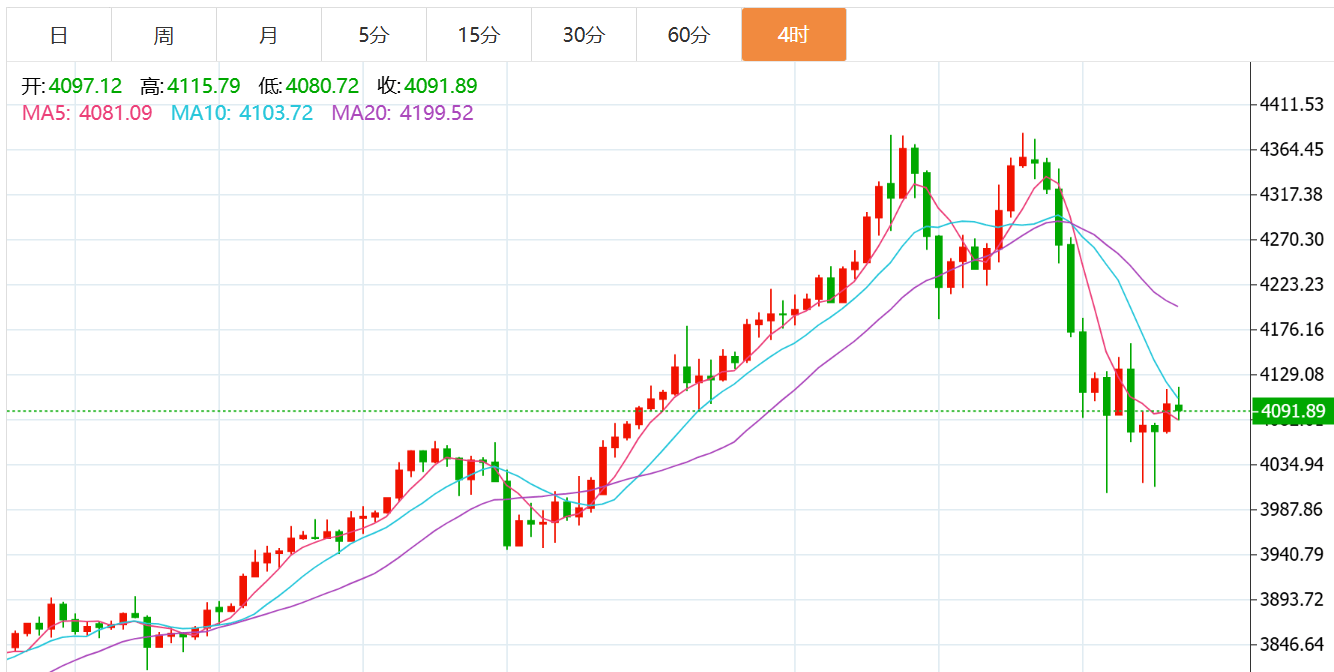
Market Overview - The investment market has four levels: preserving capital, controlling risk, earning returns, and achieving long-term stable profits [1] - The current market sentiment shows a rise in risk appetite, negatively impacting the safe-haven appeal of precious metals like gold [1] Gold Market Analysis Fundamental Analysis - Gold prices continued to decline, following significant sell-off pressure from the previous day, with the market closely monitoring this trend [1] - The U.S. Treasury market is experiencing a mild bull flattening, with yields slightly retreating, injecting cautious optimism into the fixed income sector [1] - The U.S. dollar has shown slight resilience amidst improving risk sentiment, while gold's sharp decline highlights the vulnerability of safe-haven assets under current market signals [1] - The economic calendar is sparse due to government shutdown concerns, with only minor Treasury auctions and repurchase operations supporting liquidity [1] Technical Analysis - Key support levels for gold are around the 4000 mark, which is near the 20-day moving average on the daily chart and the 5-week moving average on the weekly chart [3] - A drop below 4000 could trigger a mid-term adjustment trend, while holding above this level may indicate continued bullish sentiment [3] - Short-term trading strategy suggests focusing on short positions during rebounds, with resistance levels at 4160-4180 and support at 4120-4100 [3] Oil Market Analysis Fundamental Analysis - WTI crude oil prices are fluctuating around $57.55, with market focus shifting towards easing trade concerns and improving inventory changes [4] - Recent signals from the U.S. government indicate a reduction in trade tensions, which has positively influenced market sentiment towards oil [4] - The oil market is expected to remain in a range-bound pattern unless new developments in trade concerns arise [4] Technical Analysis - The daily chart indicates that oil prices have broken below the lower boundary of a trading range, suggesting a downward trend [5] - The MACD indicator shows bearish momentum, indicating that the mid-term outlook for oil is likely to be a downward trend [5] - Short-term trading strategy recommends focusing on long positions during pullbacks, with resistance at 61.5-62.5 and support at 58.5-57.5 [5]
唱多言犹在耳 金银大跌不期而至
Sou Hu Cai Jing· 2025-10-22 23:08
证券时报记者 许孝如 今年以来,金银走出了一轮史诗级的牛市行情,尤其是黄金接连突破了3000美元、4000美元大关,年内 累计涨幅一度超过60%,堪称市场表现最佳的一类资产。 伴随着金银价格不断刷出历史新高,资金愈发涌入的势头也非常明显。9月,全球实物黄金ETF甚至录 得了有史以来最大的单月流入规模。不过,就在市场的一片唱多声中,金银的大跌也不期而至。10月21 日,伦敦现货黄金从历史高位"摔下",日内一度大跌6.7%;现货白银当天则大跌逾7%,失守50美元大 关。 展望后市,金银成色尚有几何? 避险降速金银大跌 10月21日,伦敦现货黄金从历史高位大跌,日内一度跌逾6.7%,收盘报跌5.33%,创下2020年8月以来 最大单日跌幅。值得一提的是,黄金价格单日暴跌232美元/盎司,或创出新的历史纪录。 据统计,2000年以来,伦敦金单日跌幅超过5.3%的情形仅出现过7次,其中最大的一次跌幅为9.11%, 单日暴跌135美元/盎司。 与黄金相比,白银的抛售压力更为强劲。10月21日,现货白银大跌超7%,跌破50美元大关,最低一度 触及47.85美元/盎司,不过今年以来白银的累计涨幅仍在70%一线。 10月22日 ...
金价高台跳水,是“倒车接人”还是行情终结?
Qi Lu Wan Bao Wang· 2025-10-22 13:34
Core Viewpoint - The recent sharp decline in gold prices has triggered significant reactions in the market, affecting both stock prices of gold-related companies and consumer behavior in the retail gold market [2][3][4]. Market Reaction - On October 22, A-share gold stocks experienced a collective drop, with companies like Hunan Silver and Shengda Resources hitting the daily limit down, while others like Xiaocheng Technology and Zhaojin Gold fell over 9% [3]. - The precious metals sector became the largest declining sector in A-shares that day, with the three major indices collectively falling and trading volume decreasing by 202.4 billion yuan compared to the previous day [3]. Retail Market Adjustment - The domestic gold retail market saw a significant adjustment, with major jewelry brands reducing their gold prices sharply. For instance, Chow Tai Fook's gold price dropped by 57 yuan to 1235 yuan per gram, while Lao Miao Gold saw a decrease of 83 yuan to 1211 yuan per gram [3]. - Despite the price drop, there was an increase in consumer purchases, with many taking advantage of lower prices to buy gold jewelry [4]. Factors Behind Price Drop - Analysts attribute the recent volatility in gold prices to a combination of technical corrections after a rapid increase, easing geopolitical tensions in Eastern Europe, and potential resolutions to the U.S. government shutdown crisis [5]. - The rapid rise in gold prices had created an overheated market, leading to profit-taking by institutions, which further accelerated the price decline [5]. Long-term Outlook - Despite the short-term price drop, several international investment banks remain optimistic about the future of gold prices. HSBC forecasts that gold's upward momentum could continue until 2026, with a target price of $5000 per ounce [6]. - Long-term bullish sentiment on gold remains intact, driven by concerns over U.S. fiscal deficits and the weakening of the dollar, positioning gold as a hedge against these risks [6].



黄金暴跌,是“倒车接人”还是“顶部崩塌”
Jing Ji Guan Cha Bao· 2025-10-22 11:26
Core Viewpoint - The recent sharp decline in gold prices, with a drop of over 6% on October 21, has raised concerns among investors, marking the largest single-day drop since April 2013 [1][3][4] Group 1: Market Reaction - On October 22, gold ETFs opened significantly lower, with declines exceeding 4%, and the Shanghai Gold Exchange reported a drop of 54 yuan per gram [1][3] - Domestic gold jewelry prices were also adjusted downward, with reductions of up to 83 yuan per gram in some stores [1] Group 2: Causes of the Decline - The decline in gold prices is attributed to multiple negative factors, including a decrease in risk aversion, a strong US dollar, and profit-taking by investors [3][4] - The market's perception of reduced geopolitical tensions, such as potential US-China trade discussions and responses to the Russia-Ukraine conflict, has contributed to the drop [4] - Technical indicators showed that gold was severely overbought, prompting large-scale profit-taking, with the US gold ETF reducing holdings by 125 tons [4] Group 3: Future Outlook - Analysts suggest that while short-term adjustments are expected, the long-term outlook for gold remains positive due to ongoing central bank purchases and increasing investment demand [6][7] - The potential for further declines in gold prices exists if upcoming US economic data exceeds expectations, which could increase market volatility [6] - The overall sentiment indicates that gold may still be in a long-term upward trend, despite short-term fluctuations [7]
黄金暴跌,是“倒车接人”还是“顶部崩塌”?
Jing Ji Guan Cha Wang· 2025-10-22 10:32
Core Viewpoint - The recent sharp decline in gold prices, with a drop exceeding 6% on October 21, has raised significant concerns among investors, marking the largest single-day drop since April 2013 [2][4][5]. Market Reaction - On October 22, gold ETFs opened significantly lower, with declines exceeding 4%, and the Shanghai Gold Exchange reported a drop of 54 CNY per gram [2][4]. - Domestic gold jewelry prices also adjusted downward, with reductions of up to 83 CNY per gram in some stores [2]. Causes of the Decline - The decline in gold prices is attributed to multiple negative factors, including a decrease in risk aversion, a strengthening dollar, and profit-taking by investors concerned about high price levels [5][6]. - Specific triggers include improved expectations regarding U.S.-China relations, potential resolution of the Russia-Ukraine conflict, and the end of the U.S. government shutdown, which reduced market uncertainty [6]. Investor Sentiment - Investors are experiencing heightened volatility in the gold market, with some expressing a willingness to hold onto their investments despite recent losses, citing low average purchase prices as a buffer [7]. - Analysts suggest that while short-term adjustments may occur, long-term demand from central banks and investment growth will likely support gold prices [7][8]. Future Outlook - Analysts predict a potential 10%-15% correction in gold prices, similar to market behavior observed earlier in the year [3]. - The long-term outlook remains positive, with expectations that gold will continue to be a fundamental asset in investment portfolios, driven by ongoing geopolitical and economic uncertainties [8].
市场主流观点汇总-20251022
Guo Tou Qi Huo· 2025-10-22 10:28
Report Summary 1. Report Purpose - The report objectively reflects the research views of futures and securities companies on various commodity varieties, tracks hot varieties, analyzes market investment sentiment, and summarizes investment driving logic [1]. 2. Market Data 2.1 Commodities - Gold closed at 999.80 with a weekly increase of 10.90%, silver at 12249.00 with a 10.53% increase, and polycrystalline silicon at 52340.00 with a 6.89% increase. - Crude oil closed at 432.60 with a 6.34% decrease, glass at 1095.00 with a 9.28% decrease, and PTA at 4402.00 with a 2.91% decrease [2]. 2.2 A - shares - The Shanghai - Shenzhen 300 Index closed at 4514.23 with a 2.22% decrease, the CSI 500 Index at 7016.07 with a 5.17% decrease, and the Shanghai Composite 50 Index at 2967.77 with a 0.24% decrease [2]. 2.3 Overseas Stocks - The Nasdaq Index closed at 22679.97 with a 3.24% increase, the S&P 500 Index at 6664.01 with a 1.70% increase, and the Hang Seng Index at 25247.10 with a 3.97% decrease [2]. 2.4 Bonds - The yield of the 2 - year Chinese Treasury bond was 1.50 with an increase of 1.25 bp, the 10 - year was 1.84 with a 0.5 bp decrease, and the 5 - year was 1.60 with a 0.13 bp increase [2]. 2.5 Foreign Exchange - The US dollar index closed at 98.56 with a 0.27% decrease, the US dollar central parity rate at 7.09 with a 0.14% decrease, and the euro - US dollar exchange rate at 1.17 with a 0.24% increase [2]. 3. Commodity Views 3.1 Macro - financial Sector - **Stock Index Futures** - Strategy views: Among 8 institutions, 1 is bullish, 0 is bearish, and 7 expect a sideways trend. - Bullish logic: Sino - US trade talks, Fed rate - cut expectations, potential RMB appreciation, stable market expectations, and improved domestic M1 growth [4]. - Bearish logic: Profit - taking in the technology sector, low risk appetite before Sino - US trade resolution, limited policy stimulus, and reduced A - share trading volume [4]. - **Treasury Bond Futures** - Strategy views: Among 7 institutions, 3 are bullish, 0 is bearish, and 4 expect a sideways trend. - Bullish logic: Weak economic data, loose liquidity, and market risk aversion [4]. - Bearish logic: Potential incremental policies, unimplemented domestic rate cuts, and possible recovery of risk assets [4]. 3.2 Energy Sector - **Crude Oil** - Strategy views: Among 9 institutions, 1 is bullish, 4 are bearish, and 4 expect a sideways trend. - Bullish logic: Sino - US trade talks, approaching break - even price, undervalued fundamentals, and US strategic oil purchase [5]. - Bearish logic: Saudi production increase, EU's call for end of war, rising Russian exports, high US inventory, and expected supply surplus [5]. 3.3 Agricultural Products Sector - **Palm Oil** - Strategy views: Among 8 institutions, 3 are bullish, 1 is bearish, and 4 expect a sideways trend. - Bullish logic: Limited production potential, policy plans, low import data, and stable spot prices [5]. - Bearish logic: Increased Malaysian production, falling oil prices, low cost - effectiveness, and weak market sentiment [5]. 3.4 Non - ferrous Metals Sector - **Aluminum** - Strategy views: Among 7 institutions, 2 are bullish, 0 is bearish, and 5 expect a sideways trend. - Bullish logic: Fed rate - cut expectations, low supply, seasonal demand, long - term demand growth, and policy support [6]. - Bearish logic: Trade friction risks, hedging pressure, low market attention, and weak spot trading [6]. 3.5 Chemical Sector - **Glass** - Strategy views: Among 7 institutions, 0 is bullish, 2 are bearish, and 5 expect a sideways trend. - Bullish logic: Positive sentiment during meetings, cost support, reduced inventory, and policy expectations [6]. - Bearish logic: High intermediate inventory, unclear production - cut policies, low orders, and weak real - estate data [6]. 3.6 Precious Metals Sector - **Gold** - Strategy views: Among 7 institutions, 0 is bullish, 0 is bearish, and 7 expect a sideways trend. - Bullish logic: Geopolitical tensions, Fed rate - cut expectations, repeated conflicts, and central bank gold purchases [7]. - Bearish logic: Reduced US banking concerns, short - term profit - taking, and a stronger US dollar [7]. 3.7 Black Metals Sector - **Coking Coal** - Strategy views: Among 8 institutions, 3 are bullish, 1 is bearish, and 4 expect a sideways trend. - Bullish logic: Safety inspections, supply disruptions, high iron - water production, and positive market sentiment [7]. - Bearish logic: Reduced steel - mill profits, stable supply, weak demand, and unclear trade friction [7].
美现银行危机,美债成避险首选,两年期收益率下跌,市场或迎变化
Sou Hu Cai Jing· 2025-10-22 10:22
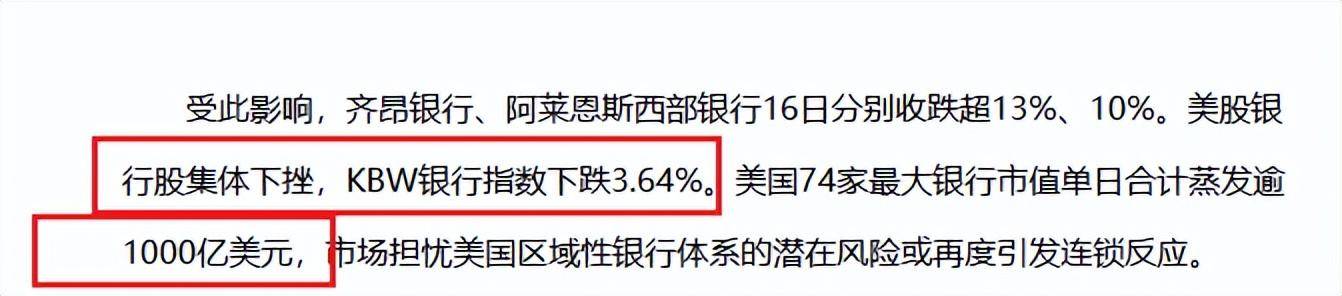
近日,美国银行业炸了个大新闻。 齐昂银行和阿莱恩斯西部银行接连曝出信贷欺诈,两家银行股价当天就分别暴跌超13%和10%。 这消息一出来,市场直接慌了,KBW银行指数当天下跌3.64%,美国74家最大银行的市值一天就蒸发了逾1000亿美元。 不少人都想起2023年硅谷银行倒闭那事儿,那种恐慌感又回来了。 恐慌之下,投资者第一件事就是找"安全垫",而美国国债成了首选。 大家疯狂抢购国债,直接把收益率给压了下来:两年期国债收益率跌破3.4%,创下2022年以来的最低;10年期国债收益率也跌破4%,跌到3.93%,是4月7日 之后的最低点。 就连之前大家不太关注的30年期国债都跟着涨了。 要知道,之前市场还在担心全球经济体借贷太多会让货币贬值,黄金都涨到每盎司4000美元以上了,可现在面对银行风险,大家还是觉得美债更靠谱。 这已经是10月美债市场第二次被"抢"了,上一次是因为贸易紧张。 除了避险情绪,美联储的降息预期也给美债加了把火。 美联储主席鲍威尔上周说,美国就业增长在放缓,而且可能会更慢。 这话一出来,市场普遍认定10月份美联储会再降息。 要知道,美联储已经降过一次息,把利率调到4%到4.25%,现在市场甚至觉 ...
现货黄金暴跌超6%,创逾12年来最大单日跌幅
Sou Hu Cai Jing· 2025-10-22 08:32
Group 1 - The international precious metals market experienced a significant decline, with spot gold dropping as much as 6.3% to approximately $4080 per ounce, marking the largest single-day drop in over 12 years [1] - Spot silver fell by 8.7% to $47.89 per ounce, representing the worst single-day performance since February 2021 [1] - COMEX gold futures closed down 5.07% at $4138.5 per ounce, while COMEX silver futures fell 6.27% to $48.16 per ounce [1] Group 2 - Analysts attribute the decline in precious metals to a decrease in safe-haven sentiment, a strengthening dollar, and investors locking in profits due to concerns over high valuations following recent historical price increases [1] - A report from the Daily Mail suggests that gold prices could rise over 50% by 2025, driven by concerns over inflation, geopolitical issues, and market volatility [1] - The initial surge in gold prices was influenced by banks and hedge funds, with increased interest from ordinary Americans reported by trading platforms [1] Group 3 - eToro's investment analyst noted that gold trading volumes have reached multi-year highs, marking the eighth consecutive week of increases, but warned that the rapid pace is unsustainable [3] - Renaissance Macro Research analysts expressed difficulty in determining the right time to take profits amid the current market conditions [3] - The Times of India reported a surge in demand for gold and silver jewelry in India due to the upcoming Hindu festival, with silver products seeing higher demand than gold, exacerbating a long-standing global silver supply shortage [3]