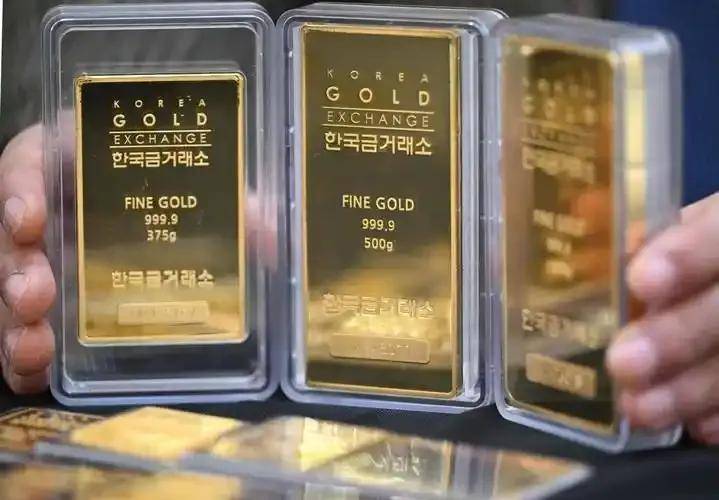
去美元化

Search documents
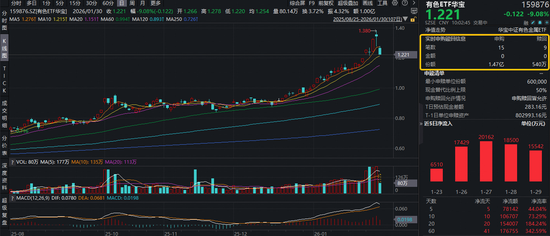
有色ETF跌超9%,获资金实时净申购1.42亿份!资金为何逆行加仓,越跌越买?
Xin Lang Cai Jing· 2026-01-30 02:15
Core Viewpoint - The recent geopolitical risks have led to a significant drop in global risk assets, yet there is a notable increase in investment in the non-ferrous metals sector, particularly in the Huabao ETF, which saw a net subscription of 142 million units despite a market downturn [1][9]. Group 1: Macro Factors - The Federal Reserve is still in a rate-cutting cycle, creating a loose monetary environment [3][11]. - Rising geopolitical uncertainties are increasing demand for safe-haven assets [3][11]. - Concerns over the sustainability of U.S. debt and deficits are prompting central banks worldwide to reduce U.S. Treasury holdings and increase gold reserves, leading to a diversification of reserve systems [3][11]. Group 2: Industry Dynamics - Emerging industries such as renewable energy, AI, and aerospace are continuously driving demand for non-ferrous metals [3][11]. - Capital expenditures for major non-ferrous metal types peaked in 2011 and have since entered a prolonged contraction phase, resulting in a significant output gap in the industry [3][11]. - Supply constraints persist, providing price support and highlighting the strategic value and scarcity of these metals [3][11]. Group 3: Performance Outlook - As of January 28, among the 60 listed companies covered by the non-ferrous ETF, 24 have released earnings forecasts for 2025, with 21 expected to be profitable, indicating a positive outlook for nearly 90% of the companies [3][11]. - The high profitability of the non-ferrous metals sector is expected to continue for an extended period, with the sector gradually gaining growth attributes and deserving of a value reassessment [4][12]. - Domestic non-ferrous metal companies are valued lower compared to their overseas counterparts, despite having comparable growth potential and core competitiveness [4][12]. Group 4: Investment Strategy - The Huabao ETF and its linked funds cover a wide range of non-ferrous metals, including copper, aluminum, gold, rare earths, and lithium, allowing investors to capture the entire sector's beta performance [5][13]. - It is recommended to allocate 10%-20% of investment portfolios to the non-ferrous metals sector to benefit from price increases while diversifying risk [4][12].

重点有色品种机遇解读,黄金、铜、铝怎么看?
Sou Hu Cai Jing· 2026-01-30 01:59
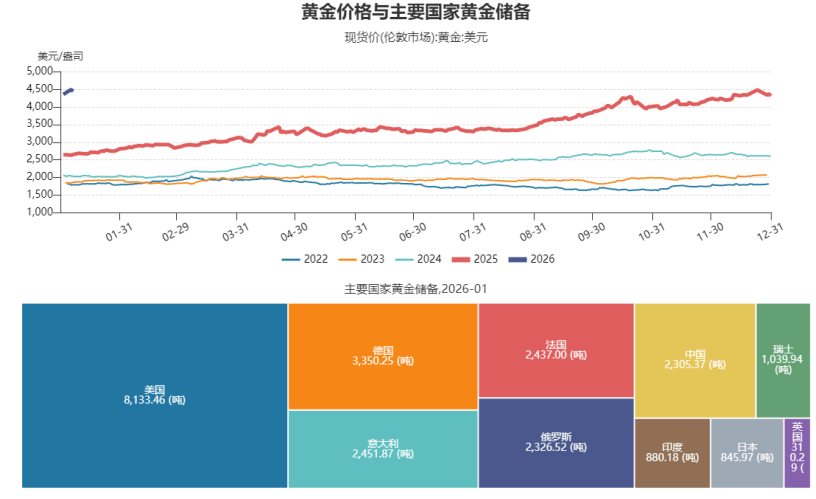
Group 1: Gold Market Insights - The long-term trend of gold is currently in an upward cycle, driven by its financial attributes and credit risk, with global central banks, especially the People's Bank of China, continuously increasing their gold reserves since 2023 [1] - Poland's central bank has approved a plan to purchase 150 tons of gold, increasing its reserves from 550 tons to 700 tons, emphasizing gold's role as a hedge against financial shocks [5] - Recent data indicates a rise in gold volatility, which may signal increasing buying power, supported by inflows into major gold ETFs, reversing a trend of outflows since early January [5] Group 2: Geopolitical and Economic Factors - The U.S. administration's fluctuating stance on Greenland and potential tariffs on Europe reflects ongoing geopolitical tensions, which may lead to market uncertainties and affect investment strategies [3] - The trend of "de-dollarization" is accelerating, with countries reducing investments in the U.S. and increasing gold reserves as a hedge, as highlighted by Bridgewater's founder [4] - The U.S. "America First" policy and its impact on global markets continue to drive safe-haven demand for precious metals [7] Group 3: Copper Market Dynamics - The copper market is experiencing upward pressure due to supply constraints and increased demand driven by the transition to renewable energy and AI technologies [10][12] - Recent disruptions in major copper mines, such as seismic events in the Democratic Republic of Congo and Chile, have raised concerns about ongoing supply tightness [11] - The imbalance in copper inventory distribution, particularly the U.S. hoarding a significant portion of global refined copper, is contributing to market volatility [13] Group 4: Other Metals and Market Trends - Aluminum prices have shown a significant upward trend, supported by tight supply conditions and robust demand across various sectors, including renewable energy [15] - Lithium prices have rebounded sharply, driven by surging demand in the energy storage sector, with current prices reaching approximately 180,000 yuan per ton [16] - The rare earth sector is poised for growth due to strategic supply constraints and increasing demand from emerging technologies, with prices expected to stabilize and potentially rise [17]
黄金未完待续,但短期可能回调
Sou Hu Cai Jing· 2026-01-30 01:34
Core Viewpoint - Gold prices are experiencing a significant rise, supported by geopolitical tensions, monetary easing, and a global trend towards de-dollarization, with the current market dynamics favoring gold as a strategic asset [2][3]. Group 1: Market Performance - On January 29, the gold ETF (518800) rose by 5.49% [1]. - London gold prices approached $5,600 per ounce, while silver prices briefly surpassed $120 per ounce [2]. Group 2: Economic Factors - The Federal Reserve decided to maintain the benchmark interest rate at 3.5%-3.75% with a 10:2 voting ratio, which aligns with market expectations [2]. - Despite the Fed's decision supporting the dollar, there are concerns regarding the potential risks to the Fed's independence and the clarity of its interest rate policy [2]. Group 3: Supporting Factors for Gold Prices - Key drivers for gold prices include ongoing geopolitical conflicts (e.g., tensions in Iran, Greenland sovereignty disputes, and the Russia-Ukraine conflict), which enhance gold's safe-haven premium [3]. - The trend of global central banks purchasing gold and the acceleration of de-dollarization processes provide structural support for gold prices [3]. - From a supply-demand perspective, global gold reserves are projected to last until 2032 at current extraction rates, with resource-exporting countries tightening mineral export restrictions, increasing gold's strategic value [3]. Group 4: Industrial Demand - The demand for industrial gold is expected to grow due to advancements in AI and high-tech industries, while the photovoltaic sector's increased silver consumption strengthens the correlation between gold and silver [3]. Group 5: Market Indicators - The current RSI indicator for international spot gold is at a high level, and the volatility index has reached a near ten-year peak, indicating potential short-term market correction pressures [3]. - Investors are encouraged to monitor the gold ETF (518800) for suitable investment opportunities [3].

深夜悬崖式过山车!白银黄金跳水重挫,随后收复近半跌幅……多家基金今日突发公告:停牌!
Sou Hu Cai Jing· 2026-01-30 00:55
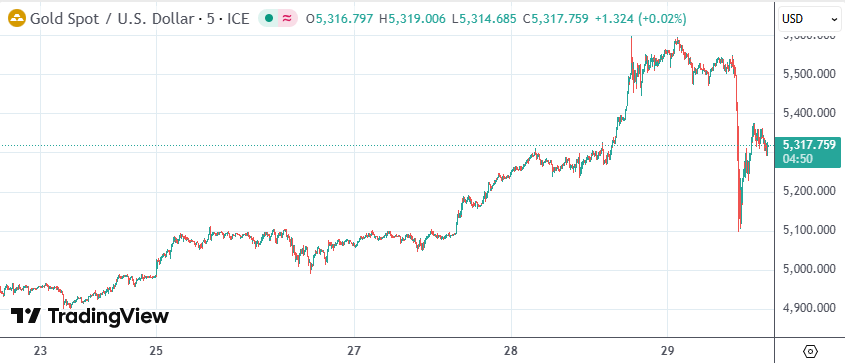
Group 1: Gold Market Dynamics - Gold prices experienced a sharp decline, dropping over $400 before recovering nearly half of the loss, with a maximum intraday drop of 5.7% [1][17] - The spot gold price approached $5600 but fell to $5105.83 before rebounding to around $5317, reflecting a 1.8% decrease at the time of reporting [1] - The volatility in gold prices is attributed to profit-taking by investors after recent highs, with gold up 6.5% for the week and 23% for the month [17] Group 2: Factors Influencing Precious Metals - The rise in precious metals is supported by dual factors: escalating geopolitical risks increasing global risk aversion and a deepening trend of "de-dollarization" raising doubts about the dollar's credibility [4] - Industrial metals and oil sectors are also gaining momentum due to a recovery in manufacturing and steady demand from green technology [4] Group 3: Silver Market Movements - Silver prices fell from a historical high of $121.67 to $106.80, with a maximum intraday drop of 8.5%, before recovering to around $114, reflecting a 2.3% decrease [6] Group 4: Investor Sentiment and Reactions - Investor sentiment is mixed, with some expressing frustration over recent losses in gold investments, highlighting the emotional impact of market fluctuations [5][13] - The demand for gold remains strong, with significant interest from both cryptocurrency companies and central banks, indicating a sustained appetite for gold as a safe-haven asset [17]
去美元化交易加速,?银同步刷新历史?位
Zhong Xin Qi Huo· 2026-01-30 00:50
投资咨询业务资格:证监许可【2012】669号 中信期货研究|贵⾦属策略⽇报 2026-1-30 去美元化交易加速,⾦银同步刷新历史 ⾼位 贵⾦属延续极端强势。美元⾛弱、主权债与法币信任受损、地缘与政策不 确定性叠加,去美元化交易进⼊加速阶段。⻩⾦突破5500美元关⼝,⽩银 同步创历史新⾼,⾦强银更强的结构维持,但⾼位波动与流动性约束开始 显性化。(以上新闻和数据均来⾃彭博终端) 黄金观点:去美元化交易主导,黄金进入加速再定价阶段。 逻辑:美元指数持续回落、日债与欧美主权债波动放大,推动资金从 债券与法币体系向黄金迁移。市场对美联储独立性、财政扩张与政策 工具有效性的担忧强化,黄金作为"最终结算资产"的配置需求快速 放大。短期内,趋势资金与被动配置共振,推动价格连续突破关键整 数位,但银行资产负债表约束抬升波动率。(以上新闻和数据均来自 彭博终端) 展望:中期上行逻辑未改,但短期超买信号显著,需关注高位震荡与 阶段性回撤风险。若美元弱势延续,黄金仍具顺趋势配置价值。 白银观点:白银弹性释放加速。 逻辑: 在黄金强势定价框架下,白银补涨属性与流动性驱动凸显。 工业与金融双重属性叠加,资金在金价持续创新高背景下向 ...
再聊聊这波黄金牛市
虎嗅APP· 2026-01-30 00:50
Core Viewpoint - The article discusses the dynamics of gold prices, emphasizing the interplay between monetary policy, central bank gold purchases, and market sentiment, while highlighting the uncertainty in predictions made by industry experts [5][9][10]. Group 1: Gold Price Dynamics - The recent surge in gold prices is attributed to the convergence of the gold cycle, interest rate cuts, and central bank gold accumulation [7]. - Central banks, including China, are increasing their gold reserves, which creates a feedback loop that drives gold prices higher as countries perceive their dollar reserves as depreciating [8]. - Predictions from institutions like Goldman Sachs suggest that gold prices could exceed $5,400 per ounce, reflecting a significant upward adjustment from previous forecasts [10]. Group 2: Monetary Policy and Debt Management - The increase in money supply is not merely due to central banks printing money; rather, it involves complex debt management strategies, often referred to as "debt replacement" [12][13]. - Countries, including the U.S., are not genuinely repaying debts but managing interest payments, leading to a continuous increase in money supply [14][15]. - This ongoing monetary expansion is expected to eventually drive gold prices up, as gold is viewed as a true form of currency compared to fiat money [16]. Group 3: Investment Perspectives - The article suggests that wealthy individuals who invest in gold for long-term holding can benefit from price increases, while typical investors may struggle to profit from short-term trading [22]. - The supply dynamics of gold are characterized by limited production and long-term holding by central banks and trusts, contrasting sharply with silver, which has a more elastic supply due to industrial demand [23]. - The author advises cautious participation in gold investment, emphasizing the importance of learning through experience rather than speculative trading [24][25].

金银之后,会轮到铜吗?
3 6 Ke· 2026-01-30 00:31
Group 1 - Gold prices have surged, breaking the historic threshold of $5,500 per ounce, with silver following suit [1] - The market is buzzing with discussions about "safe-haven," "monetary attributes," and "historical highs" [2] - The situation is different from the typical "sector rotation" or "catch-up" narrative [3] Group 2 - Copper's value has changed, becoming a strategic asset rather than just a cyclical commodity [6][4] - The driving forces behind copper's price changes overlap with those of gold and silver but are more complex [5] - The current market is experiencing a significant shift in perception regarding copper, moving from a "trading commodity" to a "portfolio asset" [17] Group 3 - The macroeconomic backdrop has dramatically changed, leading to a questioning of the dollar's credibility, with the dollar index hitting a four-year low [9] - As trust in the dollar system wavers, investors are seeking alternatives, with gold being the primary beneficiary of this sentiment [10][11] - Copper, priced in dollars, also benefits from the dollar's depreciation, as it becomes more expensive in dollar terms [14][15] Group 4 - Geopolitical risks are rising, impacting both gold and copper, with increased demand for gold as a safe haven during turbulent times [18][20] - The supply of copper is threatened by political and community uncertainties in major copper-producing regions [21][22] - The geopolitical risk premium is being factored into copper prices, adding an "insurance cost" to its valuation [23] Group 5 - The current spot market for copper is weak, with increasing global inventories and a lack of demand from China [28][29] - The significant price difference between spot and futures copper indicates an oversupply in the market [32] - The weak demand reflects a broader issue where the global economy cannot support the current high copper prices [36] Group 6 - The long-term outlook for copper is driven by structural supply issues and a robust demand forecast due to global energy transitions [39][46] - The anticipated demand from electric vehicles and renewable energy projects is expected to significantly increase copper consumption [47][48] - The market is currently experiencing a tug-of-war between weak short-term realities and strong long-term expectations for copper [49] Group 7 - The pricing logic for copper is evolving, moving away from traditional supply-demand dynamics to include strategic resource premiums and inflation hedges [54][55] - Short-term volatility is expected as the market adjusts to current conditions, with potential for significant price fluctuations [56][60] - In the medium to long term, copper is likely to establish its own upward trend, driven by persistent supply challenges and increasing demand [60][62]
21专访丨彭博赵志轩:美元指数或跌破90
2 1 Shi Ji Jing Ji Bao Dao· 2026-01-29 23:36
Group 1 - The recent decline of the US dollar index has raised concerns about "de-dollarization" and geopolitical risks, prompting market attention [1][15] - Bloomberg Industry Research predicts that the Chinese yuan and Malaysian ringgit could generate excess returns for Asian currency portfolios due to structural advantages and reduced correlation with the dollar [1][15] - The relative performance of low-interest and high-interest Asian currencies will depend on the timing of the "de-dollarization" trend [1][15] Group 2 - Zhao Zhixuan, Bloomberg's Chief Forex and Rates Strategist for Asia, suggests that the dollar index may need to fall below 90 to trigger policy intervention, indicating further downside potential from current levels [1][15] - The yuan is expected to be the most favored currency this year, with the USD/CNY exchange rate potentially challenging the 6.7 to 6.8 level [1][11] - The dollar faces multiple structural challenges, including portfolio rotation away from US assets, ongoing arbitrage trading, and expectations of a weak dollar policy [1][15] Group 3 - European institutions, including Danish pension funds, have begun to exit the US Treasury market, with China's holdings of US debt at their lowest level since 2008 [2][16] - The trend of reducing US Treasury holdings is likely to continue, but a complete sell-off is unrealistic due to the lack of alternative markets with similar depth and liquidity [2][16] - The future may see a coexistence of multiple reserve currencies and regionalization of currency use, although the dollar's leading position is unlikely to be replaced in the short term [2][16] Group 4 - Concerns over Japan's "monetary fiscalization" have led to selling pressure on its long-term bonds, which may transmit pressure to global bond markets [2][24] - The Japanese yen is expected to strengthen against the dollar this year, with a reasonable equilibrium exchange rate around 129 [2][24][25] - Other Asian currencies are expected to show divergence, with low-interest currencies like the Thai baht, Malaysian ringgit, and Singapore dollar benefiting from a declining dollar cycle [2][12] Group 5 - The yuan is viewed as the most promising currency this year, with expectations of steady appreciation against both the dollar and a basket of currencies [2][11][26] - Factors supporting the yuan's appreciation include favorable policies, interest rate differentials, and capital inflows from the stock market [2][11][26] - The Thai baht, Malaysian ringgit, and Singapore dollar are also expected to strengthen, while high-interest currencies like the Philippine peso, Indonesian rupiah, and Indian rupee may weaken due to fiscal stability concerns [2][12][29]

黄金、白银、小金属、石化都成了主线?劝你们别太高调
Sou Hu Cai Jing· 2026-01-29 23:00
Group 1 - The core theme of the article highlights the resurgence of precious metals like gold and silver, which have outperformed sectors such as AI applications, becoming the new investment focus since 2025 [4] - Gold prices surged from $5,200 to $5,600 per ounce, with a two-day increase of $400, leading to price hikes in gold jewelry and significant stock price increases for related companies [4] - Silver also saw a remarkable rise, reaching a record high of $120 per ounce, with projections suggesting it could reach $160 per ounce [4][7] Group 2 - The macroeconomic environment, supply-demand dynamics, and market sentiment are driving forces behind the price increases in precious metals [7] - The weakening of the US dollar and expectations of interest rate cuts by the Federal Reserve are contributing to the rising costs of holding precious metals [8][9] - Geopolitical tensions and supply chain disruptions in major copper-producing countries are heightening market risk aversion and supply concerns [9] Group 3 - The overall non-ferrous metals sector is experiencing a boost, with prices of aluminum, copper, and tungsten rising alongside gold and silver [10] - Historical price trends indicate a sequence of price increases from gold to silver, then copper, aluminum, and iron, driven by financial attributes and industrial demand [10] - The demand for copper is significantly increasing due to the transition to renewable energy, with electric vehicles using 4-5 times more copper than traditional vehicles [11] Group 4 - The strategic competition for key mineral resources is intensifying, with the US investing $2.5 billion in the strategic reserve of 38 non-ferrous metals, while China is implementing regular reserves for critical strategic materials [11] - The chemical industry is showing signs of potential growth, with recent market movements indicating a possible recovery in oil prices due to OPEC+ production cuts [12][13] - The chemical sector is attempting to transition away from traditional real estate-driven economic cycles towards high-end applications in new energy and electronic information [13]

华尔街现在使劲将黄金往上弄,目的是什么?本质上就是美国要实现一个目的
Sou Hu Cai Jing· 2026-01-29 22:48
Group 1 - The core viewpoint suggests that Wall Street is actively driving up gold prices, influenced by deeper considerations from the U.S. government, which plans to lower interest rates to stimulate the domestic economy and address issues like cooling employment and insufficient corporate momentum [1] - Lowering interest rates may weaken the attractiveness of the U.S. dollar, potentially leading to capital outflows from the dollar system. If a recession occurs in the U.S., the current strategy of capital extraction may fail, putting the country in a precarious situation [1] - To prevent capital outflows, the U.S. government aims to guide funds into the gold market, which is dominated by the dollar, thereby inflating gold prices and causing relative devaluation of wealth in countries with lower gold reserves [1] Group 2 - The U.S. has historically leveraged the dollar to extract wealth globally, pushing up asset prices during periods of low interest rates and bursting asset bubbles in other countries during rate hikes, which has led to regional economic crises [3] - This strategy is becoming less effective, as many countries are quietly pursuing de-dollarization by reducing U.S. Treasury holdings and increasing gold reserves, while allies are also decreasing their reliance on the dollar. If capital shifts to other currencies post-rate cuts, the U.S. could face significant challenges [4] - Additionally, oil is viewed as another means of U.S. wealth extraction. Current U.S. threats towards Iran are seen as a way to create tension, which could further elevate gold and oil prices [6]