货币政策

Search documents
Allspring投资经理:日元与日债波动性显著上升
Sou Hu Cai Jing· 2026-01-28 10:40
Allspring全球投资公司高级投资组合经理Lauren van Biljon指出,日本即将举行的大选、持续过度宽松 的货币政策以及市场技术面因素正相互交织,共同推升日本国债与日元的波动性。 她表示,这一复杂背景在债券市场上体现为收益率曲线明显陡峭化,而在外汇市场则表现为日元整体走 弱——尽管近期因市场对日本当局可能干预汇市的预期升温,日元出现短暂反弹。 Lauren van Biljon特别强调:"1月份日本国债市场的调整速度令人震惊。"她解释称,过去几周长端利率 的剧烈错位最初源于市场对日本财政可持续性的担忧,并因市场流动性薄弱而进一步放大。此外,日本 央行当前的政策立场被其视为"悬而未决的风险"。(新华财经) ...
美国降息对A股有什么影响
Jin Tou Wang· 2026-01-28 06:01
Core Transmission Mechanism - Capital flow: Interest rate cuts may drive international capital towards A-shares due to the increased attractiveness of RMB assets, but caution is needed regarding exchange rate volatility [1] - Exchange rate and trade: The depreciation of the USD and appreciation of the RMB may weaken the competitiveness of Chinese export companies, impacting the stock prices of related sectors [1] - Policy space: Interest rate cuts provide greater operational space for China's monetary policy, potentially releasing liquidity through tools like rate cuts and reserve requirement ratio reductions, which would benefit the stock market [1] - Market sentiment: Interest rate cuts typically boost global risk appetite, potentially increasing foreign capital inflow into A-shares, but external uncertainties such as the risk of a U.S. economic recession must be monitored [1] Specific Impact on A-shares - Real estate sector: U.S. interest rate cuts may lead to capital seeking returns, with some potentially flowing into the Chinese real estate market, stimulating a reduction in financing costs for real estate companies, which is a positive for the sector [2] - Non-ferrous metals sector: Interest rate cuts often lead to USD depreciation, which may increase the prices of non-ferrous metals and other commodities priced in USD, potentially enhancing the profitability of related companies [2] - Aviation sector: Airlines have significant USD-denominated debt, and U.S. interest rate cuts could lower their debt costs, alleviating financial burdens [2] Current Market Background - The Federal Reserve's interest rate cuts may reflect concerns about economic slowdown; if the cuts are preventive, A-shares may benefit from an increase in risk appetite; however, if the U.S. economy is already in recession, A-shares may be dragged down by weak global demand [3] - Overall, the impact of U.S. interest rate cuts on A-shares is multifaceted, requiring a comprehensive analysis of factors such as capital, exchange rates, policy, and sentiment [3]
张斌:货币政策发力,激活内需新动能
Zhong Guo Jing Ying Bao· 2026-01-28 06:01
Core Viewpoint - The 2025 Central Economic Work Conference prioritizes expanding domestic demand, emphasizing the need to "build a strong domestic market" for 2026 [2] Group 1: Characteristics of the New Domestic Demand Strategy - The national emphasis on expanding domestic demand has significantly increased, with counter-cyclical policies placing greater focus on this area [2] - Policy responses to economic data have become more sensitive, as seen in the dynamic adjustments throughout 2025, where proactive fiscal policies were implemented in response to economic pressures [2] - Fiscal policy operations have become more refined, with specific measures like including elevator upgrades in the support for equipment renewal in the livelihood sector [3] Group 2: Monetary Policy Actions - Confidence must be strengthened through clear policy positions to stabilize expectations and calibrate price signals, enhancing the transmission effect of monetary policy [4] - The central bank should set clear and singular policy goals, such as a 2% core CPI inflation target, to avoid conflicting objectives and ensure market confidence [4] - Total policy tools, particularly policy interest rates, are crucial for expanding domestic demand, with current rates at approximately 1.4% indicating room for further reductions [4] Group 3: Economic Recovery Indicators - The macroeconomic landscape in 2025 shows early signs of recovery, with improvements in stock markets, RMB exchange rates, and corporate profitability, although the recovery foundation remains fragile [5] - The average mortgage rate from 2018 to 2021 was 5.5%, with a 4.1% annual increase in second-hand housing prices, resulting in a near purchase cost of 1.4%, which is lower than the average rental yield of 2.2% [5] - From 2022 to 2025, the average mortgage rate decreased to 3.9%, but the annual growth rate of second-hand housing prices fell to -4.8%, leading to an increased purchase cost of 8.7%, making buying less advantageous compared to renting [6]

资金面收紧,TL收跌
Hua Tai Qi Huo· 2026-01-28 05:14
1. Report Industry Investment Rating No information provided. 2. Core View of the Report The bond market is oscillating between stable growth and easing expectations. It is influenced by the stock market, the broad - money signal released by the Politburo meeting, the unchanged LPR, the continued expectation of the Fed's interest - rate cut, and the increasing uncertainty of global trade, which adds uncertainty to foreign capital inflows. Short - term attention should be paid to the policy signals at the end of the month [3]. 3. Summary by Relevant Catalogs 3.1 Interest Rate Pricing Tracking Indicators - China's CPI monthly环比 is 0.20% and同比 is 0.80%; PPI monthly环比 is 0.20% and同比 is - 1.90% [8] - Social financing scale is 442.12 trillion yuan, with a环比 increase of 2.05 trillion yuan and a环比 change rate of 0.47%; M2同比 is 8.50%, with a环比 change rate of + 6.25%; Manufacturing PMI is 50.10%, with a环比 change rate of + 1.83% [9] - The US dollar index is 95.77, with a环比 decrease of 1.28 and a环比 change rate of - 1.32%; The US dollar against the offshore RMB is 6.9335, with a环比 decrease of 0.020 and a环比 change rate of - 0.29%. SHIBOR 7 - day is 1.56, with a环比 increase of 0.02 and a环比 change rate of + 1.36%; DR007 is 1.58, with a环比 increase of 0.01 and a环比 change rate of + 0.60%; R007 is 1.68, with a环比 increase of 0.17 and a环比 change rate of + 11.44%; The 3 - month interbank certificate of deposit (AAA) is 1.59, with a环比 increase of 0.01 and a环比 change rate of + 0.55%; The AA - AAA credit spread (1Y) is 0.09, with a环比 increase of 0.00 and a环比 change rate of + 0.55% [9] 3.2 Overview of the Treasury Bond and Treasury Bond Futures Market No specific text summary information provided, but there are figures including the closing price trend of the main continuous contract of treasury bond futures, the price change rate of each variety of treasury bond futures, the precipitation fund trend of each variety of treasury bond futures, the position ratio of each variety of treasury bond futures, etc. [12][15][19] 3.3 Overview of the Money Market Fundamentals No specific text summary information provided, but there are figures such as the Shibor interest rate trend, the maturity yield trend of the inter - bank certificate of deposit (AAA), the bank - to - bank pledged repurchase transaction statistics and the local government bond issuance [29][32] 3.4 Spread Overview No specific text summary information provided, but there are figures about the inter - term spread trend of each variety of treasury bond futures and the term spread of cash bonds and the cross - variety spread of futures [31][37][38] 3.5 Two - Year Treasury Bond Futures No specific text summary information provided, but there are figures about the implied interest rate and the treasury bond maturity yield of the main contract of two - year treasury bond futures, the IRR of the TS main contract and the fund interest rate, and the three - year basis trend and net basis trend of the TS main contract [40][42][48] 3.6 Five - Year Treasury Bond Futures No specific text summary information provided, but there are figures about the implied interest rate and the treasury bond maturity yield of the main contract of five - year treasury bond futures, the IRR of the TF main contract and the fund interest rate, and the three - year basis trend and net basis trend of the TF main contract [49][52] 3.7 Ten - Year Treasury Bond Futures No specific text summary information provided, but there are figures about the implied yield and the treasury bond maturity yield of the main contract of ten - year treasury bond futures, the IRR of the T main contract and the fund interest rate, and the three - year basis trend and net basis trend of the T main contract [54][55] 3.8 Thirty - Year Treasury Bond Futures No specific text summary information provided, but there are figures about the implied yield and the treasury bond maturity yield of the main contract of thirty - year treasury bond futures, the IRR of the TL main contract and the fund interest rate, and the three - year basis trend and net basis trend of the TL main contract [60][65]
两大“悬念”未决下期金站稳5250?
Jin Tou Wang· 2026-01-28 03:02
Group 1 - The Federal Open Market Committee (FOMC) meeting is taking place, with expectations that the U.S. monetary policy will remain unchanged [3] - Market participants are closely analyzing the FOMC statement and Chairman Jerome Powell's press conference for clues on future monetary policy direction and inflation outlook [3] - The U.S. government is facing a risk of shutdown due to increasing tensions between Senate Democrats and Republicans regarding funding for the Department of Homeland Security [3] Group 2 - April gold futures have seen a recent increase, with the latest price at $5085.5 per ounce, following profit-taking by short-term traders after reaching historical highs [1] - The next upward target for gold futures is to close above the strong resistance level of $5250.00, while the recent downward target for bears is to push prices below the key support level of $4750.00 [4] - Key resistance levels for gold are at historical high of $5145.20 and $5200.00, while key support levels are at the overnight low of $5043.90 and $5000.00 [4]
经济和市场会有开门红吗
2026-01-28 03:01
Summary of Conference Call Records Industry Overview - The economic outlook for Q1 2026 is optimistic, with an expected real GDP growth rate of around 5% and a nominal GDP growth rate of approximately 4.5% [1][7] - Fixed asset investment is anticipated to rebound significantly, benefiting from policy support and major projects under the "15th Five-Year Plan" [1][5] - Consumer spending is projected to recover, with goods consumption growth expected to rise to 3%-4% due to the Spring Festival effect and subsidies for replacing old products [1][6] Key Points and Arguments - **Economic Growth**: Despite a high base in Q1 2025, historical data suggests that it will not constrain growth in Q1 2026. A comparison with Q4 2025, which had a growth rate of 4.5%, indicates that achieving over 5% in Q1 2026 would signify a reversal of the economic downturn [3][4] - **Investment Recovery**: Investment is expected to show a significant improvement, with a potential increase of over 15 percentage points if it returns to the average growth rate of about 4% seen in previous years [4][5] - **Consumer Spending**: The service sector is likely to perform well due to increased activities during the Spring Festival, and the early launch of the replacement subsidy program is expected to release pent-up demand [6] - **Monetary Policy**: The current monetary policy emphasizes efficiency and flexibility, with limited room for interest rate cuts. The focus is on stabilizing the exchange rate rather than direct intervention [8][9] - **Fiscal Policy**: The fiscal policy for 2026 is expected to focus on structural adjustments rather than mere expansion, with a narrow deficit rate maintained at around 4.0% and a potential decrease in the broad deficit rate [10] Additional Important Insights - **Real Estate Support**: The likelihood of using fiscal subsidies to support the real estate market is low, with more feasible measures being local government actions to reduce transaction and financial costs [11] - **Public Fund Reform**: Public fund reforms are expected to play a significant role in supporting housing demand and stabilizing the real estate market [12] - **Capital Market Outlook**: The capital market is viewed positively, with stocks considered the most promising asset class. The recovery of PPI is crucial for supporting corporate profits, particularly in the technology sector [2][13][14] - **Market Volatility**: Recent stock market volatility has increased, with significant adjustments in various indices. The market is experiencing a rotation among sectors, with small-cap stocks showing resilience [15][16] - **Investment Strategy**: In a rapidly changing market, focusing on stable sectors with long-term growth potential, such as non-ferrous metals and chemicals, is recommended over more volatile growth sectors like AI [17][18]
人行北京市分行:2025年社融增量近1.9万亿、创历史新高
2 1 Shi Ji Jing Ji Bao Dao· 2026-01-28 03:00
Core Insights - The financial system in Beijing operated smoothly in 2025, with a record high in social financing scale and a continuous decline in financing costs, supporting high-quality economic development in the capital [1] Group 1: Social Financing and Direct Financing - In 2025, the social financing scale in Beijing reached a record high of 1.89843 trillion yuan, an increase of 840.04 billion yuan year-on-year [2] - Direct financing accounted for 69.2% of the social financing scale increment, amounting to 1.31389 trillion yuan, which is 13.3 percentage points higher than in 2020 [2] - Non-financial corporate bond net financing was 1.12175 trillion yuan, up by 596.97 billion yuan from the previous year [2] Group 2: Credit Growth and Cost Reduction - By the end of 2025, the total loan balance in Beijing was 12.09 trillion yuan, a year-on-year increase of 4.9%, with new loans amounting to 562.93 billion yuan [3] - The average interest rate for loans in Beijing was 2.88% in December 2025, a decrease of 25 basis points year-on-year, effectively lowering financing costs for enterprises [4] Group 3: Monetary Policy and Support Measures - The People's Bank of China implemented a moderately loose monetary policy in 2025, injecting over 800 billion yuan into the market [5] - Structural monetary policy tools were utilized to support key sectors, with a total of 667 billion yuan in special policy funds allocated throughout the year [6] - The focus on supporting agriculture, small enterprises, and private sectors resulted in a cumulative policy fund injection of over 280 billion yuan [6] Group 4: Future Outlook - The People's Bank of China plans to enhance the implementation of policies, aiming to improve financial services for the real economy and support strategic and key areas [7]
2026年01月28日:期货市场交易指引-20260128
Chang Jiang Qi Huo· 2026-01-28 02:50
1. Report Industry Investment Ratings - **Macro Finance**: Long - term bullish on stock indices, suggesting buying on dips; government bonds are expected to move in a range [1] - **Black Building Materials**: Short - term trading for coking coal, range trading for rebar, and waiting and seeing for glass [1] - **Non - ferrous Metals**: Waiting and seeing or holding long positions in small quantities for copper; strengthening observation for aluminum; waiting and seeing for nickel; range trading or taking profit on previous long positions for tin; range trading for gold; bullish movement for silver; range - bound oscillation for lithium carbonate [1] - **Energy and Chemicals**: Range trading for PVC, caustic soda and soda ash for the time being, range trading for styrene, rubber, urea, and methanol; weak oscillation for polyolefins [1] - **Cotton Textile Industry Chain**: Oscillatory adjustment for cotton and cotton yarn, oscillatory movement for apples and jujubes [1] - **Agriculture and Animal Husbandry**: Opportunities for short - selling on rebounds for hogs; hedging post - festival contracts on rallies for eggs; being cautious about chasing highs and waiting for rebounds to hedge for corn; bearish on rallies for soybean meal; bullish oscillation for three major oils [1] 2. Core Views of the Report The report provides trading suggestions for various futures products based on their current market conditions, including macro - economic factors, supply - demand relationships, and cost factors. It also emphasizes the importance of paying attention to policy changes, inventory levels, and external market factors [1][5][7] 3. Summaries According to Relevant Catalogs Macro Finance - **Stock Indices**: Medium - to long - term bullish, suggesting buying on dips. Market is volatile due to factors such as the Fed's interest - rate decision, China's industrial profit data, and consumer spending intentions [5] - **Government Bonds**: Expected to move in a range. There is no significant negative news in the bond market, but there is limited downward space for bond yields without more capital inflows [5] Black Building Materials - **Coking Coal**: Short - term trading. The coal market shows short - term fluctuations, but the price increase may not be sustainable due to factors like weak downstream demand and stable supply [7] - **Rebar**: Range trading. The futures price is slightly higher than the valley - electricity cost of electric furnaces and lower than the flat - electricity cost. There is no significant supply - demand contradiction in the short term [7] - **Glass**: Waiting and seeing. The supply is stable, the market speculative demand is weak, and the downstream inventory is high. The price is expected to oscillate between 1050 - 1070 [8] Non - ferrous Metals - **Copper**: High - level oscillation. Macro factors provide support, but the fundamentals are weak. It is recommended to wait and see or hold long positions in small quantities, and beware of the risk of a pullback before the Spring Festival [9] - **Aluminum**: High - level oscillation. The supply of bauxite and alumina is relatively stable, and the demand is entering the off - season. It is recommended to strengthen observation [11] - **Nickel**: Oscillatory movement. The reduction of Indonesian nickel ore quotas has boosted the price, but the fundamentals are weak. It is recommended to wait and see [13] - **Tin**: Oscillatory movement. The supply of tin concentrate is tight, and the downstream demand is mainly for rigid procurement. It is recommended for range trading or taking profit on previous long positions [13] - **Silver**: Bullish movement. Geopolitical tensions and changes in the Fed's leadership expectations have pushed up the price. It is recommended to hold long positions and be cautious about new positions [15] - **Gold**: Range trading. Similar to silver, geopolitical and Fed - related factors have led to a higher price center. It is recommended for range trading and be cautious about chasing highs [15] - **Lithium Carbonate**: Range - bound oscillation. The supply is affected by mine production, and the demand from the energy - storage terminal is good. The price is expected to be bullish [17] Energy and Chemicals - **PVC**: The bottom may have been reached. The supply is high, the demand is weak, but the valuation is low. It is recommended for long - term low - buying and positive spread trading [17] - **Caustic Soda**: Low - level oscillation. The demand is weak, and the supply pressure is high. It is recommended to wait and see [19] - **Styrene**: Oscillatory movement. The price has rebounded due to export growth and device maintenance, but the valuation is high. It is recommended to be cautious about chasing highs [19] - **Rubber**: Oscillatory movement. The supply is shrinking, but the inventory pressure remains. The price is in a state of multi - empty tug - of - war [20] - **Urea**: Oscillatory movement. The supply is increasing, the demand from compound fertilizers is rising, and the inventory is at a low level. The price is expected to oscillate between 1730 - 1830 [21] - **Methanol**: Oscillatory movement. The supply is decreasing, the demand from methanol - to - olefins is weakening, and the traditional downstream demand is also weak [23] - **Polyolefins**: Weak oscillation. The supply is increasing, the demand from PE downstream is declining, and the price is expected to be weak with limited upside [24] - **Soda Ash**: Waiting and seeing. The supply is in excess, but the cost support is strong. It is recommended to leave the market temporarily [24] Cotton Textile Industry Chain - **Cotton and Cotton Yarn**: Oscillatory adjustment. The global cotton supply - demand situation has changed, and the internal - external price difference has put pressure on the domestic market. It is recommended to be cautious in the short term and optimistic in the long term [24] - **Apples**: Oscillatory movement. The packaging and shipping in the production areas have accelerated slightly, but the overall market is still weak [26] - **Jujubes**: Oscillatory movement. The purchase price of Xinjiang gray jujubes in the 2025 production season is in a certain range, and the acquisition is based on quality [26] Agriculture and Animal Husbandry - **Hogs**: Bottom - building oscillation. In the short term, the price is restricted by supply - demand game. It is recommended to short on rebounds for off - season contracts. In the long term, be cautious about being bullish due to high - level production capacity and cost reduction [28] - **Eggs**: Rebound from a low level. The current valuation is high, and it is recommended to hedge post - festival contracts on rallies. Also, consider hedging the 05 and 06 contracts due to the possible post - poned supply pressure [30] - **Corn**: Limited upside. In the short term, the supply - demand is balanced, and it is recommended to be cautious about chasing highs. In the long term, the supply - demand situation is relatively loose, restricting the price increase [32] - **Soybean Meal**: Low - level oscillation. The short - term support for the M2603 contract is at 3000 - 3030, and the pressure for the far - month 05 contract is at 2800 - 2850. It is recommended to be bearish on rallies [32] - **Oils**: Bullish oscillation. The three major oils are expected to move strongly. It is recommended to buy on dips and hold previous long positions [38]
2025年银行间本币市场运行报告
Sou Hu Cai Jing· 2026-01-28 02:45
Group 1: Money Market Overview - In 2025, the total transaction volume in the money market reached 179.92 trillion yuan, an increase of 0.9% year-on-year, with an average daily transaction of 7.25 trillion yuan, up 2.1% year-on-year [2] - The central bank implemented a moderately accommodative monetary policy, utilizing various tools to inject liquidity into the market, resulting in a net liquidity injection of 64,315 billion yuan throughout the year [3] - The average daily balance in the money market increased by 3% year-on-year to 12.2 trillion yuan, while the daily net lending balance of large commercial banks decreased by 12%, and that of money market funds and policy banks increased by 9% and 15.9%, respectively [5] Group 2: Bond Market Dynamics - In 2025, the bond issuance volume reached 54.69 trillion yuan, with 26,000 bonds issued, marking a 14% increase year-on-year, and net financing increased by 31.8% to 20.33 trillion yuan [6] - The average daily transaction in the cash bond market was 15.14 billion yuan, with a total of 907.5 million transactions, reflecting a 2.9% increase year-on-year [7] - The yield curve for government bonds steepened, with the 10-year government bond yield fluctuating between 1.6% and 1.9%, and the overall credit spreads narrowed [8] Group 3: Interest Rate Swap Market - The interest rate swap curve steepened, with significant increases in long-term rates; the average daily transaction volume in the RMB interest rate swap market increased by 18.5% year-on-year, with a nominal principal total of 44.3 trillion yuan [9] - The daily average transaction volume for standard bond forwards and interest rate options also saw year-on-year increases, indicating a growing interest in these financial instruments [9]

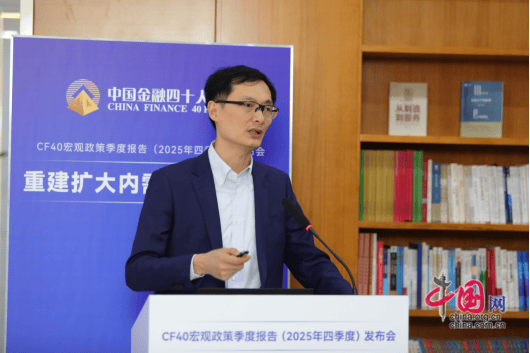
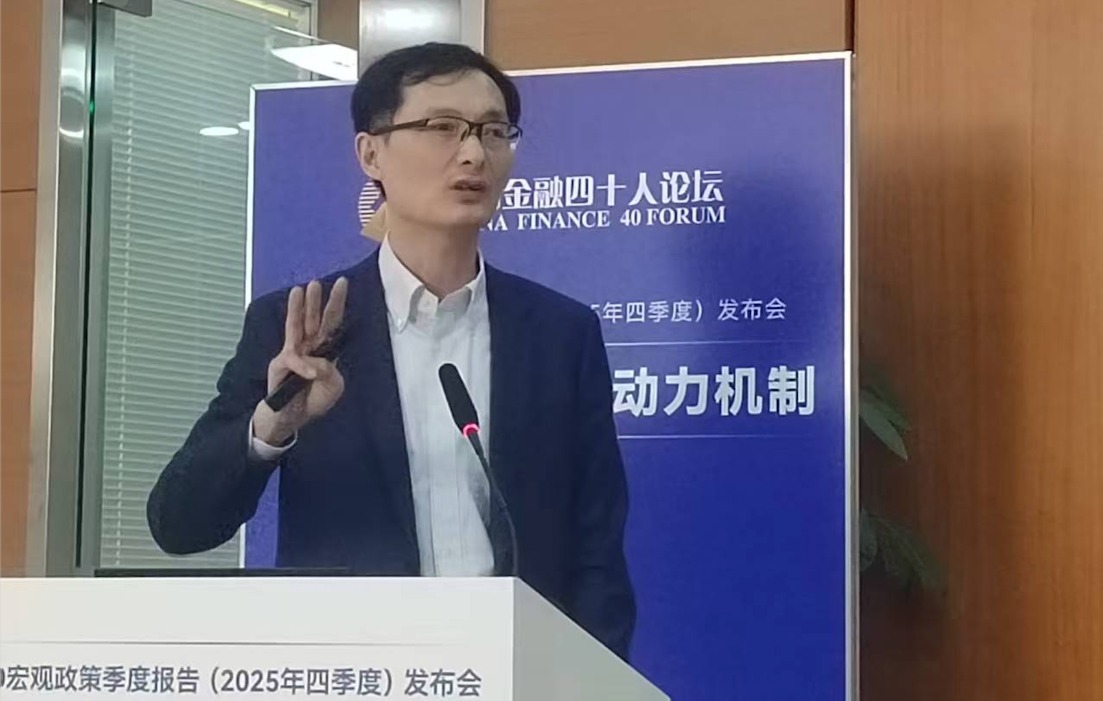
张斌:扩大内需要更加倚重货币政策
Sou Hu Cai Jing· 2026-01-28 02:45
中国网1月27日讯(记者 白璐)26日,中国金融40人论坛(CF40)举办宏观政策季度报告(2025年四季 度)发布会,主题聚焦重建扩大内需的动力机制。发布会上,中国社会科学院世界经济与政治研究所副 所长张斌表示,2025年中国宏观经济处在复苏的早期阶段,但复苏的基础尚不牢固,内生增长的动力尚 未得到有效支撑,需要通过更积极的货币政策来实现经济内生增长动力的改善。 展望未来,张斌认为通过财政政策扩大内需的空间收窄,未来应该更加倚重货币政策。他表示,首先要 充分相信货币政策的重要作用,努力实现通胀目标,同时要充分利用总量政策工具,降低政策利率。 就中国的情况而言,过去逆周期调节主要以财政政策为重,通过财政政策启动公共投资项目,带动总需 求回升,取得了不错的效果。但张斌认为,未来这种做法需要调整。当一个经济体处于工业化高峰阶段 时,经济快速增长,生产率快速提升,城市化快速推进,在这一阶段通过财政政策进行逆周期的公共投 资和支出,既可以稳定总需求,也有利于城市扩张与基础设施的发展。而发展到现今阶段,债务水平和 赤字率有所提升,通过财政政策短期花大钱就会遇到更多困难。"过去,财政的大头是城市扩张,能够 在短期内形成很 ...