宠物经济

Search documents
从历年“618”购物节看宠物食品行业变化——宠物经济
2025-06-30 01:02
Summary of the Pet Food Industry Conference Call Industry Overview - The conference call focuses on the pet food industry in China, particularly during the 2025 "618" shopping festival, highlighting the competitive landscape and consumer trends in the market [1][2][3][4][21]. Key Points and Arguments Market Share and Brand Performance - During the 2025 "618" shopping festival, domestic brands captured 65% of the top 20 pet food brands on Tmall, up from 55% in 2022, indicating a growing dominance of local brands [1][4]. - The top three brands on Tmall were all domestic: Xianlang, Maifudi, and Royal Canin, with Maifudi consistently ranking in the top two since 2020 [1][4][6]. - Xianlang emerged as the fastest-growing brand, moving from fifth in 2023 to first in 2025, while Freycat also showed significant improvement, rising three places to fifth [5][16]. Sales Performance - The overall sales of pet food during the 2025 "618" festival reached 7.5 billion yuan, a 36% increase from 5.5 billion yuan in 2024 [2]. - On JD.com, pet food user transactions increased by 32%, with new pet owners growing by 39% [3][7]. Consumer Trends - There is a notable shift towards health products and prescription diets, with prescription pet food sales increasing by 60% year-over-year and baked food by 50% during the festival [1][6]. - The pet food industry is experiencing a consumption upgrade, with mid-to-high-end price segments growing significantly faster than the overall market [23]. Competitive Landscape - The competition is characterized by a "two strong, many strong" dynamic, with Maifudi and Royal Canin leading, while brands like Xianlang, Freycat, and Blue's are emerging as strong contenders [1][4][21]. - The entry of new brands such as Xiaopei and Xu Cuihua into the rankings indicates a challenging environment for smaller brands to break through [5][6]. Marketing and Innovation - Leading brands are focusing on clear brand positioning and innovative marketing strategies, with concepts like "freshness" and "safety" becoming prevalent [25]. - The trend of "spoonification" is expected to continue supporting the growth of pet ownership, particularly among younger generations [21]. Additional Important Insights - The market share of foreign brands in the top 25 has dropped below 30%, highlighting the competitive advantage of domestic brands in product innovation and marketing [22]. - The overall GMV growth for pet food across major e-commerce platforms reached 16.8% in the first five months of 2025, compared to 13.6% in 2024 [23][24]. - The investment return rates for leading brands are improving, with increased support from platforms like Tmall and Douyin for the pet segment [24]. This summary encapsulates the key developments and trends in the pet food industry as discussed during the conference call, providing insights into market dynamics, brand performance, and consumer behavior.
毕马威林启华:中国宠物市场现巨大增长潜力
Zhong Guo Xin Wen Wang· 2025-06-28 08:40
Core Insights - The pet industry in China is experiencing rapid growth, with the number of pets expected to reach 430 million by 2024, driven by urbanization, smaller family structures, and changing social dynamics [1][2] - The report highlights a significant shift in consumer demographics, with over 60% of pet owners being from the "90s" and "00s" generations, who are increasingly willing to invest in their pets' health and well-being [1][2] - The market for pet-related businesses has grown at a compound annual growth rate (CAGR) of 25.4%, increasing from 97.8 billion RMB in 2015 to 592.8 billion RMB in 2023, and is projected to reach 811.4 billion RMB by 2025 [1][2] Market Drivers - The rapid increase in pet numbers is a fundamental driver of market expansion, leading to growth in pet food, supplies, and medical services [2] - Changing consumer attitudes towards pet ownership are shifting the market from a focus on basic needs to a more emotional and lifestyle-oriented approach [2] - Social media plays a crucial role in influencing purchasing behaviors, with online channels becoming the primary sales avenue for pet food [2] Challenges - The pet industry faces challenges such as food safety concerns, which have led to a trust crisis among consumers regarding pet food quality [3] - Increased competition from a growing number of brands poses a challenge for companies in the market [3] - The regulatory framework for the pet economy is still developing, necessitating improvements to ensure consumer protection and industry standards [3]
小狗雨衣,江浙沪梅雨季的硬通货
3 6 Ke· 2025-06-27 06:11
Group 1 - The article highlights the growing trend of pet apparel, particularly dog raincoats, during the rainy season in Shanghai, driven by consumer demand and emotional attachment to pets [1][3][6] - Sales data indicates that dog raincoats priced under 10 yuan have seen sales between 10,000 to 30,000 units, while those in the 30 to 50 yuan range have surged from 30,000 to 70,000 units, reflecting a strong market for quality pet products [3][4] - The pet economy in China is experiencing rapid growth, with a compound annual growth rate of 25.4%, increasing from 97.8 billion yuan in 2015 to an estimated 592.8 billion yuan in 2023, and projected to exceed 2 trillion yuan by 2030 [6][8] Group 2 - The article discusses the long-tail effect of seasonal pet products, noting that after the rainy season, demand for sun-protective pet clothing is expected to rise, with prices for some items reaching over 500 yuan [8] - Emotional spending on pets is a key driver of the pet economy, as more people view their pets as family members, leading to increased spending on various pet-related products and services [6][8] - The article mentions the rise of innovative pet products, such as automatic cat toys and pet language translators, which have seen significant sales growth, indicating a broader trend in the pet industry towards high-tech and premium offerings [6][8]


“它经济”成消费增长新引擎
Zheng Quan Shi Bao Wang· 2025-06-27 04:23
Group 1 - The core viewpoint of the report is that the Chinese pet industry is experiencing significant growth, with a market size projected to reach 811.4 billion yuan by 2025, reflecting a compound annual growth rate of 25.4% from 2015 to 2023 [1] - The increase in market size is driven by the rising number of pets, which is expected to reach 430 million by 2024 and 570 million by 2029, indicating a growing demand for pet-related products and services [1] - The development of the pet economy is closely linked to the improvement in residents' consumption levels, as emotional needs for companionship and comfort drive spending in this sector [1] Group 2 - The younger generation, particularly those born in the 1990s and 2000s, constitutes over 60% of pet owners, focusing on quality and personalized pet products, which is leading to an upgrade in pet consumption concepts [2] - Social media is reshaping the decision-making process for pet owners, who are increasingly valuing brand image and values over technical details, with word-of-mouth and professional recommendations playing a crucial role [2] - The restructuring of supply chains and the acceleration of domestic product substitution are becoming the dual engines driving the development of the pet industry, with Chinese companies expanding globally and domestic high-end products improving in quality [2]
聊城老板卖猫狗粮 暴赚230亿身家
2 1 Shi Ji Jing Ji Bao Dao· 2025-06-26 15:44
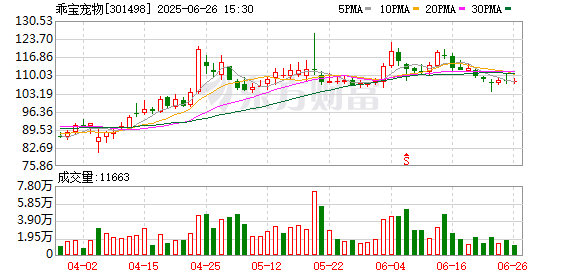
Core Viewpoint - The article highlights the rapid growth and market leadership of Guibao Pet, a Chinese pet food company, which has become a significant player in the domestic pet food industry, particularly through its brand Maifudi, achieving substantial sales and market presence during the 618 shopping festival. Company Overview - Guibao Pet's stock price reached 107.55 yuan per share, with a total market capitalization of approximately 430 billion yuan, reflecting a year-to-date increase of over 40% [3] - The founder, Qin Hua, transitioned from being a middle school physics teacher to a successful entrepreneur, amassing a fortune in the high-end pet food sector [4][5] - Qin Hua holds about 53.24% of the company's shares, valued at approximately 230 billion yuan based on the latest market capitalization [5] Market Potential - According to Goldman Sachs, the number of pets in urban China is expected to exceed 70 million by 2030, indicating a growing market for pet-related products [6] - The pet consumption market is projected to grow by 7.5% in 2024, surpassing 300 billion yuan, with pet food being a significant segment [6][7] Product Offerings - Guibao Pet offers over 1,300 products across three main categories: pet snacks, wet food, and dry food, focusing on high-quality ingredients [7] - The company has achieved a gross margin of 42.27%, which is higher than many competitors in the industry [10] Sales and Marketing Strategy - The company has significantly increased its sales expenses from 167 million yuan in 2018 to 1.055 billion yuan in 2024, with a compound annual growth rate of approximately 35% [11] - Online platforms like Tmall and Douyin contributed 37.72% of Guibao's revenue in 2024, showcasing the effectiveness of its digital marketing strategies [11] Recent Developments - Guibao Pet's stock has seen multiple shareholder sell-offs, with the second-largest shareholder reducing their stake by 3%, generating a profit of 1.08 billion yuan [15][16] - The company is expanding its production capacity with a new factory in Thailand, which is expected to double its output and enhance its competitive edge [17]
提升包容性服务 宠物友好餐厅破解“携宠就餐”难题
Xiao Fei Ri Bao Wang· 2025-06-26 02:55
Core Insights - The rise of pet-friendly restaurants addresses the growing demand for dining options that accommodate pets, creating new social experiences for pet owners and their companions [1][3] Group 1: Market Trends - The "pet economy" is gaining momentum, leading shopping malls to implement pet-friendly policies, enhancing the dining experience for pet owners [2][3] - Pet-friendly malls, such as the Bund Financial Center, feature over 30 pet-friendly restaurants and 90 pet-friendly shops, providing designated spaces for pets [2] Group 2: Operational Insights - Restaurant managers, like Wang Minglei, report that their establishments see over 40 tables of pet-owning customers weekly, primarily during weekends [2] - To ensure food safety, restaurants currently focus on providing a space for pets to accompany their owners rather than offering specialized pet meals [2][4] Group 3: Customer Experience - Pet owners seek a peaceful dining experience with their pets, prompting restaurants to create designated "pet zones" that are well-ventilated and distanced from regular dining areas [4][6] - Restaurants implement strict cleaning protocols and guidelines for pet behavior to maintain a comfortable environment for all customers [4][6] Group 4: Service Innovations - The introduction of "off-peak pet dining" services helps manage peak dining times, reducing stress for pets and ensuring a pleasant experience for all diners [5][6] - The focus on customer service quality is increasingly important, with pet-friendly restaurants aiming to balance the needs of pet owners and other diners [6][7] Group 5: Community Engagement - Positive interactions with returning customers, such as the story of a customer who left a pet behind, highlight the importance of attentive service and community building in pet-friendly dining [7] - The evolution of the restaurant industry emphasizes the need for inclusive environments that respect the experiences of all diners, not just pet owners [7]
从宠物保险看保险细分市场的发展机遇
Zheng Quan Ri Bao· 2025-06-25 16:20
Core Insights - The pet economy, "millet economy," and new tea drinks have emerged as key consumption trends in 2023, with related stocks gaining attention in the secondary market [1] - The pet insurance market in China is still in its early stages, with a low penetration rate compared to mature markets, indicating significant growth potential [1][2] Group 1: Pet Economy and Insurance Market - The scale of China's pet market is projected to grow from 97.8 billion yuan in 2015 to 811.4 billion yuan in 2023, reflecting a substantial increase [1] - Insurance companies are increasingly focusing on the pet insurance sector, with one internet insurance company reporting a 129.5% year-on-year growth in pet insurance premiums [1] - The pet insurance market is characterized by high growth and low penetration, suggesting ample opportunities for expansion [1][2] Group 2: Strategic Approaches for Insurance Companies - Insurance companies need to develop personalized products to meet the diverse and individualized needs of customers in niche markets, moving away from a one-size-fits-all approach [3] - Optimizing operational systems is crucial, as flexibility and innovation are more important than scale in niche markets, allowing companies to respond quickly to market demands [3] - Strengthening risk management is essential, as niche markets present unique challenges; companies should leverage market research and technology to enhance product development accuracy [4]
财通资管林伟:新消费的“新”,藏在单品爆发逻辑里
中国基金报· 2025-06-25 11:14
Core Viewpoint - The article discusses the resurgence of new consumption trends in the market, highlighting investment opportunities in sectors such as electric two-wheelers, pet economy, and personal care products, driven by changing consumer preferences and product innovation [2][4]. Group 1: Definition and Characteristics of New Consumption - New consumption is defined as investment opportunities driven by product or channel innovation, moving away from traditional reliance on cyclical factors like real estate and liquor sales [5]. - The focus of new consumption is on personalized consumer needs, such as emotional and self-satisfying consumption, which have gained traction among younger demographics [5][10]. - The resurgence of new consumption is attributed to a shift in market perception, where previously overlooked sectors are now receiving attention due to their potential for growth [6][7]. Group 2: Market Dynamics and Investment Strategies - The current consumption market is characterized by a recovery from previous underperformance, with funds reallocating towards consumer stocks that are product-driven [7][8]. - Investment strategies have shifted from top-down cyclical analysis to a more granular bottom-up approach, focusing on individual product performance and innovation [9][17]. - The article emphasizes the importance of product iteration and consumer engagement as key factors for maintaining competitive advantage in the new consumption landscape [11][15]. Group 3: Emerging Trends and Opportunities - Key emerging trends include the rise of niche markets such as health supplements, beauty products, and innovative consumer goods, which are expected to continue growing [15][18]. - The article notes that traditional sectors like food and beverage still hold potential, particularly through structural changes and new product introductions [16]. - The investment landscape is evolving, with a focus on identifying high-growth single products that can deliver substantial returns, reflecting a shift in consumer behavior towards quality and innovation [18][19].

消费与医药分论坛 - 新格局 新供给 2025年中期策略报告会
2025-06-24 15:30
Summary of Key Points from Conference Call Records Industry Overview - The conference call primarily discusses the **pharmaceutical industry** and its recovery driven by **policy support**, **funding inflow**, **AI technology**, and **innovation in drug development**. [1][2][4] Core Insights and Arguments 1. **Pharmaceutical Sector Recovery**: The pharmaceutical sector has shown signs of recovery, with the biopharmaceutical index outperforming the CSI 300 index, and the pharmaceutical sector increasing by **28%**. This recovery is attributed to supportive policies, funding inflow, AI technology advancements, and the international expansion of innovative drugs. [2][4] 2. **Innovative Drug Development**: In the first four months, the total amount of business development (BD) events in innovative drugs reached **$55 billion**, with upfront payments exceeding **$5 billion**, indicating strong market recognition of China's innovative drug development capabilities. [1][3][5] 3. **Investment Focus for H2 2025**: The main investment themes for the second half of 2025 include innovative drugs, AI medical technology, the silver economy, and emerging medical technologies empowered by AI, such as protein prediction. [1][4] 4. **Demographic Changes Impacting Consumption**: The decline in newborn population is weakening traditional consumption demand, while the pet economy is rapidly growing. The increasing proportion of elderly people is driving the development potential of the silver economy and health industry. [1][6] 5. **AI Technology in Pharmaceuticals**: AI technology is enhancing the pharmaceutical industry by improving research efficiency and reducing costs, particularly in protein prediction and innovative therapy development. [2][7] Additional Important Insights 1. **Clinical Data Driving Market Confidence**: The performance of innovative drug companies is expected to remain strong, with significant BD activities and impressive financial reports anticipated for the second half of 2025. [9][10] 2. **Challenges in the Pharmaceutical Supply Chain**: Hospitals face challenges in drug supply, emphasizing the need for innovative drugs to demonstrate significant clinical value and effectiveness. [18] 3. **Insurance and Policy Developments**: The introduction of commercial insurance policies is expected to stimulate the innovative drug sector positively, with ongoing adjustments to the medical insurance directory providing negotiation opportunities for companies. [11][21] 4. **Emerging Consumer Trends**: The rise of new consumer demographics, particularly among younger generations, is reshaping consumption patterns, with a notable increase in spending on pet-related products and services. [30][31] 5. **Pet Industry Growth**: The pet industry is experiencing rapid growth, with the market size reaching **300.2 billion yuan** by 2024, driven by an increase in pet ownership and spending on pet care. [53][54] This summary encapsulates the key points discussed in the conference call, highlighting the pharmaceutical industry's recovery, the impact of AI technology, demographic changes, and emerging consumer trends in the pet industry.
再战宠物食品市场,三只松鼠能否啃下千亿蛋糕?
Xi Niu Cai Jing· 2025-06-24 09:27
Group 1 - The core point of the news is that the snack giant Three Squirrels is re-entering the pet food market by establishing a subsidiary named "Anhui E Le Ge Miao Pet Food Co., Ltd." with a registered capital of 5 million RMB, focusing on pet food and related services [2][3]. - Three Squirrels previously attempted to enter the pet industry in 2020 with the brand "Yang Le Ge Mao Hai," but exited due to strategic adjustments. Now, with recovering performance, the company is investing heavily to launch a new brand "Jin Pai Nai Ba," targeting the pet food sector [3][4]. - The pet economy in China is rapidly growing, with the industry scale reaching 592.8 billion RMB in 2023 and expected to exceed 1 trillion RMB by 2028. Pet food accounts for over 50% of this market, with cat food growing faster than dog food, indicating significant opportunities for new brands [3][4]. Group 2 - The pet food market is highly competitive, with traditional brands and new entrants from various food companies. Three Squirrels has advantages in supply chain and online sales experience, but faces challenges in gaining consumer trust in pet nutrition [4][5]. - The previous attempt with "Yang Le Ge Mao Hai" achieved sales of over 2.5 million RMB during the 2020 Double Eleven shopping festival, but was ultimately transferred due to strategic changes. The success of "Jin Pai Nai Ba" remains uncertain in the saturated market [4][5]. - Three Squirrels is also diversifying into other sectors such as alcohol, prepared dishes, and daily chemicals, aiming to create a "full-category consumption ecosystem." The success of this diversification strategy is yet to be tested in the market [4][5].