
中央经济工作会议召开

Search documents
聚焦中央经济工作会议之一: 内需“打头阵” 以供需适配建设强大国内市场
Ren Min Wang· 2025-12-17 05:19
Core Viewpoint - The central economic work meeting emphasizes the importance of domestic demand as the primary task for 2026, marking a shift from short-term demand expansion to establishing a long-term mechanism for sustainable growth [1][2]. Group 1: Domestic Demand as a Priority - The meeting prioritizes expanding effective demand, particularly domestic demand, highlighting its critical role in stabilizing growth and driving high-quality development amid rising external uncertainties [2][8]. - Experts suggest that strengthening the domestic market is essential for China's modernization strategy, aiming to enhance domestic circulation stability to counter international uncertainties [2][3]. Group 2: Strategies for Enhancing Domestic Demand - A dual approach is proposed: immediate actions to boost consumption through the removal of unreasonable restrictions and long-term policies to optimize supply and demand alignment [3][4]. - The introduction of a systematic "urban and rural residents' income increase plan" signifies a fundamental shift in expanding domestic demand logic, focusing on enhancing consumer capacity and income [4][5]. Group 3: Service Consumption as a New Growth Engine - The meeting highlights the importance of releasing service consumption potential, particularly in sectors like elderly care, cultural tourism, and digital entertainment, to enhance consumer choices and experiences [5][6]. - The integration of service consumption with the "Two New" policies aims to elevate the digital and intelligent levels of the service industry, fostering a more resilient domestic demand ecosystem [6][7]. Group 4: Stimulating Private Investment - The meeting calls for effective stimulation of private investment, noting a 4.5% year-on-year increase in private investment in infrastructure for the first ten months of 2025, with a focus on sectors like AI and green energy [7][8]. - High-quality urban renewal is identified as a key pathway to expand effective investment while optimizing the consumption environment [7].
从“气候贷”到“产业贷”:邮储银行解锁助农增收“新姿势”
Jin Rong Shi Bao· 2025-12-17 04:37
Group 1: Climate Finance and Agricultural Innovation - The "climate loan" from Postal Savings Bank of China (PSBC) has enabled local agricultural enterprises to thrive despite adverse weather conditions, exemplified by a 9.35 million yuan loan that supported a successful harvest of colorful peppers in Fujian [1][2] - Green agricultural companies, such as Green State Agricultural Development Co., have benefited from innovative financial products that assess their climate-friendly practices, allowing them to secure favorable loan terms [2][3] - The collaboration between PSBC and local meteorological departments has led to the creation of a "climate-friendly enterprise evaluation system," which provides differentiated financial support based on companies' environmental practices [2][3] Group 2: Support for Traditional Agricultural Industries - PSBC has been instrumental in supporting traditional tea industries in Fujian, providing financial tools that help companies like Minrong Tea Co. expand their operations and enhance product quality [4][5] - The bank's financial support has allowed tea companies to modernize their production processes and improve their market reach, contributing to the preservation of cultural heritage while promoting economic growth [5][6] - The integration of financial services with local agricultural practices has enabled companies to achieve sustainable development and increased profitability [6] Group 3: County-Level Industry Development - The goose liver industry in Shandong has seen significant growth, with PSBC providing tailored financial solutions that support the entire supply chain, from breeding to processing [7][8] - Financial backing from PSBC has allowed local enterprises to expand their operations, resulting in increased revenue and improved livelihoods for associated farmers [8][9] - The bank's focus on understanding the unique needs of different agricultural sectors has facilitated comprehensive financial support, contributing to the overall economic development of rural areas [9][10]

锚定战略方向 推动保险业“十五五”开好局、起好步
Jin Rong Shi Bao· 2025-12-17 04:27
Core Viewpoint - The insurance industry is undergoing a significant transformation from scale expansion to value creation, with a focus on aligning with national strategic directions as outlined in the Central Economic Work Conference [1][2]. Group 1: Strategic Direction - The insurance industry must accurately anchor its strategic position to effectively support key areas such as domestic demand expansion, technological innovation, and small and medium enterprises, moving away from a performance-centric mindset [2]. - The industry is called to develop specialized products in technology insurance and green responsibility insurance, responding to the need for sustainable development and innovation [2]. Group 2: Reform and Innovation - Deepening reform and innovation is essential for the insurance industry to overcome challenges such as product homogeneity and inadequate service experiences, necessitating a shift from low-level competition to high-quality development [3]. - The industry should leverage artificial intelligence across all processes, from product design to risk monitoring, and optimize health insurance products to meet personalized needs [3]. Group 3: Risk Management - Strengthening risk management is crucial for the insurance industry to adapt to new risk scenarios emerging from economic and social transformations, requiring robust internal governance and a multi-layered risk-sharing system [4]. - The industry must implement technology-driven risk reduction services and maintain compliance to ensure market stability and protect consumer interests [4].
扩大内需的深层逻辑与战略意义——中央经济工作会议解读
Sou Hu Cai Jing· 2025-12-17 03:16
Core Viewpoint - The article emphasizes the strategic importance of expanding domestic demand in China as a response to both internal and external economic challenges, positioning it as a key driver for sustainable economic growth and modernization [1]. Group 1: Strategic Logic of Expanding Domestic Demand - The strategy of expanding domestic demand is rooted in a deep understanding of the economic laws governing large nations and is a proactive response to current internal and external challenges [2]. - Expanding domestic demand aligns with the universal pattern of large economies, where internal demand typically drives growth, as evidenced by the experiences of the US, Germany, and Japan [3]. - It serves as a strategic foundation to address uncertainties in the external environment, such as rising protectionism and geopolitical risks, thereby enhancing economic autonomy and resilience [4]. - The strategy is crucial for resolving the current economic contradictions in China, particularly the mismatch between supply and demand, which has led to persistent low consumer spending and investment confidence [5]. Group 2: Multiple Significances of Expanding Domestic Demand - Expanding domestic demand is a core engine for driving high-quality economic development, as it stimulates supply upgrades and innovation [6]. - It fosters a positive interaction between "investment in people" and improvements in living standards, linking economic growth directly to social welfare [9]. - The strategy is a strategic pivot for constructing a new development pattern, enhancing domestic market strength, and improving international competitiveness [10]. - It is inherently linked to enhancing public welfare, with policies aimed at improving income, social security, and supply quality to elevate living standards [10]. Group 3: Future Pathways for Expanding Domestic Demand - Future efforts to expand domestic demand should transcend traditional stimulus approaches, focusing on a systematic and structural policy framework that integrates income growth, quality supply, smooth circulation, and security [11]. - Implementing a plan to increase income for urban and rural residents is essential to address the "ability to consume" issue, emphasizing reforms in income distribution and enhancing labor compensation [12]. - Creating high-quality supply to generate and lead new demand is necessary to resolve the structural mismatch between supply and demand, particularly in the service sector [13]. - Building a unified national market is crucial to eliminate barriers to consumption and enhance market efficiency [14]. - Coordinating "investment in people" with macroeconomic policies is vital to stabilize consumer confidence and spending expectations [16]. Conclusion - Expanding domestic demand is a strategic necessity for China to leverage its large market advantages, adhere to economic laws, and pursue high-quality development, requiring profound reforms in income distribution, market unification, and service sector openness [17].
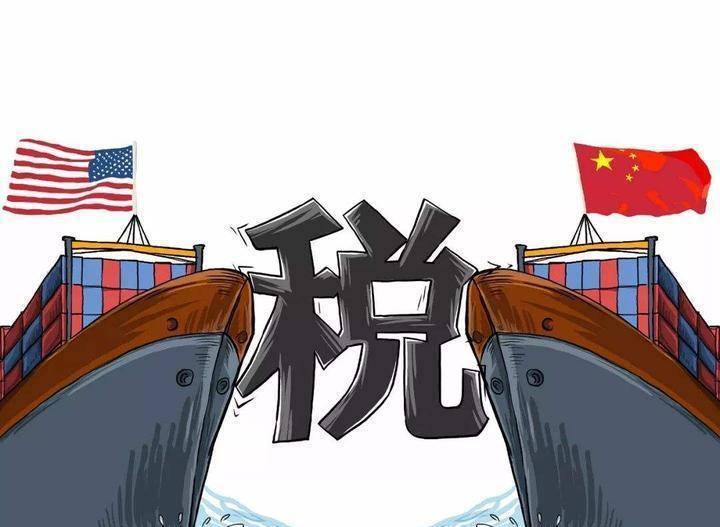
中美贸易战掀桌子了!今日凌晨的四大消息全面爆发!
Sou Hu Cai Jing· 2025-12-17 02:39
Group 1: Economic Impact of Tariffs - The global economy is experiencing significant downturns, with Switzerland reporting the largest economic contraction since the COVID-19 pandemic began in 2020, attributed to the volatility in foreign trade linked to new U.S. tariff policies [3] - Japan's economy also contracted in the third quarter, primarily due to reduced exports, while Mexico's economy began to shrink as a result of the unpredictable trade policies of the Trump administration [4] - The Canadian manufacturing sector has lost 36,500 jobs since the beginning of the year, marking the lowest labor force number since September 2021, largely due to the impact of U.S. tariff policies [4][5] Group 2: Specific Industry Challenges - Brazilian coffee exporters are facing unprecedented challenges due to a 50% tariff on coffee exports to the U.S., resulting in a more than 50% decrease in U.S. imports of Brazilian coffee from August to November compared to the previous year [6] - China's exports to the U.S. fell by nearly 29% in November, while imports from the U.S. dropped by 19%, reflecting the ongoing trade tensions and high tariffs [7][8] - U.S. farmers, particularly soybean producers, have seen a significant drop in income due to China's tariff responses, although recent data indicates a resurgence in Chinese purchases of U.S. agricultural products [9][10] Group 3: Federal Reserve Actions - The Federal Reserve lowered the federal funds rate target range by 25 basis points to between 3.5% and 3.75%, marking the third consecutive rate cut since September and the sixth since the current easing cycle began [12] - Fed Chairman Powell indicated that inflation rates have exceeded the Fed's target, largely due to increased tariffs, and suggested that the current rate cuts may be sufficient, although worsening employment data raises expectations for further cuts [12][13] Group 4: Policy Adjustments - The Trump administration is expected to reverse many of the previous Biden administration's policies, including new offshore oil and gas leasing plans and changes to fuel economy standards for vehicles [14] - The Chinese government is implementing measures to support technological innovation and industry upgrades, emphasizing the importance of domestic demand and investment to counter external economic pressures [16][17] Group 5: Market Reactions and Future Outlook - Morgan Stanley predicts that China's share of the global export market will increase from 15% to 16.5%, driven by advancements in manufacturing and technology sectors [19] - The U.S. manufacturing sector showed signs of improvement, with the ISM manufacturing PMI reported at 49.3, exceeding market expectations [19] - The ongoing trade negotiations between the U.S. and China have led to speculation about a significant agreement, although no formal confirmation has been made regarding the claimed "trillions of dollars" in purchases [19][20]

挤干增长“水分”,唯有以严以实
Di Yi Cai Jing Zi Xun· 2025-12-17 02:22
2025.12.17 本文字数:1384,阅读时长大约2分钟 作者 |一财评论员 在日前召开的中央经济工作会议上,习近平总书记强调:所有规划都要实事求是,追求实实在在、没有 水分的增长,推动高质量、可持续的发展;对于脱离实际急躁冒进、层层加码、乱铺摊子的,要严肃问 责。 应该看到,这些年驰而不息纠正形象工程、政绩工程,取得了很多成效,但尚未根治,有的地方还出现 了新变种。比如,有的地方开发区大而不当,有的地方展会论坛活动无序发展,还有"数字注水"、虚假 开工、"开票经济"等各种表现形式。 因此,追求实实在在、没有水分的增长是一项长期艰巨任务,尤其在高质量制定"十五五"规划及"十五 五"要取得良好开局的关键时期,更是如此。 过去唯GDP论英雄的理念造成了官出数字、数字出官的不良现象。有的地方在增长方面先设定指标,然 后一级压一级,压到最基层。如此而言,数字的真实性可想而知。 GDP早已不是对地方领导干部政绩考核的主要指标,当前考核更着重科学发展、高质量发展,但根深蒂 固的GDP情结仍然有着深刻影响,原因之一是这一指标更加直观、更加体现政绩。由此也就引发了"数 字注水"、虚假开工、"开票经济"等"变种"的产生。 ...

明年财政赤字将如何安排?丨落实会议部署 问答中国经济
证券时报· 2025-12-17 01:50
编者按: 日前召开的中央经济工作会议,明确了明年经济工作的总体要求和政策取向,部署了明年经济工 作"八个坚持"的重点任务,抓住关键、纲举目张。为深入学习贯彻会议精神,本报即日起推出"落实 会议部署 问答中国经济"系列述评,围绕发展目标设定、赤字规模安排、推动投资企稳等10个方面 热点问题展开讨论,敬请关注。 财政政策作为宏观调控的主要手段,通过预算、政府债券、税收等工具组合,发挥扩大总需求和定向调结构 的双重优势,实现经济质的有效提升和量的合理增长。在中央经济工作会议提出"保持必要的财政赤字、债务 总规模和支出总量"的总体要求后,市场对明年财政赤字率的设定高度关注。 财政赤字是衡量全年财政政策力度和财政风险水平的重要指标,直接关系到年内政府支出规模。目前,市场 机构与业内人士对财政赤字率的预期较为一致,预计明年赤字率不低于今年水平,即不低于4%。该赤字率水 平既能延续财政扩张态势,又避免了债务风险过快累积。 财政赤字率是社会各界观察宏观政策力度的风向标,从稳定市场预期角度看,"十五五"开局之年的财政赤字 率水平不宜低于上年。2025年,财政政策取向转为"更加积极",赤字率大幅提升1个百分点至4%,为近年最 高 ...

黑色建材日报-20251217
Wu Kuang Qi Huo· 2025-12-17 01:28
黑色建材日报 2025-12-17 黑色建材组 陈张滢 从业资格号:F03098415 交易咨询号:Z0020771 0755-23375161 chenzy@wkqh.cn 郎志杰 从业资格号:F3030112 交易咨询号:Z0023202 0755-23375125 langzj@wkqh.cn 万林新 从业资格号:F03133967 0755-23375162 wanlx@wkqh.cn 赵 航 从业资格号:F03133652 0755-23375155 zhao3@wkqh.cn 螺纹钢主力合约下午收盘价为 3081 元/吨, 较上一交易日涨 7 元/吨(0.227%)。当日注册仓单 57057 吨, 环比增加 15157 吨。主力合约持仓量为 161.5142 万手,环比减少 12524 手。现货市场方面, 螺纹钢天津 汇总价格为 3150 元/吨, 环比减少 0/吨; 上海汇总价格为 3280 元/吨, 环比增加 10 元/吨。 热轧板卷主 力合约收盘价为 3246 元/吨, 较上一交易日涨 13 元/吨(0.402%)。 当日注册仓单 103404 吨, 环比减少 0 吨。主力合约持仓量为 12 ...
解码中央经济工作会议丨持续聚焦重点领域 财政政策“更加积极”
Xin Hua Wang· 2025-12-17 01:21
Core Viewpoint - The recent Central Economic Work Conference emphasizes a more proactive fiscal policy for the upcoming year, focusing on quality and efficiency while maintaining necessary fiscal deficits and optimizing expenditure structures to support stable economic operation [1][2][8]. Fiscal Policy Direction - The fiscal policy will be more active, with a focus on key areas and critical links, including appropriate deficit arrangements, optimized use of special bonds, and further adjustments to tax policies [1][2]. - The emphasis on "quality and efficiency" indicates a shift towards the effectiveness of policies rather than just total expansion [2]. Expenditure Structure Optimization - The structure of fiscal expenditure has been continuously optimized, with nearly 40% of general public budget allocated to healthcare, education, elderly care, and housing security, indicating a growing investment in human capital [3]. - Future fiscal funding is expected to shift from focusing solely on investment to a balanced approach between investment and consumption, as well as between supply and demand [3]. Implementation of "Two New" and "Two Heavy" Policies - The implementation of "Two New" and "Two Heavy" policies has contributed to the resilience of the economy amid internal and external challenges, with significant sales growth in sectors supported by these policies [4]. - The Ministry of Finance aims to effectively utilize various government bond funds and support the implementation of consumption-boosting actions [4][5]. Local Fiscal Challenges - The conference highlighted the importance of addressing local fiscal difficulties and ensuring the basic "three guarantees" [7]. - Long-term solutions include deepening fiscal and tax system reforms to alleviate local fiscal pressures and enhance spending capabilities [7]. - The need to manage hidden debts and the risks associated with local government financing platforms was also emphasized [7]. Policy Implementation and Coordination - The Ministry of Finance will ensure that the more proactive fiscal policy is implemented effectively, maintaining policy continuity and aligning fiscal and monetary policies [8].
中央财办有关负责同志详解中央经济工作会议精神
Sou Hu Cai Jing· 2025-12-17 00:43
Core Viewpoint - The recent Central Economic Work Conference outlines the economic work for 2025 and 2026, emphasizing the need to maintain confidence and address challenges to ensure stable economic growth [1][2]. Group 1: Economic Performance and Goals - The major expected goals for economic and social development in 2025 are set to be achieved, with a projected GDP growth of around 5% [2]. - The "14th Five-Year Plan" is nearing completion, with significant achievements in overcoming challenges such as the pandemic [2]. - The conference acknowledges ongoing issues in economic development, including external environmental changes and domestic supply-demand imbalances [2]. Group 2: Key Principles for Economic Work - The conference introduces "Five Musts" for economic work: 1. Fully explore economic potential through innovation and investment [3]. 2. Combine policy support with reform to address intertwined economic issues [3]. 3. Balance deregulation with effective governance to enhance productivity [4]. 4. Integrate investments in physical and human capital for comprehensive development [4]. 5. Strengthen internal capabilities to face external challenges [5]. Group 3: Economic Policy Directions for 2026 - The focus for 2026 includes maintaining stable economic growth, ensuring employment and price stability, and promoting income growth alongside economic growth [6]. - A proactive fiscal policy will be implemented, maintaining necessary fiscal deficits and optimizing expenditure structures [6][7]. - A moderately loose monetary policy will be adopted to support stable economic growth and reasonable price recovery [7]. - Emphasis on policy consistency and coordination among various economic measures to enhance effectiveness [7]. Group 4: Key Tasks for Economic Development - The conference identifies eight key tasks for 2026, including: 1. Prioritizing domestic demand and building a strong domestic market [8]. 2. Accelerating innovation and fostering new growth drivers [8]. 3. Enhancing high-quality development through reform [8]. 4. Promoting open cooperation in various fields [8]. 5. Coordinating urban-rural integration and regional development [8]. 6. Leading green transformation through "dual carbon" initiatives [8]. 7. Focusing on improving people's livelihoods [8]. 8. Managing risks in key areas effectively [10]. Group 5: Employment and Risk Management - Employment remains a priority, with policies aimed at stabilizing job opportunities for key groups such as graduates and migrant workers [9]. - The conference stresses the importance of stabilizing the real estate market and managing local government debt risks [10].