
中央经济工作会议

Search documents
午评:沪指跌0.34%,煤炭、有色等板块走低,军工板块逆市拉升
Sou Hu Cai Jing· 2025-11-24 03:59
中信建投证券表示,当前市场处于"三期叠加":牛市中段整固期,景气验证关键期,业绩政策空窗期, 市场震荡轮动和资金年底止盈等特征也会进一步放大。近期海外环境出现较多扰动,美联储12月降息预 期反复,带动全球市场流动性预期波动;英伟达财报超预期,但股价出现巨震,投资者担忧AI开支可 持续性,蔓延影响A股情绪。长期而言,慢牛格局的主要因素不变;短期来看,策略层面以择机布局为 主,时点上等待12月中上旬的美联储议息会议和中央经济工作会议落地,其间若调整较充分也可加仓吸 筹,关注60日线与半年线支撑和市场缩量情况。 24日早盘,两市主要股指盘中震荡回落,创业板指盘中跌约1%失守2900点,场内约3200股飘红。 盘面上看,煤炭、燃气、有色、电力、保险等板块走低,军工、医药等板块逆市拉升,军贸概念、AI 应用概念等活跃。 截至午间收盘,沪指跌0.34%报3821.68点,深证成指跌0.59%,创业板指跌0.77%,沪深北三市合计成交 10326亿元。 ...
财信证券宏观策略周报(11.24-11.28):短期保持谨慎,静待市场企稳
Sou Hu Cai Jing· 2025-11-24 00:41
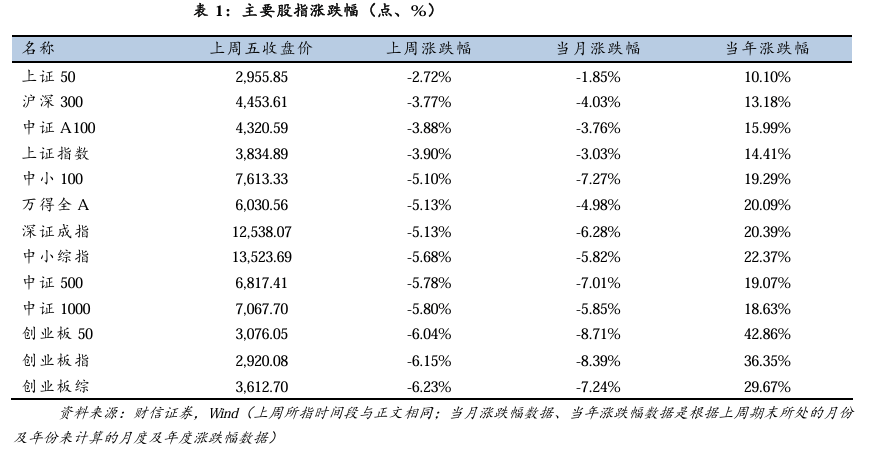
来源:市场资讯 (来源:财信证券研究) 大势研判。上周在海外市场调整影响下,万得全A指数阶段性向下调整,跌破震荡调整区间,短期仍需合理控制仓位,静待指数企 稳信号出现。一是从资金面来看,11月底之前机构倾向于守住全年收益,加仓意愿不强,但12月中旬开始,机构资金将逐步开始布 局2026年方向,存在"抢跑"的预期;二是中央经济工作会议通常在12月中旬召开,将为明年经济工作指明方向,预计在中央经济工 作会议前后,政策预期利好将支撑市场;三是从技术形态来看,2015年以来,上证指数曾屡次挑战3700点未果,本次有效突破3700 点以后,上证指数3700点附近将从"强压力位"转为"强支撑位",后续指数调整空间可能有限。我们对中长期市场走势仍然保有信 心,A股这一轮"牛市"并未结束,我们预计12月中旬前后,市场将迎来再次做多的机会窗口期。 投资建议。短期建议适当控制仓位水平,以防守方向为主,适当关注:(1)高股息的大盘蓝筹。例如银行、保险、公用事业、交通 运输等。(2)新消费方向。例如健康、文旅、体育、美容护理、IP经济、宠物经济、文化娱乐等。(3)"反内卷"方向。例如钢 铁、煤炭、建材等。(4)AI应用方向。例如传媒 ...

十大券商一周策略:需要AI给答案!市场静待转机,慢牛预期不变
Zheng Quan Shi Bao· 2025-11-23 22:55
Group 1 - The volatility of global risk assets is primarily due to liquidity issues and an over-reliance on AI narratives, leading to necessary valuation corrections when industrial development lags behind market expectations [1] - The recent adjustments in the US non-farm employment data and the downshift in interest rate cut expectations from the Federal Reserve have amplified concerns regarding the sustainability of AI infrastructure in North America [1] - The current market environment may lead to a "sharp drop and slow rise" pattern in A-shares and Hong Kong stocks, similar to the US market, as stable return-oriented funds continue to enter the market [1] Group 2 - The Chinese stock market is currently experiencing weakness due to year-end profit-taking and reduced positions by investors, compounded by a lack of internal policy support [2] - Despite the cautious consensus, there is a strong belief in the positive outlook for the Chinese market, with expectations for stabilization and upward momentum in the near future [2] - Key investment themes include AI applications, robotics, domestic consumption, and infrastructure development in Xinjiang [2] Group 3 - The market is in a "three-phase overlap" characterized by a mid-bull market consolidation, critical economic verification, and a policy vacuum, leading to increased volatility [3] - The recent fluctuations in the overseas environment, including the Federal Reserve's interest rate expectations, have affected market liquidity and investor sentiment [3] - Long-term bullish factors remain intact, with a focus on strategic positioning ahead of key meetings in December [3] Group 4 - The current market adjustment has created a preliminary sense of space, with expectations for improved overseas liquidity and reduced domestic funding pressure [4] - Emphasis on safety margins in high volatility environments, focusing on sectors such as seasoning products, leisure foods, and communication services [4] - Recommendations include increasing positions in traditional cyclical sectors and potential growth areas like domestic computing power and innovative pharmaceuticals [4] Group 5 - The recent adjustment in A-shares is attributed to weak domestic economic data, a strong dollar, and year-end performance pressures [6] - The market is expected to remain in a state of fluctuation until mid-December, when significant policy decisions are anticipated to provide direction [6] - The outlook for the first quarter of the following year suggests a potential return to an upward cycle, particularly for large-cap blue-chip and financial cyclical stocks [6] Group 6 - The recent market pullback is influenced by global financial vulnerabilities and concerns over the sustainability of AI capital expenditures [7] - The current state of the AI industry is compared to a critical juncture in the internet sector in 1997, highlighting the uncertainty of future applications [7] - Recommendations focus on sectors benefiting from physical asset consumption, including upstream resources and cyclical industries [7] Group 7 - The recent decline in the A-share index is viewed as a "clear sky turbulence," with expectations for limited future volatility [8] - The current bull market logic based on liquidity is approaching a turning point, necessitating a shift towards fundamental-driven growth [8] - The anticipated transition from a liquidity-driven bull market to a fundamental-driven one will require monitoring political and economic cycles [8] Group 8 - The recent global equity market weakness has led to a rotation in market dynamics, with a focus on three main investment directions: AI technology, economic recovery, and undervalued dividends [9] - The performance of low-valued dividends is closely tied to the progress of the AI industry, which is dependent on breakthroughs in both application and consumption [9] Group 9 - The recent adjustments in the A-share market are expected to stabilize as institutional investors begin to position for 2026 following the central economic work conference in mid-December [10] - The technical analysis suggests that the Shanghai Composite Index may find strong support around the 3700-point level, limiting further downside [10] - The long-term outlook remains positive, with expectations for a renewed buying opportunity in the market [10]
【十大券商一周策略】需要AI给答案!市场静待转机,慢牛预期不变
Zheng Quan Shi Bao Wang· 2025-11-23 15:36
Group 1 - The core viewpoint is that the volatility of global risk assets is primarily due to liquidity issues and an over-reliance on AI narratives, leading to necessary valuation corrections when industrial development lags behind market expectations [1] - The recent adjustments in the A-share and Hong Kong stock markets may present opportunities for investors to reallocate towards equities, particularly in traditional manufacturing and resource sectors [1][5] - The market is currently experiencing a "three-phase overlap," characterized by a consolidation phase in the middle of a bull market, a critical period for verifying economic conditions, and a policy vacuum affecting performance [3] Group 2 - The Chinese stock market is expected to stabilize and potentially rally in the coming months, with a focus on AI applications, robotics, and domestic consumption as key themes [2] - The recent adjustments in the A-share market are attributed to weak domestic economic data, a strong dollar, and year-end profit-taking, with expectations for a recovery following important policy meetings in December [5][10] - The current market environment is marked by high volatility, necessitating a focus on safety margins in investment strategies, particularly in sectors like food and beverage, textiles, and cyclical industries [4][11]






中信建投:当前市场处于“三期叠加”,长期来看慢牛格局主要因素不变
Ge Long Hui A P P· 2025-11-23 12:31
Core Viewpoint - The current market is in a "three-phase overlap," characterized by a mid-bull market consolidation period, a critical phase for verifying economic conditions, and a performance policy gap, leading to increased market volatility and year-end profit-taking by investors [1] Market Environment - Recent overseas disturbances have affected the market, with fluctuating expectations for a Federal Reserve rate cut in December impacting global liquidity [1] - Nvidia's earnings report exceeded expectations but caused significant stock price volatility, raising concerns about the sustainability of AI spending, which has affected investor sentiment in the A-share market [1] Long-term Outlook - The long-term slow bull market structure remains unchanged, suggesting a focus on strategic positioning in the short term while awaiting the outcomes of the Federal Reserve's monetary policy meeting and the Central Economic Work Conference in mid-December [1] Investment Strategy - During the interim period, if sufficient market adjustments occur, there may be opportunities for increased positions and accumulation [1] - Key support levels to monitor include the 60-day moving average and the half-year moving average, along with market volume conditions [1] Sector Focus - Industries to pay attention to include banking, oil and petrochemicals, steel, agriculture, animal husbandry, lithium batteries, and new materials [1]
中信建投:“三期叠加”下,市场静待转机
Zheng Quan Shi Bao Wang· 2025-11-23 12:20
Core Viewpoint - The current market is in a "three-phase overlap" characterized by a mid-bull market consolidation period, a critical phase for verifying economic conditions, and a performance policy gap, leading to increased market volatility and year-end profit-taking by investors [1] Market Environment - Recent overseas disturbances have impacted the market, with fluctuating expectations for a Federal Reserve rate cut in December affecting global liquidity [1] - Nvidia's earnings report exceeded expectations, but its stock experienced significant volatility due to investor concerns about the sustainability of AI spending, which has also affected sentiment in the A-share market [1] Long-term and Short-term Strategies - Long-term factors supporting a slow bull market remain unchanged; however, short-term strategies should focus on opportunistic positioning [1] - Investors are advised to wait for the Federal Reserve's monetary policy meeting and the Central Economic Work Conference in mid-December before making significant moves [1] - If market adjustments are sufficient, there may be opportunities to increase positions, with attention to the support levels of the 60-day and half-year moving averages and market volume conditions [1] Industry Focus - Key industries to watch include banking, oil and petrochemicals, steel, agriculture, forestry, animal husbandry, lithium batteries, and new materials [1]
2025年12月宏观及大类资产月报:中美达成阶段性协议,经济数据波动加大-20251123
Chengtong Securities· 2025-11-23 06:14
Group 1: Macro and Asset Performance - In November, the Shanghai Composite Index fell by 3.0%, the CSI 300 dropped by 4.0%, the ChiNext Index decreased by 8.4%, and the STAR 50 Index declined by 9.2% [1][11] - The bond market experienced a slight decline, with an overall drop of 0.1%, and government bond yields increased, with 1-year, 5-year, and 10-year yields rising by 1.8bp, 2.5bp, and 2.1bp respectively [1][21] - The Hang Seng Index fell by 2.7%, and major US stock indices also saw declines, with the Dow Jones Industrial Average, Nasdaq, and S&P 500 dropping by 2.8%, 6.1%, and 3.5% respectively [1][21] Group 2: A-Share Market Outlook - The central economic work conference in December is crucial for setting the tone for 2026 economic policies, which could lead to an independent market trend if macro and industrial policies exceed expectations [1][22] - The market is currently in a phase of consolidation without a clear main line, with recommendations to focus on the aviation sector, new consumption, and undervalued banking stocks [2][23] - The aviation sector is expected to benefit from supply-side constraints and policy guidance, leading to improved profitability alongside low oil prices [2][23] Group 3: Bond Market Strategy - The overall outlook for government bond yields suggests a continued upward trend, influenced by domestic fundamentals and policy fluctuations [3][24] - The upcoming central economic work conference is anticipated to have a significant impact on interest rates, as yields typically price in next year's policies [3][26] - Despite a weak economic backdrop, the 10-year government bond yield is expected to maintain a strong position, rising from 1.79% to around 1.82% [3][29]
熊园:信贷社融低于预期,会降息吗?
Sou Hu Cai Jing· 2025-11-14 10:44
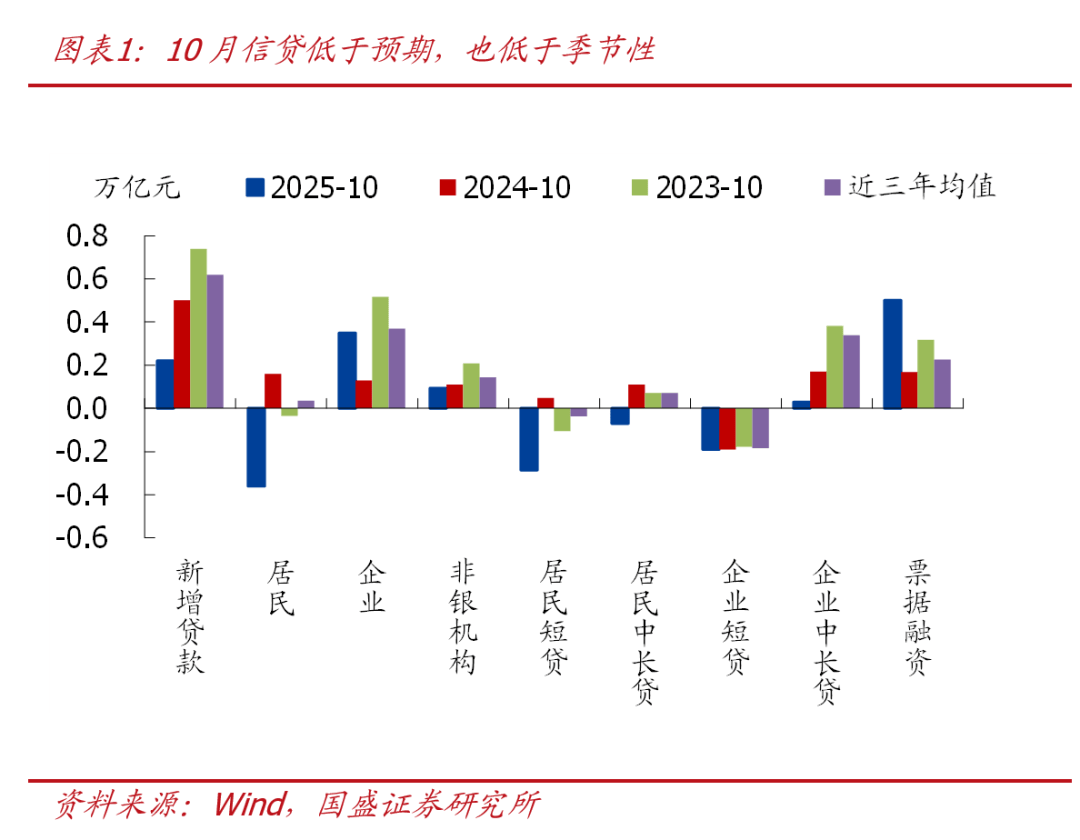
Core Viewpoint - In October, both new credit and social financing fell short of expectations and seasonal norms, indicating persistent demand issues in the economy [1][2][11] Group 1: New Credit and Social Financing - New RMB loans in October amounted to 220 billion, a decrease of 280 billion year-on-year, significantly below the seasonal average of 617.9 billion and market expectations of 460 billion [3] - New social financing totaled 815 billion, down 597 billion year-on-year, also below the seasonal average of 1.39 trillion and market expectations of 1.53 trillion [11] - The growth rate of outstanding social financing slowed to 8.5%, down 0.2 percentage points from the previous month [11] Group 2: Structural Analysis - The household sector has reverted to "de-leveraging," with both short-term and medium-to-long-term loans decreasing year-on-year, indicating weakness in consumption and real estate [6][9] - Corporate short-term loans remained stable year-on-year, but there was a significant increase in bill financing, while medium-to-long-term loans decreased, suggesting weak corporate investment [9][14] - Government bonds have weakened their support for social financing, with new government bonds issued at 489.3 billion, down 560.2 billion year-on-year [14] Group 3: Monetary Indicators - M1 growth year-on-year fell to 6.2%, a decrease of 1 percentage point from the previous month, influenced by a high base and a shift of household deposits to non-bank deposits [17] - M2 growth year-on-year slowed to 8.2%, down 0.2 percentage points, primarily due to a slowdown in credit expansion [17] - Total deposits increased by 610 billion in October, with non-bank deposits rising by 770 billion, reflecting a shift in household savings behavior [17]
食品饮料周报(25年第40周):酒类渠道包袱加速去化,大众品品类表现分化-20251105
Guoxin Securities· 2025-11-05 11:16
Investment Rating - The report maintains an "Outperform the Market" rating for the food and beverage sector [4][5][11]. Core Views - The food and beverage sector is currently characterized by "low base, low holdings, and low expectations," indicating potential for stock price increases with any changes in supply and demand dynamics [3][11]. - The report highlights a divergence in performance across categories, with beverages outperforming food and alcoholic beverages [2][11]. - The report suggests that the liquor segment is entering a left-side layout phase, with quality companies expected to gain greater growth opportunities [2][11]. Summary by Relevant Sections Liquor - The liquor sector is experiencing an expanded decline in performance, with Q3 revenue down 18.4% year-on-year and net profit down 22.2% [2][11]. - Recommended companies include Luzhou Laojiao, Shanxi Fenjiu, and Guizhou Moutai, which are expected to benefit from national expansion and pricing power [2][11]. - The report notes that the current inventory clearance pace is similar to the 2013-2014 period, suggesting a potential recovery in the future [11]. Beer - The beer industry is in a healthy inventory position, awaiting demand recovery, with recommendations for Yanjing Beer and China Resources Beer [12][11]. - The report anticipates that the relaxation of consumption regulations will positively impact beer sales [12]. Dairy Products - The dairy sector is seeing a steady recovery in demand, with a recommendation for Yili as a leading company with valuation safety margins [14][11]. - The report indicates that the supply side is gradually clearing, which may lead to improved supply-demand dynamics by 2025 [14]. Snacks - The report emphasizes the importance of strong alpha stocks in the snack sector, particularly focusing on the growth potential of konjac snacks [12][11]. - Leading companies in this category, such as Weidong and Yanjin Pouch, are highlighted for their competitive advantages and strong growth prospects [12]. Food Supply Chain - The food supply chain sector is showing signs of stabilization, with recommendations for leading companies like Yihai International and Haitian Flavoring [13][11]. - The report notes that the overall profitability of the industry is expected to gradually stabilize as companies optimize their expense management [13]. Beverages - The beverage sector continues to show strong performance, with recommendations for Nongfu Spring and Dongpeng Beverage, which are expected to benefit from accelerated operations and national expansion [14][11]. - The report highlights the ongoing growth in the no-sugar tea and energy drink segments, indicating a favorable outlook for leading companies [14].



"Taco交易"再现,机构瞄准投资机会,APEC峰会成关键节点
Feng Huang Wang· 2025-10-25 12:03
Core Viewpoint - The recent escalation of trade tensions between the US and China has led to the re-emergence of the "Taco trade" strategy, characterized by Trump's pattern of pressuring China with tariffs followed by signals of easing tensions, creating potential investment opportunities [1][4][11] Group 1: Trade Tensions and Market Reactions - The current trade friction is perceived to have a lesser impact compared to April, with the market expected to show greater resilience [2][3] - Trump's announcement of a 100% tariff effective after the APEC summit on November 1 indicates that the summit will be a critical point for negotiations [2][3] - Historical patterns suggest that the time between Trump's threats and subsequent retreats is short, indicating limited windows for market declines [2][3] Group 2: Taco Trade Logic - The "Taco trade" logic remains valid despite increasing tensions, with the potential for negotiations at the upcoming APEC summit [4][6][11] - The market has gained experience and adaptability since the trade war began in 2018, leading to reduced volatility compared to previous instances [3][6] - The current market environment, characterized by "loose monetary and fiscal" policies, differs from April, with investors having more experience in handling such situations [6][7] Group 3: Investment Opportunities - The "Taco trade" has historically provided good buying opportunities following market declines triggered by tariff threats [6][8] - The technology sector, particularly in AI and semiconductor industries, is recommended for investment, especially if short-term market corrections occur [6][7] - The Hong Kong stock market is expected to face short-term pressure but may present buying opportunities due to its limited exposure to US exports [7][8] Group 4: Future Outlook - The upcoming APEC summit is seen as a potential venue for US-China negotiations, with expectations that the intensity and duration of the current trade conflict will be limited [5][9] - The market's response to trade tensions is becoming more rational, with diminishing marginal effects from tariff impacts as both sides continue to engage in economic cooperation [11]