
中美贸易谈判

Search documents
2026年中国宏观展望:从叙事拐点到经济再平衡
Orient Securities· 2025-12-18 01:50
Group 1: Global Narrative Shifts - The "narrative inflection points" driving global capital reallocation include changes in overseas economies, AI advancements reshaping US-China dynamics, and a decrease in China's economic tail risks[4]. - The narrative power is expected to persist into 2026, with global monetary policies remaining accommodative and fiscal expansion opportunities greater in non-US countries than in the US[4]. - The "narrative inflection points" encompass three layers: the end of the "American exceptionalism," Europe's awakening, and the decline of tail risks in the Chinese economy[4]. Group 2: Economic Rebalancing in China - The main theme for China's macroeconomic strategy in 2026 is transitioning from capital reallocation to economic rebalancing, as outlined in the "14th Five-Year Plan" draft[4]. - Key shifts in ideology during the "14th Five-Year" period include prioritizing demand-side policies over supply-side policies, emphasizing consumption over investment, and focusing on "investment in people" alongside "investment in goods"[4]. - Fiscal policy is expected to enter a "rigid expansion" phase, maintaining a budget deficit ratio of 4%, with slight increases in special government bonds and local government bonds[4]. Group 3: Economic Growth Projections - The GDP target for 2026 is projected to remain around 5%, with an expected actual completion of 4.9%, indicating a flat "U-shaped" growth trajectory[4]. - Consumer subsidy policies are anticipated to increase by 100-200 billion yuan on top of the 300 billion yuan allocated in 2025 to support service consumption[4]. - The Consumer Price Index (CPI) is expected to rise moderately to 0.4%, while the Producer Price Index (PPI) is projected to decline by 0.9%[4]. Group 4: Industry Opportunities and Risks - From a macro perspective, technology remains a primary investment focus, but consumer investment value is also expected to emerge[5]. - Potential risks for 2026 include the ongoing US-China relationship dynamics, uncertainties in the European economy, and pressures in the domestic real estate market[5].
金灿荣:从“美攻我守”到“互有攻守”,统一的可能性在增大
Guan Cha Zhe Wang· 2025-11-24 05:47
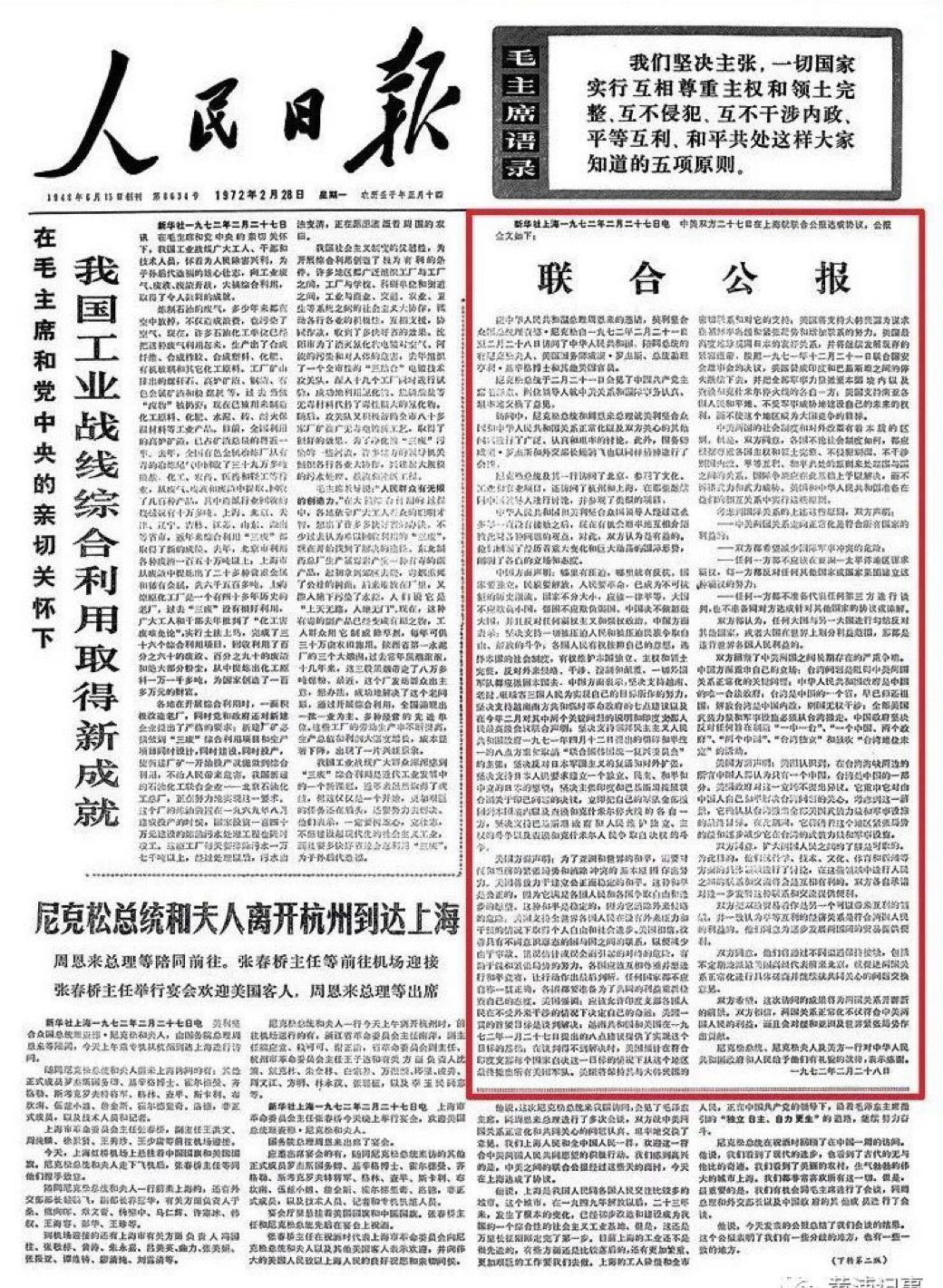
Group 1 - The core viewpoint of the article is that the relationship between China and the United States has entered a phase of structural tension, with both parties viewing each other as the "only" competitor, leading to a comprehensive competitive relationship [1][2][5] - The historical context of China-U.S. relations is divided into several stages, with the first stage being absolute hostility from 1949 to 1972, followed by a period of strategic cooperation against the Soviet Union after the Shanghai Communiqué [2][4] - The Trump administration marked a turning point in U.S.-China relations, officially designating China as the "only strategic competitor" in its national security strategy, leading to a phase of comprehensive strategic competition [5][6] Group 2 - The article discusses the mixed warfare strategy employed by the U.S. against China, which includes trade wars, technology restrictions, and financial pressures, indicating a shift from a defensive to a more aggressive stance by China [6][10] - The recent trade war has seen China adopting a more assertive response, with significant retaliatory tariffs that demonstrate a shift in strategy from previous years [8][10] - The U.S. has faced supply shortages as a result of the trade conflict, leading to a reconsideration of its approach, which highlights the interdependence of the two economies [10][11] Group 3 - The article emphasizes the importance of domestic stability for both China and the U.S., noting that internal challenges such as economic downturns and social issues could impact their international standing [15][16] - China's foreign policy is evolving, moving away from "keeping a low profile" to a more assertive stance, particularly in military capabilities and regional influence [19][20] - The article outlines China's strategic focus on building a unified domestic market and enhancing its international relationships, particularly through initiatives like the Belt and Road [32][34]

期货市场交易指引:2025年11月12日-20251112
Chang Jiang Qi Huo· 2025-11-12 06:42
Report Industry Investment Ratings - Index futures: Medium to long - term bullish, buy on dips [1][5][6] - Treasury bonds: Range - bound [1][5][6] - Coking coal: Range trading [1] - Rebar: Range trading [1] - Glass: Sell call options [1][9][10] - Copper: Exit long positions at high levels or range - bound short - term trading [1][11] - Aluminum: Suggest to buy on dips [1] - Nickel: Suggest to wait and see or short on rallies [1][17] - Tin: Range trading [1][18][19] - Gold: Range trading [1][19][20] - Silver: Range trading [1][19] - PVC: Range - bound with a weak bias, focus on 4700 resistance for 01 contract [22][23] - Caustic soda: Range - bound with a weak bias, focus on 2400 resistance for 01 contract [24][25] - Soda ash: Bearish strategy for 01 contract [1][32][34] - Styrene: Range - bound with a weak bias, focus on 6500 resistance [25][26] - Rubber: Range - bound, focus on 15000 support [27][28] - Urea: Range - bound [29][30] - Methanol: Range - bound [31] - Polyolefins: PE to range - bound, focus on 6800 support; PP to trade weakly, focus on 6500 support [32][33] - Cotton and cotton yarn: Range - bound [37] - PTA: Low - level range - bound [37][38] - Apples: Range - bound with a strong bias [38] - Red dates: Range - bound with a downward trend [38] - Live pigs: Rebound under pressure [1][40][41] - Eggs: Limited upside [42][43] - Corn: Bottom - building in a range [44][46] - Soybean meal: Range - bound [47] - Oils and fats: Bottom - building and rebounding [48][53] Core Views - The global risk appetite and domestic favorable policies fail to boost the domestic market sentiment, and the index futures may trade in a range; the bond market lacks a clear core logic, and treasury bonds may also trade in a range [6] - The coal market shows a pattern of tight supply and rising prices, and the prices of coking coal and rebar may be range - bound; the supply of glass is high and demand is weak, and it is recommended to sell call options [8][9][10] - Copper prices are affected by macro and fundamental factors and are expected to trade at high levels in a range; aluminum prices are affected by supply, demand and inventory, and it is recommended to strengthen observation [11][12] - Nickel supply is expected to be abundant in the medium - long term, and it is recommended to wait and see or short on rallies; tin supply is expected to improve, and it is recommended to trade in a range [17][18][19] - Gold and silver prices are affected by the US economic situation and Fed policies, and are expected to trade in a range [19][20] - PVC, caustic soda, styrene, etc. are affected by factors such as cost, supply, demand and macro policies, and are expected to trade weakly in a range; rubber is expected to trade in a range [23][25][28] - Urea and methanol are affected by supply, demand and cost, and are expected to trade in a range; polyolefins are affected by cost, supply and demand, and are expected to trade weakly [29][31][33] - Cotton and cotton yarn are expected to trade in a range; PTA is expected to trade at a low level in a range; apples are expected to trade strongly in a range; red dates are expected to trade downward in a range [37][38] - Live pig prices are affected by supply and demand in different periods, and it is recommended to hold short positions and pay attention to arbitrage; egg prices are affected by supply and demand, and it is recommended to short on rallies for the 12 - contract [40][42][43] - Corn prices are affected by new grain listing and demand, and it is recommended to hedge on rallies and pay attention to arbitrage; soybean meal prices are affected by US soybean supply and demand, and are expected to trade in a range [44][46][47] - Oils and fats prices are affected by palm oil, soybean oil and rapeseed oil supply and demand, and are expected to bottom - build and rebound, and it is recommended to trade in a range and pay attention to arbitrage [48][53][54] Summary by Categories Macro Finance - Index futures: Affected by factors such as the decline in US private - sector employment and domestic market sentiment, it is expected to trade in a range [6] - Treasury bonds: Due to the unclear core logic of the bond market and the need to focus on the entry of allocation funds and the actions of the central bank, it is expected to trade in a range [6] Black Building Materials - Coking coal: The coal market has tight supply and rising prices, and it is expected to trade in a range [8] - Rebar: With narrow - range price fluctuations and weakening supply - demand margins, it is expected to trade in a range [8] - Glass: High supply, weak demand, and low - season downstream replenishment, it is recommended to sell call options [9][10] Non - ferrous Metals - Copper: Affected by macro and fundamental factors, it is expected to trade at high levels in a range [11] - Aluminum: Affected by supply, demand and inventory, it is recommended to strengthen observation [12] - Nickel: Medium - long - term supply is expected to be abundant, it is recommended to wait and see or short on rallies [17] - Tin: Supply is expected to improve, it is recommended to trade in a range [18][19] - Gold and Silver: Affected by the US economic situation and Fed policies, they are expected to trade in a range [19][20] Energy and Chemicals - PVC: Affected by factors such as cost, supply, demand and macro policies, it is expected to trade weakly in a range [23] - Caustic soda: Affected by alumina production and demand, it is expected to trade weakly in a range [25] - Soda ash: Supply is in excess, it is recommended to adopt a bearish strategy for the 01 contract [35][36] - Styrene: Affected by cost and supply - demand, it is expected to trade weakly in a range [26] - Rubber: Affected by supply and demand and inventory, it is expected to trade in a range [28] - Urea: Affected by supply, demand and cost, it is expected to trade in a range [29][30] - Methanol: Affected by supply, demand and cost, it is expected to trade in a range [31] - Polyolefins: Affected by cost, supply and demand, PE is expected to trade in a range, and PP is expected to trade weakly [32][33] Cotton Textile Industry Chain - Cotton and cotton yarn: Affected by global supply - demand and trade negotiations, it is expected to trade in a range [37] - PTA: Affected by oil prices and supply - demand, it is expected to trade at a low level in a range [37][38] - Apples: Affected by production and sales, it is expected to trade strongly in a range [38] - Red dates: Affected by supply and demand, it is expected to trade downward in a range [38] Agricultural and Livestock - Live pigs: Affected by supply and demand in different periods, it is recommended to hold short positions and pay attention to arbitrage [40][41] - Eggs: Affected by supply and demand, it is recommended to short on rallies for the 12 - contract [42][43] - Corn: Affected by new grain listing and demand, it is recommended to hedge on rallies and pay attention to arbitrage [44][46] - Soybean meal: Affected by US soybean supply and demand, it is expected to trade in a range [47] - Oils and fats: Affected by palm oil, soybean oil and rapeseed oil supply and demand, it is expected to bottom - build and rebound, and it is recommended to trade in a range and pay attention to arbitrage [48][53][54]
铜的思考:本轮上涨结束了吗?
对冲研投· 2025-11-05 11:25
Core Viewpoint - The article analyzes the long-term upward trend of copper prices driven by three main factors: the commodity currency logic, structural supply shortages, and new demand dynamics, while also discussing the recent price pullback and future marginal driving conditions [3][4][5]. Group 1: Reasons for Copper Price Surge - Commodity currency logic: The global monetary system's credit challenges and major central banks' large-scale easing have led to strong inflation expectations, making copper's "commodity currency" attribute a dominant price driver over its "industrial commodity" attribute [4][10]. - Structural supply shortages: Factors such as "policy-induced stockpiling," "mine production cuts," and "catalytic accidents" have created significant supply pressures, making it easy for demand increases to lead to substantial price hikes [4][28]. - New demand dynamics: The current copper price increase is driven not only by supply tightening but also by significant demand growth from AI computing power, global energy infrastructure reconstruction, and emerging technology sectors, reshaping the long-term supply-demand landscape for copper [4][29]. Group 2: Reasons for Recent Price Pullback - The relative tightening of global dollar liquidity is the main tail risk affecting copper prices, with the U.S. Treasury and the Federal Reserve withdrawing dollar funds from risk assets since October, leading to rising U.S. Treasury yields and a stronger dollar index [5][37]. Group 3: Future Marginal Driving Conditions - The medium to long-term supply-demand gap for copper is predictable, with the largest marginal variables coming from macroeconomic factors that will influence copper prices from the demand side [6][34]. - The continuation of the commodity currency logic is crucial, as the market's perception of physical asset attractiveness remains strong amid expectations of global liquidity easing [34]. - The market's expectations regarding interest rate cuts and the cessation of balance sheet reduction are significant, as they can define recovery or recession scenarios [36][37]. - The gradual reduction of risks in U.S.-China relations may also influence copper prices positively, as recent negotiations have led to a decrease in demand risk [40].

X @外汇交易员
外汇交易员· 2025-10-31 00:59
美国财长贝森特表示,中国已同意在截至1月份的本种植季购买1200万吨美国大豆(低于上个种植季的2250万吨),称中国还承诺在未来三年每年购买2500万吨大豆。贝森特还说,东南亚其他国家已同意再购买1900万吨美国大豆,不过并未具体说明购买的时间框架或涉及的国家。Trivium China研究认为,这项协议实际上意味着美国对中国的大豆出口回到了过去的常态。外汇交易员 (@myfxtrader):特朗普:我与中国国家主席习近平举行了一次非常成功的会晤。我们两国之间有着深厚的相互尊重基础,而此次会晤无疑将进一步加深这种尊重。我们在许多方面达成了共识,其他一些至关重要的问题也即将得到解决。习近平主席授权中国开始大量采购大豆、高粱和其他农产品,我对此深感荣幸。我们的农民一定会非 https://t.co/gK5f3hedBQ ...
In China Truce on Tariffs and Rare Earths, National Security Controls Are Bargaining Chip
Nytimes· 2025-10-30 21:07
Group 1 - Analysts suggest that Beijing achieved a significant victory in trade negotiations by persuading the U.S. to retract a national security measure that was not previously part of the discussions [1]

策略日报:美联储打击降息预期-20251030
Tai Ping Yang Zheng Quan· 2025-10-30 14:49
Group 1: Macro Economic Insights - The Federal Reserve's recent actions have led to a stronger dollar and adjustments in risk assets, with expectations of continued strength in the dollar and U.S. Treasury yields [3][14]. - The market has overestimated the likelihood of interest rate cuts, with the Fed's stance indicating limited future easing as it approaches neutral interest rates [5][25]. - The anticipated decline in the 30-year Treasury bond is projected to continue, targeting the low point from September 30, 2024 [14][16]. Group 2: A-Share Market Analysis - The A-share market has seen a significant drop, with the Shanghai Composite Index falling below 4000 points, influenced by the Fed's stance and the conclusion of U.S.-China trade negotiations [4][18]. - Caution is advised for investors, with suggested stop-loss levels set at 3926 for the Shanghai Composite Index, as the dollar's strength may pressure bullish positions [4][22]. - The technology sector has shown high absorption rates, but investors are advised against chasing high-volatility stocks at elevated levels, favoring sectors like metals, coal, and renewable energy for potential gains [4][18]. Group 3: U.S. Stock Market Dynamics - The U.S. stock market is expected to experience a divergence in performance, with strong earnings driving individual stock performance amid overall market volatility [5][25]. - The market's reaction to the Fed's comments has led to a recalibration of expectations regarding December's interest rate decisions, with a significant portion of the market pricing in potential rate hikes [5][26]. - Earnings expectations for the third quarter are low, suggesting that any positive surprises could bolster stock performance [30]. Group 4: Foreign Exchange Market Trends - The onshore RMB has appreciated against the dollar, reflecting the Fed's hawkish stance and the resolution of U.S.-China trade discussions [29]. - The dollar is expected to maintain its strength, with projections indicating a continued upward trend against other currencies, including the euro [29][31]. - The RMB is anticipated to experience wide fluctuations, but it is expected to outperform many other currencies due to supportive domestic policies [29]. Group 5: Commodity Market Outlook - The commodity market has seen a decline, with the Wenhua Commodity Index down by 0.66%, influenced by the Fed's actions and a strengthening dollar [32]. - Overall commodity prices are expected to experience volatility, with specific opportunities identified in copper and oil trading strategies [32][34].
安本投资:美联储未承诺12月降息 市场关注焦点转向中美贸易谈判
Zhi Tong Cai Jing· 2025-10-30 03:09
Group 1 - The Federal Reserve announced a 0.25% interest rate cut, marking the second reduction this year, bringing the federal funds rate target range to 3.75% to 4% [1] - The Fed's decision reflects its independence from political pressures, focusing on economic conditions rather than political factors [1] - The ongoing government shutdown is limiting the Fed's access to economic data, leading to uncertainty regarding future rate cuts [1] Group 2 - The Fed's quantitative tightening is set to end on December 1, 2025, with reinvestment of mortgage-backed securities (MBS) shifting to government bonds, disappointing market expectations for an earlier implementation [2] - Concerns about layoffs and hiring challenges are heightened due to the government shutdown and recent corporate earnings reports, indicating a volatile labor market [2] - The lack of clear economic data and the Fed's uncertainty about future rate cuts suggest that short-term interest rates will remain high, which could negatively impact small-cap companies that typically hold a higher proportion of floating-rate debt [2] Group 3 - The upcoming US-China trade negotiations are expected to influence market sentiment, with discussions on key issues such as chip export controls, rare earth supply, tariff structures, and the TikTok deal [1] - Progress in these negotiations could boost the US stock market and the overall Chinese market, particularly the technology sector [1]