
信息

Search documents
周观点:短期泛能源防守,长期中国资产进攻-20260308
Huafu Securities· 2026-03-08 10:47
Group 1 - The report indicates that the U.S. is currently experiencing a phase of loose monetary policy but tight credit conditions, with a strong dollar being a method for short-term resolution [2][3] - Geopolitical conflicts are expected to drive up oil prices in the medium term, benefiting the U.S. with strong dollar and capital inflows, although the weakening military strength of the U.S. may harm dollar credibility [3][10] - In the short to medium term, the report suggests allocating investments towards broad energy dividends and U.S. capital goods inflation, while recommending an increase in insurance and leading Chinese heavy asset stocks once the dollar begins to depreciate [3][10] Group 2 - The report highlights a significant downturn in the U.S. employment market, with February's non-farm payrolls showing a decrease of 92,000 jobs, contrasting sharply with market expectations of an increase of approximately 55,000 jobs [8][12] - The report notes that job losses are widespread across various sectors, including education, healthcare, and construction, indicating a broader economic slowdown [9][12] - The report emphasizes that the weakening non-farm employment data has raised expectations for interest rate cuts, while the U.S. maintains a loose monetary policy despite a contraction in commercial credit [10]
“滞胀”风险≠美联储难降息——2月非农数据点评
一瑜中的· 2026-03-08 08:55
Core Viewpoint - The February non-farm employment data showed a significant decline, with a loss of 92,000 jobs, far below the expected gain of 55,000, indicating potential weaknesses in the labor market and raising concerns about the economic outlook [2][20]. Group 1: Non-Farm Employment Data Summary - Non-farm employment decreased by 92,000, with private non-farm employment down by 86,000, and the previous two months' data revised down by a total of 69,000 [2][20]. - Employment contraction was observed across various sectors, notably in education and healthcare services (-34,000), leisure and hospitality (-27,000), construction (-11,000), manufacturing (-11,000), and transportation (-11,300) [22][20]. - The employment diffusion index fell from 55.6% to 50.6%, indicating a broad decline in job growth across sectors [20]. Group 2: Unemployment Rate and Labor Participation - The unemployment rate slightly increased to 4.4%, above the expected 4.3%, while the labor participation rate dropped from 62.5% to 62.0% [25][20]. - The household survey indicated a decrease in total population by 216,000, with a labor force reduction of 1.399 million and a drop in employment by 1.608 million [25][20]. - The decline in labor participation was primarily due to adjustments in population estimates, with the adjusted participation rate around 62.4% [25][20]. Group 3: Wage Growth and Market Reactions - Hourly wage growth was slightly above expectations at 0.4% month-on-month, with a year-on-year increase of 3.8% [31][20]. - Following the non-farm report, market expectations for interest rate cuts increased, with the probability of a rate cut in July rising from 64% to 87% [33][20]. - The stock market reacted negatively, with major indices declining, while gold prices increased by 2.02% [33][20].


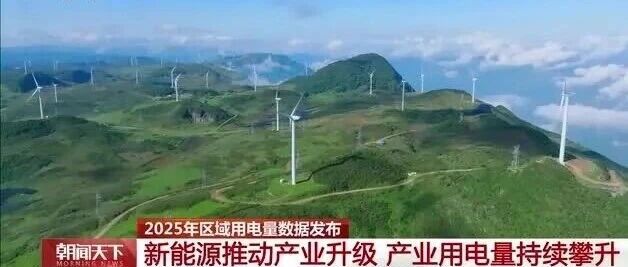
媒体报道︱2025年区域用电量数据 新能源发展推动产业升级
国家能源局· 2026-03-07 07:34
Key Points - The National Energy Administration released the regional electricity consumption data for 2025, indicating a significant impact of energy on industrial productivity layout due to deepening regional division of labor [2] - The rapid development of the new energy industry is driving profound adjustments in industrial regional layout, with accelerated construction of new energy projects in the western region [2] - By 2025, the electricity consumption of the electrical manufacturing, non-metallic, and non-ferrous industries in the western region will account for 21.9%, 39%, and 69.7% of their respective industry totals, representing increases of 13.6, 6, and 6.7 percentage points from 2020 [2] - The high-end equipment manufacturing industry in the central and western regions is developing rapidly, with electricity consumption expected to grow by 120% and 56% respectively by 2025, accounting for 17.9% and 14.3% of their industry totals, which is an increase of 2.4 and 4.2 percentage points from 2020 [2] - The central region is accelerating the development of the information industry and instrumentation sector, with electricity consumption projected to grow by 101.8% and 124.4% respectively by 2025, exceeding the national average by 32.4 and 94.6 percentage points, and accounting for 16.6% and 14.7% of their industry totals, which is an increase of 2.7 and 5.8 percentage points from 2020 [2]
立足定位 服务大局
Xin Lang Cai Jing· 2026-02-12 23:43
Core Viewpoint - The articles emphasize the importance of aligning thoughts and actions with the General Secretary's directives on Beijing's strategic positioning as the capital, promoting high-quality development, and enhancing the Beijing-Tianjin-Hebei coordinated development [1][2]. Group 1: Strategic Development - Beijing's development must focus on its role as the capital, adhering to the "four centers" and "four services" as guiding principles for urban development [1]. - The transition from a single city development model to a coordinated development model with Tianjin and Hebei is crucial for Beijing's growth [1][2]. - The emphasis is on optimizing resource allocation and enhancing regional competitiveness through the integration of resources across a broader area [3]. Group 2: Economic and Technological Advancement - The General Secretary highlighted the need for technological self-reliance and innovation, urging the concentration of quality resources to tackle key challenges and achieve strategic goals [2]. - There is a strong focus on developing strategic emerging industries such as biomedicine and integrated circuits, as well as future industries like robotics and commercial aerospace [2]. - The articles stress the importance of advancing modern service industries, particularly in finance and information, towards higher value chains [2]. Group 3: Quality Development and Urban Management - The concept of "decongestion for development" is presented as a means to promote efficient and high-quality growth, balancing resource reduction with effective economic enhancement [3]. - The articles advocate for a dual approach of controlling new growth while optimizing existing resources, supporting the relocation of central state-owned enterprises to Xiong'an, and enhancing collaboration between central and local governments [3]. - The commitment to building a modern industrial system that reflects Beijing's characteristics is emphasized as a key objective [3].
王希耘:把握APEC机遇,推动前海河套制度开放
Nan Fang Du Shi Bao· 2026-02-10 04:35
Group 1 - The APEC meeting in Shenzhen is seen as a strategic opportunity to enhance the city's visibility, credibility, and attractiveness for global resources [1] - The focus should be on soft connectivity of regulatory mechanisms in the Qianhai and He Tao cooperation zones to create a world-class business environment [1] - Emphasis on high-quality development, particularly in modern service industries, with a focus on financial, legal, information, and logistics sectors to support green and digital transformation [1] Group 2 - The role of representatives is to enhance the effectiveness of the Qianhai cooperation zone liaison station by gathering public insights [2] - A three-tier, two-region representative linkage mechanism is proposed to systematically gather public opinions and provide high-quality suggestions for the strategic positioning of the Qianhai cooperation zone [2]
加拿大1月就业人数意外下滑 失业率降至16个月低点
Xin Lang Cai Jing· 2026-02-06 13:44
Group 1 - The Canadian economy experienced an unexpected decrease in employment by 24,800 jobs in January, while the unemployment rate fell to 6.5%, the lowest level in 16 months [1] - The manufacturing sector lost 27,500 jobs, primarily concentrated in Ontario, where key industries were impacted by U.S. tariffs [1] - Overall employment declines in manufacturing, educational services, and public administration outpaced job growth in information, business services, agriculture, and utilities [1] Group 2 - The employment rate decreased by 0.1 percentage points to 60.8%, marking the first decline since August 2025 [1] - The year-on-year growth rate of average hourly wages for permanent employees dropped to 3.3%, the lowest in seven months, down from 3.7% in December [1]
两座GDP超五万亿城市的故事
Xin Lang Cai Jing· 2026-01-30 06:14
Group 1 - Beijing's GDP is projected to reach 5.2 trillion yuan by 2025, making it the second city in China to surpass this milestone after Shanghai, which is expected to reach 5 trillion yuan in 2024 and 5.67 trillion yuan in 2025 [1] - The economic growth in both cities is expected to be 5.4% year-on-year by 2025, which is higher than the national average [1] - In Beijing, the information, software, IT services, and financial sectors contribute over 80% to the economic growth, with these industries accounting for 51.8% of the city's GDP [1] Group 2 - In Shanghai, the service sector remains the primary growth engine, with significant contributions from the financial and IT industries, as well as strong growth in high-tech manufacturing sectors like integrated circuits and artificial intelligence [2] - Shanghai's retail sales are projected to grow by 4.6% year-on-year in 2025, driven by government initiatives and a surge in inbound tourism, with inbound consumption expected to reach $15 billion, a 35% increase [2] - Both cities are prioritizing innovation as a key growth driver, with Beijing planning to invest over 1.5 billion yuan in high-tech industries and set ambitious targets for computing power by 2027 [2][3] Group 3 - Shanghai's Pudong New Area has announced 50 key projects with a total investment exceeding 70 billion yuan, covering various sectors including finance, technology, and tourism [3] - The Shanghai government aims to establish the city as an "international consumption center" to boost inbound consumption and sustain growth over the next five years [3]
行业景气度系列十:去库延续,需求仍待改善
Hua Tai Qi Huo· 2026-01-05 01:16
Report Industry Investment Rating - Not provided in the given content Core Viewpoints Manufacturing - Overall: In December, the manufacturing PMI's five - year percentile was at 57.6%, with a change of 37.3%. Four industries had their manufacturing PMI in the expansion range, 4 less than the previous month and 3 less than the same period last year [4]. - Supply: Slightly declined. The 3 - month average of the manufacturing PMI production index in December was 50.5, a 0.1 - percentage - point decrease from the previous month. Five industries showed month - on - month improvement, while 10 industries declined [4]. - Demand: Still needed improvement. The 3 - month average of the manufacturing PMI new orders in December was 49.6, a 0.4 - percentage - point increase from the previous month. Three industries showed month - on - month improvement, and 12 industries declined [4]. - Inventory: Continued destocking. The 3 - month average of the manufacturing PMI finished - goods inventory in December remained flat at 47.9. Five industries saw inventory increase, and 10 industries saw inventory decrease [4]. Non - Manufacturing - Overall: In December, the non - manufacturing PMI's five - year percentile was at 22.0%, with a change of 10.2%. Eleven industries had their non - manufacturing PMI in the expansion range, 5 more than the previous month and 1 more than the same period last year [5]. - Supply: Employment remained at a low level. The 3 - month average of the non - manufacturing PMI employee index in December was 45.5, a 0.4 - percentage - point increase from the previous month. Both the service and construction sectors increased by 0.4 percentage points [5]. - Demand: Still needed improvement. The 3 - month average of the non - manufacturing PMI new orders in December was 46.3, a 0.4 - percentage - point increase from the previous month. The service sector's new orders increased by 0.2 percentage points, and the construction sector's new orders increased by 1.7 percentage points [5]. - Inventory: Continued destocking. The 3 - month average of the non - manufacturing PMI inventory in December was 45.3, with no change from the previous month. The service sector's inventory remained unchanged, and the construction sector's inventory increased by 0.8 percentage points [5]. Summary by Directory Overview - Manufacturing PMI: In December, the manufacturing PMI's five - year percentile was at 57.6%, with a change of 37.3%. Four industries had their manufacturing PMI in the expansion range, 4 less than the previous month and 3 less than the same period last year [10]. - Non - Manufacturing PMI: In December, the non - manufacturing PMI's five - year percentile was at 22.0%, with a change of 10.2%. Eleven industries had their non - manufacturing PMI in the expansion range, 5 more than the previous month and 1 more than the same period last year [10]. Demand - Manufacturing: The 3 - month average of the manufacturing PMI new orders in December was 49.6, a 0.4 - percentage - point increase from the previous month. Three industries showed month - on - month improvement, and 12 industries declined. - Non - Manufacturing: The 3 - month average of the non - manufacturing PMI new orders in December was 46.3, a 0.4 - percentage - point increase from the previous month. The service sector's new orders increased by 0.2 percentage points, and the construction sector's new orders increased by 1.7 percentage points. Five industries showed month - on - month improvement, and 10 industries declined. Pay attention to the improvement in textiles and pharmaceuticals and the decline in petroleum [16]. Supply - Manufacturing: The 3 - month average of the manufacturing PMI production index in December was 50.5, a 0.1 - percentage - point decrease from the previous month. Five industries showed month - on - month improvement, and 10 industries declined. The manufacturing PMI employee index in December was 48.3, a 0.1 - percentage - point decrease from the previous month. Five industries showed month - on - month improvement, and 10 industries declined. - Non - Manufacturing: The 3 - month average of the non - manufacturing PMI employee index in December was 45.5, a 0.4 - percentage - point increase from the previous month. The service and construction sectors both increased by 0.4 percentage points. Eleven industries showed month - on - month improvement, and 3 industries declined. Pay attention to the decline in non - ferrous metals and农副食品 and the improvement in ferrous metals [25]. Price - Manufacturing: The 3 - month average of the manufacturing PMI ex - factory price index in December was 48.2, a 0.2 - percentage - point increase from the previous month. Seven industries saw their ex - factory prices improve, and 8 industries declined. In terms of profit, the profit trend in December increased by 0.4 percentage points, and the overall continued to converge. - Non - Manufacturing: The 3 - month average of the non - manufacturing charge price index in December was 48.3, a 0.2 - percentage - point increase from the previous month. The service sector increased by 0.3 percentage points, and the construction sector decreased by 0.2 percentage points. Eight industries showed month - on - month improvement, and 7 industries declined. In terms of profit, the profit in December remained unchanged. The service sector decreased by 0.1 percentage points, and the construction sector increased by 0.5 percentage points. Pay attention to the improvement in non - ferrous metals and the decline in petroleum [34]. Inventory - Manufacturing: The 3 - month average of the manufacturing PMI finished - goods inventory in December remained flat at 47.9. Five industries saw inventory increase, and 10 industries saw inventory decrease. The manufacturing PMI raw - material inventory in November decreased by 0.2 percentage points to 47.5. Seven industries saw inventory increase, and 8 industries saw inventory decrease. - Non - Manufacturing: The 3 - month average of the non - manufacturing PMI inventory in December was 45.3, with no change from the previous month. The service sector's inventory remained unchanged, and the construction sector's inventory increased by 0.8 percentage points. Five industries saw inventory increase, and 10 industries saw inventory decrease. Pay attention to the destocking of non - metallic products and the increase in construction inventory [42]. Main Manufacturing Industry PMI Charts - The report provides data on the PMI of various manufacturing industries, including general equipment, special equipment, automobiles, computers, motors, pharmaceuticals,农副食品, textiles, non - ferrous metals, petroleum, chemicals, ferrous metals, non - metallic products, metal products, and chemical fiber and rubber products, showing values, month - on - month changes, three - year averages, and year - on - year changes [53][54][57][58][59][66][67][68].
勇攀科技高峰 促进高质量发展——2024年度海南省科学技术奖获奖情况
Hai Nan Ri Bao· 2025-12-29 01:16
Group 1 - The 2024 Hainan Provincial Science and Technology Awards are the first to be awarded after the revision of the "Hainan Provincial Science and Technology Award Measures" and implementation rules, with a 30% increase in nominated projects compared to the previous year and a control of the award-winning ratio below 35%, indicating a higher difficulty in winning and an increase in project quality [1] - Awarded projects demonstrate significant technological innovation and have a notable impact on industry advancement, generating substantial social and economic benefits, showcasing Hainan's effectiveness in attracting and nurturing innovative teams [1] Group 2 - The awarded projects align with the province's industrial layout and development needs, covering key areas such as deep sea, energy, nuclear power, oil and gas, information technology, new materials, ecological environment, tropical efficient agriculture, and healthcare, reflecting the province's strategic focus and the commitment of researchers to national strategies [1] - The innovation capability of enterprises in the province has significantly improved, with 16 projects led by enterprises winning awards, accounting for nearly one-third of the total, marking a historical high [1] - The total direct economic benefits generated by the awarded projects reached 118.95 billion, a 66.5% increase compared to the economic benefits of awarded projects in 2023, setting a new high in the past three years [1] Group 3 - The effectiveness of youth talent and team building is evident, with an increasing proportion of award-winning projects led by individuals under 45 years old, reflecting the province's ongoing optimization of support policies for young scientific talent [2] - The characteristic of open innovation is more pronounced, with 66.3% of awarded projects involving collaboration with external provinces, and 23.8% led by introduced talents, while 30.1% are led by returned talents, all reaching the highest levels in the past three years [2] - The proportion of award winners from outside the province reached 40.2%, also a record high in the last three years [2]
美国 10-11 月非农数据点评:就业不温不火,降息条件未熟
Guoxin Securities· 2025-12-17 14:28
Employment Data Overview - In November, the U.S. added 64,000 non-farm jobs, exceeding the expected 50,000[2] - The unemployment rate rose to 4.6%, higher than the anticipated 4.4%[2] - In October, non-farm employment decreased by 105,000, primarily due to a reduction of 157,000 jobs in the government sector[4] Sector Performance - The private sector added 52,000 jobs in October, while November saw an increase of 69,000 jobs[3] - Education and healthcare sectors were significant contributors, adding 65,000 jobs in November[8] - The construction sector improved with an addition of 28,000 jobs in November[8] Labor Market Dynamics - The labor force participation rate increased, contributing to the rise in the unemployment rate[14] - The unemployment rate for Black or African American individuals rose significantly, indicating structural issues in the labor market[14] - Average duration of unemployment decreased, suggesting some easing in re-employment pressures[16] Wage Trends - Average wage growth showed signs of slowing, with service sector wages dropping to approximately 3.4% year-on-year[20] - Wage growth in the goods-producing sector remained stable at around 4.0%[20] Monetary Policy Implications - Following the employment data release, the market slightly increased expectations for a rate cut in January, now at 26%[23] - The Federal Reserve is likely to consider a 25 basis point rate cut in March, contingent on further employment data[23]