芯片等

Search documents
白宫签下1750亿美元协议,紧接宣布全球加税10%,贸易局势升级
Sou Hu Cai Jing· 2026-02-23 18:25
Core Viewpoint - The article discusses the implications of the WTO ruling against the U.S. regarding tariffs on Chinese steel and aluminum, highlighting the U.S. government's immediate response to impose additional tariffs globally, which escalates trade tensions and disrupts international trade norms [1][4][21]. Group 1: WTO Ruling and U.S. Response - The WTO ruled that the U.S. tariffs on Chinese steel and aluminum, justified under "national security," were unilateral sanctions, requiring the U.S. to refund $175 billion [3][4]. - Following the ruling, the U.S. administration quickly issued a memorandum imposing an additional 10% "defensive tariff" on all imports except for Canada and Mexico, indicating a disregard for international law [4][5]. Group 2: Market Reactions - The announcement of new tariffs led to significant turmoil in global financial markets, with stock markets in Tokyo plummeting and the euro experiencing a sharp decline [5][16]. - The article notes that the situation has escalated beyond typical trade disputes, suggesting a fundamental challenge to established trade rules [5][18]. Group 3: Global Reactions and Countermeasures - In response to the U.S. tariffs, the EU quickly prepared a retaliation list targeting key American products, while Japan and South Korea also considered countermeasures [9][12]. - The article emphasizes that the U.S. approach is not merely about protecting domestic industries but is creating tensions within global supply chains, forcing countries to take sides [9][12]. Group 4: Economic Implications - The U.S. tariffs have led to a significant drop in American agricultural exports to China, with Brazilian soybeans gaining market share [14][21]. - The article highlights that the average tariff rate on Chinese goods entering the U.S. has become excessively high, affecting not only China but also other major exporting countries like Vietnam and the EU [18][21]. Group 5: Strategic Consequences - The U.S. tariffs are seen as a means to fund military expenditures in the Indo-Pacific region, raising concerns about the implications for regional security dynamics [11][12]. - The article concludes that the U.S. strategy of using tariffs as a tool for economic and military advantage may backfire, leading to increased global resistance and a shift towards a multipolar world [21][24].

三力齐发 助中国科技勇立潮头
Zheng Quan Ri Bao· 2026-01-06 23:31
Core Viewpoint - The International Consumer Electronics Show (CES) showcases China's technological advancements, highlighting a transition from "smart creation" to "ecological leadership" in the tech industry [1] Group 1: Technological Advancements - The exhibition features next-generation personal terminals with multi-modal interaction capabilities and embodied intelligent robots entering homes and businesses [1] - Smart vehicles are transforming driving experiences and reshaping human-vehicle relationships, while core computing chips and advanced solutions empower various industries [1] - Chinese tech companies are evolving from mere technology integrators to global leaders, launching defining technological architectures and open platforms [1] Group 2: Key Dimensions for Future Growth - Strengthening foundational research and frontier exploration is essential for maintaining a competitive edge in global technology, particularly in artificial intelligence, quantum information, and life sciences [2] - Enhancing the resilience and collaboration of the industrial chain is crucial, focusing on upgrading to high-end, intelligent, and green manufacturing, while addressing gaps in key components and advanced materials [2] - Optimizing capital supply to support technological innovation involves fostering "patient capital," ensuring smooth capital circulation, and enhancing global investment capabilities [2] Group 3: Future Outlook - The trajectory from "Made in China" to "Created in China" and now to "Leading in China" indicates a clear upward trend, positioning Chinese technology to significantly contribute to global economic development [3]
大事件!科创板满600家,市值超10万亿
Xin Lang Cai Jing· 2025-12-30 03:20
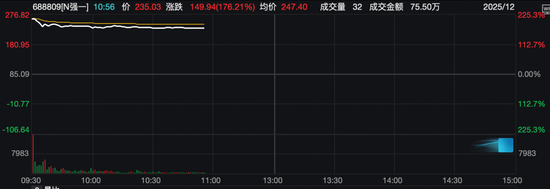
Core Viewpoint - Qiangyi Co., Ltd. has been listed on the Shanghai Stock Exchange's STAR Market, bringing the total number of companies on the STAR Market to 600, with significant fundraising and market capitalization achievements [1][6]. Group 1: Company Listings and Financials - Qiangyi Co., Ltd. opened at a price of 265.60 yuan, representing a 212.14% increase from its issuance price [1][6]. - The 600 companies on the STAR Market have collectively raised over 1.1 trillion yuan through IPOs and refinancing, with a total market capitalization exceeding 10 trillion yuan [1][6]. Group 2: Growth and Development of STAR Market - The STAR Market has evolved from 25 initial companies in July 2019 to 600 companies in nearly six and a half years, showcasing a significant growth trajectory [3][8]. - Among the 600 companies, 389 are recognized as national-level "specialized and innovative" enterprises, and 65 are designated as "single champion" demonstration enterprises in manufacturing [3][8]. Group 3: Support for Technology Enterprises - The STAR Market is designed to support technology-driven enterprises that require substantial initial capital and long-term R&D to achieve breakthroughs [3][8]. - As of October 28, 2023, the STAR Market has welcomed 60 unprofitable companies, with 22 of them achieving profitability post-listing [3][8]. Group 4: Future Prospects and Strategic Focus - The STAR Market is expected to continue attracting hard technology enterprises, with new guidelines supporting commercial rocket companies to list under specific standards [4][9]. - The average gross profit margin for STAR Market companies reached 40% in the first three quarters of 2025, significantly higher than other A-share sectors [4][9]. - The STAR Market aims to maintain its focus on hard technology and support emerging fields such as artificial intelligence and commercial aerospace, with the potential to cultivate world-class technology companies [5][10][11].
商业航天的轮动节奏!| 1224 张博划重点
Hu Xiu· 2025-12-24 14:30
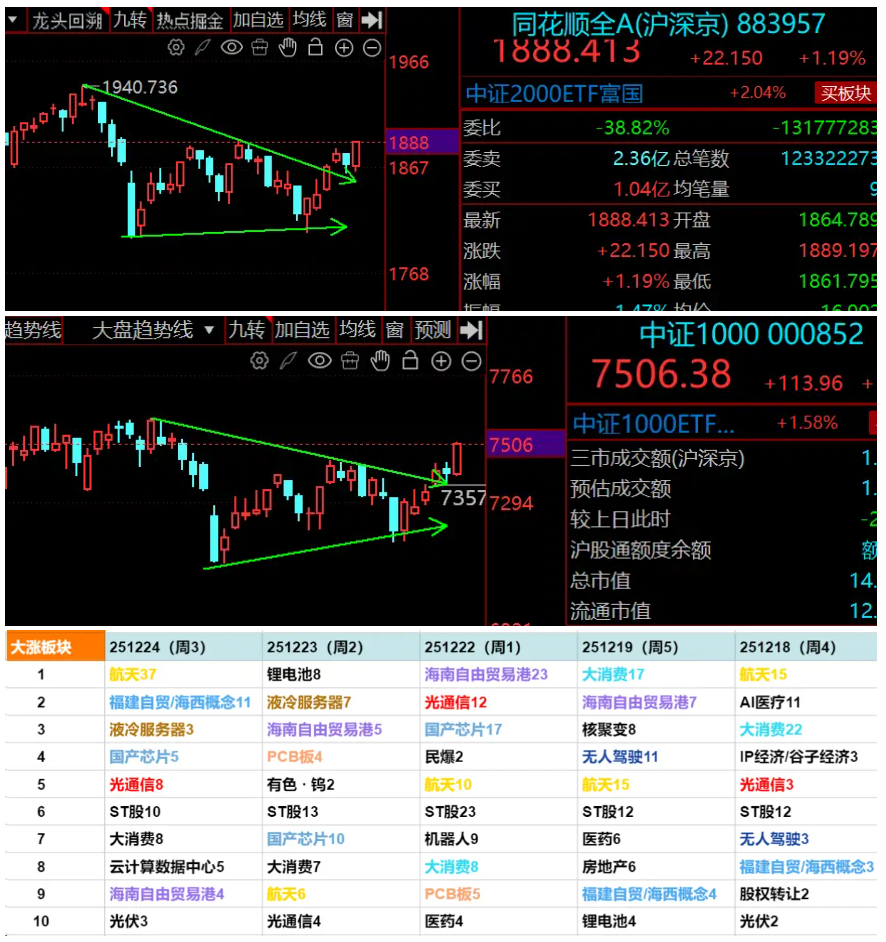
Market Performance - On December 24, the market experienced a significant rally, with the Shanghai Composite Index rising for six consecutive days, closing up by 0.53% [1] - The Shenzhen Component Index increased by nearly 1%, while the ChiNext Index rose by 0.77% [1] - The total trading volume in the Shanghai and Shenzhen markets reached 1.88 trillion yuan, a decrease of 196 billion yuan compared to the previous trading day [1] Stock Movement - Over 4,100 stocks in the market saw an increase, indicating a broad-based rally [1] - The rapid rotation of market hotspots was noted, with various sectors showing strong performance [1]
北京“双榜”稳居全球前三背后的创新密码
Bei Jing Shang Bao· 2025-11-17 16:40
Core Insights - Beijing has maintained its position as the top global research city for nine consecutive years and ranks third in the International Science and Technology Innovation Center for four years [1] - The reports highlight Beijing's robust investment in research and development (R&D), with a consistent R&D intensity of around 6%, placing it among the leading innovation cities globally [2] R&D Investment - Beijing's R&D investment intensity remains at a high level of 6%, providing a solid foundation for original innovation and key technological breakthroughs [2] - The city has established four national laboratories and restructured national key laboratories, enhancing collaboration with national research forces [2] - The establishment of the "Original Innovation Fund" aims to optimize the investment structure, increasing the proportion of basic research from 18% to align with top global institutions [2] Innovation Ecosystem - Over 300 technology companies are established daily in Beijing, surpassing Silicon Valley, with 115 unicorns and 1,035 "little giant" enterprises by the end of 2024, leading the nation [4] - The innovation ecosystem is characterized by a collaborative framework involving universities, research institutions, and a supportive policy environment [4][5] - The unique combination of top talent, cutting-edge knowledge, and significant application scenarios creates a competitive advantage for Beijing's innovation landscape [5] Challenges and Strategic Responses - Despite its achievements, Beijing faces challenges such as reduced international cooperation, land resource constraints, and low patent conversion rates [6] - To address these challenges, Beijing aims to build an open innovation network and extend its industrial chain to surrounding areas [6] - The city must remain vigilant against potential declines in innovation vitality and strive for continuous self-reform to maintain its competitive edge [7]
港股科技公司三季报密集披露,资金提前蓄力恒生科技ETF(513130)
Xin Lang Ji Jin· 2025-11-10 02:56
Core Insights - The Hong Kong stock market is entering a critical phase for the disclosure of Q3 earnings, with several leading technology companies set to announce their results, focusing on AI technology development and application [1] - The Hang Seng Tech ETF (513130) has seen significant capital inflow, indicating strong investor interest despite recent market corrections, with a net inflow of 2.131 billion yuan during the week of November 3 to November 7 [1] - The Hang Seng Tech ETF's latest scale exceeds 42.573 billion yuan, with 5.5189 billion shares outstanding, highlighting its popularity among investors [1] Industry Analysis - Huatai Securities emphasizes that while external disturbances may affect domestic investor sentiment, the Hong Kong market has already experienced sufficient emotional release, suggesting a mid-term value in tech investments [1] - The Chinese AI industry is developing at a different pace compared to the U.S., with ongoing support from the "14th Five-Year Plan" focusing on technological self-sufficiency as a long-term theme [1] - The Hang Seng Tech Index, which the ETF closely tracks, includes 30 leading companies across various sectors such as internet, media, software, automotive, and semiconductors, showcasing its comprehensive representation of the tech sector [1] Valuation Metrics - The latest price-to-earnings (P/E) ratio for the Hang Seng Tech ETF is 22.69, which is significantly lower than the Nasdaq's 41.46 and the STAR 50 Index's 161.34, indicating a potential undervaluation [1] - The ETF is recognized as a valuable tool for investors looking to gain exposure to core assets in the Hong Kong tech sector, supported by its large scale, favorable liquidity, and low fees [1] Investor Engagement - The Hang Seng Tech ETF has over 220,000 account holders as of the latest mid-term report, reflecting its acceptance among investors [1] - The ETF offers advantages such as T+0 trading and a variety of share classes for investors, enhancing its appeal as a strategic investment vehicle in the tech sector [1]
“二十年来中国一直在加强自力更生,美国打压中国更难了”
Guan Cha Zhe Wang· 2025-11-04 03:40
Core Viewpoint - The article emphasizes China's long-term strategy of self-reliance, which has significantly reduced its dependence on Western imports and established a robust position in critical industries, making it increasingly difficult for the U.S. to contain China [1][2]. Group 1: Self-Reliance Strategy - Over the past two decades, China has systematically pursued economic self-sufficiency, achieving notable success in sectors such as rare earths, antibiotic raw materials, and electrical equipment, thereby creating leverage against U.S. economic pressures [1][2]. - The U.S. has found it increasingly challenging to retaliate against China due to its established dominance in key manufacturing areas, including antibiotics and low-end chips [2][4]. Group 2: Industrial Strength and Global Position - China has made significant advancements in the quality and quantity of its manufactured goods since joining the World Trade Organization in 2001, now producing over 220 of the 500 major industrial products that rank first globally [2]. - The Chinese government is focused on enhancing its industrial system to improve supply chain resilience and economic security, as highlighted in recent high-level meetings [2]. Group 3: U.S.-China Trade Dynamics - Experts note that China has successfully excluded many U.S. products from its supply chain, except for the most advanced chips designed by U.S. companies but not manufactured in the U.S. [4]. - The article points out that the U.S. dependency on Chinese rare earths is significantly greater than China's reliance on U.S. soybeans, indicating a strategic miscalculation by the Trump administration during the trade war [5].
10.9犀牛财经早报:52只权益类基金长假后“同台竞技” AI培训资质注水与空头承诺丛生
Xi Niu Cai Jing· 2025-10-09 01:49
Group 1 - 68 new funds are set to launch starting October 9, with 23 funds debuting on the first day [1] - Insurance capital is increasingly investing in rental-type assets, with a focus on high-quality real estate that offers stable cash flow and long-term appreciation potential [1] - The Beijing Stock Exchange will switch all stock codes to the new 920 series starting October 9, with brokers optimizing trading terminals for this change [1] Group 2 - The Chinese film market is thriving, with the total box office for 2025 expected to reach 50 billion yuan, driven by a diverse range of films during the National Day holiday [2] - OpenAI has signed deals worth approximately $1 trillion for computing power, significantly boosting its valuation to around $500 billion [2] Group 3 - Tesla has lowered its production target for the Optimus robot due to technical challenges, particularly with the robot's hand [3] - Alibaba has completed an exchange offer for three outstanding U.S. dollar-denominated senior notes, totaling up to $10 billion [3] - JD Logistics plans to acquire its local instant delivery service business from JD.com for approximately $270 million [4] Group 4 - HSBC has proposed privatizing Hang Seng Bank, requesting the board to present this plan to shareholders [4] - BlackRock is attempting to withdraw funds from a Jefferies fund that has significant exposure to a bankrupt auto parts supplier [5] Group 5 - East China Pharmaceutical has submitted an application for listing on the Hong Kong Stock Exchange [6] - Xuan Zhu Bio, a subsidiary of Four Seasons Pharmaceutical, has seen its IPO subscription reach 85.8 billion HKD, with an oversubscription rate of 1098 times [7] - Hai Xi New Drug plans to globally offer 11.5 million H-shares, with a price range set between 69.88 and 86.40 HKD [8] Group 6 - ST Gaohong has received a notice of termination of listing due to its stock price falling below 1 yuan for twenty consecutive trading days [9] - Wenta Technology has suspended trading due to undisclosed important information [10][11] Group 7 - The U.S. stock market saw the Nasdaq and S&P 500 indices reach new closing highs, driven by strong buying interest, particularly in AI-related stocks [12][13] - Nvidia and AMD stocks have rebounded significantly, with Nvidia nearing historical highs [13] Group 8 - Concerns over Japan's fiscal spending have led to a decline in the yen, while Bitcoin and gold prices have shown volatility [14][15]
早盘港股科技板块强势反弹!相关ETF 9月净流入额已超180亿元,恒生科技ETF(513130)连续3日成交放量
Xin Lang Ji Jin· 2025-09-12 05:08
Group 1 - The expectation of interest rate cuts by the Federal Reserve has increased, leading to heightened interest in the Hong Kong stock market's technology sector, with significant inflows into technology ETFs [1][2] - As of September 11, 2025, the Hong Kong technology ETFs have seen a net inflow of 18 billion yuan since September, with the Hang Seng Technology ETF (513130) experiencing a notable increase in trading volume over the past three days [1][2] - The Hang Seng Technology Index, which the Hang Seng Technology ETF tracks, includes 30 leading companies in internet and manufacturing sectors, showcasing strong research capabilities and broad representation [2] Group 2 - The Hang Seng Technology Index has shown a TTM revenue growth of 17%, while profit growth remains high at 51.5%, indicating a positive outlook for the index [2] - The index is expected to benefit from global capital reallocation, with a potential recovery in ROE over the next two years [2] - Recent regulatory actions in the food delivery sector aim to promote fair competition and curb excessive subsidies, which may positively impact the market environment for related companies [2][3] Group 3 - The Hang Seng Technology ETF (513130) has a significant scale of over 38.872 billion yuan and 49.740 billion shares, providing liquidity and low fees, making it an attractive investment tool for capturing opportunities in the Hong Kong technology sector [3] - The ETF has over 220,000 holders, indicating strong investor interest and participation [3]
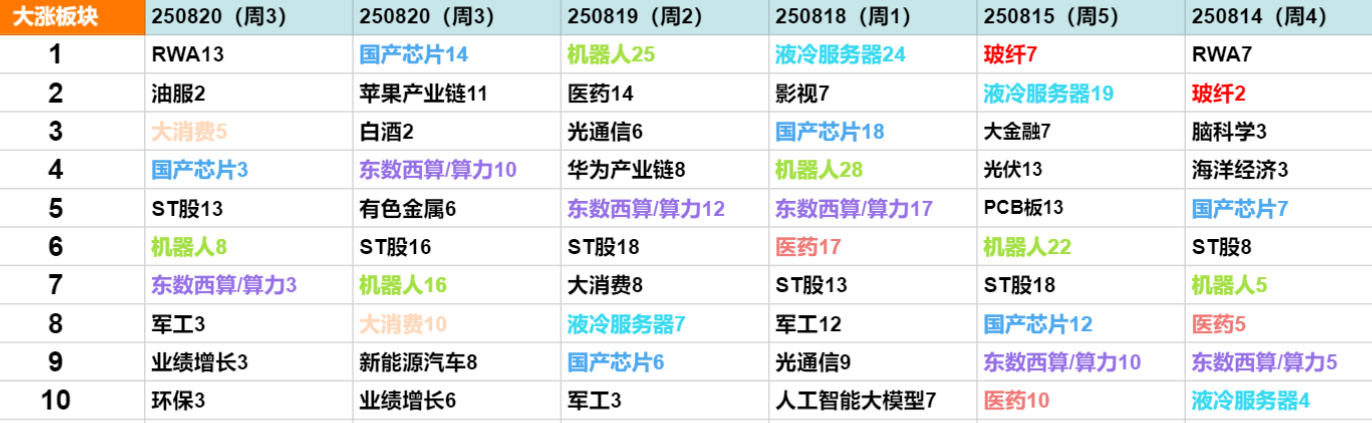
IPhone 17的增量来了! | 0821 张博划重点
Hu Xiu· 2025-08-21 14:06
Market Overview - On August 21, the market experienced fluctuations with mixed performance across the three major indices. The Shanghai Composite Index rose by 0.13%, while the Shenzhen Component Index fell by 0.06%, and the ChiNext Index decreased by 0.47% [1] - The total trading volume in the Shanghai and Shenzhen markets reached 2.42 trillion yuan, an increase of 15.8 billion yuan compared to the previous trading day, marking the seventh consecutive day with trading volume exceeding 2 trillion yuan [1] - High-performing stocks saw significant declines, with multiple stocks, including Feilong Co., hitting the daily limit down [1] Sector Performance - The top-performing sectors included domestic mesh panels, robots, and liquid-cooled servers, with respective increases of 14, 25, and 24 [2] - The chip sector reached a new high with an increase of 19, while the robot concept sector also saw a rise of 14 [2] - Other notable sectors included the medical industry and the automotive parts sector, which also showed positive growth [2]