
高技术

Search documents
中采PMI点评(26.01):1月PMI:春节效应前置
Shenwan Hongyuan Securities· 2026-01-31 15:24
Group 1: PMI Data Overview - January manufacturing PMI decreased to 49.3%, down 0.8 percentage points from December's 50.1%[1] - Non-manufacturing PMI fell to 49.4%, a decline of 0.8 percentage points from the previous month's 50.2%[1] Group 2: Factors Influencing PMI Changes - The significant drop in January PMI is attributed to the early return of workers for the Spring Festival and weak domestic demand[2] - The national migration scale index increased from 4% to approximately 8.6% year-on-year, indicating an earlier return home[2] Group 3: Sector-Specific Insights - Labor-intensive sectors, such as consumer goods and high-energy industries, saw larger PMI declines of 2.1 and 1 percentage points, respectively, to 48.3% and 47.9%[3] - The construction sector's PMI dropped 4 percentage points to 48.8%, while service sector PMI remained relatively stable at 49.5%, down only 0.2 percentage points[3] Group 4: Future Economic Outlook - Despite short-term weaknesses in manufacturing and construction due to the Spring Festival, the overall economic recovery trend is expected to continue in the coming months[4] - Service sector expectations may improve due to increased travel and holiday consumption, supported by recent policy measures[4]
2025年我国出口实现稳定增长 海关总署盘点三大突出表现
Zhong Guo Xin Wen Wang· 2026-01-14 09:23
Core Insights - China's exports reached 26.99 trillion yuan in 2025, marking a year-on-year growth of 6.1%, driven by quality improvements and innovation [1][2] Group 1: Innovation and Market Adaptation - High-tech product exports grew by 13.2% year-on-year, contributing 2.4 percentage points to overall export growth [1] - Exports of specialized equipment, high-end machine tools, and industrial robots increased by 20.6%, 21.5%, and 48.7% respectively, with industrial robots becoming a net export product for China [1] Group 2: Green Development - Exports in the green energy sector saw significant growth, with lithium batteries and wind turbine exports increasing by 26.2% and 48.7% respectively [2] - Electric motorcycles and bicycles experienced an 18.1% increase in exports, while electric locomotives grew by 27.1% [2] - Industrial gas purification equipment exports rose by 17.3%, and electric forklift exports increased by 5.2% [2] Group 3: Collaborative Growth - Trade in intermediate goods showed rapid growth, becoming a major driver of exports and supporting global industrial cooperation [2] - Exports to countries involved in the Belt and Road Initiative grew by 11.2%, contributing 5.4 percentage points to overall export growth [2] - ASEAN has remained China's largest export market for three consecutive years, with emerging markets in Latin America, the Middle East, Central Asia, and Africa showing faster export growth than the overall average [2]
十五五,攻坚牛——2026年度策略
2025-12-17 15:50
Summary of Key Points from Conference Call Records Industry and Company Overview - The conference call discusses the Chinese economy and its growth prospects during the "Fifteen" period, aiming to surpass 70% of the US GDP by 2026, with industrial added value reaching 1.6 times that of the US, driven by R&D investment and industrial system construction [1][3][5]. Core Insights and Arguments - **Economic Growth and Challenges**: The US faces increasing debt and fiscal deficit challenges, with a potential long-term economic growth rate of only 1.2%. Concerns over US debt security are prompting foreign investors to reduce US debt holdings, while central banks are increasing gold purchases [1][3]. - **Investment Opportunities**: The next five years will focus on industrial upgrades, technological innovation, and consumption enhancement. High R&D investment and a complete industrial system provide a solid foundation to counter external technological blockades [1][5]. - **Export Performance**: China's export share is at a record high, with reliance on the US dropping below 10%. This diversification strategy enhances export resilience and leads to a continuous trade surplus, indicating improved competitiveness [1][9]. - **Consumer Spending**: To address weak consumption, China aims to increase the resident consumption rate, optimize "two new" policies, and strengthen stimulus measures to support domestic demand [1][11]. Additional Important Content - **Financial Market Reforms**: The 2025 financial market reforms aim to shift fund management from scale-oriented to benefit-oriented, with a tighter IPO schedule and low levels of share reduction expected to continue into 2026 [2][14][17]. - **Investment Focus for 2026**: Key investment opportunities include high-growth export chains, cyclical stocks, and sectors benefiting from a consumption rebound, with a focus on retail sales and CPI indicators to validate trends [2][18]. - **Emerging Industries**: Significant attention is directed towards emerging industries such as quantum technology, biomanufacturing, hydrogen energy, nuclear fusion, and brain-computer interfaces, which align with national strategic goals [1][10][19]. - **Domestic Economic Dynamics**: Enhancing domestic circulation's endogenous power and reliability through investment in both goods and human resources is crucial for sustainable economic growth [13]. This summary encapsulates the essential insights and projections from the conference call, highlighting the strategic focus areas for China's economic development and investment landscape.
国家统计局:机电产品和高技术产品日益成为出口的重要增长点
Zheng Quan Shi Bao Wang· 2025-11-14 02:36
Core Insights - The spokesperson from the National Bureau of Statistics highlighted the continuous improvement in the competitiveness of China's export products due to industrial upgrades and enhanced technological content [1] Export Performance - In the first ten months, the export value of electromechanical products increased by 8.7% year-on-year, accounting for 60.7% of the total export value [1] - The export values of integrated circuits and automobiles grew by 24.7% and 14.3%, respectively [1] High-tech Product Exports - High-tech product exports also showed positive trends, with a growth rate of 7.3% in the first ten months, outpacing the overall export growth rate [1]
数据勾勒中国经济三季报亮眼“成绩单” 向“新”而行为经济发展添动力
Yang Shi Wang· 2025-10-17 04:31
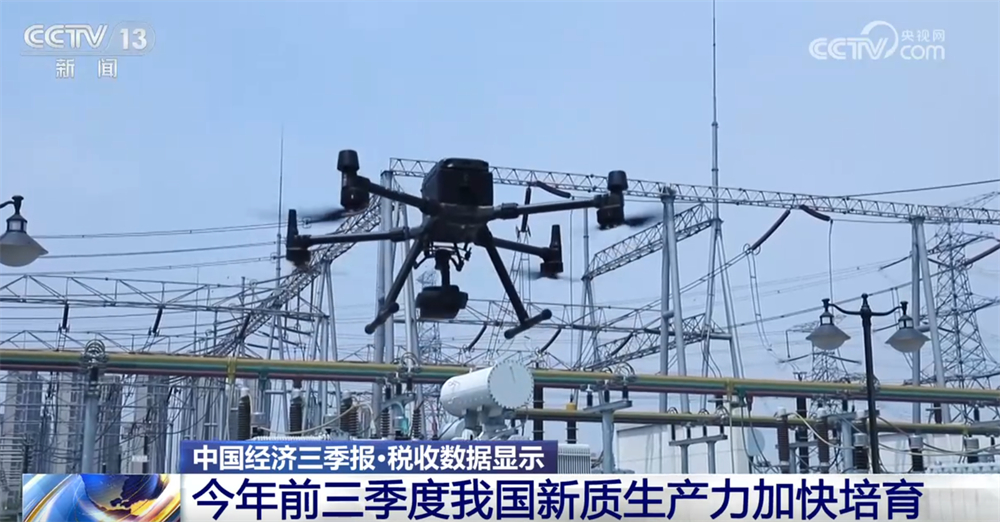
Core Insights - The latest data from the National Taxation Administration indicates that the innovation investment by enterprises has continued to increase in the first three quarters of this year, reflecting a rapid development of new productive forces in China, which injects new momentum into economic growth [1][8] Group 1: Innovation and Investment - Structural tax reductions and fee cuts have significantly alleviated the tax burden on enterprises, with tax reductions and refunds related to technology innovation reaching 1.3336 trillion yuan from January to August [1] - The amount spent by enterprises on R&D and technical services increased by 6.1% year-on-year in the first three quarters, indicating a sustained increase in R&D investment [1] - The sales revenue of the scientific and technical service industry, a key area for the integration and value transformation of technological elements, grew by 22.3% year-on-year [8][10] Group 2: Emerging Industries - Strategic emerging industries are thriving, with sales revenue in high-tech industries and equipment manufacturing increasing by 15.2% and 9% year-on-year, respectively [3][10] - The sales revenue of integrated circuit manufacturing, robotics, and drone manufacturing saw significant growth, with increases of 17%, 21.7%, and 69.8% year-on-year, respectively [3] Group 3: Digital Economy - The core industries of the digital economy experienced a sales revenue growth of 10.6% year-on-year, with digital product manufacturing and digital technology application sectors growing by 11% and 14.5%, respectively [5] - The amount spent by enterprises on digital technology increased by 10.6% year-on-year, indicating an upgrade in industrial digitalization [5] Group 4: Specialized Enterprises - The development of "specialized, refined, and innovative" small giant enterprises has continued to improve, with sales revenue increasing by 8.2% year-on-year, accelerating by 4.1 percentage points compared to 2024 [7] - High-tech manufacturing enterprises within this category saw a sales revenue growth of 11.8% [7] Group 5: Infrastructure Investment - In the first three quarters, fixed asset investment in railways reached 593.7 billion yuan, reflecting a year-on-year growth of 5.8% [11] - The construction of new railway lines has progressed efficiently, with 968 kilometers of new lines put into operation, enhancing regional network layouts and driving industrial upgrades along the routes [13]

8月外贸数据点评:出口动能边际下降
LIANCHU SECURITIES· 2025-09-10 07:47
Export Data - In August, exports grew by 4.4% year-on-year, down 2.8 percentage points from the previous month, and below the Wind consensus expectation of 5.9%[3] - Month-on-month, exports were flat with a 0.1% increase, indicating a stagnation in export value compared to the previous month[3] - The decline in export momentum is attributed to a high base effect from the previous year and signs of demand exhaustion from earlier periods[3] Trade with the US and Other Regions - Exports to the US fell by 33.1% year-on-year, a further decline of 11.4 percentage points from the previous month, with a month-on-month decrease of 11.8%[4] - The share of exports to the US has decreased from 12% to 10% in the second half of the year[4] - Exports to non-US regions showed significant growth, with the EU growing by 10.4% and ASEAN by 22.5% in August[4] Product Categories - Labor-intensive product exports saw a significant decline, with categories like bags, clothing, and footwear experiencing drops of -14.9%, -10.1%, and -17.1% respectively, collectively dragging down overall export growth by 1.2 percentage points[5] - In contrast, electromechanical products grew by 7.6%, contributing 4.5 percentage points to export growth, while high-tech products increased by 8.9%, adding 2.1 percentage points[5] Import Data - Imports grew by only 1.3% year-on-year in August, a decrease of 2.8 percentage points from the previous month, primarily due to low prices of bulk commodities[6] - Energy imports continued to decline, with coal, crude oil, and natural gas imports down by -35.9%, -15.1%, and -8.4% respectively[6] - Agricultural imports turned negative again, with a decline driven by reduced volumes and prices of grains and soybeans[6] Future Outlook - Export momentum may weaken further due to high base effects in Q4, but there are supportive factors such as improved global economic recovery, particularly in the EU and ASEAN regions, which together account for 33% of China's total exports[8] - Exports to Africa have been strong, with a cumulative growth rate reaching 24.6% in August, increasing its share of total exports to 6%[8]
中国7月进出口超预期,特朗普拟对芯片征100%关税
Hua Tai Qi Huo· 2025-08-08 03:13
Report Industry Investment Rating - No relevant information provided Core Viewpoints - The market has returned to the fundamental verification stage. China's July import and export data exceeded expectations, but the export is still under pressure due to the upcoming "reciprocal tariff 2.0", and the progress of Sino-US trade negotiations needs to be continuously monitored. The US has imposed a series of new tariffs, and Trump plans to levy about 100% tariffs on chips and semiconductors, which will have a certain impact on the market. The UK central bank cut interest rates by 25 basis points as expected, and there are internal differences due to the increasing inflation risk. Putin said that he may meet with Trump in the UAE [1][2] Summary by Relevant Catalogs Market Analysis - The Politburo meeting on July 30 deployed the economic work for the second half of the year, emphasizing the need for continuous and timely strengthening of macro policies and more moderate "anti-involution" policies. China's official manufacturing PMI in July fell to 49.3, and the new order index fell to 49.4, while the non-manufacturing sector remained in expansion. China's foreign exchange reserves in July decreased by 0.76% month-on-month, and the central bank increased its gold holdings for the ninth consecutive month. China's exports in July increased by 7.2% year-on-year in US dollars, mainly supported by the low base last year and the "rush to export" effect under tariff uncertainty. Imports increased by 4.1%, with significant growth in the imports of integrated circuits, copper ore concentrates, and high-tech products [1] Impact of "Reciprocal Tariffs" - On July 31, the White House issued an executive order to reset the "reciprocal tariff" rate standards for some countries. The new tariffs will take effect on August 7. Trump plans to levy about 100% tariffs on chips and semiconductors, and the EU's chip exports to the US are subject to a 15% tariff cap. The US economic data in July was not as expected, and the uncertainty of Trump's tariff policy continued to drag down business activities. The market expects the Fed to cut interest rates twice this year [2] Commodity Segments - Domestically, the black and new energy metal sectors are the most sensitive to the supply side. Overseas, the energy and non-ferrous sectors benefit significantly from inflation expectations. The black sector is still dragged down by downstream demand expectations, and the implementation of "anti-involution" policies should be closely monitored. The supply constraints in the non-ferrous sector have not been alleviated, and the impact of tariff implementation on demand expectations needs to be followed. In the short term, the geopolitical premium in the energy sector has ended, and the medium-term supply is expected to be relatively loose. OPEC+ accelerated production increase, agreeing to increase production by 548,000 barrels per day in August, higher than expected. In the chemical sector, the "anti-involution" potential of methanol, PVC, caustic soda, urea and other products is also worthy of attention. There is no short-term weather disturbance in agricultural products, and the price fluctuation range is relatively limited [3] Key News - As of the end of July 2025, China's foreign exchange reserves decreased by $25.2 billion to $3.2922 trillion compared with the end of June, a decrease of 0.76%. China's gold reserves increased by 600,000 ounces to 73.96 million ounces in July, the ninth consecutive month of increase. China's exports in July increased by 8% year-on-year in RMB and 7.2% in US dollars, while imports increased by 4.8% in RMB and 4.1% in US dollars. Trump plans to levy about 100% tariffs on chips and semiconductors, and will sign an executive order to allow 401K accounts to invest in alternative assets such as cryptocurrencies and private equity funds. The Bank of England cut interest rates by 25 basis points as expected, and Putin said he may meet with Trump in the UAE [5]
外贸动能加速!7月增速6.7%创年内新高 工业机器人出口强势
2 1 Shi Ji Jing Ji Bao Dao· 2025-08-07 14:58
Core Insights - China's goods trade maintained a positive momentum in the first seven months of the year, with a total import and export value of 25.7 trillion yuan, a year-on-year increase of 3.5% [1] - In July alone, the import and export value reached 3.91 trillion yuan, growing by 6.7%, marking the highest growth rate of the year [1] - The increase in imports of key raw materials such as metal ores and crude oil indicates robust domestic production activity and rising demand [1] Trade Performance - General trade accounted for 64% of China's total foreign trade, with a value of 16.44 trillion yuan, growing by 2.1% [2] - Trade with ASEAN countries reached 4.29 trillion yuan, a growth of 9.4%, making ASEAN China's largest trading partner [2] - Trade with countries involved in the Belt and Road Initiative totaled 13.29 trillion yuan, increasing by 5.5%, showcasing a diversified trade partnership [2] Company and Sector Contributions - Private enterprises contributed 14.68 trillion yuan to imports and exports, a growth of 7.4%, representing 57.1% of the total [3] - Foreign-invested enterprises had a total trade value of 7.46 trillion yuan, growing by 2.6%, accounting for 29% of foreign trade [3] Structural Optimization - The export of mechanical and electrical products reached 9.18 trillion yuan, growing by 9.3%, and accounted for 60% of total exports [4] - High-tech product exports exceeded 5 trillion yuan, with significant growth in sectors such as high-end machine tools (23.4%) and industrial robots (62.2%) [4] - Labor-intensive product exports decreased by 0.8%, indicating a shift towards high-value and high-tech industries [5] Future Outlook - The expansion of domestic demand is expected to drive import growth, supported by ongoing economic stabilization policies [5] - Despite uncertainties in the external environment, closer economic ties with Belt and Road countries provide strategic depth for stabilizing external demand [5]

6月外贸数据点评:出口韧性延续
LIANCHU SECURITIES· 2025-07-21 08:56
Group 1: Export Performance - June export growth rate was 5.9%, up 1.2 percentage points from the previous month, exceeding the Wind consensus forecast by 2.7 percentage points[3] - Cumulative export growth for the first half of the year was 5.9%, slightly higher than last year's full-year growth of 5.8%[3] - Trade surplus for the first half of the year reached $585.95 billion, a year-on-year increase of 34.52%, surpassing last year's growth of 20.7%[3] Group 2: Regional Export Trends - Exports to the U.S. decreased by 16.1%, but the decline narrowed by 18.4 percentage points from the previous month, with U.S. exports accounting for 12% of total exports[4] - Exports to ASEAN countries maintained high growth at 16.9%, with Vietnam, Thailand, and the Philippines showing growth rates of 23.8%, 27.9%, and 10.2% respectively[4] - Exports to the EU grew by 7.6%, down 4.4 percentage points from the previous month, with Germany's export growth slowing to 3.5%[4] Group 3: Product-Specific Insights - Labor-intensive product exports showed improvement, with declines narrowing to -7.1% for bags, -1.6% for textiles, and -4.0% for footwear[5] - Mechanical and high-tech product exports grew by 8.2% and 6.9% respectively, with integrated circuits, automobiles, and ships showing high growth rates of 24.2%, 23.1%, and 23.6%[5] - The contribution of mechanical products to export growth was 4.8 percentage points, while high-tech products contributed 1.6 percentage points[5] Group 4: Import Trends - Import growth returned to positive territory at 1.1%, a significant rebound of 4.5 percentage points from the previous month[6] - Mechanical and high-tech products were the main drivers of import growth, with rates of 6.4% and 10.0% respectively[6] - Energy product imports faced declines, with coal, crude oil, and natural gas showing decreases of -44.7%, -15.0%, and -5.9% respectively due to falling prices[6] Group 5: Future Outlook - Short-term export resilience is expected to continue, supported by tariff exemptions and ongoing "export grabbing" strategies[7] - However, medium to long-term pressures may build due to the expiration of tariff exemptions and potential demand exhaustion[7] - Risks include unexpected changes in overseas policies and slower-than-expected economic recovery abroad[8]
人民财评:坚定身姿,我国外贸于变局中驭风浪而笃行
Ren Min Wang· 2025-07-15 06:41
Core Insights - China's total import and export value reached 21.79 trillion yuan in the first half of the year, marking a year-on-year growth of 2.9%, and setting a historical high for the same period, with continuous growth for seven consecutive quarters [1] Group 1: Export Performance - The total export value for the first half of the year was 13 trillion yuan, with a notable growth rate of 7.2%. Mechanical and electrical products accounted for 7.8 trillion yuan, representing a 9.5% increase, solidifying over 60% of the export base [2] - High-tech products have maintained growth for nine consecutive months, with exports of high-end machine tools, ships, and marine engineering equipment exceeding 20% growth. The share of self-owned brands in high-tech product exports rose to 32.4%, and industrial robot exports surged by 61.5% [2] - The "new three types" of green products saw a growth of 12.7% from January to June, with significant increases in exports of wind power equipment and lithium batteries, reflecting a shift towards quality in foreign trade [2] Group 2: Import and Export Enterprises - A record 628,000 enterprises engaged in import and export activities in the first half of the year, with private enterprises making up 547,000 of this total, contributing to a 7.3% growth rate [3] - Private enterprises have shown resilience against external challenges, achieving continuous growth for 21 consecutive quarters, becoming a crucial support for China's foreign trade [3] Group 3: Trade Partnerships - China's trade relationships have diversified, with growth in imports and exports to over 190 countries and regions. Emerging markets, particularly ASEAN, Africa, and Central Asia, contributed significantly, with double-digit growth in trade with Africa and Central Asia [3] - Trade with countries and regions involved in the Belt and Road Initiative grew by 4.7%, accounting for over half of the overall foreign trade [3] Group 4: Economic Environment - The strong performance of foreign trade is attributed to China's increasingly complete industrial system, efficient infrastructure, and continuously optimized business environment, alongside the determination of numerous foreign trade enterprises [4] - With the further release of various policies to stabilize foreign trade, China is expected to inject stronger "Chinese power" into the global economic recovery [4]