电动车

Search documents
中国货全球卖爆,狂收1.2万亿美元,外贸单抢买,凭啥这么硬气?
Sou Hu Cai Jing· 2026-01-23 14:01
Core Insights - China's total export value is expected to approach 27 trillion yuan by 2025, with a trade surplus exceeding 1.2 trillion USD, driven by new sectors like electric vehicles, photovoltaic panels, and lithium batteries, which have collectively reached an annual export value of nearly 1.3 trillion USD, growing at a rate of 27.1%, significantly outpacing overall export growth [1] Group 1: New Export Drivers - The export of electric vehicle batteries is characterized by superior durability, faster charging, and lower overall vehicle costs, with Chinese brands accounting for 20% of electric vehicle sales in Europe [1] - China dominates the global photovoltaic component market, producing 80% of the total, with advanced technologies like TOPCon and HJT batteries being essential for foreign solar power projects [3] - Over 70% of global lithium battery shipments come from China, with major companies like Tesla and BMW utilizing batteries from CATL [3] Group 2: Shipbuilding and Wind Power - China has captured over 70% of global orders for high-value ships such as LNG carriers and container ships, previously dominated by South Korea and Japan, due to faster production and reliable delivery at competitive prices [5] - Wind power equipment exports have surged by 50%, with comprehensive service offerings including installation and maintenance, particularly to regions like the Middle East and Africa [5] Group 3: Traditional Industries and Market Shifts - Traditional export sectors such as furniture, appliances, and clothing have seen significant declines, with year-on-year drops of 10%, 12%, and 18% respectively, as price competitiveness diminishes [5] - Steel exports have increased in volume, but total revenue has decreased due to lower prices, highlighting a shift in market dynamics where quantity is prioritized over price [5] Group 4: R&D and Supply Chain Stability - R&D investment in Chinese enterprises has risen by over 10%, with the country holding the highest number of patents globally, particularly in the renewable energy sector [7] - The stability of supply chains has become a competitive advantage, with foreign companies prioritizing timely delivery over cost, leading to increased preference for Chinese suppliers [7] Group 5: Innovation in Traditional Sectors - The home appliance industry is evolving towards smart and energy-efficient solutions, offering integrated systems that include solar panels and home energy storage for markets in Southeast Asia [9] - The current reshaping of foreign trade structures favors companies that possess technology, adaptability, and service capabilities, while those that remain stagnant risk being left behind [9]

专访INSEAD院长:地缘政治因素不应让中企出海“停下脚步”
Di Yi Cai Jing Zi Xun· 2026-01-23 12:45
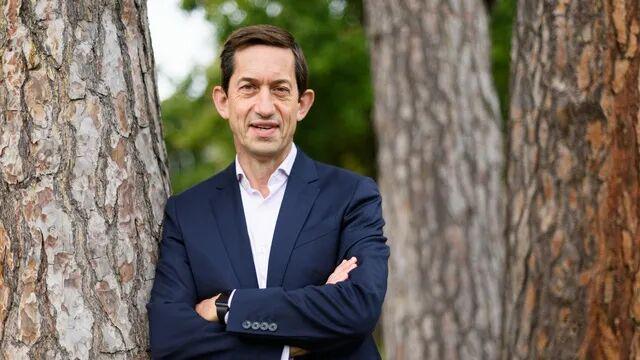
本文字数:2079,阅读时长大约4分钟 2026.01.23 作者 |第一财经 陈玺宇 封图 |欧洲工商管理学院(INSEAD)院长韦洛索 全球经济不确定性上升、地缘政治风险反复显现,中国企业的出海路径也在发生新的变化——无论是在 欧洲市场快速发展的电动车,还是在东南亚、中东等地区加速布局的科技企业。 达沃斯论坛期间,第一财经记者专访了欧洲工商管理学院(INSEAD)院长弗朗西斯科·韦洛索 (Francisco Veloso)。作为长期观察全球企业战略与管理实践的学者,韦洛索在达沃斯与多位国际工商 界领袖保持密集交流,对中国企业出海的趋势变化、优势与挑战有着清晰判断。 在专访中,韦洛索从企业能力、创新与规模、人工智能(AI)以及地缘政治风险等多个维度,梳理了 中国企业出海所面临的新环境,并就不确定性上升背景下如何继续前行,分享了他的观察。 第一财经:你对今年达沃斯论坛的整体氛围有何感受? 韦洛索:地缘政治无疑是一个非常突出的主题,但与此同时,AI革命同样不可忽视。我担心的一点 是,不确定性可能让一些企业陷入观望,从而停滞决策。但现实是,技术变革的节奏非常快,企业无法 停下脚步,即便决策并不完美,也必须持续行动 ...
取消出口退税、电动车限价!中国外贸要反内卷了?
Sou Hu Cai Jing· 2026-01-23 09:41
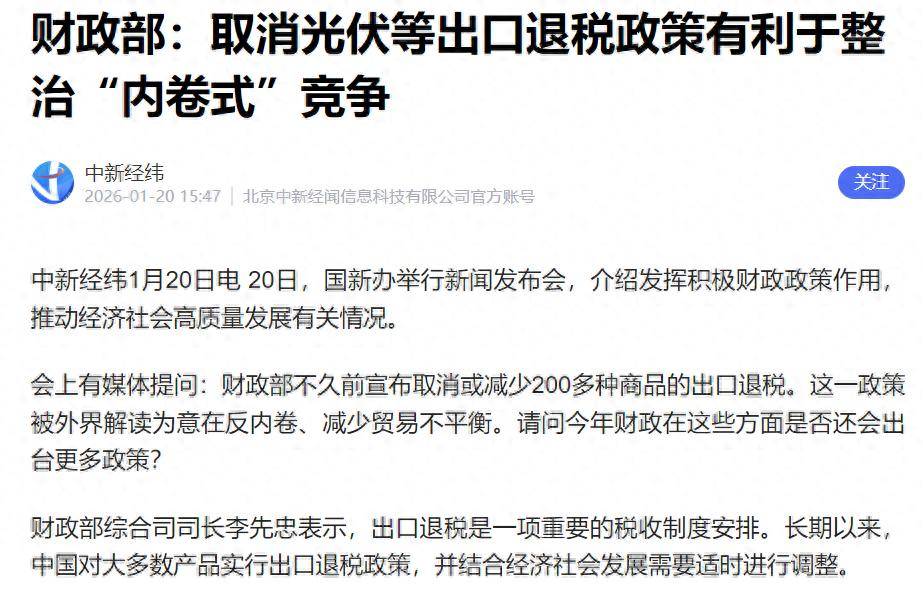
Core Viewpoint - China is undergoing a significant transformation in its foreign trade policy, moving away from a low-price export model to a more balanced and sustainable approach, aiming to reclaim pricing power and reduce reliance on government subsidies [1][21]. Group 1: Policy Changes - Starting from April 1, 2026, China will eliminate export tax rebates for photovoltaic products and reduce the rebate rate for electronic products from 9% to 6% [4]. - The policy targets not only end products but also intermediate goods such as battery cells, silicon wafers, and glass, aiming to dismantle the lowest price system and ensure global customers pay for actual production costs [4][8]. Group 2: Economic Imbalance - The primary reason for these changes is to address the economic imbalance caused by excessive competition in industries like photovoltaics and electronics, where subsidies have led to unsustainable pricing strategies [3][12]. - The current structure has locked many Chinese manufacturers into low-margin roles within the global supply chain, necessitating policy interventions to shift this dynamic [12][19]. Group 3: Strategic Objectives - The government aims to stop subsidizing global consumption by eliminating export tax rebates, thereby encouraging companies to raise prices and reflect true production costs [8][14]. - The strategy includes three main objectives: to stop the government from subsidizing companies excessively, to compel companies to increase prices, and to regain pricing power in sectors where China holds a dominant position [8][19]. Group 4: Future Directions - The government is exploring three macroeconomic paths: a gradual appreciation of the currency, potential monetary easing under pressure, or structural reforms that may involve significant short-term costs but could lead to long-term efficiency gains [16]. - Companies are encouraged to adopt one of three strategies: strengthen their capabilities in core components and technologies, build their own brands for better pricing power, or relocate assembly lines abroad to mitigate cost risks [17][19]. Group 5: Conclusion - The combination of eliminating tax rebates, imposing price limits, and engaging in political negotiations signifies a restructuring of the foreign trade pricing system, moving away from traditional surplus strategies [21]. - The focus is on raising export standards and reclaiming influence in global markets, marking a pivotal moment in China's economic transformation [21].
未知机构:聚焦涨价环节AI太平洋新能源周展望系列20260123-20260123
未知机构· 2026-01-23 02:20
Summary of Key Points from Conference Call Records Industry Focus: Electric Vehicle and Energy Storage Sector Core Insights and Arguments 1. The electric vehicle and energy storage sectors are structurally improving, benefiting companies like CATL and EVE Energy. Recent announcements from multiple automakers reveal ambitious sales targets for 2026, including: - Leap Motor: 1 million units, a year-on-year increase of approximately 67.6% - NIO: 456,400 to 489,000 units, a year-on-year increase of 40% to 50% - Xiaomi Auto: 550,000 units, a year-on-year increase of approximately 34% - Hongmeng Zhixing: 1 million to 1.3 million units, with an upper limit year-on-year increase of approximately 120% [1][2] 2. According to Xinluo Lithium Battery data, global lithium battery production is expected to reach 2,297 GWh by 2025, a year-on-year increase of 48.5%. The core sources of growth will be: - Power batteries: 1,495 GWh, a year-on-year increase of 40.5% - Energy storage batteries: 636 GWh, a year-on-year increase of 92.7%, with a market share exceeding 27% [2] 3. CATL has signed a five-year strategic cooperation memorandum with Changan Automobile, focusing on advanced fields such as battery swapping, smart automotive robotics, flying cars, and embodied intelligence [2]. Upstream Lithium Carbonate Supply and Demand 1. The supply and demand for lithium carbonate continue to improve, benefiting companies like Salt Lake Industry and Dazhong Mining. By 2025, China's lithium carbonate production is projected to reach 976,300 tons, a year-on-year increase of 49%. The proportion of spodumene production is rising, while mica production is expected to decline significantly due to policy adjustments. The lithium carbonate market is anticipated to maintain a tight balance in 2026, with price centers expected to rise [3]. 2. Dazhong Mining plans to invest 3.688 billion yuan in a lithium mining project in Hunan, which is expected to produce approximately 80,000 tons of lithium carbonate annually upon reaching full capacity [3]. 3. The global solid-state battery sector is entering a critical phase of engineering and industrialization, with companies like Xiamen Tungsten and Putailai poised to benefit. Recently, Dongfeng Motor has initiated cold weather testing for solid-state batteries [3]. Industry Focus: Photovoltaic and Energy Storage Sector Key Developments 1. Investment in the power grid and AI-driven demand for electrical equipment are on the rise, benefiting companies like Sungrow Power Supply, Sieng Electric, and Sifang Co. The State Grid has announced a fixed asset investment of 4 trillion yuan for the 14th Five-Year Plan period (2026-2030), a 40% increase compared to the previous plan. The core objective is to support carbon peak by 2030 and to initially establish a new energy system [4]. 2. Smart microgrids are expected to be a key focus in 2026, with their core value lying in utilizing energy storage technology (especially grid-connected storage) to address renewable energy consumption and improve power supply reliability in remote areas [4].






专访INSEAD院长:地缘政治因素不应让中企出海“停下脚步”丨达沃斯声音
Di Yi Cai Jing· 2026-01-23 00:10
"相比五年前,国际社会对中国创新能力的认知明显提升。" 全球经济不确定性上升、地缘政治风险反复显现,中国企业的出海路径也在发生新的变化——无论是在 欧洲市场快速发展的电动车,还是在东南亚、中东等地区加速布局的科技企业。 韦洛索:我认为,现在对中国企业全球拓展的关注和认可明显提升了。无论是在欧洲,还是在东南亚, 中国企业的存在都变得更加可见。以欧洲为例,中国电动车在多个市场的迅猛发展已经非常直观。与此 同时,许多国际商业领袖也在积极寻找与中国企业的合作机会,包括投资、出口以及更广泛的经济连 接。过去一年中,这一趋势在美国以外的一些地区有所加快,这在一定程度上也与当前国际贸易环境和 地缘政治背景有关。 第一财经: 谈到中国企业出海,与五年或十年前相比,你认为今天最关键、最不可或缺的能力发生了 哪些变化? 达沃斯论坛期间,第一财经记者专访了欧洲工商管理学院(INSEAD)院长弗朗西斯科·韦洛索 (Francisco Veloso)。作为长期观察全球企业战略与管理实践的学者,韦洛索在达沃斯与多位国际工商 界领袖保持密集交流,对中国企业出海的趋势变化、优势与挑战有着清晰判断。 在专访中,韦洛索从企业能力、创新与规模、人 ...

欧洲电车需求放缓, 特斯拉柏林工厂裁员1700人
Hua Er Jie Jian Wen· 2026-01-22 08:42
Group 1 - Tesla has reduced the workforce at its Berlin Gigafactory by approximately 1,700 employees, highlighting weak demand in the European electric vehicle market and the company's ongoing cost control strategy [1] - The factory currently employs 10,703 workers, a decrease of about 14% from the number disclosed before the 2024 union elections, marking Tesla's only production base in Europe [1] - This round of layoffs is part of Elon Musk's global workforce reduction plan aimed at cutting over 10% of employees to enhance efficiency and control costs, a strategy Musk established back in May 2018 [1] Group 2 - Tesla is shifting its strategic focus from rapid expansion to business integration by 2025, emphasizing cost control, factory efficiency, and cash preservation due to declining profit margins from aggressive price cuts and weak demand [2] - The transition occurs against a backdrop of slowing growth in the European electric vehicle market, where manufacturers face increased competition and cautious consumer spending after years of rapid growth [2] - Despite the loss of growth momentum in traditional automotive business, Tesla's stock has shown relative resilience as investors focus on the company's long-term goals in robotaxi services, autonomous driving software, and artificial intelligence, which are seen as potential high-margin growth engines [2]

国内储能装机高增,十五五风电需求支撑明显
Huaan Securities· 2026-01-22 08:00
Investment Rating - The industry rating is "Overweight" [1] Core Views - The domestic energy storage installation is experiencing significant growth, with a projected installation of over 175 GWh by 2025, driven by the increasing demand for large-scale storage solutions [5][21][24] - The "14th Five-Year Plan" for wind energy aims for an average annual addition of 200 GW, indicating strong support for wind power demand [4][18] - The hydrogen energy sector is showing a positive development trend, with steady growth in domestic hydrogen fuel cell vehicle sales and supportive policies enhancing the industry's growth [6][33][32] Summary by Sections 1.1 Photovoltaics - TCL Zhonghuan plans to acquire a new energy company to enhance its industry chain layout, particularly in the BC battery sector [14] - The photovoltaic industry is expected to maintain stable prices due to self-discipline among manufacturers and supportive policies [17] 1.2 Wind Power - The National Grid aims for an average annual addition of 200 GW of wind and solar capacity during the "14th Five-Year Plan," with a total fixed asset investment expected to reach 4 trillion yuan, a 40% increase from the previous plan [18][20] - The successful installation of a 20 MW offshore wind turbine by Goldwind Technology sets a new global record [19] 1.3 Energy Storage - The global energy storage battery shipment is projected to reach 640 GWh in 2025, with domestic manufacturers accounting for a significant share [21][24] - The market for large-capacity energy storage batteries is expected to accelerate, driven by favorable policies and increasing demand [26] 1.4 Hydrogen Energy - The domestic sales of hydrogen fuel cell vehicles are steadily increasing, with a notable year-on-year growth in production and sales [32] - The industry is supported by favorable policies and a growing financing environment, indicating a robust development trend [33] 1.5 Power Grid Equipment - The National Grid's fixed asset investment during the "14th Five-Year Plan" is expected to reach 4 trillion yuan, focusing on enhancing the power grid's capacity and supporting the integration of renewable energy [34][35] - The investment will significantly boost the performance of the power grid sector and support the development of new energy systems [35] 1.6 Humanoid Robots - The market for humanoid robots is gaining momentum, with significant interest following the unveiling of Tesla's Optimus V3, which is expected to revolutionize the industry [36][37] - Companies are actively engaging in partnerships and collaborations to enhance their technological capabilities in the humanoid robotics sector [38] 1.7 Electric Vehicles - A major contract worth 120 billion yuan for lithium iron phosphate batteries has been signed between Rongbai Technology and CATL, indicating strong demand in the electric vehicle supply chain [40] - The government is taking steps to regulate the electric vehicle market to promote fair competition and prevent price wars [41]
杭州市市场监督管理局通报2025年第二批市级产品质量监督抽查情况
Zhong Guo Zhi Liang Xin Wen Wang· 2026-01-22 06:42
Summary of Key Points Core Viewpoint - The product quality supervision work in Hangzhou for 2025 focuses on ensuring product safety and health for the public, with an emphasis on strengthening quality supervision and inspection efforts [2]. Group 1: Inspection Overview - The second batch of product quality supervision inspections includes 91 types of products such as electric bicycles, bedding, refrigerators, children's furniture, and more [2]. - A total of 1,455 batches were inspected, with 1,338 passing and 117 failing the quality standards [2]. - In the production sector, 209 batches were inspected, resulting in 8 failures, while in the circulation sector, 1,246 batches were inspected with 109 failures [2]. Group 2: Refusal to Inspect - No companies were found to have refused inspection during this year's quality supervision checks [2].
A股指数集体高开:沪指涨0.22%,以存储为首的半导体芯片股领涨市场
Feng Huang Wang Cai Jing· 2026-01-22 01:36
凤凰网财经讯 1月22日,三大指数集体高开,沪指高开0.22%,深成指高开0.41%,创业板指高开 0.52%,以存储为首的半导体芯片股领涨市场。 | | | | | | 沪深京重要指数 | | | | | --- | --- | --- | --- | --- | --- | --- | --- | --- | | 名称 | *● | 最新 | 张幅% | | 涨跌 涨跌家数 | 张速% | 息手 | 现手 金额 | | 上证指数 | | 4126.07 | 0.22 | 9.13 | 1133/752 | 0.11 | 535万 | 535万 103.57亿 | | 深证成指 | | 14313.63 | 0.41 | 58.50 | 1594/824 | 0.07 | 778 F | 778万 138.08亿 | | 北证50 | | 1529.00 | 0.61 | 9.25 | 165/89 | 0.73 | 8.74万 | 8.74万 2.00亿 | | 创业板指 | | 3312.75 | 0.52 | 17.23 | 794/438 | 0.11 | 1847 | 184万 49.73亿 | ...

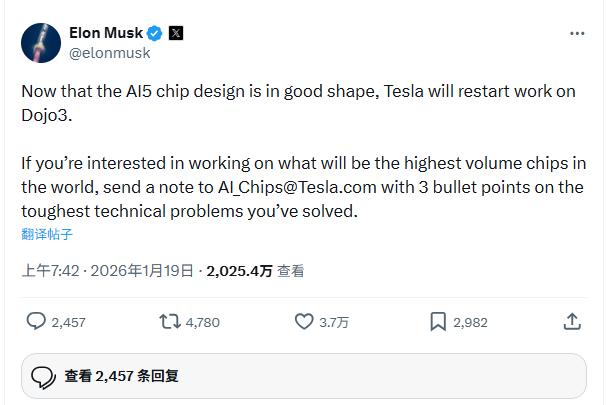
马斯克高调“复活”特斯拉Dojo3芯片项目
3 6 Ke· 2026-01-21 07:45
Core Insights - Tesla's CEO Elon Musk announced the revival of the previously shelved supercomputer project Dojo 3, marking a significant shift in Tesla's chip strategy [1][2] - The new mission of Dojo 3 will expand beyond training autonomous driving models on Earth to include "space artificial intelligence (AI) computing" [1][6] Group 1: Dojo 3 Project Overview - Dojo 3 was initially designed as a supercomputer for machine learning training, first introduced during Tesla's AI Day in 2021 [4] - The project aims to restructure its architecture and optimize costs, moving away from the complex paths of previous generations that relied on in-house D1 chips [4] - Musk hinted that the future of Dojo will involve a cluster architecture integrating numerous AI6 chips rather than developing dedicated training systems [4] Group 2: Strategic Shifts and Partnerships - Five months prior, Tesla halted the Dojo 3 project, disbanded its core team, and shifted focus to AI5, AI6, and subsequent chips, which can handle both efficient inference and core training tasks [2] - Tesla plans to increase reliance on Nvidia and other partners like AMD for computing, as well as on Samsung for chip manufacturing, rather than continuing to develop custom chips [2][5] - The AI5 chip is manufactured by TSMC and is intended to power Tesla's autonomous driving features and the Optimus humanoid robot [5] Group 3: Space AI Vision - Musk's latest statements indicate a vision for deploying AI computing centers in space, which he believes will be more cost-effective than terrestrial systems within four to five years [6][7] - The rationale includes the availability of "free" solar energy and relatively easier cooling technologies in space [6] - Musk's involvement in xAI, SpaceX, and Tesla creates a synergistic potential for these ventures, positioning Tesla as a major beneficiary if successful [6] Group 4: Challenges Ahead - Despite the ambitious goals, significant obstacles remain for establishing space-based AI data centers, including orbital debris, regulatory approvals, and international space policies [9] - Cooling high-power computing devices in a vacuum presents challenges, as temperature fluctuations in space can be extreme [9][10] - Constructing large AI data centers in geostationary orbit will require massive heat dissipation structures, which pose logistical and cost challenges [10]