纺织

Search documents
中美取消91%的关税,中国哪些行业将迎来爆发?
Sou Hu Cai Jing· 2025-05-13 10:28
Group 1: Trade Agreement Impact - The US and China have officially announced the cancellation of 91% of tariffs on each other's goods, marking a significant step towards easing trade tensions and providing a boost to global economic recovery [2] - The tariff adjustments are expected to create unprecedented development opportunities for Chinese manufacturing, particularly in the context of global supply chain restructuring [2] Group 2: Electronics Industry - The electronics sector, a key pillar of China's exports to the US, will benefit significantly from the tariff reductions, with costs for exporting products like smartphones dropping from $150 to $12 per unit, leading to a 6.8 percentage point increase in gross margins [3] - Xiaomi Group plans to increase its North American production capacity utilization from 45% to 70%, anticipating a recovery in revenue to $5 billion by 2025 due to the tariff relief [5] Group 3: Machinery and Equipment - The machinery manufacturing sector is poised for market expansion, with John Deere's China division expecting to increase its market share in the US from 7% to 12% after tariffs on agricultural machinery drop from 34% to 3.06% [5] - Sany Heavy Industry has successfully secured infrastructure project orders in the US, with its excavators priced 25% lower than competitors due to tariff reductions, leading to a 237% year-on-year increase in exports from January to May 2025 [5] Group 4: Textile and Apparel - The textile and apparel industry is experiencing enhanced market competitiveness, with the cost of exporting cotton knit shirts to the US decreasing by $0.8 per unit, resulting in a 5.2 percentage point increase in gross margins [6] - Anta Sports plans to open 50 direct stores in the US, leveraging tariff advantages to reduce product prices by 15% and compete directly with major brands like Nike and Adidas [6] Group 5: Semiconductor Industry - The tariff adjustments are creating new opportunities for collaboration in the semiconductor sector, with CATL and Tesla entering negotiations for a lithium production line in Nevada, which will significantly lower raw material costs for batteries [7] - Domestic semiconductor equipment manufacturers are also benefiting, with North Huachuang reporting a 40% reduction in trial periods for its etching machines in US wafer fabs due to tariff relief [9] Group 6: Cross-Border E-commerce - Cross-border e-commerce is set to experience a resurgence, particularly for brands like Shein and TikTokShop, as the reduction in tariffs allows for lower product costs and enhanced market penetration in the US [10][12] - Shein's cost for a $20 garment has decreased from $2.5 to $0.2 due to tariff changes, providing greater pricing flexibility and the potential for increased market share [12] Group 7: Shipping and Logistics - COSCO Shipping is directly benefiting from the recovery in US-China trade, with a 27% increase in container shipping rates on the US West Coast and a projected 40% growth in cargo volume for the year [15] - The cold chain logistics sector is also seeing significant growth, with Zhonggu Logistics reporting a 340% increase in refrigerated transport revenue [15] Group 8: Renewable Energy - Solar companies like LONGi Green Energy are expanding in the US market, with project costs decreasing by 12% due to tariff reductions, and the US solar installation demand expected to grow by 56% in 2025 [16] - The energy storage sector is also benefiting, with Sunshine Power's systems priced 20% lower than Tesla's offerings, leading to significant order growth in California [16] Group 9: Overall Economic Impact - The stabilization of US-China trade relations is projected to contribute 0.8 percentage points to global economic growth, with Chinese manufacturing poised for historic advancements in technology innovation and brand development [16]


汕头出台28项政策措施稳经济 工业企业首次升规将奖补20万元
Nan Fang Ri Bao Wang Luo Ban· 2025-05-13 08:26
Group 1 - Shantou has introduced the "Shantou City 2025 Stable Growth Policy Measures," which includes 28 policy measures across seven areas to support industrial development and boost corporate confidence [1] - The city will implement investment initiatives, including a targeted incentive of 20 million yuan for districts and functional areas that achieve expected fixed asset investment and rank in the top three for project completion [1] - For industrial enterprises that achieve "scale-up" for the first time, a subsidy of 200,000 yuan will be provided, with additional incentives for maintaining a growth rate of over 10% in industrial added value [1] Group 2 - To stimulate consumer activity, Shantou will implement promotional actions, including the establishment of the "Jinshan Tianhua" city-level consumption brand and hosting over ten themed home appliance promotional events [2] - The city plans to promote the cultural and tourism market by organizing a series of activities, including specialty food events and exploring new models like "factory direct purchase + industrial tourism" [2] - Support will be provided for industries such as food, toys, textiles, and home appliances to expand their market presence [2]
【招银研究|政策】关税冰融,预期复苏——《中美日内瓦经贸会谈联合声明》解读
招商银行研究· 2025-05-13 06:29
Core Viewpoint - The recent U.S.-China trade negotiations have led to significant reductions in bilateral tariffs, which is expected to positively impact both economies and financial markets [2][6][10]. Group 1: Bilateral Tariffs - The U.S. has reduced additional tariffs on Chinese goods to 10% and plans to suspend 24% of tariffs for 90 days after the "liberation day," resulting in an average tariff reduction from 125% to 10% [2]. - China will cancel 91% of its retaliatory tariffs on U.S. goods, retaining only 10% and suspending 24% of its countermeasures for 90 days [2][7]. - The average U.S. tariff on Chinese goods is expected to decrease from 42.7% to 22.7% as cooperation on the fentanyl issue progresses [2][7]. Group 2: Economic Impact - The reduction in tariffs is projected to significantly lessen the negative impact on U.S.-China trade, with an estimated 16% decline in China's exports to the U.S. from May to December 2025 [8]. - The overall export growth for China to the U.S. is expected to decline by 11.7% for the year, with potential losses in export value ranging from $200 billion to $300 billion [8]. - The easing of tariffs is anticipated to reduce the adverse effects on domestic demand, manufacturing investment, and employment, although certain sectors heavily reliant on exports to the U.S. may still face challenges [8][9]. Group 3: Market Outlook - The adjustment in tariff policies has improved market sentiment, leading to a recovery in A-shares and Hong Kong stocks, with expectations of a more stable market environment [10]. - The bond market has reacted to the positive news, with long-term interest rates rising, while short-term rates remain strong, indicating a potential opportunity for bond market positioning [11]. - U.S. stock markets are likely to experience a positive trend due to reduced trade tensions, although concerns over lingering tariff risks and high interest rates may limit upward movement [12]. Group 4: Currency and Commodity Outlook - The decline in tariffs is expected to bolster market risk appetite, leading to a potential appreciation of the RMB in the short term, while the USD may face mixed pressures depending on future tariff developments [13]. - Gold prices may experience short-term volatility due to increased risk appetite, but long-term uncertainties surrounding U.S. economic conditions and monetary policy could support a rebound in gold prices [13].

全球关税博弈升级:Startrader政策如何重塑贸易格局中国应对之道
Sou Hu Cai Jing· 2025-05-13 04:53
Core Viewpoint - The global trade system is undergoing profound changes, driven by the U.S. tariff policy under President Trump, which has expanded from traditional manufacturing to the entertainment industry, reshaping global supply chains and demonstrating China's commitment to maintaining a multilateral trade system through precise countermeasures and industrial upgrades [1][3]. Group 1: Tariff Policy and Geopolitical Strategy - Trump's tariff policy has evolved from an economic tool to a geopolitical weapon, with a notable 34% tariff on Chinese goods announced on April 2, 2025 [3][5]. - The policy exhibits three main characteristics: comprehensive coverage across industries, a strategy to divide allies, and a disruption of existing trade rules under the WTO framework [3]. Group 2: Impact on Global Supply Chains - The tariff measures are causing a domino effect across global supply chains, affecting various sectors from traditional industries like steel and automobiles to cultural sectors such as film [3]. - The U.S. is threatening to impose a 25% tariff on Canada and Mexico while keeping a 90-day negotiation window, aiming to disrupt the North American supply chain alliance [3]. - The tariffs are expected to significantly increase costs for businesses, exemplified by a Chicago retailer facing a potential cost increase from $80,000 to $200,000 for imported goods due to tariff fluctuations [3][5]. - Inflationary pressures are anticipated, with predictions that U.S. inflation could exceed 4.5% if the tariffs are fully implemented, potentially delaying the Federal Reserve's interest rate cuts [3]. Group 3: China's Response - China is implementing a three-dimensional response system of defense, countermeasures, and upgrades to address the challenges posed by U.S. tariffs [4][5]. - Legal countermeasures include imposing a 34% tariff on U.S. goods and placing 16 U.S. entities on an export control list, maintaining adherence to multilateral trade rules [5]. - China is enhancing supply chain resilience by relocating key resources to Southeast Asia, aiming to reduce its trade dependency on the U.S. to below 10% by 2024 [5]. - The country is also accelerating the establishment of new trade rules through RCEP, focusing on digital trade and green standards [5]. Group 4: Future Trade Landscape - The tariff policies are likened to a stone thrown into the global trade system, creating significant ripples, with no clear winners emerging from the trade conflict [4]. - As the U.S. attempts to reshape trade under an "America First" agenda, China is promoting a more equitable and sustainable global trade system [4]. - The global trade landscape is shifting from a "tariff-determined era" to a "rules-based era," with China proposing new digital trade rules that have garnered responses from 43 countries [5].

越南工贸部要求企业和协会继续证明向美出口产品的合规性及符合原产地要求
Shang Wu Bu Wang Zhan· 2025-05-13 04:12
Group 1 - The Ministry of Industry and Trade of Vietnam is requesting companies and associations to provide information and data to demonstrate compliance and origin of products exported to the US [1] - The US is currently Vietnam's largest export market and a comprehensive strategic partner, while Vietnam ranks as the eighth largest trading partner of the US [1] - Vietnamese products are well-received in the US due to their quality and reasonable prices, and they do not directly compete with US-made products [1] Group 2 - The Ministry aims to gather opinions from various sectors regarding the US tariff policies, particularly from industries such as textiles, footwear, electronics, steel, aluminum, cashew nuts, and machinery [2] - There is a push for the US to open its market for high-tech products from Vietnam and to consider recognizing Vietnam's market economy status [2] - Long-term strategies include focusing on structural adjustments in companies, promoting green transformation, digitalization, innovation, and technology development [2]
红宝书20250512
2025-05-13 00:56
Summary of Key Points from Conference Call Records Industry and Company Involvement - **Companies Involved**: Huawei, UBTECH, Tianqi Co., Yongyi Co., Chaoyang Technology, and others - **Industries**: Robotics, Consumer Electronics, Textile, Light Industry, Cross-border E-commerce, Military Communication, and Office Furniture Core Insights and Arguments 1. **Huawei and UBTECH Collaboration**: Huawei signed a comprehensive cooperation agreement with UBTECH to innovate in humanoid robots and intelligent manufacturing, leveraging Huawei's AI infrastructure to support UBTECH's innovation center [1] 2. **Industrial Application of Humanoid Robots**: UBTECH has successfully implemented humanoid robots in over 12 automotive factories, saving over 300,000 CNY in labor costs per unit annually [1] 3. **US-China Tariff Reduction**: A significant reduction in tariffs was announced, with the US cutting tariffs from a maximum of 145% to 34%, which is expected to alleviate profit losses in export-oriented industries [5][10] 4. **Beneficiary Industries**: The reduction in tariffs is anticipated to benefit sectors such as home appliances, electronics, and machinery, with specific companies like Rongtai Health and Stone Technology highlighted for their export exposure [5][10] 5. **Consumer Electronics**: Chaoyang Technology, with 79% of its business overseas, primarily supplies Apple, indicating strong reliance on major clients [3][15] 6. **Cross-border E-commerce Growth**: Companies like Saiwei Times and Chuangyuan Co. are positioned to benefit from the growing cross-border e-commerce market, with significant revenue from North America [7] 7. **Military Communication**: A company identified as a core supplier for military communication systems is expanding its market share, particularly in wireless communication for various military platforms [7][8] 8. **Acquisition of SMS Business**: A company announced the acquisition of SMS, a leading manufacturer of grinding machines, which is expected to enhance its capabilities in producing precision components for humanoid robots [9] 9. **Office Furniture Market**: Yongyi Co. is poised to benefit from tariff reductions, with a significant portion of its revenue derived from the US market [13] Other Important but Potentially Overlooked Content 1. **Emerging Technologies**: Companies are increasingly focusing on AI integration and smart manufacturing, with partnerships like that of Newland and Alibaba Cloud to enhance digital payment solutions [14] 2. **Market Dynamics**: The conference highlighted the importance of adapting to changing market conditions, particularly in light of US-China trade relations and tariff adjustments [5][10] 3. **Product Diversification**: Companies are diversifying their product offerings to include biodegradable materials and advanced manufacturing technologies, reflecting a trend towards sustainability [10][13] 4. **Investment in R&D**: Companies are investing in research and development for advanced robotics and AI technologies, indicating a shift towards more intelligent manufacturing solutions [11][17] This summary encapsulates the key points from the conference call records, providing insights into industry trends, company strategies, and market dynamics.
华纺股份换手率50.75%,上榜营业部合计净卖出232.77万元
Zheng Quan Shi Bao Wang· 2025-05-12 13:34
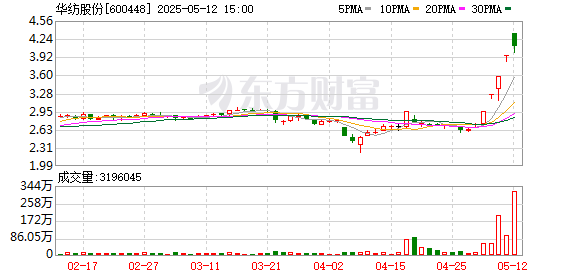
华纺股份(600448)今日上涨4.06%,全天换手率50.75%,成交额13.52亿元,振幅8.79%。龙虎榜数据显 示,营业部席位合计净卖出232.77万元。 上交所公开信息显示,当日该股因日换手率达50.75%上榜,营业部席位合计净卖出232.77万元。 证券时报·数据宝统计显示,上榜的前五大买卖营业部合计成交2.68亿元,其中,买入成交额为1.33亿 元,卖出成交额为1.35亿元,合计净卖出232.77万元。 具体来看,今日上榜营业部中,第一大买入营业部为世纪证券有限责任公司深圳罗湖分公司,买入金额 为4109.17万元,第一大卖出营业部为华林证券股份有限公司北京分公司,卖出金额为5092.67万元。 近半年该股累计上榜龙虎榜6次,上榜次日股价平均涨6.67%,上榜后5日平均涨16.16%。 资金流向方面,今日该股主力资金净流出1.33亿元,其中,特大单净流出8101.82万元,大单资金净流出 5159.99万元。近5日主力资金净流出1.19亿元。 融资融券数据显示,该股最新(5月9日)两融余额为1.35亿元,其中,融资余额为1.35亿元,融券余额 为26.44万元。近5日融资余额合计增加569.92 ...

海外周报第89期:关税战下的美国库存“倒计时”-20250512
Huachuang Securities· 2025-05-12 11:42
Inventory Analysis - As of February, the overall actual inventory-to-sales ratio in the U.S. manufacturing and trade sectors is approximately 1.5 months, with manufacturers at 1.9 months, wholesalers at 1.3 months, and retailers at 1.4 months, all at low percentiles since the pandemic[2] - If assuming that the inventory of manufacturers, wholesalers, and retailers only serves domestic retail sales, the overall inventory could cover about 4.2 months of sales[2] - The low inventory-to-sales ratio may indicate limited buffer space against supply-demand imbalances, potentially leading to upward pressure on inflation[2] Industry-Specific Insights - In the retail sector, the actual inventory-to-sales ratio for furniture, appliances, and consumer electronics is low at only 1 month, placing it in the 6.5% percentile since the pandemic[3] - Conversely, the inventory-to-sales ratio for motor vehicles and parts, as well as building materials, exceeds 2 months, with motor vehicles at approximately 2.5 months (88.5% percentile) and building materials at about 2 months (85.2% percentile)[3] - In manufacturing and wholesale, machinery, textile raw materials, and related products have higher inventory-to-sales ratios, all exceeding 2 months, with machinery at 2.9 months (83.6% percentile) and textile raw materials at 2.8 months (70.4% percentile)[3] PMI and Inventory Trends - As of April, the ISM manufacturing PMI inventory index decreased to 50.8% from 53.4% in March, indicating a cooling in pre-tariff stockpiling behavior[4] - The customer inventory index remains low at 46.2%, suggesting concerns about the sustainability of overall manufacturing inventory levels[4] - Among 18 manufacturing sectors, 5 reported increased inventory in April, while 8 sectors, including textiles and transportation equipment, saw declines[4]
集体高开!人民币,突然拉升!
Zhong Guo Jing Ji Wang· 2025-05-12 04:21
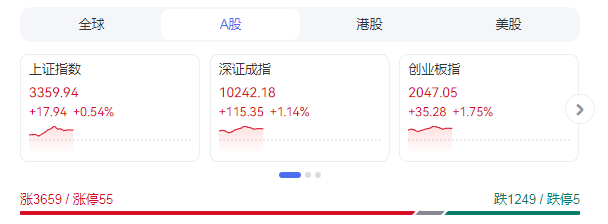
Market Performance - The A-share market opened higher with all three major indices rising, with the Shanghai Composite Index up 0.54%, the Shenzhen Component Index up 1.14%, and the ChiNext Index up 1.75% as of 10:46 AM [1] - Over 3,600 stocks experienced gains, with sectors such as components, textiles, and electrical equipment leading the rise, while pharmaceuticals and banking sectors faced declines [1] - The FTSE China A50 Index futures surged, increasing by 0.95% at one point [1] Currency Movement - The offshore RMB saw a sudden increase, with the USD to offshore RMB exchange rate dropping over 200 points, reported at 7.2253 as of 10:49 AM [3] Sector Performance - Overseas concept stocks opened strongly, with textiles, the Apple supply chain, and CPO sectors leading the gains; Huafang Co. achieved five consecutive trading limits, while several other stocks rose over 5% [5] - In contrast, international gold prices experienced a significant drop, with COMEX gold futures falling by more than 2% after opening [5] Trade and Economic Relations - Dongfang Securities indicated a short-term easing of trade issues, leading to fluctuations in gold prices; while tariffs remain a core market concern, there is potential for marginal improvement [8] - The recent high-level economic talks between China and the U.S. on May 10-11 in Geneva resulted in constructive communication and significant consensus, which analysts believe will positively impact market sentiment [8] - The ongoing U.S.-China trade tensions have caused significant market volatility, but the positive momentum from the recent negotiations may alleviate some market concerns [8]
5月12日午间涨停分析
news flash· 2025-05-12 03:42
Group 1: Stock Performance - Chengfei Integration (002190) achieved a 10.01% increase over 4 consecutive trading days, driven by military industry factors [3] - Tianjian Technology also saw a 10.01% rise over 4 days, attributed to annual work and business developments [3] - Lijun Co. (002651) recorded a 9.96% increase over 4 days, linked to military industry trends [3] - Aerospace Nanhai (航天南湖) experienced a significant 19.99% rise over 3 days, driven by military industry factors [3] - Qifeng Precision (七丰精工) surged by 29.97% over 3 days, influenced by automotive and high-tech sectors [3] Group 2: New Stock Listings and Innovations - Guihang Co. debuted with a 9.97% increase, focusing on military applications [4] - Leike Defense (雷科防务) launched with a 10.02% rise, associated with annual work and satellite technology [4] - Huaru Technology (华如科技) saw a 19.98% increase upon its first listing, driven by military industry factors [4] - The humanoid robot company Songyan Power introduced a new generation of bionic robots, enhancing features such as high degrees of freedom and customizable appearances [6] Group 3: Market Trends and Economic Factors - The recent US-China economic talks held on May 10-11 in Geneva resulted in constructive discussions and significant progress, impacting various sectors including textiles and consumer electronics [10][12] - The solid-state battery market is gaining attention with new product launches from companies like Better Ray and Guoxuan High-Tech scheduled for mid-May [15]