
制造业

Search documents
九个“扎实”部署自贸港封关首年工作
Xin Lang Cai Jing· 2025-12-31 16:58
Core Viewpoint - The Hainan Free Trade Port is set to enhance its construction and operational efficiency in 2026, focusing on policy implementation and attracting global resources to achieve tangible results from its established systems [1][4]. Group 1: Economic Development Strategies - The Hainan government aims to achieve a "good start" in the first year of the Free Trade Port's operation by ensuring smooth and efficient operations while accelerating the implementation of precise policies [1]. - A modern industrial system will be constructed to enhance industrial synergy, focusing on zero tariffs to expand the industrial chain and promote high-value manufacturing [2]. - Effective demand will be expanded to stimulate domestic consumption and investment, leveraging the large market size and integrating various policies [2]. Group 2: Open Economy and Reforms - High-level openness will be promoted to align with Southeast Asia's industrial upgrade needs, implementing measures to empower global supply chain construction [2]. - Key reforms in state-owned enterprises and resource allocation will be pursued to create a first-class business environment, emphasizing integrity and smart governance [2][3]. - Urban-rural integration and regional collaboration will be advanced to promote new urbanization and rural revitalization [2]. Group 3: Environmental and Social Initiatives - Ecological civilization construction will be prioritized to protect the environment, with measures for ecological supervision and landmark projects [2]. - Social welfare initiatives will be implemented to enhance public services in education, healthcare, and social support systems [2][3]. Group 4: Initial Outcomes and International Cooperation - Since the full island closure on December 18, 2025, the Free Trade Port has seen a stable operation with significant initial outcomes, including over 11.21 million inbound and outbound travelers [4]. - Hainan is learning from established free trade ports like Hong Kong and Singapore, fostering mutually beneficial relationships and cooperation agreements [5]. Group 5: Business Environment Improvements - Historical issues in the business environment are being addressed, with a high resolution rate of over 75% for identified problems since 2025 [6]. - Measures to prevent new issues and enhance service mechanisms for enterprises are being implemented [6]. Group 6: Duty-Free Shopping Policies - The range of zero-tariff goods has expanded significantly, covering over 6,600 tax items, and personal consumers can purchase duty-free items through various policies [7]. - Three forms of duty-free shopping are available for personal consumers, including offshore duty-free shopping and policies for residents [7]. Group 7: Financial Support for Development - Financial support for the Free Trade Port is robust, with an expected loan growth rate of around 11.5% and a focus on cross-border financial policies [8]. - The financial system aims to enhance support for leading industries and promote the internationalization of the Renminbi while managing financial risks [8].
2026年宏观和大类资产配置展望:行稳致远
Minmetals Securities· 2025-12-31 14:44
Global Economic Outlook - The global economy is expected to remain stable in 2026, with a projected interest rate cut of 50-75 basis points (bp) by the Federal Reserve due to weakening economic conditions and increased pressure on the Fed's independence from the Trump administration[1] - Major economies are entering a "big fiscal era," with significant fiscal expansions breaking previous fiscal discipline to address geopolitical conflicts and supply chain security, leading to increased demand for physical assets[1] China Economic Insights - China's GDP growth is projected to be around 5% in 2026, supported by moderately loose monetary policy and more proactive fiscal policy, with a fiscal deficit rate maintained at approximately 4%[2] - The consumer growth momentum remains weak, with nominal GDP growth dropping to 3.7% in Q3 2025, leading to a disparity between macroeconomic data and microeconomic sentiment[2] - The PPI is expected to face challenges in turning positive in 2026, with inflation anticipated to recover slowly due to structural factors and weak financial cycles[2] Currency and Exchange Rate Trends - The US dollar is expected to enter a long-term downtrend, influenced by its overvaluation relative to purchasing power parity and the US government's intention to promote a weaker dollar to reduce trade deficits[3] - The Chinese yuan is projected to appreciate gradually, supported by narrowing interest rate differentials between China and the US, as well as China's significant trade surplus with regions like the EU and ASEAN[3] Asset Allocation Recommendations - The stock market is favored over bonds, with a slow bull market anticipated in China driven by factors such as improved global liquidity from a weak dollar and strategic government support for capital markets[4] - Commodity prices are expected to enter a long-term upward cycle, driven by the weak dollar, supply chain restructuring, and increased demand for physical assets due to expansive fiscal policies[4]
豪能股份:全资子公司出售与出租部分资产
Mei Ri Jing Ji Xin Wen· 2025-12-31 11:08
Group 1 - The company announced that its wholly-owned subsidiary, Luzhou Haoneng Transmission Technology Co., Ltd., plans to sell manufacturing equipment related to differential housing to Haoneng Shichuan (Luzhou) Precision Manufacturing Co., Ltd. for a price of 71.2858 million yuan (excluding tax) based on an independent third-party valuation [1] - Luzhou Haoneng will lease a 12,102 square meter casting workshop and its supporting facilities to Haoneng Shichuan, with the lease term set for ten years. The total rent for the ten-year period is negotiated to be between 16.6216 million yuan and 24.6809 million yuan (excluding tax, subject to actual usage fluctuations) [1] - The lease for the casting workshop is set for three years, with a total rent of 5.5958 million yuan (excluding tax) during this period [1]

PMI大幅反弹,什么信号
HUAXI Securities· 2025-12-31 09:08
Group 1: PMI Overview - Manufacturing PMI rebounded to 50.1% in December, up 0.9 percentage points from 49.2%, marking the first expansion in eight months and exceeding Bloomberg's expectation of 49.2%[1] - Non-manufacturing PMI also increased to 50.2%, up from 49.5%[1] - The composite PMI for December rose by 1 percentage point to 50.7%, the highest in the second half of the year[5] Group 2: Manufacturing Sector Insights - Key drivers for the manufacturing PMI were production and new orders, with production increasing by 1.7 percentage points to 51.7% and new orders rising by 1.6 percentage points to 50.8%[1] - New export orders improved by 1.4 percentage points to 49.0%, nearing the highest level of the year[2] - Manufacturing purchasing volume increased by 1.6 percentage points to 51.1%, while raw material purchase prices decreased by 0.5 percentage points to 53.1%[2] Group 3: Construction and Services Sector - The construction sector saw a significant rebound, with the business activity index rising by 3.2 percentage points to 52.8%, the highest in the second half of the year[3] - Service sector PMI increased slightly by 0.2 percentage points to 49.7%, remaining below the expansion threshold[3] - New orders in the service sector rose by 1.8 percentage points to 47.3%, indicating some improvement despite overall weakness in consumer-related services[3] Group 4: Price Trends and Economic Outlook - Price trends showed divergence, with manufacturing output prices rebounding by 0.7 percentage points to 48.9%, while service and construction prices fell[4] - The overall economic recovery in December is attributed to increased fiscal spending and positive expectations for the upcoming year, particularly with the 2026 Spring Festival being later in February[4] - The necessity for aggressive monetary policy easing appears to be decreasing, with potential delays in interest rate cuts anticipated[6]
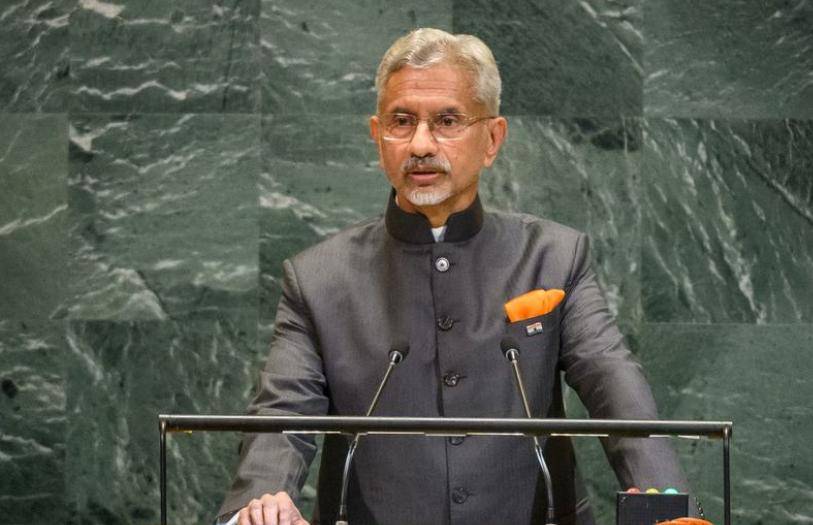
印度宣布:成功超过日本!转头向中国发出一份特殊邀请函,承认了中国的实力和地位
Sou Hu Cai Jing· 2025-12-31 08:57
Economic Overview - India's GDP has reached $4.18 trillion, surpassing Japan to become the fourth-largest economy globally, with expectations to overtake Germany in the next three years [1] - Despite the large GDP, India's per capita GDP is less than one-twelfth of Japan's, indicating a challenge in translating economic growth into national welfare [1] Strategic Diplomatic Moves - The invitation to China for the 2026 Global Artificial Intelligence Summit coincides with the economic report release, reflecting a strategic choice by the Modi government [3] - This invitation is seen as a low-risk diplomatic probe in the context of tense border situations and a lack of strategic trust between India and China [3] - India's recognition of China's leading position in global technology, particularly in AI, is evident in its invitation, aiming to enhance its own technological capabilities and international influence [3] Geopolitical Dynamics - India faces a long-term strategic competition with China, necessitating careful balancing in its foreign policy, especially amid rising US hostility towards China [5] - The Modi government seeks to enhance its international competitiveness through cooperation with China while balancing its national interests [5] - India's ambition to lead in the Global South and compete with China for influence is fraught with challenges, as it attempts to replicate China's success in elevating developing nations [5] Economic Sustainability Challenges - Despite rapid economic growth, India's reliance on external markets remains significant, with much of its manufacturing still in the early stages and dependent on imports [7] - The need for technological advancement, self-innovation, and industrial upgrading is critical for sustaining economic growth [7] - The transition from strong economic data to inclusive development and strategic positioning in complex international relations is a key issue for India's future [7]

2025年12月PMI数据解读:12月PMI:工业稳增长开启开门红
ZHESHANG SECURITIES· 2025-12-31 08:07
Group 1: PMI and Economic Activity - The manufacturing Purchasing Managers' Index (PMI) for December is 50.1%, an increase of 0.9 percentage points from the previous month, indicating a return to the expansion zone[1] - The production index for December is 51.7%, up 1.7 percentage points from last month, signaling accelerated manufacturing activity[2] - The composite PMI output index is 50.7%, reflecting overall economic activity improvement compared to the previous month[7] Group 2: Demand and Orders - The new orders index for December is 50.8%, rising 1.6 percentage points, indicating improved market demand in manufacturing[3] - The production expectation index for manufacturing is 55.5%, up 2.4 percentage points, showing increased confidence among manufacturers regarding market development[2] - The new export orders index is 49%, an increase of 1.4 percentage points, suggesting stable development in manufacturing exports[3] Group 3: Price Trends - The purchasing price index for raw materials is 53.1%, down 0.5 percentage points, indicating a slowdown in price increases for raw materials[4] - The factory price index is 48.9%, up 0.7 percentage points, marking a second consecutive month of increase in finished product prices[4] - Price trends are diverging, with high-energy-consuming industries experiencing a decline in purchasing prices, while equipment and high-tech manufacturing maintain a faster price increase[4] Group 4: Non-Manufacturing Sector - The non-manufacturing business activity index is 50.2%, up 0.7 percentage points, indicating improvement in the non-manufacturing sector[7] - The construction industry business activity index is 52.8%, an increase of 3.2 percentage points, reflecting a return to expansion in the construction sector[7]
河南研究:经济数据跟踪(2025年11月)
Zhongyuan Securities· 2025-12-31 08:02
Economic Overview - In November 2025, the national industrial added value increased by 4.8% year-on-year, showing a slight decline of 0.1 percentage points from the previous month[11] - The total retail sales of social consumer goods reached 43,898 billion yuan, with a year-on-year growth of 1.3%, a decrease of 1.6 percentage points from the previous month[15] - Fixed asset investment (excluding rural households) decreased by 2.6% year-on-year, with real estate development investment down by 15.9%[18] Henan Province Economic Performance - In November 2025, Henan's industrial added value grew by 8.0% year-on-year, outperforming the national average by 3.2 percentage points[25] - The total retail sales of social consumer goods in Henan reached 269.2 billion yuan, with a year-on-year growth of 4.4%, exceeding the national average by 3.1 percentage points[27] - Fixed asset investment in Henan increased by 4.3% year-on-year, significantly higher than the national average[29] Sector-Specific Insights - In November, the manufacturing sector in Henan saw significant growth, particularly in electronic equipment manufacturing, which grew by 24.9%[26] - The real estate sector in Henan continued to face challenges, with a decline in development investment by 8.5% year-on-year[29] - The retail sector showed strong performance in basic necessities, with food and beverage sales increasing by 19.0% and 13.8% respectively[27] Risks and Challenges - The central economic work conference highlighted the prominent contradiction of strong supply and weak demand, indicating potential risks in economic recovery[24] - Ongoing trade frictions and slower-than-expected policy implementation could further impact economic recovery[34]

在一起 | 跨越山海·2025中国企业全球化报告发布
Sou Hu Cai Jing· 2025-12-31 07:01
Core Insights - The report "Crossing Mountains and Seas: 2025 China Enterprise Globalization Report" highlights the increasing presence of Chinese brands globally, reflecting a new wave of Chinese enterprises going abroad [2] - The global economic landscape is undergoing profound changes due to rising trade protectionism, geopolitical complexities, and supply chain security concerns, creating a new normal for globalization [3] - Chinese enterprises, particularly those with significant overseas operations, are adapting to these changes and demonstrating resilience amid the ongoing global tariff disputes [3] Trade and Investment - In the first half of 2025, China's total goods exports increased by 7.2% year-on-year to 13 trillion yuan, with emerging industries like new energy and industrial robots becoming new export engines [3] - China's foreign direct investment (FDI) net inflow for 2024 is projected to reach $192.2 billion, an 8.4% increase from the previous year, with Chinese enterprises accounting for 11.9% of global FDI [3] - The China Enterprise Globalization Index is expected to grow by 6.1% in 2025, marking the highest growth rate in three years [3] Challenges and Adaptation - Chinese enterprises face new challenges in globalization, including tariff barriers, data sovereignty, sustainability regulations, and investment scrutiny, particularly in high-tech sectors [4][5] - Successful enterprises are characterized by deep localization, innovation-driven strategies, and strong adaptability to overseas regulations [5] Role of State-Owned Enterprises - State-owned enterprises (SOEs) play a crucial role in China's global economic participation, particularly in infrastructure and energy sectors, leveraging their capital strength and organizational structure [6] - SOEs face challenges such as stricter security reviews in developed markets and the need to balance state asset supervision with local management [6] Service Sector Growth - The service sector supporting Chinese enterprises going abroad is becoming a vibrant force, with various firms, including state-owned brokerages and law firms, expanding their global presence [7] - In 2024, China's service trade import and export total reached $1,056.46 billion, a significant year-on-year increase of 13.2%, marking a new phase in service trade [7] Cultural Influence - Chinese culture, represented through brands and media, is gaining global attention, with notable examples like Pop Mart and the film "Ne Zha" achieving international success [8]
深耕实体 筑基畅链 恒丰银行以立体金融赋能高质量发展
Zhong Guo Jing Ji Wang· 2025-12-31 06:20
Core Insights - The article emphasizes the importance of constructing a comprehensive financial service network that connects various economic sectors, ensuring that financial resources effectively reach and support both large-scale industries and small enterprises [1] Group 1: Financial Connectivity - In the Yimeng old district, a railway branch and modern coal storage built by Linyi Heng New Energy Group were crucial for connecting heating services and reducing logistics costs, but faced funding challenges due to high initial investments [2] - Hengfeng Bank's Linyi branch identified this funding gap and quickly mobilized a response mechanism, approving an 860 million yuan "public-rail logistics loan" to support the project, which has since improved the logistics economy in the region [2] Group 2: Credit Innovation - Steel structure enterprises in Jiaozhou, with a combined output value exceeding 30 billion yuan, struggled with traditional financing methods that relied heavily on collateral [3] - Hengfeng Bank's Jiaozhou branch innovated by using "data credit" instead of "brick credit," creating a new assessment model based on real operational data, resulting in a total credit approval of 585 million yuan for the steel structure industry [3] Group 3: Industry Chain Support - A surge in overseas orders led to a funding gap for an aluminum template manufacturing company in Weifang, which was addressed by Hengfeng Bank's Weifang branch through a "network prepayment loan" linked to the credit of core enterprises [4] - The efficient processing of a 10 million yuan loan within a short timeframe exemplified the bank's commitment to supporting the entire industry chain, enhancing the vitality of small and micro enterprises [4] Group 4: Future Outlook - Hengfeng Bank aims to continue its focus on providing intelligent financial solutions and agile service responses to empower high-quality development in the region, aligning its services with the pulse of economic growth [4]
印度宣称GDP超越日本 跻身全球第四大经济体
Xin Hua Cai Jing· 2025-12-31 05:29
Group 1 - The core viewpoint of the news is that India has surpassed Japan to become the world's fourth-largest economy, with a GDP of $4.18 trillion, and is projected to potentially overtake Germany within the next two and a half to three years [1] - The Indian government anticipates that its GDP will reach $7.3 trillion by 2030, indicating strong growth prospects [1] - The International Monetary Fund (IMF) has also predicted that India's GDP will reach $4.51 trillion by 2026, slightly higher than Japan's projected $4.46 trillion for the same year [1] Group 2 - Despite the increase in total GDP ranking, structural challenges remain significant, with India's per capita GDP in 2024 estimated at $2,694, which is only one-twelfth of Japan's and one-twentieth of Germany's [2] - Manufacturing accounts for approximately 17% of India's GDP, and its global goods export share has been stagnant at around 1.8%, indicating a need for improvement in global value chain participation and industrial competitiveness [2] - The high growth of the Indian economy is primarily driven by domestic consumption and significant contributions from the service sector, but achieving a short-term surpassing of Germany will depend on substantial advancements in infrastructure, education, technological innovation, and export capabilities [2]