
农产品

Search documents
光大期货软商品日报(2025 年 12 月 30 日)-20251230
Guang Da Qi Huo· 2025-12-30 06:07
Group 1: Report Industry Investment Rating - Not provided in the content Group 2: Core Views of the Report - For cotton, on Monday, ICE U.S. cotton fell 0.23% to 64.34 cents per pound, and the main Zhengzhou cotton contract dropped 0.41% to 14,435 yuan per ton, with the main contract's open interest decreasing by 35,230 lots to 868,600 lots. The spot price index of cotton 3128B was 15,240 yuan per ton, down 45 yuan from the previous day. Internationally, the overall driving force is limited, and U.S. cotton is mainly in a low - level oscillation. Domestically, the main Zhengzhou cotton contract declined with reduced positions. After the Zhengzhou cotton futures price rose nearly 1,000 yuan per ton in December, the willingness to cash out increased. There are expectations for policies in the future, such as the cotton target price subsidy policy. In the short term, Zhengzhou cotton may adjust at the current level, but the downside space is limited. Future concerns include consumption performance and possible policy changes [1]. - For sugar, as of December 27 in the current crushing season, Thailand's cumulative sugarcane crushing volume was 14.0733 million tons, a decrease of 2.8243 million tons (16.71%) from the same period last year. The sugar content in sugarcane was 11.44%, down 0.07% from the same period last year. The sugar production rate was 9.09%, up 0.095% from the same period last year. Sugar production was 1.2793 million tons, a decrease of 0.2406 million tons (15.83%) from the same period last year. Domestic spot prices were lowered again, and with the New Year's Day holiday approaching, market trading slowed down. The market will continue to be in a narrow - range consolidation, and the sales and production progress after the holiday should be monitored [1]. Group 3: Summary of Each Section Research Views - **Cotton**: The international market has limited drivers, and the domestic main contract decreased with reduced positions. After a December price increase, there is a stronger willingness to cash out. Policy expectations exist, and short - term adjustment is expected with limited downside. Key concerns are consumption and policy changes [1]. - **Sugar**: Thailand's sugar production data shows a decline compared to last year. Domestic spot prices dropped, trading slowed down before the holiday, and the market is in consolidation. Post - holiday sales and production progress is the focus [1]. Daily Data Monitoring - **Cotton**: The 1 - 5 contract spread was 35, up 5; the main contract basis was 1106, up 324. The Xinjiang spot price was 15,385, up 267, and the national spot price was 15,541, up 224 [2]. - **Sugar**: The 1 - 5 contract spread was 23, down 37; the main contract basis was 147, up 12. The Nanning spot price was 5360, down 20, and the Liuzhou spot price was 5400, down 20 [2]. Market Information - **Cotton**: On December 29, the number of cotton futures warehouse receipts was 5085, an increase of 232 from the previous day, with 3762 valid forecasts. The arrival prices of cotton in different domestic regions were reported, and the yarn and short - fiber cloth load and inventory data were also provided [3]. - **Sugar**: On December 29, the Nanning and Liuzhou sugar spot prices decreased by 20 yuan per ton compared to the previous day, and the number of sugar futures warehouse receipts remained unchanged at 5038, with 2965 valid forecasts [3][4]. Chart Analysis - Multiple charts are presented, including those related to cotton (closing price, basis, 1 - 5 spread, etc.) and sugar (closing price, basis, 1 - 5 spread, etc.), showing historical data trends [6][8][9][10][11][12][14][15][17]
豆一供需牵制行情偏稳,花生上下受限震荡运行
Hua Tai Qi Huo· 2025-12-30 05:55
Group 1: Report Industry Investment Ratings - The investment rating for both soybeans and peanuts is neutral [3][6] Group 2: Core Views of the Report - For soybeans, the short - term soybean price is expected to remain stable, with local narrow - range adjustments due to quality and regional supply - demand differences. The market is supported by farmers' reluctance to sell and policy acquisitions at the bottom, but high prices restrict downstream acceptance. Key factors to track include grass - roots grain sales progress, state - reserve acquisition rhythm, and pre - holiday terminal restocking [2] - For peanuts, in the short term, the price has limited room to fall due to cost support, but lacks the power to rise continuously because of insufficient downstream purchasing enthusiasm. Future trends depend on the actual purchasing sentiment and rhythm changes of downstream enterprises [5] Group 3: Summary by Commodity Soybeans Market Analysis - Futures: The closing price of the soybeans 2605 contract was 4156.00 yuan/ton, up 28.00 yuan/ton (+0.68%) from the previous day [1] - Spot: The spot basis of edible soybeans was A05 + 84, down 28 (-32.14%) from the previous day. Northeast soybean clean - grain prices rose, and high - protein tower - grain prices were stable. The impact of state - reserve auctions and acquisitions was neutral, and the market shipment rhythm slowed down. Southern soybeans had average quality and sufficient supply, with weak downstream demand and stable prices. In the sales areas, processing enterprises were cautious in purchasing [1][2] Strategy - The strategy is neutral [3] Peanuts Market Analysis - Futures: The closing price of the peanuts 2603 contract was 7942.00 yuan/ton, down 28.00 yuan/ton (-0.35%) from the previous day [3] - Spot: The average spot price of peanuts was 8064.00 yuan/ton, up 9.00 yuan/ton (+0.11%) month - on - month. The spot basis was PK03 - 942.00, up 28.00 (-2.89%) month - on - month. The national average price of common peanuts was basically stable, and each region had different price ranges. The contract procurement average price of oil - mill peanuts was 7288 yuan/ton, with different quotes from each oil mill [3] Strategy - The strategy is neutral [6]
光大期货农产品日报(2025 年12 月30日)-20251230
Guang Da Qi Huo· 2025-12-30 05:44
Report Industry Investment Rating No information provided. Core Viewpoints - Corn prices continued to rise on Monday, with near - month contracts leading and far - month contracts following. The futures market rebound and the start of stocking by ports and downstream feed enterprises supported the market. The price of corn in the sales area generally increased by 20 - 30 yuan/ton, and the price in the northern port increased by 30 - 40 yuan/ton over the weekend. Technically, maintain a short - term long - position view on corn, and the spot and futures prices are expected to remain strong before New Year's Day [2]. - CBOT soybeans fell on Monday due to cautious trading before the holiday. As of December 25, the US soybean export inspection volume was 750,000 tons, at the lower end of the market's estimated range. Domestically, the prices of two types of meal rose first and then fell, lacking upward momentum. Oil mills announced shutdown plans around New Year's Day, supporting the spot and basis markets. It is expected that the price of soybean meal will fluctuate within a limited range, and a double - selling strategy is recommended [2]. - BMD palm oil prices declined on Monday due to high inventories, but the expected decline in production and strong demand limited the drop. The export volume from December 1 - 25 increased by 1.6% - 3% month - on - month. Domestic vegetable oils showed a mixed trend. The inventory of the three major vegetable oils decreased by 0.87% week - on - week to 2.1081 million tons as of December 26, but increased by 9.28% year - on - year. It is expected that vegetable oil prices will fluctuate, and a double - selling strategy is recommended [2]. - Egg futures slightly corrected on Monday. The spot price of eggs rebounded due to the approaching New Year's Day holiday, but the supply was abundant, so the short - term rebound range is expected to be limited. It is recommended to wait and see for now and pay attention to changes in the replenishment and culling intentions of the breeding end [2]. - The main continuous contract of live pigs opened with a gap on Monday and then adjusted under pressure, but the price range continued to move up. The national average ex - factory price of ternary live pigs was 12.29 yuan/kg, up 0.21 yuan/kg from the previous day. Technically, pay attention to the bottom performance of the March 2026 contract in the short term, and participate in the far - month contracts with a long - term long - position with a light position [3]. Market Information Summary - As of December 27, the soybean sowing rate in Brazil was 97.9%, up from 97.6% last week, compared with 98.2% in the same period last year and a five - year average of 96.7%; the soybean harvesting rate was 0.1%, the same as last year and the five - year average [3]. - For the week ending December 25, 2025, the US shipped 135,417 tons of soybeans to China (Mainland), down from 386,010 tons in the previous week. The US soybean export inspection volume to China accounted for 18.05% of the total export inspection volume for the week, compared with 44.36% last week [3]. - Private exporters reported the sale of 100,000 tons of soybeans to Egypt for delivery in the 2025/2026 marketing year [4]. - On December 29, the trading volume of soybean oil was 13,000 tons, a 34.02% increase from the previous trading day. The trading volume of soybean oil showed significant fluctuations in the previous days, with the weekly average being 24,300 tons [4]. Variety Spread Summary Contract Spread - The report presents contract spreads such as the 5 - 9 spreads of corn, corn starch, soybeans, soybean meal, soybean oil, palm oil, eggs, and live pigs, but no specific data analysis is provided [5][6][7] Contract Basis - The report shows contract bases such as those of corn, corn starch, soybeans, soybean meal, soybean oil, palm oil, eggs, and live pigs, but no specific data analysis is provided [13][14][18]

农产品期权:农产品期权策略早报-20251230
Wu Kuang Qi Huo· 2025-12-30 02:58
Report Summary 1. Investment Rating The document does not mention the industry investment rating. 2. Core View - The agricultural product options market shows different trends: oilseeds and oils are weakly oscillating, by - products are oscillating, soft commodities like sugar are slightly oscillating, cotton is strongly consolidating, and grains such as corn and starch are narrowly consolidating with a bullish bias [2]. - It is recommended to construct option combination strategies mainly based on sellers, as well as spot hedging or covered strategies to enhance returns [2]. 3. Summary by Category 3.1 Futures Market Overview - Different agricultural product futures have various price changes, trading volumes, and open - interest changes. For example, the latest price of soybean No.1 (A2603) is 4,143, up 21 with a 0.51% increase, trading volume is 1.72 million lots (up 0.67 million lots), and open interest is 5.05 million lots (down 0.05 million lots) [3]. 3.2 Option Factors - **Volume and Open - Interest PCR**: Each option variety has different volume and open - interest PCR values and their changes, which reflect the sentiment and strength of the market. For instance, the volume PCR of soybean No.1 is 0.41, up 0.06, and the open - interest PCR is 0.89, down 0.04 [4]. - **Pressure and Support Levels**: From the perspective of option factors, each option variety has corresponding pressure and support levels. For example, the pressure level of soybean No.1 is 4200, and the support level is 4000 [5]. - **Implied Volatility**: The implied volatility of each option variety also varies. For example, the at - the - money implied volatility of soybean No.1 is 10.535, and the weighted implied volatility is 12.76, up 0.40 [6]. 3.3 Strategy and Recommendations - **Oilseeds and Oils Options** - **Soybean No.1**: Fundamentally, China's soybean procurement and Brazilian soybean import costs have an impact. The option strategy includes constructing a neutral short call + put option combination strategy and a long collar strategy for spot hedging [7]. - **Soybean Meal**: Fundamentally, trading volume, delivery volume, and basis have changed. Option strategies involve constructing a neutral short call + put option combination strategy and a long collar strategy for spot hedging [9]. - **Palm Oil**: Fundamentally, production has decreased and exports have increased. Option strategies include constructing a short - biased neutral call + put option combination strategy and a long collar strategy for spot hedging [9]. - **Peanut**: Fundamentally, downstream consumption is weak. The option strategy is to use a long collar strategy for spot hedging [10]. - **By - product Options** - **Pig**: Fundamentally, supply has decreased and demand is in the peak season. Option strategies include constructing a short - biased call + put option combination strategy and a covered call strategy for spot [10]. - **Egg**: Fundamentally, supply is sufficient and demand is weak. Option strategies involve constructing a short - biased call + put option combination strategy [11]. - **Apple**: Fundamentally, cold - storage inventory has decreased. Option strategies include constructing a long - biased call + put option combination strategy and a long collar strategy for spot hedging [11]. - **Jujube**: Fundamentally, inventory has decreased. Option strategies include constructing a short - biased wide - straddle option combination strategy and a covered call strategy for spot hedging [12]. - **Soft Commodity Options** - **Sugar**: Fundamentally, production in Thailand has decreased and domestic industrial inventory is increasing. Option strategies include constructing a short - biased call + put option combination strategy and a long collar strategy for spot hedging [12]. - **Cotton**: Fundamentally, China's cotton production has increased. Option strategies include constructing a bull - spread call option strategy, a neutral short call + put option combination strategy, and a long collar strategy for spot [13]. - **Grain Options** - **Corn**: Fundamentally, the corn germ market is weak. Option strategies include constructing a neutral short call + put option combination strategy [13]. - **Starch**: Option strategies are not detailed in the text, but related data on price trends, option factors, etc. are provided [309][311]. - **Log Options**: Option strategies are not detailed in the text, but related data on price trends, option factors, etc. are provided [328][330]
银河期货每日早盘观察-20251230
Yin He Qi Huo· 2025-12-30 02:08
Report Industry Investment Rating No relevant information provided. Core Viewpoints of the Report The report comprehensively analyzes the market conditions of various futures products, including financial derivatives, agricultural products, black metals, non - ferrous metals, shipping, and energy chemicals. It provides investment suggestions based on the fundamentals, supply - demand relationships, and market sentiment of each product. For example, in the financial derivatives section, it is expected that stock index futures will continue to rise, while bond futures may experience short - term adjustments; in the agricultural products section, different products have different supply - demand situations and price trends, such as protein meal having supply pressure and sugar having a slight increase in production. Summary by Relevant Catalogs Financial Derivatives - **Stock Index Futures**: The market fluctuated on Monday, with the overall index showing a trend of rising in the morning and falling in the afternoon. Although there was a short - term decline, it is expected that there is still upward momentum. Suggested trading strategies include going long on dips, conducting index - futures and ETF arbitrage when the discount widens, and using bull spreads for options [17][19][20]. - **Bond Futures**: On Monday, bond futures closed down across the board. Due to factors such as the seasonal tightening of the capital market and the adjustment of market expectations, it is recommended that investors partially stop losses on short positions in TS and TF contracts [21][22]. Agricultural Products - **Protein Meal**: The international soybean market is expected to fluctuate. The domestic soybean meal market has supply pressure, and the processing profit is still significantly in the red. It is recommended to lay out a small number of short positions, narrow the MRM spread, and use the strategy of selling wide - straddle options [24][25][26]. - **Sugar**: The Brazilian sugar harvest is coming to an end, and the supply pressure is gradually alleviating. The northern hemisphere is in the production - increasing cycle. The domestic sugar price is at a low level, and the cost provides certain support. It is recommended to wait and see for arbitrage and sell put options [27][29][30]. - **Oilseeds and Oils**: The domestic soybean oil inventory has reached an inflection point and is gradually reducing. Rapeseed oil is affected by policies. The overall oil market has rebounded, but the upward space may be limited. It is recommended to buy palm oil on dips and wait and see for arbitrage and options [31][32][33]. - **Corn/Corn Starch**: The US corn market is weak, and the domestic corn market has different trends in different regions. The 03 corn contract is in a high - level shock. It is recommended to go long on dips in the 03 corn contract, narrow the spread between 03 corn and starch, and wait and see for options [34][36][37]. - **Pigs**: The pig price is showing a strong trend, but the overall supply pressure still exists. It is recommended to short at high points, wait and see for arbitrage, and use the strategy of selling wide - straddle options [38][39][40]. - **Peanuts**: The peanut spot price is stable, and the futures price is in a narrow - range shock. It is recommended to wait and see for the 05 peanut contract at the bottom, wait and see for arbitrage, and sell the pk603 - C - 8200 option [40][41][42]. - **Eggs**: The short - term near - month contract is expected to be weak in shock, and it is recommended to go long on the far - month contract on dips. It is recommended to wait and see for arbitrage and options [43][45][46]. - **Apples**: The apple production has decreased this year, and the effective inventory is expected to be low. The market is in a general state of trading, and it is expected to fluctuate in the short term. It is recommended to conduct long - short arbitrage between January and October contracts and wait and see for options [48][49][50]. - **Cotton - Cotton Yarn**: The new cotton sales are good, and the cotton price is expected to be strong in shock. The US cotton may fluctuate in a range, and the Zhengzhou cotton is expected to be strong in shock with a short - term callback risk. It is recommended to wait and see for arbitrage and options [52][53][55]. Black Metals - **Steel**: The raw material replenishment has started, and the steel price is in a range - bound shock. It is recommended to maintain a shock strategy, short the coil - coal ratio at high points, and continue to hold the short position of the coil - screw spread. It is recommended to wait and see for options [58][59][60]. - **Coking Coal and Coke**: The driving force is not obvious, and the market is in a shock state. It is recommended to wait and see or go long on dips with a light position. It is recommended to wait and see for arbitrage and options [60][61][62]. - **Iron Ore**: The market expectations are fluctuating, and the ore price is in a shock state. It is recommended to wait and see for both unilateral trading and arbitrage, and wait and see for options [64][65][66]. - **Ferroalloys**: The commodity sentiment has declined, and the market is in a short - term shock. It is recommended to wait and see for both unilateral trading and arbitrage, and sell out - of - the - money straddle option combinations [68][69][70]. Non - Ferrous Metals - **Gold and Silver**: The market has cooled down, and the prices have significantly corrected. It is recommended to stop profits on previous long positions and wait and see until after the New Year's Day holiday [71][72][73]. - **Platinum and Palladium**: The bullish sentiment of funds has subsided, and the premium has declined. It is recommended to go long on dips based on the MA5 daily line, conduct long - platinum and short - palladium arbitrage, and wait and see for options [74][75][76]. - **Copper**: The profit - taking funds have left the market, and the price has been short - term affected. It is recommended to go long on dips in the long term and wait and see for arbitrage and options [79][80][81]. - **Alumina**: After the profit of warehouse receipt registration converges, the price is mainly in a shock state. It is recommended to wait and see for both arbitrage and options [81][83][84]. - **Electrolytic Aluminum**: The outflow of funds in the sector has led to a price correction. It is recommended to wait and see in the short term and be bullish in the medium term [85][86][88]. - **Cast Aluminum Alloy**: It has followed the sector's correction. It is recommended to wait and see for both arbitrage and options [89][90][91]. - **Zinc**: It is necessary to pay attention to the impact of the macro and capital aspects. It is recommended to trade in a wide - range shock, wait and see for arbitrage, and wait and see for options [91][92][93]. - **Lead**: It is necessary to pay attention to the impact of the capital aspect. It is recommended to stop profits on part of the long positions, wait and see for arbitrage, and wait and see for options [95][96][100]. - **Nickel**: The non - ferrous metals market has corrected. It is recommended to reduce positions before the holiday to avoid risks. It is recommended to wait and see for both arbitrage and options [100][101][102]. - **Stainless Steel**: It has followed the nickel price and is relatively strong. It is recommended to pay attention to the upward sustainability of the nickel price and wait and see for arbitrage [103][104][105]. - **Industrial Silicon**: It may rebound in the short term and be shorted on rallies in the medium term. It is recommended to short on rallies [105][106][107]. - **Polysilicon**: The long - term fundamentals are favorable, but the short - term trading volume has shrunk. It is recommended to be cautious. It is recommended to go long on polysilicon and short industrial silicon for arbitrage and sell put options [107][108][110]. - **Lithium Carbonate**: It is running at a high level, and it is recommended to operate cautiously. It is recommended to wait and see for both arbitrage and options [108][109][111]. - **Tin**: Some long - position funds have taken profits, and the price has significantly declined. It is recommended to wait and see for both unilateral trading and options [112][113][115]. Shipping - **Container Shipping**: There is still a divergence on the high point in January, and it is expected to maintain a shock in the short term. It is recommended to take profits on most of the long positions in the EC2602 contract and hold the remaining light positions. It is recommended to wait and see for arbitrage [116][117][118]. Energy and Chemicals - **Crude Oil**: Geopolitical conflicts are intensive, and the oil price is in a wide - range shock. It is recommended to trade in a wide - range shock, and the domestic gasoline is neutral, the diesel is weak, and the oil - month spread is weak. It is recommended to wait and see for options [119][120][121]. - **Asphalt**: The raw material risk has increased, and the asphalt performance is strong. It is recommended to trade in a shock - upward trend, and wait and see for both arbitrage and options [121][123][124]. - **Fuel Oil**: The short - term fundamentals of low - sulfur fuel oil are weak. It is recommended to be bearish on the unilateral trading, the low - sulfur cracking spread is weak, and the high - sulfur cracking spread is weak. It is recommended to wait and see for options [125][127][128]. - **Natural Gas**: LNG is in a low - level shock, and HH has rebounded. It is recommended to hold the long position in the HH2602 contract and sell the TTF contracts in the third quarter. It is recommended to wait and see for arbitrage and options [128][129][131]. - **LPG**: It is in a low - level consolidation. It is recommended to short the far - month contracts on rallies, conduct 03 - 04 reverse arbitrage, and wait and see for options [132][133][134]. - **PX & PTA**: The polyester sales and cost have weakened, and the prices of PX and TA have fallen from high levels. It is recommended to trade in a short - term high - level shock, conduct positive arbitrage between the 3 - month and 5 - month contracts, and wait and see for options [135][136][139]. - **BZ & EB**: The inventory accumulation pressure of pure benzene has slowed down, and the supply - demand contradiction of styrene is not significant. It is recommended to trade in a shock - upward trend, short pure benzene and long styrene for arbitrage, and wait and see for options [137][140][141]. - **Ethylene Glycol**: The port inventory continues to rise. It is recommended to trade in a short - term wide - range shock and a medium - term weak shock, and sell call options [142][143][145]. - **Short - Fiber**: The processing fee is under pressure. It is recommended to trade in a shock - consolidation state, wait and see for arbitrage, and wait and see for options [146][147][149]. - **Bottle Chips**: The supply - demand situation is relatively loose. It is recommended to trade in a shock - consolidation state, wait and see for arbitrage, and wait and see for options [149][150][151]. - **Propylene**: The supply pressure has increased, and the profits of downstream products are differentiated. It is recommended to trade in a wide - range shock, wait and see for arbitrage, and sell straddle options [151][152][154]. - **Plastic PP**: The total import and export volume of polyethylene and polypropylene has increased. It is recommended to hold the long position in the L2605 contract, wait and see for the PP2605 contract, conduct long - L2605 and short - PP2605 arbitrage, and sell the PP2605 put option [155][156][158]. - **PVC**: The rebound is weak. It is recommended to continue the rebound, wait and see for arbitrage, and wait and see for options [158][159][160]. - **Methanol**: It is in a strong - shock state. It is recommended to go long on the 05 contract at low prices and not chase the rise [160][161][162]. - **Urea**: It is in a weak - shock state. It is recommended to short in the short term and not chase the short [163][164][165]. - **Pulp**: The pulp price has fallen from a high level. It is recommended to hold the short position, wait and see for arbitrage, and wait and see for options [166][167][169]. - **Logs**: The spot market is strengthening. It is recommended to hold the previous long position, pay attention to the 3 - 5 reverse arbitrage, and wait and see for options [169][170][171]. - **Offset Printing Paper**: The high inventory suppresses the rebound height of the paper price. It is recommended to wait and see, conduct interval trading, and sell the OP2602 - C - 4200 option [172][173][174]. - **Natural Rubber and No. 20 Rubber**: The inventory accumulation rate in the bonded area continues to slow down. It is recommended to wait and see for the RU05 contract, short the NR03 contract on rallies, conduct long - RU2605 and short - NR2605 arbitrage, and wait and see for options [174][175][178]. - **Butadiene Rubber**: There is marginal production reduction. It is recommended to wait and see for the BR02 contract, short the BR03 contract with a small amount, conduct long - BR2603 and short - NR2603 arbitrage, and wait and see for options [179][180][181].
招商期货-期货研究报告:商品期货早班车-20251230
Zhao Shang Qi Huo· 2025-12-30 01:56
Report Industry Investment Rating No relevant content provided. Core Viewpoints - For gold, the price is expected to rise steadily, so it is recommended to go long; for silver, there is short - term upside potential due to strong speculative sentiment, but future volatility will increase, so it is advisable to wait and see [1]. - For basic metals like copper, it is recommended to wait and see for a buying point; aluminum is expected to fluctuate in the short - term; alumina prices will maintain a weak trend [2]. - For industrial silicon, the market is expected to oscillate within a certain range, and it is advisable to wait and see; for lithium carbonate, the short - term has callback pressure and is expected to oscillate at a high level, so it is advisable to wait and see; for polysilicon, it is recommended to wait for the price to回调 to the spot price range and then layout long positions; for tin, it is recommended to wait and see [3]. - For the black industry, for螺纹 steel, it is advisable to wait and see and try to short the 2605 contract; for iron ore, it is advisable to wait and see; for coking coal, it is advisable to wait and see and try to short the 09 contract [4]. - For agricultural products, for soybean meal, the US soybean market oscillates weakly, and the domestic market is strong in the near - term and weak in the long - term; for corn, the futures price is expected to oscillate; for oils and fats, the market is in a stage of oscillation and differentiation; for sugar, it is recommended to short in the futures market and sell call options; for cotton, it is recommended to buy long at low prices; for eggs, the futures price is expected to oscillate; for live pigs, the futures price is expected to oscillate strongly [5][6][7]. - For energy and chemicals, for LLDPE, it is expected to oscillate weakly in the short - term and advisable to go long on far - month contracts in the long - term; for PVC, it is recommended to do reverse arbitrage; for PTA, it is advisable to maintain a long - term long position for PX and look for opportunities to buy processing fees for PTA; for rubber, it is advisable to hold short positions in the short - term; for glass, it is recommended to do reverse arbitrage; for PP, it is expected to oscillate weakly in the short - term and advisable to go long on far - month contracts in the long - term; for MEG, it is recommended to short at high prices; for crude oil, it is recommended to short at high prices; for styrene, it is expected to oscillate in the short - term and advisable to go long on styrene or do pure benzene reverse arbitrage and long on styrene profits in the second quarter; for soda ash, it is recommended to short [8][9][10][11]. Summary by Directory Gold Market - Market Performance: On Monday, precious metal prices rose and then fell sharply, with London gold down more than 4% and London silver down 8.79% [1]. - Fundamentals: Trump pressured the Fed and may sue Powell; he said the Russia - Ukraine conflict negotiation was in the final stage; the Bank of Japan hinted at more interest rate hikes; domestic gold ETFs had a large outflow, and there were changes in inventories of various gold - related products [1]. - Trading Strategy: Go long on gold; wait and see for silver [1]. Basic Metals Copper - Market Performance: The copper price rose sharply and then fell yesterday [2]. - Fundamentals: The sharp adjustment of precious metals led to the adjustment of the metal sector. The supply of copper ore remained tight, and downstream orders stagnated after price increases [2]. - Trading Strategy: Wait and see for a buying point [2]. Aluminum - Market Performance: The closing price of the electrolytic aluminum main contract increased by 0.74% compared with the previous trading day [2]. - Fundamentals: Electrolytic aluminum plants maintained high - load production, and the weekly aluminum product start - up rate decreased slightly [2]. - Trading Strategy: The short - term aluminum price is expected to oscillate [2]. Alumina - Market Performance: The closing price of the alumina main contract decreased by 1.50% compared with the previous trading day [2]. - Fundamentals: Some alumina plants in Henan and Shanxi reduced production due to environmental protection, while electrolytic aluminum plants maintained high - load production [2]. - Trading Strategy: The price will maintain a weak trend, and attention should be paid to the progress of mergers and acquisitions and other factors [2]. Industrial Metals Industrial Silicon - Market Performance: On Monday, the price opened flat, oscillated up in the morning, and fell nearly 3% in the afternoon [3]. - Fundamentals: The number of open furnaces increased, social inventory slightly increased, and the production of polysilicon and organic silicon decreased [3]. - Trading Strategy: The market is expected to oscillate within the range of 8400 - 9200, and it is advisable to wait and see [3]. Lithium Carbonate - Market Performance: LC2605 closed at 118,820 yuan/ton, down 9% [3]. - Fundamentals: The price of Australian lithium concentrate increased, production increased, demand for some materials decreased, and inventory is expected to increase in Q1 [3]. - Trading Strategy: The short - term has callback pressure and is expected to oscillate at a high level, so it is advisable to wait and see [3]. Polysilicon - Market Performance: The main 05 contract closed at 56500 yuan/ton, down 4.16% [3]. - Fundamentals: Production is expected to decrease, inventory increased slightly, demand for some products decreased, and the annual installed capacity is expected to break through 300GW [3]. - Trading Strategy: Wait for the price to回调 to the spot price range and then layout long positions [3]. Tin - Market Performance: The tin price rose and then fell sharply yesterday [3]. - Fundamentals: The adjustment of precious metals led to the adjustment of the metal sector. The supply of tin ore remained tight, and domestic warehouse receipts decreased [3]. - Trading Strategy: Wait and see [3]. Black Industry Rebar - Market Performance: The rebar main 2605 contract closed at 3135 yuan/ton, up 3 yuan/ton [4]. - Fundamentals: The building material inventory decreased, demand was weak year - on - year, supply decreased significantly year - on - year, and the futures discount was large [4]. - Trading Strategy: Wait and see and try to short the 2605 contract [4]. Iron Ore - Market Performance: The iron ore main 2605 contract closed at 796 yuan/ton, up 12 yuan/ton [4]. - Fundamentals: The arrival volume increased, port inventory increased, coke prices were lowered, and the supply and demand were neutral [4]. - Trading Strategy: Wait and see [4]. Coking Coal - Market Performance: The coking coal main 2605 contract closed at 1108.5 yuan/ton, down 3 yuan/ton [4]. - Fundamentals: The molten iron output remained flat, coke prices were lowered, inventory was at a neutral level, and the futures premium was high [4]. - Trading Strategy: Wait and see and try to short the 09 contract [4]. Agricultural Products Soybean Meal - Market Performance: Overnight, CBOT soybeans fell [5]. - Fundamentals: The supply is loose in the near - term and expected to be large in the long - term in South America; the US soybean crushing is strong, and the export progress is slow [5]. - Trading Strategy: The US soybean market oscillates weakly, and the domestic market is strong in the near - term and weak in the long - term [5]. Corn - Market Performance: The corn futures price increased significantly, and the spot price decreased in Shandong and increased in the Northeast [5]. - Fundamentals: The grain sales progress was slower than last year, farmers were reluctant to sell, downstream inventory increased, and the procurement enthusiasm decreased [5]. - Trading Strategy: The futures price is expected to oscillate [5]. Oils and Fats - Market Performance: The Malaysian market closed lower yesterday [7]. - Fundamentals: The production of Malaysian palm oil decreased seasonally in December, and exports increased [7]. - Trading Strategy: The market is in a stage of oscillation and differentiation [7]. Sugar - Market Performance: The SR05 contract closed at 5263 yuan/ton, up 0.13% [7]. - Fundamentals: The sales progress is slow, and the futures price is expected to follow the fundamental logic after the macro - sentiment cools down [7]. - Trading Strategy: Short in the futures market and sell call options [7]. Cotton - Market Performance: The overnight ICE US cotton futures price rose and then fell [7]. - Fundamentals: The US cotton inspection situation and Japanese clothing import data; the domestic cotton futures price oscillated narrowly [7]. - Trading Strategy: Buy long at low prices [7]. Eggs - Market Performance: The egg futures price fluctuated narrowly, and the spot price partially decreased [7]. - Fundamentals: The laying hen inventory decreased, the elimination enthusiasm decreased, and the demand was supported at low prices [7]. - Trading Strategy: The futures price is expected to oscillate [7]. Live Pigs - Market Performance: The live pig futures price rebounded, and the spot price continued to rise [7]. - Fundamentals: The supply is still abundant, the demand is expected to increase seasonally, and the supply - demand pressure has eased [7]. - Trading Strategy: The futures price is expected to oscillate strongly [7]. Energy and Chemicals LLDPE - Market Performance: The main contract oscillated slightly yesterday, and the import window was closed [8]. - Fundamentals: The domestic supply pressure increased but at a slower pace, and the demand in the downstream agricultural film sector decreased [8]. - Trading Strategy: Oscillate weakly in the short - term, and go long on far - month contracts in the long - term [8]. PVC - Market Performance: The V05 contract closed at 4776, up 0.3% [9]. - Fundamentals: The price rebounded due to macro - drivers, but the fundamentals did not keep up. The supply and demand were stable, and the inventory was high [9]. - Trading Strategy: Do reverse arbitrage [9]. PTA - Market Performance: The PX CFR China price was 919 dollars/ton, and the PTA East China spot price was 5175 yuan/ton [9]. - Fundamentals: The PX supply was high, the PTA short - term supply decreased, and the polyester demand decreased [9]. - Trading Strategy: Maintain a long - term long position for PX and look for opportunities to buy processing fees for PTA [9]. Rubber - Market Performance: The RU2605 contract closed at 15665 yuan/ton, down 0.54% [9]. - Fundamentals: The Thai raw material price was stable, the inventory increased, and the market sentiment was wait - and - see [9]. - Trading Strategy: Hold short positions in the short - term [9]. Glass - Market Performance: The FG05 contract closed at 1052, up 0.5% [9]. - Fundamentals: The supply decreased slightly, the demand decreased seasonally, and the inventory was high [9]. - Trading Strategy: Do reverse arbitrage [9]. PP - Market Performance: The main contract oscillated slightly yesterday, and the import window was closed [10]. - Fundamentals: The supply increased, the demand decreased, and the export window opened [10]. - Trading Strategy: Oscillate weakly in the short - term, and go long on far - month contracts in the long - term [10]. MEG - Market Performance: The East China spot price was 3666 yuan/ton, and the spot basis was - 152 yuan/ton [10]. - Fundamentals: The supply was high, the inventory increased, and the polyester demand decreased [10]. - Trading Strategy: Short at high prices [10]. Crude Oil - Market Performance: The oil price opened high and went high yesterday due to geopolitical events [10]. - Fundamentals: The supply was high, the demand was in the off - season, and the inventory was above the five - year average [10]. - Trading Strategy: Short at high prices [10]. Styrene - Market Performance: The main contract oscillated slightly yesterday, and the import window was closed [10]. - Fundamentals: The pure benzene and styrene inventories were at a normal - to - high level, and the demand was in the off - season [10]. - Trading Strategy: Oscillate in the short - term, and go long on styrene or do pure benzene reverse arbitrage and long on styrene profits in the second quarter [10]. Soda Ash - Market Performance: The SA05 contract closed at 1182, down 0.6% [11]. - Fundamentals: The supply increased due to new device production, the inventory decreased from a high level, and the downstream demand was weak [11]. - Trading Strategy: Short [11].
兰大“头雁”培育显成效 “甘味”特优农产品走进校园
Xin Lang Cai Jing· 2025-12-30 01:32
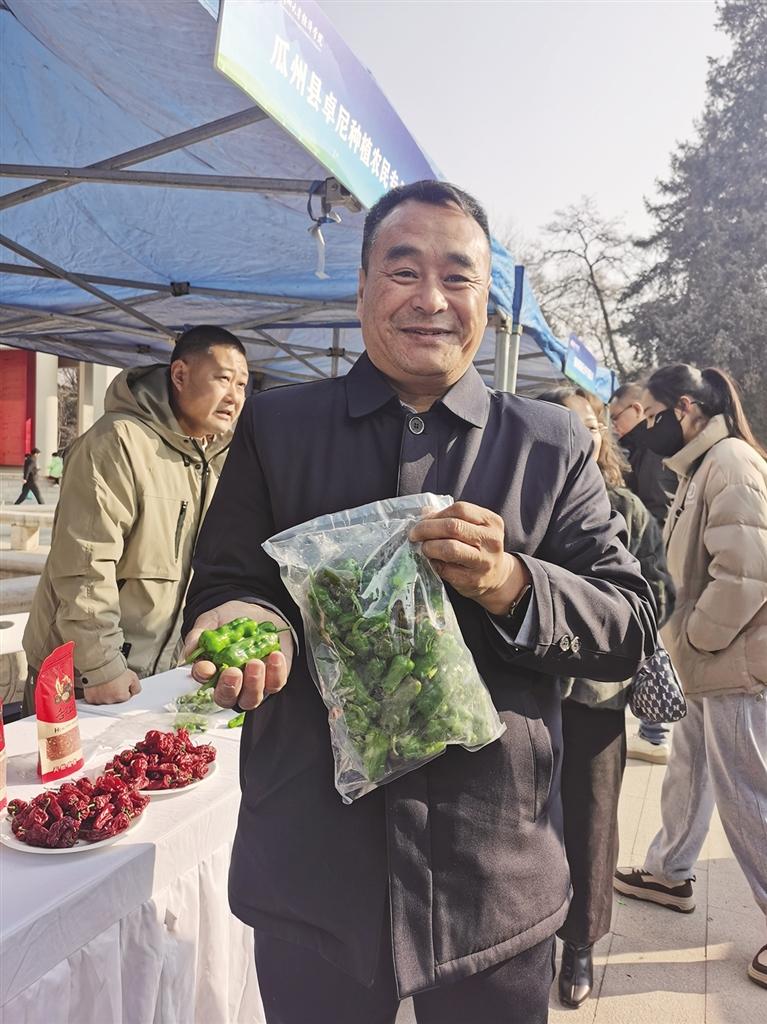
Core Insights - The event showcased the effectiveness of the "Head Goose" training program in promoting Gansu's specialty agricultural products, enhancing rural industry revitalization efforts [3][4] - The exhibition featured over 60 participating enterprises and showcased more than 100 types of Gansu agricultural products, attracting significant interest from students and local citizens [3] Group 1: Event Overview - The "Head Goose" special agricultural product marketing event took place from December 28 to 30 at Lanzhou University, aimed at promoting Gansu's rural industry [3] - The event included a vibrant exhibition at the university's alumni square, where various local products were displayed and sold [3] Group 2: Participant Engagement - Participants, including "Head Goose" trainees, actively engaged with attendees, explaining the advantages, nutritional value, and processing methods of their products [3] - The interactive experience allowed attendees to taste and learn about the unique qualities of Gansu's agricultural offerings [3] Group 3: Support and Objectives - The event was supported by the Gansu Provincial Department of Agriculture and Rural Affairs and was part of the 2025 rural industry revitalization initiative [4] - The Lanzhou University Economic College emphasized the importance of combining training outcomes with practical marketing to enhance brand operation and market expansion capabilities for the trainees [4]

油脂油料早报-20251230
Yong An Qi Huo· 2025-12-30 00:47
Report Summary 1. Report Industry Investment Rating - Not provided in the given content 2. Core Viewpoints - As of the week ending December 25, 2025, the U.S. soybean export inspection volume was 750,312 tons, in line with market expectations [1] - A private exporter reported a sale of 10,000 tons of soybeans to Egypt for delivery in the 2025/2026 market year [1] 3. Summary by Relevant Catalogs Overnight Market Information - The U.S. soybean export inspection volume as of the week ending December 25, 2025, was 750,312 tons, with the previous market forecast ranging from 750,000 - 1,200,000 tons. The volume in the previous week was revised to 929,365 tons from an initial value of 870,199 tons. The export inspection volume to the Chinese mainland that week was 135,417 tons, accounting for 18.05% of the total. As of the week ending December 26, 2024, the U.S. soybean export inspection volume was 1,643,692 tons. So far this crop year, the cumulative U.S. soybean export inspection volume is 15,396,334 tons, compared with 28,671,623 tons in the same period of the previous year [1] - A private exporter reported a sale of 10,000 tons of soybeans to Egypt for delivery in the 2025/2026 market year [1] Spot Prices - The spot prices of various products from December 23 - 29, 2025, are presented in a table, including prices of soybean meal in Jiangsu, rapeseed meal in Guangdong, soybean oil in Jiangsu, palm oil in Guangzhou, and rapeseed oil in Jiangsu [2] Protein Meal Basis - Not provided in the given content Fatty Basis - Not provided in the given content Fatty Oil Futures Spread - Not provided in the given content
农产品早报-20251230
Yong An Qi Huo· 2025-12-30 00:41
Group 1: Investment Ratings - No investment ratings are mentioned in the report Group 2: Core Views - Corn prices are currently weak due to the directional auction policy, but may rise after New Year's Day due to downstream seasonal restocking. In the medium to long term, focus on import and domestic auction policies [5] - Starch prices are expected to strengthen slightly after New Year's Day supported by year - end stocking. In the long term, downstream consumption rhythm is the key [5] - Short - term sugar prices are driven by short - covering, and in the long term, if the global sugar surplus increases, prices may fall to the out - of - quota import cost [7] - Cotton is suitable for long - term buying as demand is expected to improve next year due to factors like expanding textile production, good profits and favorable tariff policies [10] - For eggs, the key is the egg - laying hen culling rhythm. Accelerated culling may benefit second - quarter egg prices [16] - Apple prices show a pattern of good quality goods being stable and lower - quality goods weakening. The market is expected to be near - strong and far - weak [19] - Pig prices are rising due to factors such as supply reduction by farmers, second - round fattening, and New Year's Day stocking. Pay attention to factors like the slaughter rhythm, diseases and policies [19] Group 3: Corn and Starch - **Price Data**: From December 23 to 29, 2025, corn prices in Changchun remained at 2160, while in other regions, there were changes such as a 30 increase in Jinzhou and a 6 decrease in Weifang. Starch prices in Heilongjiang and Weifang remained at 2750 and 2800 respectively [4] - **Analysis**: Short - term corn prices are affected by the auction policy and downstream restocking. Starch prices are affected by downstream restocking enthusiasm and raw material costs [5] Group 4: Sugar - **Price Data**: From December 23 to 26, 2025, sugar prices in Liuzhou, Nanning and Kunming showed an upward trend, and the basis and import profit also changed [6] - **Analysis**: Short - term sugar prices are driven by short - covering, and long - term prices depend on the global sugar supply situation [7] Group 5: Cotton and Cotton Yarn - **Price Data**: From December 23 to 29, 2025, cotton price at 3128 index changed from 14895 to 15240, and other related data such as import profit and spinning profit also had fluctuations [20] - **Analysis**: Cotton demand is expected to improve next year, and it is suitable for long - term investment [10] Group 6: Eggs - **Price Data**: From December 23 to 29, 2025, egg prices in different production areas changed, and the basis decreased by 105.00 [15] - **Analysis**: The key to egg price trends is the culling rhythm of egg - laying hens [16] Group 7: Apples - **Price Data**: From December 23 to 29, 2025, the price of Shandong 80 first and second - grade apples remained at 8900.00, and the basis for different months changed [18] - **Analysis**: The apple market is currently in a weak state with slow inventory removal, and the price pattern is expected to be near - strong and far - weak [19] Group 8: Pigs - **Price Data**: From December 23 to 29, 2025, pig prices in different production areas increased significantly, and the basis also increased [19] - **Analysis**: Pig prices are rising due to supply and demand factors, and attention should be paid to factors like the slaughter rhythm, diseases and policies [19]