矿业

Search documents
盘前公告淘金:中科蓝讯2025年净利同比预增367%-377%,利扬芯片回应存储价格飙升称部分客户主动要求涨价获得产量
Jin Rong Jie· 2026-01-08 00:43
Important Matters - Pritchard has achieved a significant breakthrough in LCP film technology, being the only company in China to do so, and is collaborating with overseas clients for applications in brain-computer interfaces [1] - Zhongtian Rocket's small guided rocket products primarily serve military trade, with product gross margins fluctuating between 35% and 40% [1] - CIMC's subsidiary is providing liquid oxygen storage tanks and other equipment in the commercial aerospace sector, with expected revenue and orders exceeding 100 million yuan by 2025 [1] - Gaode Infrared is supplying infrared detector cores for commercial aerospace and satellite applications [1] - Zhongfu Shenying's M55J-grade carbon fiber is undergoing application verification in satellite structural components [1] Investment and Operations - Dazhong Mining plans to invest 3.688 billion yuan in a 20 million tons per year lithium mining and selection project [1] - Zhongkuang Resources has commenced trial production for a high-purity lithium salt project with an annual output of 30,000 tons [1] - Cuiwei Co., Ltd. has indirectly invested 150 million yuan in Super Fusion through its subsidiary fund [1] - Huagong Technology has launched a self-developed silicon photonic chip for 1.6T optical modules [1] - Gaomei Co., Ltd. has formed small batch orders for composite tungsten wire tendon ropes [1] - Xinlitai's innovative drug SAL0145 injection has had its clinical trial application accepted [1] - Hengrui Medicine's innovative drug Rilaforpu α injection has been approved for market launch, with no similar products approved domestically or internationally [1] - Yifan Pharmaceutical's wholly-owned subsidiary has received a registration acceptance notice for Yihuang Decoction granules, with no similar products from the same prescription available domestically [1] Partnerships and Collaborations - Taisheng Wind Power has formed strategic partnerships with multiple arrow manufacturers [2] - Guangqi Technology's subsidiary has signed batch production contracts totaling 264 million yuan for metamaterials with four clients [2] - Lingyi Intelligent Manufacturing has reached a strategic cooperation agreement with Qiangnao Technology [2] Performance - Zhongke Lanyun expects a net profit increase of 367%-377% year-on-year in 2025, driven by significant fair value changes from investments in Moer Thread and Muxi Co., Ltd. [2] - Kangchen Pharmaceutical anticipates a net profit increase of 243%-315% year-on-year in 2025 [2] - Chuanjinno expects a net profit increase of 144%-173% year-on-year in 2025 [2] - Beifang Navigation forecasts a net profit increase of 86.32%-137.14% year-on-year in 2025 [2]


道指深夜下挫460点,存储概念回调,热门中概股多数下跌,白银重挫,油价飘绿
2 1 Shi Ji Jing Ji Bao Dao· 2026-01-07 23:36
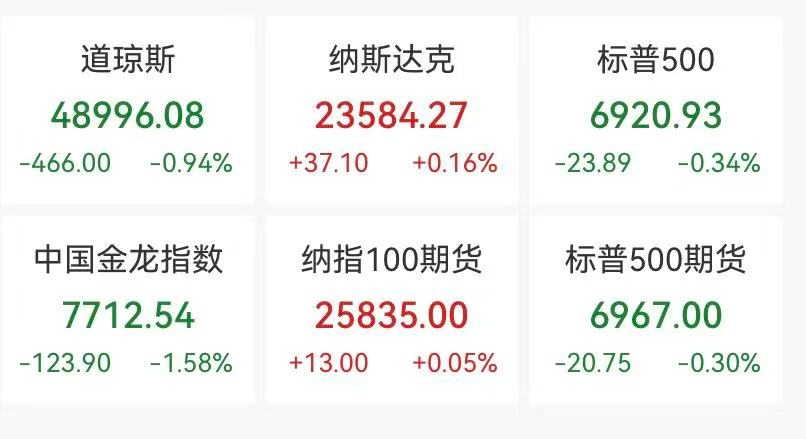
Market Overview - The U.S. stock market showed mixed results, with the S&P 500 and Dow Jones indices reaching historical highs before retreating, where the Dow Jones fell by 466 points, a decline of nearly 1% [1] - The storage sector experienced a notable pullback, with popular Chinese concept stocks mostly declining, and gold and silver stocks suffered significant losses [1] Index Performance - Dow Jones: 48,996.08, down 466.00 (-0.94%) - Nasdaq: 23,584.27, up 37.10 (+0.16%) - S&P 500: 6,920.93, down 23.89 (-0.34%) [2] Technology Stocks - Major tech stocks had mixed performances, with Google rising over 2%, surpassing Apple to become the second-largest U.S. stock by market capitalization; Microsoft and Nvidia increased by over 1%, while Facebook fell nearly 2% [2] - Intel saw a significant rise of over 6%, with an intraday increase exceeding 11% following the launch of its next-generation PC platform processor, Core Ultra3 [2] Storage Sector - The storage sector saw a significant decline, with Western Digital dropping nearly 9%, Seagate Technology down nearly 7%, and Micron Technology falling over 1%; however, SanDisk rose over 1% after a previous day increase of over 27% [3] Chinese Concept Stocks - The Nasdaq Golden Dragon China Index fell by 1.58%, with notable declines in stocks such as CloudMi Technology (down over 11%), and both Artis Solar and Tencent Music (down over 5%); Alibaba and Beike also fell over 2% [4] - Conversely, Chinese Su Xuan Tang Pharmaceutical rose over 18%, with several other stocks like Zhenkunxing, Dingdong Maicai, iQIYI, and Youdao increasing over 5% [4] Precious Metals - Gold and silver stocks faced heavy losses, with Hecla Mining and First Majestic Silver dropping over 4%, and Barrick Gold falling nearly 1% [5] - Spot gold and silver experienced significant declines, with gold down 0.87% and silver down 3.56% [6] Oil and Cryptocurrency - International oil prices showed a downward trend, with NYMEX WTI crude oil falling over 1% to $56.4 per barrel, and ICE Brent crude down over 0.4% [6] - The cryptocurrency market saw most major coins decline, with Bitcoin dropping over 2% to $91,101 per coin [8]

道指深夜下挫460点,存储概念回调,热门中概股多数下跌,白银重挫,油价飘绿
21世纪经济报道· 2026-01-07 23:30
Market Overview - The U.S. stock market showed mixed results, with the S&P 500 and Dow Jones indices reaching historical highs before retreating, where the Dow Jones fell by 466 points, a decline of nearly 1% [1] - The storage sector experienced a notable pullback, with major Chinese concept stocks mostly declining, and both gold and silver stocks suffered significant losses [1] Major Indices Performance - Dow Jones: 48,996.08, down 466.00 (-0.94%) - Nasdaq: 23,584.27, up 37.10 (+0.16%) - S&P 500: 6,920.93, down 23.89 (-0.34%) [2] Technology Stocks - Google (Alphabet) rose over 2%, surpassing Apple to become the second-largest U.S. stock by market capitalization; Microsoft and Nvidia increased by over 1%, while Facebook declined nearly 2% [2] - Intel saw a significant rise of over 6%, with an intraday increase exceeding 11% following the launch of its next-generation PC platform processor, Core Ultra3 [2] Storage Sector - The storage sector faced a sharp decline, with Western Digital dropping nearly 9%, Seagate Technology down nearly 7%, and Micron Technology falling over 1%. In contrast, SanDisk saw a rise of over 1% after a previous day increase of over 27% [3] Chinese Concept Stocks - The Nasdaq Golden Dragon China Index fell by 1.58%, with notable declines in stocks such as CloudMi Technology (down over 11%), and both Artis Solar and Tencent Music (down over 5%). Alibaba and Beike also dropped over 2% [4] - However, some stocks like Su Xuan Tang Pharmaceutical rose over 18%, and several others including Dingdong Maicai and iQIYI increased by over 5% [4] Precious Metals - Gold and silver stocks experienced significant declines, with Hecla Mining and First Majestic Silver dropping over 4%, and Barrick Gold falling nearly 1% [5] - Spot gold and silver saw substantial corrections, with gold down 0.87% and silver down 3.56% in the night session [6] Oil Market - International oil prices showed a downward trend, with NYMEX WTI crude oil falling over 1% to $56.4 per barrel, and ICE Brent crude dropping over 0.4% [7] Cryptocurrency Market - The cryptocurrency market saw most major coins decline, with Bitcoin dropping over 2% to $91,101 per coin, and over 96,000 individuals experiencing liquidation in the last 24 hours [8] Economic Indicators - Recent ADP employment data indicated an increase of 41,000 jobs in December 2025, suggesting a cooling trend in the labor market, which may reinforce expectations for continued interest rate cuts by the Federal Reserve in the first half of the year [9]

深夜英特尔狂飙11%,美股贵金属股重挫,中概股普跌,加密货币超12万人爆仓
2 1 Shi Ji Jing Ji Bao Dao· 2026-01-07 15:56
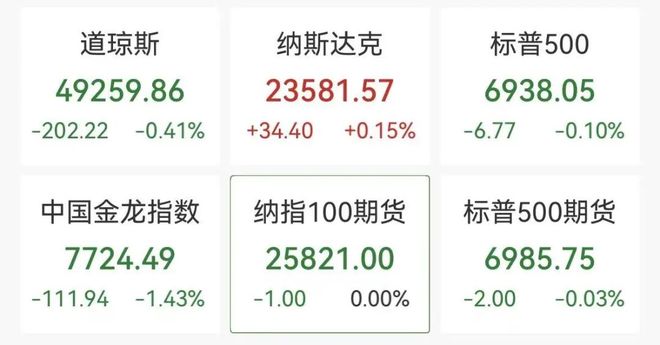
Market Overview - The U.S. stock market opened mixed on January 7, with the Dow Jones down 0.41%, the S&P 500 down 0.1%, and the Nasdaq up 0.15% [1][2]. Major Indices Performance - Dow Jones Index: 49,259.86, down 202.22 points (-0.41%) - S&P 500 Index: 6,938.05, down 6.77 points (-0.10%) - Nasdaq Composite: 23,581.57, up 34.40 points (+0.15%) [2]. Technology Sector Highlights - Intel shares surged over 11%, marking its largest increase since September 18, following the launch of its next-generation PC platform processor, Core Ultra3, at CES [2][3]. - Nvidia rose over 2%, while Google and Microsoft increased by over 1%. Facebook saw a decline of over 2% [2][3]. Chinese Stocks Performance - The Nasdaq Golden Dragon China Index fell by 1.43%. Notable declines included: - Manbang Group down over 7% - Hesai Technology down nearly 4% - NetEase down over 3% - JD.com and Alibaba down over 2% - Conversely, Huya rose over 4%, and iQIYI increased by over 1% [2][3]. Commodity Market - Gold and silver stocks experienced significant declines, with Hecla Mining down 10% and Pan American Silver down over 7%. Spot gold fell over 1% to around $4,440, while spot silver dropped over 6% below $77 [4]. Oil Market - Both U.S. and Brent crude oil prices declined [5]. Cryptocurrency Market - Major cryptocurrencies collectively fell, with Bitcoin down nearly 3% to $91,260. Over 120,000 traders faced liquidation in the past 24 hours [7][8]. Stock Market Outlook - Morgan Stanley's chief U.S. equity strategist predicts continued growth in the U.S. stock market driven by earnings, regulatory easing, and AI applications, with a projected earnings growth rate of nearly 14% for 2026 [10]. - Concerns remain regarding high valuations and capital intensity among large tech companies, prompting some analysts to adopt a more cautious stance [10]. - The founder of Bridgewater Associates warned that the AI-driven surge in tech stocks may be in the "early stages of a bubble" [10]. AI Sector Investment - In 2025, the S&P 500 rose by 16%, with significant contributions from Nvidia, Alphabet, Broadcom, and Microsoft. However, there are growing concerns about the return on investment from the substantial capital expenditures in AI, projected to increase by 34% to approximately $440 billion [11].

深夜英特尔狂飙11%,美股贵金属股重挫,中概股普跌,加密货币超12万人爆仓
21世纪经济报道· 2026-01-07 15:47
Market Overview - Major U.S. stock indices showed mixed performance, with the Dow Jones down by 202.22 points (-0.41%) to 49,259.86, while the Nasdaq gained 34.40 points (+0.15%) to 23,581.57, and the S&P 500 fell by 6.77 points (-0.10%) to 6,938.05 [1] - The Nasdaq Golden Dragon Index, which tracks Chinese stocks, decreased by 1.43% to 7,724.49 [2] Technology Sector Performance - Intel saw a significant increase of over 11%, marking its largest gain since September 18, following the launch of its next-generation PC platform processor, Core Ultra3, at CES [1] - Other major tech stocks also experienced gains, with Nvidia up over 2%, Google and Microsoft each rising over 1%, while Facebook declined over 2% [1][2] Chinese Stocks - The majority of Chinese stocks listed in the U.S. experienced declines, with notable drops including Mabang Group down over 7%, Hesai Technology down nearly 4%, and NetEase down over 3% [2] Precious Metals - Gold and silver stocks faced significant declines, with Hecla Mining dropping 10%, Pan American Silver down over 7%, and Harmony Gold down over 5% [3] - Spot gold fell over 1%, approaching the $4,440 mark, while spot silver dropped over 6%, falling below $77 [3] Oil Market - Both U.S. and Brent crude oil prices experienced declines [4] Cryptocurrency Market - Major cryptocurrencies saw collective declines, with Bitcoin dropping nearly 3% to $91,260, and over 120,000 traders liquidated positions in the past 24 hours [7][8] Stock Market Outlook - Morgan Stanley's chief U.S. equity strategist predicts continued growth in the U.S. stock market driven by earnings, regulatory easing, and AI applications, with expected earnings growth of nearly 14% in 2026 [10] - Concerns remain regarding high valuations and capital intensity among large tech companies, prompting some analysts to adopt a more cautious stance [10] AI Sector Insights - Bridgewater's founder warns that the AI-driven surge in tech stocks may be in the "early bubble stage," with significant capital expenditures expected from major companies in the AI sector [11] - The anticipated capital spending in AI by Microsoft, Alphabet, Amazon, and Meta is projected to grow by 34%, totaling around $440 billion [11]






黄金、白银重挫!重磅数据发布!
证券时报· 2026-01-07 15:39
Core Viewpoint - The ADP National Employment Report indicates a moderate recovery in the U.S. job market, with private sector non-farm employment increasing by 41,000 in December 2025, reversing a decline of 29,000 in November 2025, although it fell short of the Dow Jones consensus estimate of 48,000 [2][4]. Employment Growth - The employment growth is primarily concentrated in the service sector, with education and healthcare contributing 39,000 jobs, leisure and hospitality adding 24,000 jobs, and trade, transportation, and utilities increasing by 11,000 jobs. However, some sectors experienced job losses, including professional and business services, which decreased by 29,000 jobs, and the information services sector, which lost 12,000 jobs [2][3]. - The overall job market showed regional disparities, with the South and Northeast adding 54,000 and 40,000 jobs respectively, while the West saw a significant decline of 61,000 jobs, particularly in the Pacific region, which lost 59,000 jobs [2]. Business Size Impact - Job growth was predominantly driven by small and medium-sized enterprises, with medium-sized businesses (50-499 employees) adding 34,000 jobs and small businesses (1-49 employees) contributing 9,000 jobs. Large enterprises (500+ employees) only added 2,000 jobs [3][4]. Wage Growth - Wage growth remains moderate, with average annual salary increases for employees staying in their positions at 4.4%, unchanged from November. The manufacturing sector saw a 4.8% increase, while the financial services sector experienced a 5.2% increase [3][4]. - Employees who changed jobs saw a salary increase of 6.6%, up by 0.3 percentage points from the previous month, indicating a cooling labor market [4]. Economic Indicators - The ADP report serves as a key forward-looking indicator of the U.S. private sector job market, based on anonymous weekly salary data from over 26 million private sector employees. It provides insights into employment dynamics across industries, business sizes, and regions [4]. - Following the release of the ADP data, U.S. Treasury yields continued to decline, with the 10-year Treasury yield dropping by 3.9 basis points to 4.14%. Gold and silver prices also fell, with spot gold down by 1% and spot silver down nearly 5% [4][5].


美股黄金、白银股大跌
Di Yi Cai Jing Zi Xun· 2026-01-07 15:14
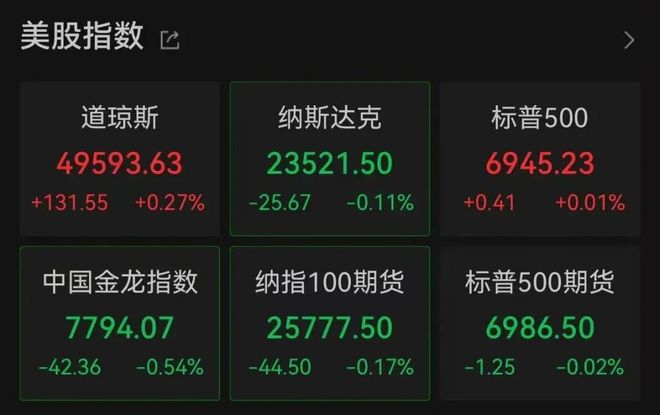
Market Overview - As of January 7, U.S. stock indices showed mixed performance, with the Dow Jones up by 0.27%, the S&P 500 slightly up by 0.01%, and the Nasdaq down by 0.11% [1]. - The Dow Jones index reached 49,593.63, gaining 131.55 points [2]. - The S&P 500 index stood at 6,945.23, with a minor increase of 0.41 points [2]. - The Nasdaq index was at 23,521.50, decreasing by 25.67 points [2]. Sector Performance - Gold and silver stocks experienced significant declines, with Hecla Mining and First Majestic Silver dropping over 5%, and Pan American Silver and Kinross Gold falling more than 4% [2]. - Barrick Gold saw a decline of over 2% [2]. - Spot gold prices fell by 1%, while spot silver prices dropped nearly 5% [2]. Technology Sector - The technology sector faced a majority of declines, with Western Digital falling over 5% and AMD down by more than 2% [2]. Chinese Stocks - Chinese stocks showed mixed results, with Zai Lab increasing by over 5% and Century Internet rising by more than 4% [2]. - However, Hesai Technology and NetEase both experienced declines of over 2% [2].



大中矿业(001203.SZ):下属全资公司拟实施鸡脚山矿区通天庙矿段2000万吨/年锂矿采选尾一体化项目
Ge Long Hui A P P· 2026-01-07 13:44
湖南鸡脚山锂矿经自然资源部评审备案的锂矿资源量达48,987.2万吨,折合碳酸锂当量约324.43万吨; 经自然资源部评审的露天开采规模为2,000万吨/年;湖南省发改委批复的项目采选规模为2,000万吨/ 年;已备案的尾矿库服务期为15.6年。根据行业经验及公司试验,每年2,000万吨原矿开采可生产8万吨 碳酸锂。整体来看,该项目规模优势突出,盈利能力较强。当前碳酸锂市场行业景气度较高,下游新能 源产业对碳酸锂需求持续增长。在此背景下,公司审议通过"鸡脚山矿区通天庙矿段2,000万吨/年锂矿采 选尾一体化项目"的投资建设,标志着公司湖南鸡脚山锂矿采选尾项目正式进入全面开发阶段,符合公 司锂资源战略布局规划,是"铁+锂"双主业协同发展的核心举措。继2025年9月公司四川加达锂矿项目贡 献利润后,湖南鸡脚山2,000万吨/年锂矿采选尾一体化项目的开发,将有助于进一步扩大锂矿利润贡 献,提升公司竞争力与综合盈利能力。 格隆汇1月7日丨大中矿业(001203.SZ)公布,第六届董事会第二十一次会议以7票同意,0票反对,0票弃 权审议通过了《关于下属全资公司实施鸡脚山矿区通天庙矿段2,000万吨/年锂矿采选尾一体化项 ...
大中矿业:下属全资公司拟实施鸡脚山矿区通天庙矿段2000万吨/年锂矿采选尾一体化项目
Ge Long Hui· 2026-01-07 12:41
湖南鸡脚山锂矿经自然资源部评审备案的锂矿资源量达48,987.2万吨,折合碳酸锂当量约324.43万吨; 经自然资源部评审的露天开采规模为2,000万吨/年;湖南省发改委批复的项目采选规模为2,000万吨/ 年;已备案的尾矿库服务期为15.6年。根据行业经验及公司试验,每年2,000万吨原矿开采可生产8万吨 碳酸锂。整体来看,该项目规模优势突出,盈利能力较强。当前碳酸锂市场行业景气度较高,下游新能 源产业对碳酸锂需求持续增长。在此背景下,公司审议通过"鸡脚山矿区通天庙矿段2,000万吨/年锂矿采 选尾一体化项目"的投资建设,标志着公司湖南鸡脚山锂矿采选尾项目正式进入全面开发阶段,符合公 司锂资源战略布局规划,是"铁+锂"双主业协同发展的核心举措。继2025年9月公司四川加达锂矿项目贡 献利润后,湖南鸡脚山2,000万吨/年锂矿采选尾一体化项目的开发,将有助于进一步扩大锂矿利润贡 献,提升公司竞争力与综合盈利能力。 格隆汇1月7日丨大中矿业(001203.SZ)公布,第六届董事会第二十一次会议以7票同意,0票反对,0票弃 权审议通过了《关于下属全资公司实施鸡脚山矿区通天庙矿段2,000万吨/年锂矿采选尾一体化项 ...
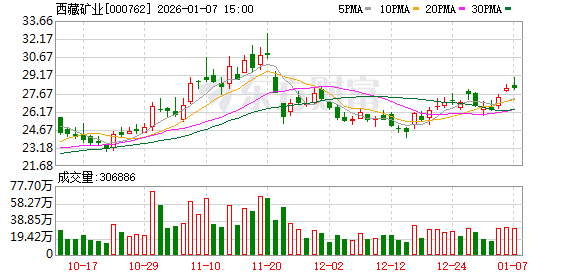
西藏矿业:扎布耶二期处于爬坡期,三期是做前期策划工作
Zheng Quan Ri Bao· 2026-01-07 12:13
Group 1 - The core viewpoint of the article is that Tibet Mining is currently in the ramp-up phase for the second phase of the Zabuye project, while the third phase is in the preliminary planning stage [2] Group 2 - Tibet Mining responded to investor inquiries on an interactive platform regarding the status of the Zabuye project [2] - The company is focusing on the development and planning of its projects to enhance operational efficiency [2]