汽车

Search documents
我国制造业数字化转型进入规模化普及阶段
Xin Lang Cai Jing· 2026-02-25 16:56
Core Insights - The report by the China Academy of Information and Communications Technology indicates that China's manufacturing digital transformation is entering a stage of large-scale popularization, with 89.6% of large-scale industrial enterprises expected to undergo digital transformation by December 2025, and a digital equipment penetration rate of 57.7% [1][2] Group 1: Current Status of Digital Transformation - As of December 2025, the digital transformation rate among key industries shows significant differentiation, with the automotive, shipbuilding, and electronic information manufacturing sectors leading at 94.4%, 94.2%, and 93.9% respectively [1] - The electronic information and equipment manufacturing sectors are categorized in the first tier, while consumer goods and raw materials industries are in the second tier [1] Group 2: Policy and Strategic Framework - The policy framework for promoting digital transformation in manufacturing has been continuously improved, with the State Council approving the "Manufacturing Digital Transformation Action Plan" in May 2024, and the Ministry of Industry and Information Technology issuing implementation guidelines by the end of the year [2] - The goal is for large-scale industrial enterprises in major industrial provinces and key parks to achieve full digital transformation coverage by 2027, and to complete a round of digital transformation by 2030 [2] Group 3: Future Directions and Recommendations - The report emphasizes the need for a systematic approach to advance digital transformation, focusing on improving development quality and efficiency, and integrating smart manufacturing as a primary direction [3] - It recommends strengthening new infrastructure like industrial internet, promoting typical scenario cultivation, demonstration transformation, and large-scale promotion, while also enhancing technology research, standard formulation, security protection, and policy support [3]
车企需多维发力应对“成本涨+价格战”双重压力
Zheng Quan Ri Bao· 2026-02-25 15:46
汽车行业的环境正悄然改变。一方面,销售终端仍延续以价换量的惯性,行业"价格战"热度不减,但不 少车企月销量却出现环比和同比双下滑;另一方面,原材料与运营成本上升、海外市场壁垒抬升等因素 叠加,使车企业绩承压。成本端和销售端的双重压力,正把行业推向一场更考验内功的再平衡。 过去一段时间,降价成为车企争夺市场份额的主要手段。短期内,这种策略有助于提升销量,但随着消 费者预期被不断重塑,观望成为常见心态,品牌溢价与残值稳定性也受到影响,车企盈利能力被进一步 压缩。 "价格战"背后是愈演愈烈的市场竞争。当市场从增量竞争走向存量博弈,车企如果缺乏差异化产品与稳 定的品牌价值支撑,往往只能依赖价格工具争取空间。但从长期来看,一旦利润空间被持续压缩,企业 在研发、服务和质量提升等领域的投入也势必受到约束,最终削弱自身竞争基础。 "今年新车明显比去年难卖了。"近期,笔者在调研汽车市场时,一位一线汽车销售人员表示,此前促销 活动总能吸引不少消费者驻足试乘,但如今人流量大不如前。 ■刘钊 笔者认为,在成本端和销售端的双重压力下,汽车行业更需要回归理性。车企应稳定价格体系,避免无 序竞争;优化库存结构,提高资金使用效率;强化品牌建 ...
以旧换新“焕新”消费图景 智能、绿色产品需求旺
Zheng Quan Ri Bao· 2026-02-25 15:45
Core Insights - The article highlights the growing trend of trade-in policies across various sectors, including electronics and automobiles, aimed at boosting consumer spending and market expansion [2][3] Group 1: Trade-in Policies - Trade-in policies are being implemented nationwide, with local governments like Henan and Beijing launching initiatives to encourage consumers to replace old products, targeting significant numbers of vehicle and appliance upgrades by 2026 [2] - Companies such as Hefei Department Store Group and Midea Group are actively engaging with these policies, enhancing their offerings and services to capitalize on the trade-in opportunities [2] Group 2: Market Impact - As of February 23, 2026, trade-in policies have benefited over 31.1 million consumers, generating sales of approximately 207.03 billion yuan, indicating a strong demand for smart and green products [3] - The shift towards trade-in policies is expected to promote green consumption, guiding consumers towards energy-efficient and environmentally friendly products, thus driving market upgrades [3] Group 3: Recommendations for Improvement - Experts suggest enhancing the precision of subsidies to favor energy-efficient and smart products, potentially increasing the subsidy amounts for these categories [3] - A more robust recycling system for old products, simplified subsidy application processes, and stronger collaboration with manufacturers are recommended to support sustainable development and improve consumer experience [3]
深夜美股科技巨头全线飘红,纳微半导体狂飙17%,油价直线跳水,比特币飙升5%,美政府被曝正酝酿征收新关税
2 1 Shi Ji Jing Ji Bao Dao· 2026-02-25 15:36
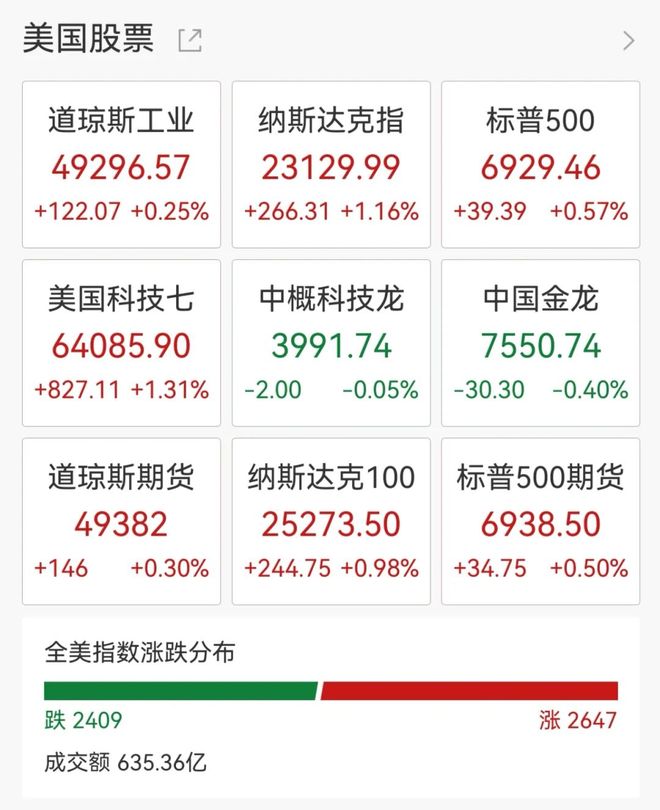
记者丨张嘉钰 编辑丨江佩霞 2月25日,美股三大指数高开,截至23:00,道指涨0.25%,标普500涨0.57%,纳指涨1.16%。 | 美国股票 L3 | | | | --- | --- | --- | | 道琼斯工业 | 纳斯达克指 | 标普500 | | 49296.57 | 23129.99 | 6929.46 | | +122.07 +0.25% | +266.31 +1.16% | +39.39 +0.57% | | 美国科技七 | 中概科技龙 | 中国金龙 | | 64085.90 | 3991.74 | 7550.74 | | +827.11 +1.31% | -2.00 -0.05% | -30.30 -0.40% | | 道琼斯期货 | 纳斯达克100 | 标普500期货 | | 49382 | 25273.50 | 6938.50 | | +146 +0.30% | +244.75 +0.98% | +34.75 +0.50% | | 全美指数涨跌分布 | | | | 跌 2409 | | 涨 2647 | | 成交资 625 2617 | | | 科技股多数上涨,美股科技七巨头全线拉 ...

宝马集团董事长齐普策随德国总理访华:全球紧密协作才能促进汽车产业繁荣共享
Xin Lang Cai Jing· 2026-02-25 14:43
Group 1 - BMW Group is intensifying its commitment to the Chinese market, highlighted by the signing of a memorandum of understanding with CATL to enhance collaboration in the battery supply chain and reduce the carbon footprint of electric vehicles [2] - The Chairman of BMW Group, Zipse, emphasized the importance of global cooperation in addressing challenges and fostering innovation, stating that open collaboration is essential for the automotive industry's sustainable development [2] - BMW has invested over 120 billion RMB in its Shenyang production base since 2010, establishing it as a leading center for smart manufacturing and innovation, while also setting a benchmark for digital and green transformation in high-end manufacturing [2] Group 2 - China has increasingly become a strategic hub for BMW's global innovation, with the establishment of four R&D innovation centers and three software companies in the country [3] - The upcoming launch of the new generation BMW iX3 long-wheelbase version at the Beijing Auto Show in April marks the highest level of localization for BMW vehicles to date [3]


当前经济与政策思考:如何应对高额顺差(日本当年的做法)
ZHONGTAI SECURITIES· 2026-02-25 14:42
Group 1: Trade Surplus Overview - Japan's trade surplus grew from 1 trillion yen in 1965 to approximately 13.7 trillion yen in 1986, peaking at about 4.0% of GDP[8] - The trade surplus was primarily driven by goods, as Japan has had a long-term deficit in service trade[3] - The rapid increase in trade surplus led to internal and external conflicts, prompting Japan to adjust its trade policies[11] Group 2: Export Adjustments - Japan shifted its export focus from resource-intensive products to technology-intensive products, with capital equipment's share rising from 43.1% (1980-1984) to 50.7% (1985-1989)[11] - Exports to the U.S. decreased from 46.5% in 1986 to 34.6% in 1991, while exports to Asia increased from 30% to 47.9% in the same period[15] - Japan implemented export restrictions and diversified its markets to mitigate trade tensions, particularly with the U.S.[16] Group 3: Import Adjustments - Japan's import structure shifted, with raw materials' share declining and manufactured goods' share increasing; raw materials fell from 40.5% (1980-1984) to 20.8% (1985-1989)[28] - The average tariff rate in Japan dropped to 2.5%-2.6% in the mid-1980s, one of the lowest among developed countries[30] - Japan actively promoted imports through various measures, including reducing tariffs and eliminating non-tariff barriers[32] Group 4: Utilization of Foreign Exchange Reserves - Japan's foreign exchange reserves grew from approximately $3 billion in the 1970s to over $20 billion in the 1980s[53] - The government used reserves to stabilize the yen and mitigate trade tensions, notably through the Plaza Accord in 1985, which led to a significant appreciation of the yen[54] - Japan's foreign aid (ODA) surged to $8.965 billion in 1989, surpassing the U.S. and reflecting its enhanced international standing[55]
开源晨会0226-20260225
KAIYUAN SECURITIES· 2026-02-25 14:42
Core Insights - The report highlights a decrease in the bond custody amount at the Shanghai Clearing House, with a total of 49.71 trillion yuan at the end of January, down from 49.88 trillion yuan, reflecting a net decrease of 176.29 billion yuan [5][7][8] - The total bond custody amount at both the Shanghai Clearing House and China Central Depository & Clearing Co., Ltd. (CCDC) increased to 179.31 trillion yuan, with a net increase of 757.62 billion yuan [7][8] - The report indicates that the overall leverage ratio in the bond market remained stable at 107.14% in January, with commercial banks being the main contributors to bond purchases [11][12] Total Research - The Shanghai Clearing House's bond custody amount decreased by 176.29 billion yuan, while CCDC's increased by 933.91 billion yuan, leading to a combined net increase of 757.62 billion yuan [7][8] - The main contributors to the net increase in bond custody were interest rate bonds, which saw a significant rise, while interbank certificates of deposit experienced a notable decrease [9] - Commercial banks were identified as the primary buyers of bonds, with a net increase of 10.22 trillion yuan in bond custody, while other financial institutions showed negative net increases [10] Market Outlook - The report suggests a target range for the 10-year government bond yield of 2-3%, with a central tendency around 2.5% [12][13] - Economic recovery is not meeting expectations, and there may be a shift towards looser monetary and fiscal policies in early 2026, which could accelerate the economic cycle [12] - The report emphasizes the importance of monitoring inflation trends, particularly the Producer Price Index (PPI), to gauge potential tightening of monetary policy [13]
马年开工,各省如何“押注”科技赛道?
Xin Jing Bao· 2026-02-25 14:40
2026年是"十五五"开局之年,意义非凡。春节后首个工作日,全国各地"新春第一会"如约而至。"科技创新"成为 各地谋篇布局的关键词。 各省如何落子"科技赛道"?从广东的"两业协同",到山东的"人工智能+制造",再到湖北机器人的硬核迭代,今年 各地对科技的部署,不再是单一维度的技术竞赛,而是更深层次地与区域战略定位、产业基础和发展阶段相融 合,呈现出"同向竞速,各展所长"的局面。 图/ic 人工智能:从技术变量到发展增量 连续四年在开工首日召开"新春第一会"的广东,今年将主题锁定在"制造业与服务业协同发展"。作为GDP突破 14.58万亿元、连续37年领跑全国的经济大省,广东既有规模底气,也面临转型阵痛:制造业体量巨大但升级迫 切,服务业体量庞大但赋能深度不足。 广东省委书记黄坤明在广东省高质量发展大会上的讲话中明确指出,新一轮科技革命和产业变革加速突破,人工 智能、生物制造、量子通信等前沿科技集群式爆发、多领域融合,对两业协同发展提出紧迫要求,也提供了坚实 支撑。 作为广东的核心城市,广州率先发力,将人工智能作为破解两业协同难题的重要抓手。广州市委书记冯忠华介 绍,广州将加快人工智能赋能千行百业,开展算力规模 ...

德国总理默茨携30家“顶配团”访华 德国企业:期待中德携手引领全球技术变革
Zhong Guo Jing Ying Bao· 2026-02-25 14:34
另一位"团员"宝马集团董事长齐普策在随德国总理默茨访华期间表示:"当今世界,全球性挑战纷繁交 织,合作是应对变局、开创未来的必由之路。德国总理此次访华,向世界传递了持续对话、深化合作的 鲜明信号,同时也为宝马同中国伙伴未来继续挖掘合作潜力奠定了基础。国际环境越复杂,越需要各国 敞开胸怀,摒弃误解偏见,加强沟通对话,增进政治互信,维护世界和平与稳定。" 《中国经营报》记者采访了解到,作为德国先进的汽车制造商以及最早进入中国市场的跨国企业,大众 汽车集团(中国)方面就德国总理默茨访华表示:"在全球格局日渐动荡分化的背景下,德国总理弗里 德里希·默茨此次访华,释放出稳定、对话与务实合作的重要信号。作为欧洲最大经济体,德国在塑造 欧中经贸关系方面发挥着关键作用。对大众汽车集团、德国乃至整个欧洲的工业界而言,中国的意义不 仅仅是销售市场,更是创新的策源地和技术合作伙伴,同时也是全球价值创造体系中的一大支柱。在电 动出行、软件、人工智能和电池技术等领域,中国正以全球领先的速度引领发展节奏,并塑造行业标 准。无论是在出行还是可再生能源等关键领域,任何真正致力于推动转型的企业,都不可能忽视中 国。" 刚刚迎来品牌140周年的 ...
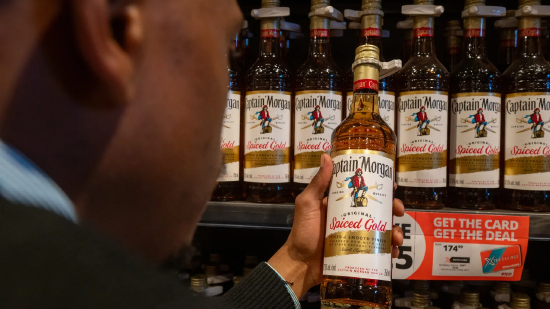
全球最大烈酒生产商帝亚吉欧调低盈利预期,股价跌8%
Xin Lang Cai Jing· 2026-02-25 14:21
Group 1: Diageo Financial Performance - Diageo's Kenyan subsidiary reported a profit of 12.2 billion Kenyan shillings (approximately 9.44 million USD) for the fiscal year ending June [2] - For the six months ending in December, Diageo's net sales fell by 4% to 10.5 billion USD, attributed to pressure on disposable income affecting the U.S. spirits market [8] - The company expects further weakening in 2026, with organic sales projected to decline by 2%-3% and organic operating profit expected to remain flat or grow slightly in single digits [9] Group 2: Market Reactions and Economic Context - Diageo's stock price dropped by 8% following the company's downward revision of sales and profit expectations for 2026, citing weak demand in North America and China [2] - European stock markets rose, with the Stoxx 600 index up by 0.5%, influenced by the announcement of a global 10% tariff by U.S. President Trump, which eased market tensions [2] - Aston Martin announced a 20% workforce reduction due to profit declines linked to U.S. and China tariffs, with a revenue drop of 21% to 1.26 billion GBP in 2025 [9]