有色

Search documents
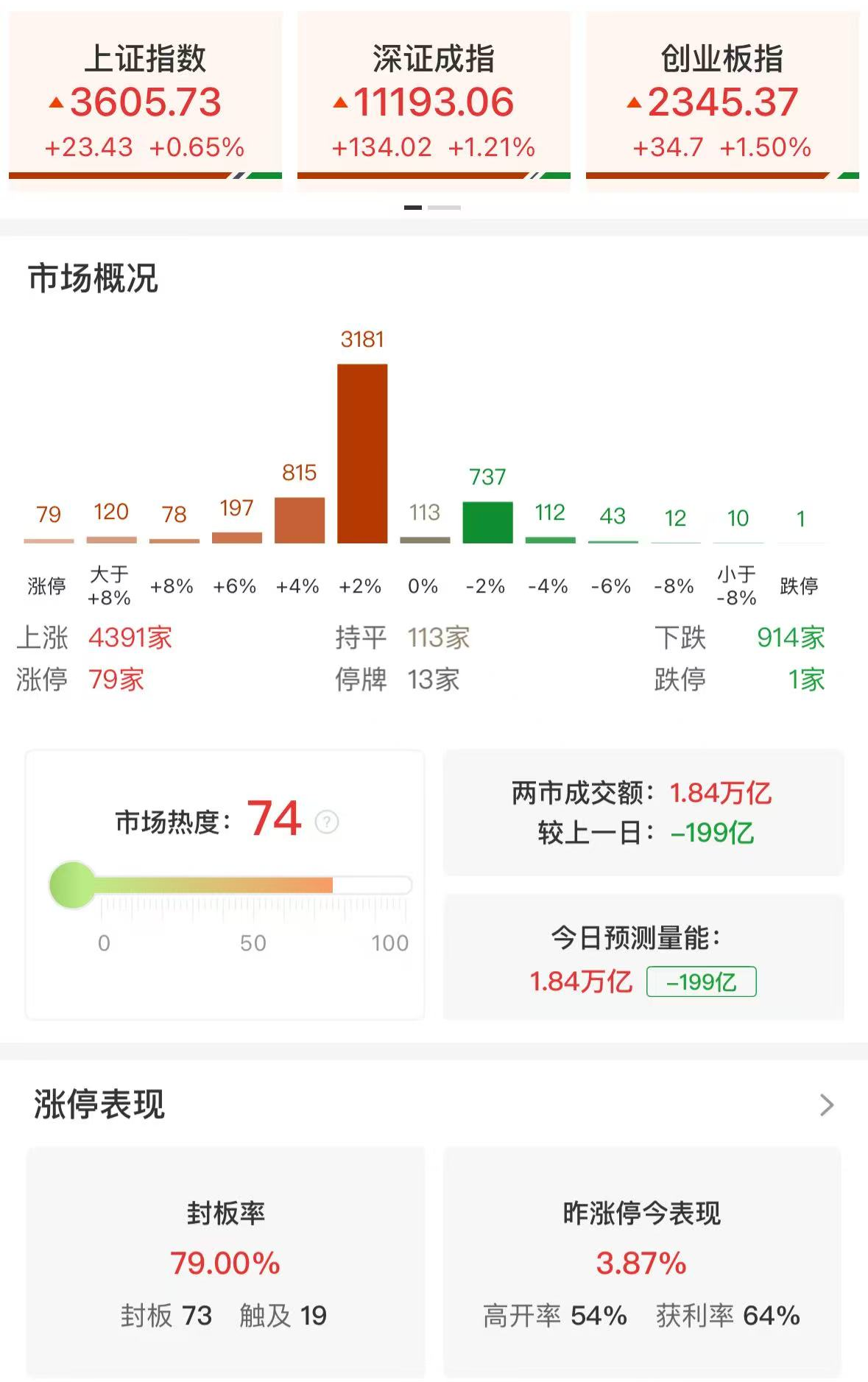
收评:沪指涨0.65%再度站上3600点 全市场超4300只个股上涨
news flash· 2025-07-24 07:04
Market Overview - The Shanghai Composite Index closed up 0.65%, surpassing the 3600-point mark, with all three major indices reaching new highs for the year [1][2] - The total trading volume in the Shanghai and Shenzhen markets was 1.84 trillion yuan, a decrease of 19.9 billion yuan compared to the previous trading day [1] Stock Performance - Over 4300 stocks in the market experienced gains, indicating a broad-based rally [1] - The Hainan Free Trade Zone concept stocks saw a collective surge, with over 20 stocks, including Hainan Airport, hitting the daily limit [1] - Rare earth permanent magnet concept stocks also rose significantly, with Guangsheng Nonferrous Metals hitting the daily limit [1] - Super water power concept stocks rebounded from lows, with multiple stocks, including China Power Construction, reaching the daily limit [1] Sector Analysis - The leading sectors in terms of gains included Hainan Free Trade Zone, rare earth permanent magnets, lithium mining, and super water power [1] - Conversely, sectors that experienced declines included precious metals, banking, and CPO [1] Additional Metrics - The limit-up rate was recorded at 79%, with 73 stocks hitting the limit and 19 stocks touching the limit-down [5] - The high opening rate was 54%, with a profit rate of 64% [5]

构建现代化产业体系 河南建什么怎么建
He Nan Ri Bao· 2025-07-24 00:03
Core Viewpoint - The article emphasizes the importance of building a modern industrial system to support high-quality economic development in Henan Province, as highlighted by President Xi Jinping during his visit in May [1]. Group 1: Modern Industrial System Construction - The provincial meeting outlined a roadmap for creating a modern industrial system with unique characteristics of Henan, focusing on optimizing the industrial structure and enhancing comparative advantages [1]. - The "1+2+4+N" target task system aims to establish a modern industrial system led by technological innovation, supported by the real economy, with advanced manufacturing as the backbone and modern service industries as the foundation [1]. Group 2: Traditional and Emerging Industries - The strategy includes upgrading traditional industries such as steel, non-ferrous metals, and food processing, while also promoting strategic emerging industries like new energy, smart connected vehicles, new materials, and next-generation information technology [2]. - The focus is on artificial intelligence, biomanufacturing, and quantum technology to drive the industrialization of cutting-edge technologies and the application of key scenarios [2]. Group 3: Digital Integration - The province is advancing the integration of digitalization and industrialization, enhancing productivity through smart factories and automation, as seen in companies like Luozhu Group and Chaohui [3]. - Efforts are being made to develop a data-driven digital economy and establish a comprehensive digital empowerment platform for leading enterprises [3]. Group 4: Innovation and Industry Chain Development - The article highlights the role of technological innovation in creating new industries and driving productivity, with a focus on nurturing leading innovative enterprises and high-tech companies [4]. - In the first half of the year, the province's technology contract transaction volume reached 155.1 billion yuan, reflecting an 86.7% year-on-year increase [4]. Group 5: Technology Commercialization - The province plans to enhance the innovation platform system, support leading enterprises in establishing high-level R&D platforms, and overcome critical technological bottlenecks to facilitate the commercialization of scientific achievements [5]. Group 6: Industrial Park Development - Industrial parks are identified as crucial for building a modern industrial system, contributing significantly to the province's industrial growth [6]. - The strategy includes enhancing the role of industrial parks in attracting investment and fostering project development, with a focus on creating a matrix of modernized parks characterized by collaborative and digitalized operations [6].
周期投资热情压抑已久私募聚焦结构性机会
Zhong Guo Zheng Quan Bao· 2025-07-23 21:00
Core Viewpoint - The domestic commodity futures market has seen a rapid increase in prices for various industrial products, driven by policy initiatives and infrastructure projects, but there is a growing divergence in the outlook for cyclical stocks among private equity firms [1][2]. Group 1: Market Dynamics - The Ministry of Industry and Information Technology announced a new plan to stabilize growth in ten key industries, focusing on structural adjustments and the elimination of outdated capacity [1]. - The recent strong performance of sectors such as infrastructure, non-ferrous metals, steel, and building materials is seen as a clear indication of favorable fundamentals for bulk commodities [2]. - There is a significant difference in the current environment compared to the 2016 commodity boom, primarily due to a lack of short-term demand resonance and a different supply structure [1][2]. Group 2: Price Trends and Valuation - Current prices for some industrial raw materials are at historical highs, contrasting with the low prices seen in 2016, which may lead to a more differentiated impact from new policies [2]. - The cyclical sectors are experiencing a rebound partly due to supply-side reform expectations and the fact that overall valuations are at historical lows, with institutions holding fewer shares [3]. Group 3: Investment Strategies - Private equity firms are focusing on structural opportunities, particularly in industries with low capacity growth and strong global competitiveness, such as non-ferrous metals [4]. - There is a flexible investment strategy being adopted, combining short-term speculation with long-term positioning, particularly in sectors like steel and chemicals that are expected to benefit from large infrastructure projects [4][5]. - Some firms have begun to build positions in sectors like new energy and coal, which have seen significant price adjustments in recent years, reflecting a positive medium-term outlook for the market [5].
连续上攻后,市场预期有哪些新变化
2025-07-23 14:35
Summary of Key Points from Conference Call Records Industry or Company Involved - The discussion primarily revolves around the **A-share market** and **infrastructure investment**, particularly focusing on the **Yaxi Water Conservancy Project** and its implications for various sectors including **construction**, **resources**, and **new energy**. Core Points and Arguments 1. **Market Catalysts and Fund Flows**: The A-share market has seen a surge due to significant catalysts such as the announcement of a **1.2 trillion yuan** investment in the Yaxi Water Conservancy Project and the Ministry of Industry and Information Technology's new growth stabilization plan for key industries. This has led to increased investor interest in undervalued sectors like infrastructure and cyclical goods [2][4][5]. 2. **Impact of Yaxi Water Conservancy Project**: Although the Yaxi project is estimated to contribute only **0.15%** to GDP, it has generated strong market sentiment as it is perceived as part of a broader anti-involution policy. This has led to a notable rally in related sectors despite the limited actual economic impact [5][6]. 3. **Investment Strategy Conflicts**: There is a noted conflict between short-term and long-term investment strategies. Short-term strategies may focus on following the price movements of upstream resource futures, while long-term strategies should align with anti-involution policies and sectors like photovoltaics, lithium batteries, and automotive [9][10]. 4. **Market Risk Appetite**: The easing of US-China relations and a decrease in the VIX index to its lowest level since February have contributed to a heightened risk appetite among investors. This has resulted in a significant inflow of new capital into the market, with margin financing exceeding **10%** [10][11]. 5. **Performance Disparity in Earnings**: There is a significant disparity in earnings forecasts, with **42%** of companies expected to report negative net profits. Traditional sectors are under pressure, while high-end manufacturing and new sectors like renewable energy and AI show potential for growth [3][14][15]. 6. **Sector Performance**: High-end manufacturing sectors, including small metals and marine equipment, are performing well, while traditional sectors like coal and real estate are struggling. The proportion of companies with profit growth exceeding **50%** has increased from **8%** to **18%** year-over-year [15][16]. 7. **New Investment Opportunities**: Emerging sectors such as renewable energy, humanoid robotics, artificial intelligence, and innovative pharmaceuticals are expected to attract continued investment. This trend mirrors past market behaviors where low-valuation sectors were replaced by stronger growth sectors [17][19]. 8. **Dividend Strategy Focus**: The dividend strategy should emphasize individual stock rotation rather than a single sector focus. Stocks with stable dividend yields, such as those in food and beverage, are currently more favorable [18]. 9. **Future Market Trends**: The market is expected to maintain a strong upward trend, with a potential shift from growth to value stocks. Short-term fluctuations may present buying opportunities, particularly in sectors like innovative pharmaceuticals and semiconductors [13][19]. Other Important but Possibly Overlooked Content - The market's current sentiment is influenced by a combination of fundamental factors and liquidity conditions, with a notable lack of overheating or rapid corrections in the market [10][12]. - The potential for retail investor participation is anticipated to increase as previous losses are recouped, leading to a more favorable environment for market entry [12].
行业景气观察:黑色系商品价格上涨,新能源和光伏产业链价格反弹
CMS· 2025-07-23 13:33
Core Insights - The report highlights a significant rebound in prices for black commodities, as well as the new energy and photovoltaic industry chains, driven by expectations of "anti-involution" policies [1][2][21] - Key price increases are observed in steel, coal, glass, and certain metals, with many currently at historical lows, indicating potential for recovery [2][21] - The report recommends focusing on sectors with high or improving sentiment, including coke, steel, building materials, non-ferrous metals, batteries, silicon materials, semiconductors, telecommunications, and securities [1][2][21] Industry Overview Upstream Resources - Recent price increases in steel, coal, and glass are attributed to "anti-involution" policies, with coke and coal futures rising by 13.1% and 22.7% respectively [13][21] - Steel prices have also seen a rise, with rebar prices increasing by 4.2% and steel billet prices by 6.1% [13][21] New Energy and Photovoltaics - The new energy and photovoltaic sectors have experienced rapid price increases, with DMC and lithium carbonate prices rising by 13.5% and 8.5% respectively [16][21] - The photovoltaic industry composite price index has increased by 16.2%, with silicon wafers and polysilicon prices rising by 39.4% and 19.5% respectively [16][21] Metals - Industrial metals such as copper, aluminum, zinc, and tin have generally increased in price, driven by robust downstream demand and supply constraints [14][21] - Precious metals have shown strong performance, with COMEX gold and silver prices rising by 3.4% and 4.4% respectively [14][21] Agricultural Products - Seasonal demand has led to a significant increase in egg prices, which rose by 14.8% [18][21] - High temperatures have impacted supply, resulting in increases in soybean and soybean oil prices by 2.3% and 2.1% respectively [18][21]
早盘直击 | 今日行情关注
申万宏源证券上海北京西路营业部· 2025-07-23 02:39
Core Viewpoint - The A-share market is experiencing a short-term upward trend despite some fluctuations, with a positive outlook for the upcoming months as various industry catalysts emerge [1][2]. Market Overview - The A-share market showed initial volatility but began to rise after 10:30 AM, with most major indices closing in the green, indicating a strong buying force [1]. - The Shanghai Composite Index has officially broken through the high point of November 8, 2024, suggesting the end of the sideways movement since Q4 2024 [1]. - Concerns regarding trade conflicts have eased, and with the policy window approaching in July, the market is expected to maintain a slow upward trend [1]. Future Outlook - There are multiple industry catalysts that could positively influence the market, such as the launch of the Yarlung Tsangpo River downstream power station and potential recovery in H20 chip exports [2]. - After the index surpasses 3500 points, two potential paths are identified: continuing the upward trend or consolidating before challenging the previous high of 3674 points [2]. - For the market to challenge the previous high, three conditions must be met: implementation of fiscal stimulus policies, continued global easing, and sustained increase in trading volume [2]. Sector Highlights - The A-share market in July is expected to be driven by events, with a likelihood of sector rotation between high and low-performing areas [3]. - Key sectors to watch include: 1. Consumer expansion and domestic demand, with a focus on dairy products, IP consumption, leisure tourism, and medical aesthetics [3]. 2. The trend of robot localization and integration into daily life, with opportunities in sensors, controllers, and functional robots [3]. 3. The ongoing trend of semiconductor localization, focusing on semiconductor equipment, wafer manufacturing, materials, and IC design [3]. 4. The military industry is expected to see a rebound in orders, with signs of recovery in various sub-sectors [3]. 5. The innovative drug sector is anticipated to reach a turning point in fundamentals after a prolonged adjustment period [3]. Market Performance Review - The A-share market experienced fluctuations but maintained an upward trend, with strong buying support observed [4]. - Leading sectors included coal, building materials, construction, steel, and non-ferrous metals, while banking, computing, telecommunications, electronics, and textiles lagged [4].

后市震荡向上或是主基调,持续大涨的部分题材股可择机适度逢高减持
British Securities· 2025-07-23 02:29
Core Viewpoints - The market is expected to maintain a strong upward trend with structural opportunities, particularly in sectors such as photovoltaic, batteries, energy storage, construction materials, coal, steel, and non-ferrous metals [2][4][9] - The recent surge in traditional sectors is driven by multiple factors, including the significant investment of approximately 1.2 trillion yuan in the Yarlung Tsangpo River downstream hydropower project, which is anticipated to boost related industries and overall economic sentiment [3][4][10] Market Overview - On July 19, the Yarlung Tsangpo River downstream hydropower project officially commenced, with a total investment of around 1.2 trillion yuan, leading to a notable increase in related stocks [7][8] - The A-share market showed a positive trend, with major indices experiencing fluctuations but ultimately closing higher, indicating a robust market sentiment [6][12] Sector Analysis - The traditional sectors, including construction materials, engineering machinery, steel, and coal, have shown strong performance, attributed to the positive impact of the hydropower project and supportive government policies aimed at stabilizing growth in key industries [8][10] - The report emphasizes the importance of focusing on low-valuation leading companies that are directly benefiting from large-scale infrastructure projects, as these are expected to continue their upward trajectory [4][11] Investment Strategy - Investors are advised to selectively reduce holdings in stocks that have seen significant increases while maintaining positions in those that are lagging, as market rotation opportunities may arise [4][11]
文字早评2025/07/23星期三宏观金融类-20250723
Wu Kuang Qi Huo· 2025-07-23 01:35
Report Industry Investment Ratings No relevant content provided. Core Views - The overall market sentiment is positive, influenced by policies such as "anti - involution" and the expected release of key industry stability and growth plans. However, different sectors have different outlooks based on their specific fundamentals [6][11]. - In the short term, the market style may shift from small - and medium - cap stocks to large - and medium - cap stocks. For the bond market, although the long - term trend of interest rates is downward, the recent strong performance of commodities and the stock market has suppressed the bond market [3][6]. Summary by Category Macro - Financial Index Futures - Macro news includes the release of the "Rural Highway Regulations", the establishment of China Fusion Energy Co., Ltd., coal stock surges due to production checks, and net foreign capital inflows into domestic stocks and funds in the first half of the year [2]. - The basis ratios of IF, IC, IM, and IH are provided. The trading logic suggests that the market style may shift, and it is recommended to go long on IF index futures at low prices [3]. Treasury Bonds - On Tuesday, the main contracts of TL, T, TF, and TS all declined. Foreign capital has been increasing its allocation of RMB assets, and the scale of foreign investment in RMB bonds is at a historically high level. The human resources department will promote pension - related reforms [4]. - The central bank conducted 2148 billion yuan of 7 - day reverse repurchase operations, resulting in a net withdrawal of 2477 billion yuan. The economic data in the second quarter was resilient, and the central bank is expected to maintain a loose monetary policy. The bond market may be affected by the stock - bond seesaw [5][6]. Precious Metals - Shanghai gold and silver prices rose, while COMEX gold fell slightly and COMEX silver rose. The statements of Fed officials have affected the precious metals market. It is recommended to maintain a long - term bullish view on precious metals, with reference price ranges provided for Shanghai gold and silver [7][8]. Non - Ferrous Metals Copper - The US dollar index is weak, and the commodity sentiment is positive, driving up copper prices. However, the supply of copper raw materials remains tight, and the downstream is in a relatively off - season. The implementation of US copper tariffs may pose a downward risk to copper prices. Reference price ranges are provided for Shanghai copper and LME copper [10][11]. Aluminum - The rise of black - series commodities has led to an increase in aluminum prices. Although the domestic aluminum ingot inventory is relatively low, it is expected to accumulate due to the off - season and weak export demand. Reference price ranges are provided for domestic and LME aluminum [12]. Zinc - In the long - term, the zinc price is expected to be bearish due to the abundant supply of zinc ore and the expected increase in zinc ingot production. In the short - term, the dovish Fed atmosphere and the strong commodity sentiment may lead to a short - term upward trend in zinc prices [13]. Lead - The supply of lead ingots is relatively loose, and the demand is affected by anti - dumping tariffs. It is expected that the domestic lead price will be weak [15][16]. Nickel - The short - term macro - environment is positive, but the stainless - steel inventory is high, and the demand for nickel is weak. It is expected that the price of nickel ore will continue to decline, and it is recommended to wait and see in the short - term [17]. Tin - The supply of tin is expected to increase in the third and fourth quarters, but the short - term supply of raw materials is still tight, and the demand is weak. It is recommended to wait and see, with reference price ranges provided [18]. Carbonate Lithium - The price of carbonate lithium has increased. The "anti - involution" policy has affected the market sentiment, but the fundamental improvement is limited. It is recommended to wait and see, with a reference price range provided [19][20]. Alumina - The price of alumina has increased. The policy of "eliminating backward production capacity" has boosted the market sentiment, but the over - capacity situation may still exist. It is recommended to wait and see, with a reference price range provided [21]. Stainless Steel - The price of stainless steel has increased slightly, but the supply exceeds demand, and the market sentiment has cooled. The anti - involution policy has boosted the industry's willingness to support prices, but the fundamental situation has not improved significantly [22]. Cast Aluminum Alloy - The price of cast aluminum alloy has increased slightly. The downstream is in an off - season, and the supply and demand are both weak. The cost support has strengthened, but the price may face difficulties in continuous increase [23]. Black Building Materials Steel - The prices of rebar and hot - rolled coil have increased. The start of the Motuo Hydropower Station project has increased the demand expectation for building materials. The supply - side reform and low inventory levels may support the price increase. Attention should be paid to policy signals and terminal demand [25][26]. Iron Ore - The price of iron ore has increased. The high demand for iron water and low overseas ore arrivals have supported the price. The "anti - involution" policy has also boosted the market sentiment. The ore price may remain strong in the short - term [27][28]. Glass and Soda Ash - The price of glass has increased due to policy support and inventory reduction. The price of soda ash has also increased in the short - term, but the long - term supply - demand contradiction still exists. It is recommended to avoid short - selling in the short - term and wait for short - selling opportunities later [29][30]. Manganese Silicon and Ferrosilicon - The prices of manganese silicon and ferrosilicon have increased due to the coal market rally. The fundamental situation of the alloy market is still bearish, but the short - term market sentiment is strong. It is recommended to wait and see [31][32]. Industrial Silicon - The price of industrial silicon has increased. The supply of industrial silicon is still excessive, and the demand is insufficient. It is recommended to rationally treat the current market and consider hedging for the industrial side [35][36]. Energy and Chemicals Rubber - The prices of NR and RU have risen. The rubber market has different views from bulls and bears. The operating rates of domestic tire enterprises have changed, and the inventory situation is complex. It is recommended to maintain a long - term bullish view on rubber prices in the medium - term and be cautious in the short - term [38][39][41]. Crude Oil - The prices of WTI, Brent, and INE crude oil have declined. The fundamental market is healthy, but the seasonal demand in August may limit the upward space. A target price for WTI in September is provided, and it is recommended to go long at low prices and take profits [42][44]. Methanol - The price of methanol has increased. The market is driven by news, and the volatility has increased. The supply and demand are expected to be weak in the future. It is recommended to wait and see after the sharp increase [45]. Urea - The price of urea has increased. The domestic urea supply and demand are acceptable, and the price has support at the bottom but limited upside. It is recommended to pay attention to long - position opportunities at low prices [46]. Styrene - The spot price of styrene has increased, and the futures price has decreased, with a strengthening basis. The cost - side support is strong, and the BZN spread may be repaired. It is expected that the styrene price will follow the cost - side fluctuations [47]. PVC - The price of PVC has increased. The fundamental situation has improved slightly, but the supply and demand and valuation still face pressure. The short - term trend is strong due to anti - dumping extension and market sentiment [49]. Ethylene Glycol - The price of ethylene glycol has increased. The supply and demand situation is changing, and the inventory is decreasing. The short - term valuation has upward support, but the fundamental situation may turn weak in the future [50]. PTA - The price of PTA has increased slightly. The supply is expected to increase, and the demand is weak in the off - season. It is recommended to pay attention to long - position opportunities following PX at low prices [51]. Para - Xylene - The price of para - xylene has increased. The short - term negative feedback from the downstream is small, and the inventory is low. It is recommended to pay attention to long - position opportunities following crude oil at low prices [52]. Polyethylene (PE) - The futures price of PE has increased. The cost - side support has returned, but the demand is in an off - season. The price may maintain a downward trend in a volatile manner [53]. Polypropylene (PP) - The futures price of PP has increased. The supply and demand are weak in the off - season, and it is expected that the price will be bearish in July. It is recommended to wait and see [54]. Agricultural Products Live Pigs - The domestic pig price has generally declined. The short - term supply is limited, and the price may rise again in August. In the long - term, the supply pressure in the fourth quarter may increase. It is recommended to buy at low prices for the 09 contract and consider hedging or short - selling for the 11 contract [56]. Eggs - The egg price has mostly stabilized, with some increases and decreases. The supply pressure has eased, but the high - premium situation makes the market lack a clear trend. It is recommended to pay attention to short - selling opportunities after the price rebounds for the 09 and later contracts [57]. Soybean and Rapeseed Meal - The price of US soybeans is expected to fluctuate within a range. The domestic soybean import cost is affected by trade relations. The domestic soybean meal market has both long and short factors. It is recommended to go long at the low end of the cost range and wait for new drivers [58][59]. Oils and Fats - The price of palm oil has continued to rise. The US biodiesel policy supports the price, but the high - yield expectation and other factors limit the upward space. It is recommended to view the market as volatile [60][62]. Sugar - The price of sugar has declined slightly. The import of syrup and pre - mixed powder has decreased, but the import supply pressure may increase in the second half of the year. It is expected that the price of Zhengzhou sugar will continue to decline [63]. Cotton - The price of cotton has increased slightly. The US cotton growth situation is good, and the downstream consumption is average. The potential issuance of import quotas may be a negative factor. The price has reflected some positive expectations [64][65].
黑色建材日报-20250723
Wu Kuang Qi Huo· 2025-07-23 00:58
黑色建材日报 2025-07-23 钢材 黑色建材组 陈张滢 从业资格号:F03098415 交易咨询号:Z0020771 0755-23375161 chenzy@wkqh.cn 郎志杰 从业资格号:F3030112 0755-23375125 langzj@wkqh.cn 万林新 从业资格号:F03133967 0755-23375162 wanlx@wkqh.cn 赵 航 从业资格号:F03133652 0755-23375155 zhao3@wkqh.cn 螺纹钢主力合约下午收盘价为 3307 元/吨, 较上一交易日涨 83 元/吨(2.574%)。当日注册仓单 86534 吨, 环比持平。主力合约持仓量为 202.4507 万手,环比减少 71405 手。现货市场方面, 螺纹钢天津汇总价格 为 3330 元/吨, 环比增加 50/吨; 上海汇总价格为 3370 元/吨, 环比增加 50 元/吨。 热轧板卷主力合约收 盘价为 3477 元/吨, 较上一交易日涨 83 元/吨(2.445%)。 当日注册仓单 59549 吨, 环比减少 905 吨。主 力合约持仓量为 158.2445 万手,环比减少 1 ...
政策高频 | 中央城市工作会议在北京举行(申万宏观·赵伟团队)
申万宏源宏观· 2025-07-22 09:30
关注、加星,第一时间接收推送! 文 | 赵伟、贾东旭、侯倩楠 联系人 | 侯倩楠 报告正文 一、 中央城市工作会议部署城市工作重点任务 7月14日至15日,中央城市工作会议在北京举行。相比2015年中央城市工作会议提出的"加快棚户区和危房改 造,有序推进老旧住宅小区综合整治,力争到2020年基本完成现有城镇棚户区、城中村和危房改造";当前"存量提 质增效"研判下,本次会议指出要"加快构建房地产发展新模式"、"稳步推进城中村和危旧房改造",并未提出明确目 标。会议中,总书记也提及"工业化进程,西方走了几百年,而我们只用了几十年。深层次看,我们工业化的短板 还很多,要花时间去补。城镇化也是这样,不能面子可以、里子不行,不要搞急于求成、急功近利的事情。有些事 要打攻坚战,有些事要久久为功。" 二、国常会:规范新能源汽车产业竞争秩序 7月16日, 国务院总理李强主持召开国务院常务会议。会议研究了做强国内大循环重点政策举措落实工作,指 出要深入实施提振消费专项行动,系统清理制约居民消费的不合理限制,优化消费品以旧换新政策,扩大新质生产 力、新兴服务业等领域投资。会议还提出要规范新能源汽车产业竞争秩序,要加强成本调查和价 ...