
茶饮

Search documents
味甘传统茶 盛夏新赛道
Bei Jing Wan Bao· 2025-07-30 08:12
Core Insights - The tea beverage market in China is experiencing intense competition as it approaches structural upgrades by 2025, driven by the popularity of ready-to-drink tea among young consumers [1][3] - Major brands are innovating and diversifying their product offerings to cater to health-conscious consumers, marking a shift from traditional tea consumption to modern interpretations [6][7] Market Trends - The ready-to-drink tea market is growing rapidly, with brands like Bawang Chaji achieving significant sales milestones, such as over 600 million cups sold by 2024 [3][5] - Health-conscious trends are becoming mainstream, with brands like Bawang Chaji and Heytea implementing transparency initiatives and health standards to meet consumer demands for lower sugar options [6][8] Brand Strategies - Leading brands are building competitive advantages through unique product offerings: Bawang Chaji focuses on "original leaf fresh milk tea," while Heytea emphasizes innovative flavor combinations [5][6] - Brands are expanding their product lines to include healthier options, with Bawang Chaji launching a "nutrition selection" system and Heytea introducing a health standard for their beverages [6][7] Global Expansion - Major tea brands are increasingly looking to international markets, with Bawang Chaji opening 169 overseas stores by early 2025 and achieving impressive sales in new locations [8][9] - The cultural aspect of tea is being leveraged in global markets, with store designs reflecting Chinese cultural elements to attract local consumers [9] Innovation in Traditional Tea - Traditional tea companies are revitalizing their offerings through product innovation, such as Xiaoguan Tea entering the bottled tea market and Wu Yutai launching cross-category products [10][11] - Wu Yutai's introduction of Jasmine Flower Tea Craft Beer exemplifies the blending of traditional tea culture with modern consumer preferences [11][12]

中金:维持古茗(01364)目标价28港元 评级“跑赢行业”
智通财经网· 2025-07-30 06:41
Core Viewpoint - The report from CICC indicates a strong long-term competitive advantage for Gu Ming (01364), leading to an upward revision of adjusted net profit estimates for 2025 and 2026 by 9% and 7% to 2.2 billion and 2.5 billion HKD respectively [1] Group 1: Revenue Growth and Store Expansion - The company is expected to achieve approximately 30% revenue growth in the first half of 2025, driven by both same-store sales and new store openings [2] - The number of stores is projected to reach around 11,000 by the end of the first half of 2025, with about 1,100 new stores added [2] - The company signed nearly 2,000 new stores from January to May, although some openings are delayed due to renovation capacity constraints [2] Group 2: Profitability and Margin Improvement - The company is anticipated to see a recovery in profit margins, with a projected increase in non-GAAP net profit to around 1 billion HKD in the first half of 2025 [2] - The gross margin is expected to expand due to increased cup volume, although lower margins from coffee machines may offset some of this gain [2] - The company plans to enhance coffee product marketing, which is expected to increase coffee cup volume to over 10% by June [2] Group 3: Future Outlook and Competitive Position - The outlook for same-store sales in the second half of the year remains positive, with expectations for accelerated store openings due to the easing of renovation constraints [3] - The company is leveraging delivery subsidies for new customer acquisition and product promotion, particularly for coffee products [3] - The long-term competitive advantage of Gu Ming is expected to be maintained, focusing on brand value and customer experience rather than solely on short-term promotions [3]
中金:维持古茗目标价28港元 评级“跑赢行业”
Zhi Tong Cai Jing· 2025-07-30 06:40
Core Viewpoint - The company has a solid long-term competitive advantage, leading to an upward revision of adjusted net profit for 2025 and 2026 by 9% and 7% to 2.2 billion and 2.5 billion respectively [1] Group 1: Revenue Growth - The company is expected to achieve approximately 30% revenue growth in the first half of 2025, driven by both same-store sales and an increase in the number of stores [2] - The number of stores is projected to reach around 11,000 by the end of the first half of 2025, with about 1,100 new stores added [2] - The company signed nearly 2,000 new stores from January to May, although some were delayed due to renovation capacity constraints, which are expected to ease by June [2] Group 2: Profitability - The company is anticipated to see a recovery in profit margins, with a projected non-GAAP net profit of around 1 billion in the first half of 2025 [3] - The gross margin is expected to expand due to increased cup volume, although the lower margin from coffee machines may offset some of this increase [3] - The company plans to enhance marketing efforts for coffee products, which may lead to a rise in coffee cup volume to over 10% by June [3] Group 3: Future Outlook - The company is expected to accelerate store openings in the second half of the year, potentially exceeding 3,000 new stores for the entire year [4] - Same-store performance may normalize in the second half due to base effects and a reduction in delivery subsidies, but it is still expected to outperform the industry [4] - The company has established a foundation that does not rely solely on a single platform for survival, which may enhance its long-term competitive advantage despite the reduction in delivery subsidies [4]
茶颜悦色也做烘焙了
Bei Jing Shang Bao· 2025-07-30 02:35
Core Viewpoint - Chayan Yuesheng is expanding its business by introducing a new store format called "Chayan Handmade Bakery," which sells both Western and Chinese baked goods at affordable prices, indicating the brand's determination to seek growth opportunities in a competitive market [1][2][6]. Group 1: New Business Initiatives - The new store format "Chayan Handmade Bakery" focuses on freshly baked products, with a slogan emphasizing the use of good ingredients and simplicity in preparation [2]. - The bakery offers a variety of products, including basic bread, croissants, pineapple buns, egg tarts, and Chinese pastries, with prices ranging from 3 to 6 yuan, predominantly around the 5 yuan mark [2][3]. - The bakery is not a standalone store but operates as a store-in-store concept within an existing Chayan Yuesheng location in Changsha [3]. Group 2: Market Strategy and Positioning - Chayan Yuesheng is diversifying its offerings to enhance customer experience and increase sales frequency, as the tea beverage market is becoming saturated [6][8]. - The brand has previously launched various store types, including discount stores and specialty shops, to cater to different consumer needs and preferences [4]. - The company has also entered the North American market through e-commerce, selling snacks, tea sets, and cultural products, rather than opening physical stores [4]. Group 3: Competitive Landscape - The tea beverage industry is experiencing intense competition, with many brands exploring bakery offerings as a means to drive growth [5][7]. - Chayan Yuesheng's approach of combining tea and baked goods is not unique, but the brand has opportunities to differentiate itself through unique flavors and high-quality products [7]. - Industry experts suggest that the brand should focus on maintaining product quality, innovating new offerings, and enhancing brand recognition through cultural activities and social media engagement [8].
茶咖日报|星巴克免费VS皮爷收费?咖啡行业迎来极端“座位大战”
Guan Cha Zhe Wang· 2025-07-29 14:34
Group 1: Peet's Coffee and Market Dynamics - Peet's Coffee has implemented measures to address the issue of "seat hogging" by requiring customers to make a purchase to occupy seats in select stores [1] - The company has seen strong sales growth in China, with an adjusted EBIT organic growth of 23.8%, contributing to a global sales increase of 7.9% to €8.837 billion [1] - The coffee brand's strategy reflects a focus on protecting its premium experience, contrasting with Starbucks' approach of removing consumption barriers [2] Group 2: New Tea Beverage Industry Trends - The new tea beverage industry has experienced stagnation in store growth, with a total of 116,978 stores as of June 2025, reflecting a mere 0.74% increase from the previous year [3] - The industry is undergoing a reshuffling, with leading brands expanding into lower-tier cities while many mid-tier brands face closures [3] - New tea brands are increasingly targeting the U.S. market, adapting their business models to fit local preferences rather than replicating domestic success [3] Group 3: Technological Innovations in Coffee - Shanghai Heitun has introduced the sixth generation of its fully automated coffee robot, COFE+, capable of producing over 1,000 cups daily with a design lifespan of 500,000 cups [4] - The COFE+ robot utilizes AI to control extraction parameters, ensuring the preservation of coffee's original aroma [4] - The technology aims to eliminate risks associated with opening coffee shops and reduce operational burdens [4] Group 4: Bond Coffee's Strategic Positioning - Bond Coffee, led by the second-generation successor of Want Want Group, is focusing on a "premiumization" strategy rather than rapid franchise expansion [5] - The brand has opened five stores in Shanghai and plans to establish significant locations in high-profile areas by July 2025 [5] - The competitive landscape is intensifying, with both international and domestic brands enhancing their offerings to meet rising consumer expectations [5]
哈根达斯还是不够贵
Hu Xiu· 2025-07-29 13:17
Group 1 - Haagen-Dazs China significantly contributed to General Mills' ice cream business, accounting for half of its revenue in 2017, but rumors of selling its Chinese stores have emerged for 2025 [1] - General Mills denied the sale plans, but Haagen-Dazs is facing increasing competition and has closed 81 stores nationwide in the past year [2][3] - The brand's sales have declined, with a reported 10% drop in customer traffic in its Chinese stores, reflecting broader struggles in the global market [6] Group 2 - Haagen-Dazs' revenue in the past five years fell from $820 million to $720 million, indicating a significant downturn [7] - The brand's premium pricing strategy, with an average price of $9.89 for a double scoop in China, is the highest globally, but it faces challenges from lower-priced competitors [9][11] - The brand's historical positioning as a luxury product has shifted, as it now competes with a variety of cold dessert products, including tea drinks [4][19] Group 3 - The rise of new tea beverage brands has intensified competition, with Haagen-Dazs struggling to maintain its market share [20][28] - The brand's attempt to diversify by opening a coffee shop in Shanghai was a response to the competitive landscape, but it still faces challenges from established players like Starbucks [21][22] - Haagen-Dazs has shifted focus to retail and e-commerce channels, but the ice cream market's low online penetration complicates this strategy [29][30] Group 4 - The pricing strategies of new tea brands have shifted, with products now priced between 15-25 yuan, making them more accessible to a broader audience [32] - The expansion of tea brands into shopping centers has displaced traditional ice cream brands like Haagen-Dazs, which has struggled to adapt [27][33] - Haagen-Dazs' high operational costs and supply chain challenges hinder its ability to compete effectively with the more agile tea brands [43][45] Group 5 - The brand's ice cream products face limitations in scaling due to their perishable nature and high cold chain costs, making it difficult to compete on price [43][44] - Haagen-Dazs has attempted promotional strategies to attract customers, but its core ice cream line remains difficult to expand rapidly [42][46] - The brand's future may depend on finding unique ingredients and repositioning itself in the market to maintain its premium image [49][50]

主打3—6元面包酥饼 茶颜悦色做烘焙副业拓新局
Bei Jing Shang Bao· 2025-07-29 12:40
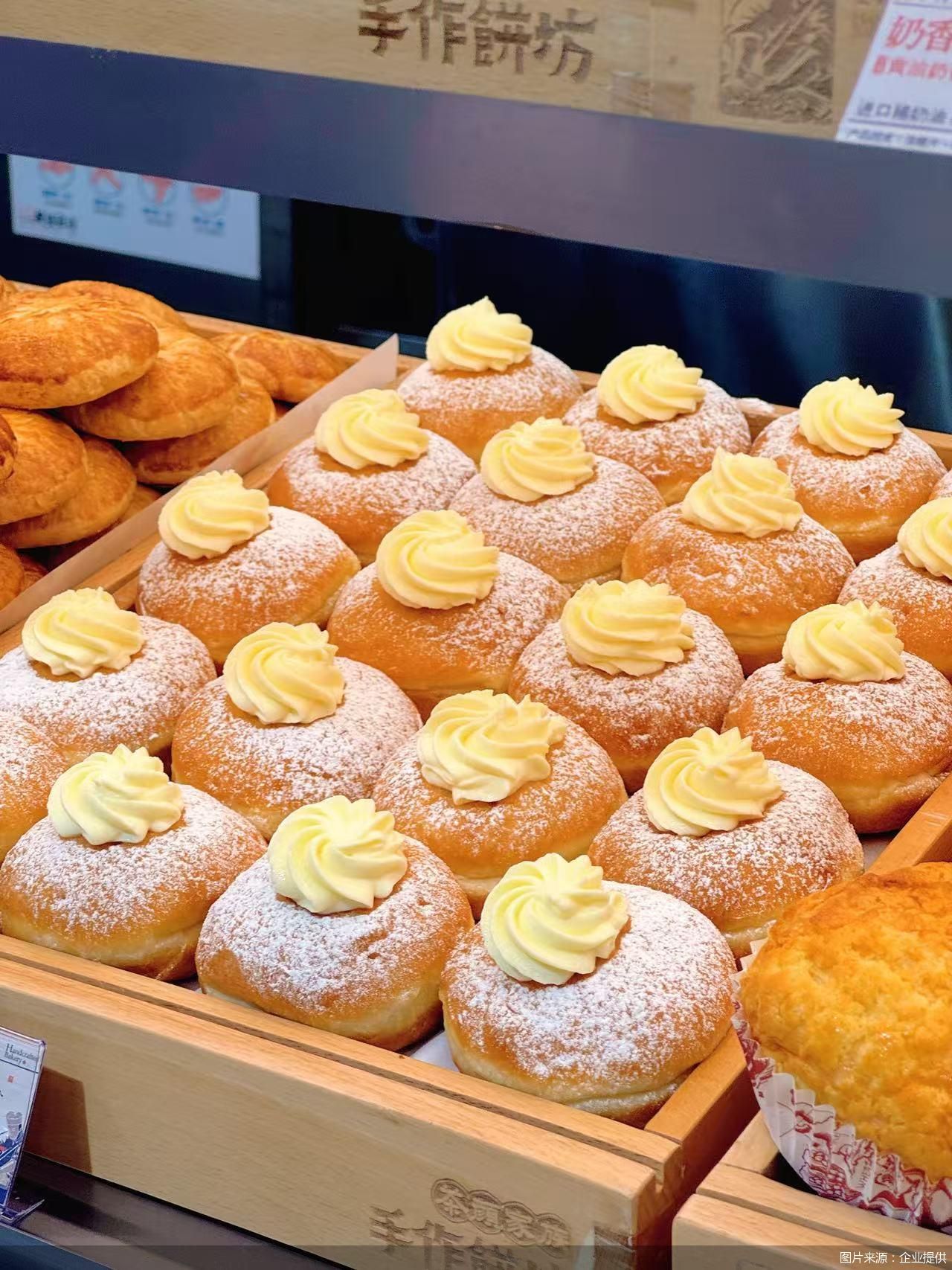
Core Insights - Chayan Yuese has launched a new store format called "Chayan Handmade Bakery," focusing on selling baked goods at affordable prices ranging from 3 to 6 yuan, indicating the brand's commitment to diversifying its product offerings [1][5][10] - The new bakery format is designed as a store-in-store concept, currently located within a Chayan Yuese outlet in Changsha, which allows the brand to leverage existing customer traffic and brand recognition [5][11] - The company is also exploring international markets, having recently entered the North American market through e-commerce, selling snacks, tea sets, and cultural products, rather than opening physical stores [9][14] Product Offering - The bakery offers a variety of baked goods, including both Western and Chinese styles, such as bread, croissants, pineapple buns, egg tarts, and traditional pastries, with creative product names that align with the brand's identity [5][10] - Pricing strategy includes promotions like "buy three get one free" and "buy five get one free," making the products accessible to a broader audience [5][10] Market Strategy - The brand is actively seeking growth opportunities through diversification, as the tea beverage market in China is becoming increasingly saturated, with a projected market size of 3,547.2 billion yuan by 2024 [14][15] - Chayan Yuese's strategy includes enhancing customer experience and optimizing service in stores, which is crucial for building brand loyalty and increasing customer retention [15] Competitive Landscape - The tea beverage industry is witnessing intense competition, with many brands, including Chayan Yuese, expanding into baked goods to increase average transaction value and customer frequency [10][11] - The company faces challenges in managing operational costs and supply chain logistics as it ventures into the baking segment, which has been a common trend among tea brands [10][11] Future Outlook - The brand's future plans for the bakery format remain cautious, focusing on establishing the first location before considering further expansion [5][9] - Experts suggest that Chayan Yuese should continue to innovate and maintain high product quality to differentiate itself in a crowded market, while also exploring potential growth in domestic and international markets [14][15]
凌晨3点,满街都是一手奶茶一手零食的年轻人,“网红”长沙想变“长红”
Chang Sha Wan Bao· 2025-07-29 07:06
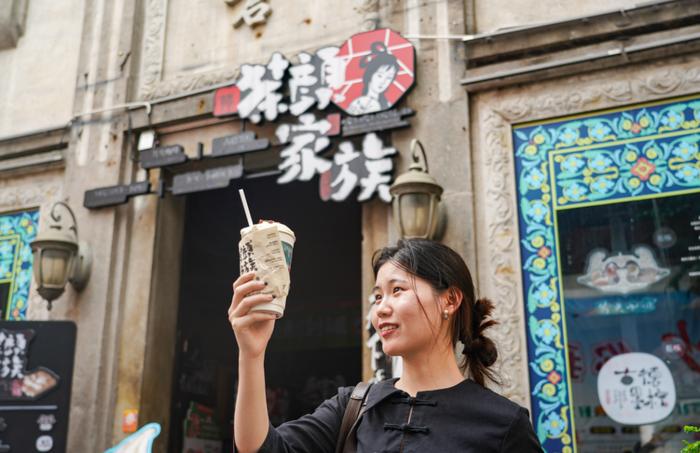
Group 1: Overview of Changsha's Economic Landscape - Changsha is recognized as a vibrant "city that never sleeps," with a significant focus on boosting consumption, particularly in the new retail sector [1] - The city is also known as the "capital of engineering machinery," with over 30% of the national market share, housing five companies listed among the global top 50 engineering machinery firms [1] Group 2: New Consumption Brands - The success of the tea brand "Chayan Yuese" is attributed to its cultural depth and brand recognition, utilizing a "slow philosophy" to counteract industry restlessness [2][3] - Chayan Yuese integrates traditional Chinese culture into its products, creating a unique brand identity that resonates with younger consumers [3][5] - The brand emphasizes quality and a slow-paced approach, maintaining a cautious stance on large-scale delivery and focusing on in-store experiences [6][8] Group 3: Water Sheep Co. (Shuiyang Co.) - Water Sheep Co. has transformed from relying on e-commerce to becoming a leader in the beauty industry, leveraging a unique "CP model" to introduce over 50 international brands into China [11][12] - The company has invested heavily in self-research and production, establishing a smart manufacturing facility capable of producing over 2 billion face masks annually [14][16] - Water Sheep Co. has developed a robust R&D team, creating over 8,000 proprietary formulas and applying for more than 400 patents [16] Group 4: Starbond Intelligent Equipment - Starbond Intelligent Equipment has evolved from relying on imports to becoming a global leader in aerial work platforms, with products sold in nearly 100 countries [19][22] - The company has implemented advanced technologies, such as laser cutting and welding, significantly improving production efficiency and reducing costs [21] - Starbond's transformation has been supported by local government initiatives, providing tailored services to facilitate its growth [23] Group 5: Government Support and Ecosystem - Changsha's government has established a "super incubator" for new consumption brands, providing comprehensive support through research, consulting, and investment services [25][28] - The city has implemented a "1+3" service model to enhance the new consumption industry, focusing on resource integration and talent support [30][31] - The local government has also introduced policies to promote digital transformation and innovation within the engineering machinery sector [34][36] Group 6: Cultural and Demographic Advantages - Changsha's youthful population, with an average age of 37, serves as a strong foundation for new consumption growth [37] - The city's cultural heritage encourages innovation and resilience among local businesses, fostering a unique consumer environment [37][38] - The collaborative approach between government and enterprises has created a supportive ecosystem for new consumption brands to thrive [38][40]
中国抹茶迎来labubu时刻
3 6 Ke· 2025-07-28 00:09
Core Insights - The Chinese matcha industry is at a critical turning point, with increasing global demand and opportunities for growth [1][10] - Matcha is gaining popularity among younger generations in Europe and America, being recognized as a "superfood" [1][10] - Chinese matcha production has surpassed Japan, with expectations to produce over 5,000 tons by 2025, making China the largest producer and consumer of matcha globally [10][11] Industry Trends - Major tea brands in China, such as Heytea and Nayuki, have launched new matcha products, emphasizing their Chinese origins [2][4] - The rise of matcha products in the beverage and dessert sectors reflects a shift in consumer preferences towards this flavor [4][11] - The matcha market is seeing a surge in product innovation, with various brands creating unique offerings to attract consumers [4][10] Production and Supply Chain - The production of high-quality matcha requires a complex supply chain, including specific cultivation and processing methods [6][7] - Key players like Guizhou Guicha Group and Zhejiang Tea Group are leading the establishment of matcha production bases in China [7][9] - The production process involves multiple steps, including shading, harvesting, and low-temperature grinding to preserve nutrients [6][9] Market Dynamics - The global demand for matcha is strong, with significant price increases observed in auction markets [12][14] - Matcha is positioned as a competitor to coffee and chocolate, with potential for capturing market share in these established sectors [12][15] - The Chinese market's unique preferences may allow for the development of matcha products that cater specifically to local tastes [10][19] Future Outlook - The combination of local production capabilities and a large consumer base positions the Chinese matcha industry for significant growth [10][19] - Companies are encouraged to leverage their advantages in production and market access to create popular consumer products [19] - The industry is at a pivotal moment, with the potential for rapid expansion and innovation in matcha offerings [1][11]
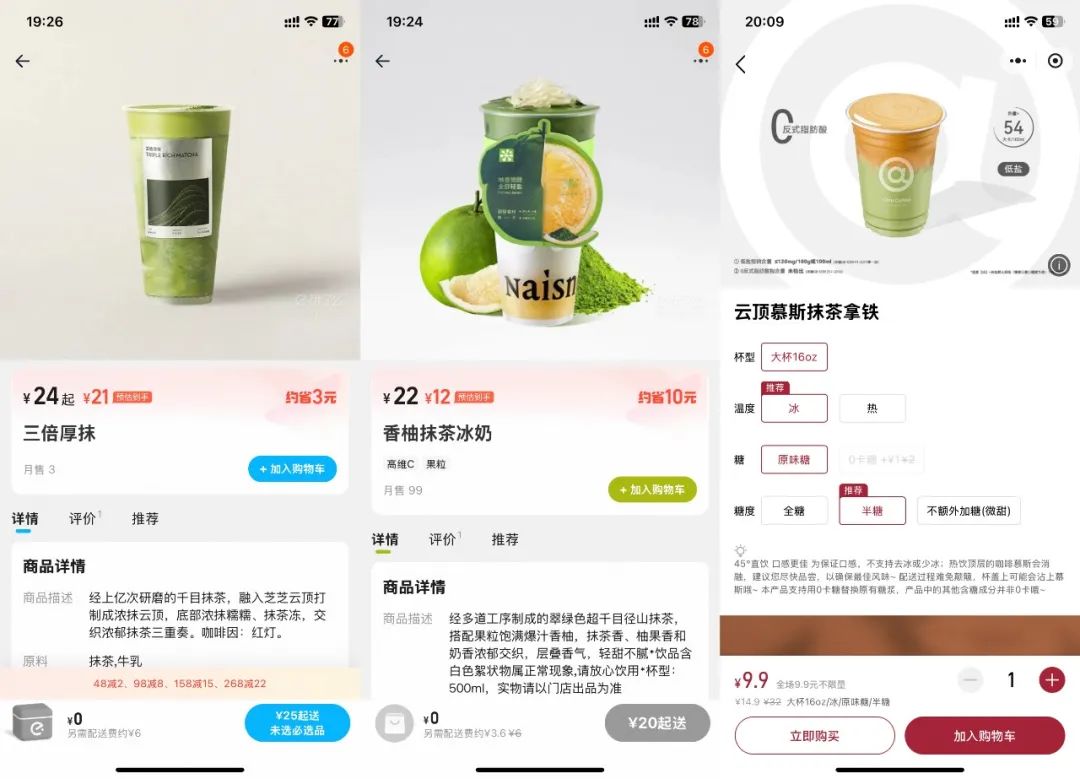
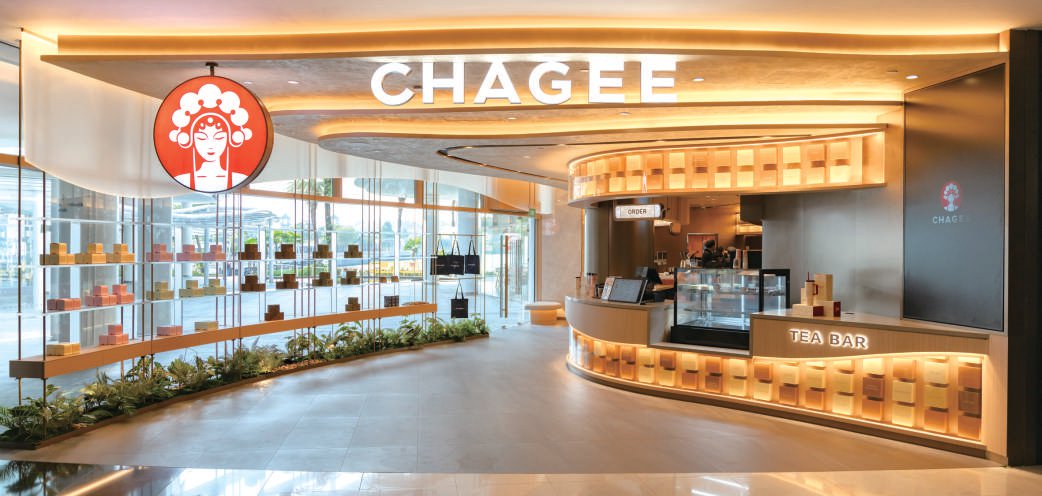
茶百道“冰奶”系列销量已破千万杯 近期加速出海布局新加坡市场
Zheng Quan Shi Bao Wang· 2025-07-27 14:25
Core Insights - The launch of the new "Ice Milk" series drinks, including Ice Mint Milk and Midsummer Melon Milk, has been well-received, with cumulative sales exceeding 12 million cups, making it one of the most popular categories for the summer [1] - The summer season has driven strong demand for fresh fruit beverages, with the company introducing multiple new products that have performed well in the market, including the Lychee series, which has sold over 7 million cups [2] - The company is accelerating its overseas expansion, having recently entered the Singapore market with two stores, which attracted significant consumer interest and sales [2] Product Innovation - The company has established a core competitive barrier focused on product innovation, with over 40 new products launched in the first half of 2025, significantly increasing the rate of blockbuster products [3] - The "Ice Milk" series is part of the company's strategy to create a stable product matrix, following the success of the Lychee Ice Milk [1] Market Trends - The hot summer weather has stimulated consumer demand for refreshing fruit-based drinks, with a notable increase in searches for "refreshing food" by over 36 times in June [1] - The company is also focusing on expanding its presence in lower-tier cities in China, indicating potential for considerable growth [3] Overseas Expansion - The company has successfully implemented a "one city, one policy" strategy for its overseas operations, with stores now established in countries such as South Korea, Malaysia, and Australia [3] - The Singapore launch saw high consumer engagement, with long wait times and significant sales of specific products like the Mango Sago [2]