
动力电池

Search documents
国资委发声!涉及新央企、重组整合、人工智能
2 1 Shi Ji Jing Ji Bao Dao· 2026-01-28 09:36
Core Insights - By the end of 2025, central enterprises are projected to have total assets exceeding 95 trillion yuan, with total profits reaching 2.5 trillion yuan and fixed asset investments of 5.1 trillion yuan, contributing significantly to the economic and social development goals of China [1] - In terms of technological innovation, central enterprises are expected to invest 1.1 trillion yuan in R&D by 2025, maintaining over 1 trillion yuan in annual investment for four consecutive years, and adding 22 academicians, achieving a historical high [1] - The investment in strategic emerging industries by central enterprises is projected to reach 2.5 trillion yuan by 2025, accounting for 41.8% of total investments [1] Group 1: Industry Development and Strategic Focus - The restructuring and integration of central enterprises, along with the focus on "AI+" and emerging industries, are key themes highlighted in the recent press conference [2] - The main goal in building a modern industrial system is to create a number of emerging pillar industries, with a focus on sectors such as new energy, new energy vehicles, new materials, aerospace, and quantum technology [2][4] - The development of new industries is seen as crucial for enhancing global competitiveness and ensuring national development security [2] Group 2: Restructuring and Integration Efforts - The State-owned Assets Supervision and Administration Commission (SASAC) plans to advance the restructuring and integration of central enterprises, focusing on energy security and green development [4] - New central enterprises are being formed, such as the China Yajiang Group and China Chang'an Automobile Group, to reshape competition in the automotive industry and promote high-quality development in smart connected vehicles [4][6] - The SASAC aims to optimize the layout and structure of state-owned capital through strategic mergers and acquisitions, enhancing core competitiveness [6] Group 3: Investment in Emerging Industries - By 2025, revenue from strategic emerging industries of central enterprises is expected to exceed 12 trillion yuan, with a consistent annual growth of 1 trillion yuan [7] - Significant investments have been made in integrated circuits, biotechnology, and new energy vehicles, with a focus on maintaining advantages in high-end equipment manufacturing and new communication technologies [7] - The cumulative investment in strategic emerging industries has surpassed 10 trillion yuan, increasing their share of total investments from 22% to over 40% since the beginning of the 14th Five-Year Plan [7] Group 4: AI and Technological Advancements - Central enterprises are focusing on artificial intelligence as a key area for development, with over a thousand application scenarios created in collaboration with leading companies [9] - The establishment of computing power clusters and intelligent computing service platforms aims to support large model training and provide standardized computing services [9] - Future initiatives include the formation of an "AI+" industry community and the optimization of data supply in key sectors such as transportation, energy, and finance [9] Group 5: Goals for the 14th Five-Year Plan - The SASAC has outlined five key areas for strengthening the high-quality development of central enterprises, including enhancing efficiency, promoting technological innovation, optimizing layouts, advancing reforms, and strengthening risk prevention [12][14] - The focus will be on ensuring continuous growth in value added and aligning with national GDP growth, while also improving operational indicators [12] - Emphasis will be placed on strategic investments in key industries and public services, as well as fostering innovation and collaboration to drive economic growth [12][14]

花旗唱多中国动力电池巨头!称宁德时代迎来良好买入机会,A股目标价上涨空间高达68%
Jin Rong Jie· 2026-01-28 08:00
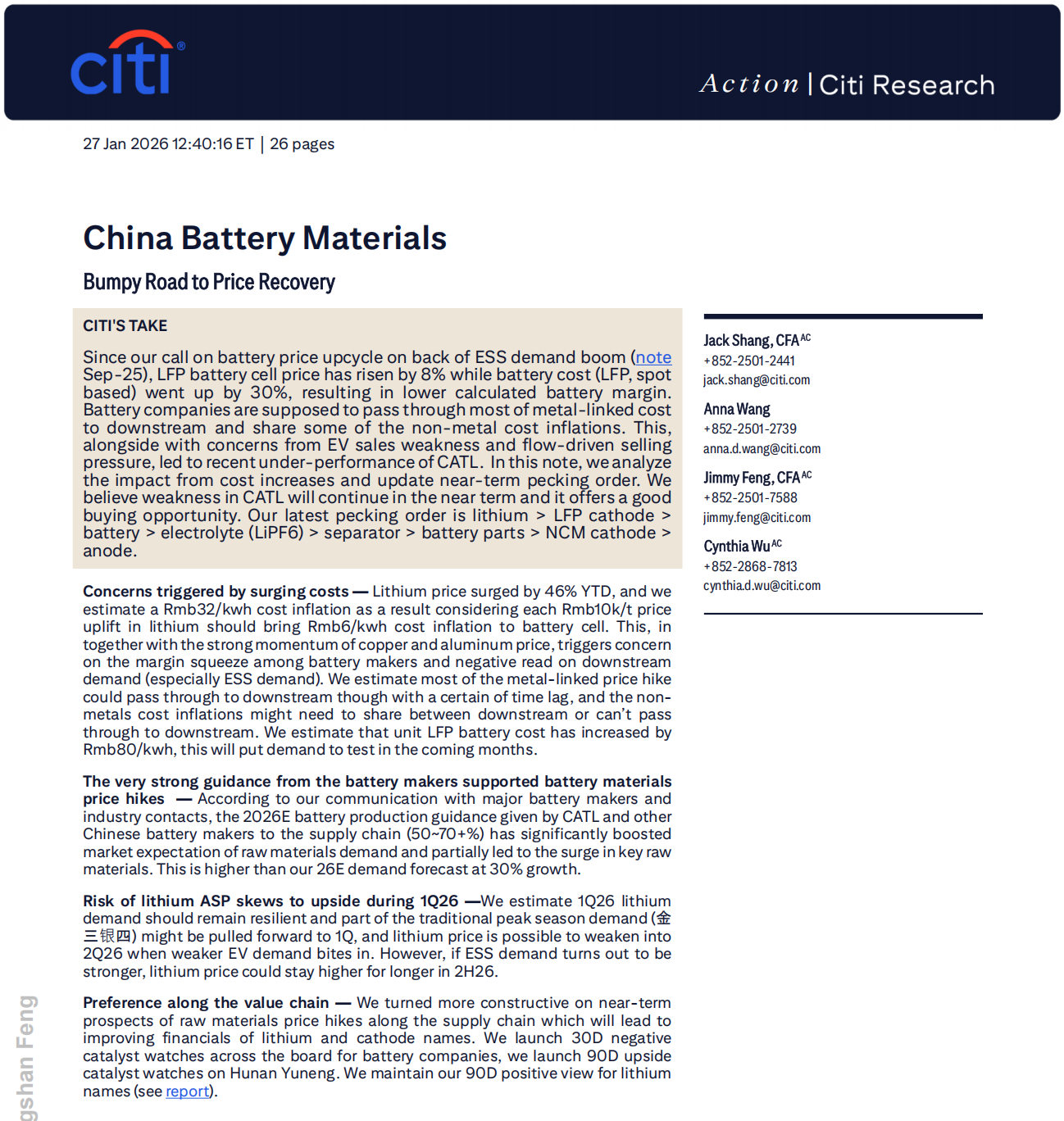
1月28日,全球动力电池龙头宁德时代午后异动,迅速翻红,量能同步放大。截止下午收盘股价报339.99元,市值约1.5万亿。 消息面上,花旗发布研报,称宁德时代迎来良好买入机会,维持长期积极展望,给与宁德时代A股目标价571元,H股621港元,较目前股价有68%和31%的 上涨空间。 值得注意的是,近期锂价飙升,碳酸锂主力合约从去年最低5.84万元/吨,近期最高飙升至18.94万元/吨。今日碳酸锂高位盘整,早盘一度涨近6%,随后跳 水,收盘大跌3.90%。 根据花旗报告,尽管短期面临成本上涨与需求波动的压力,宁德时代当前股价反而提供了买入机会。 自2025年9月预判电池价格进入上行周期以来,磷酸铁锂(LFP)电池电芯价格上涨8%,电池成本飙升30%,导致行业利润率承压。锂价年初至今已上涨 46%,叠加铜、铝等金属价格走强,进一步挤压了电池厂商的利润空间。但相对而言,由于宁德时代更早施行原材料价格联动机制,可以相对定价权较弱的 同业更为及时充实传导成本波动。 需求方面,花旗认为未来几个月的动力电池需求可能面临测试,但上修了对储能电池需求的预测,因此维持全年总电池需求预测30%+的增速基本不变。基 于此,花旗对宁德 ...

头部份额走低 商用车驱动增长 ——2025动力电池格局异动
Zhong Guo Qi Che Bao Wang· 2026-01-28 01:24
中国汽车动力电池产业创新联盟的数据显示,去年我国动力电池销售1200.9GWh,同比增长51.8%,远超 新能源汽车29%的增速。记者调查发现,新能源商用车及换电市场快速发展,引领动力电池行业增长;新能源 乘用车单车电量未因此增长,反而略有下降。此外,两家头部企业份额有所下降。 乘用车平均单车电量下降 2025年,我国动力电池国内累计装车量769.7GWh,同比增长40.4%;其中三元电池装车量为144.1GWh,占总 装车量的18.7%,同比增长3.7%;磷酸铁锂电池累计装车量625.3GWh,占总装车量的81.2%,同比增长 52.9%。 动力电池增长速度远超新能源汽车,是平均单车电量增长了吗?中国汽车动力电池产业创新联盟副秘书长尹艳 萍告诉记者,这两组数据给人的感觉是每辆车的平均电量提高了,但从细分车型可以看出,动力电池销量、装 车量增长的主要原因是电动卡车销量大幅增长,以及换电模式快速增长,一辆电动卡车的电池电量远超乘用 车,一个换电站的电池配套量更是远超一辆电动卡车。另外,2025年,大量的专用车,如环卫车、洒水车等改 成纯电动车型,它们的电量也较高。 "从乘用车数据来看,平均电量没有上升,反而略有 ...
全球大公司要闻 | 芯片涨价潮蔓延,安踏123亿元出海扫货
Wind万得· 2026-01-28 00:30
Group 1 - A new wave of price increases in the global chip industry has emerged, with Samsung Electronics raising LPDDR memory prices for iPhones by over 80% and SK Hynix by nearly 100%. Domestic companies like Zhongwei Semiconductor and Guokewai have also announced price hikes of 15%-50% and 40%-80% respectively for their products [2] - Guotai Junan forecasts a net profit of 27.533 billion to 28.006 billion yuan for 2025, representing a year-on-year growth of 111%-115%. Shenwan Hongyuan expects a net profit of approximately 9.1 billion to 10.1 billion yuan, with a growth of 74.64%-93.83% [2] - Anta Sports has signed an agreement to acquire a 29.06% stake in German sports brand Puma for 1.506 billion euros (approximately 12.28 billion yuan), which will make Anta the largest single shareholder of Puma if the transaction is completed [2] Group 2 - Micron Technology announced a $24 billion investment to build a new memory chip manufacturing facility in Singapore, aiming to meet the growing demand for NAND storage chips in AI and data center applications, with production expected to start in the second half of 2028 [3] - Corning has secured a procurement order worth up to $6 billion from Meta for optical cables, primarily for AI data center construction, further solidifying its market position in fiber optic communications [3] Group 3 - Pizaihuang's controlling shareholder, Jiulongjiang Group, plans to increase its stake in the company by investing between 300 million and 500 million yuan from February 1 to July 31, demonstrating confidence in the company's future development [5] - Hengrui Medicine's drug HRS-5346 has been included in the list of breakthrough therapies, which will accelerate its research and approval process, positively impacting the company's innovative drug pipeline [5] - Shennan Circuit expects a net profit increase of 68%-78% for 2025, driven by sufficient orders, high capacity utilization, and improved profitability from product structure optimization [5] - Zhongjin Gold anticipates a net profit increase of 41.76%-59.48% for 2025, influenced by rising gold prices and increased mineral gold production [5] Group 4 - Ganfeng Lithium expects a net profit of 1.1 billion to 1.65 billion yuan for 2025, turning a profit compared to previous losses, with a fair value change gain of approximately 1.03 billion yuan from its holdings in Pilbara Minerals Limited [6] - Wanda Film forecasts a net profit of approximately 480 million to 550 million yuan for 2025, achieving profitability due to the recovery of the domestic film market and improved operational efficiency [6] Group 5 - Samsung Electronics plans to produce 1 million units of the Galaxy Wide Fold smartphone, targeting competition with Apple's potential foldable products [11] - SK Hynix's market capitalization has surpassed $400 billion due to surging demand for high-bandwidth memory (HBM), with the company considering establishing an AI investment department in the U.S. [11] - Toyota is recalling approximately 162,000 Tundra vehicles in the U.S. due to multimedia display screen issues, while also facing a 9% decline in new car registrations in the EU [11] - LG Energy will supply batteries for Tesla's humanoid robots, marking its expansion into non-automotive applications in the power battery sector [11]


汇安沪深300指数增强基金投资价值分析
量化藏经阁· 2026-01-28 00:08
Group 1 - The CSI 300 Index consists of 300 representative securities from the Shanghai and Shenzhen markets, reflecting the overall performance of large-cap stocks and benefiting from China's steady economic growth and continuous industrial optimization [1][5][60] - As of December 31, 2025, the average market capitalization of CSI 300 constituents reached 225.49 billion, significantly higher than that of the CSI 500 and other indices, indicating a strong leader effect [7][60] - The top ten weighted stocks account for a total of 23.08% of the index, with an average total market capitalization of 942.8 billion, showcasing competitive leading enterprises across various sectors [10][60] Group 2 - The CSI 300 Index is the preferred choice for broad-based allocation, with its fund size reaching nearly 1.2 trillion, accounting for almost 50% of all broad-based index funds [12][61] - From 2015 to 2025, the index's industry structure underwent significant transformation, with traditional finance and real estate weights declining, while emerging industries like electronics and new energy surged [15][61] - The concentration of the top three industries decreased from 40.24% to 35.85%, reflecting a shift from real estate and finance-driven growth to technology and innovation-driven growth [15][61] Group 3 - The CSI 300 Index shows strong growth potential, with projected EPS growth rates of 3.76% for 2024, 5.43% for 2025, and 11.46% for 2026, alongside net profit growth rates of 2.78%, 9.67%, and 9.40% respectively [17][60] - The index's profitability has been steadily increasing, indicating robust growth capabilities [17][60] Group 4 - The Huian CSI 300 Index Enhanced A fund, managed by Liu Yucai since September 27, 2023, employs an innovative fundamental quantitative investment approach, aiming for long-term value enhancement while controlling tracking error [20][61] - Since the strategy adjustment to "tight constraints, low deviation" at the end of 2024, the fund achieved a cumulative excess return of 7.23% in 2025, ranking first among peers [39][62] - The fund maintained a high stock position between 90%-95% since 2025, demonstrating a commitment to active management [44][62] Group 5 - The fund's stock turnover rate is significantly lower than the average of its peers, indicating strong stock selection capabilities, with average quarterly returns of 0.66% in 2025 [63][62] - The fund's performance in 2025 included a relative maximum drawdown of only -0.57%, ranking second among peers, and an annualized tracking error of 1.28% [41][62]

销量首破TWh,2025动力电池上升中的八重变化
高工锂电· 2026-01-27 11:21
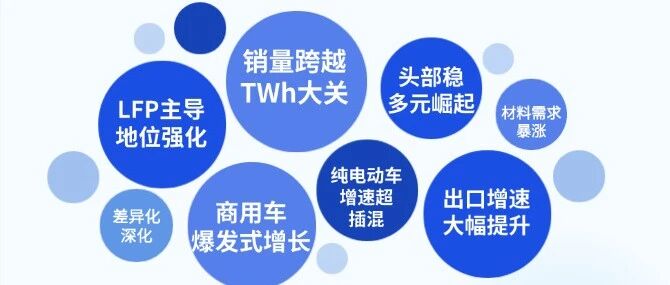
Core Viewpoint - In 2025, the power battery industry in China experienced rapid growth, with sales surpassing 1 TWh for the first time, reflecting significant structural changes in exports, material composition, vehicle demand, and market competition [1] Group 1: Sales and Growth - In 2025, the total sales of power batteries reached 1200.9 GWh, a year-on-year increase of 51.8%, significantly higher than the 28.4% growth in 2024 [1] - Cumulative installed capacity was 769.7 GWh, up 40.4% year-on-year, with an increase of 221.3 GWh compared to 2024 [1] Group 2: Export Dynamics - Cumulative exports of power batteries in 2025 reached 189.7 GWh, a year-on-year growth of 41.9%, a substantial increase from the 5.0% growth in 2024 [3] - In December 2025, exports of lithium iron phosphate batteries accounted for 51.3% of total monthly exports, marking a 71.1% year-on-year increase and surpassing the previously dominant ternary batteries [3] Group 3: Battery Type Performance - In 2025, the installed capacity of lithium iron phosphate batteries was 625.3 GWh, representing 81.2% of total installed capacity, with a year-on-year growth of 52.9% [5] - The installed capacity of ternary batteries dropped to 18.7%, with a year-on-year growth of only 3.7%, continuing a downward trend from 10.2% in 2024 [5] Group 4: Commercial Vehicle Growth - The growth of commercial vehicles was explosive, with the installed capacity of pure electric trucks increasing to 17.7%, a year-on-year growth of 168.9% [7] - The average battery capacity of new energy vehicles rose to 55.2 kWh, a year-on-year increase of 18.8% [7] Group 5: Market Structure and Competition - The market competition is evolving from a "dual dominance" to a "stable head and diverse rise," with CATL and BYD maintaining their leading positions but seeing their combined market share decrease from 69.8% to 64.9% [10] - Mid-tier companies like Zhongchuang Innovation and Guoxuan High-Tech are gaining market share, with Guoxuan's installed capacity reaching 43.44 GWh, a year-on-year increase of 1.07 percentage points [12] Group 6: Material Demand and Pricing - The demand for core materials such as lithium iron phosphate and ternary materials surged by over 50% in 2025 [14] - By the end of 2025, the price of battery-grade lithium carbonate reached 150,000 yuan per ton, reflecting a more than 60% increase compared to the end of 2024 [14] Group 7: December Performance Highlights - In December 2025, power battery sales reached 143.8 GWh, a year-on-year increase of 49.2%, while installed capacity was 98.1 GWh, up 35.1% year-on-year [16] - The growth was driven by policy incentives and strong end-user demand, with major automakers launching promotional campaigns to stimulate purchases [15]




媒体报道丨以高质量发展引领新能源产业出海
国家能源局· 2026-01-27 07:57
Core Viewpoint - The rise of China's new energy industry, represented by electric vehicles, lithium batteries, and photovoltaic products, has become a new engine for foreign trade growth and a significant driver for global economic green transformation [2][3]. Group 1: Industry Growth and Achievements - The Chinese new energy industry has achieved remarkable growth, with the market size of electric vehicles increasing 3.6 times during the "14th Five-Year Plan" period, making China the world's largest exporter of automobiles [3]. - The cost of power batteries has decreased by 30%, lifespan has increased by 40%, and charging speed has improved by over three times [3]. - The photovoltaic industry has established the world's most complete industrial chain, producing over 80% of global photovoltaic modules and 70% of lithium batteries, with electric vehicle production leading globally for several consecutive years [3]. Group 2: Challenges and Competition - The industry faces challenges such as blind expansion of new energy projects and homogenization, leading to unhealthy competition where some companies export products below cost, resulting in a "growth without profit" cycle [4]. - This "involution" of competition distorts market signals, causing companies to focus on price wars rather than long-term investments in technology, brand building, and service upgrades, potentially harming the reputation of "Made in China" [4]. Group 3: Policy Response and Strategic Directions - The government has introduced a series of policies to rationally "cool down" the industry, aiming to redirect competition towards higher quality development rather than stifling growth [4]. - To thrive in the "Globalization 2.0" era, the industry should focus on four areas: 1. **Technological Innovation**: Forming innovation alliances to tackle cutting-edge fields and converting patent advantages into industry control [5]. 2. **Supply Chain Resilience**: Promoting cooperation between upstream and downstream sectors and ensuring the global allocation of key mineral resources [5]. 3. **Global Operations**: Supporting companies in establishing overseas R&D and service centers and participating in international standards formulation [5]. 4. **Green Integration**: Accelerating the construction of carbon footprint databases and exploring comprehensive energy solutions [5].

穿越周期的力量:2025中国企业家年度榜单
Sou Hu Cai Jing· 2026-01-26 15:59
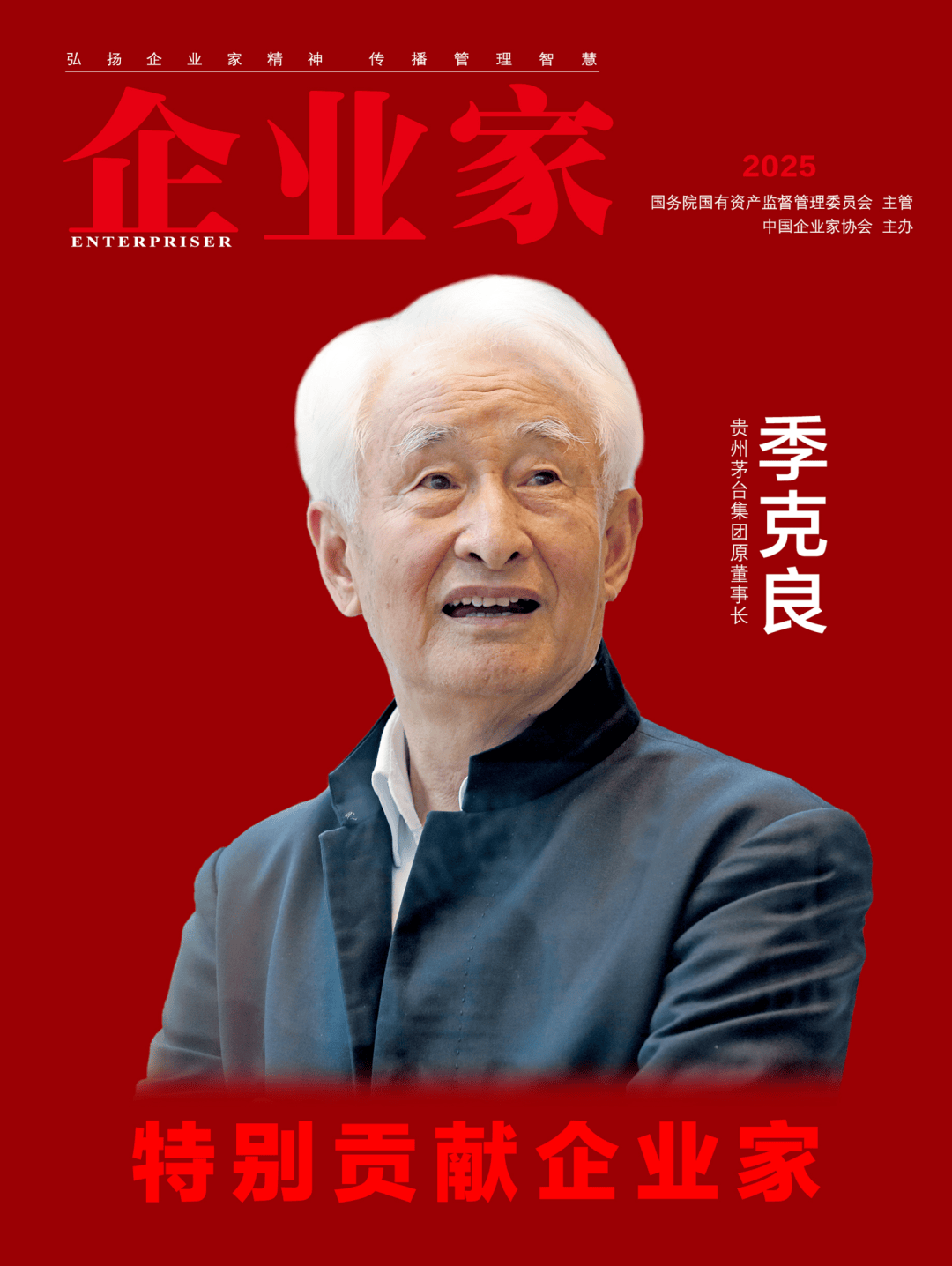
Core Insights - The article highlights the recognition of 3 "Special Contribution Entrepreneurs" and 20 "2025 Entrepreneurs" who exemplify long-termism and innovation across various industries in China, including liquor, manufacturing, energy, agriculture, internet, AI, and new consumption [1][2]. Group 1: Special Contribution Entrepreneurs - Ji Keliang, former chairman of Kweichow Moutai Group, transformed traditional brewing techniques into scientific data over 60 years, emphasizing quality over speed, which laid the foundation for Moutai's billion-dollar brand value [4][10][12]. - Zhang Ruimin, founder of Haier Group, is known for his continuous self-disruption and innovation, leading Haier from a struggling factory to a global leader in home appliances with over 400 billion yuan in revenue [18][20][21]. - Jiang Baoquan, founder of Nanjing Gold Foil Holdings, turned a failing workshop into the world's largest gold foil producer, emphasizing resilience and innovative management theories [25][27][29]. Group 2: 2025 Entrepreneurs - Ma Huateng, chairman of Tencent, focuses on "technology for good," committing to social responsibility and innovation in digital technology to drive high-quality economic development [31][34][41]. - Wang Ning, founder of Pop Mart, capitalizes on emotional value and consumer psychology, creating a successful business model around collectible toys that resonate with young consumers [43][45][46]. - Wang Xingxing, founder of Yushutech, leads advancements in humanoid robotics, achieving significant market presence and profitability while promoting technological innovation [48][49][51]. - Fang Hongbo, chairman of Midea Group, has successfully transformed Midea into a global technology group through strategic restructuring and a focus on efficiency and innovation [54][56]. - Liu Yonghao, chairman of New Hope Group, maintains a long-term vision in agriculture, achieving growth even during economic downturns by embracing new technologies [67][69][70]. - Liu Qiangdong, founder of JD.com, integrates the concept of "common prosperity" into business practices, ensuring fair profit distribution among stakeholders while enhancing supply chain efficiency [73][75][78]. - Li Dongsheng, founder of TCL, exemplifies global leadership in semiconductor display and photovoltaic sectors, driving innovation and sustainable growth through strategic partnerships [110][111].




看完福布斯选出的20款电车,突然懂了车圈“潜规则”
阿尔法工场研究院· 2026-01-26 10:45
导语:超过2400万的装车量,意味着全球每三辆新能源车,就有一辆使用宁德时代电池。 回看过去一年的购车清单,会发现一个有趣的反差现象。 一方面,新能源车市卷到了极致 。 价格战、配置战、甚至是 "冰箱彩电大沙发"的军备竞赛,让消费者在选车时眼花缭乱,决策变得异常复杂。 另一方面,在纷繁复杂的选项背后,消费者的选择逻辑却正在形成一种惊人的默契 。 无论是在商超里对比三十万的高端旗舰,还是在精打细算十 几万的家用代步车,越来越多的人开始习惯性地先问一句 : "这车装的是谁 家 电池? " 刚刚出炉的 2025年国内动力电池装车量数据,恰恰印证了这种来自用户端的直觉 。 宁德时代不仅 以总装车量 333.57GWh 的 绝对优势蝉联国内 榜首,更首次在同一个年度内,同时将三元锂电池 ( 101.61GWh)和磷酸铁锂电 池 ( 231.9GWh)的装车量冠军收入囊中,成为行业首个"双料冠军"。 | | | | 3.7.1 2025年1-12月国内三元动力电池企业装车量前十五名 | | | --- | --- | --- | --- | --- | | | 序号 企业名称 | 装车量(GWh) | 装车量占比 | 装 ...

动力电池碳足迹管理体系建设迈向新阶段
Zhong Guo Neng Yuan Wang· 2026-01-26 08:44
Core Viewpoint - The Ministry of Industry and Information Technology (MIIT) has initiated the carbon footprint accounting and reporting for automotive power batteries, aiming to establish a comprehensive management system by the end of 2026, which will align with international standards [1][2]. Group 1: Policy and Framework - The notification marks the full launch of carbon footprint accounting and reporting for automotive power batteries, which are significant sources of carbon emissions in the lifecycle of new energy vehicles [1]. - By 2026, a robust framework for carbon footprint management, including accounting rules, certification standards, and background data systems, is expected to be established [1][2]. - The implementation of a unified carbon footprint reporting system is crucial for the global development of the power battery industry and aligning with international standards [2][3]. Group 2: Industry Collaboration - The carbon footprint data reporting involves various stakeholders across the supply chain, with battery pack manufacturers as the primary reporting entities [2][3]. - The establishment of a "Battery Carbon Chain Alliance" is suggested to enhance collaboration among battery manufacturers, upstream material suppliers, and third-party organizations to build a low-carbon management system [3]. Group 3: Implementation Phases - The reporting process will be conducted in two phases: a trial run until December 31, 2026, followed by regular reporting starting January 1, 2027 [4][5]. - During the trial phase, manufacturers are required to report the carbon footprint for at least five typical battery pack products, covering all chemical systems [5]. Group 4: Challenges and Recommendations - Companies may face challenges such as data acquisition difficulties, high costs, and a lack of professional talent in carbon footprint management [6]. - It is recommended that companies build digital carbon management platforms to enhance data transparency and collaboration across the supply chain [6]. - The government is encouraged to support small and medium-sized enterprises in developing their carbon accounting capabilities through training and tax incentives [6]. Group 5: International Standards and Cooperation - The MIIT emphasizes the importance of aligning domestic standards with international norms to reduce compliance costs for export-oriented companies [6][7]. - Continuous communication and collaboration with international entities will be pursued to promote unified accounting rules and mutual recognition of results [7].