
有色金属冶炼

Search documents
期货市场交易指引2026年02月04日-20260204
Chang Jiang Qi Huo· 2026-02-04 04:10
1. Report Industry Investment Ratings - Macro-finance: Bullish on stock indices in the medium to long term, suggesting buying on dips; expecting treasury bonds to trade in a range [1][5] - Black building materials: Short - term trading for coking coal; range - trading for rebar; buying on dips for glass [1][5][7] - Non - ferrous metals: Waiting and seeing for copper, aluminum, and nickel; range - trading for tin, gold, and silver; expecting lithium carbonate to trade in a range [1][9][11] - Energy and chemicals: Range - trading for PVC, styrene, rubber, urea, and methanol; temporarily waiting and seeing for caustic soda and soda ash; expecting polyolefins to trade weakly in a range [1][17][19] - Cotton and textile industry chain: Expecting cotton and cotton yarn to adjust in a range; expecting apples and jujubes to trade in a range [1][27][28] - Agriculture and livestock: Short - term shorting opportunities on rebounds for live pigs; hedging post - holiday contracts on rallies for eggs; cautious about chasing high for corn; expecting soybean meal to trade in a short - term range; expecting short - term limited回调 for oils and fats [1][29][34] 2. Core Views - The report provides comprehensive investment suggestions for various futures markets, considering factors such as supply - demand relationships, macroeconomic policies, and geopolitical situations. It emphasizes the need to pay attention to market trends, inventory changes, and policy impacts in different industries [1][5][7] 3. Summaries by Relevant Catalogs Macro - finance - Stock indices are expected to trade in a range in the short term and be bullish in the medium to long term. The market shows strong resilience. On Tuesday, the Shanghai Composite Index rose 1.29%. The defense, machinery, and building materials sectors led the gains, while the banking, petrochemical, and coal sectors declined [5] - Treasury bonds are expected to trade in a range. There is no obvious major negative news in the bond market, but there is no further impetus for interest rates to decline. After the repair since the beginning of the year, the space for bond yields to decline is limited [5] Black building materials - Double - coking coal is expected to trade in a range, with short - term trading recommended. The coal market has shown short - term fluctuations recently, but the sustainability of the price increase is limited due to factors such as weak downstream demand and coal mine inventory clearance [6][7] - Rebar is expected to trade in a range. On Tuesday, the rebar futures price traded in a range. The valuation is relatively low, and the supply - demand contradiction is not significant in the short term [7] - Glass is recommended to be bought on dips. Although there are negative factors such as inventory and demand, the futures price is relatively low, and there are positive news in the real estate sector. Technically, the short - side strength is weakening [7][8] Non - ferrous metals - Copper is expected to have high - level volatility, and waiting and seeing is recommended. Macro factors have dominated the market this week, causing copper prices to fluctuate sharply. The supply is still tight, but the demand is weakening. There is a risk of high - level correction before the Spring Festival [9] - Aluminum is expected to have high - level volatility, and increased waiting and seeing is recommended. The bauxite price is under pressure, and the alumina inventory is increasing. The demand for downstream aluminum processing enterprises is weakening, and short - term high - level volatility is expected [10][11] - Nickel is expected to trade in a range, and waiting and seeing is recommended. Although the Indonesian nickel ore quota reduction has boosted the market, the fundamental situation is weak. Different nickel products have different supply - demand situations, and the price increase drive is insufficient [12][13] - Tin is expected to trade in a range. The domestic tin production and imports have changed. The semiconductor industry is recovering, but the supply of tin concentrate is tight. It is recommended to pay attention to supply and demand changes [13] - Gold and silver are expected to trade in a range. Trump's nomination of the new Fed chairman has led to an increase in hawkish expectations, but the central bank's gold purchases and de - dollarization trends remain unchanged. The medium - term price centers of gold and silver are moving up [14][15] - Lithium carbonate is expected to trade in a range. The supply is affected by factors such as mine production and imports, and the demand is in the off - season. It is necessary to pay attention to the disturbances in the Yichun mining area [16][17] Energy and chemicals - PVC is expected to have low - level wide - range volatility. The cost is at a low level, the supply is high, and the domestic demand is weak. However, the export has growth potential. It is recommended to be cautious about chasing high prices [17] - Caustic soda is expected to have low - level volatility, and temporary waiting and seeing is recommended. The demand is weak, the supply pressure is large, and there is short - term delivery pressure. It may have support if the market atmosphere of related commodities improves [19] - Styrene is expected to trade in a range. The inventory is expected to decrease due to factors such as export increases and device maintenance, but the current valuation is high. It is recommended to be cautious about chasing high prices and pay attention to cost and supply - demand changes [19] - Rubber is expected to trade in a range. The global supply is in the seasonal reduction stage, and the cost has support. However, the inventory is accumulating seasonally, and the market is expected to trade in a range in the short term [20][21] - Urea is expected to trade in a range. The supply is increasing, the demand from compound fertilizer enterprises is increasing, and the inventory level is relatively low. The price is expected to trade in the range of 1730 - 1830 [22][23] - Methanol is expected to trade in a range. The domestic supply is decreasing, the demand from the olefin industry is weakening, and the traditional downstream demand is also weak. The price is affected by geopolitical and port factors [24][25] - Polyolefins are expected to trade weakly in a range. The supply is increasing, the demand is in the off - season, and there is inventory accumulation pressure before the Spring Festival. The price increase space is limited [25][26] - Soda ash: Temporary waiting and seeing is recommended. The supply is in excess, but the cost support is strong. After the supply contraction, the supply - demand contradiction may be alleviated [26] Cotton and textile industry chain - Cotton and cotton yarn are expected to adjust in a range. The global cotton supply and demand situation has changed, with a decrease in production and an increase in consumption. The internal - external price difference is suppressing the domestic market, but the long - term outlook is optimistic [27][28] - Apples are expected to trade in a range. The packaging and shipping in the production areas are slightly accelerating, but the overall market is stable and weak, and some fruit farmers are eager to sell [28] - Jujubes are expected to trade in a range. The acquisition price in the 2025 production season is in a certain range, and the acquisition is based on quality [28] Agriculture and livestock - Live pigs are expected to build a bottom in a range. In the short term, the supply and demand are both increasing, and it is recommended to short on rebounds for off - season contracts. In the long term, the capacity reduction is slow, and it is necessary to be cautious about the price increase [29][30] - Eggs are expected to rebound from a low level. The current valuation is high, and it is recommended to hedge post - holiday contracts on rallies. Considering the high probability of molting and extension of laying periods around the Spring Festival, the supply pressure will be postponed [31][32] - Corn's upward space is limited. In the short term, the market is balanced, and it is recommended to be cautious about chasing high prices. In the long term, the supply - demand pattern is relatively loose in the 25/26 season, which restricts the price increase [33][34] - Soybean meal is expected to trade in a low - level range. In the short term, the M2603 contract is expected to trade in a range, and the 05 contract is expected to face pressure at 2800 - 2850. It is necessary to pay attention to overseas weather and domestic policies [35] - Oils and fats are expected to have a limited回调. In the short term, the three major oils and fats are expected to回调 but with limited amplitude. It is recommended to take profit on previous long positions on rebounds and wait to buy on dips [36][41]
人工智能产业重塑有色行业格局,汇添富中证细分有色ETF联接C(019165)铜+铝含量近5成
Sou Hu Cai Jing· 2026-02-04 03:27
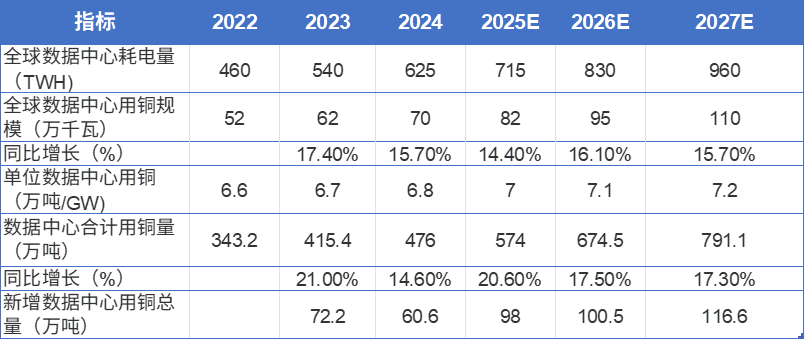
Core Insights - The artificial intelligence (AI) industry is rapidly reshaping the global demand for non-ferrous metals, with copper being the primary beneficiary as it is deemed the "oil of the electrification era" [1] - Significant increases in copper demand are projected, with estimates suggesting an additional 2 million tons of copper will be required for AI data centers and related power infrastructure from 2025 to 2040 [1] - Morgan Stanley forecasts that global copper demand from AI data centers will surge from 200,000 to 500,000 tons annually by 2027, reflecting a compound annual growth rate (CAGR) of 26% [1] Copper Demand Projections - The global copper consumption for data centers is expected to grow from approximately 50,000 tons per year to 300,000 tons by 2050, increasing its share of global copper consumption from 1% to 7% [1] - Data center electricity consumption is projected to rise from 460 TWh in 2022 to 860 TWh by 2027, indicating a growing need for copper [2] - The total copper usage in data centers is forecasted to increase from 343.2 thousand tons in 2022 to 791.1 thousand tons by 2027, with a year-on-year growth rate of 17.3% [2] Broader Metal Demand - In addition to copper, aluminum is also in high demand for cooling systems and server racks in data centers, with a single large-scale AI data center potentially consuming up to 20,000 tons of steel and significant amounts of aluminum [3] - The AI sector is expected to drive an additional demand of 850,000 tons for aluminum by 2026, with global primary aluminum demand projected to increase by 2.7% [3] - The supply-demand balance for electrolytic aluminum is expected to remain tight in 2026, with a growing gap anticipated post-2027 as demand from AI and renewable energy sectors continues to rise [3] ETF and Investment Opportunities - The Huatai-PineBridge Non-ferrous Metals ETF (159652) covers a comprehensive index that includes copper, aluminum, lithium, and rare earths, positioning it to benefit from the non-ferrous "super cycle" [5] - The ETF's structure emphasizes a significant allocation to copper and aluminum, with copper accounting for 34% of the index, providing strong exposure to industrial metal bull markets [5][7] - The ETF has demonstrated a remarkable return of 171.24% over the past two years, outperforming major indices, indicating a favorable risk-reward profile for investors [8]

中信建投期货:2月4日工业品早报
Xin Lang Cai Jing· 2026-02-04 01:24
热点栏目 自选股 数据中心 行情中心 资金流向 模拟交易 客户端 铜:囤铜预期提振,铜价持续反弹 隔夜沪铜主力涨近3.5%至105180元,伦铜运行至13420美金。 宏观中性。美国总统特朗普签署政府拨款法案,结束政府部分停摆,市场情绪改善。 基本面中性偏多。有色金属工业协会表示目前已叫停国内200多万吨铜冶炼项目,铜冶炼产能过快增长的势头已得到有效抑制,效果预计在后续两三年内逐 步体现,同时研究铜精矿储备扩大铜战略储备规模,探索商业储备机制,引发市场供应紧张担忧。 总体来看,国内战略储备铜资源的预期升温,中美囤铜将加剧全球铜供需紧张矛盾,加之近日市场情绪有所改善,预计短时间内价格震荡偏强运行。今日沪 铜主力运行区间参考10.35万-10.65万元/吨。策略上,节前短多逢高降低仓位,卖深虚看涨期权继续持有;中长线远月多单可继续持有。 重要声明 本报告中的信息均来源于公开可获得资料,中信建投期货力求准确可靠,但对这些信息的准确性及完整性不做任何保证,据此投资,责任自负。本报告不构 成个人投资建议,也没有考虑到个别客户特殊的投资目标、财务状况或需要。客户应考虑本报告中的任何意见或建议是否符合其特定状况。(虞璐 彦 ...


嘉能可加拿大公司被迫暂停Horne铜冶炼厂重大投资
Wen Hua Cai Jing· 2026-02-04 01:00
(文华综合) 作为全球最大的铜消费国,中国产业链面临三大挑战:上游资源对外依存度攀升、中游加工环节产能过剩、下游需求受高铜价抑制。为助力行业应对变局, 上海有色网携手铜产业链企业联合编制《2026中国铜产业链分布图》中英双语版,点击此链接即可免费领取铜产业链分布图: https://s.wcd.im/v/470opZ19l/。 2月3日(周二),嘉能可(Glencore)周二称,嘉能可加拿大公司被迫暂停对加拿大魁北克省的霍恩(Horne)冶炼厂的重大投资,该冶炼厂配套的加拿大铜精 炼厂的投资也将在中期内缩减。 该公司称,如果不完成计划中的项目,就不可能实现2027年3月开始生效的某些目标。 SMM联合制作联系人 刘明康 liumingkang@smm.cn 156 5309 0867 ...


株冶集团全链发力提质效 圆满完成首月生产指标
Zheng Quan Ri Bao Wang· 2026-02-03 13:56
生产制造中心是株冶集团的核心生产单位,该单位牵头各生产单位,以全过程管控保障生产系统稳定高 效运行。通过全维度分析、精准管控与动态追踪,牢牢把控生产关键节点,全流程跟踪监管原料投入, 确保与析出锌产出计划精准匹配;聚焦配料、干燥窑、焙烧炉等核心工艺,强化工艺纪律检查,对各中 间工序实施持续动态监测,全方位夯实生产高效推进的基础,各项生产控制目标全面达成。 2025年以来,白银、铜等金属价格持续上行,2026年这一上行势头仍未减弱。株冶集团紧紧跟踪价格变 动趋势,聚焦系统有价元素综合回收,秉持"吃干榨净"的发展思路,紧抓银、铜市场价格上涨机遇,深 挖产业增值潜力。 2月3日晚间,株洲冶炼集团股份有限公司(以下简称"株冶集团(600961)")通过公司官方微信公众号 发布消息:1月份,公司旗下各生产基地协同发力、提质增效,圆满达成首月产品产量、成本管控目 标,提前完成原料采购目标和锌精矿库存目标,多项生产指标取得亮眼成绩,为全年高质量发展奠定坚 实基础。 株冶集团董秘兼财务总监陈湘军向《证券日报》记者表示:"公司以生产目标为导向,将月度任务逐级 细化分解,层层压实生产责任。1月份,公司旗下各大生产基地各项指标均超 ...

豫光金铅:公司生产经营一切正常
Zheng Quan Ri Bao· 2026-02-03 12:08
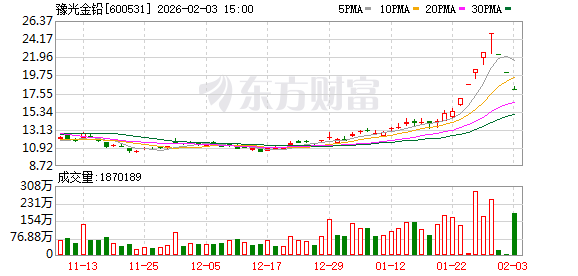
证券日报网讯 2月3日,豫光金铅在互动平台回答投资者提问时表示,公司作为有色金属冶炼企业,白 银是主要产品之一,其价格波动会影响公司现货端盈利,但公司已通过持续优化的套期保值策略对冲相 关风险,以减少价格波动对经营业绩的潜在影响、保障公司稳健运营。公司严格遵循既定套保方案,根 据生产经营计划与库存情况动态调整套保比例,期货端损益与现货端损益形成有效对冲,整体经营利润 保持相对稳定。目前,公司生产经营一切正常,相关财务数据请以公司在法定信息披露媒体发布的公告 为准。 (文章来源:证券日报) ...

什么信号?中有色协会研究将“铜精矿”纳入国家储备
Hua Er Jie Jian Wen· 2026-02-03 08:34
中国正在探索将铜精矿这一上游原料纳入国家战略储备体系,这标志着在铜产业链安全保障上,政策思 路正从单一储备精炼铜向多层次、多品种储备转变。 2月3日,中国有色金属工业协会副秘书长段绍甫在新闻发布会上表示,除了储备精炼铜之外,也可研究 将贸易量大、容易变现的铜精矿纳入储备范围。同时,将扩大国家铜战略储备规模,探索进行商业储备 机制,通过财政贴息等方式选择国有骨干企业试行商业储备。 这一表态释放了明确的政策信号。铜是关系国计民生和国民经济发展的战略资源,中国作为全球最大的 精炼铜消费国和生产国,铜矿资源相对匮乏且对海外进口依赖较高。铜精矿加工费自2023年三季度起经 历下跌,2025年长单加工费仍处于历史低位,国内高成本冶炼厂面临持续减产压力。 分析认为,将铜精矿纳入储备范围,意味着中国在保障铜产业链供应安全上采取更前置的防御措施。这 不仅有助于增强原料端的议价能力,也为国内冶炼企业提供更稳定的原料供应保障,对稳定产业链运行 具有积极意义。 生产方面,将继续平稳运行,预计有色金属工业增加值同比增长5%左右。根据有色金属生 产特点和产能建设情况,2026年十种常用有色金属产量同比增长2%左右。 价格方面,2026年 ...
晋控电力:中铝新材料公司主营业务是氧化铝、电解铝及炭素制品等生产和销售,目前公司实缴资本6亿元
Mei Ri Jing Ji Xin Wen· 2026-02-03 04:53
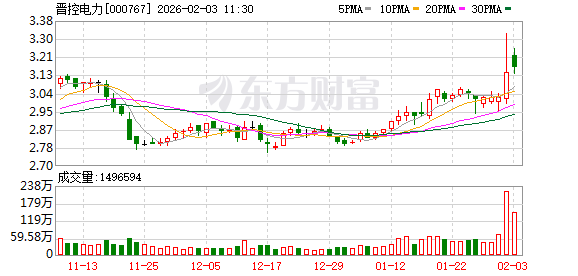
晋控电力(000767.SZ)2月3日在投资者互动平台表示,中铝新材料公司主营业务是氧化铝、电解铝及 炭素制品等生产和销售,到目前为止,公司实缴资本6亿元。 (文章来源:每日经济新闻) 每经AI快讯,有投资者在投资者互动平台提问:中铝山西新材料有限公司是做什么的?公司投资了多 少资金? ...

金融期货早评-20260203
美国农业部· 2026-02-03 03:18
Group 1: Overall Market Analysis - The nomination of Kevin Warsh as the Federal Reserve Chairman triggered the "Warsh trade", leading to a rapid cooling of global risk appetite and a significant adjustment in commodities. The short - term market volatility contrasts with the long - term super - cycle main line, but the long - term support for the technology and non - ferrous metals main line remains solid [2] - The US ISM manufacturing index in January reached 52.6, the highest since February 2022, which made the US dollar index strengthen. The RMB exchange rate remained relatively resilient but the downward space of the US dollar against the RMB was narrowed [3] - The stock index continued to adjust, but the policy support limited the downward space. The bond market lacked upward momentum and was likely to continue to fluctuate [4][5][6] Group 2: Commodities Energy and Oil and Gas - Fuel oil was in a weak operation. The supply of high - sulfur fuel oil was gradually recovering, while the demand was weak, and the Iranian issue provided some support at the bottom [26] - Low - sulfur fuel oil had a low cracking spread. The supply was relatively abundant, the demand was stable, and the inventory decline provided a slight boost [27] - The asphalt price quickly fell back. The short - term price was expected to oscillate with limited upward and downward space [28][29] New Energy - For lithium carbonate, in the long - term, the demand from energy storage, new - energy vehicles still supported the price. Before the Spring Festival, it was recommended to reduce positions and pay attention to selling volatility strategies [10][11] - For industrial silicon and polysilicon, in the short - term, the demand was expected to increase due to the export - tax - rebate policy, and the price was likely to rise. Before the Spring Festival, it was recommended to reduce positions [11][12] Non - ferrous Metals - Copper prices fluctuated around important support levels after the release of market sentiment. It was recommended to conduct short - term range operations before the Spring Festival [13][16] - Aluminum prices got short - term support. In the long - term, the price was expected to rise, while alumina was expected to be weak in the long - term and casting aluminum alloy was recommended to pay attention to the price difference with aluminum [17] - Zinc prices were oversold during the day and adjusted at night. It was expected to maintain a wide - range shock [18] - Nickel and stainless - steel prices fell during the day and the decline slowed at night. It was necessary to pay attention to the macro - level situation and the news from Indonesia [18][19] - Tin prices showed a short - selling signal during the day and remained weak at night. It was recommended to enter the market with a light position [20][21] - Lead prices followed the sector. The cost of recycled lead provided support, and it was expected to oscillate in a range [21] Grains and Oils - Oilseeds oscillated and declined. The supply of imported soybeans in the first quarter might have a gap, and the domestic soybean meal and rapeseed meal prices were expected to oscillate [23] - Oils faced pressure. The short - term price was facing a test at the pressure level, waiting for new market drivers [24] Group 3: Chemicals - Pulp and offset paper futures prices continued to decline. The pulp market had many negative factors, and the supply - side reduction provided some support. It was recommended to wait and hold previous short positions [36][38] - LPG risk premium significantly retreated. The supply was neutral - low, the demand was weak, and it was necessary to pay attention to the situation of relevant talks [38][39] - PX - PTA's high processing fees were expected to be difficult to maintain. PX was in a tight supply - demand pattern in the first half of the year, and it was recommended to go long at low prices and shrink the processing fees on the disk [39][41] - MEG - bottle chips had difficulty finding upward drivers. It was necessary to pay attention to geopolitical risks, and the price was expected to oscillate widely with the macro - atmosphere [41][43] - Methanol prices fell. The trading logic was driven by the change of macro - sentiment, and it was recommended to wait for unilateral trading and do 3 - 5 reverse spreads and expand MTO profits [44][45] - PP and PE prices were affected by the macro - sentiment. PP's supply and demand decreased, and PE's supply increased while demand decreased. It was necessary to pay attention to the cost and macro - trends [45][46][48] - Pure benzene and styrene prices fell due to the retreat of geopolitical premium. Pure benzene's supply increased while demand decreased, and styrene's supply - demand pattern turned weak. It was recommended to wait and look for opportunities to go long on styrene after a callback [48][49] - Glass and soda ash prices were hovering at a low level. Soda ash had an oversupply expectation, and glass was in a situation of weak supply and demand, with no obvious trend [49][50][52] - Propylene prices were affected by cost and supply - demand. The cost decreased, but the short - term supply - demand provided some support, and it was necessary to pay attention to the change of fundamentals [52][53] Group 4: Black Metals - Rebar and hot - rolled coil prices had no driving force and oscillated in the bottom range. The supply was high, the demand was weak, and the price was supported by cost and policy [53][54] - Iron ore was a hedging variety. The supply was loose, the demand was expected to increase, and the price had limited downward space [54][55] - Coking coal and coke prices had relatively low valuations, but short - term driving forces had not appeared. The supply - demand structure was expected to improve during the Spring Festival, and the price might face downward pressure in the future [55][56][57] - Ferrosilicon and ferromanganese prices were supported at the bottom and pressured at the top. The supply was expected to be stable, the demand increment was limited, and the price was expected to oscillate in a range [57][58] Group 5: Agricultural and Soft Commodities - Hog prices stopped falling and stabilized, and it was recommended to sell call options [59][60] - Cotton prices were likely to rise due to the tight - balance expectation but were restricted by the internal - external price difference. It was recommended to go long on dips but not to chase the rise [61][62] - Sugar prices were dragged down by the decline of international raw sugar. The upward space was limited, and there was great pressure at the 60 - day moving average [62][63] - Egg prices opened low and went low. The spot price was expected to oscillate at a high level [64][65] - Apple prices saw the acceleration of pre - holiday stocking, and the spot price was loose. It was necessary to pay attention to whether the logic of the shortage of delivery products could return to the disk [65][66] - Red date prices were expected to oscillate at a low level in the short - term and be under pressure in the long - term. It was necessary to pay attention to the pre - holiday purchasing situation [66][67] - Log prices in Lanshan increased, and the four - port inventory slightly increased. The price was relatively balanced, with limited upward space and strong support below. It was recommended to continue holding the short - put strategy [68][69]
一、动力煤:宝城期货品种套利数据日报(2026年2月3日)-20260203
Bao Cheng Qi Huo· 2026-02-03 01:53
1. Report Industry Investment Rating - No information provided in the given content. 2. Core View of the Report - The report presents the daily arbitrage data of various futures varieties on February 3, 2026, including power coal, energy chemicals, black metals, non - ferrous metals, agricultural products, and stock index futures, covering aspects such as basis, inter - period spreads, and inter - variety spreads. 3. Summary by Relevant Catalogs 3.1 Power Coal - **Basis**: From January 27 to February 2, 2026, the basis of power coal was - 116.4 on January 27, - 111.4 on January 28, and - 109.4 from January 29 to February 2 [2]. - **Inter - period spreads**: The spreads of 5 - month minus 1 - month, 9 - month minus 1 - month, and 9 - month minus 5 - month were all 0 during the period from January 27 to February 2, 2026 [2]. 3.2 Energy Chemicals 3.2.1 Energy Commodities - **Basis**: For fuel oil, the basis on February 2, 2026 was 127.38; for INE crude oil, the basis on February 2, 2026 was - 3.68; for crude oil/asphalt, the basis on February 2, 2026 was 0.1392 [7]. - **Price Ratio**: The price ratio of some energy commodities was also provided, such as 99.68 for a certain ratio on February 2, 2026 [7]. 3.2.2 Chemical Commodities - **Inter - period spreads**: For rubber, the 5 - month minus 1 - month spread was - 485, the 9 - month minus 1 - month spread was - 625, and the 9 - month minus 5 - month spread was - 140; for methanol, the corresponding spreads were - 64, - 45, and 19; for PTA, they were 40, 38, and - 2; for LLDPE, they were - 35, 3, and 38; for PVC, they were - 218, - 101, and 117; for PP, they were 46, 72, and 26; for ethylene glycol, they were - 167, - 76, and 91 [9]. - **Inter - variety spreads**: For example, on February 2, 2026, the LLDPE - PVC spread was 1889, the LLDPE - PP spread was 171, the PP - PVC spread was 1718, and the PP - 3*methanol spread was - 93 [9]. - **Basis**: On February 2, 2026, the basis of rubber was - 80, methanol was - 4.5, PTA was - 72, LLDPE was 122, PVC was - 254, and PP was 76 [10]. 3.3 Black Metals - **Inter - period spreads**: For rebar, the 5 - month minus 1 - month spread was - 82, the 9 - month(10) minus 1 - month spread was - 33, and the 9 - month(10) minus 5 - month spread was 49; for iron ore, the corresponding spreads were 29, 12, and - 17; for coke, they were - 149, - 82, and 67; for coking coal, they were - 248.5, - 172, and 76.5 [19]. - **Inter - variety spreads**: On February 2, 2026, the rebar/iron ore ratio was 3.96, the rebar/coke ratio was 18132.1, the coke/coking coal ratio was 4690, and the rebar - hot - rolled coil spread was - 161 [19]. - **Basis**: On February 2, 2026, the basis of rebar was 112, iron ore was 4, coke was - 175.5, and coking coal was 38.5 [20]. 3.4 Non - ferrous Metals 3.4.1 Domestic Market - **Basis**: On February 2, 2026, the basis of copper was 1460, aluminum was 635, zinc was 455, lead was - 70, nickel was 10760, and tin was 850 [28]. 3.4.2 London Market - **LME Ascending/Descending Premium**: On February 2, 2026, the LME ascending/descending premium of copper was (59.17), aluminum was (22.32), zinc was (5.35), lead was (47.99), nickel was (218.73), and tin was (300.00) [34]. - **Shanghai - London Ratio**: On February 2, 2026, the Shanghai - London ratio of copper was 7.83, aluminum was 7.73, zinc was 7.53, lead was 8.49, nickel was 7.85, and tin was 8.16 [34]. - **CIF**: On February 2, 2026, the CIF of copper was 101532.75, aluminum was 25597.59, zinc was 27517.86, lead was 15764.97, nickel was 136168.76, and tin was 375735.34 [34]. - **Domestic Spot Price**: On February 2, 2026, the domestic spot price of copper was 101060, aluminum was 23680, zinc was 24970, lead was 16640, nickel was 140410, and tin was 392480 [34]. - **Import Profit and Loss**: On February 2, 2026, the import profit and loss of copper was (472.75), aluminum was (1917.59), zinc was (2547.86), lead was 875.03, nickel was 4241.24, and tin was 16744.66 [34]. 3.5 Agricultural Products - **Basis**: On February 2, 2026, the basis of soybeans No.1 was - 233, soybeans No.2 was 96.22, soybean meal was 350, soybean oil was 578, and corn was 49 [38]. - **Inter - period spreads**: For example, for soybeans No.1, the 5 - month minus 1 - month spread was - 28, the 9 - month minus 1 - month spread was 5, and the 9 - month minus 5 - month spread was 33 [38]. - **Inter - variety spreads**: On February 2, 2026, the soybeans No.1/corn ratio was 1.93, the soybeans No.2/corn ratio was 1.55, the soybean oil/soybean meal ratio was 2.97, the soybean meal - rapeseed meal spread was 477, the soybean oil - palm oil spread was - 944, the rapeseed oil - soybean oil spread was 1082, and the corn - corn starch spread was - 249 [38]. 3.6 Stock Index Futures - **Basis**: On February 2, 2026, the basis of CSI 300 was - 20.84, SSE 50 was 133.85, CSI 500 was - 19.49, and CSI 1000 was - 5.74 [50]. - **Inter - period spreads**: For CSI 300, the next - month minus current - month spread was - 46.2, and the next - quarter minus current - quarter spread was - 1.2; for SSE 50, the next - month minus current - month spread was - 24.8, and the next - quarter minus current - quarter spread was - 10.6; for CSI 500, the next - month minus current - month spread was - 35.2, and the next - quarter minus current - quarter spread was - 145.6; for CSI 1000, the next - month minus current - month spread was - 38.8, and the next - quarter minus current - quarter spread was - 104.2 [50].