
制造业

Search documents
超117万人被裁!
商业洞察· 2025-12-18 09:23
Core Viewpoint - The article discusses the alarming rise in layoffs in the U.S. job market, with over 1.17 million employees laid off by November 2025, a 54% increase from the previous year, drawing parallels to the 2008-2009 financial crisis [4][5]. Group 1: Causes of Layoffs - The primary cause of layoffs is attributed to the efficiency revolution led by the DOGE department, resulting in 293,753 federal employees and contractors losing their jobs, with an additional 20,976 in the private and non-profit sectors, an eightfold increase compared to 2024 [15]. - The macroeconomic environment, characterized by high costs and tariffs, is also a significant factor, as many companies face debt repayment pressures from loans taken during the low-interest period of 2020-2021 [18][19]. - Companies, particularly those owned by private equity, are cutting jobs at a rate 1.5 times higher than publicly traded firms due to high leverage costs and cash flow constraints [21][22]. Group 2: Impact on Various Industries - The retail sector is the hardest hit, with a significant drop in consumer confidence and companies like Target and Starbucks announcing substantial layoffs due to decreased sales [27][28]. - The service industry has seen a 64% increase in layoffs, with UPS cutting 14,000 management positions to improve efficiency [30][31]. - The food industry has also been affected, with 34,165 job losses throughout the year, particularly in beef processing due to rising costs [32][33]. Group 3: Technology and Management Changes - The technology sector has contributed significantly to layoffs, with 35% of the total layoffs coming from this industry, primarily affecting middle management roles [46][47]. - A new corporate mantra has emerged: "Every employee generates revenue," leading to layoffs becoming a normalized management tool rather than a crisis response [51]. - Companies like Amazon and IBM have reported increased profits while simultaneously announcing significant layoffs, indicating a trend where cost-cutting measures are prioritized over workforce stability [53][54]. Group 4: Future Implications - The trend of layoffs is expected to continue, with predictions that the technology sector will see a peak in cost-cutting benefits by 2026, potentially reducing operational costs significantly [58]. - However, the loss of middle management, which often holds critical technical knowledge, could extend product development cycles and hinder innovation [62][71]. - The article warns that excessive cost-cutting may erode the foundation of innovation within the technology sector, leading to long-term negative consequences [72].







际华集团:累计回购约3056万股
Sou Hu Cai Jing· 2025-12-18 09:14
每经AI快讯,际华集团(SH 601718,收盘价:3.3元)12月18日晚间发布公告称,截至2025年12月17 日,公司完成回购,已实际回购公司股份约3056万股,占公司总股份数的0.6959%,回购最高价格人民 币4.02元/股,回购最低价格人民币2.51元/股,回购均价人民币3.27元/股,使用资金总额人民币约1亿 元。 2025年1至6月份,际华集团的营业收入构成为:制造业占比97.04%,其他业务占比4.4%,贸易及其他 占比4.07%,内部抵销占比-5.51%。 截至发稿,际华集团市值为145亿元。 每经头条(nbdtoutiao)——海南封关政策红利全解析:零关税、低个税、投资准入放宽、跨境资金自 由、创业扶持…… (记者 王瀚黎) 免责声明:本文内容与数据仅供参考,不构成投资建议,使用前请核实。据此操作,风险自担。 每日经济新闻 ...

美俄对话引欧洲被边缘化忧虑,同时面临多重压力
Sou Hu Cai Jing· 2025-12-18 07:15
Core Viewpoint - Europe's current crisis is not a sudden decline but rather the culmination of long-term structural issues that have finally come to light [1] Group 1: Historical Context - Europe's initial capital accumulation was largely derived from wealth generated during the colonial era, including silver, spices, resources, and labor [3] - The industrial revolution, world wars, and reparations systems helped maintain Europe's advantageous position in the global resource landscape [3] Group 2: External Supports - Three external supports have historically underpinned modern Europe's high welfare society: 1. U.S. security guarantees post-World War II allowed Europe to significantly reduce defense budgets, reallocating funds to welfare and social spending [3] 2. Russian energy support provided cheap natural gas, enabling European industries to maintain a competitive cost structure [5] 3. China's supply chain and low-cost goods helped stabilize domestic prices and facilitated ongoing industrial upgrades [5] Group 3: Erosion of Supports - The first pillar, U.S. support, is weakening as America shifts towards domestic priorities, leading to increased pressure on Europe to assume more security responsibilities [7] - The second pillar, Russian energy support, collapsed following the Ukraine conflict, resulting in soaring energy prices and increased manufacturing costs, particularly affecting traditional industrial powerhouses like Germany and the Netherlands [7] - The third pillar, reliance on Chinese manufacturing, is being challenged as China moves towards high-end manufacturing, squeezing European market space and escalating trade tensions [7] Group 4: Consequences of Support Erosion - As these external supports falter, Europe faces significant disruptions in daily life, with industrial giants relocating production overseas and rising energy costs exacerbating financial burdens [9] - The number of bankrupt companies in Germany is increasing, youth unemployment in France is rising, and Southern European debt is nearing critical levels, prompting cuts to retirement ages, budgets, and welfare systems [10] - The underlying issue is that Europe's industrial framework relies on cheap energy, its social system on U.S. security, and its living costs on outsourced manufacturing, all of which are now unstable [10] Group 5: Future Challenges - Europe's past prosperity was largely a static result of long-term global subsidies, and with changes in external support, it must now learn to independently manage security, cope with high energy costs, compete with emerging manufacturing powers, and make difficult choices between high welfare and realistic support [12]
封关启幕 潮起海之南 海南自贸港以制度创新打造新时代对外开放重要门户
Zheng Quan Ri Bao Wang· 2025-12-18 05:03
12月18日,海南自由贸易港(以下简称"海南自贸港")正式启动全岛封关。至此,进口征税商品目录、 货物流通税收政策、禁限清单、加工增值内销免关税政策、海关监管办法等一系列封关政策及配套文件 同步实施。 回溯多年探索实践之路,海南自贸港建设实现从"顺利开局""蓬勃展开""进展明显""蓬勃兴起"的稳步迈 进,如今封关运作全面落地,不仅宣告高水平自由贸易港的正式成型,更成为新时代中国扩大对外开放 的标志性里程碑。 所谓"封关",并非物理意义上的封锁,而是制度层面的重构,是更高水平的开放。这场牵动全球目光的 制度变革,以"一线放开、二线管住、岛内自由"为核心框架,用"零关税、低税率、简税制"的税收红利 与金融领域的多维创新,在南海之滨构筑起一座连接国内国际双循环的开放高地。 接受《证券日报》记者采访的业内专家表示,海南自贸港建设是国家重要战略部署,是未来一段时期内 引领中国发展迈入新阶段,尤其是"十五五"时期推进高水平对外开放的核心抓手。这一战略布局绝非仅 属于海南,更是中国构建新发展格局的关键基石。依托海南自贸港这一海关监管特殊区域开展全方位国 际对接,能够充分释放其作为内外联通通道的枢纽效应。与此同时,国内大循环 ...
多重金融工具注入强劲动能 筑牢海南自贸港资本根基|决胜“十四五” 擘画“十五五”·地方资本市场高质量发展之海南篇
Sou Hu Cai Jing· 2025-12-18 02:57
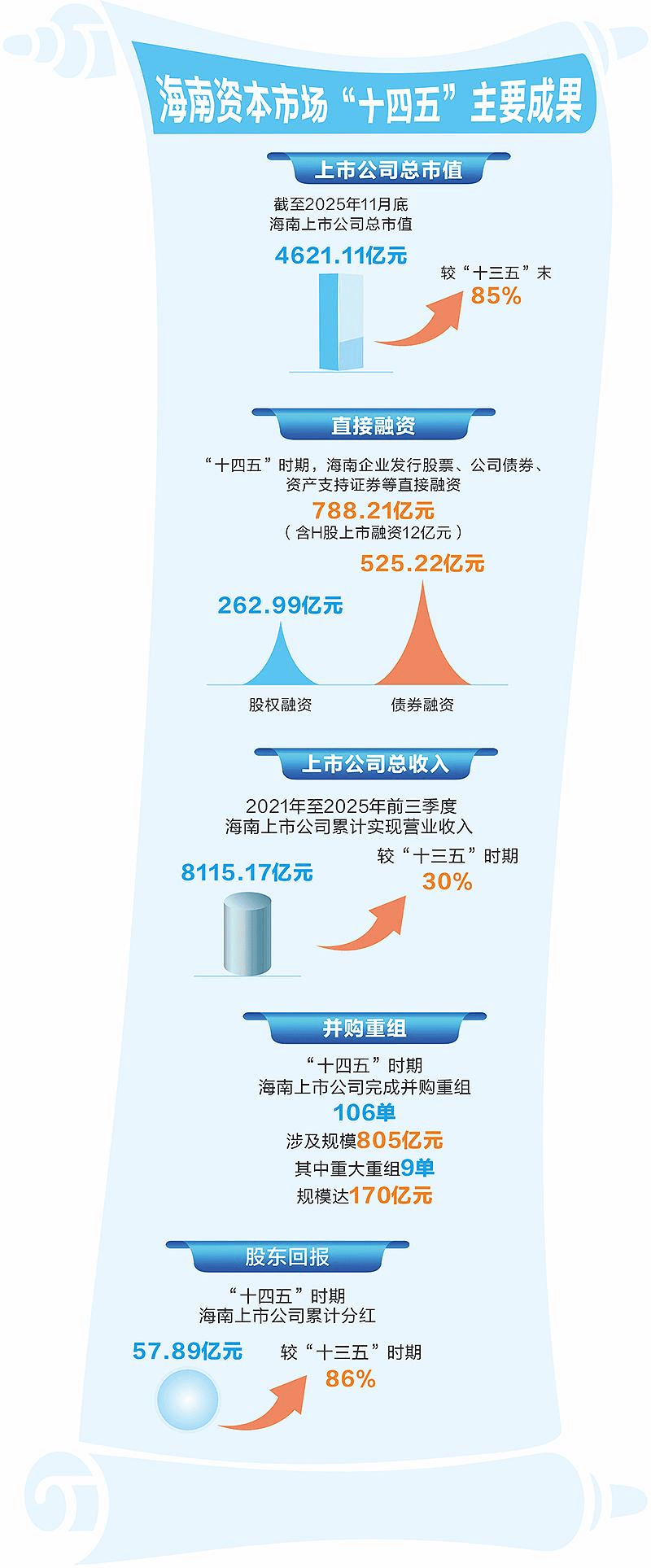
Core Viewpoint - The construction of Hainan Free Trade Port has transitioned from initial stages to a significant development phase, with the full island closure operation set for December 18, 2025, marking a historical milestone for the region [1]. Financing and Market Growth - Over the past five years, Hainan has achieved direct financing of 78.821 billion yuan, with the total market capitalization of listed companies increasing by 85% to 462.111 billion yuan, and the number of companies with a market value exceeding 10 billion yuan rising to 14 [1][5]. - The financing methods included 26.299 billion yuan from equity financing and 52.522 billion yuan from bond financing, significantly supporting enterprise transformation and international development [5]. Capital Market Development - Hainan's capital market has improved its multi-tiered system, with service bases established by major stock exchanges, and a dedicated board for specialized and innovative enterprises launched to facilitate capital access for tech SMEs [6]. - A total of 106 mergers and acquisitions were completed, involving 80.5 billion yuan, enhancing core competitiveness and focusing on key sectors such as technology innovation and green development [6]. Investor Returns and Protection - Listed companies in Hainan have increased their cash dividends to 5.789 billion yuan, an 86% increase compared to the previous five-year period, with share buybacks and stakeholder increases enhancing investment value [8]. - Investor protection mechanisms have been strengthened, with over 5,000 educational activities conducted, reaching more than 10 million investors [8]. Financial Innovation and Cross-Border Investment - Hainan has introduced innovative financial products, including the first green rural revitalization bonds and clean energy ABS, supporting sustainable development [10]. - Cross-border financial innovations have been implemented, allowing foreign investors to access various financial products, thereby enhancing the region's attractiveness for financial institutions [11]. Regulatory Environment - The Hainan Securities Regulatory Bureau has focused on strict enforcement and risk prevention, taking regulatory actions against 137 entities and imposing fines totaling nearly 150 million yuan to maintain market integrity [13]. Future Outlook - Looking ahead, Hainan's capital market aims to align with high standards for the Free Trade Port, focusing on improving the quality of listed companies and expanding cross-border asset management pilot businesses [14].
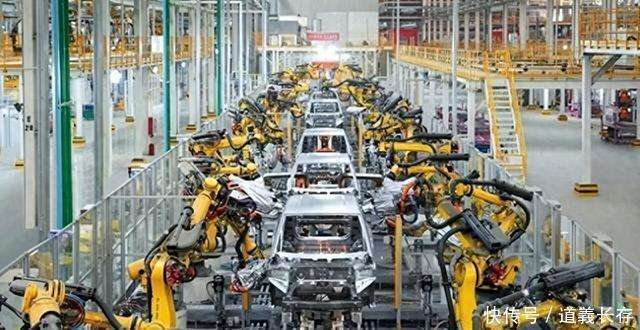
第十八届中国工业论坛在京召开
Zhong Guo Jing Ji Wang· 2025-12-18 02:22
Group 1 - The 18th China Industrial Forum emphasizes "integrated innovation" as a key driver for industrial upgrading and new competitive advantages, focusing on intelligent, green, and integrated development [1] - The forum highlights the importance of deep interaction and restructuring among different fields and elements to foster new technologies, business models, and systemic changes in production and organization [1] - Achieving a strong industrial base relies on core capabilities, quality branding, innovation capacity, green content, and international competitiveness, all driven by "integrated innovation" [1] Group 2 - The mechanical industry faces challenges such as the need for stronger foundational research and the enhancement of supply chain resilience and security, necessitating a focus on technological self-reliance and innovation [2] - The importance of technology innovation as a core driver for both traditional industry transformation and the growth of emerging industries is emphasized, alongside the need for deep integration of technology and industry [2] - The call for reform to break down barriers and activate internal dynamics for integration, as well as the need for a collaborative ecosystem to foster innovation and talent development, is highlighted [2] Group 3 - Recommendations include advancing artificial intelligence applications, enhancing foundational capabilities in data, networks, and algorithms, and promoting the scale development of emerging industries [3] - The necessity for a green low-carbon transition is stressed, with specific goals for carbon peak by the end of the 14th Five-Year Plan, and the promotion of green factories and low-carbon parks [3] - The integration of technological and industrial innovation is crucial, with an emphasis on converting scientific achievements into productive forces and enhancing effective supply across the industry [3] Group 4 - Manufacturing is identified as the core of building a modern industrial system and solidifying the foundation of the real economy, with an increasing share of Chinese manufacturing firms in the global top 500 [4] - The focus on intelligent manufacturing and the enabling role of technologies like AI and IoT for traditional industry upgrades is emphasized, alongside the need for collaboration across the industrial chain [4] - The "2025 New Quality Productivity Trends and Practices Report" indicates significant improvements in various aspects of productivity but also highlights challenges such as cognitive biases and insufficient foundational research [4]
2026年中国宏观展望:从叙事拐点到经济再平衡
Orient Securities· 2025-12-18 01:50
Group 1: Global Narrative Shifts - The "narrative inflection points" driving global capital reallocation include changes in overseas economies, AI advancements reshaping US-China dynamics, and a decrease in China's economic tail risks[4]. - The narrative power is expected to persist into 2026, with global monetary policies remaining accommodative and fiscal expansion opportunities greater in non-US countries than in the US[4]. - The "narrative inflection points" encompass three layers: the end of the "American exceptionalism," Europe's awakening, and the decline of tail risks in the Chinese economy[4]. Group 2: Economic Rebalancing in China - The main theme for China's macroeconomic strategy in 2026 is transitioning from capital reallocation to economic rebalancing, as outlined in the "14th Five-Year Plan" draft[4]. - Key shifts in ideology during the "14th Five-Year" period include prioritizing demand-side policies over supply-side policies, emphasizing consumption over investment, and focusing on "investment in people" alongside "investment in goods"[4]. - Fiscal policy is expected to enter a "rigid expansion" phase, maintaining a budget deficit ratio of 4%, with slight increases in special government bonds and local government bonds[4]. Group 3: Economic Growth Projections - The GDP target for 2026 is projected to remain around 5%, with an expected actual completion of 4.9%, indicating a flat "U-shaped" growth trajectory[4]. - Consumer subsidy policies are anticipated to increase by 100-200 billion yuan on top of the 300 billion yuan allocated in 2025 to support service consumption[4]. - The Consumer Price Index (CPI) is expected to rise moderately to 0.4%, while the Producer Price Index (PPI) is projected to decline by 0.9%[4]. Group 4: Industry Opportunities and Risks - From a macro perspective, technology remains a primary investment focus, but consumer investment value is also expected to emerge[5]. - Potential risks for 2026 include the ongoing US-China relationship dynamics, uncertainties in the European economy, and pressures in the domestic real estate market[5].
华泰证券:海外市场对国内映射的四个路径
Xin Lang Cai Jing· 2025-12-18 01:08
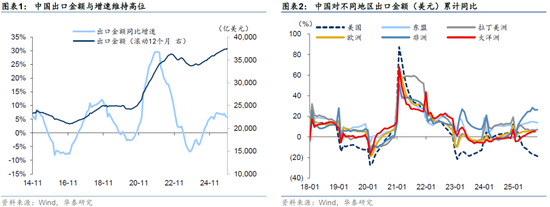
Core Viewpoints - The characteristics of trading driven by overseas macro events have become evident this year, with increased radiation and linkage to the domestic market. The focus has shifted from being primarily economy-driven to multiple channels including economy, geopolitics, AI industry trends, and global liquidity [1][5][36] - Four main paths of overseas influence on the domestic market need close attention in the coming year: external demand affecting profit expectations, AI chains contributing to market hotspots, reduced geopolitical risks, and positive impacts of overseas liquidity and RMB appreciation on domestic assets [1][20][59] Group 1: Overseas Influence on Domestic Market - Despite the impact of tariffs, China's export growth has remained robust, with a cumulative year-on-year increase of 5.4% in export value for the first 11 months, and a trade surplus increase of 21%. Net exports contributed 29% to GDP, surpassing the 17.5% contribution from investment [5][43] - The global economic outlook suggests a dual easing of fiscal and monetary policies, providing strong support for domestic growth through external demand. The structural shift in exports towards Africa and ASEAN has effectively countered declines in exports to the US [5][43][54] - Domestic enterprises are actively expanding into overseas markets, potentially creating a second growth curve, with leading companies likely to break through first. China's foreign direct investment is expected to reach nearly $200 billion in 2024, contrasting with a decline in global FDI [7][45] Group 2: Geopolitical Changes - Geopolitical changes are expected to influence market risk preferences in the short term and the restructuring of global order in the long term. China's response to trade tensions has demonstrated strategic resolve, and the market is becoming less sensitive to US tariff policies [10][49] - The trend towards regional integration and de-dollarization is accelerating, with a focus on self-sufficient supply chains. This context reduces tail risks and enhances the strategic value of scarce resources and capital goods [10][49] Group 3: AI Industry Trends - The AI wave has generated hotspots in the domestic market, primarily impacting hardware profitability and leading to valuation increases in applications. The market has experienced two rounds of AI-related trends this year, with a focus on hardware profitability and the need for actual earnings realization [12][51] - As overseas AI investments deepen, their influence is beginning to spill over into other asset classes, with a shift from "chip shortages" to "electricity shortages" becoming evident. This shift is expected to increase demand for power equipment and copper [13][52] Group 4: Monetary Policy and Currency Trends - The Federal Reserve's easing cycle, narrowing of the US-China interest rate differential, and gradual appreciation of the RMB are favorable for domestic asset performance. The trade surplus remains high, and the willingness of enterprises to convert currency has increased significantly [15][54] - The RMB is expected to continue appreciating, supported by a substantial potential for currency conversion funds and the anticipated further rate cuts by the Federal Reserve in the coming year [15][54] Group 5: Market Conditions and Recommendations - The domestic bond market is facing redemption pressures, with skepticism about the long-term interest rate support. The market is expected to experience volatility, with a focus on short- to medium-term credit bonds as relatively safe choices [39][60] - In the stock market, there is a consensus expectation for a spring rally, but the lack of earnings support may limit upward potential. Key sectors to watch include technology growth, commercial aerospace, and robotics, alongside cyclical and resource sectors [39][62]

海南澄迈 扬帆出海 连接未来
Ren Min Ri Bao· 2025-12-18 00:43
优环境、引项目,激活招商引资强磁场 高质量发展的背后,是一流营商环境的硬核支撑。澄迈深刻认识到,"干部强则营商环境强",全力锻造 一支具有"开放思维、开明作风、开拓能力"的"三开"干部队伍。推动政府服务由"可不可以办"的技术判 断向"应不应该办"的价值判断转变,让"有事找我"及"不转身就干"成为常态。 2025年12月18日,海南自由贸易港全岛封关运作正式启动。海南省澄迈县以"开局即冲刺"的奋进之姿, 全力拼经济、奋楫闯新路,于琼北大地奏响了"扬帆自贸港"的激扬乐章。服务封关运作,澄迈锚定关键 三事,始终坚持把"全力拼经济"作为第一选项,把"要'出海'、来澄迈"作为城市标签,把"重构产业、重 塑形象、重新出发"作为战略路径,矢志打造中国与世界互联互通的国际平台,连续14年经济总量位居 全省县域经济体首位、连续3年入选全国综合实力百强县,在"'澄'接世界、迈向未来"的征程上全速前 行。 当前,澄迈县在谈招商项目537个、计划总投资近1500亿元,覆盖先进制造、现代服务、农产品精深加 工、数字经济等重点领域,呈现"储备扩容、洽谈推进、签约见效"的良好态势。澄迈通过精准上门拜 访、线上视频洽谈等多元方式,加速意向投 ...
2025年ESG治理新格局: 监管、市场、技术多维度协同
Zheng Quan Shi Bao· 2025-12-17 22:12
近日,由证券时报社主办,五粮液(000858)、中泰证券(600918)协办的"第十九届上市公司价值论 坛暨2025新质生产力巡礼宜宾行"在四川省宜宾市举办,证券时报中国资本市场研究院与价值在线共同 编制的《上市公司可持续发展报告》(下称"报告")在会上发布。 国际能源署数据显示,2025年全球能源领域投资预计攀升至23.49万亿元人民币,达历史峰值,较去年 增长2%。 国内绿色债券规模持续扩大,金融机构参与日益增多。截至2025年7月4日,我国银行间市场绿色金融债 券发行规模已突破3000亿元人民币,超过2024年全年发行规模,发行只数也同步增加。 综合观察,在政策与市场驱动下,我国绿色债券市场正快速发展,成为支持实体经济绿色低碳发展的重 要力量。 报告显示,2025年在政策体系持续完善、技术迭代不断加快、市场需求日益多元的驱动下,ESG发展格 局呈现出系统性、融合性加强,战略高度提升等新特征。各维度之间的界限逐渐模糊, 多维协同正在 重塑企业价值创造的基本逻辑。本文对报告的重要结论进行了总结,展现了2025年国内ESG发展的变化 及趋势,为企业提升ESG治理水平提供参考。 一、ESG监管新格局逐步清晰 全 ...