
债券

Search documents
美国损失惨重,中国清空3000亿美债,最大接盘侠诞生
Sou Hu Cai Jing· 2025-10-01 09:44
Group 1 - The core issue is the unprecedented shock to the US financial system triggered by China's significant reduction of US Treasury holdings, totaling $300 billion over three months, which has shaken market confidence [2][5] - China has strategically reduced its US Treasury holdings to $767.4 billion after selling $7.6 billion in March, marking a clear shift in its investment strategy and signaling a decrease in reliance on the US economy [2][4] - The US government has attempted to mitigate the situation by sending officials to persuade China to maintain its Treasury holdings, but China has decisively moved away from US debt, indicating a decline in trust in US financial dominance [2][5] Group 2 - In contrast to China's withdrawal, Japan has increased its US Treasury holdings by $19.9 billion in March, bringing its total to over $1.18 trillion, positioning itself as the largest holder of US debt [4] - The US faces worsening fiscal conditions, with rising inflation and a growing deficit, leading to a decline in market confidence in US Treasuries, raising questions about the wisdom of Japan's investment [4][7] - The ongoing financial turmoil reflects the broader context of US-China tensions, with China's actions seen as a direct response to US pressures, including tariffs on Chinese products and geopolitical tensions in the South China Sea [5][6] Group 3 - Despite Japan's short-term role in absorbing some of the US Treasury market's losses, it cannot restore confidence in the market, as other countries are now considering reducing their own US Treasury holdings [7] - The US economy is experiencing slow growth and market volatility, compounded by ineffective Federal Reserve interest rate policies that have failed to alleviate inflationary pressures [7] - The financial crisis is just beginning, with the potential for a more severe crisis looming on the horizon if the US government cannot find new buyers for its debt [7]

美债今年强势反弹 政府关门阴影下避险需求再起
智通财经网· 2025-09-30 23:05
Core Insights - U.S. Treasury bonds have shown strong performance this year, with investors accelerating purchases of this risk-free asset as the risk of a federal government shutdown looms [1] - The iShares 20+ Year Treasury Bond ETF (TLT.US) is expected to see a total return of 2.72% this quarter, with a year-to-date increase of 5.7%, marking its best performance since 2020 [1] - Long-term Treasury yields have been declining, with the 10-year yield down 45.2 basis points to approximately 4.1% year-to-date, compared to 4.6% at the beginning of the year [1] Group 1 - Factors driving the strength of U.S. Treasuries include stable supply maintained by Treasury Secretary Yellen, which alleviates market supply-demand pressures, and the Federal Reserve's recent interest rate cuts to support the job market [1] - The attractiveness of bonds as a safe haven has increased amid concerns over economic growth and recession [1] - Historical data indicates that government shutdowns tend to provide short-term benefits to the bond market, with TLT averaging a 0.2% increase in the week following a shutdown [2] Group 2 - If a government shutdown lasts too long, it could create a "data vacuum," delaying the release of key economic indicators and complicating monetary policy and investment decisions [2] - The uncertainty surrounding the duration of the shutdown raises concerns about potential permanent reductions in workforce size by the Trump administration [2]
债市 震荡寻底概率较大
Qi Huo Ri Bao· 2025-09-30 19:48
Group 1 - Recent policy expectations continue to suppress bond market sentiment, with concerns over institutional redemptions remaining prevalent, leading to renewed challenges at key interest rate levels [1] - The central bank's resumption of 14-day reverse repurchase operations indicates a strong willingness to support liquidity, which has helped stabilize the bond market [1][3] - The net redemption scale of bond funds by institutions such as wealth management subsidiaries, banks, and insurance companies is at a relatively high level, particularly as the end of the quarter approaches, which may trigger negative feedback in bond fund redemptions [1] Group 2 - The current economic contradictions are primarily structural, with limited necessity for short-term interest rate cuts, although there remains room for reserve requirement ratio reductions in the fourth quarter [3] - The bond market is experiencing mixed factors, with cautious sentiment prevailing and downward pressure remaining due to macroeconomic conditions and capital diversion to the stock market [5] - As the holiday approaches, market risk aversion is increasing, and institutions are opting to hold cash, leading to a potentially weak and volatile bond market [5] Group 3 - The U.S. government faces a shutdown crisis, which could impact the release of key economic data and subsequently affect market expectations regarding the Federal Reserve's interest rate decisions [5] - Recent announcements of new tariffs by former President Trump are set to take effect, indicating a new phase of tariff increases that may further influence market dynamics [5]
【笔记20250930— 股债双牛,喜迎双节】
债券笔记· 2025-09-30 13:54
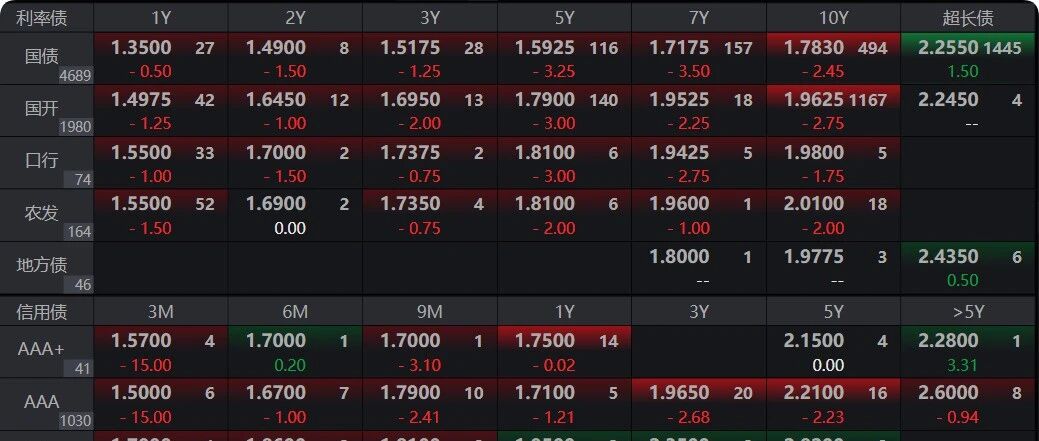
Core Viewpoint - The article discusses the current market conditions, highlighting the balance in the funding environment and the performance of both the stock and bond markets, particularly in light of recent central bank actions and economic indicators. Group 1: Market Overview - The stock market experienced a slight increase, supported by a stable funding environment and a central bank announcement of a 1.1 trillion yuan reverse repurchase operation, leading to a downward trend in interest rates [5][6]. - The central bank conducted a 242.2 billion yuan 7-day reverse repurchase operation, with a net withdrawal of 33.9 billion yuan, indicating a balanced funding situation [3][4]. Group 2: Interest Rates and Bond Market - The yield on long-term bonds has significantly decreased, with the 10-year government bond yield dropping to approximately 1.783% [5][6]. - The funding rates remained stable, with the overnight rate (DR001) slightly rising to around 1.39%, while the 7-day rate (DR007) fell by 15 basis points to approximately 1.44% [4]. Group 3: Economic Indicators - The official manufacturing PMI for September met expectations, contributing to the slight rise in the stock market [5]. - The article notes a shift in market sentiment regarding government bonds, with a recent announcement from the Ministry of Finance affecting the pricing of long-term bonds [6].
香港特区政府已发行约2400亿港元等值绿色债券
Zhong Guo Xin Wen Wang· 2025-09-30 13:50
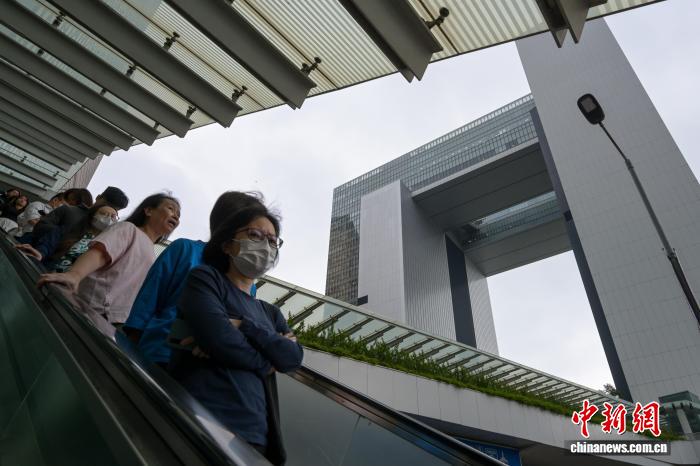
Group 1 - The Hong Kong Special Administrative Region (HKSAR) government has issued approximately HKD 240 billion worth of green bonds to finance local green projects and provide benchmarks for potential issuers [1][3] - The funds raised through green bonds have been fully allocated or reserved for various green projects, including the construction and repair of the Cheung Sha Wan sewage main pumping station, the expansion plan for North District Hospital, and a high-performance computer system for the Hong Kong Observatory [3] - The Secretary for Financial Services and the Treasury, Christopher Hui, stated the commitment to strengthen Hong Kong's position as a regional and international center for green and sustainable finance, leveraging its advantages in the bond market, green finance, and fintech to create a conducive regulatory environment [3]
绿标委发布绿色债券适用《绿色金融支持项目目录(2025年版)》工作机制
Xin Hua Cai Jing· 2025-09-30 13:35
Core Viewpoint - The Green Bond Standard Committee has announced mechanisms to align the "Green Finance Support Project Catalog (2025 Edition)" with the "Green Bond Support Project Catalog (2021 Edition)" to enhance the green bond market's development [1][2]. Group 1 - Green bonds that are in existence or have been approved before the release of the 2025 catalog will continue to follow the 2021 catalog's applicable scope [1]. - For green bonds that have submitted materials but are not yet approved or registered at the time of the 2025 catalog's release, issuers can choose to apply either the 2021 or 2025 catalog for project recognition [1]. - From the effective date of the 2025 catalog, any changes to the project recognition for green bonds in the issuance phase must adhere to the 2025 catalog [1][3]. Group 2 - Green bonds that change the use of raised funds during their existence must apply the 2025 catalog for the new intended use [1]. - Issuers are encouraged to disclose information according to the 2025 catalog [1]. - Carbon-neutral bonds registered under the 2025 catalog must meet the criteria for "greenhouse gas emission reduction contribution" [2]. Group 3 - The Green Bond Standard Committee will update and optimize related mechanisms, such as the "Green Bond Ongoing Information Disclosure Guidelines," to promote high-quality development in the green bond market [2]. - Any adjustments to the 2025 catalog by regulatory bodies will automatically apply to this notification [2]. - The notification will take effect from the date of publication [3].
央行:8月债券市场共发行各类债券74281.4亿元
Di Yi Cai Jing· 2025-09-30 10:12
Core Insights - The central bank reported on the financial market operations for August 2025, highlighting significant bond issuance and market balances [1] Bond Market Issuance - In August, a total of 74,281.4 billion yuan in various bonds were issued, including: - Government bonds: 13,277.6 billion yuan - Local government bonds: 9,776.4 billion yuan - Financial bonds: 11,550.3 billion yuan - Corporate credit bonds: 12,391.4 billion yuan - Credit asset-backed securities: 212.2 billion yuan - Interbank certificates of deposit: 26,956.5 billion yuan [1] Bond Market Custody Balances - As of the end of August, the total custody balance of the bond market reached 192.0 trillion yuan, with: - Interbank market custody balance: 169.8 trillion yuan - Exchange market custody balance: 22.2 trillion yuan - By bond type, the custody balances were: - Government bonds: 38.4 trillion yuan - Local government bonds: 53.0 trillion yuan - Financial bonds: 43.9 trillion yuan - Corporate credit bonds: 34.1 trillion yuan - Credit asset-backed securities: 1.0 trillion yuan - Interbank certificates of deposit: 20.4 trillion yuan - The custody balance of commercial bank counter bonds was 222.5 billion yuan [1]
债海观潮,大势研判:基本面改善仍需验证,债市存在阶段性机会
Guoxin Securities· 2025-09-30 07:23
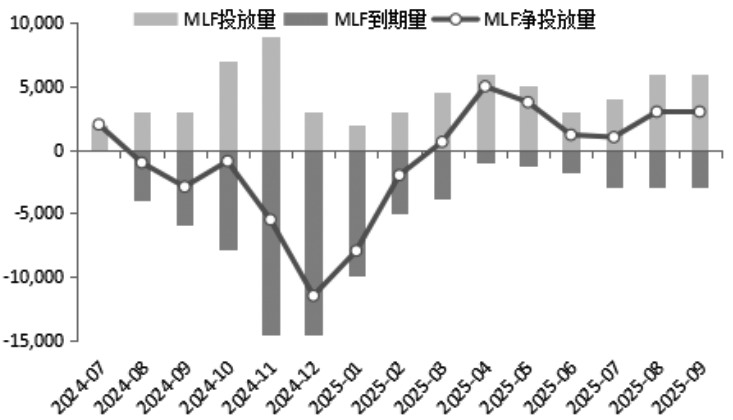
Group 1 - The overall bond market saw an increase in yields across all varieties in September, with the 10-year national development bond experiencing the highest rise [3][9] - In the credit bond sector, long-term varieties showed a significant widening of credit spreads, particularly the 5-year AAA, AA, and AA- credit bonds, which increased by 16 basis points, 14 basis points, and 14 basis points respectively [9][18] - The default amount in September slightly decreased to 6.79 billion, indicating a minor improvement in credit risk [27] Group 2 - The U.S. economy is showing signs of a slowdown, with weak employment performance and a slight increase in inflation expectations, as evidenced by a 2.9% year-on-year rise in CPI in August [33][37] - In contrast, the European and Japanese economies continue to expand, with stable inflation rates of 2.0% and 2.7% respectively in August [40] - Domestic economic growth in China has significantly declined, with the monthly GDP growth rate dropping to approximately 3.8% in August, which is 0.5 percentage points lower than July [3][61] Group 3 - The monetary policy in September continued to show a net withdrawal in the open market, with a total net withdrawal of 187.2 billion [98] - The MLF (Medium-term Lending Facility) operations in September resulted in a net injection of 300 billion, maintaining the same level as August [102] - The report emphasizes the need for a proactive monetary policy to support sectors such as technology innovation, consumption, and small and micro enterprises [106] Group 4 - The report highlights the importance of analyzing the internal structure of CPI, particularly the trends in non-food prices, as they are more indicative of demand-driven price changes [159] - The correlation between the 10-year government bond yield and non-food price growth has increased significantly since 2015, suggesting a shift in the factors influencing bond yields [159] - The report suggests that understanding the divergence between food and non-food prices is crucial for accurately interpreting inflation trends and their impact on monetary policy [159]
香港财政司司长:香港股市、债市、资产及财富管理“三市齐旺”
Zhong Guo Xin Wen Wang· 2025-09-30 03:43
Core Insights - Hong Kong's financial markets, including the stock market, bond market, and asset and wealth management, are experiencing robust growth, with the Hang Seng Index showing exceptional performance this year [1][3] Stock Market - The Hang Seng Index has risen over 30% this year, following an 18% increase last year [3] - The Hang Seng Technology Index has increased by over 40%, while the biotechnology index has more than doubled [3] - Average daily trading volume in Hong Kong stocks for the first eight months was approximately HKD 250 billion, a 1.3 times increase compared to the same period last year [3] - The total amount raised through initial public offerings (IPOs) has exceeded HKD 150 billion, marking a nearly sixfold increase year-on-year [3] - The total market capitalization of Hong Kong stocks has surpassed HKD 48 trillion, significantly outperforming many other major global markets [3] Bond Market - The bond market is also showing strong growth, with the issuance of RMB "dim sum bonds" and green bonds experiencing steady increases [3] - In the first half of this year, the issuance of green bonds in Hong Kong is expected to exceed USD 34 billion, representing a 15% year-on-year increase [3] Asset and Wealth Management - The asset and wealth management sector recorded significant growth last year, with net inflows reaching HKD 705 billion, an increase of over 80% year-on-year [3]

大类资产早报-20250930
Yong An Qi Huo· 2025-09-30 01:36
Report Information - Report Date: September 30, 2025 [2] - Report Title: Daily Report on Major Asset Classes [9] Global Asset Market Performance 10-Year Treasury Yields of Major Economies - Yields on September 29, 2025: US 4.140%, UK 4.700%, France 3.531%, etc [3] - Latest Changes: US -0.036, UK -0.045, France -0.037, etc [3] - One-Week Changes: US -0.008, UK -0.012, France -0.028, etc [3] - One-Month Changes: US -0.090, UK -0.050, France -0.005, etc [3] - One-Year Changes: US 0.389, UK 0.778, France 0.594, etc [3] 2-Year Treasury Yields of Major Economies - Yields on September 29, 2025: US 3.640%, UK 3.983%, Germany 2.020%, etc [3] - Latest Changes: US 0.070, UK -0.026, Germany -0.007, etc [3] - One-Week Changes: US 0.070, UK 0.008, Germany 0.006, etc [3] - One-Month Changes: US 0.120, UK 0.023, Germany 0.069, etc [3] - One-Year Changes: US 0.050, UK 0.071, Germany -0.126, etc [3] US Dollar Exchange Rates Against Major Emerging Market Currencies - Rates on September 29, 2025: Brazil 5.322, South Africa ZAR 17.273, South Korean Won 1400.400, etc [3] - Latest Changes: Brazil -0.40%, South Africa ZAR -0.37%, South Korean Won -0.72%, etc [3] - One-Week Changes: Brazil -0.24%, South Africa ZAR -0.31%, South Korean Won 0.66%, etc [3] - One-Month Changes: Brazil -2.15%, South Africa ZAR -1.96%, South Korean Won 0.50%, etc [3] - One-Year Changes: Brazil -3.88%, South Africa ZAR -0.45%, South Korean Won 4.88%, etc [3] Stock Indices of Major Economies - Values on September 29, 2025: S&P 500 6661.210, Dow Jones Industrial Average 46316.070, NASDAQ 22591.150, etc [3] - Latest Changes: S&P 500 0.26%, Dow Jones Industrial Average 0.15%, NASDAQ 0.48%, etc [3] - One-Week Changes: S&P 500 -0.49%, Dow Jones Industrial Average -0.14%, NASDAQ -0.87%, etc [3] - One-Month Changes: Mexico Index 6.36%, UK Index 1.13%, France CAC 2.24%, etc [3] - One-Year Changes: S&P 500 16.48%, Dow Jones Industrial Average 9.95%, NASDAQ 25.69%, etc [3] Credit Bond Indices - Values on September 29, 2025: US Investment-Grade Credit Bond Index 3517.910, Eurozone Investment-Grade Credit Bond Index 265.036, etc [3] - Latest Changes: US Investment-Grade Credit Bond Index 0.34%, Eurozone Investment-Grade Credit Bond Index 0.13%, etc [4] - One-Week Changes: US Investment-Grade Credit Bond Index 0.09%, Eurozone Investment-Grade Credit Bond Index 0.08%, etc [4] - One-Month Changes: US Investment-Grade Credit Bond Index 1.56%, Eurozone Investment-Grade Credit Bond Index 0.51%, etc [4] - One-Year Changes: US Investment-Grade Credit Bond Index 3.50%, Eurozone Investment-Grade Credit Bond Index 3.93%, etc [4] Stock Index Futures Trading Data Index Performance - Closing Prices: A-share 3862.53, CSI 300 4620.05, SSE 50 2973.04, etc [5] - Price Changes (%): A-share 0.90%, CSI 300 1.54%, SSE 50 1.09%, etc [5] Valuation - PE(TTM): CSI 300 14.19, SSE 50 11.73, CSI 500 34.92, etc [5] - Month-on-Month Changes: CSI 300 0.15, SSE 50 0.05, CSI 500 0.47, etc [5] Risk Premium - 1/PE - 10-Year Interest Rate: S&P 500 -0.53, Germany DAX 2.40 [5] - Month-on-Month Changes: S&P 500 0.03, Germany DAX 0.04 [5] Fund Flows - Latest Values: A-share 836.51, Main Board 463.46, Small and Medium-Sized Enterprise Board - [5] - Average Values in the Past 5 Days: A-share -302.46, Main Board -264.41, Small and Medium-Sized Enterprise Board - [5] Trading Volume - Latest Values: Shanghai and Shenzhen Stock Exchanges 21614.61, CSI 300 6933.95, SSE 50 1899.69, etc [5] - Month-on-Month Changes: Shanghai and Shenzhen Stock Exchanges 145.76, CSI 300 946.71, SSE 50 397.81, etc [5] Main Contract Premiums or Discounts - Basis: IF -15.45, IH 2.96, IC -118.36 [5] - Premium or Discount Ratios: IF -0.33%, IH 0.10%, IC -1.61% [5] Treasury Bond Futures Trading Data Closing Prices - T00 107.660, TF00 105.485, T01 107.325, TF01 105.360 [6] Price Changes (%) - T00 0.00%, TF00 0.00%, T01 0.00%, TF01 0.00% [6] Money Market - Capital Interest Rates: R001 1.3776%, R007 1.8694%, SHIBOR-3M 1.5800% [6] - Daily Changes (BP): R001 -17.00, R007 32.00, SHIBOR-3M 0.00 [6]