
建筑业

Search documents
焦点访谈|稳中求进、提质增效 经济“活水”这样浇灌美好生活
Yang Shi Wang· 2026-01-21 13:35
Core Viewpoint - The focus is on the implementation of the "14th Five-Year Plan" starting in 2026, emphasizing high-quality development and the support of the real economy through monetary policy measures [1][2]. Monetary Policy - The People's Bank of China (PBOC) will continue to implement a moderately loose monetary policy to support stable economic growth and high-quality development, ensuring a favorable financial environment for the "14th Five-Year Plan" [2]. - The PBOC has a rich toolbox of monetary policy instruments, including traditional tools like reserve requirement ratio (RRR) cuts and interest rate reductions, as well as structural monetary policy tools [2][3]. - There is still room for further RRR and interest rate cuts in 2026, with the current average RRR at 6.3% and a stabilized net interest margin of 1.42% observed since 2025 [3]. Structural Support - The PBOC aims to optimize the design and management of structural monetary policy tools to enhance support for key areas such as domestic demand expansion, technological innovation, and small and micro enterprises [5]. - Specific measures include a dedicated 500 billion yuan for consumer and elderly care loans, increasing the technology innovation loan quota to 1.2 trillion yuan, and raising the agricultural and small enterprise loan quotas to 4.35 trillion yuan [5]. Financial Stability - The PBOC emphasizes the importance of maintaining financial market stability to support high-quality development of the real economy, including managing expectations and stabilizing the RMB exchange rate [9]. - A comprehensive macro-prudential management system will be established to address the interconnections between macroeconomic operations and financial risks [7]. Urban Development - In 2026, urban renewal projects will be initiated, focusing on improving living conditions and environments, with a commitment to high-quality urban development [11]. - The Ministry of Housing and Urban-Rural Development will implement city-specific strategies to address urgent community issues, such as parking and aging infrastructure [13]. Real Estate Market - The real estate market will be stabilized through precise policies tailored to individual cities, supporting reasonable financing needs of real estate companies and addressing housing demands [15][16]. - The focus will be on enhancing the quality of housing through better standards, designs, materials, and maintenance, transitioning from new construction to the renovation of existing properties [15][16].

财政部及央行新闻发布会解读:财政金融协同,助力“开门红”
Shenwan Hongyuan Securities· 2026-01-21 10:07
Group 1: Policy Signals - The Ministry of Finance and the central bank are focusing on stimulating domestic demand, enhancing support for technological innovation, and activating private investment as key areas for policy collaboration[1] - Personal consumption loan interest subsidies have increased significantly, with the maximum subsidy per loan rising from 500 yuan to 3000 yuan, and credit card installment payments now included[1] - The central bank has lowered the interest rates on various structural monetary policy tools by 0.25 percentage points to guide financing costs down[1] Group 2: Addressing Key Issues - In 2025, new household loans dropped to 360 billion yuan, a decrease of 22,910 billion yuan from 2024, indicating a significant decline in consumer credit growth[2] - The overall credit growth rate fell to 6.4% in 2025, with a 1.0 percentage point decline attributed to the drop in household loans[2] - Fixed asset investment decreased by 3.8% in 2025, with equipment purchases being a major growth driver, increasing by 11.8%[3] Group 3: Expected Outcomes - Fiscal interest subsidies are expected to stabilize financial data and stimulate domestic demand, despite banks facing challenges in expanding loan volumes due to low net interest margins of 1.4%[4] - The expansion of consumer loan interest subsidies is anticipated to support stable consumer spending, particularly in service consumption, as households shift their spending patterns[4] - New policy financial tools, if further enhanced, could provide an additional 1.5 percentage points in fiscal interest subsidies, thereby boosting investment in new infrastructure projects[4]
12月经济数据点评:四大对冲力量在增强
Huachuang Securities· 2026-01-20 04:46
Group 1: Economic Structure and Wealth - By 2025, the new economy is expected to account for 20.1% of the total economy, surpassing the old economy at 19.7% for the first time[2][11] - Financial assets held by residents are projected to exceed residential assets by 2026, driven by increases in deposits, non-deposit financial investments, and stock market valuations[3][13] Group 2: Spending Willingness and Supply-Demand Dynamics - Resident spending willingness has declined from 101.4% in 2021 to 80% in 2025, but is expected to rebound to 107.6% by 2025 due to fiscal and external demand support[4][18] - In December 2025, the midstream manufacturing sector is expected to see a demand growth rate of 8.4%, contrasting with upstream at -6.8% and downstream at 3.2%[5][21] Group 3: Quarterly Economic Data Insights - In Q4 2025, GDP growth was recorded at 4.5%, with a nominal GDP growth of 3.8% and a cumulative annual growth of 5.0%[6][25] - The contribution rates to economic growth in Q4 were 52.9% from final consumption, 16.0% from capital formation, and 31.1% from net exports[29] Group 4: Employment and Consumer Behavior - The urban unemployment rate remained stable at 5.1% in December 2025, with a total of 18.006 million migrant workers, reflecting a year-on-year growth of 0.8%[46][39] - Consumer spending growth in December was 0.9%, down from 1.3% in the previous month, indicating a slowdown in consumer demand[51][43]
张瑜:四大对冲力量在增强——12月经济数据点评
一瑜中的· 2026-01-20 04:39
Core Viewpoint - The report discusses four macroeconomic counterforces that are expected to strengthen by 2025, potentially leading to a healthier economic environment in 2026, characterized by rising prices, improved corporate profits, and stable employment and consumption [2][4]. Group 1: Four Strengthening Counterforces - **Economic Structure**: By 2025, the new economy is projected to account for 20.1% of the economy, surpassing the old economy at 19.7%, marking the first time this has occurred [4][13]. - **Household Wealth**: Financial assets are expected to exceed residential assets by 2026, driven by growth in deposits, non-deposit financial investments, and stock market valuations [5][15]. - **Spending Willingness**: Despite a decline in household spending inclination, the combined spending willingness of three sectors is anticipated to rise from 107.2% in 2023 to 107.6% in 2025 [7][16]. - **Supply-Demand Imbalance**: The supply-demand contradiction in the midstream manufacturing sector is rapidly easing, with midstream demand growth projected at 8.4% for 2025, outperforming upstream and downstream sectors [8][20]. Group 2: Economic Data Analysis for Q4 - **GDP Growth**: In Q4, GDP growth was 4.5%, down from 4.8%, with a cumulative annual growth rate of 5.0% [10][22]. - **Investment Trends**: Fixed asset investment saw a significant decline of -13.2% in Q4, with real estate sales area decreasing by -17.0% [23][50]. - **Consumer Spending**: Retail sales growth in December was 0.9%, down from 1.3%, indicating a slowdown in consumer spending [31][38]. - **Employment Stability**: The urban unemployment rate remained stable at 5.1% in December, with a total of 30.115 million migrant workers, reflecting a slight increase of 0.5% year-on-year [36][30]. Group 3: December Economic Data Insights - **Production Strength**: December saw industrial output growth of 5.2%, with service sector production index at 5.0% [31][46]. - **Real Estate Market**: The real estate sector experienced a downturn, with a sales area decline of -15.6% in December and a significant investment drop of -35.8% [43][44]. - **Price Trends**: In December, the PPI decreased by -1.9%, while the CPI rose to 0.8%, indicating mixed price pressures in the economy [34][35].

12月宏观数据分析:2025年预期目标圆满实现,但复苏动能仍不强
Xi Nan Qi Huo· 2026-01-20 02:02
1. Report Industry Investment Rating No relevant content provided. 2. Core Viewpoints of the Report - The GDP growth target of 5% in 2025 was successfully achieved, but the growth rate declined quarter - by - quarter. The macro - economic data in December continued to fall, and the recovery momentum remained weak. Consumption, fixed - asset investment, and the real estate market were sluggish, while exports showed resilience and inflation data improved [3]. - A rational and objective view of the current macro - economy is needed. The transformation, adjustment, and bottoming - out of the real estate market require time, and the domestic economic recovery cannot be achieved overnight. More active macro - policies should be implemented to expand domestic demand and optimize supply [4]. - In the future, "expanding domestic demand and combating cut - throat competition" will remain important long - term policy measures. The financial market is in a state of "weak reality, strong expectation", and the market sentiment is continuously improving. In 2026, the macro - economy and asset prices are expected to continue the upward repair trend, but patience is required [4]. 3. Summary by Directory 3.1 Manufacturing PMI: A Slight Rebound but Still Weak - In December, the manufacturing PMI was 50.1%, up 0.9 percentage points from the previous month, entering the expansion range. Large - scale enterprises' PMI was 50.8%, up 1.5 percentage points; medium - sized enterprises' PMI was 49.8%, up 0.9 percentage points; small - sized enterprises' PMI was 48.6%, down 0.5 percentage points [6]. - Among the five sub - indices of the manufacturing PMI, the production index, new order index, and supplier delivery time index were above the critical point, while the raw material inventory index and employment index were below it. The production and new order indices increased, indicating accelerated production and improved market demand, but the employment index declined slightly [6]. - Overall, although the manufacturing PMI rebounded in December, the manufacturing sector was still weak, and the economic recovery momentum was insufficient [9]. 3.2 CPI and PPI: Inflation Continued to Improve - In December 2025, the national CPI rose 0.8% year - on - year and 0.2% month - on - month. Food and non - food prices both increased, and among the eight major categories of prices, five increased and two decreased year - on - year [10]. - The PPI decreased 1.9% year - on - year in December, with the decline narrowing by 0.3 percentage points, and increased 0.2% month - on - month, with the growth rate expanding by 0.1 percentage points. The anti - cut - throat competition policy has achieved continuous results, and the PPI year - on - year growth rate is expected to turn positive in 2026 [12][15]. 3.3 Import and Export: Maintaining Resilience - In December, China's imports denominated in US dollars increased 5.7% year - on - year, and exports increased 6.6% year - on - year, both exceeding expectations. The trade surplus was 1,141.4 billion US dollars [16]. - Since the second quarter, exports have been stronger than expected, showing strong resilience. The real risk for China's foreign trade lies in the potential economic recession in the US and the slowdown of global economic growth [18]. - In December, China's exports to regions other than the US maintained steady growth, and exports to ASEAN countries continued to replace those to the US [19]. 3.4 Credit: Weak Resident Credit Demand and Declining M1 Growth - At the end of 2025, the stock of social financing scale was 442.12 trillion yuan, a year - on - year increase of 8.3%. The annual increment of social financing scale was 35.6 trillion yuan, 3.34 trillion yuan more than the previous year [20][21]. - In December, resident short - term and long - term loans both decreased significantly, indicating weak resident consumption and housing credit demand. Government bond issuance slowed down, M1 growth declined, but enterprise credit improved and M2 growth rebounded [24][25]. - Overall, the credit demand of the real economy was still weak, and the upward trend of M1 and M2 growth faced resistance [26]. 3.5 Industrial Production, Consumption, and Investment: Industrial Production Rebounded, while Consumption and Investment Growth Continued to Decline - In December 2025, the added value of large - scale industrial enterprises increased 5.2% year - on - year and 0.49% month - on - month. For the whole year of 2025, it increased 5.9% compared with the previous year [27]. - In December, the total retail sales of consumer goods increased 0.9% year - on - year. After excluding the impact of national subsidies, consumption in 2025 was weak, indicating insufficient domestic demand. Further consumption - promotion policies may be introduced in 2026 [27][28]. - In 2025, the national fixed - asset investment (excluding rural households) decreased 3.8% year - on - year. The growth rates of manufacturing investment, infrastructure investment, and real estate development investment all continued to decline [32]. 3.6 Real Estate Market: Continued Downtrend - In 2025, the sales area and sales volume of newly built commercial housing decreased by 8.7% and 12.6% respectively year - on - year. The real estate development investment decreased 17.2% year - on - year [31][32]. - The new construction, construction, and completion of real estate all declined further. The real estate development climate index continued to fall in December [35][36]. - The real estate market is currently at the bottom stage. With the decline of the base, the year - on - year decline of sales area and sales volume is gradually narrowing. The first half of 2026 is expected to be a critical period for the real estate market to stop falling and stabilize [38]. 3.7 Summary and Outlook - In December, the macro - economy was weak, with consumption, fixed - asset investment, and the real estate market remaining sluggish, while exports were resilient and inflation data improved [40]. - The main constraints on macro - economic recovery and asset price repair are insufficient domestic effective demand represented by real estate and consumption, and over - capacity in multiple industries. More policy support is needed [40]. - The financial market is in a state of "weak reality, strong expectation". In 2026, the macro - economy and asset prices are expected to continue the upward repair trend, but one should track policy implementation details and wait for positive macro - economic signals [40].
AI的尽头,是电工
3 6 Ke· 2026-01-19 11:48
Group 1 - The core viewpoint of the article highlights the increasing demand for electricians in the U.S., with an estimated annual shortage of about 81,000 electricians from 2024 to 2034, leading to a projected 9% growth in employment for electricians, significantly higher than the average for all occupations [1][3]. - The surge in job openings is primarily driven by the data center industry, which is creating a ripple effect in the blue-collar job market, benefiting not only electricians but also plumbers, construction workers, and HVAC technicians [3][10]. - The demand for workers in data center projects has reached unprecedented levels, with some local unions reporting that the number of workers needed for single data center projects has doubled or tripled compared to their current capacity [3][10]. Group 2 - In 2024, tech giants are expected to increase hiring in the energy sector by 34% year-on-year, maintaining high levels in 2025, which is approximately 30% higher than before the release of ChatGPT in 2022 [4][5]. - Amazon has made the largest hiring move, adding 605 employees in the energy sector since 2022, followed by Microsoft and Google with over 570 and 340 new hires, respectively [5][6][7]. - The competition for talent at the executive level is intensifying, with notable personnel shifts between major companies, indicating a fierce battle for skilled professionals in the energy sector [8][10]. Group 3 - The current energy consumption of data centers has reached 30 GW, equivalent to the peak electricity usage of New York State during its hottest times, with GPUs accounting for about 40% of this consumption [11][14]. - The shortage of skilled labor in the construction industry has been a long-standing issue, exacerbated by a historical shift in career preferences away from skilled trades towards white-collar jobs [15][16]. - Companies are proactively addressing the labor shortage by investing in training programs, such as Google's donation to the Electrical Training Alliance to help train 30,000 new apprentices by 2030, potentially increasing the electrician workforce by 70% [18]. Group 4 - The article emphasizes that the next phase of competition in the tech industry will revolve around energy supply, with Microsoft’s CEO acknowledging that the lack of electricity is a more critical issue than the shortage of GPUs [19]. - Elon Musk has suggested that energy will become the new currency, highlighting the importance of not just power generation but also the infrastructure needed for energy distribution and cooling systems [21]. - China is positioned to have a significant advantage in energy production, with projections indicating that by 2026, its electricity output will reach three times that of the U.S. [21].



亓伟:今年计划筹集保障性租赁住房3500套(间)
Qi Lu Wan Bao· 2026-01-19 11:05
Group 1 - The core viewpoint is that Jinan is focusing on urban renewal and housing development to stimulate demand and improve living conditions by implementing various projects and policies by 2026 [1][2][3][4] Group 2 - In 2025, Jinan plans to implement 92 urban renewal projects and has introduced local regulations for urban renewal, marking a significant step in the city's development [2] - The city aims to enhance infrastructure by adding 17 million square meters of heating area, with a total centralized heating area reaching 400 million square meters, covering approximately 2.9 million households [2] - Jinan is actively exploring new models for real estate development, with 20 projects recognized as high-quality residential pilot projects at the municipal level, and 24 at the provincial level, leading the province in the number of provincial pilot projects [2] - The housing security system is being improved, with a total of 186,000 units of rental housing and 1,021 units of sale-type affordable housing planned, achieving a 95% sales rate for the first batch [2] - The city plans to renovate 92 kilometers of heating pipelines and 43 kilometers of aging gas pipelines to enhance urban safety and infrastructure [3][4] - Jinan's housing and urban construction bureau is promoting high-quality residential projects and supporting the "old for new" housing exchange to stimulate housing demand [4] - The city is focusing on green, intelligent, and industrialized development in the construction industry, aiming to enhance competitiveness and expand into new markets [4]
聚焦12个方面重点工作,济南这样谋篇布局“十五五”
Qi Lu Wan Bao· 2026-01-19 06:55
Core Viewpoint - The government work report presented at the Jinan Municipal People's Congress outlines the main goals and tasks for the city's economic and social development during the 14th Five-Year Plan period, emphasizing modernization, innovation, and sustainable growth. Group 1: Economic Development - Accelerate the construction of a modern industrial system, focusing on building a northern advanced manufacturing base and enhancing the "13+34" industrial chain [1] - Implement strategies to expand domestic demand and optimize investment structures, including modern infrastructure projects and support for private capital in major projects [2] - Promote high-quality development in the commercial logistics sector by establishing a comprehensive transportation hub and enhancing the modern commercial circulation system [2] Group 2: Innovation and Education - Implement a strategy to strengthen education and talent development, aiming to build a regional technology innovation hub and enhance the integration of technological and industrial innovation [1][2] - Optimize the layout of innovation resources and strengthen the role of enterprises in innovation, targeting breakthroughs in key technologies and advanced equipment [1] Group 3: Urban and Rural Development - Advance agricultural modernization and rural revitalization, ensuring food security and improving rural governance [4] - Promote urban renewal and the construction of a modern urban area that is innovative, livable, and resilient [3] Group 4: Environmental Sustainability - Promote green and low-carbon transformation, focusing on pollution prevention and ecological restoration, while implementing a dual control system for carbon emissions [4] - Develop a new energy system and promote a waste-free city initiative [4] Group 5: Cultural and Social Development - Enhance cultural development and support the growth of cultural industries, while promoting the core socialist values and protecting historical cultural sites [5] - Focus on improving public services and social welfare to ensure common prosperity and enhance the quality of life for residents [5] Group 6: Security and Governance - Implement a comprehensive national security strategy to safeguard the new development framework, ensuring food, energy, and infrastructure security [6] - Strengthen public safety governance and enhance social governance to build a safer and more law-abiding city [6]
资本主导下的薪酬博弈 ——读《工资的真相》
Shang Hai Zheng Quan Bao· 2026-01-18 18:15
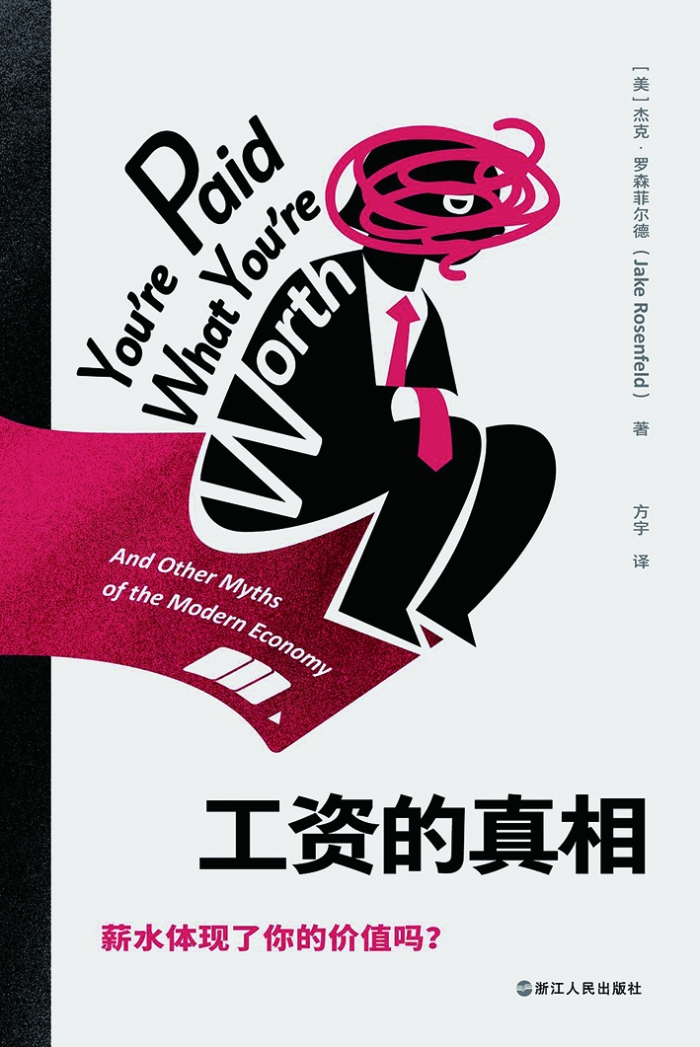
为何美国建筑工人的年收入较20世纪70年代缩水约1万美元?同样经营快餐店,为何丹麦员工平均薪酬 能达到美国同行的两倍以上?美国圣路易斯华盛顿大学社会学教授杰克·罗森菲尔德在其著作《工资的 真相》中,以横跨40年的实证数据揭示:决定美国工人工资的关键,并非传统意义上的"绩效"或"资 历",而是一套由权力、惯性、模仿与公平认知共同塑造的隐性规则体系。 美 ] 老虎 · 廖 森菲尔德 ( )ake Rosenfeld Voure 著 方 And Other 译 of the Model 的真相 薪水体现了你的价值吗? S浙江人民出版社 《工资的真相》 (美)杰克·罗森菲尔德 著 方 宇 译 浙江人民出版社 2025年11月出版 ◎南 芃 具体而言,"权力"被定义为即使遭遇反抗,也能贯彻意志的能力;"惯性"意味着员工一旦被雇佣,其薪 资水平几乎丧失谈判的空间;企业间通过互相模仿制定薪资水平,形成所谓"市场价格";雇佣关系中的 公平性,则依据内、外部多重参照系统。作者认为,在这一体系中,权力分配成为薪资水平的决定因 素。因为权力关系的变化可以颠覆组织的惯性实践,重塑模仿对象,并重新定义何为"公平"。 绩效主义的溃败 在 ...
【数说经济】“公共服务随人走”意味什么
Jing Ji Ri Bao· 2026-01-16 07:22
Core Insights - The State Council's recent meeting emphasizes the transition from household registration-based public service provision to residence-based services, aiming to address the urgent needs of the unregistered permanent population [1][2] - The shift will allow unregistered residents to access equal public services in education, healthcare, social security, and housing, breaking the rigid link between public services and household identity [1][2] Group 1: Demographics and Needs - The unregistered permanent population is primarily composed of new-generation migrant workers who are better educated and more eager to integrate into urban life [2] - There is a growing trend of families migrating together rather than individuals, leading to increased demand for comprehensive public services related to education, healthcare, and housing [2] - Major inflow areas include developed eastern coastal regions and key city clusters, resulting in significant public service supply-demand imbalances in these regions [2] Group 2: Economic Implications - Providing public services based on residence is crucial for unlocking domestic demand and increasing investment in human capital [3] - Research indicates that once farmers transition to urban permanent residents, their per capita consumption can increase by 30%, with an additional 30% increase after settling in urban areas [3] - A 1% increase in urbanization rate can generate over 200 billion yuan in consumer demand and more than 1 trillion yuan in investment demand [3] Group 3: Policy Implementation - The meeting outlines targeted measures to address pressing issues in education, housing, and social security, including improving policies for the education of migrant children and expanding public rental housing [3][4] - Emphasis is placed on a scientific and regionally tailored approach to policy implementation, allowing for local exploration while maintaining a unified national policy framework [3][4] - The reform aims to enhance the attractiveness and livability of cities, shifting the focus from GDP and large projects to human-centric development and overall quality of life [4]