
房地产

Search documents
冬季达沃斯论坛开幕,呼吁全球秉持“对话精神”,与会嘉宾规格创纪录
Xin Lang Cai Jing· 2026-01-20 01:36
Core Insights - The 56th World Economic Forum Annual Meeting, known as the "most expensive annual meeting in the world," commenced on January 19, 2023, with the theme "A Spirit of Dialogue," gathering over 3,000 elites from 130 countries to promote dialogue among various sectors [1][3][7] Group 1: Participation and Government Involvement - This year's meeting is expected to set a record for government participation, with approximately 400 officials, including nearly 65 heads of state and government, 55 economic and finance ministers, 33 foreign ministers, 34 trade and industry ministers, and 11 central bank governors [3][9] - The participation of leaders from the G7, including six leaders such as Trump, marks a historic breakthrough, alongside unprecedented involvement from leaders of emerging economies [3][9] Group 2: Key Themes and Discussions - The forum will address five key areas: competitive geopolitical and economic environments, macroeconomic conditions, investment in human capital, long-term value creation in natural resources, climate, food, and water, and responsible deployment of artificial intelligence [10][11][12] - The focus on macroeconomic conditions aims to explore new growth drivers, with artificial intelligence and other cutting-edge technologies at the core of discussions [11] - Investment in human capital will cover the entire value chain, including skills training, education, healthcare systems, and pension systems, which are crucial for unlocking new growth potential [11][12] Group 3: ESG Initiatives - The Sina Finance ESG Rating Center offers 14 ESG services, including information, reports, training, and consulting, to help listed companies promote ESG concepts and enhance sustainable development performance [1][6][13] - The center aims to establish a suitable ESG evaluation standard system for China, promoting the development of ESG investment in the asset management industry [6][13]


德祥地产(00199.HK)1月20日起短暂停牌 待公布内幕消息
Ge Long Hui· 2026-01-20 00:57
Core Viewpoint - Desheng Real Estate (00199.HK) announced a temporary suspension of its shares on the Hong Kong Stock Exchange starting from 9:00 AM on January 20, 2026, pending the publication of information regarding the subscription of company securities, which includes insider information [1]. Summary by Category - **Company Announcement** - Desheng Real Estate will halt trading of its shares for a short period to await the release of significant information related to the subscription of its securities [1].
德祥地产1月20日起短暂停牌 待刊发内幕消息
Zhi Tong Cai Jing· 2026-01-20 00:57
Core Viewpoint - Deson Development Holdings (00199) announced that its shares will be temporarily suspended from trading on the Hong Kong Stock Exchange starting January 20, 2026, at 9:00 AM, pending the release of an announcement regarding the subscription of the company's securities, which contains inside information [1] Group 1 - The trading suspension is set to last until the announcement is published [1] - The announcement pertains to the subscription of the company's securities, indicating potential significant developments [1] - The timing of the suspension suggests that the information may have a material impact on the company's stock performance [1]
德祥地产(00199)1月20日起短暂停牌 待刊发内幕消息
智通财经网· 2026-01-20 00:57
Core Viewpoint - The company, 德祥地产 (00199), announced a temporary suspension of its shares trading on the Hong Kong Stock Exchange starting from January 20, 2026, at 9:00 AM, pending the release of information regarding a subscription of its securities, which includes insider information [1] Group 1 - The trading suspension is set to last until the announcement of the subscription details [1] - The announcement indicates the presence of insider information related to the securities subscription [1] - The specific date and time for the trading halt is clearly stated as January 20, 2026, at 9:00 AM [1]
四季度经济数据点评:增长无虞,投新投人
Changjiang Securities· 2026-01-20 00:40
Economic Growth - The GDP growth rate for 2025 is projected at 5.0%, consistent with 2024, achieving the annual growth target[2] - In Q4 2025, the GDP growth rate slowed to 4.5% year-on-year, aligning with Wind's expectations[6] - The nominal GDP growth rate for 2025 is expected to decline slightly to 4.0% due to an expanded price drop, with the GDP deflator index decreasing from -0.8% in 2024 to -1.0% in 2025[6] Production and Investment - Industrial value added in December rebounded to a growth rate of 5.2%, indicating stabilization in production despite a slowdown in the second and third industries[6] - Fixed asset investment growth is projected at -3.8% for 2025, with December's monthly growth rate dropping to -16.0%[6] - Manufacturing investment growth fell to -10.5%, primarily due to rapid declines in midstream equipment processing industries[6] Consumption Trends - Retail sales growth for 2025 is expected to be 3.7%, with December's growth rate at 0.9%[6] - Durable goods consumption drag has weakened, with essential consumption growth declining while optional consumption, including automobiles and home appliances, showed recovery[6] Policy and Economic Outlook - The economic decline in 2025 is not a cause for major concern, as the second half's slowdown is attributed to strong performance in the first half, allowing for policy leeway[6] - Exports and service consumption are anticipated to be key drivers for China's economy in 2026, supporting a strong start to the 14th Five-Year Plan[6]
财信宏观 | 2025顺利收官,2026向新而行——2025年宏观数据点评
Xin Lang Cai Jing· 2026-01-20 00:36
Economic Outlook for 2025 - The GDP growth for 2025 is projected at 5.0%, with a quarterly growth of 4.5% in Q4, characterized by a "strong supply, weak demand" scenario and low inflation pressure [1][4][54] - The macroeconomic policy is expected to strengthen, but the efficiency of transmission and marginal effectiveness needs improvement [1][5][54] - The transition from old to new economic drivers is accelerating, with significant structural optimization [1][7][54] Economic Forecast for 2026 - GDP growth for Q1 2026 is anticipated at 4.9%, with an annual growth of around 4.8% [1][54] - Despite the continuation of the "strong supply, weak demand" pattern, the contribution from high-tech manufacturing and modern services is expected to increase, enhancing internal growth resilience [1][54] December Economic Performance - The economy in December continued to show a "production recovery, consumption and investment under pressure" structural characteristic, with industrial value-added and service production indices both improving [2][55] - Social retail sales grew by only 0.9%, with high base effects and weak consumption from low-income groups being major drag factors [2][55] - Investment saw a cumulative decline, with manufacturing, infrastructure, and real estate investment growth rates all accelerating downward [2][55] Inflation Trends - Inflation is expected to continue its upward trend in 2026, following a weak inflation environment in 2025, where the GDP deflator index decreased by 1.0% [2][4][54] - By the end of 2025, signs of improvement were noted, with CPI rising for four consecutive months and PPI showing positive month-on-month growth for three months [2][4][54] Financial Data Insights - The growth rate of social financing continued to slow, with a significant reliance on government bonds, which contributed 76% of the annual increase in social financing [3][57] - In December, social financing and M1 growth rates continued to decline, but there were signs of improvement in corporate credit [3][57] - The overall credit growth is expected to stabilize gradually, although social financing still faces downward pressure [3][57]
2025年经济目标顺利完成,下半年内卷压力有所缓解
Sou Hu Cai Jing· 2026-01-20 00:31
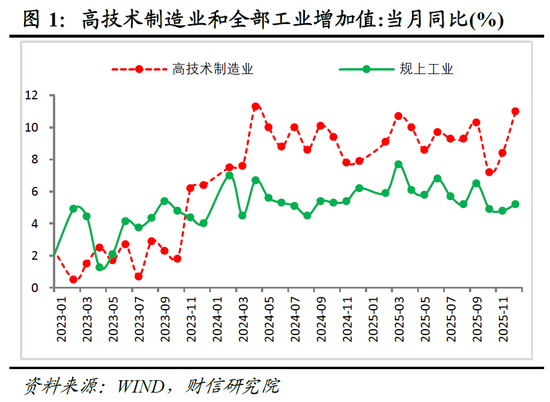
Economic Growth and Performance - In 2025, China's GDP grew by 5.0% compared to the previous year, achieving the government's target set at the beginning of the year [1] - The GDP growth rates for each quarter were 5.4%, 5.2%, 4.8%, and 4.5% respectively [1] - The nominal GDP growth in Q4 was 3.8%, showing a slight improvement from the previous quarter [2][3] Price and Inflation Trends - The GDP deflator index in Q4 increased by 0.35 percentage points, indicating a recovery in prices [3] - The Producer Price Index (PPI) for industrial producers decreased by 2.6% year-on-year, but the decline narrowed in the second half of the year [3] - Prices in certain sectors, such as coal mining and new energy equipment, began to rise after a prolonged decline [3] Consumer and Investment Dynamics - In December, retail sales of consumer goods grew by 0.9%, a decrease from the previous month [5] - The total retail sales for 2025 increased by 3.7%, supported by consumption subsidy policies [5] - Fixed asset investment fell by 3.8% for the year, with significant declines in real estate and infrastructure investments [6] Industrial Production and Export Performance - Industrial production value increased by 5.2% year-on-year in December, with an annual growth rate of 5.9% [6][7] - High-tech industries and exports were key drivers of industrial production, with high-tech manufacturing value added growing by 9.4% [7] - The export delivery value of industrial enterprises reached 15.8 trillion yuan, a 2.2% increase from the previous year [7] Policy Measures and Future Outlook - The Central Economic Work Conference emphasized expanding domestic demand as a priority, with measures to boost consumption and stabilize investment [8] - Policies are being implemented to support consumption and investment, including a significant bond issuance for consumption subsidies [8] - Analysts expect that the economic structure will gradually shift towards domestic demand, with potential improvements in service sector contributions [9]

2025年度四川民生调查数据发布,全省居民人均消费支出26073元 四川人在文旅消费上舍得花钱
Si Chuan Ri Bao· 2026-01-20 00:31
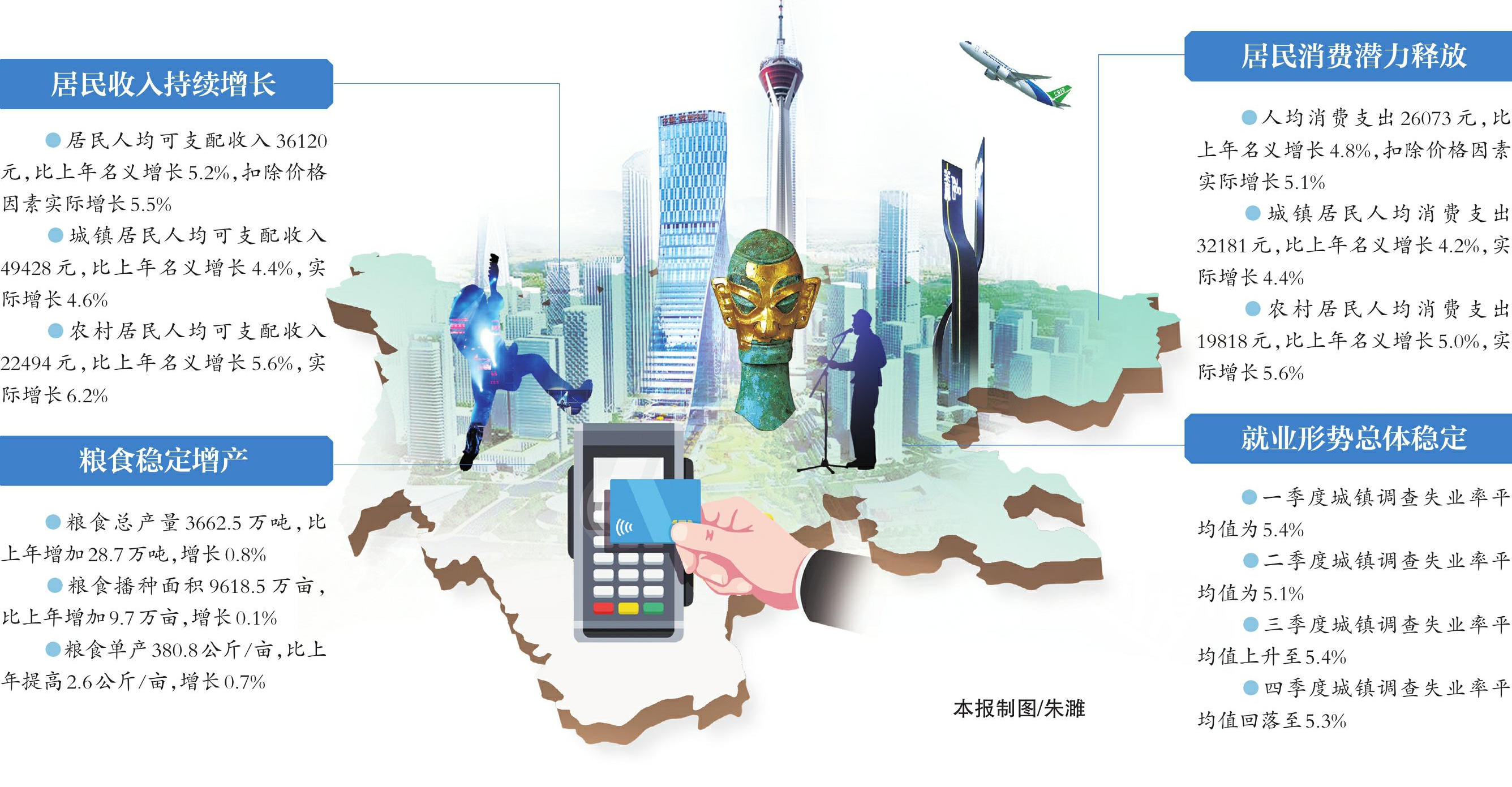
Core Insights - The overall economic indicators for Sichuan in 2025 show stable grain production, steady livestock development, and continuous growth in residents' income, with a low Consumer Price Index (CPI) and stable urban employment [3] CPI Trends - Sichuan's CPI exhibited a pattern of high opening and low closing, with a year-on-year decline of 0.3% for 2025, influenced by insufficient domestic consumption, price competition in certain industries, and declining prices of pork and international crude oil [4] - The core CPI, excluding volatile food and energy prices, increased by 0.5% year-on-year, indicating a gradual accumulation of domestic demand recovery and improving price signals [6] Consumer Spending Patterns - In 2025, the per capita disposable income in Sichuan reached 36,120 yuan, a nominal increase of 5.2%, while per capita consumption expenditure was 26,073 yuan, with a nominal growth of 4.8% [7] - The share of service consumption in total spending rose, with per capita service expenditure increasing by 6.0%, indicating an upgrade in consumer quality [7] - Cultural and entertainment spending surged by 12.6%, reflecting a vibrant tourism and entertainment market [8] Industrial Price Index - The Producer Price Index (PPI) for industrial producers in Sichuan fell by 2.8% year-on-year, with 64.1% of 39 industrial sectors experiencing price declines [8] - Despite the overall decline, some sectors like electronics and integrated circuits showed price increases, indicating structural upgrades in the industry [8] Livestock Industry Insights - The pig farming sector in Sichuan showed stable development, with a 1.6% year-on-year increase in pig slaughtering and a 4.7% increase in pork production [9] - However, pork prices experienced a significant decline of 16.6% year-on-year in December 2025, attributed to weak demand and increased supply [10]
全球大公司要闻 | 苹果去年四季度iPhone出货量登顶中国市场
Wind万得· 2026-01-19 23:00
Group 1 - OpenAI's annual recurring revenue (ARR) is expected to exceed $20 billion by 2025, with a computing power scale of 1.9GW, achieving a tenfold revenue growth and 9.5 times increase in computing power within three years [2] - Micron Technology is acquiring the P5 wafer fab from Powerchip Semiconductor for $1.8 billion, expected to complete in Q2 2026, which will enhance Micron's position in the global DRAM market amid increasing demand from AI infrastructure [2] - Tesla's Neuralink has made advancements in brain-machine interface technology, allowing upgrades without surgery, and plans to restart the Dojo 3 supercomputer project, with a new affordable Model 3/Y targeting the Chinese market [3] Group 2 - Apple is set to regain the top position in the Chinese smartphone market with a 28% year-on-year increase in iPhone shipments by Q4 2025, and is developing the iPhone 18 Pro series with advanced features [3] - Baiwei Storage expects a net profit of 850 million to 1 billion yuan in 2025, representing a year-on-year growth of 427.19% to 520.22% [4] - China Duty Free Group plans to acquire DFS's travel retail business in Greater China for up to $395 million, strengthening its market position [6] Group 3 - Pfizer's CEO indicated that the company may raise drug prices abroad due to a pricing agreement with former President Trump, which could lead to a halt in new drug supplies to Europe if price increases are rejected [9] - Toyota aims for over 1.78 million vehicle sales in China by 2025, collaborating with Fujitsu to simplify automotive ECU design using quantum-inspired technology [11] - LVMH's DFS Group is selling its Greater China retail business to China Duty Free Group for up to $395 million, indicating significant market movements in the luxury retail sector [13]

实体经济图谱2026年第3周:节后地产销售略回暖
Huafu Securities· 2026-01-19 14:48
Group 1: Economic Indicators - Real estate sales in 42 cities showed a year-on-year decline improvement from -25.6% to -22.2% in the first three weeks of January[7] - The average price decline for new homes in 70 cities widened from -2.8% to -3.1% in December[7] - The average wholesale price index for agricultural products decreased, while pork prices increased by 0.4% month-on-month[22] Group 2: Consumer Behavior - Movie box office revenue fell to approximately 360 million yuan, with a year-on-year decline of 16.4%[35] - The average daily visitor count at Shanghai Disneyland rose to 50,000, showing a year-on-year increase of 14.3%[37] - The average daily coal consumption by major power generation groups decreased by 1.4% year-on-year in the first 16 days of January[102] Group 3: Industrial Production - The operating rate of automotive semi-steel tires increased to 74.4% this week[9] - Steel production growth turned positive, with sample steel mills showing a decrease in inventory[54] - The price of PTA and polyester products generally increased, while the operating rate in the PTA industry declined[49]