
券商

Search documents
中金:财富管理收入进入上行通道 明年需关注基金第三阶段降费影响
智通财经网· 2025-10-17 02:53
Group 1 - The core viewpoint is that wealth management institutions are expected to see rapid growth in large wealth income in the first half of 2025, driven by an increase in AUM growth rate and fee rate optimization [1] - In 1H25, large wealth income for sample banks, brokerages, and platform institutions grew by 11.4%, 21.4%, and 27.7% year-on-year, with revenue contribution ratios increasing for the first time in two years [1] - The growth in large wealth income is primarily attributed to wealth management business, contributing 98% of the incremental growth, driven by a recovering capital market, low interest rates prompting asset reallocation, and increased marketing of wealth products by institutions [1] Group 2 - As of the end of 1H25, retail AUM and wealth AUM for sample banks grew by 11.2% and 10.7% year-on-year, with growth rates accelerating compared to 2024 [2] - The average wealth management fee rate for five sample banks in 1H25 was 0.27%, an increase of 2 basis points from 2024, indicating a potential turning point in fee rates [2] Group 3 - The number and AUM of high-net-worth clients and brokerage clients are growing faster than the overall retail client base, indicating greater growth potential [3] - As of the end of 1H25, the number of retail clients for sample banks grew by 2.6% year-on-year, while the number of high-income private banking clients and brokerage clients grew by 14% and 11% respectively [3]
晨会纪要:对近期重要经济金融新闻、行业事件、公司公告等进行点评-20251017
Xiangcai Securities· 2025-10-17 01:47
Macro Strategy - In September, CPI decreased by 0.3% year-on-year and increased by 0.1% month-on-month, with food prices rising by 0.7% and pork prices falling by 17.0%, contributing to a 0.26 percentage point decline in CPI [2][4] - By the end of September, M2 balance reached 335.38 trillion yuan, growing by 8.4% year-on-year, while the total social financing stock was 437.08 trillion yuan, up 8.7% year-on-year [2][4] Healthcare Services Industry - The pharmaceutical and biological sector fell by 1.20%, ranking 25th among 31 primary industries, with the medical services sub-sector dropping 3.37% [6][9] - WuXi AppTec is highlighted as a CRDMO integrated platform company, with its R&D segment driving growth and D&M capacity release significantly increasing revenue per capita from 542,000 yuan in 2018 to an expected 1,118,000 yuan in 2025 [7][8] - The long-term development trend of the healthcare services industry remains positive despite recent geopolitical tensions, with a "buy" rating maintained for the sector [9] Securities Industry - The securities sector showed active performance post-holiday, with the brokerage index rising by 0.5%, outperforming the CSI 300 index by 1 percentage point [11][15] - Daily average stock trading volume reached 25.87 trillion yuan, a 19% increase from the previous period, indicating a significant recovery in trading activity [12][13] - The investment recommendation for the securities industry is to maintain an "overweight" rating, focusing on internet brokerages and firms with strong performance certainty [15] Electronic Industry - OpenAI's release of Sora 2.0 marks a significant milestone in AI applications, with the new video generation model achieving high realism and user engagement [17][19] - The electronic industry is expected to benefit from ongoing recovery in consumer electronics and AI technology advancements, maintaining an "overweight" rating [19] New Materials Industry - The rare earth magnetic materials sector increased by 10.44%, outperforming the benchmark by 8.97 percentage points, while rare earth prices showed mixed trends [21][24] - The investment outlook remains cautious, with a recommendation to maintain an "overweight" rating, focusing on upstream rare earth resource companies and downstream magnetic material firms [25] Banking Industry - Social financing growth slowed to 8.7% in September, with improvements in credit structure, particularly in long-term loans supported by policy measures [28][32] - The banking sector is expected to maintain stable performance, with a recommendation to focus on state-owned banks and regional banks for their investment value [32]
四大证券报精华摘要:10月17日
Xin Hua Cai Jing· 2025-10-17 00:23
Group 1 - The A-share market is currently in the window for disclosing Q3 reports, with many companies showing significant profit growth in the first three quarters of 2025, leading to increased investments from public funds in high-performing stocks like Xian Da Co. and Ying Lian Co. [1] - Financial companies are increasing their allocation to equity assets as the A-share market remains active, with a notable rise in the issuance of equity and mixed financial products, utilizing "fixed income +" strategies to enhance returns [2] - In October, nearly 160 companies have received institutional research, with a strong focus on the power and machinery equipment sectors, indicating a positive outlook for investment opportunities in these industries [3] Group 2 - The Hong Kong IPO market has seen a significant increase, with 73 companies listed and total fundraising reaching 1886.98 billion HKD, a 227.75% year-on-year growth, highlighting the critical role of Chinese securities firms in this process [4] - The cross-border wealth management scheme is expanding, allowing residents of the Greater Bay Area more investment options, with recent updates to regulations broadening the scope of eligible investment products [5] - Private equity funds have achieved an average return of 25% in the first three quarters of the year, with stock strategies leading the performance, reflecting strong market conditions in sectors like innovative pharmaceuticals and technology [6][7][11] Group 3 - The solar industry is undergoing regulatory changes, with new capacity control policies expected to be introduced, although challenges remain in implementing a multi-crystalline silicon storage platform due to funding requirements [8] - Bank wealth management scales have seen a decline at the end of Q3, with a notable drop in pure debt product scales, while "fixed income +" products have benefited from the strong stock market performance [9] - A recent survey indicates a consensus among economists on the resilience of both the stock and foreign exchange markets, with expectations for fiscal and tax reforms being a priority for future economic development [10] Group 4 - The China Securities Regulatory Commission is enhancing the quality and scope of sustainable disclosures by listed companies, aiming for a more comprehensive reporting framework that aligns with corporate needs [12] - Regulatory actions have intensified, with a focus on ensuring accountability even after delisting, as evidenced by recent investigations into multiple companies for financial misconduct [13][14]
行情,为什么突然走坏?
大胡子说房· 2025-10-16 11:23
Group 1 - The article warns about the potential short-term risks in the gold market, predicting a possible high-level pullback after a recent surge in prices [2][5] - Gold prices reached a peak of $4179 per ounce before dropping to around $4140 per ounce, indicating a potential for further corrections in the coming weeks [2][5] - The article emphasizes that the recent surge in gold prices has led to a significant accumulation of short-term profit-taking, which could pressure prices downward [5][6] Group 2 - The article discusses the recent performance of the A-share market, particularly the technology sector, which has experienced significant declines after a period of rapid growth [3][5] - The semiconductor and chip ETFs saw declines of 5.59% and 5.29% respectively, highlighting the volatility in the tech sector [5] - The article attributes the A-share market's downturn to market pressure shifting from one day to the next, as well as the main funds in the tech sector taking profits [6][8] Group 3 - The article notes that while the tech sector is experiencing declines, other sectors such as banking, brokerage, and liquor are seeing gains, indicating a rotation of institutional funds from high-valuation tech stocks to undervalued sectors [10][12] - The article suggests that the current market environment is characterized by a cautious approach from institutional investors ahead of important meetings and earnings reports, leading to a focus on low-valuation stocks with solid performance [12][13] - It emphasizes the importance of aligning investment strategies with institutional movements to capitalize on market trends [13][14]


充电桩、固态变压器、存储芯片走强,高手看好安全边际高的板块!
Mei Ri Jing Ji Xin Wen· 2025-10-16 10:05
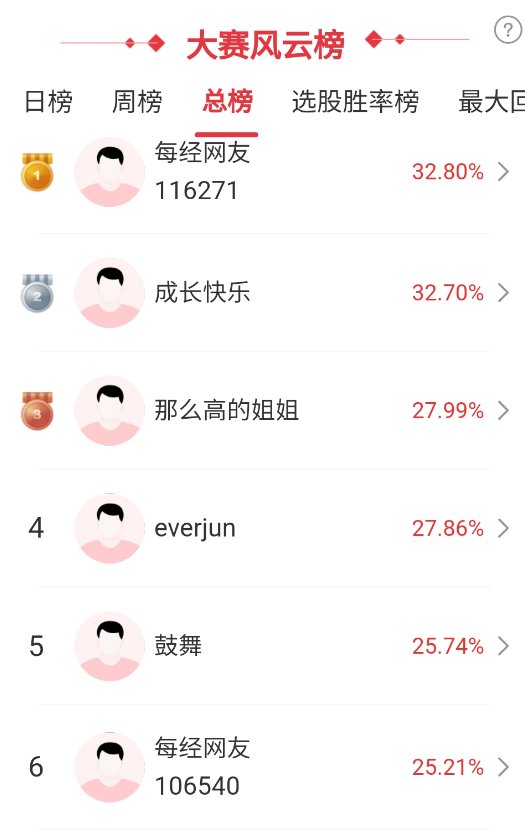
Group 1 - The stock market showed weak fluctuations on Thursday, with dividend stocks like banks and insurance rising against the trend, indicating strong risk aversion in the market [1] - Some stocks in the charging pile, storage chip, and solid-state transformer sectors saw significant gains [1] - The 75th session of the simulated stock trading competition will announce its champion on Friday, with participants competing for a simulated capital of 500,000 yuan [1][3] Group 2 - The cash rewards for the competition include 688 yuan for the first place, 188 yuan for the second to fourth places, and 88 yuan for the fifth to tenth places, with additional rewards for positive return participants [3] - Participants can join a discussion group to exchange market insights and investment strategies after registering for the competition [3][6] - Experts believe that if the Shanghai Composite Index breaks through the key resistance level of 3950 points, it will open up upward space [3] Group 3 - As companies begin to disclose their third-quarter reports in October, funds are expected to remain cautious towards high-priced stocks, suggesting a focus on low-priced stocks for opportunities [4] - Recent commentary highlighted opportunities in the silver sector, with stocks like Shengda Resources and Hunan Silver showing strong performance [4][5] - The AI power sector was also mentioned, with companies like Magpow and China West Electric experiencing stock price increases [5]
高金牵头撰写发布《2025上海ESG发展报告》 为全球可持续发展贡献“上海样本”
Zheng Quan Shi Bao Wang· 2025-10-16 07:47
Core Insights - The report titled "Path to Sustainable Development: 2025 Shanghai ESG Development Report" was released at the 2025 Sustainable Global Leaders Conference, focusing on ESG practices in Shanghai and providing actionable recommendations for sustainable development [1] Group 1: ESG Development in Shanghai - Shanghai is positioned as a leader and enabler in ESG practices, responding to increasing global economic volatility and environmental pressures [2] - The report indicates that Shanghai's ESG development is entering a new phase characterized by more systematic regulations, standardized actions, quantifiable performance, and closer collaboration compared to the previous year [2] - A systematic framework for ESG has been gradually established through national and local policies promoting information disclosure, green finance reforms, and market regulation [2] Group 2: Role of Participants in ESG Ecosystem - Enterprises are identified as the backbone of Shanghai's ESG ecosystem, with state-owned enterprises leading in information disclosure and governance, while private and foreign enterprises explore diverse practices in green product development and social responsibility [3] - Small and medium-sized enterprises face challenges such as limited resources, high technical and financial barriers, and difficulties in implementing governance systems, which slow down the capitalization of ESG values [3] - Financial institutions are expanding green financial products and integrating ESG factors into investment decisions, although issues like data accessibility and product homogeneity remain [3] Group 3: Third-Party Services and Talent Development - Third-party service providers are becoming essential in the Shanghai ESG ecosystem, supporting enterprises in carbon assessment, green certification, and information disclosure [4] - Talent development and public participation are increasingly recognized as vital drivers for the ongoing development of ESG in Shanghai [4] Group 4: Systematic Action Recommendations - The report proposes a systematic action plan centered on the "Four Transformations" of ESG: internalization of ESG activities, standardization of ESG information disclosure, systematization of ESG evaluation, and concretization of ESG value realization [5] - These transformations create a mutually supportive closed loop, enhancing the effectiveness of ESG practices and strengthening Shanghai's influence in national and global ESG governance [5]
我的阶段性投资理念和思考
佩妮Penny的世界· 2025-10-16 07:26
Core Insights - The article reflects on the current volatile market and the importance of understanding personal risk tolerance and investment strategies. It emphasizes the need for a disciplined approach to investing, particularly for individual investors who may be influenced by market noise and trends [1][3]. Investment Strategy - The article suggests that individual investors should prioritize capital preservation and manage their portfolios according to their risk tolerance. It recommends allocating funds to safer investments like bonds for those who cannot accept any loss, while a portion can be allocated to higher-risk investments [5]. - The risk-return spectrum is outlined, indicating that higher potential returns come with increased risks. The hierarchy of investment risk is presented, ranging from bank deposits to venture capital investments [5]. Market Trends - The article identifies a significant trend in the technology sector, particularly in areas related to AI, computing power, and robotics. It suggests that these sectors will continue to thrive as long as the AI performance bubble remains intact [9]. - It highlights the importance of understanding macroeconomic trends, particularly the impact of fiscal and monetary policies on liquidity and market conditions. The expectation is that global liquidity will improve over the next few years, creating favorable conditions for investment [7][9]. Investment Approach - The article stresses the importance of patience and a long-term perspective in investing. It suggests that capital markets will eventually reflect economic fundamentals, and investors should avoid panic during market fluctuations [11]. - It encourages investors to conduct thorough research and maintain a clear investment logic to avoid falling into traps during rapid market changes. The need for continuous observation of market trends and fundamentals is emphasized [9][11].

非银金融行业近期投资机会解析:财报预期和市场风险偏好转换或带来投资机会
Hua Yuan Zheng Quan· 2025-10-16 03:23
Investment Rating - The investment rating for the non-bank financial industry is "Positive" (first-time rating) [4] Core Viewpoints - The non-bank financial sector has underperformed compared to the overall A-share market, with a year-to-date increase of 10.6% as of October 14, 2025, while the Wind All A Index has grown by 23.5%. However, the sector is expected to present investment opportunities driven by performance and changes in market preferences [4] - Strong third-quarter earnings expectations are anticipated to drive valuation growth, particularly in the insurance sector, where companies like New China Life Insurance are expected to see a net profit increase of 45%-65% year-on-year [5][6] - The report highlights a relative "mismatch" between performance and valuation, suggesting that the insurance companies' equity holdings have significantly increased, which will positively impact their investment income and net profit [5][6] Summary by Sections Insurance Sector - New China Life Insurance's net profit for the first three quarters of 2025 is expected to grow by 45%-65% compared to the same period in 2024, exceeding market expectations [6] - Major insurance companies have seen substantial growth in their equity holdings, with China Life, Ping An, and China Pacific's equity and equity fund holdings increasing significantly from June 2024 to June 2025 [6][9] - The PEV valuation points for China Life, Ping An, and China Pacific are at 45.2%, 56.3%, and 62.1% respectively, indicating potential for further valuation improvement supported by regulatory policies and market conditions [6][9] Brokerage Sector - The brokerage sector is expected to benefit from an active equity capital market in Q3 2025, with a 213% year-on-year increase in average daily trading volume and a 56% increase in average margin financing balance [7] - The current PB ratio for the brokerage industry is approximately 1.42 times, which is at the 61% percentile since 2020, indicating a favorable valuation environment [7] Market Preference Changes - Increased global political and economic uncertainties may lead to a shift from high-valuation to lower-valuation sectors, with the financial industry potentially serving as a medium for such transitions [8] - Historical performance indicates that the non-bank financial sector has shown strong performance during periods of rising risk appetite, suggesting a potential rebound in the near future [8]



A股开盘速递 | A股集体低开 沪指跌0.29% 稀土永磁、人形机器人等板块领跌
智通财经网· 2025-10-16 01:40
Group 1 - A-shares opened lower with the Shanghai Composite Index down 0.29% and the ChiNext Index down 0.58% [1] - The charging pile sector showed active performance, while rare earth permanent magnets, cultivated diamonds, and humanoid robots experienced significant declines [1] Group 2 - Industrial trends and market conditions remain the core focus for investment strategies, with recommendations to invest in domestic demand sectors such as agriculture, beverages, and brokerage insurance [1] - The upcoming quarterly reports and the Fourth Plenary Session are expected to influence market strategies, emphasizing self-sufficiency and sectors benefiting from the "14th Five-Year Plan" [1] - Key sectors highlighted include military industry, domestic computing industry chain, innovative pharmaceuticals, North American computing chain, gaming, and batteries [1] Group 3 - Market outlook remains optimistic for the fourth quarter, with expectations for a technology-led rally and potential new highs in sectors like overseas computing, semiconductors, and robotics [2] - The concept of "anti-involution" is seen as crucial for the transition from structural bull to a comprehensive bull market, particularly in solar energy and chemicals [2] - Hong Kong stocks are expected to benefit from global easing and the emergence of new economic trends [2] Group 4 - The probability of continued rebound in stock indices is high, with the Shanghai Composite Index expected to steadily approach the 4,000-point mark, while large technology remains the main focus for investment [3]

【财经早报】这只科技股 净利预增最高超3200%
Zhong Guo Zheng Quan Bao· 2025-10-15 23:27
Financial Data - As of the end of September, the total social financing stock was 437.08 trillion yuan, with a year-on-year growth of 8.7% [1][2] - In the first three quarters, the cumulative increase in social financing was 30.09 trillion yuan, which is 4.42 trillion yuan more than the same period last year [2] - The broad money supply (M2) balance was 335.38 trillion yuan at the end of September, with a year-on-year growth of 8.4% [2] - In the first three quarters, the increase in RMB loans was 14.75 trillion yuan [2] Consumer Price Index (CPI) - In September, the Consumer Price Index (CPI) rose by 0.1% month-on-month and fell by 0.3% year-on-year [2] - The core CPI, excluding food and energy prices, increased by 1% year-on-year, marking the first return to this growth rate in 19 months [2] Company Performance - Shuo Bei De (硕贝德) expects a net profit of 495.31 million to 515.31 million yuan for the first three quarters, representing a year-on-year increase of 1258.39% to 1313.24% [4] - In the third quarter, Shuo Bei De's net profit is projected to grow by 2836.86% to 3203.96% year-on-year [4] - Guanghua Technology (光华科技) reported a net profit of 90.39 million yuan for the first three quarters, a year-on-year increase of 1233.70% [4] - Xin Zhi Group (信质集团) achieved a net profit of 122 million yuan in the first three quarters, up 39.49% year-on-year [4] Company Initiatives - The National Development and Reform Commission announced a plan to double the service capacity of electric vehicle charging facilities by 2027, aiming to build 28 million charging facilities nationwide [2] - Hangzhou's government introduced the "Run Seed Plan" to support the high-quality development of technology-based startups, offering up to 1 million yuan in rewards for key enterprises [3] Stock Buybacks - Heng Ming Da (恒铭达) proposed a share buyback of 200 million to 400 million yuan for employee stock ownership plans [5] - Kang Chen Pharmaceutical (康辰药业) plans to repurchase shares worth 50 million to 100 million yuan for employee stock ownership plans [5] Mergers and Acquisitions - Xin Bo Co. (鑫铂股份) plans to invest 1.5 million USD to establish a subsidiary in Singapore to enhance its international market presence [5] - Chip Origin (芯原股份) intends to acquire control of a semiconductor company for a total equity value of 950 million yuan [9]