食品饮料

Search documents
跨越边界的认知:QYResearch 如何通过研究连接不同行业?
QYResearch· 2026-01-12 09:00
Core Viewpoint - The article emphasizes the importance of breaking down information silos in various industries to foster collaboration and innovation, highlighting QYResearch's role as a catalyst in connecting different sectors through comprehensive data analysis and research [2][4]. Group 1: Company Background and Development - QYResearch has been dedicated to building a cross-industry research ecosystem for 18 years, starting from its establishment in 2007, focusing on providing detailed data analysis for enterprises [4]. - The company has expanded its research capabilities across 36 industry research centers since 2015, keeping pace with global industrial transformations [4]. - QYResearch has established research centers in 10 countries, including China, the USA, Japan, South Korea, and Germany, creating a unique advantage of "global vision + local insight" [4]. Group 2: Resource System and Research Capabilities - The company boasts a comprehensive resource system with over 90 million database entries, integrating more than 200 customs databases and 300 third-party databases, covering the entire industry chain from raw material supply to market consumption [5]. - QYResearch has a team of over 180 full-time professional analysts who possess industry expertise and interdisciplinary research capabilities, enabling them to interpret the intrinsic connections between different industries [5]. - The establishment of a unique 30-angle interview confirmation system ensures data authenticity and accuracy, laying a solid foundation for cross-industry analysis [5]. Group 3: Industry Coverage and Research Focus - QYResearch has developed a "comprehensive yet precise" industry coverage, serving over 30 major categories and more than 300 sub-industries, allowing it to capture key intersections and overlapping market demands across various fields [6]. - The research extends to critical areas such as semiconductor materials, eco-friendly packaging films, and brain-computer interface applications, demonstrating the company's extensive reach in global industries [6]. Group 4: Technology-Driven Research and Global Network - The company employs a technology-driven research system that integrates data collection, analysis, and application, utilizing its proprietary QYR Data database with over 80 million product information entries [7]. - QYResearch's global presence enhances its ability to connect industries, with localized research teams understanding regional industrial characteristics and market demands [8]. Group 5: Customized Services and Client Solutions - QYResearch offers customized research reports and consulting services tailored to the specific needs of different industry clients, facilitating precise resource integration [9]. - The company has successfully assisted clients like Dow Chemical and Three Squirrels by providing comprehensive market analysis that combines insights from various sectors, enabling effective product development and market entry strategies [9][11]. Group 6: Case Studies and Practical Applications - The article presents case studies demonstrating how QYResearch's research has facilitated cross-industry collaboration, such as Caregen's expansion into the cosmetic market through tailored market analysis [10]. - Other examples include Three Squirrels optimizing its plant protein beverage strategy and Stryker Medical leveraging QYResearch's reports for technological collaboration in the medical field [11][12]. Group 7: Future Outlook and Strategic Focus - QYResearch aims to enhance its cross-industry research capabilities by focusing on emerging industries like renewable energy, semiconductors, and biotechnology, aligning with global trends [13]. - The company plans to transition from a "report delivery" model to a "long-term partnership" approach, providing ongoing updates and strategic consulting to clients [14]. - QYResearch is committed to expanding its global footprint and local service network to eliminate information barriers across regions and industries [14].


同样是牛市,为什么2025年赚钱比2020年难?
雪球· 2026-01-12 08:39
Group 1 - The core viewpoint of the article emphasizes that the A-share market is more sensitive to liquidity than to macro fundamentals, indicating a structural bull market driven by capital influx rather than corporate performance [3][4][5] - The overall revenue and net profit growth of non-financial listed companies in the first three quarters was only 0.7% and 1.92% respectively, contrasting with the over 20% growth expected for the entire year, highlighting a disconnect between market performance and corporate earnings [4] - The article identifies two types of capital influencing the market: one based on fundamental performance expectations and the other driven by momentum effects, leading to a "stronger gets stronger" dynamic in stock performance [5][6] Group 2 - True momentum sectors are characterized by sustainable growth logic and broad industry trends, supported by measurable performance variables, while pseudo-momentum sectors rely on speculative assumptions and are often driven by market sentiment [10][11] - The article discusses the distinction between true and pseudo momentum, noting that true momentum sectors have strong institutional participation and consistent earnings growth, while pseudo momentum sectors often lack fundamental backing and are more volatile [12][13] - The performance of momentum strategies in the A-share market has been inconsistent, with cross-sectional momentum strategies underperforming due to rapid sector rotations and frequent policy changes [17][18] Group 3 - The article suggests that the market dynamics in 2025 will be more challenging for investors compared to the 2019-2021 period, where both cross-sectional and time-series momentum strategies were effective due to strong macro fundamentals and diverse sector performance [20][21] - It highlights that the lack of counterbalancing sectors in the A-share market has led to extreme price movements, where strong sectors experience rapid increases followed by sharp declines [24] - The article provides four recommendations for investors to navigate the current momentum-driven market, emphasizing the importance of recognizing sector differentiation, maintaining confidence in fundamentally strong stocks, and being sensitive to trend reversal signals [27][30]

西麦食品(002956):燕麦龙头引领行业发展 大健康二次增长空间广阔
Xin Lang Cai Jing· 2026-01-12 08:37
Core Viewpoint - The company, Ximai Food, has established a complete industry chain in the oat sector, achieving significant revenue growth and maintaining its leading position in the Chinese market [1][2]. Group 1: Company Performance - In 2024, Ximai Food achieved a revenue of 1.896 billion yuan, representing a year-on-year growth of 20.16%, and a net profit attributable to shareholders of 133 million yuan, up 15.36% [1]. - The company's revenue CAGR from 2020 to 2024 is 16.65%, indicating strong and consistent growth [1]. - The company plans to implement an employee stock ownership plan in 2025 to enhance performance incentives [1]. Group 2: Industry Dynamics - The Chinese oat industry is experiencing a robust growth phase, with the market size expected to exceed 10 billion yuan in 2024, driven by an increase in health-conscious eating habits [1]. - The industry is characterized by a rising penetration rate and a compound growth in oats, leading to a simultaneous increase in both volume and price [1]. - The current CR3 of the oat industry in China is approximately 51.9%, with Ximai Food holding over 20% market share, indicating its dominant position [1]. Group 3: Product and Channel Strategy - The company's product structure includes composite oat flakes, pure oat flakes, and cold oat flakes, with significant growth driven by composite oats, which saw increases of 34.44%, 33.76%, and 28.81% from 2022 to 2024 [2]. - Ximai Food employs a "mainly distribution + direct sales" model to build an extensive and efficient sales network, ensuring market penetration in both first and second-tier cities as well as lower-tier markets [2]. - The company plans to focus on the health sector starting in 2025, with positive initial responses to its health food products, indicating potential for revenue growth from new product launches [2]. Group 4: Financial Projections - Revenue projections for Ximai Food from 2025 to 2027 are estimated at 2.286 billion yuan, 2.878 billion yuan, and 3.461 billion yuan, with growth rates of 20.6%, 25.9%, and 20.3% respectively [2]. - The net profit attributable to shareholders is expected to be 184 million yuan, 255 million yuan, and 307 million yuan for the same period, with corresponding PE ratios of 33.2, 24.1, and 20 times [2].
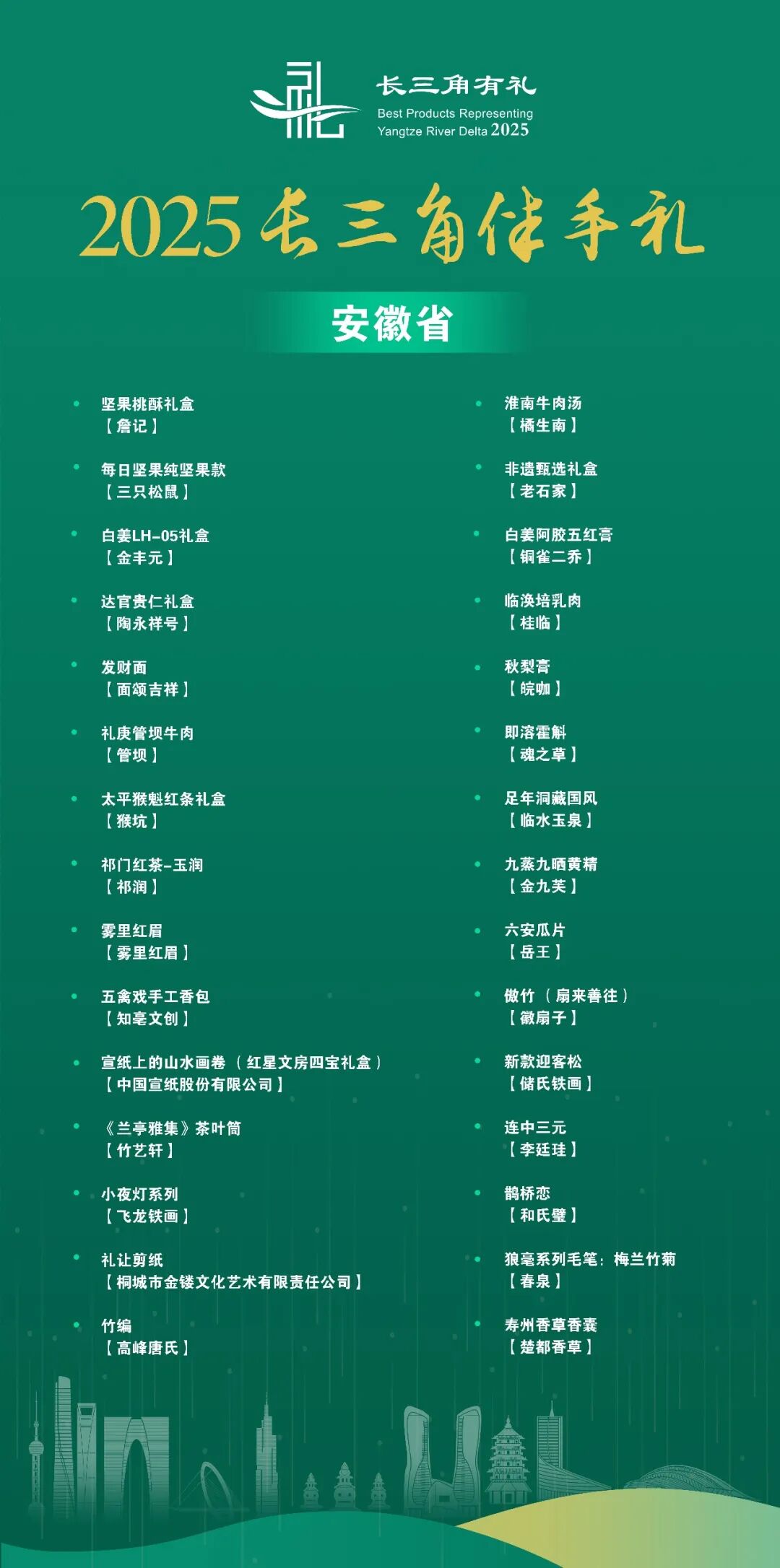
“2025长三角伴手礼”名单正式发布,詹记、三只松鼠上榜
Xin Lang Cai Jing· 2026-01-12 07:15
Core Insights - The "2025 Yangtze River Delta Souvenir" list has been released, featuring 120 products that represent the Yangtze River Delta region, including food, cultural creations, and technology [1] Group 1: Product Highlights - Among the 30 products recommended by Anhui Province, "Jianji's Nut Gift Box" and "Three Squirrels' Daily Nut Pure Nut Version" made it to the list [1] - The evaluation activity was jointly conducted by consumer protection committees from Shanghai, Jiangsu, Zhejiang, and Anhui [1] Group 2: Product Categories - The final list includes a variety of products such as: - Food items like "Fried Noodles" and "Huainan Beef Soup" - Cultural products like "Xuan Paper" and "Handmade Silk Bags" - Technological items [2][3]

资金跟踪系列之二十八:市场交易热度加速上升,两融与北上大幅回流
SINOLINK SECURITIES· 2026-01-12 07:04
Macro Liquidity - The US dollar index continued to rise, and the degree of "inversion" in the China-US interest rate spread has narrowed. The nominal and real yields of 10Y US Treasuries both fell, indicating a rebound in inflation expectations [1][13][19]. Market Trading Activity, Volatility, and Liquidity - Market trading activity has continued to rise, with most industry trading heat above the 90th percentile. Specifically, sectors such as military, light industry, chemicals, media, and textiles are all above this threshold [2][25]. - The volatility of major indices has also increased, with the communication sector's volatility remaining above the 80th historical percentile [2][31]. - Market liquidity indicators have improved, although all sectors remain below the 60th historical percentile [2][35]. Institutional Research - The electronic, pharmaceutical, computer, machinery, and electric new energy sectors have seen high research activity, while sectors like oil and petrochemicals, agriculture, military, and automotive have also experienced rising research interest [3][41]. Analyst Forecasts - The net profit forecast for the entire A-share market in 2026 has been downgraded. However, the profit forecasts for sectors such as non-ferrous metals, chemicals, transportation, consumer services, and textiles have been upgraded. The net profit forecasts for the Shanghai 50 and CSI 300 indices have also been raised, while those for the ChiNext and CSI 500 indices have been lowered [3][4][4.1][4.2][4.3][4.4]. Northbound Trading Activity - Northbound trading activity has continued to rise, with significant net purchases of A-shares. The trading volume ratio in sectors like home appliances, media, and non-bank financials has increased, while it has decreased in communication, electronics, and banking [4][5][5.1][5.2]. Margin Financing Activity - Margin financing activity has reached its highest point since November 2025, with a net purchase of 857.75 billion yuan last week. Key sectors for net purchases include electronics, military, and non-ferrous metals, while net sales were seen in food and beverage, consumer services, and utilities [6][6.1][6.2][6.3]. Active Equity Funds and ETFs - The positions of actively managed equity funds have decreased, while ETFs have seen renewed net subscriptions, primarily driven by institutional ETFs. The main net purchases in ETFs were in sectors like non-ferrous metals, military, and chemicals, while electronics, electric new energy, and banking saw net sales [8][8.1][8.4][8.5].
美国通胀三维六体分析框架(上篇):美国2026年通胀展望:前高后低,整体可控
NORTHEAST SECURITIES· 2026-01-12 04:14
Group 1: Report Industry Investment Rating No relevant content provided. Group 2: Report's Core View - The report constructs a multi - dimensional analysis framework based on long - term expectations, medium - term cycles, and short - term shocks to systematically sort out the core driving forces and future trends of US inflation [3]. - The Fed's "risk - management style" rate cuts will not restructure the inflation pattern as this round of cuts occurs in a non - recession environment and is more about maintaining economic resilience rather than causing a significant rebound in inflation [3]. - Long - term inflation expectations are anchored, and the Fed's independence remains a key stabilizer, with limited risk of long - term inflation getting out of control [3]. - Endogenous inflation momentum is slowing, and most structural sub - items show downward pressure, except for possible mild rebounds in durables and core services (excluding rent) inflation [3]. Group 3: Summary According to Related Catalogs 1. Inflation Analysis's Three - Dimensional Framework: Long - term Expectations, Core Dynamics, and Short - term Shocks - The Fed assesses inflation trends through a three - dimensional framework: long - term inflation expectations, core inflation, and short - term price shocks [11]. - Long - term inflation is anchored by monetary policy through expectations, core inflation's mid - term fluctuations are driven by the economic cycle, and external factors cause short - term disturbances [12]. - Long - term inflation expectations are the core pillar of the Fed's inflation management, core inflation reflects the domestic demand and labor market, and short - term shocks are usually temporary and exogenous [13]. - "Risk - management style" rate cuts generally do not lead to a significant inflation rebound based on historical experience and logical reasons [20][21]. 2. Is the Fed's Long - term Inflation Anchor Failing? - Although inflation has been persistently above the Fed's 2% target, the 5 - year/5 - year forward break - even inflation rate shows that the market's long - term inflation expectations remain stable [33]. - A quantitative model shows that the Fed's 2% inflation target has played a decisive role in guiding and stabilizing market expectations, and currently, the market may overestimate Trump's short - term impact on the Fed's independence [36][40]. 3. Reconstructing US Inflation Analysis: A Six - Sub - item Analysis Framework 3.1 Food and Beverage: Obvious Dual - Factor Drive of Commodity and Labor Costs - The cost of US food mainly concentrates on the middle and lower reaches of processing and circulation. The CRB food index and salary growth indicators are in a downward trend, so the food sub - item's upward momentum for overall inflation will weaken [3][51]. 3.2 Energy: Inflation Thrust Easing under Changing Supply - Demand Patterns - Energy has a significant impact on overall inflation. In 2025 - 2026, the global crude oil market's supply growth is expected to exceed demand, reducing the risk of a significant upward movement in US inflation [3][56][58]. 3.3 Rent: Lags US Housing Prices by about 15 Months - Rent is a key driver of CPI. In 2026, the year - on - year growth rate of rent is expected to slow to about 2.88%, leading to a 0.3% decline in overall inflation [3][71]. 3.4 Durables: May Face Some Upward Pressure in 2026 - Durables inflation may face upward pressure in 2026, but the pulling effect on inflation is expected to be mild due to the slowdown in the job market and consumer pressure [3][88]. 3.5 Non - durables: Obvious Cost - Driven Characteristics - Non - durables demand is rigid, and prices are mainly cost - driven. Based on the prediction of a decline in the crude oil price center in 2026, non - durables inflation is expected to cool down or fluctuate narrowly [91]. 3.6 Core Services: The Labor Market is the Core Driver - Core services inflation (excluding rent) is mainly driven by the labor market's tightness. Currently, the labor market is demand - driven, and there is no sustainable upward momentum for this type of inflation [3][111].
“申”挖数据 | 资金血氧仪
申万宏源证券上海北京西路营业部· 2026-01-12 03:24
Group 1 - The core viewpoint of the article highlights the recent trends in market capital flows, indicating a net outflow of 282.58 billion yuan in the last two weeks, with banking, coal, and textile industries seeing the highest net inflows, while electronics, communications, and defense industries experienced the largest outflows [5][13]. - The current margin trading balance stands at 26,206.09 billion yuan, reflecting a 4.85% increase from the previous period, with the financing balance at 26,031.55 billion yuan and the securities lending balance at 174.55 billion yuan [15][16]. - The average daily trading volume for margin trading reached 2,468.24 billion yuan, marking a 30.70% increase compared to the previous period, with net buying in financing averaging 2,461.12 billion yuan, up 30.83% [19][20]. Group 2 - In terms of market performance, the number of stocks that increased in value outnumbered those that decreased, with the top three performing sectors being defense, comprehensive, and non-ferrous metals, while banking and food and beverage sectors saw declines [6][27]. - The overall strength analysis of A-shares scored 6.63, indicating a neutral to strong market condition, with the Shanghai-Shenzhen 300 index scoring 6.2, the ChiNext scoring 7.05, and the Sci-Tech Innovation Board scoring 7.3 [6][32]. - The market is currently in a strong upward trend, with the Shanghai Composite Index breaking through the 4,100-point mark, suggesting potential for further gains, while also noting the accumulation of profit-taking [7][31].

雀巢大中华区销售额增长率跌6.1% 召回中国市场71个批次婴儿配方奶粉
Chang Jiang Shang Bao· 2026-01-12 03:07
Core Viewpoint - Nestlé is conducting a global recall of certain infant formula products due to potential contamination with Bacillus cereus, a bacteria that can cause foodborne illness, affecting multiple countries and brands [3][4]. Group 1: Recall Details - On January 6, Nestlé China announced a voluntary recall of 71 batches of infant formula, including 41 batches imported from Europe and 30 batches sold in mainland China [1][5]. - The recalled products include various brands such as "Nestlé BEBA Supreme" and "Wyeth启赋未来" [5]. - The recall is a precautionary measure due to quality issues with a specific oil ingredient used in the production of the affected formulas [3][4]. Group 2: Market Impact - As of now, Nestlé China has not received any reports of illness related to the recalled products [2][5]. - The organic sales growth rate for Nestlé's Greater China region was -6.1% for the first three quarters of 2025, with a significant drop of -10.4% in the third quarter [2][7]. - The company is shifting its strategy from a "channel-driven" approach to a "demand-driven" model to address declining sales [2][8]. Group 3: Management Changes and Strategy - Mark Schneider took over as Chairman and CEO of Nestlé Greater China in July 2025, emphasizing the need for a strategic shift in operations [8]. - The previous growth model relied heavily on expanding distribution channels and inventory pressure, which has proven unsustainable [8]. - Schneider has initiated changes in key management positions and integrated e-commerce teams to enhance operational efficiency [8].

贵州茅台(600519):i茅台强化消费者触达,市场化改革加速
CMS· 2026-01-12 03:05
Investment Rating - The report maintains a "Strong Buy" rating for Guizhou Moutai [2][7] Core Insights - Guizhou Moutai has enhanced consumer reach through the launch of its i Moutai platform, addressing consumer pain points and establishing a four-dimensional channel system that benefits government, company, shareholders, distributors, and consumers [1][6] - The company is experiencing strong demand as it approaches the Spring Festival, with low channel inventory levels, which supports the ongoing market reform and cash returns [1][6][7] Summary by Sections Investment Rating - The report reiterates a "Strong Buy" rating, indicating confidence in the company's growth potential and market performance [2][7] Company Strategy - The launch of 500ml Flying Moutai and premium products on the i Moutai platform aims to improve consumer access and address the mismatch between supply and demand [6] - The new sales model combines self-sale, distribution, agency, and consignment, creating a win-win situation for all stakeholders involved [6] Market Dynamics - The i Moutai platform is expected to strengthen pricing power and mitigate concerns over wholesale price fluctuations, as it provides a reliable price benchmark for consumers [6] - Current market conditions show robust consumer demand, particularly among younger demographics, with low inventory levels reported across various sales channels [6][7] Financial Projections - The report forecasts earnings per share (EPS) for 2025, 2026, and 2027 to be 71.54, 73.49, and 76.96 yuan respectively, with a corresponding price-to-earnings (PE) ratio of 19x for 2026 [7][10] - Revenue and net profit are projected to grow steadily, with total revenue expected to reach 182.49 billion yuan in 2025, reflecting a year-on-year growth of 5% [10][19]

麦格理:升康师傅控股目标价至15港元 维持“跑赢大市”评级
Zhi Tong Cai Jing· 2026-01-12 02:41
Core Viewpoint - Macquarie maintains an "outperform" rating for Master Kong (00322) and believes that the new management will focus on strict cost management and revenue recovery, leading the company to achieve sustainable growth starting in 2026 [1] Financial Projections - Macquarie has raised its earnings forecasts for Master Kong for 2025, 2026, and 2027 by 2.1%, 2.1%, and 2.0% respectively, based on confidence in strict operational cost control [1] - The company is expected to see healthy profit growth supported by these adjustments [1] Valuation and Target Price - Macquarie maintains a price-to-earnings ratio of 15 times for the 2026 forecast and has increased the target price from HKD 14.7 to HKD 15, representing a 2% increase [1] Dividend Yield - The anticipated dividend returns for Master Kong are attractive, with expected dividend yields of 7% and 8% for 2025 and 2026 respectively [1] Sales and Profit Expectations - Sales for the second half of 2025 are projected to increase by 0.1% year-on-year, with a 3% growth in the instant noodle segment offsetting a 1.5% decline in beverage sales [1] - Operating profit is expected to grow by 13.4% year-on-year, primarily benefiting from strict cost control strategies and favorable raw material price trends [1] Future Growth Potential - Following a price increase for instant noodle products in July 2024, the low base effect is expected to result in positive sales growth for instant noodles in the second half of 2025, which is likely to continue until the end of the year [1] - Due to declining raw material prices, the gross margin for the second half of 2025 is expected to expand by 0.7 percentage points year-on-year [1]