
家电

Search documents
新华鲜报|“新国补”落地首周!消费市场“焕新”
Xin Hua Wang· 2026-01-07 23:56
Group 1 - The "New National Subsidy" policy for replacing old consumer goods such as automobiles, home appliances, and digital products has been officially implemented, leading to a revitalization of the consumption market and enhancing both industrial upgrades and quality of life for citizens [1][2] - Major online and offline platforms, including JD.com and Suning, have fully adopted the national subsidy, offering additional promotions and services to facilitate consumer upgrades [2][3] - The new subsidy policy aligns with consumer demand and trends towards consumption upgrades, expanding support to include smart glasses and smart home products, with a focus on energy-efficient appliances [2][3] Group 2 - During the New Year holiday, consumer traffic in Suning's stores increased by 110% nationwide, with cities like Beijing, Chengdu, and Shanghai being the most active in utilizing the subsidy [3] - The first batch of 625 billion yuan in long-term special government bonds to support the old-for-new consumption plan has been allocated to local governments, contributing to a strong start for the consumption market [2][3] Group 3 - The automotive sector is also benefiting from the new subsidy, with the first application for the 2026 vehicle scrappage and replacement subsidy being submitted, allowing for higher subsidies based on the new car price [5][6] - The adjustment of the new energy vehicle purchase tax from exemption to a 50% reduction has led to varied consumer reactions, with some opting to wait while others proceed with purchases due to existing needs [5][6] - The overall automotive consumption structure is evolving, with the replacement rate exceeding 55%, indicating a strong market demand for upgrades [6] Group 4 - The launch of the "National Subsidy" coincided with the New Year, leading to immediate consumer engagement and participation in various promotional activities across cities [8] - The holiday season is critical for capturing consumer interest, prompting various regions to enhance subsidy accessibility and ensure effective implementation of the policy [8][9]

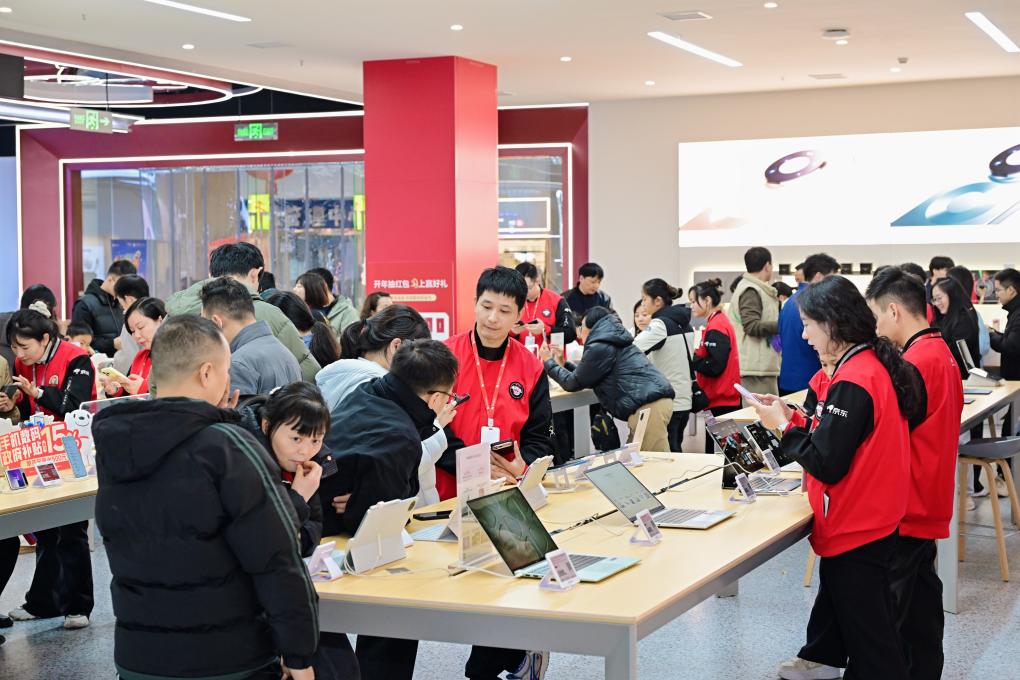
促消费扩投资“双引擎”发力,各地瞄准扩大内需激活经济
Sou Hu Cai Jing· 2026-01-07 23:20
Group 1 - The core focus of the article is on the emphasis of domestic demand as a primary driver for economic growth, with a strong domestic market being a top priority for 2026 economic work [1] - Various regions are actively working to expand domestic demand through initiatives such as "two new" subsidies to stimulate the home appliance market, leading to increased consumer traffic in sectors like dining and cinema [1] - Large projects are being launched, and the orderly development of "two heavy" constructions is underway, indicating a concerted effort to boost investment and consumption [1] Group 2 - Experts suggest that enhancing domestic demand serves as a stabilizing anchor for the economy, providing support for a sustained recovery and positive growth trajectory [1]
【渭南】2025年消费品以旧换新拉动消费36.9亿元
Shan Xi Ri Bao· 2026-01-07 23:16
Core Insights - The core strategy of Weinan City for 2025 is to implement a "trade-in" policy for consumer goods to stimulate consumption, projected to generate an additional 3.69 billion yuan in consumer spending [1][2] Group 1: Policy Implementation - The "trade-in" policy targets key sectors such as automobiles, home appliances, and digital products, providing direct subsidies to enhance market activity [1] - The Weinan City Commerce Bureau is focused on optimizing the application process and ensuring effective policy execution, allowing consumers to benefit from discounts while helping businesses increase sales [1] Group 2: Market Performance - From January to November 2025, the retail sales of consumer goods in Weinan increased by 7.3% year-on-year, which is 2.8 percentage points higher than at the beginning of the year [1] - The total retail sales of social consumer goods grew by 5.8% year-on-year in the first three quarters, indicating sustained resilience in the consumption market [1] Group 3: Future Plans - Weinan City plans to further adjust and optimize the scope and standards of the trade-in subsidies to maximize policy effectiveness [1] - The city aims to integrate the trade-in policy with e-commerce promotions, production and sales connections, and cultural tourism to expand consumption growth opportunities [2]
九部门明确七方面20项举措 培育绿色消费新增长点
Jing Ji Ri Bao· 2026-01-07 23:08
Core Viewpoint - The implementation of green consumption is a crucial strategy for promoting low-carbon development, enhancing consumer confidence, and accelerating the overall green transformation of the economy and society [1] Group 1: Green Consumption Initiatives - The Chinese government aims to replace 18.3 million vehicles through a trade-in program from 2024 to 2025, with nearly 60% being new energy vehicles [1] - The old-for-new appliance program targets 192 million units, with over 90% achieving first-level energy and water efficiency, leading to a sales boost of 3.92 trillion yuan and benefiting 494 million consumers [1] - The Ministry of Commerce, along with eight other departments, has issued a notification outlining 20 measures across seven areas to promote green consumption throughout the "14th Five-Year Plan" period [1] Group 2: Agricultural and Supply Chain Developments - The demand for high-quality green agricultural products is rapidly increasing, driving upgrades in the agricultural supply system [2] - The Ministry of Agriculture is establishing platforms for green product sales and organizing events to connect agricultural products with major consumption areas [2] - The Ministry of Commerce is focusing on green supply chain development, promoting high-quality logistics, and encouraging the use of recyclable packaging materials [2] Group 3: Waste Management and Recycling - The Ministry of Ecology and Environment is promoting the concept of "waste-free cities" to transform waste into valuable resources, enhancing the recycling system for discarded consumer goods [3] - By 2024, over 11,000 smart recycling facilities will be added in urban residential areas, and 50 billion yuan will be invested to process approximately 100 million old appliances, yielding over 3 million tons of recycled resources [3] - The Ministry of Ecology and Environment is collaborating with the Ministry of Finance to support the standardized dismantling of old appliances, promoting resource recycling and low-carbon industry development [3] Group 4: Regulatory and Institutional Support - The State Administration for Market Regulation is committed to enhancing the market environment for green consumption, including updating national standards and supporting international standardization efforts [3] - Measures will be taken to improve energy and water efficiency labeling systems and to combat food waste through initiatives like "green dining" service labels [3] - The administration will strengthen law enforcement to address violations related to green products and waste management [3] Group 5: Future Directions - The Ministry of Commerce plans to coordinate with relevant departments to refine and implement measures that promote green production and consumption, integrating low-carbon principles into all aspects of economic and social development [4]
“国补”政策落地 甘肃兰州消费市场升温
Sou Hu Cai Jing· 2026-01-07 22:17
Group 1 - The core viewpoint of the news is that the implementation of the new national subsidy policy for replacing old consumer goods has significantly boosted the consumption market in Lanzhou, particularly in the automotive, home appliance, and digital smart product sectors [1][2][4]. Group 2 - The new subsidy policy includes three categories: automobile replacement, home appliance replacement, and the purchase of new digital and smart products. Eligible consumers can receive up to 15,000 yuan for replacing new energy vehicles and up to 1,000 yuan for fuel vehicles. Home appliance subsidies focus on energy-efficient products, with a maximum of 1,500 yuan per item, while digital products priced under 6,000 yuan can receive up to 500 yuan [4]. Group 3 - Retailers in Lanzhou are combining the national subsidy with additional promotions, leading to a notable increase in sales of energy-efficient appliances during the New Year period. For instance, a customer reported a significant discount on a new double-door refrigerator, making it a cost-effective choice [2][4]. Group 4 - The subsidy qualification process is managed through the "Gan Kuai Ban" platform, where consumers can apply for subsidies via an app or mini-program. The subsidies are subject to a total control mechanism, with a limited number of qualifications available each week [4][5].
华尔街顶级分析师最新评级:惠而浦获上调
Xin Lang Cai Jing· 2026-01-07 16:52
Core Viewpoint - The article summarizes significant analyst rating changes that could impact market trends, highlighting upgrades, downgrades, and new coverage ratings for various companies [1][6]. Upgrades - Barclays upgraded Whirlpool (W) from "Neutral" to "Overweight," raising the target price from $104 to $123, citing accelerated market share growth expected in 2025 and continuation into 2026 [5]. - Oppenheimer upgraded McDonald's (MCD) from "Market Perform" to "Outperform," setting a target price of $355, with a more optimistic outlook for the restaurant sector in 2026 despite a poor performance in 2025 [5]. - Barclays upgraded Lowe's (LOW) from "Neutral" to "Overweight," increasing the target price from $259 to $285, based on an expected improvement in non-essential goods demand due to upcoming tax policy changes [5]. - Piper Sandler upgraded Hershey (HSY) from "Neutral" to "Overweight," raising the target price from $193 to $213, noting lower cocoa costs and the removal of cocoa tariffs, which provide flexibility for reinvestment and growth [5]. - Bank of America upgraded Regeneron Pharmaceuticals (REGN) from "Underperform" to "Buy," significantly raising the target price from $627 to $860, as previous concerns regarding Eylea SD have been addressed [5]. Downgrades - Jefferies downgraded First Solar (FSLR) from "Buy" to "Hold," lowering the target price from $269 to $260 due to limited visibility on orders and emerging strategic issues [10]. - Oppenheimer downgraded Yum Brands (YUM) from "Outperform" to "Market Perform," with no target price set, as the stock's risk-reward profile has become balanced after a 13% increase in 2025 [10]. - Montreal Bank Capital Markets downgraded Union Pacific Railroad (UNP) from "Outperform" to "Market Perform," reducing the target price from $270 to $255, citing high uncertainty regarding regulatory outcomes and weak freight demand [10]. - Piper Sandler downgraded Deckers Outdoor (DECK) from "Neutral" to "Underweight," lowering the target price from $100 to $85, as the company has increased discount promotions on its core brands [10]. - Wells Fargo downgraded Humana (HUM) from "Overweight" to "Neutral," setting a target price of $290, due to uncertainties regarding profit margin targets for 2026 [10]. New Coverage - Argus Research initiated coverage on grocery delivery platform Instacart (CART) with a "Buy" rating and a target price of $52, highlighting revenue growth and recent profitability achievements [11]. - Citigroup initiated coverage on Natera (NTRA) with a "Buy" rating and a target price of $300, citing significant growth potential [11]. - Link Consulting initiated coverage on Galecto (GLTO) with an "Outperform" rating and a target price of $46, noting its acquisition of Damola Therapeutics to advance its oncology pipeline [11]. - Wolfe Research initiated coverage on Apogee Therapeutics (APGE) with a "Market Perform" rating, without a target price, predicting mixed catalysts for the stock in 2026 [11]. - Mizuho Securities initiated coverage on Palvella Therapeutics (PVLA) with an "Outperform" rating and a target price of $205, based on positive clinical trial data for its drug Qtorin [11].






“新国补”落地首周!消费市场“焕新”
Sou Hu Cai Jing· 2026-01-07 15:34
Group 1 - The "New National Subsidy" policy for replacing old consumer goods officially launched at the beginning of the new year, aiming to enhance both industrial upgrades and the quality of life for citizens [1] - The policy includes subsidies for digital and smart products, expanding the scope to include smart glasses and smart home products, with a focus on energy-efficient appliances [2][3] - The first week of the policy saw significant consumer engagement, with a notable increase in foot traffic and sales across various platforms, indicating a strong market response [3][7] Group 2 - The automotive sector is benefiting from the new subsidy policy, which adjusts the old car replacement subsidy to be based on a percentage of the new car's price, encouraging consumers to purchase higher-value, environmentally friendly vehicles [4][6] - The adjustment of the new energy vehicle purchase tax from exemption to a 50% reduction has led to varied consumer reactions, with some opting to wait while others proceed with purchases due to existing needs [4][5] - The overall automotive market is showing signs of rational consumer behavior, with a significant portion of consumers prioritizing product features and brand service over mere price discounts [6] Group 3 - Various cities are actively promoting the subsidy program during the holiday season, launching multiple consumer engagement activities to maximize participation and ensure the effectiveness of the subsidies [7] - The focus on creating a seamless consumer experience through "policy + scenario + experience" initiatives is crucial for capturing the holiday shopping momentum [7] - The market's enthusiasm for the "New National Subsidy" reflects a broader trend towards high-quality development and the transition from "Made in China" to "Intelligent Manufacturing in China" [7]
新华鲜报丨“新国补”落地首周!消费市场“焕新”
Xin Hua Wang· 2026-01-07 15:11
Core Viewpoint - The implementation of the "New National Subsidy" policy for trade-in of consumer goods such as automobiles, home appliances, and digital products is expected to stimulate the consumption market and enhance the quality of life for citizens, driving both industrial upgrades and consumer demand [1][11]. Group 1: Consumer Goods Market - The "New National Subsidy" policy has led to a surge in consumer interest, with platforms like JD.com and Suning launching various promotional activities to facilitate trade-ins and provide additional benefits [2][10]. - The policy has expanded the scope of subsidies to include digital and smart products, aligning with consumer demand for upgraded technology and energy-efficient appliances [2][3]. - Sales data from Suning indicates a significant increase in foot traffic, with a 110% week-on-week rise in stores nationwide during the New Year holiday, particularly in major cities like Beijing and Shanghai [3][10]. Group 2: Automotive Market - The automotive trade-in subsidy has been adjusted to provide higher incentives based on the price of new vehicles, with a maximum subsidy of 20,000 yuan for scrapping old cars and 15,000 yuan for trade-ins [6][8]. - The adjustment in the new energy vehicle tax policy, from full exemption to a 50% reduction, has led to varied consumer reactions, with some opting to wait for better deals while others proceed with purchases due to existing needs [6][7]. - The overall vehicle replacement rate has surpassed 55%, indicating a strong demand for upgrading to greener and smarter vehicles, supported by the new subsidy structure [8]. Group 3: Market Dynamics and Consumer Behavior - The market is becoming more rational, with consumers increasingly prioritizing product features such as energy efficiency and smart technology over mere price discounts [7][8]. - The New Year holiday has been identified as a critical period for capturing consumer interest, with various cities launching promotional events to maximize the impact of the subsidy policy [10][11]. - Industry experts emphasize the importance of timely adjustments to subsidy categories and the need to combat fraudulent claims to ensure the effectiveness of the subsidy funds [10].


欧盟电价暴涨,福利大砍,街头乱成一锅粥,1月2日真相揭晓
Sou Hu Cai Jing· 2026-01-07 15:09
Group 1: Energy Crisis - The energy crisis in Europe has intensified since the outbreak of the Russia-Ukraine conflict, leading to significant shortages in natural gas, particularly affecting Germany and France, with electricity prices in Germany rising nearly 40% within a year [5] - Many households are resorting to unconventional heating methods, such as burning coal, due to soaring energy costs [5] - Experts warn that unless Europe completely reduces its dependency on Russian energy, similar crises will continue to recur [5] Group 2: Economic Challenges Post-Brexit - The Brexit process, finalized in 2020, was expected to bring freedom but has instead resulted in economic slowdown and cuts to public spending, particularly affecting healthcare and unemployment benefits [7] - The poverty rate in the UK increased by two percentage points compared to pre-Brexit levels in 2022 [7] - Strikes and protests have become commonplace as the welfare system faces increasing strain [8] Group 3: Pension Reforms and Social Unrest - France's government proposed raising the retirement age from 62 to 64 in 2023 due to fiscal pressures, leading to widespread strikes and disruptions in public services [9][11] - Over one million people participated in the strikes, highlighting the growing anxiety among citizens regarding their financial security in retirement [11][12] - Experts indicate that structural reforms in high-welfare countries like France will inevitably cause short-term pain but are necessary for long-term sustainability [12] Group 4: Manufacturing Sector Pressures - European traditional manufacturing industries, particularly automotive and home appliances, are facing unprecedented challenges due to the rise of Chinese manufacturing since 2010 [13] - In 2023, exports of Chinese electric vehicles to Europe surged by 60%, prompting the EU to implement anti-dumping measures, which have had limited effectiveness [15] - European companies are under pressure to transform while maintaining employment, creating a challenging environment for traditional industries [15] Group 5: Increased Defense Spending - Since 2018, the U.S. has increased demands for European allies to raise military spending, resulting in a nearly 20% increase in Germany's defense budget in 2023 [16][17] - This increase in military expenditure is squeezing budgets for education and healthcare, leading to dissatisfaction across various sectors [17] - The trend of rising military spending is expected to continue, impacting the quality of life for ordinary citizens [17] Group 6: Broader Economic and Social Trends - Europe has historically benefited from external advantages, such as Russian energy, U.S. security, and cheap Chinese goods, but these conditions are changing [19] - The current situation presents a critical moment for Europe to undergo self-reform and reduce reliance on external support [20] - Various countries are taking proactive measures, such as Spain's investment in renewable energy and Italy's pension reforms, to address these challenges [21][22][24] - A 2023 EU survey indicated that over 60% of respondents expect increased living pressures in the next five years, particularly concerning welfare and employment [24]

每两周一轮摇号!上海家电数码“国补”开抢
Guo Ji Jin Rong Bao· 2026-01-07 14:25
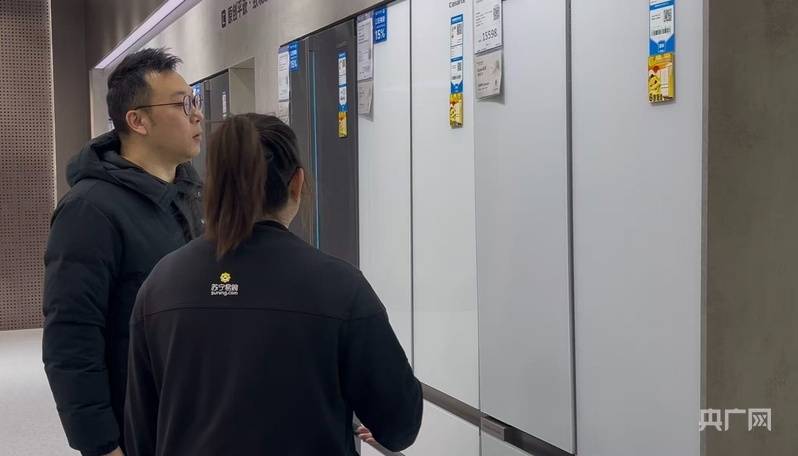
1月7日,2026年上海家电消费"国补"第一轮中签的"幸运儿"陆续诞生,线下门店迎来消费热潮。在 苏宁易购浦东第一店,顾客林先生选购了一台卡萨帝高端冰箱,率先受益于"以旧换新"国补政策。 记者从上海市商务委获悉,2026年开年,备受上海市民关注的新一轮家电以旧换新及数码产品购新 补贴活动,已于近日正式启动。 上海将按照"消费者报名、公证摇号、中签发券"的方式,开展家电以旧换新、数码和智能产品购新 补贴活动,原则上每两周开展一轮报名。第一轮报名时间为2026年1月1日8时至5日20时,发券时间为1 月7日12时至24时,核销时间为补贴资格券到账后14天。 记者了解到,包括京东在内的多个线上线下平台已全面承接国家补贴的落地实施,并纷纷推出配套 服务,为市民的"焕新"之路提供更多便利。 根据活动规则,市民购买指定的冰箱、洗衣机、电视、空调等6类家电产品,单件最高可获补贴 1500元;购买手机、平板、智能手表等4类数码产品,单件最高可获补贴500元。 "不止浦东门店,从今天中午开始,上海地区其余门店也已陆续开单。我们将借此机会,推动绿色 智能家电走进更多上海家庭,助力消费升级。"上海苏宁易购门店运营中心总经理闵旗表示 ...