
非银金融

Search documents
28个行业获融资净买入 29股获融资净买入额超2亿元
Zheng Quan Shi Bao Wang· 2025-08-19 03:30
Group 1 - On August 18, 28 out of 31 primary industries in the Shenwan index received net financing inflows, with the electronics sector leading at a net inflow of 8.094 billion [1] - Other industries with significant net financing inflows included computer (4.071 billion), machinery equipment (2.852 billion), non-ferrous metals (2.787 billion), electric equipment (2.713 billion), communication (2.448 billion), non-bank financials (2.162 billion), chemicals (1.832 billion), and pharmaceutical biology (1.452 billion) [1] Group 2 - A total of 2,325 individual stocks received net financing inflows on August 18, with 244 stocks having net inflows exceeding 50 million [1] - Among these, 29 stocks had net inflows over 200 million, with Northern Rare Earth leading at 736 million [1] - Other notable stocks with high net inflows included SMIC (661 million), ZTE (614 million), Guiding Compass (478 million), China Merchants Bank (464 million), New Yisheng (435 million), Cambricon (398 million), Dongfang Fortune (393 million), and China Unicom (358 million) [1]



“申”挖数据 | 估值水温表
申万宏源证券上海北京西路营业部· 2025-08-19 02:23
Core Viewpoint - The current valuation levels of the A-share market indicate a relatively high risk, with the Buffett indicator at 83.15%, slightly above the safe zone, and various indices showing elevated PE ratios compared to historical levels [6][22]. Market Overview - The total market capitalization of listed companies in Shanghai is approximately 593.11 billion yuan, with a circulating market value of about 557.97 billion yuan and an average PE ratio of 15.14 [19][26]. - The Shenzhen market has a total market capitalization of around 389.16 billion yuan, with a circulating market value of 334.34 billion yuan and an average PE ratio of 28.50 [26]. Valuation Levels Buffett Indicator - The Buffett indicator, which measures the ratio of stock market capitalization to GDP, currently stands at 83.15%, indicating a relatively high valuation [22][23]. PE Valuation Levels - Major indices such as the Shanghai Composite Index and the ChiNext Index have PE ratios above 20%, with specific values being 15.88 (↑2.97%) for the Shanghai Composite and 36.21 (↑7.70%) for the ChiNext [27]. - The PE ratios for the major indices are as follows: - Shanghai Composite: 15.88 (↑2.97%) - Shenzhen Component: 28.05 (↑4.98%) - ChiNext: 36.21 (↑7.70%) [27]. Industry Valuation Levels - The PE ratios for the food and beverage industry and the agriculture, forestry, animal husbandry, and fishery industry are notably low, at 6.98% and 8.81% of their historical levels, respectively, suggesting potential investment opportunities [8]. - Conversely, industries such as construction materials, media, steel, electronics, retail, computer, and real estate have PE ratios at high historical percentiles, indicating increased investment risk [8]. PB Valuation Levels - The PB ratios for various indices show significant variation, with the Shanghai Composite at 1.45 (↑3.11%) and the ChiNext at 4.60 (↑7.94%) [29]. - The PB ratios for key industries are as follows: - Agriculture, forestry, animal husbandry, and fishery: 2.02 - Basic chemicals: 1.41 - Steel: 0.73 [37]. PS Valuation Levels - The PS ratios for several industries indicate varying levels of valuation, with agriculture, forestry, animal husbandry, and fishery at 0.82 and basic chemicals at 0.55 [41]. Conclusion - The current market conditions reflect a high valuation environment, with specific sectors showing both potential opportunities and risks based on their historical valuation levels. Investors should consider these factors when making investment decisions.


年内净买入超9000亿港元!南向资金钟意哪些方向?
Xin Lang Ji Jin· 2025-08-19 01:55
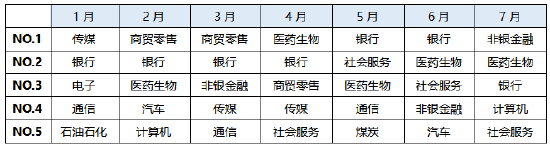
Group 1 - The core viewpoint of the article highlights the significant influx of southbound capital into the Hong Kong stock market, with net purchases exceeding 902 billion HKD by August 13, 2025, surpassing the total for the entire year of 2024 [1][2] - The banking sector has consistently been a favored investment area for southbound capital, remaining in the top three net purchases each month due to its high dividend yield and low volatility in a low-interest-rate environment [2][3] - The pharmaceutical and biotechnology sector has gained popularity since April, driven by the performance of innovative drug companies and their competitive advantages, attracting substantial capital inflows [3][6] Group 2 - The average daily trading volume of all Hong Kong stocks reached 1,919 billion HKD in 2025, a 132% increase from the previous year's average of 827 billion HKD, indicating strong market confidence [3][10] - The southbound capital's role in the Hong Kong market has grown, with its trading volume accounting for approximately 35% of the total market, up from around 10% in 2020, reflecting its increasing pricing power [3][6] - The Hong Kong Stock Connect 50 Index, which includes the largest 50 stocks in the Hong Kong Stock Connect, has shown a 28.42% increase in 2025, outperforming the Hang Seng Index and the Hang Seng Tech Index [10][12] Group 3 - The Hong Kong Stock Connect 50 Index comprises stocks with a market capitalization of over 1 billion HKD, with 64% of its weight held by stocks with a market cap exceeding 10 billion HKD, indicating a focus on large-cap assets [6][9] - The index covers 19 primary industry sectors, including banking, non-bank financials, media, and retail, aligning with the sectors favored by southbound capital [6][9] - The index's balanced exposure to both traditional and emerging sectors allows for a diversified investment strategy, catering to both value and growth investors [12][13]
港股开盘 | 恒指高开0.26% 美的集团(00300)涨超2% 紫金矿业(02899)涨超1%
智通财经网· 2025-08-19 01:39
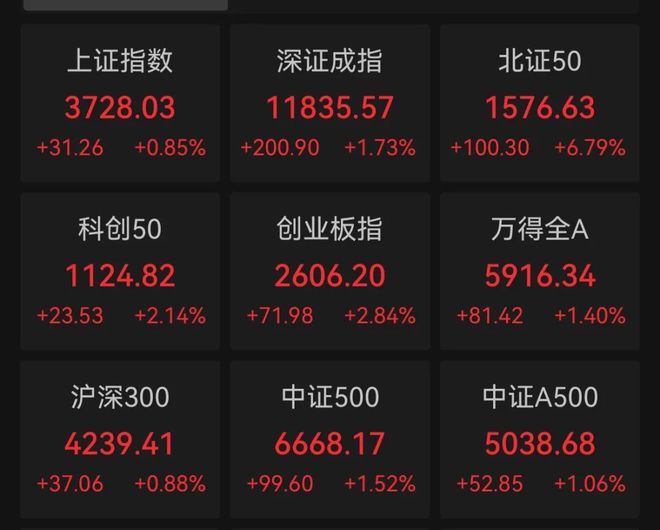
Group 1 - The Hang Seng Index opened up 0.26%, and the Hang Seng Tech Index rose by 0.24%, indicating a positive market sentiment [1] - Meituan and Zijin Mining saw stock increases of over 2% and 1% respectively, reflecting investor confidence in these companies [1] Group 2 - Huatai Securities suggests that the market is currently in a critical phase with a lack of clear trading themes, but they remain optimistic about future performance, particularly in sectors like gaming and leading internet e-commerce [2] - China Galaxy recommends focusing on sectors with better-than-expected mid-term performance, such as innovative pharmaceuticals and local financial stocks, as well as those benefiting from favorable policies [2] - CITIC Securities highlights that the upcoming half-year report period will be crucial for the continuation of the Hong Kong market's performance, with a shift from liquidity-driven to earnings-driven market dynamics expected [2] Group 3 - Industrial Securities maintains a bullish outlook on the Hong Kong stock market, predicting a long-term bull market driven by increasing investor confidence and potential Federal Reserve interest rate cuts [3] - Guotai Junan Securities anticipates continued inflows of capital and structural advantages in assets as key drivers for the Hong Kong market's bull run in the second half of the year [3] - The report notes that the total financing scale for the year could approach 300 billion HKD, with a significant inflow from southbound trading expected to exceed 1.2 trillion RMB [3] Group 4 - Huatai Securities attributes recent market corrections to adjustments in expectations but maintains that the medium-term liquidity remains favorable, recommending investments in sectors with improving conditions and low valuations [4] - Bank of China International indicates that the impact of the Hong Kong Monetary Authority's actions on the stock market is minimal, as liquidity remains abundant, with average daily trading volumes reaching historical highs [4] - The forecast for the Hang Seng Index is set to reach 27,500 points by the end of the year, reflecting a price-to-earnings ratio of 12.3 times, which is a premium compared to the past 20-year average [4]

策略周报:关注泛科技行业的“头部效应”-20250819
Bank of China Securities· 2025-08-19 00:01
Group 1 - The report highlights a significant "head effect" in the pan-technology sector, indicating that larger companies are outperforming smaller ones in terms of stock price increases, particularly in the context of the recent economic policies aimed at reducing competition and promoting growth [1][24][30] - The AI industry chain is experiencing a shift in investment style from small to mid-large market capitalization stocks, suggesting a growing institutional consensus on the attractiveness of larger firms within this sector [1][30][35] - The implementation of new 3C certification regulations for mobile power supplies and lithium batteries marks a transition towards more stringent safety and compliance standards, which is expected to reshape the industry landscape by eliminating low-quality products and enhancing the market position of compliant manufacturers [1][41] Group 2 - The report notes that the overall market sentiment has improved due to increased leverage and foreign capital inflows, with significant net buying observed in the non-bank financial sector, electronics, and computing industries [1][40] - The performance of various sectors indicates a strong trend in technology and high-end manufacturing, with the report suggesting that these areas will continue to lead market growth [1][21][24] - The report emphasizes the importance of monitoring the progress of incremental capital release and external economic factors, such as U.S. Federal Reserve interest rate decisions, which could influence foreign investment speed [1][10][40]
险资今年举牌30次,成A股慢牛推手之一
2 1 Shi Ji Jing Ji Bao Dao· 2025-08-18 23:59
Core Insights - The activity of insurance capital in the capital market has significantly increased in 2025, with 30 instances of insurance capital stake acquisitions reported this year, marking a new high in recent years, second only to 62 instances in 2015 [1][4] - The total market capitalization of A-shares has surpassed 100 trillion yuan for the first time, with the Shanghai Composite Index reaching a nearly 10-year high [1][12] - The long-term investment reform pilot program is accelerating, with a total scale of 222 billion yuan across three batches of pilot programs [1][9] Insurance Capital Activity - Insurance capital has made 30 stake acquisitions this year, exceeding 20 in 2024 and 26 in 2020, with 6 in the A-share market and 25 in the H-share market, involving 23 listed companies across 10 major Wind secondary industries [4][5] - The banking sector is the most favored, with 7 banks being targeted for a total of 14 stake acquisitions [5][7] Market Trends - The current market exhibits characteristics of a "slow bull" market, with significant inflows of capital and a positive outlook for the A-share market [2][13] - Analysts suggest that the low volatility, high dividend, and low valuation characteristics of bank stocks make them particularly attractive to insurance capital [7][8] Long-term Investment Reforms - The long-term investment reform pilot program has led to the establishment of 7 insurance capital private equity fund companies, with a total of 222 billion yuan approved for participation [9][10] - The pilot program aims to encourage insurance companies to invest in the stock market for the long term, with a focus on high-quality equity assets [10][11] Regulatory Environment - Recent regulatory measures have created a favorable environment for insurance capital to enter the market, including policies that encourage long-term investments and adjustments to asset allocation ratios [15][16] - The central financial authorities have set a target for large state-owned insurance companies to invest 30% of new premiums in A-shares starting in 2025 [15]
8月W2港股周度资金跟踪:创下自2018年以来单日净流入新高的南向资金买了什么?-20250818
Changjiang Securities· 2025-08-18 15:23
Core Insights - Southbound funds recorded a net inflow of HKD 80.62 billion from August 11 to 15, 2025, with significant investments in non-bank financials, hardware equipment, pharmaceutical biology, software services, and real estate II sectors, totaling a net inflow of HKD 130.61 billion across the top five industries [2][5][30] - On August 15, 2025, southbound funds achieved a single-day net inflow of HKD 358.76 billion, marking the highest level since 2018 [2][5][30] Industry Performance - The Hang Seng Index rose by 1.65% and the Hang Seng Tech Index increased by 1.52% during the period from August 11 to 15, 2025, with healthcare, information technology, and materials sectors leading the gains, while utilities lagged [5][12][27] - The top five industries for southbound fund inflows were: - Non-bank financials: HKD 47.23 billion - Hardware equipment: HKD 37.1 billion - Pharmaceutical biology: HKD 22.62 billion - Software services: HKD 14.31 billion - Real estate II: HKD 9.36 billion [2][5][30] Fund Flow Dynamics - Southbound funds showed a divergence from foreign institutional flows, with southbound investments focusing on non-bank pharmaceuticals while foreign capital targeted media and software sectors [5][30] - From August 1 to 15, 2025, southbound funds had a net inflow of HKD 543.79 billion, primarily into software services, hardware equipment, non-bank financials, consumer discretionary retail, and pharmaceutical biology [5][45] Sectoral Trends - The report highlighted that the inflow of southbound funds was concentrated in technology sectors, while foreign capital increased its stake in pharmaceuticals and non-ferrous metals [5][45] - The major outflows were observed in sectors such as telecommunications services, durable consumer goods, and automotive components [5][30][45]
兴业期货日度策略-20250818
Xing Ye Qi Huo· 2025-08-18 13:44
Group 1: Overall Strategy Recommendations - Hold existing long positions in the IF2509 contract of the CSI 300 Index due to continuous improvement in liquidity and high bullish sentiment [1] - Adopt a long - position strategy for liquefied petroleum gas and Shanghai aluminum, and expect Shanghai nickel to remain weak [1] - Hold short - put options on the PS2511 - P - 45000 polycrystalline silicon contract as downstream prices provide strong support [2] - Initiate new long positions in the P2601 palm oil contract as positive factors from the production area continue to emerge [2] Group 2: Equity Index Analysis - The A - share market continued to rise last week, with the Shanghai Composite Index reaching a new stage closing high and the trading volume of the two markets exceeding 2 trillion yuan for three consecutive days. The communication and non - bank financial sectors led the gains, while the banking and steel sectors declined [1] - In July, domestic economic indicators fluctuated, with the year - on - year growth rates of industrial added value, total retail sales of consumer goods, and fixed - asset investment lower than expected, which increased market expectations for incremental policies. With the continuous rise of the stock market and the accumulation of profit - making effects, the equity index is expected to remain strong under the boost of liquidity [1] Group 3: Treasury Bond Analysis - Bond market sentiment remained fragile last week, with more significant adjustments in long - term bonds. Domestic economic data was still mixed, but market optimism continued, and expectations for additional stimulus policies remained. The central bank's net injection in the open market kept the money market stable, but the overall cost of funds increased. The market's expectations for monetary policy easing turned cautious, and the bond market faced adjustment pressure [1] Group 4: Precious Metals Analysis - Gold prices are expected to continue to oscillate in a high - level range. The US - Russia summit over the weekend did not reach an agreement, but it may have released positive signals, which is marginally beneficial to global risk appetite. There is currently insufficient upward momentum for gold prices [3] - Silver remains in a bullish pattern. The confidence in a "soft landing" of the US economy is still significantly higher than that of a "recession." Although the expectation of an aggressive interest rate cut by the Fed in September has cooled, an interest rate cut within the year is still highly likely, and the direction of US fiscal policy easing is clear. Hold short - put options on the silver 10 - contract and long positions in silver [3] Group 5: Non - ferrous Metals Analysis - Copper prices are expected to continue to oscillate. Economic data is still mixed, but expectations for additional policies remain optimistic. The impact of tariffs has weakened, and there are still differences in the market's expectations for the Fed's interest rate cut rhythm. The supply of copper mines in Chile is resuming, but the tight supply situation at the mine end has not improved. The demand during the peak season and policy expectations still support consumption, but there are many short - term disturbances on the demand side, and the valuation is relatively high, so new driving forces are needed for further upward movement [3] - The expansion of the US aluminum tariff scope has limited impact. Alumina prices fluctuated last week, and the center of gravity of Shanghai aluminum prices slightly increased. The market's expectations for additional policies remain optimistic, and there are differences in the market's expectations for the Fed's interest rate cut rhythm. The expansion of the US aluminum tariff scope has limited impact, and the current US aluminum production capacity is limited, with a high degree of import dependence. The alumina market is in an oversupply situation, and the price is expected to continue to oscillate, while Shanghai aluminum has clear support at the bottom, and attention should be paid to changes in demand [3] - Nickel prices are expected to continue to oscillate in a range. The supply of nickel mines in Indonesia is tight, while the supply from the Philippines has increased seasonally. The smelting sector is in an oversupply situation, and the downstream consumption of stainless steel is still in the off - season. The demand for nickel from ternary batteries is limited by its weak market share. Although there are some supporting factors such as macro - policy expectations and a weak US dollar index, there is no clear directional driving force [3] Group 6: Lithium and Silicon Analysis - Lithium carbonate prices are expected to oscillate at a high level. The suspension of the Jiaxiaowo mine has been realized, and the price of lithium carbonate has risen significantly. The production of the smelting sector has increased, and the inventory pressure is still high. However, considering the continuous increase in futures trading volume and open interest, the market sentiment is still positive. Attention should be paid to the production situation of mines in Yichun [4] - Industrial silicon and polycrystalline silicon markets are in an oscillating pattern. For industrial silicon, supply and demand have both increased, and the inventory has remained stable, with no strong driving force. The manufacturers' price - holding sentiment is strong, resulting in a stalemate between supply and demand. For polycrystalline silicon, although some enterprises in Xinjiang have stopped production, the overall supply is still increasing. Downstream component prices have risen, and there are still expectations for further price increases. Policy - related positive sentiment has re - emerged, and overall prices are strongly supported [4] Group 7: Steel and Iron Ore Analysis - Steel prices are expected to oscillate. For rebar, the long - term logic of anti - involution is difficult to disprove, but the fundamentals have shown signs of weakening. Environmental protection restrictions before the military parade may affect blast furnace production in the Beijing - Tianjin - Hebei region, but the current steel mill profits are acceptable, which may stimulate the production enthusiasm of non - restricted areas. Rebar inventory has begun to accumulate rapidly. Without policies to reduce crude steel production, the contraction of steel - making profits is a more certain direction after the end of the military parade restrictions. Rebar futures prices are expected to continue to operate in the range of [3150, 3300] [4] - For hot - rolled coils, the fundamentals and policy are divergent. The long - term logic of anti - involution is difficult to disprove, but the steel fundamentals have weakened marginally. The fundamentals of hot - rolled coils and other plate products are relatively better than those of construction steel. Environmental protection restrictions before the military parade may ease the inventory accumulation pressure of plate products. However, if there are no strict policies to reduce crude steel production, the contraction of steel - making profits is still a likely direction. Hot - rolled coil futures prices are expected to operate in the range of [3350, 3500] [4] - Iron ore prices are expected to turn to range - bound operation. The environmental protection restrictions in the north before the military parade may affect iron ore demand, but the relatively high steel mill profits and the certain复产 direction after the end of the restrictions limit the downward space of iron ore prices. Iron ore futures prices are expected to operate in the range of [750, 810] for the 01 contract [4][5] Group 8: Coal and Coke Analysis - Coking coal prices are expected to oscillate. The exchange has strengthened risk - control measures in the futures market, and the coking coal futures price fluctuations have increased. The fundamentals are improving, but the rate of inventory reduction at the mine end has slowed down, and the upward trend of coal prices is expected to slow down. Attention should be paid to the results of the energy bureau's inspection of coal mine production and the proportion of expected shutdown mines [5] - Coke prices are expected to oscillate. After six rounds of price increases, the coking profit has been repaired, and the daily production of coke has increased slightly. The impact of production restrictions on Shandong coking enterprises has not yet appeared, and the current fundamentals of coke show a double - increase pattern. However, environmental protection restrictions in the Beijing - Tianjin - Hebei region in the second half of the month are expected to affect both supply and demand [5] Group 9: Chemical Products Analysis - Oil prices are in a bearish pattern. Geopolitical negotiations between the US and Russia may help promote the resolution of the Russia - Ukraine conflict. Major institutions have significantly raised their forecasts for supply surpluses, and oil prices are expected to remain weak [5] - Methanol prices are in a bearish pattern. The overseas methanol plant operating rate has remained at 72%. The spot price of methanol in East China has fallen due to increased arrivals. The futures 09 contract has accelerated its decline, and the basis has returned to a reasonable level. If the planned restart of maintenance devices goes smoothly, production will increase significantly, but there are still new maintenance plans. Wait for the price to stabilize before selling put options or taking long positions [6] - Polyolefin prices are expected to oscillate. After the end of the centralized maintenance period, polyolefin production has returned to a high level, and demand is about to enter the peak season. There are no prominent contradictions in the fundamentals. If there are no extreme movements in coal or oil prices, polyolefin futures are expected to continue to oscillate. After the release of oil - related negative news this week, sell near - month slightly out - of - the - money put options. The spread between L and PP is expected to further widen from September to October [6] Group 10: Agricultural Products Analysis - Cotton prices are expected to have limited upward space in the short term. The USDA report has reduced the production forecast for the 2025/26 season, which has supported cotton prices. However, the domestic cotton market is still in the off - season, and there is no obvious improvement in yarn mill orders. The pre - hedging orders of ginneries under the expectation of a bumper harvest may put pressure on the market, and the peak - season expectation from September to October has not yet been reflected [6] - Rubber prices are cautiously bullish. The inventory of semi - steel tires has increased, which has dragged down production line operations, but they are still at a relatively high level. The all - steel tire inventory has decreased smoothly, and production enthusiasm is high. The demand for rubber is expected to improve marginally. Although the rubber - tapping season has entered the production - increasing period, the raw material supply has not increased as expected, and the purchase price has slightly increased. The supply - demand structure of natural rubber has continued to improve, and the port inventory has decreased rapidly, providing support for rubber prices [6]
个人消费贷贴息政策出台,可关注哪些机会?
Datong Securities· 2025-08-18 13:06
Market Review - The equity market indices continued to strengthen, with the ChiNext Index showing the largest increase of 8.58% [4] - The bond market saw an increase in both short and long-term interest rates, with the 10-year government bond rising by 5.74 basis points to 1.747% [10] - The fund market experienced mixed results, with equity funds rising while medium and short-term pure bond fund indices declined [18] Equity Product Allocation Strategy - Event-driven strategies include focusing on the semiconductor sector due to the upcoming China Semiconductor Ecosystem Development Conference and the newly introduced personal consumption loan interest subsidy policy [21][20] - Asset allocation strategy suggests a balanced core plus a barbell strategy, emphasizing dividend and technology sectors [23] - Recommended funds include those focused on consumer and infrastructure sectors, as well as technology growth styles [23][27] Stable Product Allocation Strategy - The central bank's recent operations indicate a net withdrawal of 414.9 billion yuan, maintaining a balanced liquidity environment [29] - Economic data for July shows a year-on-year industrial value-added growth of 5.7% [29] - Social financing data indicates a total stock of 431.26 trillion yuan, with a year-on-year growth of 9% [29] Key Focus Products - Recommended products include short-term bond funds like Nord Short Bond A and Guotai Li'an Medium and Short Bond A, as well as funds benefiting from convertible bonds and equity market opportunities [2][34]
8月第3期:杠杆资金新高
Tai Ping Yang Zheng Quan· 2025-08-18 12:33
Group 1 - The report indicates that market liquidity has strengthened, with a total net inflow of 360.14 billion yuan in the last week, and the total trading volume of the A-share market reached 10.51 trillion yuan, an increase from the previous week [9][3] - The turnover rate decreased to 9.75%, while the net inflow of margin trading reached 531.26 billion yuan, accounting for 10.63% of the total A-share trading volume [28][4] - The report highlights that the issuance scale of new equity funds was 87.83 billion yuan, which is a decrease compared to the previous week [22][4] Group 2 - The report notes that the domestic liquidity situation shows a net withdrawal of 4,149 billion yuan in open market operations, with the yield on 10-year government bonds rising by 5 basis points [11][12] - The yield spread between 10-year and 1-year government bonds has widened, indicating a change in market expectations regarding interest rates [11][4] - The market anticipates an 84.8% probability of a rate cut by the Federal Reserve in September [19][11] Group 3 - The report details that the trading activity of institutional investors has increased, with the top three sectors for fund accumulation being electronics, non-bank financials, and power equipment [23][4] - Conversely, the sectors with the largest reductions in holdings were banks, food and beverage, and agriculture [23][4] - The report also mentions that the total amount of restricted shares released last week was 2,321.19 billion yuan, with electronics, computers, and non-bank financials being the top sectors affected [40][41]