
新能源汽车

Search documents
理想汽车(LI.US)跌逾2% 公司辟谣:网传“关闭100家门店”为不实信息
Zhi Tong Cai Jing· 2026-01-27 14:49
Core Viewpoint - Li Auto (LI.US) shares fell over 2% to $16.56 amid reports of plans to close approximately 100 underperforming retail stores in the first half of 2026, which raised market concerns [1] Group 1: Company Response - The company responded to the rumors of mass store closures and layoffs circulating online, stating that these claims are false [1] - It confirmed that it will close a small number of low-efficiency retail stores this year, but emphasized that this does not involve mass closures [1]

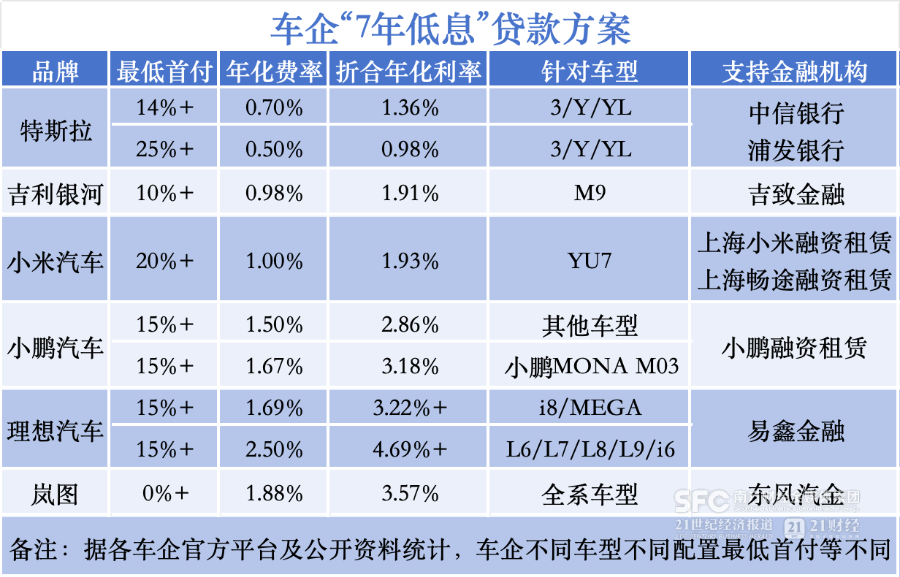
7年期车贷来了 车企“超低息”大促有点儿猛
2 1 Shi Ji Jing Ji Bao Dao· 2026-01-27 14:43
Core Insights - The automotive industry is experiencing a promotional wave of "7-year low-interest" financing plans, initiated by companies like Tesla, Xiaomi, and Xpeng, aimed at stimulating consumer demand and increasing sales before the Chinese New Year [1][4]. Group 1: Promotional Strategies - Various automakers have launched "7-year low-interest" loan schemes to lower the barriers for car purchases and stimulate end-consumer demand [4][5]. - The promotional period for these financing options is limited, primarily from January to February 2026, indicating a strategic push to boost sales during a peak buying season [5][6]. Group 2: Financing Details - The financing plans differ significantly among brands in terms of lending institutions, down payment requirements, funding costs, and model coverage [5][6]. - Tesla offers a low-interest rate of 0.50% for a 25% down payment, while other brands like Li Auto and Xpeng have higher rates, with some reaching up to 2.50% [6][7]. - The monthly payment burden is significantly reduced with the extended loan term, but the total interest paid over the loan period increases [8][10]. Group 3: Consumer Considerations - Consumers are advised to assess their financial capabilities and long-term repayment abilities before opting for the "7-year low-interest" loans, as the longer repayment period may lead to increased financial strain [15][17]. - The risk of depreciation in vehicle value over the extended loan term raises concerns, particularly for electric vehicles, which may face rapid technological obsolescence [10][11]. Group 4: Market Trends - The trend of offering longer loan terms aligns with national policies aimed at boosting consumer spending, reflecting a broader economic strategy [2][4]. - The resale value of electric vehicles is notably lower compared to traditional fuel vehicles, with electric models experiencing a decline in value due to market competition and rapid advancements in technology [11][13].


2025中国经济关键词丨动能强劲,创新活力持续迸发
Xin Hua Wang· 2026-01-27 13:04
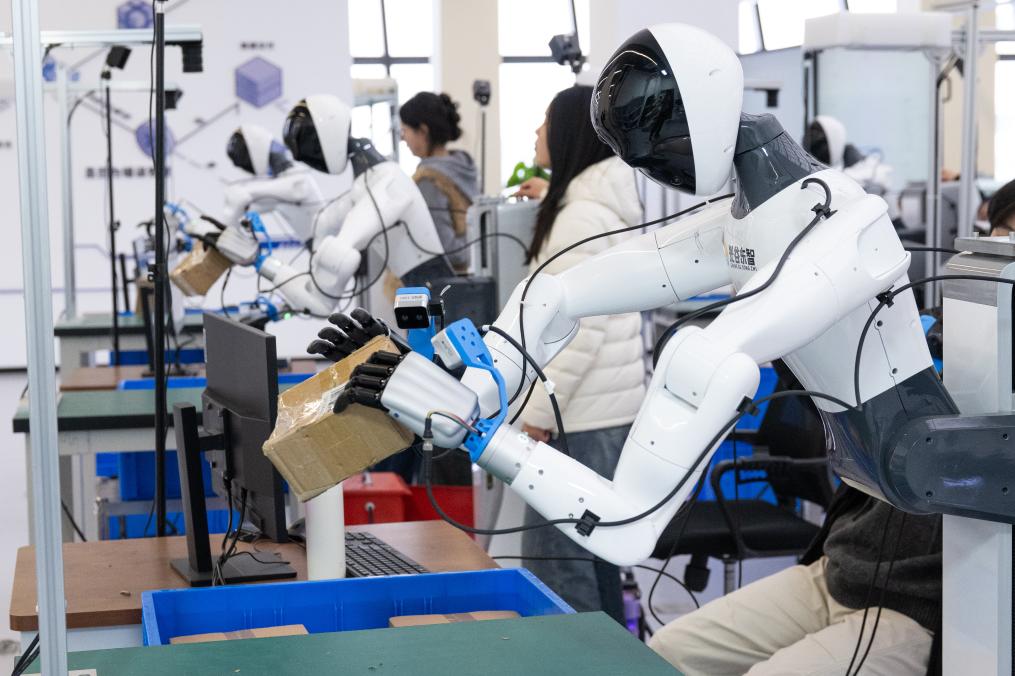
Group 1 - In 2025, China's economy effectively responded to various risks and challenges, achieving significant results through a focus on innovation and development [1] - China's R&D expenditure intensity reached 2.8%, surpassing the OECD average for the first time, indicating a strong commitment to innovation [1] - The World Intellectual Property Organization reported that China's innovation index entered the global top ten for the first time [1] Group 2 - The emphasis on technological and industrial innovation in China has led to strategic positioning, large investment scales, strong support systems, and high conversion efficiency in key sectors such as AI, robotics, and quantum communication [2] - In 2025, the value added of China's digital product manufacturing industry grew by 9.3%, with significant increases in the production of servers and industrial robots [5] - The integration of technological and industrial innovation has resulted in smarter, greener manufacturing, accelerated upgrades of traditional industries, and rapid growth of emerging industries [5] Group 3 - A virtuous cycle of "technology-industry-finance" is forming in China, providing stronger financial support for industrial transformation and upgrading [7] - The current ecosystem for technology transfer and transformation is being improved, promoting collaboration among government, industry, academia, and research [7] - The rapid development of industry-education integration and innovation is characterized by strong policy guidance and fast conversion of results [7] Group 4 - China's systematic layout and high-intensity investment in frontier fields have enabled a leap from following to keeping pace and leading in various industries [9] - The focus during the 14th Five-Year Plan period is on nurturing emerging and future industries while consolidating existing advantages and strategically planning new sectors [9]
景顺长城基金董晗:2026年科技成长仍是重要主线
Zheng Quan Ri Bao Wang· 2026-01-27 12:41
Group 1 - The core viewpoint is that technology growth and non-ferrous metals sectors are key drivers for market momentum at the beginning of 2026, with the launch of the Invesco Great Wall Prosperity Driven Fund managed by experienced fund manager Dong Han [1] - Dong Han has 19 years of experience in the securities and fund industry, with over 14 years of investment experience, focusing on sectors such as semiconductors, consumer electronics, new energy vehicles, and cyclical industries [1] - The fund will invest in both A-shares and Hong Kong stocks, incorporating a floating fee structure linked to excess returns to align the interests of the manager and investors [1] Group 2 - In the short to medium term, the driving force for the equity market's rise will shift from valuation recovery to profit recovery, with a focus on structural performance improvements from breakthroughs in the AI industry and overall economic recovery [2] - Long-term prospects for China's economic structural transformation are significantly improved, which will continue to translate into economic growth momentum and corporate performance [2] - Dong Han is optimistic about the equity market performance in 2026, identifying technology growth as a key theme throughout the year, with a more balanced market style compared to 2025, particularly favoring sectors such as semiconductors, non-ferrous metals, power equipment, AI computing power, and humanoid robots [2]
瑞银关于A股十问十答:估值还有空间!
Datayes· 2026-01-27 12:09
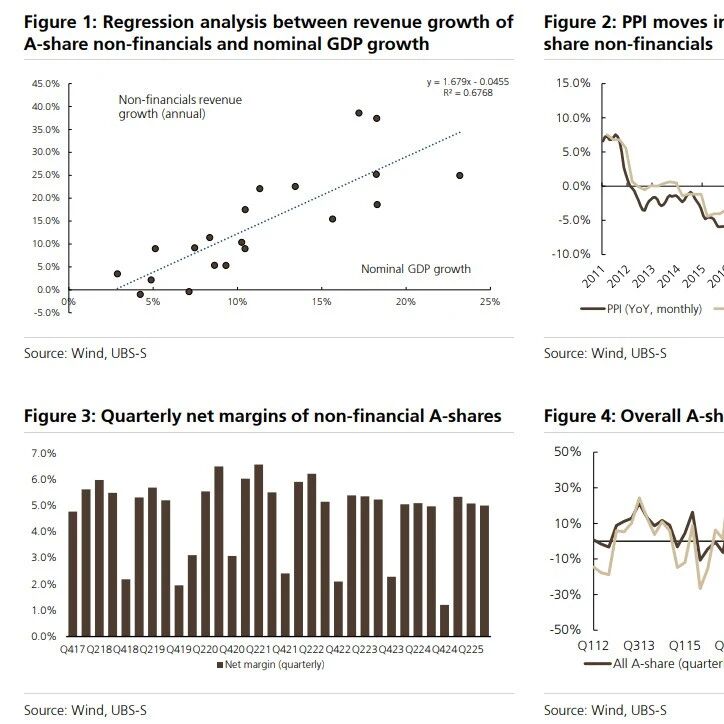
Group 1 - The overall A-share profit growth is expected to accelerate from 6% in 2025 to 8% in 2026, primarily driven by the non-financial sector [1] - The revenue growth of non-financial A-shares is closely related to China's nominal GDP growth and PPI inflation, with a projected nominal GDP growth of 4.3% in 2026 [1] - The net profit margin (NPM) of non-financial A-shares has rebounded in the first nine months of 2025, reversing a long-term downward trend since 2021 [1] Group 2 - The financial sector's profit growth is expected to remain stable, supported by solid asset quality in the banking sector and improved market sentiment [2] - The cumulative profit growth of industrial enterprises in China was only 0.1% in the first eleven months of 2025, but certain sectors like computer and electronic equipment manufacturing saw a 15% profit increase [2] - Investors should pay attention to potential revisions in profit growth expectations around April 2026, as historical data shows discrepancies in profit growth forecasts during that period [2] Group 3 - The current rolling P/E ratio of the Wind All A-share index has risen above the historical average, leading some investors to worry about overvaluation [13] - Despite concerns, the equity risk premium in the A-share market remains above historical averages, indicating potential for further revaluation [13][16] - Factors such as clearer fiscal support, accelerating profit growth, and increased household savings reallocating to stocks are expected to drive A-share growth in 2026 [16] Group 4 - The Chinese central bank plans to moderately expand the deficit and maintain stable credit pulses, which is expected to support A-share revaluation [17] - The anticipated reduction in policy rates and reserve requirement ratios by the central bank may further enhance liquidity in the market [17] - A moderate expansion in P/E ratios is expected as profit growth accelerates, with historical data showing a correlation between profit growth and P/E ratios [21] Group 5 - The ongoing market capitalization management reforms are changing investor perceptions, leading to increased focus on shareholder returns [27] - A-share cash dividends reached 2.06 trillion yuan in 2025, marking a significant increase, while stock buybacks have also risen [27] Group 6 - Daily trading volume in A-shares has significantly increased in 2026, driven by improved investor risk appetite, with average daily turnover reaching 3.03 trillion yuan [28] - Regulatory measures have been implemented to cool down excessive trading activity, with daily turnover ratios fluctuating [28][33] - The financing balance in A-shares reached a historical high of 2.7 trillion yuan, indicating increased leverage in the market [33] Group 7 - The trend of reallocating household savings towards stocks is evident, with a significant portion of household deposits still available for investment in A-shares [40] - Despite a recent uptick in the stock market, the influx of household funds into the market has not yet reached overheating levels [42][46] - The potential for further inflows into A-shares exists as investors may gradually shift from fixed-income products to equity investments [49] Group 8 - The issuance of active funds has been slow, but the performance of equity funds has improved, potentially leading to increased inflows as market conditions stabilize [53] - The ETF market has seen rapid growth, with A-share holdings in ETFs surpassing those in active equity funds for the first time [58] Group 9 - The "anti-involution" policies are expected to improve supply-demand dynamics and support price recovery, enhancing corporate profitability [64] - The narrowing and eventual recovery of PPI is crucial for the revenue growth of non-financial A-shares, which may lead to stock price revaluation [65] Group 10 - The growth style is expected to outperform the value style in the mid-term, with cyclical stocks likely to perform better than defensive stocks [66] - Tactical preferences lean towards sectors benefiting from innovation, ample liquidity, and narrowing PPI, such as electronics, telecommunications, and chemicals [66] Group 11 - Despite recent declines in financing balances and market turnover, the technology sector's fundamentals remain strong, with expectations for continued growth in 2026 [75] - Metrics for assessing trading congestion in technology stocks include the proportion of trading volume and financing balances relative to market capitalization [78]
官宣!2025年GDP15强省名单落定,3大趋势关乎养老和理财!
Sou Hu Cai Jing· 2026-01-27 11:43
Core Insights - The 2025 GDP rankings reveal a stable yet evolving landscape among the top 15 provinces, indicating regional development trends and implications for investment strategies [1][3] Group 1: Key Rankings and Data - The top 15 provinces by GDP include Guangdong, Jiangsu, Shandong, and Zhejiang, with notable growth rates and nominal GDP figures [4][5] - Guangdong and Jiangsu both exceed 13 trillion in GDP, collectively accounting for over 20% of the national economy, while Shandong and Zhejiang show significant growth rates of 4.87% and 5.04% respectively [6][8] Group 2: Emerging Trends - The traditional dominance of coastal provinces is shifting, with inland provinces like Hubei and Jiangxi showing strong growth driven by technology and innovation [8][9] - Shandong stands out as the only northern province in the top three, demonstrating resilience through industrial transformation and innovation in sectors like offshore wind and biomedicine [9] Group 3: Practical Insights for Investment - High GDP does not equate to safe investment opportunities; provinces with high growth rates may still carry significant risks due to reliance on single industries [11] - Investment strategies should focus on stable industries such as Hubei's optoelectronics and Zhejiang's digital economy, while avoiding high-risk, unsupported high-yield products [11] - For retirement planning, second-tier cities in economically strong provinces offer a balance of quality resources and lower living costs compared to first-tier cities [11]

建强数智赋能体系 河南如何向“智”而行?
Zhong Guo Xin Wen Wang· 2026-01-27 11:39
建强数智赋能体系 河南如何向"智"而行? 中新网郑州1月27日电 (韩章云 范晓恒 王佳宁 张楠)"灯塔工厂"、中试基地、"人工智能+""数据要素 ×"行动……正在召开的2026年河南省两会上,加快建设数字河南、打造数智强省成为代表委员们关注 的焦点。 河南是制造业大省,在当前的数字化浪潮中,积极谋篇布局数智版图。近年来,该省依托数智化推动产 业转型升级成效显著。 数智技术赋能企业转型升级的"魔力",让河南省人大代表、新乡市卫华集团董事长韩红安深有感触。他 介绍,在起重机行业,因客户需求不同,几乎每台起重机都是"量身定制",仅设计就要花上三周的时 间。2025年底,企业落地了一套自主研发的数字化设计平台,将一台起重机的设计时间压缩到2小 时,"提升了企业对市场响应的速度,也让客户有更灵活的产品定制体验"。 来源:中国新闻网 2026年河南省政府工作报告披露,2025年,河南已有全球"灯塔工厂"3家,国家卓越级智能工厂16家; 培育了超聚变、中创智领等一批行业领军企业;先进装备、电子信息、新能源汽车等7大产业集群对工 业贡献率超过70%。 眼下已是"十五五"开局之年,河南就数智赋能千行百业已有布局。上述政府工作 ...
理想汽车召开全员会 从汽车制造商向具身智能企业转型
Zhong Zheng Wang· 2026-01-27 11:12
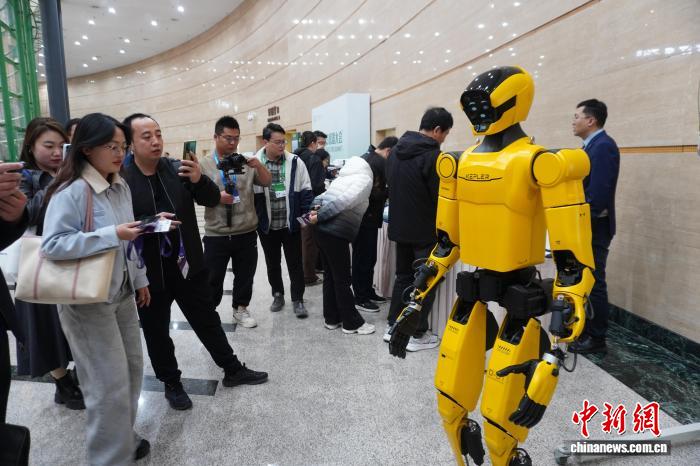
Core Viewpoint - The company is transitioning from a traditional automotive manufacturer to a focus on embodied intelligence, emphasizing the development of humanoid robots and general-purpose agents as part of its strategic upgrade [1][3] Group 1: Strategic Shift - The CEO outlined a strategic shift from "creating a mobile home" to focusing on embodied intelligence, with a core emphasis on silicon-based life forms [1] - The company plans to restructure its R&D teams into three main segments: foundational models, software entities, and hardware entities, integrating automotive and robotics under the hardware team [1] Group 2: R&D Focus - Since 2022, the company has been developing reasoning chips and operating systems, and it initiated foundational model research in 2023, aiming to enhance its self-research capabilities [1] - The company aims to deepen its self-research in core components like batteries and motors while building a general-purpose agent ecosystem for seamless integration between mobile applications and vehicle systems [1] Group 3: Industry Insights - The CEO identified four paths for general-purpose agent development, focusing on improving life scenarios through autonomous driving, humanoid robots, and home services [2] - The company plans to accelerate its humanoid robot business and will initiate specialized recruitment to attract core talent in the robotics field [2] Group 4: Market Positioning - The strategic upgrade signifies a formal transition from an automotive manufacturer to an embodied intelligence enterprise, leveraging its advantages in family user scenarios for autonomous driving and home robotics [3] - The effectiveness of organizational changes and technological collaboration will require time to validate, and the progress of this transformation will provide important insights for the competitive landscape of the electric vehicle industry [3]
从硅谷到矿山:技术扩张的物理边界与能源破局
3 6 Ke· 2026-01-27 10:58
Core Insights - The relationship between minerals, electricity, and wealth creation is becoming increasingly central to capital markets, as highlighted by Musk's emphasis on energy infrastructure [2] Group 1: Impact of Energy on Mining - Mining operations are significantly affected by energy conditions, with actual output increasingly dependent on stable electricity supply rather than just mineral reserves and extraction technology [3][5] - Electricity is a critical element throughout the mining process, and fluctuations in power supply can lead to increased equipment wear, production disruptions, and unplanned downtime [3][5] Group 2: Case Study of Boreton in Africa - In Africa, many resource-rich countries face long-standing electricity supply issues that limit mining capacity, often relying on expensive and unstable diesel generators [6] - Boreton's integrated solar and storage solutions have successfully provided stable and predictable electricity to mining operations in Zimbabwe, significantly enhancing production capabilities [6][8] - The economic implications of stable gold production extend beyond individual mines, supporting broader financial systems and technological advancements [8] Group 3: Boreton's Expansion and Economic Model - Boreton is expanding its solar and storage projects, with a cumulative scale exceeding 200MW of solar and 465MWh of storage, potentially generating over 350 million kWh annually [9] - The dual benefits of Boreton's energy projects include predictable revenue from electricity sales and enhanced mining productivity, reducing reliance on costly diesel power [10] - The stable energy supply transforms electricity from a cost factor into a key variable for increasing production capacity and wealth creation [10][15] Group 4: Broader Economic Context - The current global economic environment is seeing intensified competition over existing wealth, with a shift in focus towards production capacity rather than mere redistribution of resources [14][15] - Mining operations are at the forefront of this transformation, as stable energy supply is essential for converting mineral resources into tradable products and unlocking their value [15]

赛力斯张正萍:AI深度融入汽车产业 汽车未来将是移动智能体
Quan Jing Wang· 2026-01-27 10:44
面对地缘政治与合规挑战,张正萍表示全球化绝不是简单地将国内模式复制到海外,而是要在市场差 异、文化差异与法规差异中,找到价值融合的最佳方案。 张正萍表示,中国新能源汽车产业在过去五年实现了"质"与"量"的双重跨越。国内市场渗透率从5%提 升至50%以上,2025年全球超过60%的新能源汽车销量来自中国。他强调,中国车企已在电池、电机、 电控等核心领域形成先发优势,当前产业竞争正从电动化向智能化与高端化转移。 "高端化与智能化已成为中国新能源汽车品牌的差异化优势,"张正萍表示,"赛力斯早在十年前就已布 局智能化研发,我们不仅聚焦技术落地,更关注用户体验。"5年前,赛力斯和华为共同推出问界品牌, 面对"智能车不豪华、豪华车不智能"的市场痛点,提出 "智慧重塑豪华" 的品牌理念,仅用46个月实现 百万辆下线,改变了中国豪华车市场格局。 目前,问界用户累计使用智能辅助驾驶里程已超50亿公里,节假日使用率占比达40%,其中问界M9稳 居50万元以上中国豪华市场销量榜首,充分印证了中国新能源汽车品牌在高端市场的竞争力。 推进 "深度本地化" 战略融入全球市场 第19届亚洲金融论坛1月26-27日在香港举行,本届论坛以"变 ...

