
水泥

Search documents
塔牌集团(002233) - 2025年9月10日投资者关系活动记录表
2025-09-11 00:30
Group 1: Market Conditions and Price Trends - The cement market experienced a seasonal slowdown in July and August due to high temperatures, typhoons, and increased rainfall, leading to a decrease in demand compared to June [1] - The company anticipates a price increase in September as it enters the traditional sales peak season, with recent price hikes observed in the Pearl River Delta region [1][3] - The company expects fourth-quarter cement prices to be higher than the same period last year, supported by improved market conditions and reduced low-cost cement supply from surrounding areas [3] Group 2: Production Capacity and Cost Management - The company operates three major production bases with a total of seven new dry-process rotary kiln cement clinker production lines, with capacities ranging from 4,500 to 10,000 tons per day [1][2] - Cost control measures initiated in June 2022 have led to significant reductions in operational costs, aided by declining coal prices and efficiency improvements through various initiatives [4] - The company plans to replace 30% of coal usage with alternative fuels, currently achieving a 10% replacement rate, indicating potential for further cost reductions and carbon footprint improvements [8] Group 3: Future Plans and Shareholder Returns - The company has no immediate plans for new production capacity but may consider acquisitions to strengthen its market position, with a focus on maintaining current production capabilities [5][6] - A three-year shareholder return plan (2024-2026) has been established, emphasizing stable and predictable cash dividends, supported by low debt levels and sufficient cash reserves [6][7] - The company aims to enhance its shareholder return strategy post-2026, reflecting its commitment to shareholder value [7] Group 4: Environmental and Regulatory Compliance - The company is actively involved in solid waste disposal through its cement production lines, leveraging geographic advantages to enhance operational efficiency and profitability [10] - The implementation of staggered production policies in Guangdong and Fujian has effectively reduced cement supply, supporting price stability in the market [9]

光大证券晨会速递-20250911
EBSCN· 2025-09-11 00:23
Group 1: Macroeconomic Insights - In August 2025, CPI remained flat at 0% month-on-month, while PPI ended a consecutive eight-month decline, indicating a potential turning point for PPI [1] - Core CPI growth has rebounded for four consecutive months due to policies aimed at expanding domestic demand and regulating low-price competition, although overall CPI year-on-year growth fell to -0.4% due to food prices [2] - The PPI is expected to see a slow recovery due to a poor demand environment and market-oriented capacity governance, remaining in negative growth territory for the year [2] Group 2: Industry Research - The antimony supply is tightening as Polar Gold's antimony production is projected to drop to zero in the first half of 2025, leading to potential price increases in the domestic market [3] - Antimony prices have fluctuated this year, influenced by export policies and demand changes, with expectations of price increases if export restrictions ease [3] Group 3: Company Research - Huaxin Cement (600801.SH) reported significant growth in net profit for the first half of 2025, driven by accelerated international expansion and increased overseas revenue and cement sales [4] - The company is projected to achieve net profits of 2.9 billion, 3.3 billion, and 3.5 billion yuan for the years 2025 to 2027, maintaining a "buy" rating [4] - Megachip Color (603062.SH) also experienced rapid revenue and profit growth in the first half of 2025, with new business developments in wind power and marine coatings contributing to sales [5] - The company is expected to achieve net profits of 270 million, 300 million, and 330 million yuan from 2025 to 2027, maintaining an "increase" rating [5]
海螺水泥(600585):2025H1单位盈利回升 H2行业预期向好
Ge Long Hui· 2025-09-10 19:24
Core Insights - The company reported a total revenue of 41.3 billion yuan for H1 2025, a year-on-year decrease of 9%, while the net profit attributable to shareholders was 4.37 billion yuan, an increase of 31% year-on-year [1] - In Q2 2025, the company experienced a significant recovery in profit margins, achieving revenue of 22.2 billion yuan, a year-on-year decrease of 8%, and a net profit of 2.56 billion yuan, a year-on-year increase of 40% and a quarter-on-quarter increase of 41% [1] - The company maintained stable sales with a slight decline in net sales volume, reporting a total of 130 million tons of cement and clinker, a decrease of 0.1% year-on-year, while the main business revenue increased by 2% to 34.8 billion yuan [1] Industry Developments - The company is expanding its industrial chain, successfully signing contracts for projects in Xinjiang and enhancing its market competitiveness in Indonesia through overseas acquisitions [2] - The industry outlook for the second half of 2025 is positive, supported by government initiatives to accelerate bond issuance and promote urban renewal, which are expected to optimize market competition and address capacity issues [2] - The National Development and Reform Commission is working on revising the Price Law to clarify standards for identifying unfair pricing practices, which may impact the industry [2] Financial Projections - The company maintains a "buy" rating, projecting revenues of 95.4 billion yuan, 98.6 billion yuan, and 101.9 billion yuan for 2025 to 2027, with year-on-year growth rates of 5%, 3%, and 3% respectively [3] - The net profit attributable to shareholders is expected to reach 9.5 billion yuan, 10.6 billion yuan, and 11.6 billion yuan for the same period, reflecting year-on-year growth rates of 24%, 11%, and 10% respectively [3] - Corresponding price-to-earnings ratios are projected to be 13, 12, and 11 times for 2025, 2026, and 2027 respectively [3]
国泰海通|策略:地产销售边际改善,耐用品增长乏力
国泰海通证券研究· 2025-09-10 14:41
Group 1: Real Estate and Consumer Trends - The real estate market shows marginal improvement in sales, with new home sales in 30 major cities increasing by 4.4% year-on-year, while first-tier cities experienced a decline of 6.8% [2] - Retail sales of passenger cars grew by 4.6% year-on-year in August 2025, but the growth rate has slowed significantly due to a high base from the previous year [2][3] - Service consumption has seen a decline during the back-to-school week, with movie box office revenues dropping by 51% month-on-month [2][4] Group 2: Manufacturing and Technology - The construction demand in the real estate sector remains weak, impacting the overall construction activity, while steel prices have increased slightly due to environmental production limits [3] - Manufacturing activity in sectors like automotive and chemicals has decreased, likely influenced by policies aimed at reducing overproduction [3] - Global semiconductor sales surged by 20.6% year-on-year in July 2025, with domestic PCB exports increasing by 33% year-on-year, indicating strong demand driven by AI data centers [3] Group 3: Resource Prices and Logistics - Coal prices have decreased by 1.6% month-on-month as the peak demand season ends, while gold prices have risen significantly due to expectations of interest rate cuts by the Federal Reserve [3] - Passenger transport demand has declined significantly month-on-month, with a 17.6% drop in the migration index, although it remains up 5% year-on-year [4] - Freight logistics have also shown a downward trend, with highway truck traffic and railway freight volumes decreasing by 1.0% and 1.2% respectively [4]


国泰海通|建材:需求有结构性亮点,盈利改善或快于营收
国泰海通证券研究· 2025-09-10 14:41
Core Viewpoint - The construction materials industry is showing various structural highlights in the 2025 mid-year report, with multinational expansion and high-end demand significantly contributing to profitability. Different sub-industries in the domestic market are reaching a consensus on improving profitability, with the pace of profitability recovery potentially outpacing revenue recovery [1]. Group 1: Cement Sector - The cement sector has demonstrated pricing elasticity, with overseas profitability advantages being strong. In Q2 2025, the profitability of the cement industry showed a pattern of high-to-low within the quarter, with April and May continuing the price advantages and raw material cost reductions from Q1, contributing to a year-on-year increase in profitability [2]. - Starting in June, supply-demand pressures increased, leading to a retraction in profitability, but it is confirmed that 2024 is likely the bottom for profit per ton, with further downward pressure being difficult [2]. - The focus on limiting overproduction remains crucial for improving supply-demand dynamics, and there is an expectation for improved shareholder returns driven by industry equity incentives [2]. Group 2: Consumer Building Materials - The profitability recovery in the consumer building materials sector is showing higher elasticity compared to revenue elasticity. In Q2, the revenue growth rate for this sector remained similar to Q1, with expectations that the revenue growth bottomed out in Q3 2024 [3]. - The industry has generally seen some recovery, with price disadvantages year-on-year being a core factor affecting revenue appearance. However, entering Q3, a significant recovery is anticipated due to base effects [3]. - Price recovery and structural upgrades in the coatings and waterproofing sectors are leading the way, while personnel and cost optimizations have significantly improved profitability in the first half of 2025 [3]. Group 3: Glass and Fiberglass - In the fiberglass sector, high-end demand from wind power and thermoplastics is supporting continuous improvement in net profit per ton for leading companies. The demand trend for AI in electronic fabrics is expected to drive both volume and price increases [4]. - The structural upgrade and demand expansion in the specialty electronic fabric sector remain a certain trend, with leading companies deepening their participation [4]. - In the glass sector, the float glass market is experiencing price stabilization amid supply-demand stalemate, while photovoltaic glass has seen slight price rebounds following self-regulated production cuts during extreme losses [4].

大摩周期:市场对宁德锂矿复工有误解,原材料反内卷5天调研,保险油运工业的投资机会
2025-09-10 14:38
Summary of Conference Call Industry or Company Involved - **Industries Discussed**: Lithium mining, copper, aluminum, steel, cement, coal, shipping (cruise industry), express delivery, logistics, insurance, industrial equipment. Key Points and Arguments Lithium Mining - Market misunderstanding regarding the resumption of operations at Ningde lithium mines, with a target for resumption set for November [4][3] - Seven mines in Yichun are awaiting a government decision on their operational status, with results expected by October or November [3][4] Copper - Copper smelting processing fees are currently negative, but no significant changes in smelting operations are anticipated [6][6] - New regulations on waste copper suppliers may increase domestic costs and affect supply, with an estimated monthly supply impact of 50,000 to 55,000 tons [7][7] Aluminum - The impact of anti-involution on alumina is minimal, with the industry remaining in a state of oversupply [8][8] Steel - Regional differences in steel production cuts, with some provinces actively implementing reductions while others, like Tangshan, have not yet enforced cuts [9][9] - Profitability in the steel sector has dropped significantly, leading to potential voluntary production cuts [9][9] Cement - Cement demand is declining, particularly in cities like Shanghai, prompting discussions among leading companies about potential production cuts [10][10] Coal - Coal prices are expected to stabilize between 600 and 700, with production checks likely if prices fall below 600 [11][11] Shipping (Cruise Industry) - The cruise industry has faced demand dilution due to illegal oil transport, impacting market performance [14][14] - Recent increases in shipping rates, from around 30,000 to 60,000, indicate a potential recovery in the sector [15][16] - Supply-side changes are expected to drive future price increases, with a focus on compliance and sanctions affecting operational efficiency [20][20] Express Delivery - The express delivery sector is experiencing a gradual price increase, with major players locking in market shares to stabilize pricing [26][26] - Concerns about social security changes impacting delivery costs were noted, but no drastic regulatory changes are expected [29][29] Logistics (Aneng Logistics) - Aneng is positioned as a leading player in the express delivery market, benefiting from structural changes and a growing market share [30][30] - The company is expected to see continued growth due to favorable market dynamics and competitive advantages [31][31] Insurance - The insurance sector has reported strong performance in the first half of the year, with a focus on cost control and structural improvements [39][39] - The growth in the insurance market is driven by fewer catastrophic events and improved expense management [39][39] Industrial Equipment - The industrial sector is entering a new upcycle, particularly in engineering machinery and lithium battery equipment, with expected growth rates of 46%, 24%, and 21% over the next three years [52][57] - Key drivers include equipment replacement cycles, infrastructure projects, and overseas market growth [54][55] Other Important but Possibly Overlooked Content - The overall sentiment in various sectors indicates a cautious optimism, with potential for recovery in specific industries despite ongoing challenges [12][12] - The discussion highlighted the importance of regulatory changes and market dynamics in shaping future performance across sectors [12][12][12]

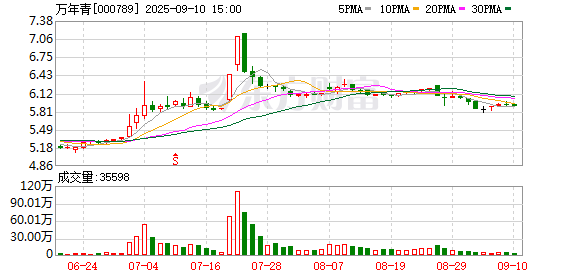
万年青:公司始终以提升企业价值、维护全体股东利益为原则
Zheng Quan Ri Bao· 2025-09-10 11:36
Group 1 - The company emphasizes enhancing enterprise value and protecting shareholder interests as its core principles [2] - The primary focus of the company is to concentrate on its main business while seizing various development opportunities within and outside the industry [2] - The company aims to improve its core competitiveness and risk resistance through deepening reforms, innovation, cost control, and promoting green and digital transformation [2]

罗志恒:反内卷与供给侧改革都是在什么背景下提出的?
和讯· 2025-09-10 09:35
Core Viewpoint - The article discusses the concept of "anti-involution" as a new phase of supply-side reform, highlighting the structural imbalance between supply and demand as a core issue, leading to declining capacity utilization, falling prices, shrinking corporate profits, and increasing economic downward pressure [5][15]. Group 1: Similarities between Anti-involution and Supply-side Reform - Both anti-involution and supply-side reform are driven by structural supply-demand imbalances, resulting in significant declines in industrial capacity utilization. For instance, industrial capacity utilization fell from 76.8% in Q4 2013 to 72.9% in 2016 before supply-side reform, and from 77.4% in Q4 2021 to 74.0% by Q2 2025 during the anti-involution phase [5][6][13]. - Industrial prices have also seen substantial declines. During the supply-side reform period, the Producer Price Index (PPI) experienced negative growth for 54 consecutive months starting from March 2012. Similarly, the PPI has been in negative growth since October 2022, continuing for 34 months as of July 2025 [6][10]. - Corporate profits have declined due to falling demand and prices. In 2015, industrial profits fell by 2.3%, marking the first negative growth since 1998. In the anti-involution period, industrial profits have been in negative growth since 2022, with a 1.8% decline in the first seven months of 2025 [7][10]. - Economic downward pressure has intensified, with declining capacity utilization and industrial prices leading to reduced corporate revenues and profits, which in turn decrease investment and increase unemployment. GDP growth fell from 8.1% in Q4 2012 to 6.9% in Q4 2015 during the supply-side reform, while the growth rate has stabilized around 5% during the anti-involution period [13][19]. Group 2: Differences between Anti-involution and Supply-side Reform - The macroeconomic environment differs significantly. While both periods face demand shortages, the anti-involution phase is characterized by a more severe demand shortfall due to population decline and a downturn in the real estate market. In contrast, the supply-side reform period saw resilient demand supported by post-financial crisis recovery and real estate market upturns [16][19]. - The industry characteristics also vary. Supply-side reform primarily targeted traditional industries like steel and coal, while anti-involution encompasses a broader range of sectors, including emerging industries and platform economies. This shift indicates a new phenomenon where "involution" competition is prevalent across various industries [21][24]. - The reasons behind the two phases differ. Supply-side reform was largely a response to overcapacity resulting from stimulus policies, while anti-involution is influenced by a wider array of macroeconomic and industry-specific factors, including the deep adjustment in the real estate sector and the transition to new production forces [30][32]. - The implementation paths diverge as well. Supply-side reform focused on traditional industries with administrative measures to cut capacity, while anti-involution emphasizes legal and market-based approaches to regulate competition and foster innovation [40][43].

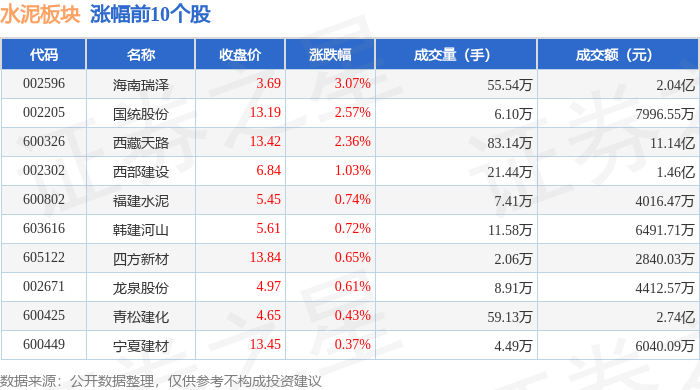
水泥板块9月10日跌0.71%,海螺水泥领跌,主力资金净流出7944.62万元
Zheng Xing Xing Ye Ri Bao· 2025-09-10 08:38
Market Overview - The cement sector experienced a decline of 0.71% on September 10, with Conch Cement leading the drop [1] - The Shanghai Composite Index closed at 3812.22, up 0.13%, while the Shenzhen Component Index closed at 12557.68, up 0.38% [1] Individual Stock Performance - Notable gainers in the cement sector included: - Huanzi House with a closing price of 3.69, up 3.07% [1] - Guotong Co. with a closing price of 13.19, up 2.57% [1] - Xizang Tianlu with a closing price of 13.42, up 2.36% [1] - Major decliners included: - Conch Cement with a closing price of 24.08, down 1.75% [2] - Shangfeng Cement with a closing price of 8.67, down 1.70% [2] - Sichuan Jinding with a closing price of 9.89, down 1.59% [2] Trading Volume and Capital Flow - The cement sector saw a net outflow of 79.45 million yuan from institutional investors, while retail investors contributed a net inflow of 53.35 million yuan [2] - The trading volume for the cement sector was significant, with Conch Cement alone accounting for a transaction amount of 567 million yuan [2] Capital Flow Analysis - Key capital flow insights include: - Xizang Tianlu had a net outflow of 30.84 million yuan from institutional investors [3] - West Construction saw a net inflow of 10.07 million yuan from institutional investors [3] - Huanzi House experienced a net inflow of 5.84 million yuan from institutional investors [3]
中国最高法发布反垄断典型案例 涉“共享电单车”等
Zhong Guo Xin Wen Wang· 2025-09-10 08:31
Core Points - The Supreme People's Court of China released five typical antitrust cases, including the first case recognizing the abuse of administrative power to eliminate and restrict competition in the "shared electric bike" sector [1] - The court's decision aims to clarify the standards for recognizing the abuse of administrative power and to promote market access, enhancing market vitality [1] - The cases also cover horizontal monopoly behaviors such as fixed pricing and market division, affecting industries like construction materials, raw pharmaceuticals, and chemicals [1] Group 1 - The "shared electric bike" case involved a company in Hangzhou that challenged the illegal establishment of a franchise for shared electric bikes by local administrative bodies, leading to the annulment of the specific administrative actions [1] - The horizontal monopoly agreement case involving concrete companies established rules for estimating damages and calculating losses, easing the burden of proof for plaintiffs in such disputes [1] - The cases reflect the judicial review of local antitrust enforcement decisions, ensuring the legality and fairness of enforcement procedures [2]