
外卖

Search documents
商贸零售行业周报:永辉公布自有品牌规划,美团饿了么有新动向-20250727
SINOLINK SECURITIES· 2025-07-27 07:30
Investment Rating - The industry investment rating is "Buy" (maintained) [1] Core Insights - Yonghui Supermarket announced a detailed private brand plan, aiming to increase the number of private brand products from 60 to 500 and penetration rate from 5% to 40% by 2029 [11][12] - The offline retail sector is seeing steady progress in store renovations, with 143 out of 523 stores (27.34%) already renovated as of July 25 [11] - Online retail competition remains intense, with expectations of subsidy wars continuing until the end of summer, potentially leading to a recovery in order sizes post-subsidy [11][18] Summary by Sections 1. Core Insights and Company Dynamics - Yonghui's private brand plan includes developing 2 products with over 1 billion in sales by 2026 and 15 such products by 2029 [11] - The online retail sector is expected to see a shift in competition dynamics, with Meituan likely regaining market share after the subsidy wars [11][18] 2. Industry Data Tracking - In the second week of July, the overall GMV for Tmall and JD.com decreased by 14.24% year-on-year [20] - The top five categories in terms of growth were toys, consumer electronics, home appliances, maternal and infant products, and pet supplies [20] 3. Market Review - From July 21 to July 25, the Shanghai Composite Index rose by 1.67%, while the retail sector (Shenwan) increased by 2.65%, ranking third among nine major consumption sectors [3][30] - Notable stock performers included Dalian Friendship and Lion Head Shares, with significant gains [3][29] 4. Investment Recommendations - Yonghui Supermarket is recommended for its transformation towards a selective retail model, which is expected to have long-term growth potential in the post-consumption era [32] - Meituan is viewed positively for its established barriers in user perception, rider management, and merchant relationships, despite competitive pressures from JD.com [34]

外卖大战正酣,酒业影响几何?
Sou Hu Cai Jing· 2025-07-26 13:18
Group 1 - The core viewpoint of the articles revolves around the ongoing competition among food delivery platforms like Ele.me, Meituan, and JD.com, which has intensified as they offer substantial subsidies to attract new users, leading to a significant increase in delivery volumes during the summer months [1][10] - The market regulatory authority has intervened by urging these platforms to engage in rational competition, indicating a need for a balance between aggressive marketing strategies and sustainable business practices [1][10] - The rise in food delivery is closely linked to changing consumer habits, particularly among younger demographics, who are increasingly relying on delivery services for convenience [6][10] Group 2 - The integration of alcohol sales with food delivery services is being examined, with experts suggesting that the rise in food delivery may not significantly impact traditional alcohol consumption patterns, particularly for white spirits, which are typically consumed in more formal social settings [3][5] - The primary consumers of food delivery services are younger individuals, urban professionals, and single people, while traditional alcohol consumers tend to be older males and business professionals, indicating a demographic mismatch [5][9] - The food delivery market is projected to reach a scale of 500 billion yuan by 2025, with a user base exceeding 553 million, reflecting a broadening acceptance of delivery services across various age groups [10][12] Group 3 - The articles highlight the need for the alcohol industry to adapt to new consumption scenarios created by the food delivery boom, suggesting that innovative product offerings and marketing strategies are essential for capturing this evolving market [12] - The trend of online food ordering is becoming a significant channel for restaurant consumption, with over 90% of consumers expressing greater acceptance of food delivery compared to two years ago [10][12] - The expansion of food delivery services into diverse product categories beyond traditional food items, such as clothing and cosmetics, indicates a shift in consumer behavior towards instant gratification and convenience [5][10]


100观察|京东、美团公布外卖升级路径:谁能打赢舌尖上的“认知战”?
Mei Ri Jing Ji Xin Wen· 2025-07-26 03:45
Group 1: Strategic Initiatives - JD Group officially launched the "Dish Partner" recruitment plan, investing 1 billion yuan to find partners for 1,000 signature dishes [1][4] - Meituan's "Pin Hao Fan" initiated the "Ten Thousand Brands" plan, aiming to provide support for 10,000 well-known restaurant brands [1][6] Group 2: Market Dynamics - The competition in the food delivery market is shifting from price wars to deeper strategic battles, influenced by recent regulatory actions against malicious price competition [1] - Both JD and Meituan face unique challenges: JD must balance its significant investment with profitability needs, while Meituan needs to enhance integration efficiency among multiple brands [1] Group 3: Company Performance - BYD celebrated the rollout of its 13 millionth new energy vehicle, becoming the first company to reach this milestone globally [3] - BYD's high-end brand, Yangwang, has delivered over 10,000 units, indicating progress in its premium market strategy [3] Group 4: Leadership Changes - Shanghai Electric appointed Hu Xupeng as the new company secretary and Qiu Jiayou as vice president, with a focus on professional backgrounds [7] - Gu Yu was elected as the chairman of Yanghe Co., amid a challenging performance period for the company [8] Group 5: Collaborations - Changan Automobile and Haier Group signed a strategic cooperation agreement to explore new automotive products and personalized modification services [9]




不敢不参加!餐饮老板自曝外卖补贴大战的无奈与焦虑
第一财经· 2025-07-25 14:44
Core Viewpoint - The article discusses the recent surge in competition among food and beverage businesses due to aggressive discounting strategies by major e-commerce platforms, leading to both increased order volumes and challenges for some merchants [1][2]. Group 1: Market Dynamics - Major e-commerce platforms have initiated a "super Saturday" event, resulting in unprecedented levels of subsidies for food delivery services, including promotions like "0 yuan purchase" [1]. - Consumers have benefited from these promotions, enjoying significant discounts, while delivery platforms report record-high order volumes [1]. - Some merchants have experienced a dramatic increase in orders and delivery personnel earnings, but others face declining profits and operational challenges, such as unclaimed "0 yuan purchase" items and slow service [1]. Group 2: Competitive Landscape - The intense competition has led to lower prices and reduced profit margins, compelling many businesses to participate in subsidy wars due to their high dependency on delivery platforms [1]. - Some food and beverage companies have opted out of the subsidy competition, either because they have a lower reliance on delivery services or possess strong direct sales capabilities [1]. - The ongoing delivery wars are also seen as a strategy for instant retail to capture market share, potentially impacting physical retail operations [1]. Group 3: Industry Response - In response to the competitive pressures, local restaurant associations and culinary organizations have begun issuing statements urging delivery platforms to cease "involutionary" competition and promote a healthier, more sustainable development of the food service industry [2].
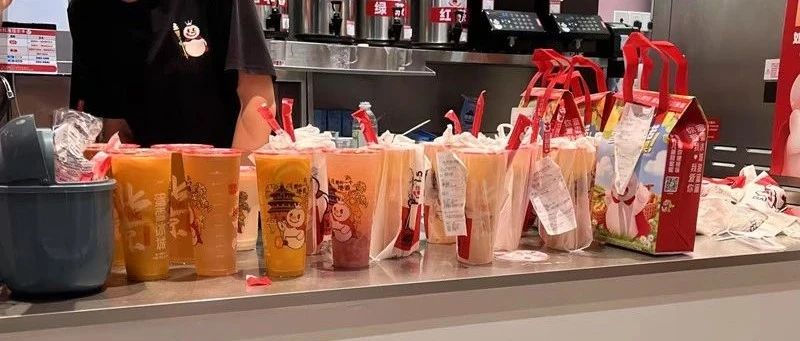
二次约谈,10月外卖大战或谢幕?美团京东淘宝为何烧钱也要让你点进来
3 6 Ke· 2025-07-25 11:30
Core Viewpoint - The new Anti-Unfair Competition Law will take effect in October 2025, prohibiting platforms from passing more than 70% of subsidy costs onto merchants, with violators facing fines up to 5 million yuan. This regulation marks a significant shift in the ongoing subsidy war among major food delivery platforms, which is now seen as a capital consumption battle with a deadline [1][13][24]. Group 1: Background and Market Dynamics - JD.com entered the food delivery market with a "0 commission + 10 billion subsidies + full insurance for riders" strategy in February 2025, prompting competitors like Meituan and Ele.me to engage in a subsidy war [3]. - By April 2025, Ele.me initiated a subsidy program exceeding 10 billion yuan, while Alibaba upgraded its Taobao platform to include a flash purchase feature, investing 50 billion yuan in subsidies to reclaim market share [3][6]. - The competition intensified, with Meituan and Ele.me launching aggressive promotional campaigns, leading to a significant drop in average order value from 30 yuan to 15 yuan, despite a surge in daily orders [13][19]. Group 2: Regulatory Actions - The State Administration for Market Regulation (SAMR) held two rounds of talks with major platforms, addressing issues like unfair competition and rider rights. The first meeting on May 13, 2025, focused on broad issues, while the second on July 18 targeted specific problems related to subsidy practices [9][15][17]. - The new law will enforce stricter regulations on promotional activities, aiming to eliminate irrational competition and ensure a healthier ecosystem for consumers, merchants, and riders [15][24]. Group 3: Financial Implications and Market Strategies - Goldman Sachs predicts that the three major platforms could incur losses of up to 90 billion yuan in the coming months due to ongoing subsidy wars [1]. - Meituan reported a peak of 1.5 billion daily orders, while Ele.me's flash purchase service reached around 800 million daily orders, indicating a fierce competition for market share [20][23]. - The platforms are using capital to secure user bases, with JD.com focusing on quality delivery and supply chain efficiency, while Meituan and Ele.me leverage high-frequency user engagement to drive sales in higher-margin categories [19][20]. Group 4: Future Outlook - As the new Anti-Unfair Competition Law comes into effect, the intensity of subsidies is expected to decline, leading to a shift towards efficiency and differentiated competition among platforms [24]. - The future winners in the food delivery market will be those who can convert delivery efficiency into merchant profits and foster brand loyalty among users, emphasizing long-term sustainability over short-term capital expenditure [24].

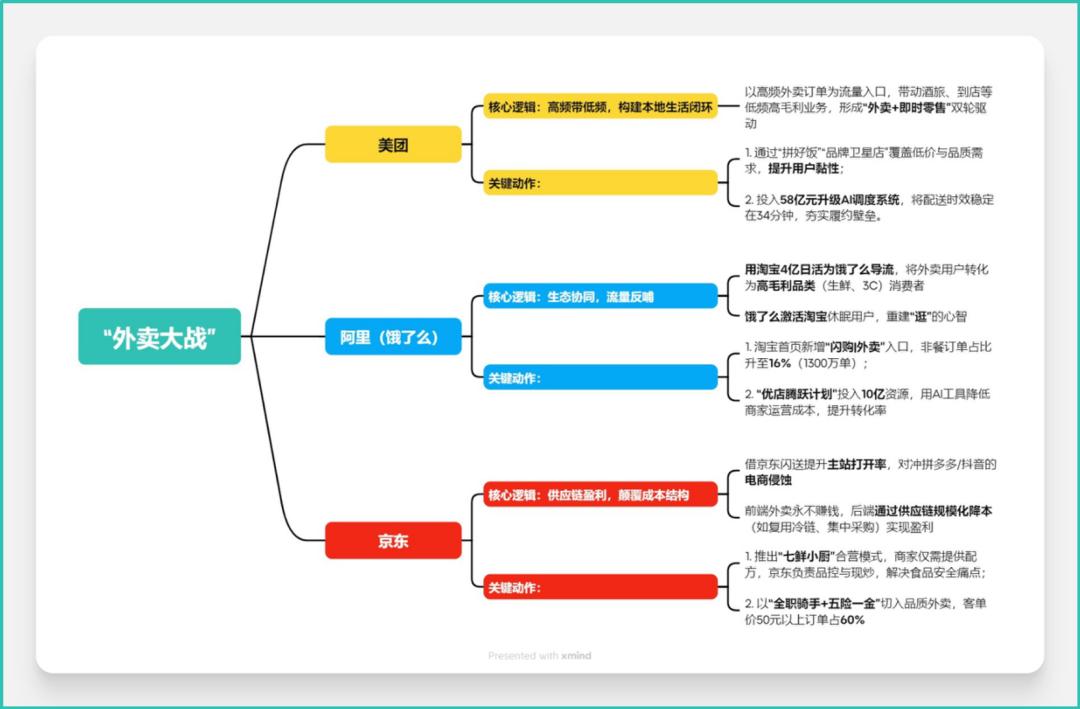
外卖大战正酣,抖音何故缺席?
3 6 Ke· 2025-07-25 10:12
Core Viewpoint - The takeaway from the article is the ongoing competition in the food delivery sector, particularly focusing on Meituan and Douyin's contrasting strategies in the local lifestyle services market, with Douyin opting for a more cautious approach after previous attempts in food delivery [1][5][10]. Group 1: Competition Dynamics - The food delivery industry has seen intense competition, evolving from a "hundred团大战" to a three-way battle, with Meituan being a long-standing player facing challenges from new entrants like Douyin [1]. - Douyin has previously scaled back its food delivery efforts, indicating a misalignment with its platform's core business model, while continuing to invest in its in-store services [1][5]. - Recent regulatory scrutiny has prompted major food delivery platforms to adhere to legal standards and engage in rational competition [1][5]. Group 2: Douyin's Strategy - Douyin's past attempts to enter the food delivery market included launching the "Xindong Takeaway" mini-program, which was later discontinued due to poor feedback [4][5]. - The platform has shifted its focus to in-store services, leveraging its content-driven approach to attract users and drive sales through group buying [10][12]. - Douyin's "随心团" business model allows users to purchase group coupons that can be redeemed either in-store or for delivery, effectively merging its in-store and delivery services [10][12]. Group 3: Market Positioning - Meituan's food delivery business operates on thin profit margins, with a net profit margin of around 4%, making it less attractive for Douyin, which prefers high-efficiency revenue models [9][10]. - Douyin's user engagement metrics significantly outperform Meituan, with Douyin's monthly active users (MAU) reaching 763 million compared to Meituan's 454 million [9]. - The strategic focus for Douyin remains on enhancing its in-store services, which are more profitable and align better with its operational strengths [10][12]. Group 4: Future Outlook - The competition between Meituan and Douyin is expected to evolve into a more normalized rivalry, with both platforms prioritizing operational efficiency over sheer transaction volume [10][15]. - Douyin is exploring innovative solutions, such as the AI product "探饭," to enhance user experience and streamline its service offerings [13]. - The overall landscape of local lifestyle services is shifting, with Douyin aiming to refine its group buying strategies while maintaining a cautious stance on direct food delivery competition [16][17].
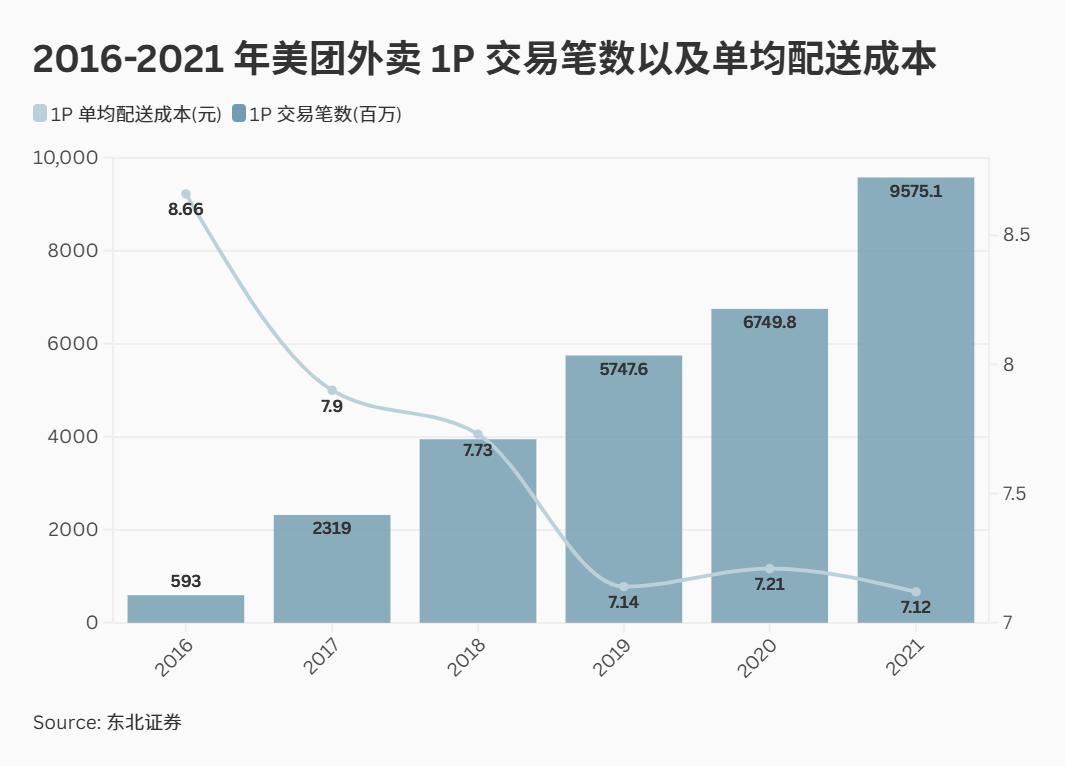
外卖折叠:50公斤黄金和50公斤小麦
3 6 Ke· 2025-07-25 09:27
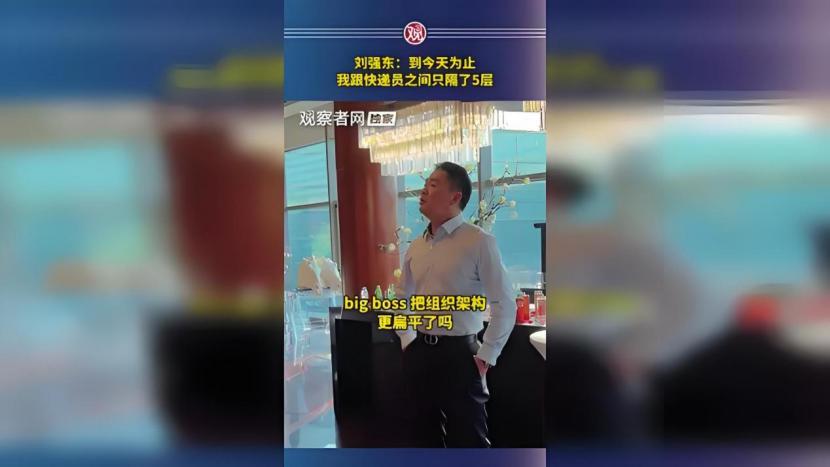
Core Insights - The article discusses the significant wealth disparity between the CEO of Ele.me and the average delivery workers, highlighting the vast financial gap despite the perceived closeness in hierarchy [2][3][25] - It mentions the recent scandal involving former Ele.me CEO Han Liu, who was implicated in a corruption case involving substantial sums of money, including 12 million RMB, 50 kg of gold, and over 30 million RMB in luxury goods [3][25] Company Overview - Ele.me's former CEO Han Liu was reported to have committed job-related crimes, leading the company to report the case to the police [3] - The average income for full-time delivery workers is estimated to be between 5,000 to 12,000 RMB per month, which starkly contrasts with the amounts involved in the scandal [5][12] Financial Context - In the first quarter of 2025, Alibaba's local life group, which includes Ele.me, reported revenues of 16.134 billion RMB, a year-on-year increase of 10% [5] - The total value of the assets linked to Han Liu's case is approximately 80 million RMB, which is close to 13.4% of the reported loss of 5.96 billion RMB for the local life group [25][26] Industry Insights - The article reflects on the broader implications of corruption within large tech companies, noting that the average amount involved in corruption cases from 2020 to 2024 was only 1.97 million RMB, significantly lower than the figures associated with Han Liu [5][26] - The disparity in wealth and the perception of money among delivery workers is emphasized, with many expressing a lack of understanding of what 12 million RMB truly represents [6][12][21]
京东向“幽灵外卖”开战,鲶鱼效应如何推动行业变革
Nan Fang Du Shi Bao· 2025-07-25 07:13
Core Viewpoint - The article discusses the shift in the food delivery industry towards quality and service differentiation, with companies like JD.com and Meituan leading the charge through innovative supply chain models and partnerships with local chefs and restaurants [1][7]. Group 1: JD.com's Strategy - JD.com has initiated a "Dish Partner" recruitment program, investing 1 billion yuan to collaborate with restaurants and individual chefs to create quality dishes, emphasizing supply chain innovation over extreme price subsidies [1][3]. - The "Seven Fresh Kitchen" model allows partners to provide recipes while JD.com handles cooking and quality control, aiming to eliminate ghost kitchens and enhance consumer trust in food quality [1][5]. - By implementing a zero-commission policy for merchants until May 2025, JD.com reduces operational costs by 15%-20%, attracting over 150,000 quality restaurants and achieving a daily order volume of over 25 million by June 2025 [3][6]. Group 2: Industry Trends - The food delivery market is transitioning from price competition to a focus on service quality and product differentiation, as evidenced by initiatives from JD.com and Meituan [7]. - Meituan's "Raccoon Kitchen" aims to enhance food quality and safety through transparent operations and real-time monitoring, planning to open 1200 locations nationwide [4][6]. - The rise of quality-focused delivery services is expected to drive improvements in standards among small and medium-sized restaurants, attract more investment, and foster innovation in the industry [7].
为什么我说外卖大战是三输局?
3 6 Ke· 2025-07-25 03:25
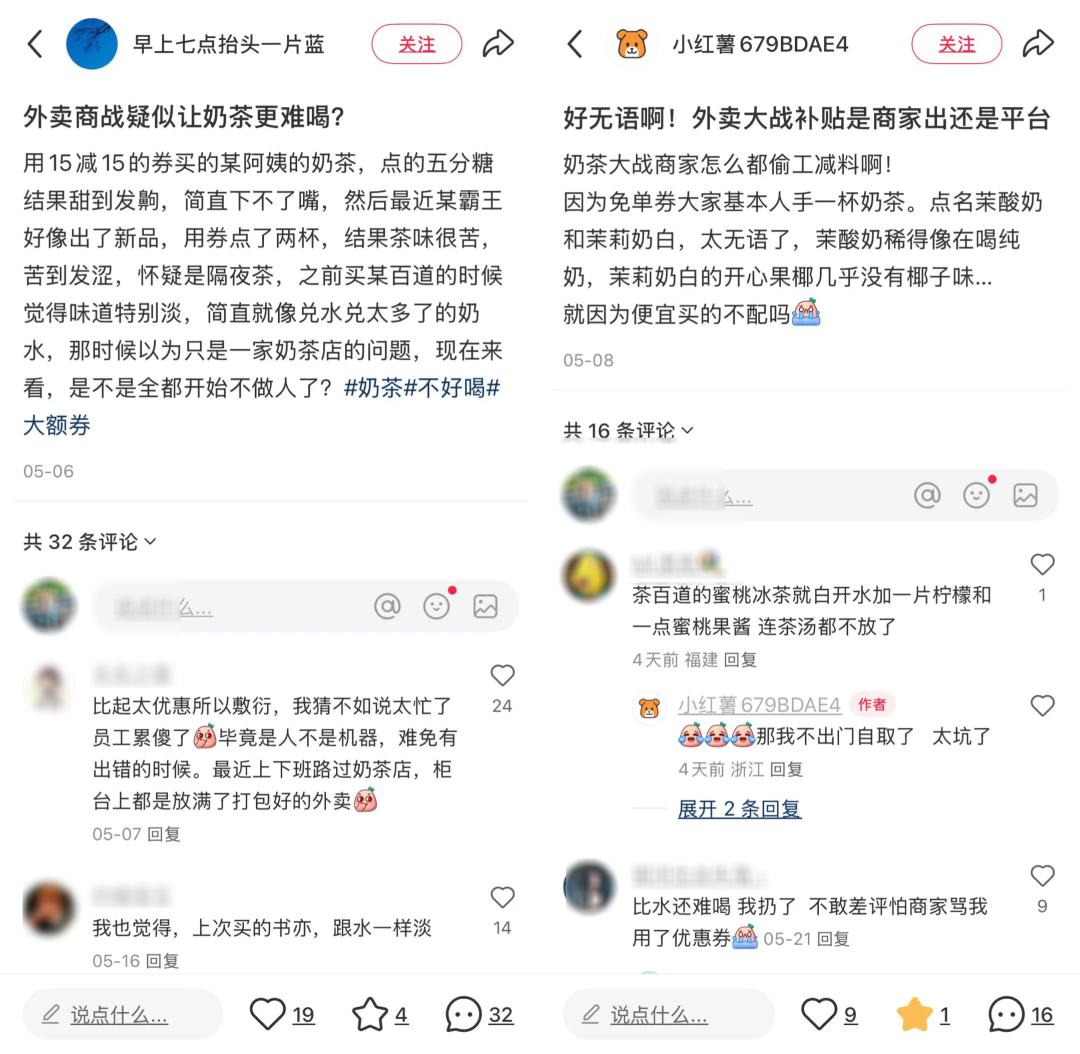
即时零售,本应该是当下消费的新趋势,给消费者带来便利,给商家带来红利,现在却被卷成了暴力。各个平台都在盯着局部最优解,结果反倒让全局更 差了。 任何事要是急功近利,总想靠资本推着超它本来的速度走,最终只会变形扭曲。就像现在的外卖大战,平台们为了抢市场疯狂补贴,逼着商家破价、让实 体承压,结果只会是消费者用的吃的质量越来越差。 我们应该让消费回归它原有的本质和速度! 外卖大战这几周,我的心情从一开始的兴奋,到现在陷入了极度的焦虑和担心。 杀红了眼的平台们,今天你给五百亿,明天我给 0 元购,仿佛把我带回到了十五年前的电商、十年前的 O2O、共享经济。靠疯狂烧钱补贴拉用户,经历 短暂的集体狂欢后,大批项目消失,幸存者寥寥。 历史无数次证明,只靠烧钱加速市场膨胀,会把本来健康的生态妖魔化。果不其然,上周三家平台就被约去喝茶了。 其实外卖本身不是一个赚钱的生意,刘强东说自己做外卖利润率不能超过 5%,王莆中都"笑"了,美团自己常年运营利润率也只有三点几。既然难赚钱, 为什么还要补贴,大家都在争什么呢? 争的是即时零售这个万亿市场,大家打这么厉害,是因为在传统电商增长率只有 6-8 个点的现在,即时零售能保持 20% ...
股市机会扩散,债市短期承压
Zhong Xin Qi Huo· 2025-07-25 03:20
1. Report Industry Investment Rating - The report does not explicitly provide an overall industry investment rating. However, for specific derivatives: - The outlook for stock index futures is "oscillating with a bullish bias" [6]. - The outlook for stock index options is "oscillating" [7]. - The outlook for treasury bond futures is "oscillating with caution" [8]. 2. Core Viewpoints - Stock index futures: The Shanghai Composite Index stood above 3,600 points, with sector opportunities spreading. Anti - involution varieties in the commodity market are active, triggering expectations of accelerated policy implementation before the Politburo meeting. More attention is paid to the implementation of measures to expand domestic demand. Before the meeting, a relatively positive attitude is maintained, and elastic growth varieties are preferred [1][6]. - Stock index options: The trading volume was 6.69 billion yuan, and liquidity remained high. The call trading ratio decreased, and the bullish speculation weakened, but market sentiment was still relatively optimistic. Short - term bull spreads can be continued, and medium - term covered calls can be appropriately increased [1][6][7]. - Treasury bond futures: Treasury bond futures closed down across the board. Risk preference increase and the stock - bond seesaw continue to suppress the bond market. Capital fluctuations may also have a negative impact. The bond market should remain cautious in the short term, especially the long - end, and long - end short hedging operations can be appropriately considered [2][7][8]. 3. Summary by Directory 3.1 Market Views 3.1.1 Stock Index Futures - Market data: The basis of IF, IH, IC, and IM contracts changed, and the total positions also changed. The market showed a general upward trend, with trading volume close to 2 trillion yuan [6]. - Logic: Anti - involution policies are important, but demand expansion is a prerequisite for their effectiveness. Before the meeting, a positive attitude is maintained, and elastic growth varieties are preferred [6]. - Operation suggestion: Hold IM [6]. 3.1.2 Stock Index Options - Market data: The trading volume was 6.69 billion yuan, and liquidity remained high. The call trading ratio decreased, and the skewness of each variety was low [6][7]. - Logic: The underlying market rose, and small and medium - cap stocks were dominant again. The volatility of most varieties decreased, and the short - term value of selling options reappeared [7]. - Operation suggestion: Continue to hold bull spreads in the short term and appropriately increase medium - term covered calls [7]. 3.1.3 Treasury Bond Futures - Market data: The trading volume and positions of T, TF, TS, and TL contracts changed. The central bank conducted 33.1 billion yuan of 7 - day reverse repurchases, with 45.05 billion yuan of reverse repurchases maturing [7]. - Logic: The bond market continued to be weak, with risk preference increase and the stock - bond seesaw effect suppressing the bond market. Capital fluctuations also had a negative impact [7][8]. - Operation suggestion: Adopt a cautious attitude in trend strategies. Pay attention to short hedging at low basis levels, basis widening, and curve steepening [8]. 3.2 Economic Calendar - China's 1 - year and 5 - year loan prime rates in July 2025 remained unchanged. The year - on - year growth rate of China's total social electricity consumption in June was 5.4% [10]. 3.3 Important Information and News Tracking - Finance: The central budgetary investment in 2025 has been basically allocated, focusing on multiple fields [10]. - Exchange rate: In June 2025, the RMB ranked sixth in the global payment currency ranking, with a payment amount increase of 2.57% compared to May [11]. - Takeout: At the takeout industry development meeting, merchants expressed concerns about price wars, declining customer unit prices, and reduced income [11]. - Funds: The second batch of 12 new floating - rate fund products have been registered by the CSRC and will be launched soon [12]. 3.4 Derivatives Market Monitoring - The report mentions the monitoring of the stock index futures, stock index options, and treasury bond futures markets but does not provide specific monitoring data content in the given text.