
玩具

Search documents
中国银河证券:IP+盲盒构筑玩具赛道核心获客逻辑 细分子行业不断拓宽增量空间
智通财经网· 2025-04-10 01:42
Industry Overview - The Chinese toy market has been rapidly expanding, with significant growth potential driven by the strong purchasing power of Generation Z and the vast opportunities in lower-tier markets [1][2] - In 2023, the market size for toys and games in China reached 396.1 billion and 83.4 billion yuan respectively, with year-on-year growth rates of 11.2% and 5.1%, significantly outpacing global market trends [1] Market Dynamics - The toy industry in China is projected to capture 13.6% of the global market share in 2023, with expectations to rise to 16.7% by 2028 [1] - The growth of specific segments such as building blocks, educational toys, and card games is leading the market expansion [1] Growth Drivers - The combination of IP (Intellectual Property) and blind boxes is creating a strong customer acquisition logic in the toy sector [3] - The blind box market in China reached 17.25 billion yuan in 2023, with a compound annual growth rate (CAGR) of 24.2% from 2019 to 2023, indicating a significant trend towards repeat purchases and consumer engagement [3] Segment Analysis - The building block market is experiencing a CAGR of 14% in China from 2019 to 2024, with local brands like Blokku capturing a 30.3% market share [5] - The collectible card game market in China has seen a CAGR of 78.4% from 2017 to 2022, with expectations of a 20.6% CAGR from 2022 to 2027, indicating substantial growth potential [6] - The潮玩 (trendy toys) sector is thriving, with a reported member repurchase rate of 43.9% for companies like Pop Mart, highlighting strong consumer loyalty [7] Future Outlook - The integration of AI technology in toys is becoming more prevalent, enhancing consumer experiences and expanding market opportunities [4] - The谷子 (Gouzi) market is set to experience a surge in physical store openings in 2024, transitioning from rapid growth to a more standardized competitive phase [8]

市场走势点评+宏观策略展望:在不确定性中寻找确定性
Zhe Shang Guo Ji Jin Rong Kong Gu· 2025-04-08 02:56
Group 1 - The report highlights the significant increase in the effective tariff rate imposed by the U.S., reaching the highest level since 1910, with a broad 10% minimum baseline tariff set to take effect on April 5 [4][10] - The tariffs on key trading partners vary significantly, with China facing a 34% tariff, Vietnam 46%, the EU 20%, Japan 24%, India 26%, and Thailand 36% [4][31] - The report indicates that the U.S. trade deficit is projected to reach $1.2 trillion in 2024, with China, the EU, and Mexico contributing 25%, 20%, and 14% respectively [4][31] Group 2 - China's response to U.S. tariffs has been characterized by a strong strategic stance, implementing countermeasures including a 34% tariff on all U.S. imports and export controls on certain U.S. companies [3][8] - The report anticipates further escalation of the trade conflict, particularly given the U.S. administration's firm stance and the lack of effective agreements with other countries [9][10] - The Federal Reserve's reluctance to lower interest rates in the face of high inflation and economic resilience is noted, with potential economic impacts from the tariffs expected to be more significant than previously anticipated [10][11] Group 3 - The report identifies "risk-off" sentiment in the market, with traditional safe-haven assets like U.S. Treasuries, the Japanese yen, and the VIX index experiencing strong gains, while risk assets have faced significant declines [12][15] - It suggests that the current market environment is similar to past periods of heightened uncertainty, with a focus on defensive investment strategies [12][14] - The report emphasizes the importance of high-dividend, domestic demand, and food security sectors as potential investment opportunities amid the ongoing trade tensions [15][20] Group 4 - The report outlines specific investment opportunities in Hong Kong stocks, particularly in high-dividend sectors, gold, semiconductor companies, and domestic consumption as a response to the trade conflict [20][22] - It highlights the potential for gold stocks to benefit from increased geopolitical risks and central bank purchases, as well as the opportunity for domestic semiconductor companies to gain from increased restrictions on imports [21][22] - The report also notes that agricultural stocks may benefit from the trade tensions, particularly those related to food security, as China imposes tariffs on U.S. agricultural products [22]
陪伴我88天后,我终于能来聊聊这个3000块买的AI宠物了。
创业邦· 2025-04-07 03:16
Core Viewpoint - The article discusses the rise of AI pets, particularly Moflin, and how they serve as a response to increasing loneliness in modern society, especially in Japan, where cultural and economic factors have led to a significant decline in social interactions and companionship [24][30][39]. Group 1: Product Overview - Moflin is an AI pet developed by Casio, initially sold out upon release, with prices reaching around 3000 RMB [5][29]. - The AI pet interacts through sounds and movements, responding to touch and environmental noises, but lacks advanced communication capabilities [12][15]. - An accompanying app, MofLife, tracks the pet's personality development based on user interactions, creating a sense of companionship [17][19]. Group 2: Cultural Context - The article draws parallels between Moflin and earlier electronic pets like Tamagotchi, highlighting a historical trend in Japan of creating companionship products during times of social isolation [26][30]. - Japan's economic stagnation since the late 1980s has contributed to a culture of loneliness, with a significant decline in birth rates and an increase in "lonely deaths" [31][35]. - The phenomenon of renting friends or companions in Japan reflects the deep-seated need for social interaction, even if it is transactional [36]. Group 3: Emotional Resonance - Moflin, despite its limitations, provides emotional comfort and a sense of presence, fulfilling a psychological need for companionship in an increasingly isolated world [39]. - The article emphasizes that the need for companionship is not about having a functional pet but rather about receiving emotional responses, which Moflin provides in a unique way [41].


马斯克看好的AI玩具,成了商场新印钞机
创业邦· 2025-03-31 02:53
Core Viewpoint - The rapid rise of AI toys reflects a significant shift in consumer preferences, driven by technological advancements and emotional engagement, with the market expected to exceed 30 billion by 2025 [8][19][62]. Group 1: Market Dynamics - AI toys have gained immense popularity, with orders surging and factories working overtime to meet demand, indicating a robust market trend [8][9]. - The first batch of AI toy manufacturers has seen substantial profits, highlighting the lucrative nature of this emerging sector [9]. - The market for AI toys is projected to reach over 30 billion by 2025, with significant growth already observed in 2023 [8][19]. Group 2: Technological Integration - AI toys are equipped with advanced features such as emotional recognition and interactive capabilities, enhancing user experience and engagement [6][17]. - The integration of AI technology has transformed traditional toy manufacturing, allowing for rapid production and cost efficiency [36][40]. - Companies are leveraging open-source technology to facilitate the development of AI toys, enabling smaller firms to innovate without extensive resources [40]. Group 3: Cultural and Emotional Appeal - AI toys are not just for entertainment; they serve educational and emotional needs, appealing to a broader consumer base [28][62]. - The trend of combining cultural IP with AI technology is gaining traction, with companies creating products that resonate with local heritage and values [43][46]. - The emotional connection fostered by AI toys addresses the growing consumer demand for personalized and meaningful experiences [62]. Group 4: Competitive Landscape - Major tech companies and former executives from leading firms are entering the AI toy market, indicating its potential as a new consumer frontier [10][51]. - The competition is shifting from traditional toy manufacturing to creating emotional connections and comprehensive ecosystems around AI toys [53][56]. - The future of AI toys lies in their ability to integrate into daily life, serving as tools for education, companionship, and smart home control [56][59].

宏观|四月初关税摩擦或将再起硝烟
中信证券研究· 2025-03-31 00:06
Core Viewpoint - The article discusses the imminent implementation of Trump's tariff policies in early April, focusing on the implications for various industries and the potential impact on U.S.-China trade relations [1][2]. Tariff Policy Implementation - Key tariff-related developments set to take effect in early April include the "America First Trade Policy" memorandum investigation, reciprocal tariffs, secondary tariffs on Venezuelan oil imports, and automobile tariffs [1][2]. - The "America First Trade Policy" memorandum, released on January 20, 2025, indicates a shift in Trump's negotiation strategy regarding trade relations with China, moving away from border security as the primary justification for tariffs [2]. Reciprocal Tariffs - The imposition of reciprocal tariffs will consider tariffs, turnover taxes, regulations, and non-tariff trade barriers [3]. - Targeted economies for these tariffs may include India, Brazil, Vietnam, South Korea, and certain sectors in the EU and Japan, as they have higher average tariff rates compared to the U.S. [3][4]. Industry Impact Analysis - The impact of tariffs on exports is non-linear, with industries facing higher cumulative tariff rates experiencing more significant declines in exports to the U.S. in the first two months of the year [5]. - Industries with cumulative tariff rates between 40% and 50%, such as leather goods, automobiles, and wooden products, saw an average export growth decline of 46.2 percentage points compared to the previous year [5]. Labor-Intensive Industries - Labor-intensive industries in China, such as toys, furniture, and footwear, have a high proportion of revenue from U.S. exports, making them more vulnerable to additional cost pressures from tariffs [6]. - The revenue share from U.S. exports for these labor-intensive sectors is notably high, with toys at 32.6%, furniture at 25.0%, and footwear at 24.3% [6]. Macro Economic Trends - The macroeconomic environment shows a decline in industrial enterprise revenue and profit growth in early 2025, with profit margins shifting towards lower-end industries [7]. - The decrease in profit margins is primarily attributed to falling profitability in the upstream mining sector, likely linked to declining coal prices [7].

出海周刊138期 | 万亿比亚迪,也有烦恼/9家热门上市公司出海业绩速览
3 6 Ke· 2025-03-29 04:01
Group 1 - Several overseas consumer brands reported impressive growth for the full year of 2024, showcasing the results of their global expansion strategies through localized operations, store and channel expansion, and supply chain optimization [2] - The article highlights the hidden advantages and compliance requirements of establishing a company in the UAE, particularly in Dubai, while also addressing potential pitfalls [3] - The success of Chinese businesses in Japan's funeral industry illustrates a strategic approach to market penetration and cultural adaptation [5][6] Group 2 - The performance of various listed companies, including Mixue Ice City and Pop Mart, is summarized, indicating a trend of overseas expansion in the food and consumer goods sectors [8] - Ba Wang Tea's prospectus reveals aggressive marketing strategies and a focus on international markets, suggesting a shift in narrative towards overseas growth [9] - Pop Mart's overseas single-store revenue exceeds three times that of domestic stores, indicating strong international demand [10] Group 3 - Miniso's Q4 overseas revenue increased by 42.7%, with a record high gross margin of 47%, reflecting its successful international strategy [12] - The company Xiaoma Zhixing reported consecutive revenue growth, although its Robotaxi segment faced challenges, highlighting the complexities of scaling in the autonomous vehicle market [13] - A cross-border enterprise from Fuzhou has received approval for an IPO in the US, indicating a growing trend of Chinese companies seeking international capital markets [14] Group 4 - The article discusses the advantages of Dubai's IFZA free zone for cost-sensitive small and medium-sized enterprises looking to enter the Middle Eastern market, emphasizing low registration costs and quick setup times [26] - The establishment of a digital economy service base in Beijing aims to facilitate Chinese companies' global expansion, contributing to the Belt and Road Initiative [24]


出海速递 | 出海封神!泡泡玛特一路“狂飙”/小红书出海的第一批卖家,内心忐忑
3 6 Ke· 2025-03-27 11:25
Group 1 - The core viewpoint of the articles revolves around the performance of various companies in the food and consumer goods sectors as they expand overseas, highlighting both successes and challenges faced in international markets [2][3][4][5][8][10][13]. - Bawang Tea's aggressive marketing strategy and its potential overseas expansion are discussed, indicating a shift in focus after years of domestic growth [3]. - Pop Mart's overseas single-store revenue reportedly exceeds domestic figures by more than three times, showcasing its successful international strategy [4]. Group 2 - The article on Xiaohongshu sellers indicates mixed feelings about their initial success in overseas markets, suggesting that while sales have increased, there are underlying concerns [5]. - Pony.ai's revenue has seen consistent growth, but its Robotaxi segment has faced a decline, raising questions about its future direction amidst operational challenges [6]. - The article discusses the increasing presence of Chinese businesses in Japan's funeral industry, illustrating a strategic and gradual market penetration approach [7]. Group 3 - Chinese automotive companies are advised to be cautious of common pitfalls when entering the European market, emphasizing the need for patience and strategic planning [8]. - The rapid growth of smart home appliances from Suzhou, with a reported 400% increase in sales on AliExpress, highlights the effectiveness of targeted marketing and product innovation [13]. - OpenAI's projected revenue growth to $12.7 billion this year, doubling from last year's $3.7 billion, reflects the strong demand for its AI software [11].


天风证券晨会集萃-2025-03-27
Tianfeng Securities· 2025-03-27 00:15
Group 1: Agriculture and Livestock Industry - The probability of capacity reduction in the pig farming industry is high, with recovery difficulties greater than in previous cycles, indicating that the pig cycle is likely to return to normal gradually [2] - The overall output of large-scale pig enterprises is expected to increase year-on-year in 2025, while the industry may re-enter a loss state due to strong supply and weak demand for pig prices [2] - The pig farming sector is currently undervalued, with significant upside potential in stock valuations as many stocks are at historical low valuation ranges [2] Group 2: Light Textile Industry - The company, Shifeng Culture, is expected to turn a profit in 2024, with its toy business accounting for over 90% of revenue from 2018 to 2023 [3] - The integration of AI and IP in product development is leading the industry trend, with successful launches of AI toys that meet various functional needs [3] - The company plans to expand its market presence through diversified strategies and aims to enter overseas markets, projecting significant growth in net profit from 0.1 billion to 1.0 billion from 2024 to 2026 [3] Group 3: Healthcare Industry - The company, Weijian Medical, is actively responding to a crisis by enhancing its internal controls and implementing a traceability project for its sanitary products [5] - The brand, Nais Princess, has gained market recognition and improved rankings on e-commerce platforms due to its product quality and clean production environment [5] - The company aims to enhance product quality and innovation in its core product lines, focusing on consumer trust and product storytelling [5][27] Group 4: Human Resources Industry - Beijing Renli is embracing AI technology to drive digital transformation in the human resources sector, establishing a joint venture to focus on AI applications [9][30] - The company is developing a dual technology path to enhance operational efficiency and risk management through AI integration [30] - Profit forecasts for 2024-2026 have been adjusted downward, with expected net profits of 8.3 billion, 9.5 billion, and 10.4 billion respectively [9][32] Group 5: Energy Industry - Kunlun Energy reported a revenue of 1870.46 billion RMB in 2024, reflecting a year-on-year increase of 5.5% [33] - The company achieved a natural gas sales volume of 541.70 billion cubic meters, up 9.9% year-on-year, outperforming industry growth [33] - The LNG plant's operational efficiency has improved, with 13 plants achieving profitability, indicating a positive trend in the energy sector [35]





布鲁可的隐忧:去年下半年现增长乏力信号
Jie Mian Xin Wen· 2025-03-24 13:28
Core Viewpoint - The company, Bluko, has shown significant revenue growth in 2024, but signals of slowing growth in the second half of the year raise concerns about its future performance [3][4]. Revenue Performance - In 2024, Bluko's revenue is projected to be approximately 2.241 billion yuan, representing a year-on-year increase of 155.6% [3]. - Adjusted annual profit is expected to be around 585 million yuan, reflecting a year-on-year growth of 702.1% [3]. - Revenue growth is expected to slow down in the second half of 2024, with a projected year-on-year increase of 110.76% compared to 237.6% in the first half [4]. IP Contribution - The top three IPs contributing to revenue are Ultraman (1.096 billion yuan, 48.9%), Transformers (454 million yuan, 20.26%), and Heroes Unlimited (310 million yuan, 13.8%) [5]. - Revenue from key IPs like Ultraman and Heroes Unlimited is expected to decline in the second half of 2024, with Ultraman's revenue projected at 496 million yuan, a 17.3% decrease from the first half [5]. Market Context - The overall consumer market in China is experiencing low growth, with retail sales increasing by only 3.7% in the first half of 2024 [6]. - Bluko's products, primarily building toys, are less influenced by subsidy-driven consumption and rely more on product performance [6]. Growth Strategy - Bluko is expanding its IP portfolio significantly, increasing from about 27 IPs at the end of 2023 to approximately 50 by the end of 2024 [7]. - The company is focusing on enhancing its cost-effectiveness, with average product prices dropping from 89 yuan in 2021 to 19 yuan in the first half of 2024 [8]. International Expansion - Bluko's overseas business is in its early stages, with revenue from international markets reaching 64 million yuan in 2024, accounting for only 2.9% of total revenue [9]. - The company is establishing subsidiaries in countries like the UK, Indonesia, and Singapore, and is participating in international events to boost its presence [9].
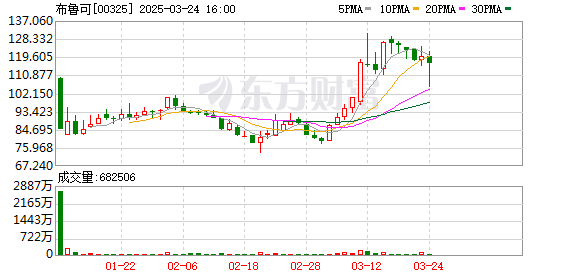
营收狂飙155%,仍亏损4亿,揭秘"中国乐高"布鲁可的冰火两重天
3 6 Ke· 2025-03-24 10:08
Core Insights - The company, known as "China's Lego," reported a revenue surge of 155.6% to 2.241 billion yuan in 2024, but also faced a significant loss of 401 million yuan, highlighting a paradox of high growth alongside substantial financial challenges [1][4][6] Revenue Growth and Strategy - The revenue growth was primarily driven by the "IP matrix + offline channel" strategy, with sales from building role-play toys reaching 2.201 billion yuan, significantly boosted by the Ultraman IP [2][3] - Offline sales accounted for 92.1% of total revenue, emphasizing the importance of physical retail channels, with 433 distributors covering over 140,000 outlets [2][3] - The company expanded its IP portfolio from 27 to 50, including major franchises like DC and Harry Potter, while also developing proprietary products to fill market gaps [3][8] Financial Performance and Losses - Despite revenue growth, the company has experienced four consecutive years of losses, with the loss attributable to high sales and administrative expenses totaling 748 million yuan, which is 33.4% of revenue [4][5] - The loss was exacerbated by a 542 million yuan accounting loss from preferred shares, raising concerns about the sustainability of its profitability model [5][6] Market Position and Challenges - The company holds a 30.3% market share in the domestic building role-play toy segment, indicating a strong competitive position [2] - The broader toy industry in China faces low average net profit margins, with the company’s losses reflecting the industry's transformation challenges [7] - The company aims to enhance its global presence, particularly in low-tier cities and international markets, while facing competition from established brands like Mattel and Hasbro [7][8] Future Outlook - The company plans to strengthen its R&D capabilities and expand its IP ecosystem through both self-developed and licensed IPs, targeting a wider consumer demographic [8] - Market forecasts suggest adjusted net profits could reach 1 billion yuan, 1.5 billion yuan, and 1.99 billion yuan in 2025, 2026, and 2027 respectively, indicating potential for future growth [8][9]