
家居

Search documents
西部证券:把握消费行业底部机会 重视“红利+”配置方向
智通财经网· 2026-01-12 02:56
Core Viewpoint - The market is expected to gradually refocus on the consumer sector due to the recovery of high-end consumption and certain mass-market products, along with the implementation of national subsidy policies and funding demands for "high-cut low" strategies [1] Group 1: Market Trends - High-end consumption, including luxury goods and gambling, shows improvement in demand, while some mass consumer goods like beer and dairy products are experiencing governance and structural enhancements [3] - The long-term policy encouragement and low interest rate environment are expected to boost equity allocation dynamics, particularly in high-dividend, stable performance stocks with valuation advantages [1][2] Group 2: Investment Opportunities - Companies with strong global competitive power, particularly in the white goods sector, are enhancing their operational models and supply chains, which is expected to positively impact overall performance [2] - The selected consumer sector stocks have an average dividend yield of over 5% and a projected PE ratio of 13X for 2026, indicating potential for long-term investment [4]





华西证券:内需赋能叠加出口扩容 轻工&美护行业有望企稳向好
智通财经网· 2026-01-11 22:53
Core Viewpoint - The light industry and beauty care sector is expected to stabilize and improve by 2026, driven by domestic demand policies and steady export growth, despite facing certain pressures in the broader environment [2] Domestic Demand - The "14th Five-Year Plan" year is anticipated to see an increase in domestic demand policies, coupled with a growing consumer pursuit of high-quality living, which opens up significant growth opportunities for the industry [2][3] Export Potential - The cross-border e-commerce penetration rate has substantial room for improvement, and the improvement of international relations along with the demand boost from emerging markets will further expand the market, injecting momentum into the industry's overseas expansion [2][3] Company Insights - Companies with core technology and brand advantages are expected to seize opportunities, with cutting-edge technology enhancing product competitiveness and brand strength breaking the price-performance competition [2] - These companies are likely to benefit from domestic demand and explore overseas markets through global layouts, leading the growth in the trend of high-quality industry development [2] Investment Focus - **Beauty Sector**: Focus on high-end skincare and makeup brands with Eastern cultural characteristics such as Maogeping (01318) and Lin Qingxuan (02657), as well as companies like Marubi Biotechnology (603983.SH) showing marginal improvements [3] - **Home Furnishing**: Attention on leading companies with strong channel capabilities and multi-category layouts like Oppein Home Group (603833.SH) and Kuka Home (603816.SH), as well as Man Wah Holdings (01999) benefiting from the anticipated recovery in the US real estate market due to Federal Reserve rate cuts [3] - **Two-Wheel & Motorcycle**: The two-wheeler market is generally stable with a natural replacement cycle, and companies like Yadea Technology (01585), Aima Technology (603529.SH), and Ninebot (689009.SH) are under focus as market expectations are currently pessimistic [3] Light Industry Consumption - **Personal Care**: Companies with a big product strategy and all-channel expansion capabilities such as Baiya Co., Ltd. (003006.SZ) and Weigao Medical (300888.SZ) are noteworthy [4] - **Stationery**: Product and channel optimization are key for stationery companies adapting to current consumer trends, with attention on Morning Glory (603899.SH) and Qixin Group (002301.SZ) [4] Jewelry Sector - Focus on Laopu Gold (06181), which is expected to see performance growth due to continuous channel expansion and market breakthroughs [5] Export Companies - Companies with significant technical barriers and brand advantages in high-demand segments such as Haoyang Co., Ltd. (300833.SZ) and Yiyi Co., Ltd. (001206.SZ) are of interest [5]

外资撤离潮,中国真要变天?别急,经济刚吃饱饭,咱还稳得住!
Sou Hu Cai Jing· 2026-01-11 17:38
Core Viewpoint - The recent withdrawal of foreign capital from China is not solely a sign of a changing economic landscape but rather a combination of global strategic adjustments and local competition dynamics, indicating that the market is not collapsing but rather undergoing a redistribution of opportunities [1][5][10] Group 1: Foreign Capital Withdrawal Reasons - A portion of foreign companies is struggling to adapt to the evolving preferences of Chinese consumers, leading to decreased competitiveness against local brands [3][5] - Global strategic realignments by multinational corporations, such as layoffs at Microsoft and Amazon, are not specifically targeting China but are part of a broader trend of economic contraction [5][10] - The exit of some foreign banks, like Citibank, reflects limited market share and profitability issues rather than a defeat in the Chinese market [5][6] Group 2: Impact of Foreign Capital Exit - The withdrawal of foreign capital may create short-term challenges, particularly in retail, dining, and certain manufacturing sectors, resulting in reduced orders and job adjustments [8][10] - Local companies are poised to fill the gaps left by foreign firms, demonstrating the resilience and adaptability of the domestic market [8][12] Group 3: Long-term Implications and Strategies - The departure of foreign capital highlights existing vulnerabilities in technology and core components, emphasizing the need for accelerated domestic innovation [12][18] - Maintaining stability in employment, supply chains, and market expectations is crucial, with a focus on supporting local enterprises through targeted policies rather than mere subsidies [14][16] - The importance of strategic self-reliance in key industries such as semiconductors, renewable energy, and artificial intelligence is underscored, necessitating a unified effort from both government and businesses [18]


轻工新消费行业周报:26H2别样消费长牛有望开启,四大新消费主线领航-20260111
SINOLINK SECURITIES· 2026-01-11 13:48
Investment Rating - The report maintains a "Buy" rating for the durable consumer goods industry [1] Core Insights - The report anticipates a long-term consumer bull market driven by new consumption trends, with four main themes expected to lead the way: AI+ consumption, overseas expansion, emotional value, and silver economy [1][8] - Historical cycles indicate that the A-share market exhibits 3-4 year cyclical fluctuations, with technology, cyclical consumption, and manufacturing rotating sequentially [1] - The report draws parallels between the upcoming "anti-involution" reforms starting in July 2025 and the "supply-side" reforms initiated in October 2015, suggesting similar transmission paths despite differing contexts [1] Summary by Sections 1. Consumer Outlook for 2026 - The report highlights that the consumer bull market led by new consumption will differ from the 2016-2019 period, focusing on AI+ consumption, overseas expansion, emotional value, and silver economy as key growth areas [8] - AI+ consumption is expected to be a major opportunity throughout 2026, with significant advancements in technology and consumer engagement [12] - The overseas expansion of brands is seen as a critical growth driver, particularly as urbanization rates plateau and the focus shifts to international markets [23] - Emotional value consumption is projected to grow significantly, driven by changing demographics and economic conditions, with sectors like pet care and collectibles gaining traction [28] - The silver economy is anticipated to reach a market size of 71 trillion yuan by 2023, with substantial growth expected as the aging population increases [40] 2. Sector Performance Tracking - The report tracks various sectors, indicating a mixed outlook: - Trend toys are showing upward momentum, with companies like Pop Mart leading the market [43] - The new tobacco sector is expected to benefit from regulatory tightening, favoring compliant manufacturers [45] - The home goods sector is experiencing pressure from weak real estate transactions, but there are signs of stabilization [47] - The paper and packaging sector is seeing price fluctuations, with expectations of recovery as supply tightens [49] - The pet food market is evolving, with a shift towards premium products and increased focus on health and wellness [31] 3. Key Data and Trends - The report provides insights into key data trends, such as the significant growth in the 3D printing market, which is projected to reach $24.61 billion by 2024 [17] - The export of 3D printers from China has seen substantial increases, with a year-on-year growth of 136.2% in export value [25] - The emotional value market is expected to continue expanding, with pet care and collectibles being highlighted as key areas of growth [28]


周末影响市场重要资讯回顾:国常会部署实施财政金融协同促内需一揽子政策,证监会提高吹哨人奖励至100万元
Xin Lang Cai Jing· 2026-01-11 08:10
Macro Economy - The State Council has deployed a package policy for fiscal and financial coordination to promote domestic demand, emphasizing the importance of effective demand expansion and innovative macro-control measures [2] - The National Business Work Conference highlighted the need to accelerate the cultivation of new growth points in service consumption and optimize the implementation of the old-for-new consumption policy [3] - The Ministry of Finance and the State Taxation Administration announced the cancellation of VAT export tax rebates for photovoltaic products starting April 1, 2026, and a reduction in the VAT export tax rebate rate for battery products from 9% to 6% until the end of 2026 [4] Capital Market - The China Securities Regulatory Commission has significantly increased the rewards for whistleblowers reporting violations in the securities and futures markets, with the maximum reward rising to 1 million yuan for major cases [10] - The Shanghai Stock Exchange issued over 130 disciplinary penalties for information disclosure violations in 2025, with a focus on financial fraud and serious violations leading to delisting [11] Industry Dynamics - The first successful flight of the "Tianma-1000" unmanned transport aircraft was reported, which is designed for logistics transport and emergency rescue, showcasing its capabilities in complex terrains [16] - New Jian Transmission, a first-tier supplier for humanoid robots, has initiated its IPO process, indicating strong industry interest due to its connection with Tesla's Optimus supply chain [17] - The domestic first 3D-printed aviation engine has completed its flight test, marking a significant milestone in China's aerospace technology [30] Company News - Tianpu Co., Ltd. is under formal investigation for significant disclosure omissions, raising concerns about its market conduct [33] - Guizhou's Green Land Holdings has projected a net loss of 16 billion to 19 billion yuan for 2025, attributed to declining asset prices and increased promotional efforts [36] - The stock of Guozheng Technology is set to resume trading after a suspension due to abnormal price fluctuations, with an expected net loss for the fiscal year [39]


1月外盘浆价上涨,关注美国对等关税裁决结果:轻工制造
Huafu Securities· 2026-01-11 07:50
Investment Rating - The report maintains an "Outperform" rating for the industry [4] Core Insights - In January, international pulp prices increased, with Arauco softwood pulp rising by $10 to $710 per ton and hardwood pulp by $20 to $590 per ton, providing cost support and potential stabilization in paper prices [3][5] - The report highlights the upcoming announcement from the U.S. regarding the tariff decision related to Trump's global tariff measures, which could impact the export chain [3][5] - E-commerce performance in December for personal care products showed overall weakness, with some emerging brands maintaining rapid growth [3] Summary by Sections Export Chain - The U.S. is expected to announce the tariff decision next week, with a predicted 28% chance of supporting current tariffs. If rejected, tariffs imposed in 2025 may be lifted [5] - The postponement of tariffs on upholstered furniture and cabinets until 2027 may alleviate CPI increases in the U.S. and support demand recovery [5] - Companies like Dream Lily and Fashion Bed Group are expanding into the Canadian market, while Zhongxin Co. plans to establish a factory in the U.S. to enhance global competitiveness [5] Home Furnishing - The furniture manufacturing industry's revenue from January to November 2025 decreased by 9.1% year-on-year, with a widening decline in residential sales [5] - IKEA announced the closure of several stores in China while shifting focus to smaller stores and online channels [5] - The report suggests that despite the ongoing adjustment period in the home furnishing and real estate sectors, valuations are at historical lows, presenting potential investment opportunities [5] Paper and Packaging - As of January 9, 2026, prices for various paper types showed mixed trends, with some prices remaining stable while others decreased [5] - The report recommends focusing on companies with strong production capacity and fiber supply, such as Nine Dragons Paper and Shanying International [5] Consumer Goods - Sales growth for sanitary napkins on major e-commerce platforms showed a decline, while some brands on Douyin experienced rapid growth [5] - The report highlights strategic collaborations and product launches by companies like Morning Glory and the potential for recovery in the stationery sector [5] New Tobacco Products - New regulations regarding non-combustible nicotine products will take effect in April 2026, indicating a shift towards a more concentrated market structure [5] - Companies like Smoore International are expected to benefit from the global rollout of their products [5] Textile and Apparel - The textile and apparel sector underperformed the market, with a reported increase in net profit for companies like Bailong Oriental, driven by strong order volumes [5]


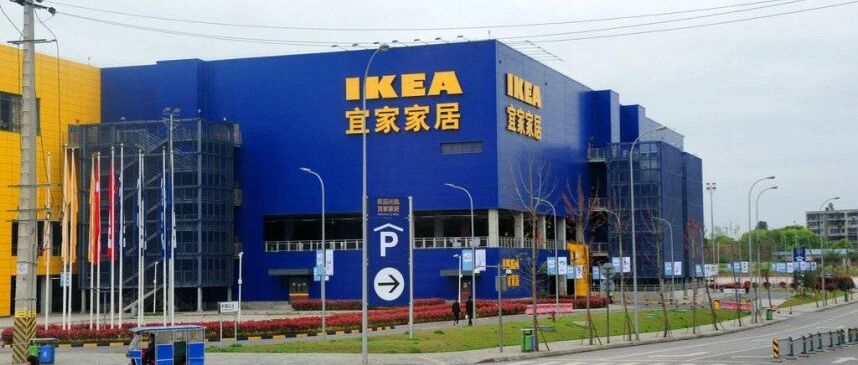
宜家中国一次性关闭7家门店,20年来罕见
首席商业评论· 2026-01-10 04:11
Core Viewpoint - IKEA is closing seven stores in China by February 2, 2026, marking a rare occurrence in its over 20-year history in the country, but it is not exiting the market entirely; rather, it is undergoing a structural adjustment to focus on key markets like Beijing and Shenzhen [2][6]. Group 1: Store Closures and Adjustments - The seven stores being closed include locations in Shanghai, Guangzhou, Tianjin, Nantong, Xuzhou, Ningbo, and Harbin, with the Shanghai Baoshan store previously being the largest IKEA in Asia [2]. - IKEA China is shifting from large-scale expansion to targeted development, planning to open over ten smaller stores in the next two years, including new locations in Dongguan and Beijing [6][13]. Group 2: Market Challenges - The decline in the real estate market, reduced marriage rates among young people in major cities, and the rise of online shopping have decreased foot traffic to large stores, making the previous "big box" model less efficient [10][12]. - The heavy asset model of owning land and building stores has limited flexibility during market downturns, leading to the closure of underperforming locations [10][12]. Group 3: Future Strategy - IKEA is transitioning to smaller urban stores and enhancing its online presence, integrating various online platforms for a seamless shopping experience [13][15]. - The company is also focusing on improving price competitiveness against local brands by optimizing supply chain efficiency and reducing prices [15]. Group 4: Consumer Experience and Brand Identity - While IKEA's price reductions are a response to competition, the brand's strength lies in providing a unique shopping experience, which may be challenging to replicate in smaller stores and online formats [20][22]. - The need to maintain brand identity while adapting to a smaller store format is a significant challenge for IKEA moving forward [20][22].
月星家居红石店喜临门年末清仓 终极让利降到底
Qi Lu Wan Bao· 2026-01-09 10:00
Group 1 - The article does not provide any relevant information regarding a company or industry [2]


对话泰中罗勇工业园总裁赵斌:中资出海泰国现在是天高海阔
2 1 Shi Ji Jing Ji Bao Dao· 2026-01-09 07:45
Core Insights - The article highlights the increasing interest of Chinese enterprises in Thailand, particularly in the Rayong Industrial Park, which has become a hub for nearly 300 Chinese companies across various sectors [1][2]. Group 1: Investment Opportunities - The Rayong Industrial Park offers permanent land ownership for industrial use, which is a significant investment opportunity for companies looking to establish a presence in Thailand [1]. - The park's strategic location, being only 100 kilometers from Bangkok and close to major transportation hubs, enhances its attractiveness for Chinese businesses [2]. - In 2022, the park attracted 180 Chinese manufacturing companies and over 30 supporting enterprises, indicating a growing trend of Chinese investment in the region [2]. Group 2: Competitive Advantages - Thailand's favorable trade agreements result in relatively low export tariffs, making it an appealing destination for Chinese manufacturers [3]. - The strong bilateral relationship between China and Thailand, marked by the "China-Thailand family" concept, provides a stable environment for Chinese enterprises [4]. - Thailand's leading business environment in the ASEAN region, including financial services and infrastructure, further enhances its competitiveness compared to neighboring countries [4]. Group 3: Trends in Chinese Enterprises - Recent years have seen a shift in the types of Chinese companies entering the park, with a growing focus on emerging industries such as renewable energy, smart home technology, and semiconductors [6]. - There is a trend towards collective investment, with companies forming clusters to enhance their competitive edge in international markets [8]. - The evolution of Chinese enterprises in Thailand reflects a transition from merely establishing manufacturing bases to developing comprehensive operational systems, including R&D and supply chain management [7][9]. Group 4: Future Prospects - The Rayong Industrial Park plans to expand from 20 square kilometers to 30 square kilometers, aiming to attract 500 to 1,000 companies in the future, indicating confidence in the ongoing wave of Chinese investment [12][13]. - The upcoming 50th anniversary of diplomatic relations between China and Thailand is expected to further enhance cooperation and open new opportunities for Chinese enterprises [12].
4连板后跌停,“高端家居第一股”陷4年连亏,美克家居回应跨界进展
2 1 Shi Ji Jing Ji Bao Dao· 2026-01-09 05:50
Core Viewpoint - Meike Home (600337.SH), known as the "first stock in high-end home furnishings," experienced a significant drop, hitting the daily limit down to 3.84 CNY per share, with a sell-off of 439,900 shares, making it the only stock to hit the limit down in the morning session. This follows a four-day streak of limit-up trading from January 5 to 8. The company announced a projected loss for the fiscal year 2025, indicating it will record losses for four consecutive years if no changes occur [1]. Company Performance - Meike Home is currently in a loss-making state, with projected total profit and net profit attributable to shareholders expected to be negative for 2025. This suggests a continuation of poor financial performance [1]. - The company's performance is closely tied to the home furnishing industry, which is directly affected by the real estate sector's downturn [1]. Company Response and Strategy - A representative from Meike Home stated that market fluctuations are influenced by multiple factors and confirmed that there are no undisclosed matters at present. The company is still in the early stages of its acquisition of Wandeli and will provide updates on its AI computing power plans as they become available [1]. - To address ongoing losses, Meike Home is implementing cost-cutting and efficiency-enhancing measures, including closing underperforming stores and expanding into mass-market segments [1].
