证券业

Search documents
1.29犀牛财经早报:超50万亿定存迎到期高峰
Xi Niu Cai Jing· 2026-01-29 01:39
Group 1 - Over 50 trillion yuan in bank time deposits are set to mature, with most funds concentrated in the first quarter, leading to potential outflows towards insurance and wealth management products due to declining market interest rates [1] - The "fixed income +" fund category has seen significant growth, reaching a record high of 2.74 trillion yuan by the end of 2025, driven by increasing demand for rights-containing assets among residents [1][2] Group 2 - Many small and medium-sized banks are rapidly reducing their proprietary wealth management products, shifting towards agency sales partnerships as a core transformation strategy [2] - The total scale of gold-themed funds has approached 380 billion yuan, with a 35.7% increase year-on-year, reflecting growing investor interest in gold amid rising international gold prices [2] Group 3 - Nearly 100 companies have submitted IPO applications to the Hong Kong Stock Exchange since the beginning of the year, indicating a strong trend in the market [3] - The number of qualified investors on the Beijing Stock Exchange has surpassed 10 million, marking a significant milestone in market attractiveness and investor ecosystem development [3] Group 4 - Starbucks reported an 11% year-on-year revenue growth in its first quarter of fiscal year 2026 in China, reaching 823.4 million USD, with same-store sales also showing positive growth [4] - Microsoft reported second-quarter revenue of 81.27 billion USD, slightly above expectations, but faced concerns over rising capital expenditures and slowing cloud sales growth [5] Group 5 - Tesla plans to gradually halt production of the Model S and Model X, reallocating resources towards the production of humanoid robots, with anticipated capital expenditures exceeding 20 billion USD in 2026 [5] - Li Auto is restructuring its R&D framework, splitting its autonomous driving team into separate units, indicating a strategic shift in its development approach [6] Group 6 - Jiangsu Investment announced potential delisting risk warnings due to expected losses in 2025, with projected net profits ranging from -450 million to -300 million yuan [9] - Muyuan Foods is set to issue H-shares with a maximum price of 39 HKD per share, aiming to raise capital through its global offering [9]

国际金融市场早知道:1月29日
Xin Hua Cai Jing· 2026-01-29 00:13
Group 1 - The Federal Reserve maintains the benchmark interest rate at 3.50% to 3.75%, ending a series of three consecutive rate cuts since last September. This decision aligns with market expectations but reveals internal dissent, as two members voted against it, advocating for a 25 basis point cut [1] - Fed Chairman Powell emphasizes that the current interest rate is at the upper end of the "neutral zone," indicating neither tightening nor significant easing. He reiterates that decisions will be strictly data-driven, suggesting that if inflation related to tariffs continues to decline, it may indicate a potential for policy relaxation [1] - U.S. Treasury Secretary Yellen supports a strong dollar policy, denying any intervention in the foreign exchange market to sell dollars and buy yen. She asserts that capital will flow in when policies are appropriate [1] Group 2 - The German government lowers its 2026 economic growth forecast from 1.3% to 1%, highlighting ongoing external pressures on Europe's largest economy due to underwhelming infrastructure investment and high tariffs affecting exports [2] - SpaceX, owned by Musk, plans to launch its initial public offering (IPO) in mid-June, targeting a valuation of approximately $1.5 trillion and aiming to raise up to $50 billion, potentially becoming one of the largest tech company listings in history [2] - The Bank of Thailand introduces restrictions on gold trading to address the strengthening of the Thai baht, requiring traders with annual transactions exceeding 10 billion baht to report and setting a daily online trading limit of 50 million baht [2] Group 3 - The Dow Jones Industrial Average rises by 0.02% to 49,015.6 points, while the S&P 500 index decreases by 0.01% to 6,978.03 points, and the Nasdaq Composite Index increases by 0.17% to 23,857.45 points [3] - COMEX gold futures increase by 6.46% to $5,411 per ounce, and COMEX silver futures rise by 10.06% to $116.62 per ounce [4] Group 4 - The main contract for U.S. oil rises by 1.78% to $63.5 per barrel, while the main contract for Brent oil increases by 1.56% to $67.63 per barrel [5] - The 2-year U.S. Treasury yield remains unchanged at 3.5964%, the 3-year yield decreases by 0.56 basis points to 3.640%, the 5-year yield increases by 25.90 basis points to 3.828%, the 10-year yield rises by 0.20 basis points to 4.243%, and the 30-year yield decreases by 0.31 basis points to 4.855% [5] Group 5 - The U.S. dollar index increases by 0.63% to 96.35, with the euro declining by 0.70% against the dollar to 1.1953, and the British pound decreasing by 0.28% to 1.3809. The Australian dollar rises by 0.42% to 0.7041, while the dollar strengthens by 0.81% against the yen to 153.4200 [6]
【财经早报】重组预案出炉!200亿龙头 复牌
Zhong Guo Zheng Quan Bao· 2026-01-28 23:21
Group 1 - The State-owned Assets Supervision and Administration Commission (SASAC) is focusing on key areas such as embodied intelligence and energy power, exploring the establishment of an "AI+" industrial community [1] - SASAC is working on optimizing the layout and structural adjustment of state-owned enterprises, and is drafting documents to promote the cultivation of emerging pillar industries [1] - The total market value of listed companies in China is approaching 109 trillion yuan, marking the highest point in the last five years [4] Group 2 - Keda Manufacturing plans to acquire 51.55% of Tefu International, which is expected to constitute a major asset restructuring [6] - Keda Manufacturing's stock will resume trading on January 29, following the announcement of the acquisition [6] - The company is also investing approximately 94.72 million USD in a float glass production project in Ghana, with a daily capacity of 600 tons [7] Group 3 - Haixia Innovation expects a net profit of 100 million to 150 million yuan in 2025, representing a year-on-year growth of 1660.56% to 2540.85% [5] - Electric Power Investment Water Power anticipates a net profit of around 517 million yuan in 2025, a year-on-year increase of approximately 1337% [5] - Honghe Technology forecasts a net profit of 193 million to 226 million yuan in 2025, reflecting a growth of 745% to 889% [5] Group 4 - Zhongyin Securities plans to establish an artificial intelligence industry investment fund with a target scale of no less than 1 billion yuan, focusing on AI-related high-tech enterprises [10] - The global satellite communication market is expected to grow from 25.2 billion USD in 2025 to 83 billion USD by 2035, with a compound annual growth rate of about 13% [11] - The non-bank financial sector is currently underweighted by active funds, but is expected to gain value as the capital market becomes more active [11]
流动性跟踪与地方债策略专题:资金波澜再起
Guolian Minsheng Securities· 2026-01-28 14:41
Key Insights - The report highlights the liquidity situation and local government bond strategies, indicating a significant increase in government debt payments to approximately 515 billion yuan, which may disrupt the liquidity environment. However, the central bank's net injection of 1 trillion yuan through reverse repos and MLF shows a commitment to maintaining liquidity support [6][9]. - Local government bond issuance is projected to reach 863.3 billion yuan by the end of January, with long-term bonds accounting for 57% of the total issuance. The report notes a doubling of the February issuance plan, indicating potential pressure on the market due to fewer working days [15][41]. Monetary Policy and Liquidity Insights - The report discusses the impact of tax periods on liquidity, with a notable rise in government debt payments. The central bank's actions, including a net injection of 1 trillion yuan, are aimed at stabilizing the liquidity environment, suggesting that concerns over month-end liquidity may be overstated [6][9]. - The report also mentions that interbank deposit rates have decreased despite an increase in overnight funding rates, indicating that banks may have sufficient long-term liabilities [6][9]. Local Government Bond Insights - By the end of January, local government bonds are expected to total 863.3 billion yuan, with 494.9 billion yuan in long-term bonds and 276.8 billion yuan in debt-restructuring bonds. The issuance plan for February has been adjusted significantly, reflecting increased pressure on the market [15][41]. - The report emphasizes the strong willingness of regions to maintain a lower limit on bonds with maturities of 10 years or less, reflecting fiscal cost control considerations. However, there is less intervention in long-term bonds, suggesting manageable supply pressure under coordinated fiscal and monetary policies [15][41]. Market Dynamics - Recent sentiment towards long-term bonds has improved, with insurance companies showing a net purchase of 10 billion yuan, indicating a release of pent-up demand for bond investments. The report notes that the newly issued 30-year Sichuan bond quickly traded at a slight premium in the secondary market [16][42]. - The report identifies the current yield curve's convex points and highlights that the yield spreads for various maturities are at historically low levels, suggesting potential investment opportunities in specific bond maturities [44].
对话连平:楼市分化、利率走低,中国居民财富会流向哪里?
Sou Hu Cai Jing· 2026-01-28 10:53
Core Viewpoint - The Chinese real estate market has undergone a significant adjustment over the past five years, leading to a fundamental change in its role in household wealth. As bank interest rates continue to decline, residents are experiencing a trend of "deposit migration," prompting a reevaluation of asset allocation strategies among ordinary people. The discussion focuses on which types of real estate can retain value, whether the stock market can replace the real estate market as a wealth growth engine, and the future of gold as a safe-haven asset [1]. Real Estate Market Analysis - The real estate market is currently in a phase of stabilization, with expectations that it has completed its downward trajectory and is entering a horizontal consolidation phase. However, the market is still in the process of finding its bottom, with significant declines in investment expected in 2024 and 2025 [2][4]. - The adjustment cycle of the real estate market is consistent with global trends, where prolonged growth is often followed by significant corrections due to demographic changes and aging populations [3]. - The current market dynamics show a disparity in supply and demand, with some cities experiencing high demand and low supply, while others face oversupply and insufficient demand. This differentiation is expected to persist [7][8]. Policy Recommendations - To stabilize the real estate market, policies should focus on stimulating demand and increasing supply. Current market conditions reflect a hesitance from both buyers and sellers, necessitating policy interventions to encourage transactions [5][6]. - The government should consider removing restrictive measures that hinder market activity, such as purchase limits and high down payment requirements, to enhance market liquidity [21][22]. Asset Allocation Trends - With the decline of the real estate market, the focus is shifting towards equity assets as a primary investment avenue. The stock market is expected to benefit from a favorable macroeconomic environment and supportive policies aimed at protecting investor interests [37][38]. - The potential for a significant portion of capital to flow from the real estate sector to the stock market is highlighted, as the total market value of real estate has decreased significantly, creating opportunities in equities [43][44]. Future of Gold - Gold is anticipated to maintain its appeal as a hedge against inflation and geopolitical risks, with expectations of price increases in the coming years due to ongoing global uncertainties and demand from central banks [51][56].


再探超长债供需
CAITONG SECURITIES· 2026-01-28 07:01
1. Report Industry Investment Rating The provided content does not mention the industry investment rating. 2. Core Viewpoints of the Report - Since Q4 last year, there have been strong concerns about the supply of ultra - long bonds in the market. In January this year, the issuance scale of ultra - long government bonds increased significantly year - on - year, with the increment mainly from new special bonds, indicating a decent demand for capital for major project construction at the beginning of the year. The central bank's relatively active liquidity injection and banks' increased purchases at the ultra - long end have alleviated market concerns to some extent [3]. - From the perspective of achieving the annual economic target, the annual fiscal increment may exceed market expectations, and fiscal policies may be supplemented in the second half of the year. It is estimated that the net financing of government bonds in 2026 will be 15.1 trillion yuan, and the issuance of ultra - long government bonds will be 7.12 trillion yuan, a year - on - year increase of 0.7 trillion yuan. For Q1, the issuance of ultra - long government bonds is expected to be 2.24 trillion yuan, a year - on - year increase of 416.7 billion yuan, with certain supply pressure in February and March [3]. - Insurance is likely to have a good start, with an expected annual premium growth of 6.6% and the growth rate of the balance of funds utilization remaining at around 15%. It is estimated that in 2026, the proportion of ultra - long bonds allocated by insurance in the annual issuance of ultra - long bonds will drop to about 31%, and the proportion in its own bond investment will remain basically flat at about 71%, corresponding to an investment scale of about 2.2 trillion yuan, basically the same as in 2025 [3]. - It is estimated that the investment scale of commercial banks in ultra - long bonds in 2026 will be about 4.82 trillion yuan, accounting for about 67.7% of the annual issuance of ultra - long bonds, a year - on - year increase of 0.66 trillion yuan [3]. - For trading institutions, based on a neutral judgment of the interest rate trend, the investment scale of funds and securities firms in ultra - long bonds may be higher than that in 2025 but lower than that in 2024, totaling about 10 billion yuan [3]. - The 30 - 10 - year term spread in 2025 mainly widened due to the contraction of trading desks' demand for ultra - long bonds and frictions in the trading process, rather than being mainly determined by primary supply [3]. 3. Summary According to the Directory 3.1 How is the supply of ultra - long government bonds this year calculated according to the upper limit? - It is estimated that the net financing of government bonds in 2026 will be 15.1 trillion yuan, including 7.143 trillion yuan for treasury bonds and 7.938 trillion yuan for local bonds. In terms of issuance, the issuance of general treasury bonds will be 14.1377 trillion yuan, special treasury bonds 2 trillion yuan, new general bonds 80 billion yuan, new special bonds 550 billion yuan, special refinancing bonds 200 billion yuan, and ordinary refinancing bonds 325.8 billion yuan [7]. - The issuance of ultra - long government bonds in 2026 is expected to be 7.12 trillion yuan, a year - on - year increase of 0.7 trillion yuan. Among them, the issuance of ultra - long treasury bonds will be 1.74 trillion yuan, a year - on - year increase of 225 billion yuan, and the issuance of ultra - long local bonds will be 5.38 trillion yuan, a year - on - year increase of 475 billion yuan [8]. - For Q1, the issuance of ultra - long government bonds is expected to be 2.24 trillion yuan, a year - on - year increase of 416.7 billion yuan. The issuance of ultra - long treasury bonds in Q1 is usually low because special treasury bonds need to be approved by the Two Sessions and are expected to start issuing at the end of April. The planned issuance of local bonds in Q1 is about 2.38 trillion yuan, with a relatively high refinancing ratio, and the issuance of replacement bonds is expected to be in the front, making room for new bonds for construction projects later. The issuance progress of new special bonds is expected to be faster than last year [9][10]. 3.2 How is the demand for ultra - long bonds? 3.2.1 Insurance - In 2025, the premium income of insurance companies from January to November was 5.76 trillion yuan, a year - on - year increase of 7.56%. Property insurance increased by 2.48% year - on - year, with auto insurance as the main source of income, accounting for over 52% and highly correlated with the growth rate of vehicle ownership. Personal insurance increased by 9.2% year - on - year, with life insurance accounting for about 77% and growing by 11.47%, mainly driven by the popularity of savings - type insurance products [12][13]. - In 2026, the probability of a "good start" for premium income is high. Favorable factors include high - interest fixed - deposit maturities, the correlation between the stock market's good start in January and premium income growth, and a low base in 2025. Unfavorable factors include pressure on traditional life insurance and the over - consumption of demand due to previous "panic - buying" promotions. It is expected that the annual premium income will achieve stable growth, with property insurance growing by about 2% and personal insurance by about 8%, and the overall insurance premium income increasing by about 6.6% [14][15]. - At the end of Q3 2025, the balance of insurance funds utilization was 37.46 trillion yuan, a year - on - year increase of 16.5%. In 2026, it is expected that the year - on - year growth rate of the balance of insurance funds utilization will decline slightly to 15%. The proportion of bank deposits is expected to drop to 7%, the proportion of stock investment to rise to 11.5%, the proportion of fund investment to rise to 6%, the proportion of long - term equity investment to be stable at 8%, and the proportion of other investments to drop to 16%. The proportion of bonds will remain stable at 51.5%, with a net increment of about 3.1 trillion yuan [20][21]. - From 2022 - 2025, the net purchases of ultra - long bonds by insurance institutions in the secondary market were 0.48, 0.73, 1.71, and 2.28 trillion yuan respectively, accounting for 13.62%, 20.7%, 31.3%, and 35.5% of the annual issuance of ultra - long bonds, and 48%, 41%, 67%, and 72% of the annual bond investment respectively. In 2026, it is expected that the proportion of ultra - long bonds in the annual issuance of ultra - long bonds will drop from 35.5% in 2025 to about 31%, and the proportion in its own bond investment will drop slightly from 72% in 2025 to 71%, corresponding to an investment scale of about 2.2 trillion yuan [25][26]. 3.2.2 Banks - In 2025, the proportion of banks' bond allocation increased significantly. The government bond custody volume of commercial banks was 63.85 trillion yuan, accounting for 67.17% of the outstanding government bonds. The incremental custody of government bonds by commercial banks in 2025 was 10.8 trillion yuan, accounting for 78% of the net financing of government bonds in 2025 [29]. - It is estimated that in 2026, the passive allocation scale of commercial banks for government bonds will be 10.56 trillion yuan, and the scale of bond purchases will be 17.56 trillion yuan. The scale of ultra - long bonds that commercial banks need to undertake may be 4.48 trillion yuan. It is also expected that the excess allocation scale of commercial banks for ultra - long bonds in 2026 will increase slightly to 0.34 trillion yuan compared with last year. Overall, the scale of commercial banks' allocation of ultra - long bonds in 2026 is estimated to be about 4.82 trillion yuan [30][32]. - After the implementation of the redemption new rules at the beginning of this year, part of the banks' entrusted - out investment has been transferred back to self - operated allocation. The probability of using this part of the funds to increase the allocation of ultra - long bonds is not high due to certain indicator pressures [33]. 3.2.3 Trading Institutions - In 2025, securities firms mainly increased their allocation of treasury bonds, reduced their allocation of local bonds, and shortened the duration of government bonds. The investment scale of securities firms in ultra - long bonds decreased by 1.493 billion yuan. In 2026, it is expected that the investment scale of securities firms in ultra - long bonds will be basically the same as in 2025 [40][41]. - At the end of 2025, non - monetary funds held 12.51 trillion yuan in bond investments. In 2025, funds only net - bought 5.82 billion yuan of ultra - long interest - rate bonds. In 2026, due to the implementation of the fund sales new rules and concerns about the cancellation of tax exemption, the liability side of bond - type funds is unstable. It is expected that the investment scale of funds in ultra - long bonds will be higher than that in 2025 but lower than that in 2024, about 10 billion yuan [41][42]. 3.3 Does the 30 - 10 - year term spread depend on primary supply? - The widening of the 30y - 10y treasury bond spread in 2025 mainly occurred in the second half of the year, mainly due to the significant improvement in the stock market sentiment, the fund sales new rules, and the interest - rate adjustment, which led to the selling of ultra - long bonds by trading - like desks. If primary supply were the decisive factor, the spread should have widened in Q2 2025 [45]. - The widening of the 30y - 10y local bond spread also shows that primary supply is not the main influencing factor, as the power of allocation desks is sufficient to hedge the selling pressure [45]. - For the secondary interest - rate trend, the willingness of trading desks to increase holdings and short - term frictions seem to be more crucial [48].
权威声音:港股IPO募资额登顶!基金净流入500亿美元!香港金融业交出硬核成绩单
Xin Lang Cai Jing· 2026-01-28 05:41
Stock Market - The Hong Kong stock market is expected to show significant resilience and attractiveness, with daily trading volume projected to reach HKD 249.8 billion in 2025, representing a year-on-year increase of 89.5% [1][5] - The total IPO fundraising amount is anticipated to reach HKD 285.8 billion, surpassing the HKD 200 billion mark for the first time in four years, with a year-on-year increase of over 200%, making it the highest globally, exceeding the New York Stock Exchange [1][5] Banking Sector - The total customer deposits in Hong Kong's banking sector are projected to grow by approximately 10% year-on-year, driven by active capital market trading and continuous net inflows of funds [2][6] - Foreign currency deposits are expected to see a notable increase of about 15% year-on-year, while RMB deposits are projected to grow by over 7% since the beginning of the year [2][6] Insurance Industry - The Hong Kong insurance industry is forecasted to experience a gross premium growth of over 30% year-on-year [3][7] - New policy premiums for long-term business (excluding retirement plans) are expected to increase by over 50%, with linked individual business premiums rising by more than 70%. Overall operating profit is projected to rise by about 50%, and underwriting profit is expected to increase by approximately 60% [3][8] Asset Management - In the first 11 months of 2025, net inflows into funds recognized by the Hong Kong Securities and Futures Commission are expected to exceed USD 50 billion, doubling the total for the entire year of 2024 [3][8] - As of the third quarter of 2025, the total assets under management in Hong Kong are projected to reach HKD 35.1 trillion, reflecting a year-on-year growth of about 13%, with 60% of the funds coming from overseas investors, highlighting Hong Kong's role as a cross-border wealth management hub [3][8]
美联储下次降息需等待多久,鲍威尔如何回击特朗普
第一财经· 2026-01-27 00:20
2026.01. 27 本文字数:1935,阅读时长大约3分钟 作者 | 第一财经 樊志菁 当地时间1月27日(周二),为期两天的美联储议息会议在美国华盛顿特区正式召开。 外界普遍预期,联邦公开市场委员会FOMC料将把基准利率维持在当前区间。本次会议不会发布新的经济和 政策预期,但市场目前预计,美联储将暂停进一步降息至5月之后,届时降息举措大概率由鲍威尔的继任者 推动。另一个焦点在于,鲍威尔将如何回应独立性和继任者问题。 降息料按下暂停键 按照日程安排,美联储于美东时间周三下午2点(北京时间周四凌晨3点)公布利率决议,半小时后,美联储 主席鲍威尔将出席新闻发布会。 自去年9月起,美联储连续三次议息会议采取降息,累计降息75个基点,将基准利率下调至3.50%-3.75%的 区间。虽然,重启降息周期源于美国就业市场招聘放缓,然而一系列降息决策的出台过程颇具争议——部分 美联储官员明确反对降息,而理事米兰则主张以更快的节奏下调利率,两派意见的分歧多次公开显现。 第一财经记者汇总发现,上一次会议以来的经济数据显示,美国劳动力市场和通胀趋势均无明显变化,就业 增长表现疲软,但在经济增长和消费支出向好的背景下,12月失业 ...
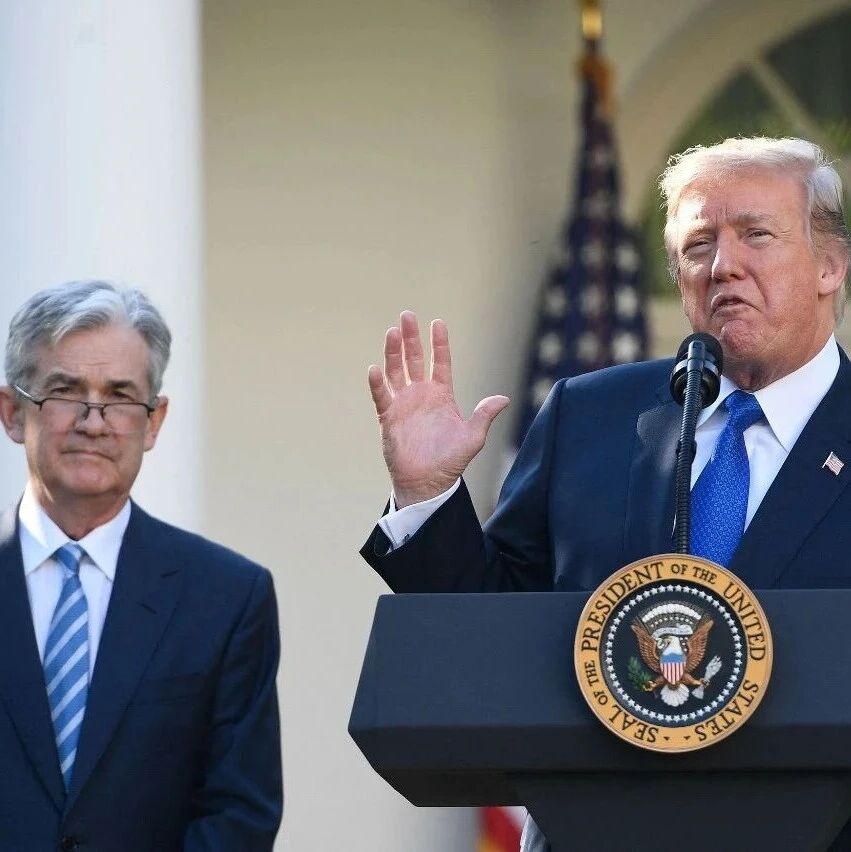
【宏观与债市周报】中央财政为股权投资机构发债提供增信支持,国债收益率下行
Xin Lang Cai Jing· 2026-01-26 11:09
Macroeconomic Overview - In mid-January 2026, prices of 29 out of 50 monitored production materials increased, while 13 decreased and 8 remained stable [1][4] - As of January 23, 2026, the 10-year U.S. Treasury yield decreased by 6 basis points to 4.24%, with the effective federal funds rate remaining stable at 3.64% [1][4] - In December 2025, the seasonally adjusted non-farm employment in the U.S. increased by 50,000, with previous months' figures revised downwards, totaling a downward revision of 76,000 jobs [1][4] - The unemployment rate in December fell to 4.4%, a decrease of 0.1 percentage points from November [1][4] - The Eurozone benchmark interest rate remains at 2.15%, while Japan's benchmark rate is at 0.75% [1][4] Bond Market Insights - The yields on both 10-year and 2-year government bonds declined last week, with the 10-year yield down by 0.95 basis points to 1.8298% and the 2-year yield down by 1.13 basis points to 1.3959% as of January 23 [2][5] - As of the end of December, the M2 money supply was 340.29 trillion yuan, reflecting a year-on-year growth of 8.5% [2][5] - The People's Bank of China conducted a 125 billion yuan 7-day reverse repurchase operation on January 23, with a net liquidity injection of 38.3 billion yuan for the day [2][5] - The total social financing stock was 442.12 trillion yuan in December 2025, with a financing growth rate of 8.3%, narrowing the gap with M2 growth by 0.7 percentage points from November [2][5] - Last week, 308 credit bonds were successfully issued, with 135 classified as local government financing bonds, accounting for 43.8% of the total [2][5] Policy and Market Developments - The People's Bank of China aims to accelerate the construction of a cross-border payment system for the yuan and implement strict regulatory measures for payment institutions [3][6] - The central government has allocated risk-sharing funds to support bond issuance for private enterprises and private equity investment institutions [3][6] - The Governor of the People's Bank of China announced plans to establish a risk-sharing tool for technology innovation and private enterprise bonds, along with providing re-lending support [3][6] - The Ministry of Finance will conduct market support operations for government bonds with maturities of 3 and 5 years starting January 20 [3][6] - Recent announcements from local government financing entities involve equity transfers, asset disposals, and changes in control [3][6] Information from Far East Credit - Far East Credit published a guide on the application of large language models in corporate credit evaluation [3][6] - Far East Credit's rating facilitated the successful issuance of the first medium-term note for Zhejiang Jiaxing Lake District Science and Technology Control Group in 2026 [3][6]
年初涨超15%,金价会否站上6000美元?
Xin Lang Cai Jing· 2026-01-26 10:34
Core Viewpoint - The price of spot gold has surged past $5000 per ounce, reaching a new historical high, driven primarily by geopolitical risks and concerns regarding the independence of the Federal Reserve ahead of its leadership transition in 2026 [2][11]. Group 1: Gold Price Trends - As of January 26, 2026, spot gold was priced at $5076.65 per ounce, marking a daily increase of approximately 1.82% [2][11]. - Since the beginning of 2026, gold prices have risen over 15%, breaking through key levels of $4600, $4800, and $5000 per ounce [2][11]. - Gold has experienced a continuous increase for over three years, with a 13% rise in 2023 and a final annual increase of over 26% in 2024 [3][12]. Group 2: Central Bank Demand - Central bank demand for gold has significantly increased since 2022, doubling from an annual purchase of around 500 tons to 1000 tons, raising its share of total demand from approximately 11% to over 20% [3][12]. - This surge in demand has been a crucial factor in the rapid increase in gold prices in recent years, particularly following the outbreak of the Ukraine crisis [3][12]. Group 3: Market Dynamics and Risks - The International Bank for Settlements has warned of potential market bubbles, noting that simultaneous explosive growth in gold and U.S. equities often precedes periods of negative or subdued returns [3][12][13]. - Retail investors are increasingly influencing the market, often acting contrary to institutional investors, which could lead to heightened volatility during market downturns [4][14]. Group 4: Future Predictions - Goldman Sachs has raised its forecast for gold prices at the end of 2026 from $4900 to $5400 per ounce, citing diversification by private sector buyers as a key factor [6][15]. - Bank of America analysts predict that gold could reach $6000 per ounce by spring 2026, based on historical trends of gold bull markets [6][15]. - The expected monthly purchases of gold by central banks are projected to average 60 tons, contributing significantly to price increases [6][15]. Group 5: Investment Strategies - Investment strategies suggest that for investors with moderate risk tolerance, gold should constitute about 5% of their portfolio, with bonds at 20-30% and global equities at around 40% [7][16]. - Excessive allocation to gold could lead to heightened risk and lack of diversification, as gold does not generate income [7][16].