芯片

Search documents
腾讯押注,深圳140亿独角兽,冲刺国产DPU第一股
21世纪经济报道· 2026-01-15 06:04
作者 丨吴佳楠 编辑丨孙超逸 萧启阳出生于中国香港,24岁就拿到了斯坦福大学的博士,人工智能之父Marvin Minsky还为 他的著作撰写序言。 直到2019年,萧启阳准备创业,攻克DPU芯片。 他认为,在云业务中,CPU做不好、GPU做不了的基础设施业务都可以统统交给DPU来做。 DPU可以说是整个云数据中心的灵魂。 去年末以来,以海光、龙芯为代表的CPU公司,以寒武纪、摩尔、沐曦、壁仞等为代表的GPU 或AI算力芯片公司,都纷纷在二级市场迎来收获季。 萧启阳所成立位于深圳的DPU公司——云豹智能,也进入资本市场视界。云豹智能上市辅导备 案获深圳证监局受理,辅导机构为中信证券,冲刺"国产DPU第一股"正在路上。 这是国产DPU赛道中第一只行业独角兽,最后一轮融资后估值140亿元。 公司成立的同一年,英伟达创始人黄仁勋也公开称"DPU为数据中心第三颗主力芯片",DPU就 此以惊人速度发展,成为整个行业的关注重点。 随着人工智能和超大规模智算中心建设加速,DPU的重要性愈显重要。目前,在DPU赛道上已 有英伟达、英特尔、博通、Marvell等一众芯片大厂布局。 面对国际科技巨头占据全球DPU市场主导地位的竞争 ...

美联储褐皮书;中国拟限制美国网安产品
Sou Hu Cai Jing· 2026-01-15 04:25
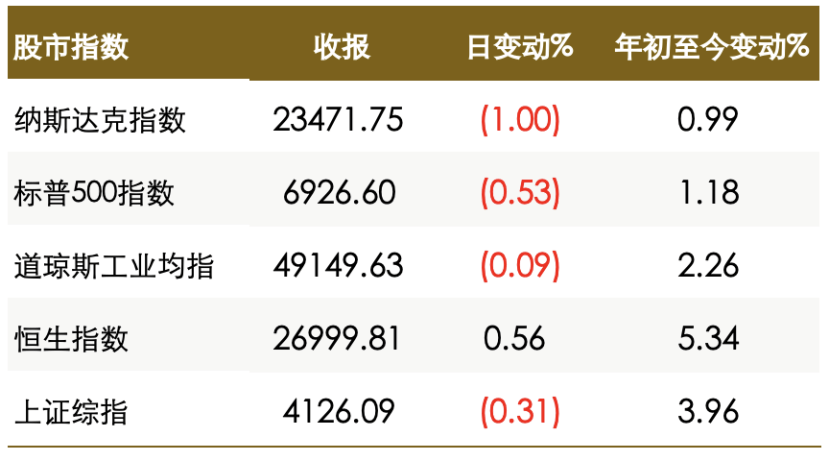
美联储褐皮书显示经济增速回升且就业持稳,美国11月零售增长超预期,PPI环比小幅加速。日本首相将很快宣布提前 大选,财相对日元发出干预警告。中国要求企业停止使用部分美国和以色列的网络安全产品。 隔夜要点 · 美国股市周三收低,纳指领跌,科技股走软,因投资者转向更具防御性的板块;银行股在部分银行公布喜忧参半的 季度业绩后延续近期跌势。美国公债收益率下跌,此前公布了显示消费者健康状况和通胀的数据,同时投资者在等待 最高法院就特朗普总统关税的合法性作出裁决,且中东地区的地缘政治紧张局势也在加剧。日圆兑美元从18个月低点 反弹,因日本官员警告称可能会采取干预措施来支撑日圆。油价收高,市场担忧伊朗供应中断。金价创下纪录新高, 白银也随之上涨,地缘政治和经济不确定性推动投资者转向避险资产,与此同时,美联储降息预期进一步增强了黄金 上涨的动能。 | 股市指数 | 收报 | 日变动% | 年初至今变动% | | --- | --- | --- | --- | | 纳斯达克指数 | 23471.75 | (1.00) | 0.99 | | 标普500指数 | 6926.60 | (0.53) | 1.18 | | 道琼斯工业均 ...
【环球财经】科技股显著走低 纽约股市三大股指14日均下跌
Xin Hua Cai Jing· 2026-01-15 03:09
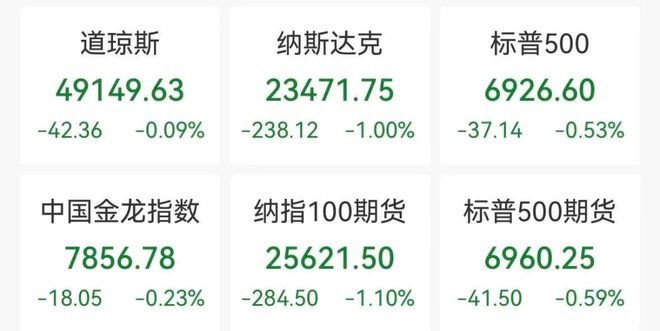
美国劳工部在当日盘前发布的数据显示,美国2025年11月生产者价格指数环比增加0.2%,而市场预期 和前月环比涨幅均为0.3%;该指数同比涨幅为3%,前月涨幅和市场预期均为2.7%。扣除食品和能源, 11月核心生产者价格指数环比上涨0.2%,与市场预期一致,但高于前月的0.1%;该核心指数同比涨幅 为3%,高于前月的2.6%。 美国全国地产经纪商协会当日发布的数据显示,美国2025年12月现房销售年率为435万套,高于市场预 期的423万套和前一月的414万套。 新华财经纽约1月14日电(记者刘亚南)由于科技权重股和金融股走低拖累,纽约股市三大股指14日早 间高开,早盘震荡走低,尾盘跌幅收窄,收盘时纽约股市三大股指均下跌。 截至当天收盘,道琼斯工业平均指数比前一交易日下跌42.36点,收于49149.63点,跌幅为0.09%;标准 普尔500种股票指数下跌37.14点,收于6926.6点,跌幅为0.53%;纳斯达克综合指数下跌238.123点,收 于23471.749点,跌幅为1.00%。 板块方面,标普500指数十一大板块六涨五跌。能源板块和必需消费品板块分别以2.26%和1.18%涨幅领 涨,非必需消费品 ...
光大期货金融期货日报-20260115
Guang Da Qi Huo· 2026-01-15 03:08
1. Report Industry Investment Rating - The investment rating for stock index futures is "volatile", and for treasury bond futures is "relatively strong" [1] 2. Core Viewpoints - The A-share market had a volatile performance on January 15, 2026, with the overall market surging and then falling back, and the three major indexes showing mixed results. The trading volume of the whole market was close to 4 trillion, hitting a new high. The index increase at the beginning of 2026 was mainly driven by global technological development, and geopolitical tensions also made rare metals popular. The stock index is expected to be volatile, and investors should be cautious about chasing high prices and mainly adopt a wait-and-see approach [1] - Treasury bond futures showed mixed results. The short - term reasonable and sufficient liquidity is the biggest support for the bond market, but factors such as economic stability, rising inflation, and cautious attitude towards interest rate cuts restrict the bond market. The bond market is expected to remain in a range - bound pattern in the short term [1][2] 3. Summary by Relevant Catalogs 3.1 Research Viewpoints Stock Index Futures - The market had a volatile performance, with the Shanghai Composite Index down 0.31%, the Shenzhen Component Index up 0.56%, and the ChiNext Index up 0.82%. The rise was driven by technological development and geopolitical factors. The short - term trend is volatile, and investors are advised to be cautious [1] Treasury Bond Futures - The 30 - year main contract was down 0.04%, the 10 - year main contract was up 0.08%, the 5 - year main contract was up 0.04%, and the 2 - year main contract was flat. The central bank carried out 240.8 billion yuan of 7 - day reverse repurchase, with a net injection of 212.2 billion yuan. The bond market is expected to be range - bound in the short term [1][2] 3.2 Daily Price Changes Stock Index Futures - IH decreased by 0.75% from 3,137.6 to 3,114.0; IF decreased by 0.39% from 4,758.6 to 4,740.0; IC increased by 0.82% from 8,131.2 to 8,197.8; IM decreased by 0.05% from 8,160.4 to 8,156.0 [3] - The Shanghai 50 Index decreased by 0.67% from 3,132.9 to 3,112.1; the CSI 300 Index decreased by 0.40% from 4,761.0 to 4,741.9; the CSI 500 Index increased by 1.04% from 8,143.3 to 8,227.7; the CSI 1000 Index increased by 0.66% from 8,203.1 to 8,257.2 [3] Treasury Bond Futures - TS remained flat at 102.33; TF increased by 0.03% from 105.63 to 105.66; T increased by 0.07% from 107.85 to 107.93; TL decreased by 0.07% from 111.35 to 111.27 [3] 3.3 Market News - The Ministry of Science and Technology will strengthen financial services for major national scientific and technological tasks and technology - based small and medium - sized enterprises in 2026, and play a role in the science - finance coordination mechanism [4] 3.4 Chart Analysis Stock Index Futures - The report presents the trends and basis trends of IH, IF, IM, and IC main contracts [5][6][7][8][9][10] Treasury Bond Futures - The report shows the trends of treasury bond futures main contracts, treasury bond spot yields, basis, inter - period spreads, cross - variety spreads, and capital interest rates [12][13][14][15][16][17][18][21] Exchange Rates - The report displays the trends of the US dollar against the Chinese yuan, the euro against the Chinese yuan, forward exchange rates, the US dollar index, euro - US dollar, pound - US dollar, and US dollar - Japanese yen exchange rates [22][23][24][25][27][29]
摩根资产管理:中国科技领域将迎来“更多DeepSeek时刻”,中国科技股将继续受益于技术突破
Ge Long Hui· 2026-01-15 02:14
年初至今,一项衡量中国内地科技股的指数已上涨12%,表现跑赢香港以及美国的同类指数,因投 资者纷纷涌入。从芯片到人形机器人再到商用火箭等领域的每日进展,以及大量计划中的股票上市,共 同推动了这股热潮。 展望未来,Rasid认为人工智能支出和更有利的政策将成为推动中国科技股的关键催化剂。 "我们确实认为中国在科技领域仍然有很多机会。"该公司的全球市场策略师Raisah Rasid在新加坡 的一次简报会上表示:"你们将会看到越来越多机器人技术的进步,以及更多DeepSeek时刻。" 摩根资产管理表示,随着中国加大力度创建更多类似DeepSeek的公司,中国科技股将继续受益于 技术突破。 ...


OpenAI签下近700亿AI芯片巨单
3 6 Ke· 2026-01-15 01:43
百亿美元AI芯片大单来了! 智东西1月15日报道,今天,OpenAI与美国AI芯片独角兽Cerebras联合宣布,将部署750兆瓦的Cerebras 晶圆级系统,为OpenAI客户提供服务。该合作将于2026年起分阶段落地,并于2028年之前完成,建成 后将成为全球规模最大的高速AI推理平台。 另据《华尔街日报》援引知情人士消息称,这笔交易价值超过100亿美元(约合人民币697.36亿元), 同时,Cerebras正在洽谈以220亿美元(约合人民币1534.20亿元)的估值融资10亿美元(约合人民币 69.74亿元),这将使其估值升至原有的近3倍。知情人士称,Cerebras仍计划推进IPO。 值得注意的是,OpenAI联合创始人兼CEO萨姆·阿尔特曼(Sam Altman)同时也是Cerebras的个人投资 者。 Cerebras打造的芯片以"大"著称,能在一块芯片上塞入4万亿颗晶体管。OpenAI认为,Cerebras芯片的速 度来自于将庞大的计算量、内存和带宽集成在一块巨型芯片上,消除了传统硬件推理速度下降的瓶颈。 Cerebras上大模型的响应速度,是基于GPU的系统的15倍。 OpenAI称,将Ce ...
光大期货:1月15日金融日报
Xin Lang Cai Jing· 2026-01-15 01:19
Stock Market - A-shares experienced significant fluctuations, with Wind All A index rising by 0.31% and a record trading volume of 3.99 trillion yuan [10] - The China Securities Index 1000 rose by 0.66%, while the CSI 500 increased by 1.04%. Conversely, the CSI 300 and SSE 50 indices fell by 0.4% and 0.67%, respectively [10] - The Shanghai and Shenzhen Stock Exchanges announced an increase in the minimum margin ratio for margin trading from 80% to 100%, indicating heightened risk aversion among investors [10] - The rise in A-share indices is primarily driven by global technological advancements, highlighted by the CES event and Nvidia's new Rubin architecture, which is expected to significantly enhance chip efficiency and reduce costs [10] - Geopolitical tensions have led to increased interest in rare metals, which are crucial for high-tech manufacturing and military industries, resulting in a short-term price surge [10] - Historical trends suggest that after geopolitical clarity, related metals may see inventory releases and price corrections, with current expectations of continued high volatility [10] Bond Market - The 30-year bond futures contract fell by 0.04%, while the 10-year and 5-year contracts rose by 0.08% and 0.04%, respectively [11] - The People's Bank of China conducted a 240.8 billion yuan reverse repurchase operation with a stable interest rate of 1.4% [11] - The money market remains reasonably ample, supporting the bond market, but economic stability, rising inflation, and cautious interest rate cuts pose constraints [11] - The bond market is expected to remain in a range-bound pattern due to mixed market forces, with upward rate movements requiring significant inflation increases [11] Precious Metals - Gold prices showed high volatility, while silver continued to perform strongly, with the gold-silver ratio dropping to around 50.1 [12] - U.S. retail sales increased by 0.6% in November, surpassing expectations, indicating consumer resilience [12] - The Federal Reserve's Beige Book reported overall economic improvement, with stable employment levels and moderate price increases [12] - Geopolitical issues, particularly the situation in Iran, are becoming a focal point, supporting gold's strong performance amid potential interest rate pauses by the Fed [12] - The rapid decline in the gold-silver ratio suggests that silver is approaching its peak, while platinum and palladium may see further upward trends [12]

李彦宏,下一个超级IPO
3 6 Ke· 2026-01-15 00:05
Core Viewpoint - Baidu's Kunlun Chip is set to go public, marking a significant IPO in the Chinese semiconductor industry, as the company aims to capitalize on the rising demand for computing power in China [1][4][8]. Group 1: Company Background and Development - Kunlun Chip, originally part of Baidu's AI chip division, was spun off in 2021 with an initial valuation of 13 billion RMB [1][6]. - The chip development began in 2011, with a team formed from top companies like Qualcomm and Tesla, leading to the launch of the first Kunlun chip in 2018, which achieved a computing power of 260 Tops [2][3]. - By 2021, Kunlun Chip became an independent entity, rapidly advancing with multiple product generations and significant market deployments [3]. Group 2: Financial Performance and Market Position - Kunlun Chip has secured major contracts, including a significant order from China Mobile, with projected sales reaching 3.5 billion RMB in 2025 and 6.5 billion RMB in 2026 [7][9]. - The company has attracted a diverse range of investors, including BYD and various venture capital firms, enhancing its financial backing and market credibility [6][7]. Group 3: IPO Significance and Market Context - The IPO is anticipated to elevate Kunlun Chip's profile among clients and investors, potentially increasing Baidu's market valuation significantly [7][9]. - The current IPO wave in the semiconductor sector, highlighted by successful listings of competitors like Wallen and Moore Threads, underscores the urgency for Baidu to capitalize on its market position [8][9]. - Analysts suggest that if Kunlun Chip achieves a valuation similar to that of Cambricon, Baidu's stake could be worth up to 22 billion USD, representing a substantial portion of its total market value [9].

美股全线下挫,科技七巨头、芯片股普跌,携程跌超17%,白银狂飙突破93美元
2 1 Shi Ji Jing Ji Bao Dao· 2026-01-14 23:37
Market Overview - The three major U.S. stock indices closed lower on January 14, with the Dow Jones down 0.09%, S&P 500 down 0.53%, and Nasdaq down 1% [1] - Large tech stocks experienced declines, with Facebook, Amazon, and Microsoft each falling over 2%, while Tesla dropped nearly 2% and Nvidia fell over 1% [2] Technology Sector - The Philadelphia Semiconductor Index decreased by 0.6%, with Broadcom dropping over 4% and ARM and Marvell Technology each falling over 2% [3] - Intel saw an increase of over 3%, and AMD rose by over 1% [3] Chinese Stocks - The Nasdaq Golden Dragon China Index fell by 0.23%, with individual stocks showing mixed results; Bitdeer surged over 15%, while Ctrip Group dropped over 17% [4] Precious Metals - Silver reached a new high, with spot gold rising by 0.87% to $4626.1 per ounce, and COMEX gold futures increasing by 0.62% to $4627.7 per ounce [5] - UBS's Andrew Matthews indicated that silver prices could reach $100 per ounce by mid-2026, supported by supply shortages and increasing demand in industrial applications [5] Oil Market - International oil prices saw a significant drop, with WTI crude oil and Brent crude oil both falling by 3% at one point; however, WTI closed at $62.02 per barrel, up 1.42% [5] Cryptocurrency - Bitcoin continued to strengthen, rising nearly 2% to surpass $97,000 per coin, with over 120,000 liquidations occurring in the market within 24 hours [6] Economic Indicators - The Federal Reserve's Beige Book reported slight to moderate growth in consumer spending, with most regions experiencing stable employment conditions [7] - The probability of a 25 basis point rate cut in January is at 5%, while the likelihood of maintaining the current rate is at 95% [7] Federal Reserve Policy - Despite President Trump's pressure on the Federal Reserve for rate cuts, analysts suggest this may actually increase resistance to lowering rates [8] - Jamie Dimon, CEO of JPMorgan, emphasized the importance of the Fed's independence, warning that undermining it could lead to higher inflation expectations and interest rates over time [8]
美股全线下挫,科技七巨头、芯片股普跌,携程跌超17%,白银狂飙突破93美元
21世纪经济报道· 2026-01-14 23:27
记者丨金珊 张伟泽 吴斌 编辑丨黎雨桐 周三(1月14日),美国三大股指全线收跌,道指跌0.09%,标普500指数跌0.53%,纳指跌1%。 | 道琼斯 | 纳斯达克 | 标普500 | | --- | --- | --- | | 49149.63 | 23471.75 | 6926.60 | | -42.36 -0.09% | -238.12 -1.00% | -37.14 -0.53% | | 中国金龙指数 | 纳指100期货 | 标普500期货 | | 7856.78 | 25621.50 | 6960.25 | | -18.05 -0.23% | -284.50 -1.10% | -41.50 -0.59% | 大型科技股全线下跌,个股方面,脸书、亚马逊、微软跌超2%,特斯拉跌近2%,英伟达跌超1%。 | 名称 | 现价 涨跌幅 = | li | | --- | --- | --- | | 脸书(META PLATF | 615.520 -2.47% | | | META.O | | | | 亚马逊(AMAZON) | 236.710 -2.43% | | | AMZN.O | | | | 微软(MI ...