
生猪养殖

Search documents
农业行业2025年中期投资策略:大畜牧养殖板块有望迎来景气共振,新消费乘势而上
Minsheng Securities· 2025-06-30 09:56
Group 1: Beef Industry - The beef cycle in China is undergoing significant changes, with a long-term trend of price increases due to lower production capacity compared to consumption growth. The high profitability cycle in beef farming is leading to aggressive expansion downstream, but this has resulted in substantial losses since July 2023. The industry is characterized by low concentration and severe information asymmetry, similar to the pig farming industry before the African swine fever outbreak. Once capacity is effectively cleared, supply-demand mismatches and price elasticity may exceed expectations [3][57]. - China's beef production capacity is not proportional to its beef output, with a significant gap between live cattle production and beef yield. In 2024, China is projected to produce 520 million live cattle but only 779 million tons of beef, indicating inefficiencies in production practices [19][24]. - The beef import dependency in China has increased significantly, with imports rising from 601,000 tons in 2016 to 2,915,000 tons in 2024, reflecting a compound annual growth rate (CAGR) of 21.8%. This has amplified the impact of imports on domestic beef pricing [24][25]. Group 2: Swine Industry - The swine industry is expected to experience a short-term decline in prices due to an oversupply of pigs, with the national breeding sow inventory remaining stable but limited growth. The Ministry of Agriculture has mandated a halt to the expansion of breeding sows, which will impact supply dynamics in the second half of 2025 [87][89]. - The supply of piglets is expected to increase, leading to higher market pressures in the second half of 2025. However, potential outbreaks of diseases in the autumn and winter could lead to a temporary decrease in supply, which may cause prices to rise in 2026 [89][92]. - The average asset-liability ratio of listed pig farming companies has improved from 73.9% to 61.6% between Q2 2023 and Q1 2025, indicating a recovery in financial health among leading firms in the industry [99]. Group 3: Animal Health Industry - The animal health sector is expected to benefit from improvements in efficiency and cost management, despite an oversupply in the breeding industry. The demand for veterinary drugs is anticipated to rise as pig prices recover, which will positively impact upstream animal health companies [84][90]. - The industry is transitioning from a focus on scale to an emphasis on quality, with the development of vaccines against diseases like African swine fever becoming a critical catalyst for growth in the animal health sector [90][92]. Group 4: New Consumption Trends - The pet consumption market in China is steadily growing, with the overall market size expected to reach 300.2 billion yuan in 2024, reflecting a year-on-year growth of 7.5%. The pet cat market is particularly strong, with a growth rate of 10.7% [59][62]. - Domestic brands are gaining popularity among pet owners, with a significant increase in preference for local products over foreign brands. This trend is driven by cost advantages and effective marketing strategies during major shopping events [72][79]. - The demand for pets as companions is rising due to demographic changes, including an aging population and declining marriage rates, which is expected to further boost the pet industry [67][68].
农林牧渔行业2025年中期投资策略:养殖底部修复,宠物经济高景气
Donghai Securities· 2025-06-30 09:33
Investment Rating - The report suggests a cautious outlook for the pig farming industry, with a focus on low-cost and high-quality enterprises such as Muyuan Foods, Wens Foodstuff Group, Shennong Group, Juxing Agriculture, and Lihua Agricultural [68]. Core Insights - The pig farming industry is currently experiencing a phase of quality improvement after a period of rapid expansion and excess profits following the African swine fever outbreak [52][61]. - The average price of live pigs has shown stability with fluctuations, while the price of piglets has experienced a rise followed by a decline due to supply-side adjustments and seasonal demand [9][14]. - The profitability of self-breeding and self-raising has remained stable, while the profitability of purchasing piglets has been volatile, indicating a challenging environment for external sourcing [14][64]. - The supply of breeding sows has stabilized, with a slight increase in the number of newborn piglets, which may exert pressure on pig prices in the latter half of the year [15][41]. - The industry is witnessing a trend towards increased efficiency in breeding, with key metrics such as the number of healthy piglets per litter and survival rates remaining high [20][22]. Summary by Sections Price Trends - The average price of live pigs was reported at 14.56 yuan/kg as of June 27, 2023, reflecting a 7.6% decrease since the beginning of the year but a 0.9% increase year-on-year [9]. - Piglet prices peaked in April 2023 but have since declined due to increased supply and lower demand [9]. Profitability - Self-breeding operations have maintained profitability, while external piglet sourcing has faced longer periods of loss, with an average loss of 132 yuan per head reported as of June 27, 2023 [14]. - The report indicates that the profitability of the industry is expected to improve as pig prices stabilize and the supply-demand balance adjusts [68]. Supply Dynamics - The number of newborn piglets increased by 10.2% year-on-year in the first five months of 2025, indicating a potential increase in supply pressure on pig prices [15]. - The number of breeding sows has stabilized, with a slight increase noted, suggesting a balanced supply situation [15][41]. Cost Trends - The costs of corn and soybean meal have shown a downward trend compared to last year, contributing to lower overall breeding costs for both large-scale and small-scale farms [32]. - The report highlights that the cost control measures adopted by listed pig companies have become a core competitive advantage [55]. Market Outlook - The report anticipates that the pig price will gradually rise in the second half of the year due to reduced supply pressure and seasonal demand increases [42][68]. - The industry is expected to continue focusing on quality improvement and cost efficiency as key drivers of profitability moving forward [68].
农林牧渔行业周报:猪价继续反弹,关注种植链投资机会-20250630
Yong Xing Zheng Quan· 2025-06-30 07:54
Investment Rating - The industry investment rating is maintained as "Add" [6] Core Views - The agricultural sector underperformed the market by 1.15 percentage points during the week of June 23-27, 2025, with the Shenwan Agricultural Index closing at 2,661.46, reflecting a weekly increase of 0.80% [1][16] - The pig farming sector shows a bullish sentiment with pig prices continuing to rebound, reaching an average price of 14.72 CNY/kg, a week-on-week increase of 3.52% [2] - The poultry sector is facing downward pressure, with broiler prices remaining low due to high inventory levels in the downstream slaughtering sector [2] - Grain prices such as wheat and corn have seen slight increases, while soybean meal prices have decreased due to increased supply from oil mills [3] Summary by Sections 1. Market Review - The agricultural sector's weekly performance ranked 25th among 31 Shenwan first-level industries, with the fishery sector performing the best with a 4.90% increase [1][18] - The animal health, agricultural product processing, planting, and breeding sectors also saw increases of 3.13%, 2.10%, 1.44%, and 0.28% respectively, while the feed sector declined by 0.32% [1][18] 2. Industry Key Data 2.1 Pig Farming - The average profit for self-bred pigs is 50.25 CNY/head, up 30.84 CNY/head week-on-week, while the profit for purchased piglets is -131.71 CNY/head, an increase of 55.08 CNY/head week-on-week [2][24] 2.2 Poultry - The average price of broiler chicks is 1.70 CNY/chick, down 8.60% week-on-week, and the average price of white feather broilers is 7.01 CNY/kg, down 1.54% week-on-week [2][32] 2.3 Agricultural Products - The average price of wheat is 2,446.39 CNY/ton, up 0.19% week-on-week, and corn is 2,352.86 CNY/ton, up 0.43% week-on-week. Soybean meal prices have decreased to a range of 2,900-3,100 CNY/ton [3][35] 3. Investment Recommendations - The report suggests focusing on investment opportunities in the planting industry chain due to increasing geopolitical tensions affecting food security [4] - For pig farming, companies with strong cost control or clear cost reduction paths are recommended, including Muyuan Foods, Wens Foodstuff Group, and others [4] - In the poultry sector, attention is drawn to integrated industry leaders like Shengnong Development and Lihua Stock for their stable capacity expansion and cost advantages [4] - The feed sector is expected to benefit from the recovery of livestock inventory, with recommendations for industry leaders like Haida Group and Hefeng Stock [4] - For agricultural products, companies like Suqian Agricultural Development and Beidahuang are highlighted for their relevance to food security [4]


农林牧渔行业2025年中期投资策略:政策加码产能调控,重视粮食安全
CMS· 2025-06-30 03:33
Group 1: Core Insights - The report emphasizes the importance of policy measures to regulate breeding sow capacity, which may elevate the price center for pigs in 2025-2026, benefiting the poultry sector and leading feed companies [1][38]. - The report highlights the increasing focus on food security amid frequent extreme weather events and trade tensions, suggesting a strategic shift in the agricultural sector [1]. Group 2: Swine Farming - In the first half of 2025, pig prices remained strong, influenced by slow recovery in breeding sow capacity and proactive market behavior before holidays, leading to a stable price range of 14.0-15.0 yuan/kg [12][15]. - The report anticipates limited growth in pig supply for 2025 due to cautious replenishment by producers, with expectations for pig prices to remain favorable in the second half of 2025 [15][31]. - Key companies recommended for investment in the swine sector include Muyuan Foods and WH Group, noted for their cost advantages and strong performance [38]. Group 3: Poultry Farming - The report is optimistic about the white-feathered chicken breeding sector, expecting a tightening supply of parent stock in the second half of 2025, which will positively impact the market [40][58]. - For yellow-feathered chickens, the report indicates that the current low inventory of parent stock, combined with reduced production costs, sets the stage for potential price recovery and profit expansion [52][58]. - Recommended companies in the poultry sector include Lihua Agricultural and Dekang Agriculture, which are expected to benefit from improving market conditions [58]. Group 4: Feed and Veterinary Services - The report notes a recovery in demand for feed products as the breeding sector improves, with a positive outlook for companies like Haida Group, which is well-positioned to capitalize on this trend [6][38]. - The veterinary services sector is also expected to see a recovery in demand, with a focus on leading companies in the animal health space [38]. Group 5: Seed Industry - The report highlights the rising importance of food security, with a focus on the seed industry, particularly in rice and corn, as the sector enters a phase of recovery and growth [38]. - The hybrid rice seed industry is expected to see improved supply-demand dynamics, while corn prices are rebounding, encouraging farmer planting enthusiasm [38][58]. - Recommended companies in the seed sector include Longping High-Tech and Dabeinong, which are anticipated to benefit from these trends [38].


华联期货生猪年年报:产能去化放缓,猪价僵持
Hua Lian Qi Huo· 2025-06-30 03:13
1. Report Industry Investment Rating - Not provided in the content 2. Core Viewpoints of the Report - **Fundamental Viewpoints**: Since mid - February 2025, the national live pig market has been in a stalemate between supply and demand, with prices adjusting narrowly within a range. After the Dragon Boat Festival, due to high - temperature weather, pork consumption entered a slack season, and pig enterprises faced great pressure, leading to a temporary decline in pig prices. The spot price briefly fell below 14 yuan/kg and then rebounded, indicating strong willingness for second - round fattening at low prices. In May 2025, the inventory of reproductive sows increased by 40,000 to 40.42 million, a month - on - month increase of 0.10% and a year - on - year increase of 1.15%, still 3.9% higher than the normal level. The piglet supply curve may intensify the expected supply pressure in the far - month. If pork consumption does not increase significantly, the upside of pig prices will be limited even in the peak season [7]. - **Strategy and Outlook**: There are still profit expectations for the live pig breeding industry in the second half of the year. However, the epidemic prevention pressure in the breeding end will increase in the third and fourth quarters. The inventory of reproductive sows may decline slightly but the overall reduction will be limited. In July, the supply of the live pig market may continue to increase, and the spot price may continue to run weakly within the range. In the long term, prices are expected to improve. The short - term market sentiment supports the strengthening of the futures market, and the resistance level of the main contract is 14,000. For options, out - of - the - money call options can be sold [9]. 3. Summary According to the Directory 3.1 Semi - annual Views and Strategies - **Fundamental Views**: The live pig market is in a supply - demand stalemate, with prices in a narrow - range adjustment. The inventory of reproductive sows is increasing, and the supply pressure in the future is expected to intensify. Most enterprises are in a state of small profits or cost - covering [7]. - **Strategy Views and Outlook**: The profit expectation for the second half of the year exists, but the epidemic prevention pressure increases. The inventory of reproductive sows may decline slightly. The supply in July may increase, and the spot price may run weakly. The futures market depends on market sentiment. The short - term resistance level of the main contract is 14,000, and out - of - the - money call options can be sold [9] 3.2 Futures and Spot Markets - **Futures and Spot Prices**: Since mid - February 2025, the live pig market has been in a stalemate, and prices are expected to continue to fluctuate within a range [15]. - **Futures Spreads**: Not elaborated in detail in the summary requirements. - **Standard and Fat Pig Prices**: Recently, the prices of standard and fat pigs have risen simultaneously. The supply of both has decreased, and the demand for second - round fattening has increased, with the price of standard pigs rising more than that of fat pigs, and the spread narrowing [31]. - **Piglet and Binary Sow Prices**: Since mid - May, piglet prices have been falling due to weak commodity pig market, past peak of piglet replenishment, and cautious attitude of retail farmers. In the second half of the year, the enthusiasm for piglet replenishment will weaken, and prices are expected to adjust weakly [35]. - **Culled Sow Prices**: The industry's willingness to actively eliminate production capacity is low. Culled sow prices were driven up by the increase in live pig prices this week and are expected to fluctuate and adjust [38] 3.3 Production Capacity - **Inventory of Reproductive Sows**: In May 2025, the inventory of reproductive sows increased to 40.42 million, a month - on - month increase of 0.10% and a year - on - year increase of 1.15%, still 3.9% higher than the normal level. Enterprises' willingness to actively reduce production capacity is weak, and the supply pressure in the future is expected to increase [42]. - **Elimination Volume of Reproductive Sows**: In May, the elimination volume of reproductive sows in large - scale farms decreased slightly month - on - month and year - on - year, while that in small and medium - sized farms decreased month - on - month but increased year - on - year. In June, due to high - temperature and high - humidity weather, the elimination volume may be stable but difficult to decrease [49] 3.4 Supply Side - **Inventory of Commercial Pigs**: In May, the inventory of commercial pigs in large - scale farms and small and medium - sized farms increased. In June, due to high - temperature weather and price decline, the inventory is expected to decrease [54]. - **Slaughter Volume of Commercial Pigs**: In May, the slaughter volume of commercial pigs in large - scale farms and small and medium - sized farms decreased month - on - month. In June, it is expected to increase due to factors such as farmers' willingness to sell [57]. - **Inventory Structure of Commercial Pigs**: In May 2025, the inventory proportion of 7 - 49 kg piglets decreased, mainly due to the suspension of piglet replenishment; the inventory of pigs over 140 kg decreased due to farmers' willingness to sell; the inventory of 90 - 140 kg pigs increased slightly due to the entry of second - round fattening pigs [60]. - **Average Slaughter Weight of Commercial Pigs**: This week, the average slaughter weight of live pigs decreased slightly due to farmers' pressure - barring and weight - increasing intentions [63] 3.5 Demand Side - **Live Pig Slaughter Volume**: Not elaborated in detail in the summary requirements. - **Cold Storage Rate of Slaughtering Enterprises**: Terminal consumption is weak. Slaughtering enterprises have a high fresh - sales rate and a low cold - storage rate, indicating cautious attitude towards inventory building. Domestic frozen products are in the de - stocking stage, and the impact on pig prices is limited [72]. - **Operating Rate and Fresh - sales Rate of Slaughtering Enterprises**: The operating rate decreased due to weak downstream demand. The demand for frozen products is weak, and there is still passive storage of fresh products, leading to a slight increase in the cold - storage rate [75] - **Substitute Prices**: Not elaborated in detail in the summary requirements. 3.6 Cost and Profit - **Profit of Live Pig Breeding and Slaughter**: The average weekly profit of self - breeding and self - raising mode is 75.35 yuan per head, a month - on - month increase of 14.24 yuan. The average weekly loss of the mode of purchasing piglets has expanded to 58.39 yuan per head, a month - on - month increase of 4.97 yuan [88]. - **Slaughter Gross Profit and Feed - to - Meat Ratio**: Not elaborated in detail in the summary requirements. - **Pig - to - Grain Ratio**: This week, the pig - to - grain ratio was 5.90, a month - on - month increase of 0.73%. Next week, it is expected to increase slightly and stabilize [95]
稳字当头,预计下半年猪价波动幅度有限
Sou Hu Cai Jing· 2025-06-30 02:14
Core Viewpoint - The average price of pork in China has decreased in the first half of the year due to stable supply and seasonal decline in demand, with expectations for stable prices in the second half of the year [1][4]. Supply and Demand Analysis - The average pork price on June 25 was 20.22 yuan/kg, down 11.4% from 22.81 yuan/kg on January 6 [1]. - The pig price in the third week of June was 14.61 yuan/kg, reflecting an 11.8% drop since the beginning of the year and a 20.8% year-on-year decrease [1]. - From January to May, the slaughter volume of large-scale pig enterprises reached 15.349 million heads, a year-on-year increase of 12.8% [2]. - Pork imports from January to May totaled 450,000 tons, up 5.2% year-on-year, with May imports at 90,000 tons, an 11.7% increase [2]. - Seasonal demand for pork has declined post-Spring Festival, compounded by warmer weather, leading to a seasonal downturn in consumption [2]. Industry Profitability - Despite the drop in pork prices, the pig farming industry remains profitable, with average profits per head around 120 yuan from January to May, decreasing to about 80 yuan in May [3]. - The price of piglets has shown an overall upward trend this year, contributing to high levels of breeding sows [3]. - Continuous decline in feed prices and improved productivity of breeding sows have led to reduced farming costs [3]. Future Price Trends - The pork price is expected to remain stable with narrow fluctuations in the second half of the year due to various supply and demand factors [4]. - An increase in the number of breeding sows is anticipated to lead to a steady rise in piglet production, supporting a stable supply of pigs [4]. - Seasonal demand for pork is expected to rise with the approach of cooler weather and upcoming holidays, which will help stabilize prices [4].
猪企龙头也在“借新还旧”?牧原股份打出“预防针”丨正经深度
Sou Hu Cai Jing· 2025-06-30 01:43
Core Viewpoint - Muyuan Foods is initiating its "international narrative" through its Hong Kong IPO, aiming to connect with international capital and enhance its valuation narrative by emphasizing "internationalization" and "technology-driven" growth [1][7]. Group 1: Financial Performance and Debt - Muyuan Foods has experienced significant asset growth, with total assets increasing from 528.87 billion to 1772.66 billion from 2019 to 2021, showing growth rates of 77.22%, 131.87%, and 44.56% respectively [4]. - However, from 2022 to 2024, total assets have plateaued, with figures of 1929.48 billion, 1954.05 billion, and 1876.49 billion, reflecting much lower growth rates of 8.85%, 1.27%, and -3.97% [4]. - The company has accumulated substantial debt, with total liabilities reaching 565.22 billion in 2020, a 166.93% increase, and surpassing 1 trillion in 2021, with a debt ratio of 61.30% [6]. - As of 2024, total liabilities remained above 1 trillion, with a debt ratio of 58.68%, indicating ongoing financial pressure [6][5]. Group 2: IPO and Market Strategy - The company emphasizes that the Hong Kong IPO is not primarily for raising funds but to enhance its credibility in the global market [7][10]. - The management acknowledges the need for internationalization as a critical growth pathway, especially given the current domestic market constraints [10][12]. - Despite the focus on internationalization, the company faces challenges in achieving a premium valuation as a leading enterprise, given the historical performance of newly listed stocks in Hong Kong [13][14]. Group 3: Technological and Competitive Challenges - Muyuan Foods aims to position itself as a leader in agricultural technology, but its R&D investment of 17.47 billion only accounts for 1.27% of its revenue, which is significantly lower than international competitors [16][17]. - The company’s R&D personnel count has decreased, raising concerns about its capability to compete in a technology-driven industry [17]. - Current international efforts are limited, with 100% of revenue in 2024 coming from domestic sources, indicating a slow start in its international expansion [18].


生猪养殖业探出“质变”关键一步,如何理解德康农牧(02419)“平台+生态”模式的新意?
Zhi Tong Cai Jing· 2025-06-30 00:52
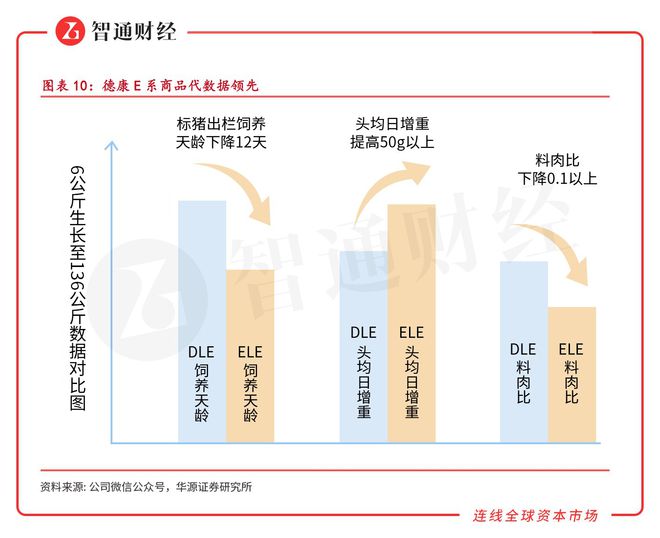
Core Viewpoint - Dekang Agriculture (02419) is recognized for its outstanding investment value, with Huayuan Securities issuing a "buy" rating based on its leading position in profitability and technology within the industry [1] Group 1: Business Model and Strategy - Dekang Agriculture has developed a unique "platform + ecosystem" model, which is expected to become a reference point for industry transformation [1] - The company has shifted from a production-oriented to a service-oriented enterprise, focusing on creating value for farmers through its "modern farm" initiative [2] - The "modern farm" model allows new farmers, often without prior experience, to quickly become proficient under Dekang's comprehensive training services [2] Group 2: Technological Innovation and Efficiency - Dekang Agriculture emphasizes technological innovation and research investment, maintaining a leading edge in the industry [3] - The company has established a global-leading breeding system and aims to produce high-quality food products while empowering farmers through a light-asset model [3] - In 2024, Dekang's modern farm is projected to achieve a per-head profit of 504 yuan, outperforming competitors like Muyuan and Wens [7] Group 3: Economic Impact and Future Prospects - Dekang's model has resulted in higher income for farmers, with an average income of 770,000 yuan per household in 2024, surpassing competitors by significant margins [5] - The company's approach aligns with national policies for high-quality development and rural revitalization, suggesting a promising future for its business model [7] - Dekang Agriculture is well-positioned to replicate the success of leading companies in the industry, making its future performance highly anticipated [7]
邮储银行宁明县支行300万元“贷”动生猪养殖发展壮大
Zheng Quan Ri Bao Zhi Sheng· 2025-06-30 00:17
Group 1 - The core viewpoint of the articles highlights the challenges faced by a local pig farmer in Guangxi, who, despite having a large-scale operation with over 11,000 breeding sows and more than 6,000 meat pigs, is encountering financial difficulties due to rising labor costs and the need for equipment upgrades [1] - The timely loan of 3 million yuan provided by Postal Savings Bank is aimed at addressing the farmer's urgent needs, including the introduction of smart feeding systems and the renovation of ventilation and odor removal equipment, which are expected to reduce labor costs by 30% and shorten the pig production cycle by 15 days [1] - The financial support not only assists the individual farmer in overcoming development bottlenecks but also demonstrates the empowering value of financial services across the entire pig farming industry, contributing to the stability of food prices and ensuring the supply of essential goods [2] Group 2 - Postal Savings Bank plans to continue optimizing its financial products and services, focusing on key segments of the pig farming industry, including feed processing and cold chain logistics, to enhance credit investment and support rural revitalization [2] - The bank's efforts are expected to inject strong momentum into the high-quality development of the regional livestock industry, facilitating a transition from traditional farming to smart farming practices [2]

农林牧渔行业周报:行业降重持续推进,关注产能变动-20250629
SINOLINK SECURITIES· 2025-06-29 14:39
Investment Rating - The report indicates a neutral investment rating for the agricultural sector, with expectations of limited price movements in the near term [75]. Core Insights - The agricultural sector index has shown a slight increase of 0.80% week-on-week, but it has underperformed compared to the broader market indices [13][14]. - The report highlights that the pig farming sector is experiencing a rebound in prices, with the average price of commodity pigs at 14.72 yuan/kg, reflecting a week-on-week increase of 3.52% [3][22]. - The poultry farming sector is facing pressure due to weak demand, leading to price adjustments, particularly for yellow feathered chickens [4][37]. - The beef and dairy sectors are in a state of fluctuation, with live cattle prices at 26.52 yuan/kg, showing a slight decrease, while dairy prices are stabilizing [5][41]. - The planting industry is showing signs of stabilization, with wheat prices supported by minimum purchase price policies, and corn prices rebounding slightly [6][46]. Summary by Sections 1. Market Review - The agricultural index closed at 2661.46 points, with a week-on-week increase of 0.80%, lagging behind the Shanghai Composite Index [13][14]. 2. Key Data Tracking 2.1 Pig Farming - As of June 27, the average weight of pigs at slaughter is 128.14 kg, with a slight decrease from the previous week. The profitability for leading pig farming enterprises exceeds 200 yuan per pig [3][22][24]. 2.2 Poultry Farming - The average price for white feathered chickens is 7.01 yuan/kg, with a week-on-week decrease of 1.54%. The overall price pressure is attributed to weak downstream demand [4][33][37]. 2.3 Livestock - Live cattle prices are at 26.52 yuan/kg, with a slight decrease, while dairy prices are stabilizing around 3.04 yuan/kg [5][41]. 2.4 Planting Industry - Domestic corn prices are at 2352.86 yuan/ton, showing a week-on-week increase of 0.43%, while wheat prices are supported by government policies [6][46]. 2.5 Feed & Aquaculture - Feed prices remain stable, with pig feed at 3.36 yuan/kg. Aquaculture prices are showing an upward trend, particularly for fish species [60][61].