
白酒

Search documents
2025年超1万家银行网点关闭,净减少超2000家|首席资讯日报
首席商业评论· 2026-01-14 04:34
Group 1 - In 2025, over 11,000 bank branches will be approved for closure, resulting in a net decrease of more than 2,000 branches, indicating an acceleration in digital transformation and optimization of physical banking channels [2] - SK Hynix announced an investment of 19 trillion KRW in its advanced packaging factory in Cheongju, South Korea, aiming to enhance production efficiency, with construction expected to start in April 2026 and completion by the end of 2027 [3] - The Ministry of Industry and Information Technology will focus on promoting the large-scale application of humanoid robots and health monitoring devices in various settings, emphasizing technological empowerment in the elderly care sector [4] Group 2 - Citigroup plans to lay off approximately 1,000 employees as part of a broader strategy to reduce 20,000 jobs by the end of 2026, reflecting adjustments to align workforce and skills with current business needs and technological advancements [5] - Ctrip clarified that a recent message about a mass layoff was a mistake, confirming that there is no plan for a full staff departure [6] - The U.S. Defense Secretary announced that Elon Musk's AI chatbot "Grok" will be integrated into the Pentagon's systems, alongside Google's generative AI, to enhance military operations [7] Group 3 - The launch of a 4,199 RMB bottle of Moutai sold out immediately on the iMoutai app, indicating strong demand for premium products [8] - Shanghai has introduced measures to optimize auto loan processes, including relaxing application conditions and determining reasonable loan issuance ratios, terms, and interest rates to stimulate consumption [9] - Apple responded to rumors regarding Google taking over iPhone control, clarifying that there has been no transfer of control over Siri or Apple Intelligence to Google [10] Group 4 - Lianchuang Electronics has begun supplying optical products to the robotics sector, although the industry is still in its early stages with relatively low sales [11] - DeepSeek published a new paper on conditional memory for large language models, co-authored with Peking University, contributing to advancements in AI research [12]

90%的名酒在跌价,2026年酒企怎么活?
首席商业评论· 2026-01-14 04:34
Core Viewpoint - The article discusses the significant changes in the Chinese liquor industry, particularly the white wine sector, highlighting a shift from a focus on brand prestige and social status to a more value-driven approach based on product quality and consumer experience [3][5][21]. Group 1: Industry Overview - As of early 2026, the white wine industry is undergoing a deep adjustment, with a notable decline in both revenue and profit across major companies, marking the first time in a decade that the industry has experienced consecutive quarters of double-digit declines [14][21]. - The average inventory turnover days for 20 listed liquor companies reached 1,424 days by the end of Q3 2025, indicating that some inventory may take nearly four years to deplete [10]. - The overall revenue for 20 A-share listed liquor companies in the first three quarters of 2025 was 3,177.79 billion yuan, a year-on-year decrease of 5.90% [14]. Group 2: Market Dynamics - The price system in the white wine market has collapsed, with the market price of premium brands like Moutai dropping below 1,600 yuan, a decline of over 15% for other high-end products [12][14]. - Over 99% of famous liquor prices have fallen, with average retail prices decreasing by more than 30% [12]. - The industry is witnessing a "devaluation of value," where consumers are no longer willing to pay for brands that do not deliver tangible quality or experience [16][18]. Group 3: Future Trends - The future of the liquor industry will be characterized by a "polarization" where companies must either provide "extreme experiences" or "precise value" to survive [8][21]. - High-end products will focus on exceptional craftsmanship and unique experiences, while lower-end products will cater to specific daily needs with high cost-effectiveness [25][29]. - The younger demographic is increasingly important, with 95 post-90s consumers making up only 18% of the white wine market, prompting a need for products that resonate with their lifestyle [25]. Group 4: Strategic Shifts - Companies are exploring new distribution models, such as direct-to-consumer sales, and are innovating product lines to meet changing consumer preferences [18][20]. - Regulatory changes are pushing for clearer labeling of production processes and ingredients, moving away from vague marketing strategies [18]. - The industry is transitioning from a focus on speculative investment to a more grounded approach centered on genuine consumer value and experience [21][31].




贵州茅台市场化运营方案正式出炉!2026年白酒周期能否见底?
Mei Ri Jing Ji Xin Wen· 2026-01-14 04:13
Core Viewpoint - Guizhou Moutai has approved the "2026 Guizhou Moutai Liquor Market Operation Plan," which includes four key reforms: product system, operation model, channel layout, and pricing mechanism [1] Group 1: Reforms Overview - The pricing mechanism emphasizes a market-oriented approach, establishing a dynamic adjustment mechanism for retail prices that is "responsive to market conditions and relatively stable" [1] - The current retail prices for the self-operated system have been implemented in iMoutai and self-operated stores [1] Group 2: Industry Insights - According to Huachuang Securities, the white liquor industry has experienced a persistent supply-demand mismatch over the past few years, with a significant imbalance expected in 2025 due to damaged consumption scenarios [1] - The team predicts that the white liquor cycle will accelerate its bottoming process in 2026, focusing on two key indicators: cash flow of channels and liquor companies, and the stabilization of core product prices, particularly for Feitian Moutai [1] Group 3: Market Position - Guizhou Moutai is a component stock of the CSI segmented food index, representing over 15% of the holdings in the food and beverage ETF as of January 13 [1]
在无人在意的角落,江小白悄悄打了场漂亮翻身仗
Sou Hu Wang· 2026-01-14 03:37
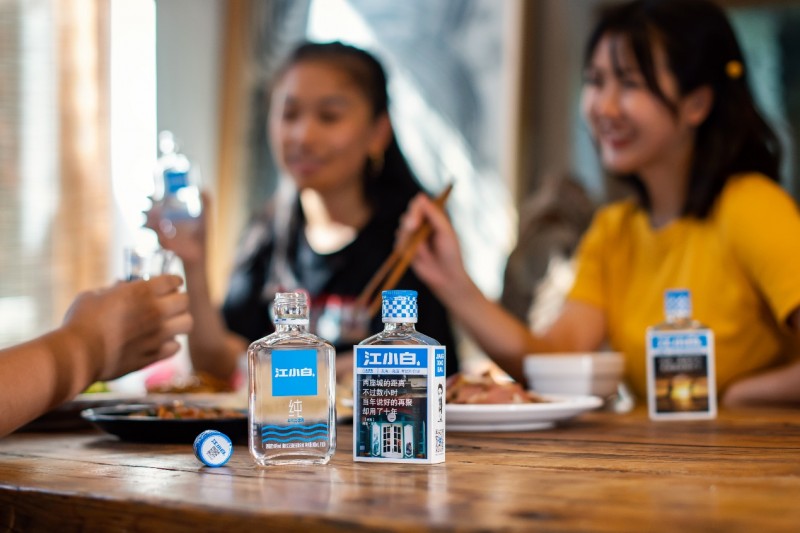
Core Insights - The article discusses the resurgence of Jiangxiaobai, a brand that once dominated the market with over 2 billion in annual sales and extensive product distribution, which faced significant challenges but has now re-emerged with a new product called "Guolifang" [1][3]. Group 1: Brand Evolution - Jiangxiaobai initially gained popularity by introducing low-alcohol liquor in small bottles, targeting young consumers in informal settings, and promoting a message of "youth is not lonely" [1][3]. - The brand experienced a golden era with nationwide retail coverage exceeding one million terminals and annual revenue surpassing 2 billion [3]. - However, the brand faced a decline as consumer preferences shifted towards high-end liquor, leading to negative perceptions and criticism of Jiangxiaobai's product [3][4]. Group 2: Strategic Shift - In response to declining sales, Jiangxiaobai made a strategic decision to focus on product quality rather than external marketing, rejecting advice to pivot towards high-end liquor [4][5]. - The company engaged directly with consumers to understand their drinking habits, leading to the development of "Guolifang," which caters to the preferences of young drinkers [5][9]. - The new product emphasizes a blend of fruit juices and alcohol, with a focus on maintaining clarity and taste, appealing to a younger demographic [7][9]. Group 3: Market Impact - "Guolifang" has become a popular choice in bars and convenience stores, reflecting a shift in social drinking culture among young people [7][9]. - The product's success has led to the creation of the "Guolifang Index," which measures the vibrancy of youth culture in different cities based on its sales performance [7][9]. - Jiangxiaobai's transformation highlights a broader trend in the industry, moving from brand-centric to user-centric product development, focusing on real consumer needs [9].
五粮液曾从钦带队调研,要求全体营销人员要下沉一线,保障旺季动销效率
Xin Lang Cai Jing· 2026-01-14 03:29
Core Insights - The current Chinese liquor industry is undergoing a deep adjustment period, with accelerated changes in consumer trends [3][6] - The company emphasizes the need to adapt to new challenges by focusing on customer and market insights, enhancing consumer demand understanding, and promoting a harmonious lifestyle [3][6] Group 1: Market Research and Strategy - The chairman of Wuliangye Group, Zeng Congqin, led a team to conduct in-depth market research in cities including Guangzhou, Shenzhen, Nanjing, Hangzhou, Jiaxing, and Sanya from January 7 to 12 [1][4] - The research focused on optimizing marketing strategies, upgrading channel systems, and improving consumer services [1][4] Group 2: Marketing and Sales Initiatives - The company plans to implement a comprehensive strategy called "Five New Expansions," targeting new demographics, channels, scenarios, markets, and mechanisms to deepen consumer engagement [3][6] - With the upcoming Spring Festival, the company aims to prepare and deploy effective sales strategies to ensure high efficiency during peak sales periods [3][6] Group 3: Future Goals and Marketing Philosophy - The year 2026 marks the beginning of the "15th Five-Year Plan" and is designated as the "Year of Marketing Innovation" for Wuliangye [3][6] - The company will adhere to a marketing approach defined by "one core, three reinforcements, and dual goals," focusing on marketing transformation, market response strategies, and execution capabilities [3][6]

ETF盘中资讯|茅台打出市场化“组合拳”!吃喝板块震荡拉升,行业迎周期底部机遇?
Sou Hu Cai Jing· 2026-01-14 03:16
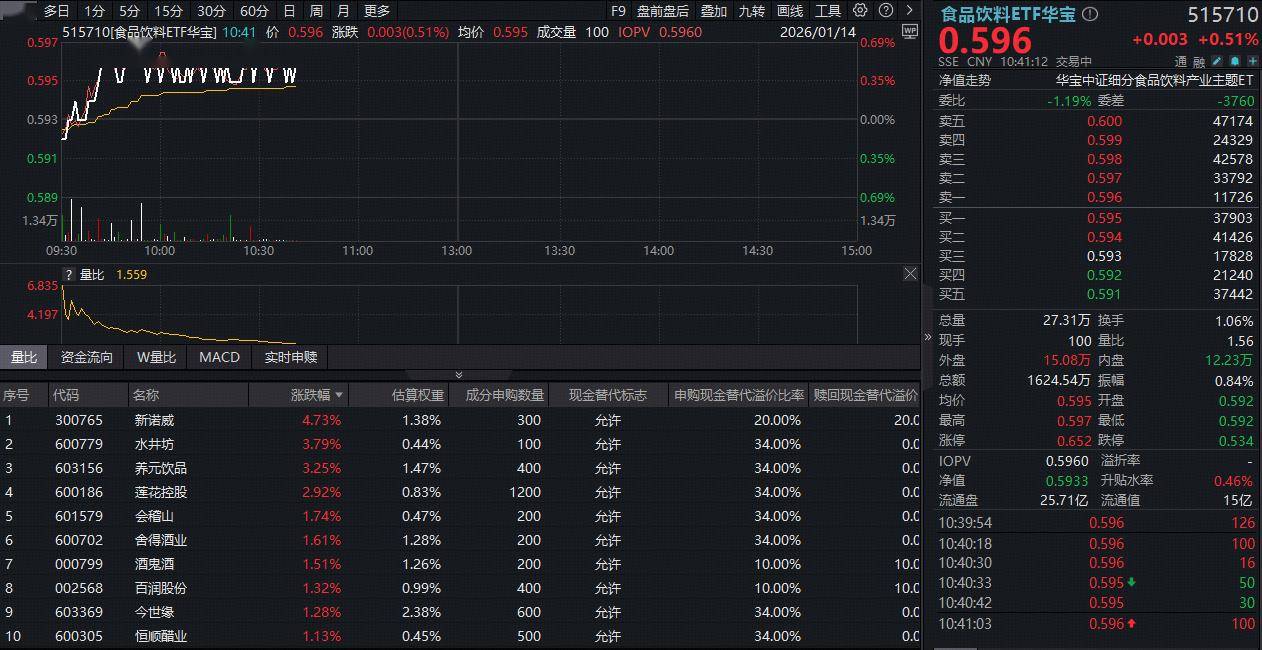
Group 1 - The food and beverage sector experienced a positive trend on January 14, with the Huabao Food and Beverage ETF (515710) rising by 0.51% during trading [1] - Notable gains were observed in several stocks, including XinNuoWei, which surged over 4%, and ShuiJingFang and YangYuan beverages, both increasing by over 3% [1] - The overall valuation of the food and beverage sector is currently at a historical low, with the food index's price-to-earnings ratio at 20.23, indicating a favorable long-term investment opportunity [3][4] Group 2 - Kweichow Moutai announced a new market-oriented operational plan, restructuring its product lineup to enhance market competitiveness [3] - The operational model will shift to a multi-channel approach, including self-sale, distribution, consignment, and online retail, aiming for a more dynamic pricing mechanism [3] - Analysts suggest that this transformation is crucial for Moutai to address supply-demand mismatches and channel issues, emphasizing the essence of the product [3] Group 3 - The white liquor industry is expected to reach a turning point, with potential opportunities for capital market investments as the Spring Festival approaches [4] - The Huabao Food and Beverage ETF is recommended for investors looking to gain exposure to core assets in the food and beverage sector, with significant allocations to leading high-end liquor stocks [4]
茅台多款产品价格下调,陈年茅台15年降幅近2000元,市场迎来巨变
Sou Hu Cai Jing· 2026-01-14 03:12
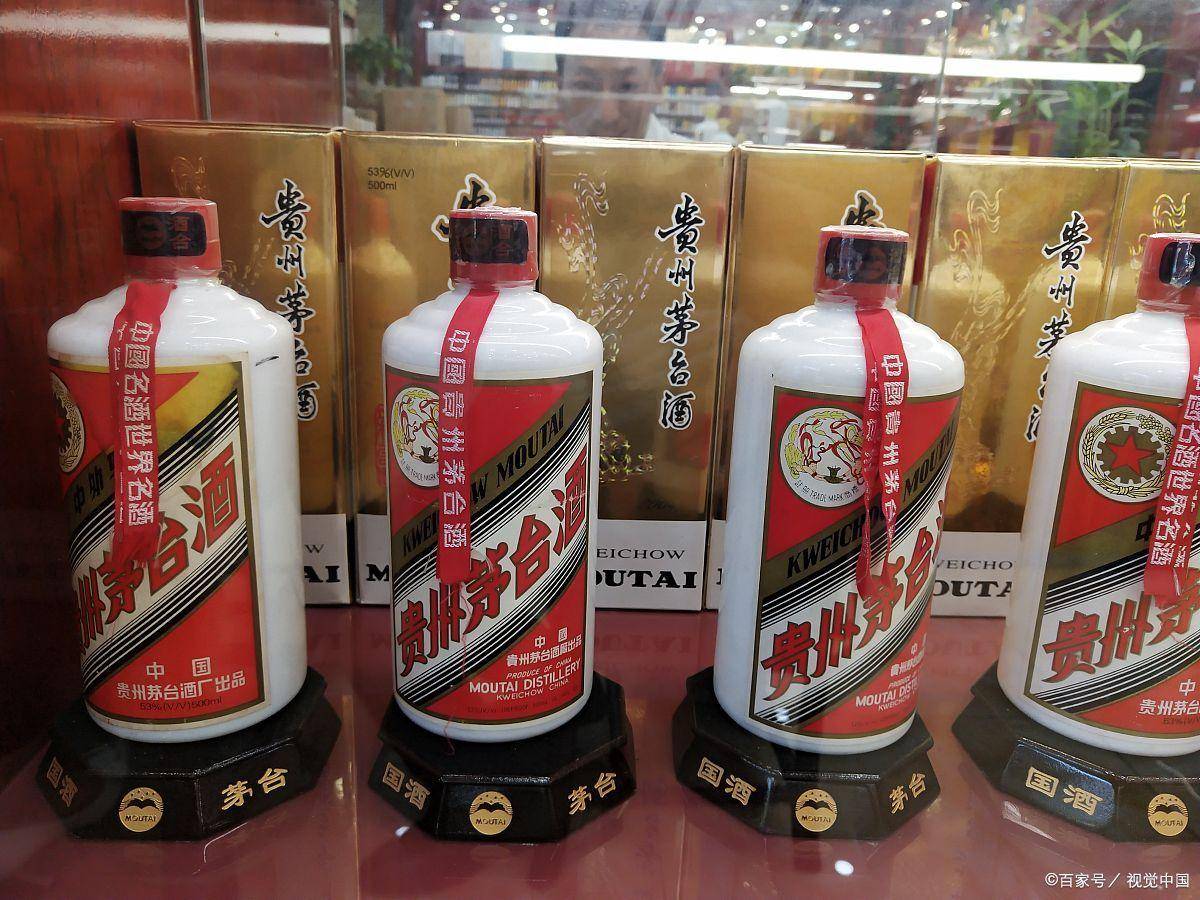
Core Viewpoint - Moutai Group is shifting towards a market-oriented pricing strategy, allowing product prices to align with market conditions and consumer choices, marking a significant change in its pricing approach [1][3]. Price Adjustment - Moutai has made substantial price adjustments across several products, with the price of aged Moutai (15 years) dropping from 5399 yuan to 3409 yuan per bottle, a decrease of nearly 37%. Other products, such as premium Moutai and 43-degree Moutai, also saw significant price reductions [3][5]. Strategic Shift - The price cuts are part of Moutai's broader marketing strategy aimed at transitioning to a market-oriented approach. The company is focusing on market and value orientation to establish a pricing system that reflects market dynamics [3][5]. System Reconstruction - Moutai is restructuring its product lineup to return to a "pyramid" model, categorizing products based on sales volume and consumer demand. This includes positioning flagship products at the base and premium offerings at the top [5]. Price Anchoring - Moutai's pricing strategy utilizes three anchors: market transaction prices, the price of 1499 yuan for flagship Moutai as a baseline, and time value as a premium basis. Recent adjustments on the iMoutai platform reflect these changes [5][7]. Zodiac Wine Market Cooling - The market for Moutai's zodiac wines is moving away from speculative trading, with the latest release for the 2026 zodiac year priced lower than previous years, thus reducing the entry barrier for consumers [7]. Channel Transformation - Moutai is shifting its distribution strategy from focusing solely on channels to enhancing consumer service, integrating online and offline sales to improve efficiency and reach. This has resulted in a significant increase in new users on the iMoutai platform [7][9]. Dealer Support - The recent price adjustments are expected to provide dealers with a more reasonable profit margin, reflecting Moutai's commitment to supporting its distribution network. This move is seen as a way to foster long-term value creation and stabilize dealer profits [9].
张勇重任海底捞CEO,能否打造第二曲线?丨消费参考
2 1 Shi Ji Jing Ji Bao Dao· 2026-01-14 03:10
Group 1: Company Leadership Changes - Zhang Yong has returned to the CEO position of Haidilao, effective January 13, 2026, following the resignation of Guo Yiqun as CEO [1] - Zhang Yong previously handed over the CEO role to Yang Lijuan in March 2022, and Guo Yiqun took over in June 2024 [1] - The leadership change comes as Haidilao faces performance challenges, with a 3.0% year-on-year revenue decline to 20.703 billion yuan and a 13.7% drop in net profit to 1.755 billion yuan in the first half of 2025 [1] Group 2: Industry Context - The restaurant industry in China is experiencing a slowdown, with the China Cuisine Association noting a trend of "slowing revenue growth, declining profits, and intensified competition" in the first half of 2025 [1] - Competitors like Xiaobing Xiaobing reported an 18.88% revenue decline to 1.942 billion yuan and a net loss of 84 million yuan during the same period [1] Group 3: Strategic Initiatives - Zhang Yong's return is linked to the "Pomegranate Plan," a multi-brand incubation strategy launched in August 2024, aimed at creating a second growth curve for Haidilao [2] - As of June 2025, the "Pomegranate Plan" has incubated 14 restaurant brands, with a total of 126 stores, and the related business saw a 227% year-on-year revenue increase to 600 million yuan in the first half of 2025 [2] - The company is at a critical juncture for transformation, with Zhang Yong becoming more involved in operational details [2]


10万亿山东呼唤“新鲁酒”
Sou Hu Cai Jing· 2026-01-14 02:55
Core Insights - Shandong Province is projected to surpass a GDP of 10 trillion yuan by 2025, ranking third nationally and first in Northern China, marking a significant economic milestone [2][3] - The Shandong economy is characterized by a "two-three-one" structure, with the service sector accounting for a substantial portion, while manufacturing remains a core strength [3] - The liquor industry in Shandong, particularly the Lu liquor sector, is a vital component of the province's economic narrative, reflecting its transition from agricultural to industrial civilization [2][6] Economic Structure and Industry Overview - By 2025, Shandong's GDP growth rate is expected to be 5.6%, outpacing the national average, with a manufacturing value added to GDP ratio of 30% [3] - Shandong is the only province in China with complete coverage across all 41 industrial categories, showcasing its diverse manufacturing capabilities [3] - The province is also a leading agricultural producer, contributing significantly to national food production despite having only 6% of the country's arable land [5] Liquor Industry Dynamics - Shandong is recognized as a major liquor-producing province with a rich history and established production capacity, but faces challenges in innovation and market expansion [9][11] - The Lu liquor sector must evolve to avoid stagnation and leverage Shandong's economic strengths, including its strategic geographic position and global trade connections [11][39] - Successful examples, such as Yantai Ancient Brew becoming the top imported liquor brand in South Korea, highlight the potential for Shandong liquor to expand internationally [11][39] Technological Advancements and Innovation - The liquor industry is undergoing a transformation through technological advancements, focusing on scientific methods and data-driven production processes [30][31] - Research initiatives, such as the study of ancient fermentation techniques and soil samples, are enhancing the understanding of flavor profiles and production quality [26][28] - The integration of smart manufacturing technologies is reshaping the production landscape, allowing for greater efficiency and quality control [30][31] Market Challenges and Opportunities - Despite the growth potential, local Lu liquor brands hold less than 20% of the market share in a consumption market exceeding 500 billion yuan, indicating a need for improved branding and consumer engagement [32][33] - The historical focus on production volume over quality has led to a disconnect with modern consumer preferences, necessitating a shift towards enhancing flavor and brand value [33][37] - A call for a comprehensive scientific initiative to define and promote the unique terroir of Shandong liquor is essential for establishing a strong market identity [39][41]

古井贡酒把“年酒”端上寻常餐桌,让“中国年酒”成为人人举得起的团圆符号
Guan Cha Zhe Wang· 2026-01-14 02:32
Core Viewpoint - Gujinggongjiu has reaffirmed its position as the exclusive partner of the Spring Festival Gala for the eleventh consecutive year, emphasizing its deep integration into Chinese New Year culture and its commitment to making traditional liquor accessible to the general public [1][5][9]. Brand Partnership and Cultural Significance - The partnership with the Spring Festival Gala has transformed Gujinggongjiu from a mere product into a cultural symbol, representing collective memories of Chinese families during the New Year [5][9]. - The introduction of "Gujinggongjiu · Year Thirty [He]" at a price point of 220 yuan aims to democratize the experience of traditional liquor, making it a staple for family gatherings rather than a luxury item [10][11]. Product Development and Market Strategy - The new product "Gujinggongjiu · Year Thirty [He]" retains the brand's cultural essence while lowering the price to appeal to a broader consumer base, thus enhancing its market presence [10][12]. - The product's design incorporates traditional elements, such as the red lantern and auspicious symbols, reinforcing its connection to Chinese New Year celebrations [6][14]. Craftsmanship and Heritage - Gujinggongjiu boasts a rich heritage of over 1800 years, with its brewing techniques recognized as the oldest distillation method in the world, contributing to its unique market position [13][14]. - The brand emphasizes a balance between traditional craftsmanship and modern innovation, ensuring high-quality production while respecting cultural heritage [14][15]. Cultural Impact and Consumer Engagement - The phrase "Celebrate the New Year, drink Gujing, watch the Spring Festival Gala" has become a cultural phenomenon, reflecting the brand's successful integration into the fabric of Chinese New Year celebrations [15][17]. - The brand's strategy not only focuses on sales but also on fostering cultural connections, making it a vital part of family traditions during the festive season [15][17].

