外汇

Search documents
【环球财经】巴西股市创历史新高 美最高法院裁决提振市场信心
Xin Lang Cai Jing· 2026-02-21 05:57
转自:新华财经 新华财经圣保罗2月21日电(记者杨家和)美国最高法院20日裁定特朗普政府大规模关税政策违法后,巴西主要股指Ibovespa指数当日强势上涨,收盘创 历史新高,同时巴西雷亚尔兑美元汇率显著走强。 截至20日收盘,Ibovespa指数上涨1.06%至190534.42点,首次突破190000点大关。该指数当日最高曾达到190726.78点,交易量达到约361.6亿雷亚尔。 "从边际效应来看,关税的取消强化了全球外汇投资组合的重新配置,这有利于巴西雷亚尔和股市,但主要后果应该是汇率波动加剧,因为美国政府下一 步的举措存在不确定性。即便如此,美元贬值的全球趋势依然存在。"国际货币基金组织高级经济学家安德烈·瓦莱里奥表示。 市场预测,随着外资流入预期增强和巴西国内宏观经济基本面稳健,巴西金融市场短期内维持积极走势的动力较为充足。 编辑:王姝睿 受狂欢节假期影响,本周交易时间减少,但本周股指累计上涨2.18%。 市场分析认为,美国最高法院20日裁定特朗普政府大规模关税政策违法,这一判决对全球贸易环境产生广泛影响,提振了投资者对风险资产的信心,成为 推动巴西股市上涨的主要因素之一。 在汇市方面,雷亚尔兑美元 ...


春节前最后一刻,人民币送了个大红包——你接到了吗?
Sou Hu Cai Jing· 2026-02-19 10:58
Group 1 - The core viewpoint of the article highlights the significant appreciation of the Chinese yuan, which has surpassed the 6.9 mark against the US dollar, marking a new high since April 2023, and indicating a potential shift in global investment dynamics [1][10][13] - The yuan's rise is attributed to a strong trade surplus, with China's goods trade surplus reaching a historical high of 1.19 trillion USD in 2025, leading to a substantial influx of foreign exchange back into the country [5][11] - The depreciation of the US dollar's credibility is noted, particularly due to ongoing investigations into the Federal Reserve and the impact of US economic policies, which have diminished the attractiveness of dollar-denominated assets [7][10] Group 2 - The decline in gold and silver prices, with gold dropping over 3% and silver over 11%, is linked to geopolitical developments, particularly Iran's recent statements that have reduced perceived risks in the Middle East, prompting a shift in investment from precious metals to yuan assets [3][8] - The article discusses the implications of the yuan's appreciation for export-oriented companies, indicating that while it may reduce competitiveness for those relying on low-end manufacturing, it reflects the overall strengthening of China's manufacturing capabilities [10][11] - The breakthrough of the yuan above 6.9 is seen as a potential starting point for further appreciation, with market dynamics suggesting a target of 6.5 in the future, supported by strong trade surpluses and a controlled monetary policy approach by the People's Bank of China [11][13]
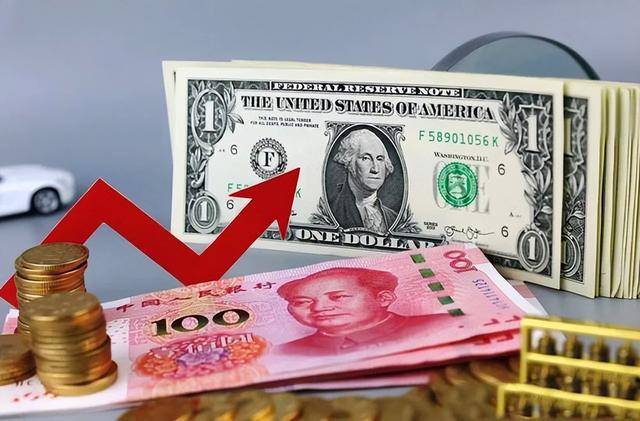
人民币暴走!6.88关口告破,外贸老板们春节睡得着吗?
Sou Hu Cai Jing· 2026-02-19 04:05
Core Viewpoint - The offshore RMB has surged past the 6.89 mark against the USD, reaching a low of 6.8825, marking a three-year high, driven primarily by corporate foreign exchange settlements rather than central bank intervention [1][3] Group 1: Market Dynamics - The RMB appreciated approximately 1.3% from the beginning of 2026 to February 11, while the USD index fell nearly 4%, indicating that the RMB's strength is partly due to the USD's weakness [5] - China's merchandise trade surplus reached a record high of $1.076 trillion in 2025, leading to a significant accumulation of USD by Chinese enterprises [5][7] - An estimated $1.1 trillion in pending foreign exchange settlements has built up over the past three years, with the Chinese New Year acting as a catalyst for a surge in corporate settlements [7] Group 2: Corporate Impact - The surge in RMB value has pressured profit margins for exporters, particularly in labor-intensive sectors like textiles, toys, and furniture, where even slight fluctuations in exchange rates can turn profits into losses [11][13] - Some companies are forced to lower prices to maintain orders, as the strong RMB diminishes their competitive pricing advantage in the global market [13] Group 3: Central Bank Response - The People's Bank of China (PBOC) has signaled that it will not allow excessive appreciation of the RMB while also preventing competitive devaluation, aiming for stability at a reasonable equilibrium [13][15] - The PBOC has a range of tools at its disposal to manage currency fluctuations, including adjusting foreign exchange reserve requirements and utilizing macro-prudential parameters for cross-border financing [15]
日股狂欢难掩债汇风波,“高市交易”究竟是机会还是陷阱?
Hua Er Jie Jian Wen· 2026-02-15 11:57
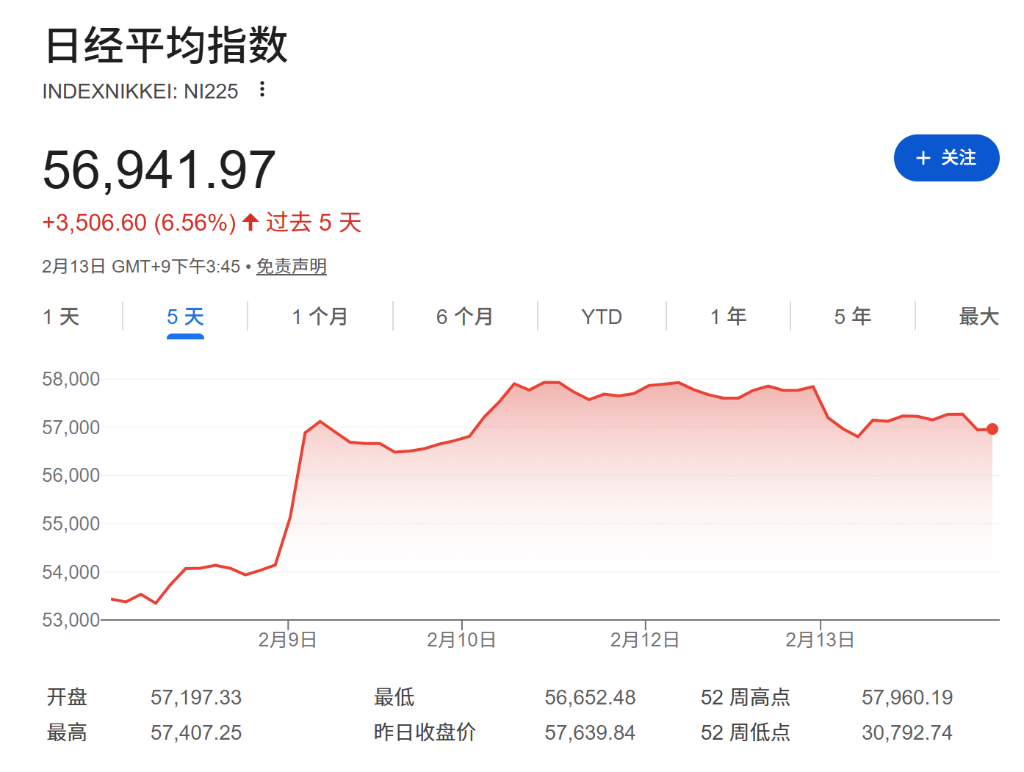
Core Viewpoint - The recent election victory of Kishi Sayaka has led to a significant rally in the Japanese stock market, with the Nikkei 225 index rising by 5%, but concerns are growing among investors about a potential "Kishi trap" that could undermine market stability [1][4][5]. Market Reactions - Despite the stock market surge, the Japanese bond and foreign exchange markets have shown relative calm, indicating that some investors believe the new Prime Minister will exercise restraint in implementing her fiscal plans [4][5]. - The calm in the bond and currency markets is viewed as a temporary phenomenon, with warnings that the real challenge lies in how the government will finance its ambitious spending plans [5][6]. Fiscal Policy Concerns - Kishi Sayaka's proposed fiscal spending plan, valued at $135 billion, and her commitment to suspend the food consumption tax for two years, which is expected to cost ¥5 trillion (approximately $32 billion), have raised concerns about potential inflation and currency depreciation [5][10]. - Analysts express skepticism about the feasibility of Kishi's fiscal commitments, questioning how she can fulfill these promises without disrupting the market, especially given her significant political mandate [10][11]. Currency and Debt Issues - The Japanese yen is currently facing risks associated with the "Kishi trap," where increased government spending could lead to further currency depreciation, exacerbating inflation through higher import costs [6][10]. - Japan's public debt stands at 237% of GDP, raising alarms about the sustainability of its fiscal policies, with differing views among analysts regarding the implications of this debt level [11][12]. Investor Sentiment - There is a notable divide in market sentiment, with foreign investors holding only 6.6% of Japanese government bonds but accounting for 71% of futures trading, indicating a lack of direct stakes in the market [11]. - Some analysts warn that the government may be underestimating the populist pressures from Kishi's policies, which could lead to a dangerous complacency regarding global bond market signals [11].
Exness: 政策交锋中的市场,贸易摩擦、通胀偏离与利率之争
Sou Hu Cai Jing· 2026-02-13 07:04
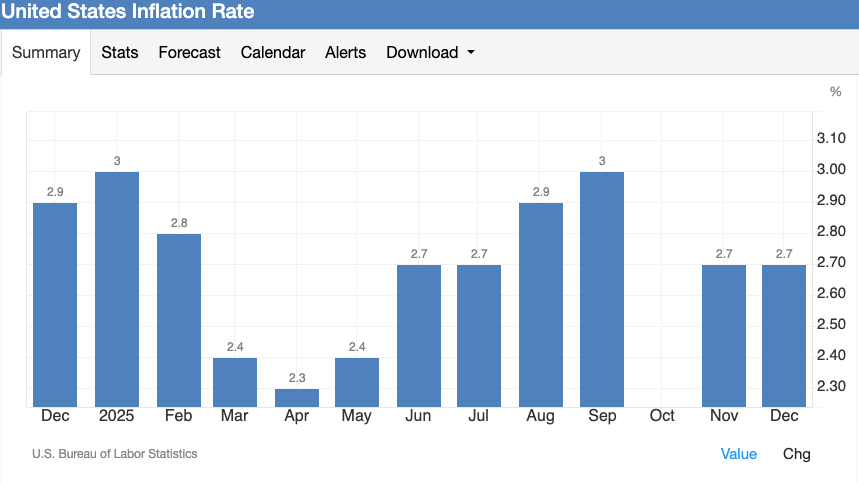
Group 1: Market Overview - The financial market in 2026 is characterized by a rare interplay of political pressure and economic adjustments, with trade rhetoric and geopolitical tensions remaining active [1] - Inflation has slowed down, prompting renewed discussions on interest rate directions globally, influenced by various macroeconomic factors rather than a single mainstream narrative [1] Group 2: Geopolitical Influences - Geopolitical developments, particularly tensions surrounding Greenland and U.S. trade policies, are significantly impacting risk appetite and commodity pricing, leading to increased demand for safe-haven assets like gold [2] - The Middle East's situation continues to affect energy market dynamics, with ongoing supply shock risks keeping the oil market on alert despite recent stability [2] Group 3: Inflation and Monetary Policy - U.S. inflation rates have decreased from 3% to approximately 2.7% since Q4 2025, influencing market expectations for potential interest rate cuts by the Federal Reserve [3] - Differentiated monetary policies among central banks are shaping market behaviors, with some countries adopting easing measures while others maintain a neutral stance due to domestic growth constraints [3] Group 4: Oil Market Dynamics - Oil prices are under pressure due to easing geopolitical risks and concerns over supply surplus, with prices fluctuating within a range despite structural supply-demand imbalances [6][8] - Technical analysis indicates that oil prices are facing resistance near $61, with key support levels around $58, influenced by moving averages and Fibonacci retracement levels [8] Group 5: Currency Market Trends - The EUR/USD exchange rate has been declining, influenced by positive U.S. non-farm data and the Federal Reserve's potential for rate cuts, while the European Central Bank appears reluctant to lower rates further [9][11] - Current technical indicators suggest that the EUR/USD is testing significant resistance levels, with potential support around $1.17, indicating a cautious trading environment [11]
大类资产早报-20260213
Yong An Qi Huo· 2026-02-13 01:59
Group 1: Global Asset Market Performance - The latest yields of 10 - year government bonds in major economies are as follows: US 4.100, UK 4.452, France 3.363, Germany 2.777, Italy 3.383, Spain 3.150, Switzerland 0.268, Greece 3.375, Japan 2.232, Brazil 6.127, China 1.776, Australia 4.807, New Zealand 4.518 [3] - The latest yields of 2 - year government bonds in major economies are: US 3.457, UK 3.595, Germany 2.055, Japan 1.303, Italy 2.191, China (1Y yield) 1.304, Australia 4.281 [3] - The latest exchange rates of the US dollar against major emerging - economy currencies are: Brazil 5.213, South Africa zar 15.961, Korean won 1439.100, Thai baht 30.932, Malaysian ringgit 3.903. The latest values of on - shore RMB, off - shore RMB, RMB central parity rate, and RMB 12 - month NDF are 6.902, 6.898, 6.946, and 6.778 respectively [3] - The latest values of major economies' stock indices are: S&P 500 6832.760, Dow Jones Industrial Index 49451.980, NASDAQ 22597.150, Mexican stock index 70888.040, UK stock index 10402.440, France CAC 8340.560, Germany DAX 24852.690, Spanish stock index 17896.900, Russian stock index (not provided), Nikkei 57639.840, Hang Seng Index 27032.540, Shanghai Composite Index 4134.018, Taiwan stock index (not provided), South Korean stock index 5522.270, Indian stock index 8265.352, Thai stock index 1441.530, Malaysian stock index 1750.850, Australian stock index 9281.789, emerging - economy stock index 1570.440 [3] - The latest values of credit - bond indices are: Eurozone investment - grade credit - bond index 268.564, Eurozone high - yield credit - bond index 413.620 [3] Group 2: Stock Index Futures Trading Data - For A - shares, the closing price is 4134.02 with a 0.05% increase; for CSI 300, the closing price is 4719.58 with a 0.12% increase; for SSE 50, the closing price is 3079.73 with a 0.28% decrease; for ChiNext, the closing price is 3328.06 with a 1.32% increase; for CSI 500, the closing price is 8423.57 with a 1.17% increase [4] - The PE (TTM) values of CSI 300, SSE 50, CSI 500, S&P 500, and Germany DAX are 14.20, 11.70, 38.08, 27.29, and 19.28 respectively, with环比 changes of - 0.03, - 0.06, 0.38, - 0.43, and 0.00 [4] - The risk premiums (1/PE - 10 - year interest rate) of S&P 500 and Germany DAX are - 0.44 and 2.41 respectively, with环比 changes of 0.13 and 0.01 [4] - The latest capital flows of A - shares, main board, small - and medium - sized enterprise board, ChiNext, and CSI 300 are 106.78, - 237.55, (not provided), 239.92, and - 109.58 respectively, and the 5 - day average values are 7.38, - 101.94, (not provided), 80.09, and - 1.88 respectively [4] Group 3: Transaction Amount and Other Data - The latest transaction amounts of the Shanghai and Shenzhen stock markets, CSI 300, SSE 50, small - and medium - sized enterprise board, and ChiNext are 21417.38, 4904.74, 1304.13, 4190.81, and 6134.82 respectively, with环比 changes of 1574.86, 570.45, 163.27, 148.57, and 531.84 [5] - The basis values of IF, IH, and IC are - 2.78, 3.27, and 25.23 respectively, with spreads of - 0.06%, 0.11%, and 0.30% [5] - The closing prices of T2303, TF2303, T2306, and TF2306 in Treasury bond futures are 108.59, 106.07, 108.60, and 106.15 respectively, with increases of 0.04%, 0.01%, 0.06%, and 0.03% [5] - The funding rates of R001, R007, and SHIBOR - 3M are 1.4329%, 1.6029%, and 1.5800% respectively, with daily changes of - 17.00 BP, 0.00 BP, and 0.00 BP [5]
在岸、离岸人民币对美元汇率升破6.9,影响几何?
Guo Ji Jin Rong Bao· 2026-02-12 17:17
Core Viewpoint - The Chinese Yuan (RMB) has been appreciating against the US Dollar, breaking significant thresholds and reaching its highest level since May 4, 2023, driven by improved Sino-US trade relations and external economic conditions [1][2]. Exchange Rate Dynamics - On February 12, 2023, the onshore RMB opened at 6.9083 against the USD, peaking at 6.8998, while the offshore RMB reached 6.8964, both marking new highs since May 4, 2023 [1]. - The People's Bank of China set the mid-point exchange rate at 6.9457 RMB per USD, a slight depreciation of 19 basis points from the previous day [1]. Influencing Factors - The RMB's strength is attributed to the stabilization of Sino-US economic relations since November 2025 and a recent criminal investigation into the Federal Reserve Chairman, which has pressured the USD [1][2]. - Increased corporate demand for currency exchange towards the year-end is also contributing to the seasonal strengthening of the RMB, particularly following high export growth [2]. Short-term Outlook - The RMB is expected to remain strong in the short term, supported by continued export growth and high market sentiment, with limited potential for a significant rebound in the USD index [2]. Long-term Considerations - Over the year, the RMB's exchange rate will be influenced by the USD's performance, changes in external trade environments, and domestic growth policies [2][3]. - Potential depreciation pressures on the RMB may arise due to the anticipated stabilization of the USD index in 2026 and the impact of the Federal Reserve's new policies [2][3]. Impact on Trade and Residents - The current appreciation of the RMB is not expected to significantly impact export businesses, although it may affect their exchange rate gains [3]. - For residents, a stronger RMB reduces the cost of currency exchange, benefiting expenses related to travel and education abroad [3]. Policy Implications - The RMB's appreciation provides more flexibility for domestic monetary policy adjustments, potentially easing constraints on interest rate cuts [4]. - The attractiveness of RMB assets may increase due to the currency's appreciation, although the impact on cross-border capital flows remains limited [5].
每日投行/机构观点梳理(2026-02-12)
Jin Shi Shu Ju· 2026-02-12 12:19
国外 道明证券将美联储下次降息时间点的预测从此前的3月推迟至6月,仍预计今年将累计降息75个基点,降 至终端利率3%。道明证券预计美联储将在6月、9月和12月各进行一次25个基点的降息。该机构首席美 国宏观策略师Oscar Munoz领衔的团队表示,预期中的政策宽松并非源于经济状况恶化,而是随着通胀 逐步回到目标水平,货币政策走向"正常化"的结果。就业前景改善应能让美联储把注意力转向通胀任 务。该机构同时预计,美债收益率今年将会继续下行,10年期收益率至年末将降至3.75%(此前预计为 3.5%)。 3. 野村:高市早苗政府有望加强财政纪律,日元走强 日元相对其他G10及亚洲货币走强。野村外汇研究分析师在报告中指出,日本首相高市早苗在财政政策 上可能变得更加"负责",这将为外汇市场带来了一定缓解。分析师指出,有关如何为日本的消费税暂时 减免提供资金的讨论正在升温。分析师补充称,政府可能会利用"外汇基金特别账户"的盈余来支持此次 消费税减免。 4. Monex宏观研究负责人:美联储3月降息的可能性已消除 Monex的宏观研究负责人Nick Rees在报告中表示,对于美联储而言,1月美国就业数据表现强劲,"应当 ...
人民币汇率一路“昂首向上”,持汇过节有何讲究?
Di Yi Cai Jing· 2026-02-12 12:01
Core Viewpoint - The recent strengthening of the RMB against the USD is influenced by multiple factors, including improved external conditions, a weaker USD, and increased corporate demand for currency exchange, while the People's Bank of China is managing the RMB's midpoint rate to prevent rapid appreciation [1][2][7]. Group 1: RMB Exchange Rate Dynamics - The RMB has recently appreciated, with both onshore and offshore rates breaking the 6.9 mark against the USD, marking a significant pre-holiday financial market highlight [1]. - The midpoint rate for the RMB against the USD was set at 6.9457 on February 12, a depreciation of 19 basis points from the previous day [1]. - Analysts attribute the RMB's strength to a combination of external environment improvements, a weaker USD, and seasonal corporate currency exchange demands [2][3]. Group 2: Factors Influencing Exchange Rate During Spring Festival - Key factors affecting the RMB exchange rate during the Spring Festival include changes in the US-China interest rate differential, the USD index, domestic cross-border capital flows, and market expectations regarding economic policies [3][4]. - The market is expected to remain optimistic, with continued corporate demand for currency exchange leading up to the holiday, while the likelihood of a significant rebound in the USD index is low [4]. Group 3: Implications for Residents and Businesses - For residents, the appreciation of the RMB reduces currency exchange costs, making it a favorable time for overseas travel and study, but decisions should be based on actual needs rather than speculation [5][6]. - For foreign trade enterprises, the RMB's appreciation may affect exchange rate gains, but it is not expected to significantly impact export levels; businesses are advised to manage foreign exchange risks through hedging strategies [6][7]. Group 4: Policy and Future Outlook - The People's Bank of China has been adjusting the RMB midpoint rate to guide market expectations and prevent rapid appreciation, indicating a focus on maintaining stability in the exchange rate [7][8]. - Future RMB exchange rate movements will depend on the USD's performance, external economic conditions, and the effectiveness of domestic growth policies, with predictions suggesting a range of 6.85 to 7.05 in February [8].
2307吨黄金回国!美财长气急败坏甩锅中国,这回美元真的没救了?
Sou Hu Cai Jing· 2026-02-12 04:06
我们不妨把时钟拨回到那个充满紧张气氛的时刻,金价如脱缰的野马,突破了5000美元、5300美元的关口,直到逼近5600美元的历史新高。那时,华尔街的 交易大厅一片死寂,屏幕上跳动的红色数字不再是诱人的超额利润,而是眼看就要引爆整个金融系统的定时炸弹。就在市场普遍认为美元信用体系将彻底崩 溃之际,一场毫无预警的暴跌突然来袭。 美国财政部长贝森特,最近在聚光灯下的表现简直可以用情绪崩溃来形容。然而,他的焦虑并非源自美国38万亿的债务危机,而是来自一股来自东方的神秘 暗流。 谁能想到,在国际金价上演了一场惊心动魄的过山车行情后,华盛顿的官方解释竟然是:中国交易员让市场失序了。一边是美联储的印钞机轰鸣不断,信用 体系在不断坍塌;另一边是2307吨实物黄金悄无声息地流入中国的地下金库。这场危机不仅仅是一场围绕金价数字的博弈,更是一场关系到货币霸权生死存 亡的终极审判。看到贝森特那气急败坏的模样,大家不禁要问:到底是什么刺痛了美元霸权的神经? 再看看印度和土耳其,这些国家也在拼命将美元兑换为硬通货。全球央行集体倒戈的现象,金融圈有一个不言而喻的代号——去美债化。曾几何时,那张绿 色的美元纸币是各国央行眼中的甜蜜果实,是外 ...