
科技

Search documents
[2月5日]指数估值数据(红利、港股上涨;存款会入市吗;投顾四周年成绩单来了)
银行螺丝钉· 2026-02-05 13:56
Core Viewpoint - The article discusses the current market conditions, focusing on the performance of A-shares and Hong Kong stocks, the impact of deposit maturities on the stock market, and the valuation of dividend indices. Market Performance - The overall market experienced a decline, with small and mid-cap stocks falling more than large-cap stocks. The ChiNext and STAR Market indices dropped around 1.5%. However, Hong Kong stocks showed resilience, rebounding in the afternoon and closing higher [2][3]. - The A-share market has seen a 3.4% correction from its peak in this bull market, while the Hong Kong Hang Seng Index has corrected by 4.2%. Since September 2024, both markets have risen by 50-60% [2][3][4]. Deposit Maturities and Market Impact - A significant amount of deposits, approximately 50 trillion yuan, is set to mature between late 2025 and early 2026, with most maturing in the first two quarters of 2026 [4][5][6]. - The current interest rates on deposits are lower than in previous years, leading to speculation about whether these funds will flow into the stock market. However, only a small portion is expected to enter equity assets due to the low-risk appetite of depositors [7][8][9]. Investment Strategies - It is suggested that only 5-10% of the maturing deposit funds may flow into stock markets, translating to several hundred billion to a trillion yuan potentially entering the market, which is seen as a positive but not overwhelmingly large impact [14][15]. - The article emphasizes that new funds and profits taken from the market should consider stable fixed-income strategies rather than aggressive stock investments, especially when the market is rated around 3 stars [21][22][23]. Dividend Indices Valuation - The article provides a valuation table for various dividend indices, highlighting their earnings yield, price-to-earnings ratio, price-to-book ratio, and dividend yield. For instance, the Shanghai Dividend Index has an earnings yield of 9.79% and a P/E ratio of 10.21 [24][25]. - The valuation of dividend indices is crucial as they have been among the fastest-growing index funds in recent years, and the article encourages investors to explore these options [28][30].

方直科技:关于全资子公司通过高新技术企业认定的公告
Zheng Quan Ri Bao· 2026-02-05 13:38
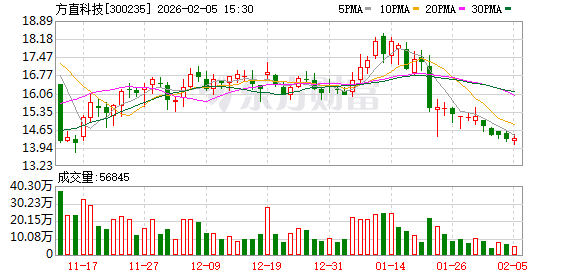
Core Viewpoint - Fangzhi Technology announced that its wholly-owned subsidiary, Shenzhen Mu Yu Technology Co., Ltd., has recently received the "High-tech Enterprise Certificate" issued by the Shenzhen Municipal Bureau of Industry and Information Technology, Shenzhen Municipal Finance Bureau, and the State Taxation Administration of Shenzhen [2] Group 1 - The certificate signifies recognition of the company's technological innovation capabilities [2] - This achievement may enhance the company's competitiveness and potential for future growth [2] - The certification could also provide the company with various financial benefits and incentives from the government [2]

银行股,资金出手了
3 6 Ke· 2026-02-05 11:21
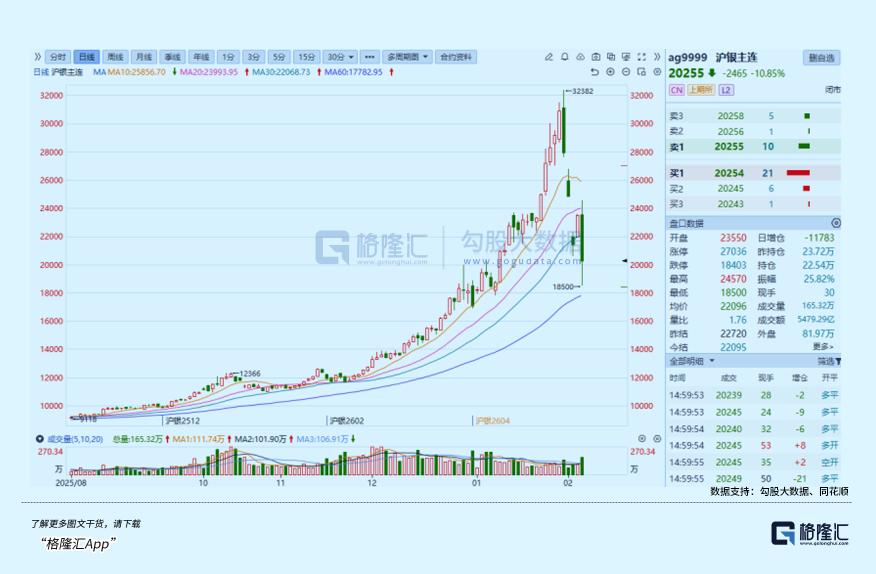
Core Viewpoint - A significant market shift occurred as global funds fled from technology stocks and precious metals, leading to a notable decline in major indices and a surge in bank stocks as a safe haven for investors [1][2][3]. Group 1: Market Reactions - On February 4, U.S. tech stocks experienced a sharp decline, with the Nasdaq dropping over 2% and major companies like Nvidia, Meta, and Tesla falling more than 3%. AMD saw a staggering drop of 17.3%, marking its largest single-day decline in nearly nine years [1][3]. - The panic spread to A-shares and Hong Kong stocks, with sectors like solar energy and precious metals witnessing significant sell-offs. Silver futures plummeted nearly 20% at one point, exacerbating market fears [2][5]. - Despite the overall market turmoil, the banking sector in A-shares rose by 2.1%, with all 42 bank stocks closing in the green, indicating a flight to safety among investors [2][10]. Group 2: Capital Flows - Southbound funds recorded a net purchase of over 22 billion HKD, with major Chinese banks like ICBC, CMB, and CCB becoming core targets for accumulation [3][13]. - A significant shift in capital is underway, with funds moving from tech and precious metals to banks, which are perceived as having a higher safety margin [3][9]. Group 3: Banking Sector Performance - The banking sector is supported by strong earnings growth and historically low valuations, making it an attractive option for risk-averse investors [15][20]. - As of February 4, several banks reported robust earnings, with Qingdao Bank, Hangzhou Bank, and others showing significant profit increases, further solidifying the sector's appeal [16][18]. - The banking sector's average dividend yield ranges from 4.87% to 5.2%, significantly higher than the 10-year government bond yield of around 2%, enhancing its attractiveness in a low-interest-rate environment [21][22]. Group 4: Future Outlook - The recent market volatility raises questions about whether the declines in tech stocks and precious metals will lead to further panic selling. However, the influx of funds into bank stocks suggests a potential shift in market sentiment [23].






特朗普启动120亿美元“金库计划”,旨在摆脱对中国稀土的依赖
Sou Hu Cai Jing· 2026-02-05 10:43
Core Points - The "Treasury Plan" launched by President Trump aims to reduce U.S. dependence on Chinese rare earths and strengthen the supply chain for critical minerals [1][3] - The plan involves collaboration with major industrial players like General Motors, Boeing, and Google to create emergency stockpiles of strategic minerals [3][4] - Funding for the plan includes $20 billion from private capital and up to $100 billion in loans from the Export-Import Bank of the United States [4] Funding and Strategy - The plan is part of a broader strategy to elevate critical minerals to a national security priority, including reforms in domestic mining permits and controversial deep-sea mining [4] - The U.S. government is promoting public-private partnerships, with significant investments in domestic rare earth producers like MP Materials and American Lithium [4][5] - The U.S. is also investing in allied countries, such as acquiring a 10% stake in Canadian Trilogy Metals [5] Geopolitical Context - The urgency of the plan is underscored by the fact that in 2024, the U.S. will rely 100% on imports for 12 critical minerals and over 50% for 29 others, raising concerns about national security [7] - Japan has responded positively to the plan, committing to invest $550 billion in U.S. supply chains, despite facing unfavorable terms [8][9] - Japan's strategic move is driven by concerns over China's impending export controls on dual-use items, which could impact Japan's security [10] Risks and Challenges - Japan's investment conditions have been criticized domestically as an "unequal treaty," raising concerns about the long-term viability of the partnership [9] - Japanese companies investing in U.S. rare earth projects may find themselves in a subordinate position, lacking control over key technologies and processes [13] - The U.S. is also shifting focus towards building new rare earth processing facilities in Australia, indicating a potential pivot away from Japan [13][14] Industry Dynamics - Western media has claimed that the U.S. and its allies are gaining control over rare earth processing, suggesting a decline in China's dominance [14][15] - However, the complexities of replicating China's established supply chain and production quality pose significant challenges for Western efforts [17] - China's comprehensive rare earth manufacturing system, built over decades, includes critical tacit knowledge that is difficult for others to replicate [17][18]


腾讯、阿里接连走低,恒生科技坠入“技术性熊市”?主力逆市抄底ETF意图何在
Jin Rong Jie· 2026-02-05 06:35
Core Viewpoint - The Hong Kong technology sector continues to experience a downward adjustment, with the Hang Seng Technology Index dropping over 20% since its peak in October last year, while certain stocks related to hardware or AI concepts are showing resilience [1][3]. Group 1: Market Performance - The Hang Seng Technology Index fell more than 1% on February 5, reflecting a significant decline in major stocks like Tencent and Alibaba, while companies like Xiaomi and Lenovo saw gains [1]. - Despite the overall weak performance of the index, ETF products tracking the technology sector experienced a net inflow of over 200 million, indicating a "buy the dip" strategy among long-term investors [2]. Group 2: Factors Influencing Market Adjustment - The current market adjustment is attributed to three main factors: a shift in global macro liquidity expectations, a cooling optimism regarding potential interest rate cuts by the Federal Reserve, and concerns over the quality of growth due to intense competition in AI applications [3]. - Some companies have issued earnings forecasts that fell short of expectations, contributing to a heightened risk-averse sentiment among investors [3]. Group 3: Investment Opportunities - The reverse capital inflow suggests that the valuations of the Hong Kong technology sector have reached historically low levels, presenting an opportunity for long-term investors to acquire quality assets at lower costs [3]. - The core position of the underlying assets in the ETFs, representing China's digital economy and long-term trends in artificial intelligence, remains unchanged despite current market volatility [3].

Skittish investors haunted by tech sell-off
Reuters· 2026-02-05 05:32
Core Viewpoint - Major U.S. tech firms were expected to report strong sales and positive outlooks, leading investors to increase their exposure ahead of the earnings season, which has turned out to be a costly mistake [1] Group 1 - Investors had high conviction in the performance of major U.S. tech firms prior to the earnings season [1] - The anticipation of impressive quarterly results prompted increased investments in these companies [1] - The outcome of this strategy has resulted in financial losses for investors [1]

瑞银:预计年底全球股市将上涨约10%,建议分散配置至中国、日本和欧洲
Jin Rong Jie· 2026-02-05 04:21
Group 1 - The UBS Chief Investment Office (CIO) expects global stock markets to rise by approximately 10% by the end of this year, with the US market remaining a core component of investors' equity allocations and having further upside potential [1] - Other regions outside the largest global economy also present attractive opportunities, driven by strategic autonomy, regional fiscal expansion, and structural reforms, with a particular focus on China, Japan, and Europe [1] - The Chinese government's explicit support for domestic artificial intelligence (AI) models and chip manufacturing is expected to lay the foundation for further increases in Chinese tech stocks [1] Group 2 - In a low interest rate environment, domestic investors are pursuing yields, which is likely to benefit sectors such as finance, healthcare, consumer goods, materials, and power equipment due to structural advantages from healthcare companies expanding internationally, the rise of new consumption models, and grid modernization [1]

银行股、科技股双双分化,中概股创近期新低,黄金十字星
Ge Long Hui· 2026-02-05 04:12
Market Overview - The three major indices showed mixed results, with the Dow Jones increasing by 0.53%, while the Nasdaq and S&P 500 decreased by 1.51% and 0.51% respectively [1] - The market displayed a divergence in performance among bank stocks and technology stocks, with Chinese concept stocks hitting recent lows [1] Banking Sector - Bank stocks continued their strong performance but showed signs of divergence, with First Citizens Bank rising by 3.43% and Zions Bank increasing by 2.33% [3] - Major banks like Bank of America and U.S. Bancorp saw gains of over 1%, while Goldman Sachs fell by 2.74% and Morgan Stanley dropped by 1.55% [3] Technology Sector - The technology sector exhibited weakness and divergence, with significant declines in stocks such as Super Micro Computer down by 17.31%, Tesla down by 3.78%, and Nvidia down by 3.41% [3] - Conversely, Apple managed to rise by 2.6% and Qualcomm increased by 1.16% [3] Chinese Concept Stocks - Chinese concept stocks continued to decline, closing down by 1.95% and reaching recent lows, with Bilibili dropping by 6.56% and NetEase down by 5.41% [3] - Other notable declines included Tencent Holdings down by 4.12% and Baidu down by 4.77%, while Li Auto and Beike saw gains [3] Gold Market - COMEX gold experienced fluctuations, closing up by 0.32% at $4986.4 per ounce, after hitting a low of $4867.7 and a high of $5113.9 during the trading session [3]

德银警示“科技自噬”! 除去谷歌,AI泡沫其实早就碎了一地
美股IPO· 2026-02-05 04:02
Core Viewpoint - Deutsche Bank warns that the era of "tech self-consumption" has arrived, where AI investments have shifted from broad gains to a "winner-takes-all" scenario, with many tech stocks experiencing significant pullbacks of up to 80% from their peaks. The S&P 500 index is largely supported by Alphabet, which has surged 75% in six months, adding $1.7 trillion in market value, while other major tech stocks have retraced between 5% and 25% [1][3][6][11]. Group 1 - The report titled "Tech eats itself" highlights a brutal reshuffling within the tech sector, indicating that while the S&P 500 remains near historical highs, this is primarily due to defensive sector rotations and the exceptional performance of a few tech giants [3][12]. - Deutsche Bank's analysis reveals that many tech stocks related to AI, software, and private equity have faced severe declines, with some experiencing pullbacks of nearly 80% from their 52-week highs [3][6]. - The report emphasizes that the apparent stability of the S&P 500 is misleading, as it is heavily reliant on Alphabet's performance, which has counterbalanced losses from other companies in the "Magnificent Seven" [6][9]. Group 2 - Alphabet's stock has risen nearly 25% in the past three months and an astonishing 75% over the last six months, translating to a market value increase of approximately $1.7 trillion [8][11]. - The report indicates a significant shift in market sentiment, moving from the belief that "every tech stock is a winner" to a more brutal reality where a clear distinction between winners and losers is emerging [12][14]. - Companies that can effectively deploy AI tools that are cost-effective, scalable, and capable of delivering meaningful productivity improvements are likely to be the long-term beneficiaries in this new market environment [14]. Group 3 - The report warns that if more members of the "Magnificent Seven" fall into the "loser" category, the impact could extend beyond the tech sector and spill over into the broader macroeconomic landscape [15]. - The focus of the market is shifting from whether AI can change the economy to how quickly and in what manner it will rewrite the competitive advantages of existing tech companies [16].

中原期货晨会纪要-20260205
Zhong Yuan Qi Huo· 2026-02-05 03:22
Report Industry Investment Rating No information provided. Core Viewpoints of the Report - The A-share market shows a mixed trend, with the spring market still likely to continue, but the market performance may not be smooth. Before the Spring Festival, the market may be volatile, and investors are advised to adopt a more conservative style and focus on high-dividend sectors [27]. - The commodity market has different trends. Precious metals generally rise, while base metals show mixed performance. The energy market is affected by factors such as geopolitical risks and inventory changes, and oil prices rise [10][11][12]. Summary by Relevant Catalogs 1. Macro News - China's President Xi Jinping had a phone call with US President Trump, emphasizing the importance of the Taiwan issue and the need for the US to handle arms sales to Taiwan carefully [7]. - Market rumors that Musk's team visited Chinese photovoltaic companies led to a surge in A-share photovoltaic concept stocks. However, some companies announced that they had not carried out any cooperation with the relevant team, and the China Photovoltaic Industry Association pointed out that space photovoltaic technology is still in the early exploration stage [7]. - Google's parent company Alphabet's Q4 2025 revenue exceeded expectations, and its 2026 capital expenditure is expected to be much higher than investors' expectations [8]. - The A-share market showed a trend of first decline and then rise. The coal and photovoltaic sectors saw a wave of daily limit increases, while the semiconductor, computing hardware, and AI application sectors were sluggish [8]. - The Ministry of Industry and Information Technology emphasized the need to strengthen the technological supply of future industries and promote breakthroughs in fields such as 6G, quantum technology, brain-computer interfaces, and embodied intelligence [8]. - The number of newly opened margin trading accounts in the market in January increased significantly compared with the previous month and the same period last year [9]. - The US dollar index rose, and most non-US currencies fell. The offshore RMB against the US dollar fell [9]. - China's first domestically developed 12-inch silicon carbide ingot thinning equipment and substrate thinning equipment were successfully delivered, marking a new breakthrough in the field of large-size silicon carbide processing [9]. - The Federal Reserve announced that it will not adjust the capital levels of large banks in the 2026 stress test cycle and is considering reforms to improve transparency [9]. - The US stock market closed mixed. The Dow rose, while the S&P 500 and Nasdaq fell. The labor market data showed that the number of private sector employment in the US in January was far lower than expected [10]. - The domestic commodity futures market mostly rose, with precious metals leading the gains. The international precious metals futures market also generally rose [10][11]. - The London base metals market mostly fell [11]. - The European stock market closed mixed. The French stock market rose due to the rebound of the luxury goods sector and the stability of the European Central Bank's interest rate; the British stock market was boosted by the strengthening of the pound; the German stock market fell due to the difficulties in the auto parts industry and geopolitical concerns [11]. - Iran's Foreign Minister clarified the official position on the talks with the US in Oman, and the meeting is scheduled to be held on February 6 [12]. - The yields of treasury bonds in the interbank market showed mixed trends, and the treasury bond futures closed lower. The central bank carried out reverse repurchase operations, and the interbank market liquidity returned to a stable and loose state [12]. - The prices of US and Brent crude oil futures rose due to concerns about the risk of military conflict and the unexpected decrease in US EIA crude oil inventory [12]. 2. Morning Meeting Views on Major Varieties 2.1 Agricultural Products - **Sugar**: The price of the sugar futures main contract continued to rebound. Although the supply pressure remains, the rebound of international sugar prices and the tightening of domestic import policies have alleviated some downward pressure. It is expected to maintain a bottom - shock repair in the short term [14]. - **Corn**: The price of the corn futures main contract fluctuated narrowly, and the pre - holiday selling pressure continued to be realized, putting pressure on the price. It is recommended to wait and see and pay attention to the support at 2250 yuan/ton [14]. - **Peanuts**: The price of the peanut futures main contract fluctuated narrowly, and the supply and demand contradiction is not prominent. It is expected to maintain a bottom - shock pattern in the short term [14]. - **Pigs**: As the Spring Festival approaches, the supply of pigs is abundant, and the downstream demand is limited. The futures market is expected to remain volatile before the festival [14][16]. - **Eggs**: The spot price of eggs dropped significantly, and the futures market reflected the decline in spot prices and the expectation of post - festival decline, maintaining a volatile trend [16]. - **Red Dates**: The price of red dates is expected to remain stable in the short term, and the futures market is looking for support [16]. - **Cotton**: The supply of cotton is expected to decrease, and the demand is resilient. It is recommended to treat it with an interval - shock idea and consider going long at the lower edge of the interval [16]. 2.2 Energy and Chemicals - **Caustic Soda**: The caustic soda market is in a state of high supply and high inventory, and the fundamentals remain in an oversupply pattern [15][16]. - **Coking Coal and Coke**: The supply of coking coal and coke is expected to shrink, and the downstream demand is also weak. It is expected to show a weak - shock trend in the short term [16]. - **Logs**: The price of log futures continued to be strong, but there is a risk of a decline in demand before the festival. It is recommended to wait and see [18]. - **Pulp**: The supply pressure of pulp continues, and the demand support is weak. It is necessary to pay attention to whether the price can stand firm at the spot price level [18]. - **Double - offset Paper**: The supply of double - offset paper is abundant, and the demand is weak. The price may be restricted if there is no substantial improvement in demand [18]. - **Urea**: The domestic urea market price is stable. The daily output is rising, and the inventory is decreasing. The UR2605 contract should pay attention to the support at 1750 - 1760 yuan/ton [18][20]. 2.3 Non - ferrous Metals - **Copper and Aluminum**: The price of copper is boosted by the proposed key mineral strategic reserve plan and the easing of market uncertainties. The supply of aluminum is increasing, and the demand shows signs of stabilization, but the structural contradiction has not been eliminated. Both are expected to continue to run at a high level [22]. - **Alumina**: The alumina market is in an oversupply pattern, waiting for new market drivers [23]. - **Rebar and Hot - rolled Coil**: The spot market of rebar and hot - rolled coil is inactive, and the demand is limited. The steel price is expected to fluctuate and adjust in the short term [23]. - **Ferroalloys**: The supply and demand of ferroalloys changed little this week. The fundamentals of silicon iron and manganese silicon are relatively healthy. The short - term trend is expected to be callback - biased and long, and the impact of the macro environment should be noted [25]. - **Lithium Carbonate**: The price of lithium carbonate futures is under pressure. The supply is expected to shrink in February, and the demand is in the peak season. It is recommended to wait and see before the festival and look for long - buying opportunities after the price stabilizes [25]. 2.4 Options and Finance - **Stock Index Options**: On February 3, the A - share market rose, and the trading volume of stock index options changed. Trend investors can pay attention to the arbitrage opportunities between varieties, and volatility investors can hold short - straddle positions to short volatility [25]. - **Stock Index**: The stock market may be volatile before the Spring Festival. It is recommended to focus on high - dividend sectors and adopt a more conservative investment style. The spring market is still likely to continue in February after short - term adjustment [27].