
投资银行

Search documents
高盛王亚军:2026年港股市场将“涛声依旧”
Zheng Quan Ri Bao Wang· 2026-01-16 11:12
Group 1 - The core viewpoint is that the Hong Kong capital market experienced significant growth in 2025, with expectations for continued activity in 2026, described as "涛声依旧" [1] - In 2025, the total equity financing in the Hong Kong stock market reached $96 billion, a 173% increase from $35.2 billion in 2024, indicating a substantial rise [1] - The IPO market in 2025 was robust, with total IPO financing soaring from $11.3 billion in 2024 to $37.5 billion, an increase of over 230% [1] - The refinancing scale, including placements and rights issues, surged from approximately $9 billion to around $45 billion, a growth of about five times, aligning with Goldman Sachs' earlier predictions [1] - Convertible bonds maintained a high financing level of about $20 billion, accounting for approximately 20% of total financing, above historical averages [1] Group 2 - The structural characteristics of the 2025 IPO market showed that nearly half of the financing came from A-share companies listing in Hong Kong, while the other half was from companies listing for the first time in Hong Kong [2] - In 2026, the IPO momentum is expected to continue, with a shift towards more first-time listings, particularly in AI and hard technology sectors, which will test the pricing power and liquidity of the Hong Kong market [2] - The refinancing market is anticipated to remain at high levels in 2026, driven by an increasing number of Chinese enterprises listed in Hong Kong, especially in high capital expenditure sectors like renewable energy and AI [2] - The concentration of Chinese AI and related industry companies going public is highlighted as a key theme for 2026, with significant capital needs still present in the sector [2] Group 3 - The phenomenon of new stocks breaking below their issue price in Q4 2025 is explained as a normal price discovery mechanism in mature markets, with no fundamental shift in the Hong Kong market [3] - Consumer stocks are emphasized as a core attraction for the Hong Kong market in 2026 due to their simple and transparent business models, predictable earnings growth, and attractive valuations [3]
大摩2026全球展望:美国强经济推迟降息,日央行全年按兵不动,中国出口持续扩大...
Hua Er Jie Jian Wen· 2026-01-16 11:08
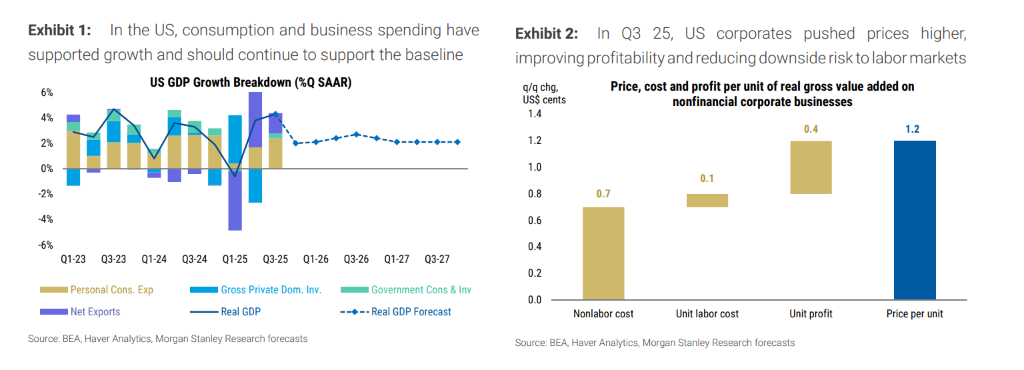
Core Viewpoint - Morgan Stanley indicates that the global economy is at a highly differentiated crossroads, with market expectations for liquidity easing potentially diverging from reality [1] Group 1: US Economic Outlook - The US economy shows a confusing yet resilient divergence, with strong consumer spending growth at an annualized rate of 3.5% despite signs of labor market weakness [2][5] - The Federal Reserve's path has been altered due to strong demand and tariff-induced inflation, leading to a significant delay in interest rate cuts to mid-2026 [5] - The resilience of the US economy poses inflation as a more pressing threat than recession, with the Fed expected to maintain restrictive rates until a clear downward trend in inflation is confirmed [1][5] Group 2: Eurozone and UK Economic Conditions - The Eurozone is experiencing stagnation, with a composite PMI decline from 52.8 to 51.9, indicating a loss of growth momentum [6] - Core inflation in the Eurozone has dropped to 2.3%, supporting the case for potential rate cuts by the European Central Bank in June and September [8] - The UK economy remains weak, with labor demand softening, and the Bank of England is likely to cut rates in February as inflation is expected to return to target levels by April 2026 [8] Group 3: Japan's Monetary Policy - Morgan Stanley's view on Japan's monetary policy contrasts with market expectations, predicting that the Bank of Japan will keep rates unchanged throughout 2026 despite prior rate hikes [9][10] - A projected decline in core CPI from 3% to 2% and political uncertainties are cited as reasons for the lack of tightening [10] Group 4: China's Economic Strategy - China is expected to increase its global export market share from 15% to 16.5% by 2030, supported by fiscal policy continuity and a rebound in PMI data [11][13] - The economy's recovery from deflation is anticipated to be slow, relying more on commodity prices than broad demand recovery [13] Group 5: Emerging Markets Dynamics - India is projected to grow at 7.4% in FY2026, driven by policy easing and strong demand, while the current rate cut cycle is seen as nearing its end [16] - Latin America is poised for a policy shift towards more market-friendly approaches, with Brazil expected to cut rates significantly while facing moderate economic slowdown [16]


外资回流五六成!高盛王亚军证实,港股IPO头部外资参与率飙升至九成
Jin Rong Jie· 2026-01-16 10:53
Core Insights - International long-term capital has largely returned to the Chinese market, with approximately 50-60% of previously withdrawn foreign capital coming back, and expectations for this to rise to around 70% [1] - The participation rate of top international long-term funds in Hong Kong IPOs has surged from 10-15% at the beginning of 2024 to 85-90% [1] - The total financing amount in the Hong Kong capital market for 2025 is projected to reach $96 billion, more than doubling from $35.2 billion in 2024 [1] Group 1: Market Trends - In 2025, the Hong Kong stock refinancing scale is expected to increase significantly from approximately $7 billion in 2024 to $38.8 billion [2] - The demand for refinancing is driven by the acceleration of Chinese companies going overseas and the capital expenditure needs of high-growth sectors like renewable energy and AI [2] - The proportion of convertible bonds in total financing is anticipated to remain stable at 20-25% in 2026 [2] Group 2: Sector Focus - The technology and consumer sectors continue to be the core focus for international long-term capital [2] - In 2026, Chinese AI and related industry companies are expected to dominate the Hong Kong stock market, with significant participation from core AI technology firms and related sectors such as telecommunications and semiconductors [2] - The consumer sector remains attractive to international long-term funds due to clear business models, predictable profit growth, and relatively reasonable valuations [3] Group 3: Market Sentiment - Concerns regarding the collective decline of new Hong Kong stocks at the end of 2025 are viewed as a phase of adjustment rather than a fundamental market shift [3] - Market sentiment has quickly rebounded since 2026, indicating a solid market foundation [3] - Retaining international capital in the Hong Kong market will depend on market reforms and improvements in asset quality [3]

2025年港股IPO绿鞋观察:中资护盘积极却跌幅更大 建投保荐海螺材料跌幅近50% 外资破发率高但跌幅可控
Xin Lang Cai Jing· 2026-01-16 09:30
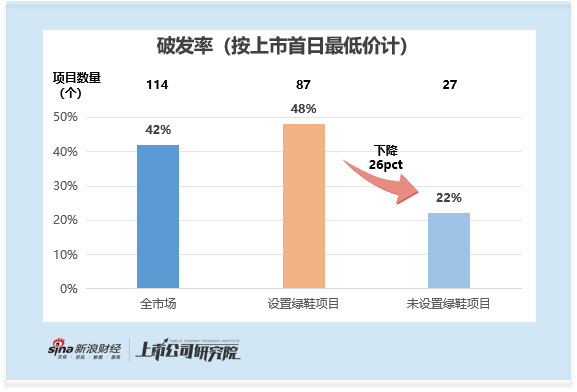
Group 1 - The core viewpoint of the article highlights the strong recovery of the Hong Kong IPO market in 2025, with 114 companies completing listings and raising a total of 285.6 billion HKD, making it the largest IPO fundraising exchange globally [1][13] - The average first-day gain for newly listed companies was 37%, significantly higher than the previous year's 8%, although over 40% of the projects experienced a first-day drop [1][13] - The green shoe mechanism, typically intended to stabilize new stock prices, showed limitations in 2025, with a first-day drop rate of 42%, and projects with green shoes had a higher drop rate of 48% compared to 22% for those without [1][15] Group 2 - The execution of the green shoe mechanism is closely tied to market demand, as it is allocated to non-anchor institutional investors, leading to a higher drop rate for projects with green shoes when demand is insufficient [3][15] - The strategy of green shoe funds typically involves controlling price declines rather than immediate full support, with concentrated buying near the market close to achieve a favorable closing price [3][15] - The performance of market stabilizers, such as CICC, showed a 44% drop rate based on intraday lows, which narrowed to 30% based on closing prices, indicating the effectiveness of their strategy [9][18] Group 3 - There is a notable difference in the green shoe execution strategies between Chinese and foreign institutions, with foreign investment banks generally exhibiting higher drop rates, such as Goldman Sachs at 75% and Morgan Stanley at 58% [6][20] - Chinese investment banks, such as CICC and CITIC Securities, reported lower drop rates of 41% and 25% respectively, indicating better performance among leading underwriters [6][20] - The average minimum drop for projects under Chinese investment banks was significantly higher, ranging from 14% to 32%, compared to 6% to 12% for foreign banks, highlighting greater volatility in the former's projects [10][22]



2025年港股承销格局全景:大摩双赛道均衡发力稳居总榜第三 高盛靠两单超大再融资夺回总榜第四
Xin Lang Cai Jing· 2026-01-16 09:18
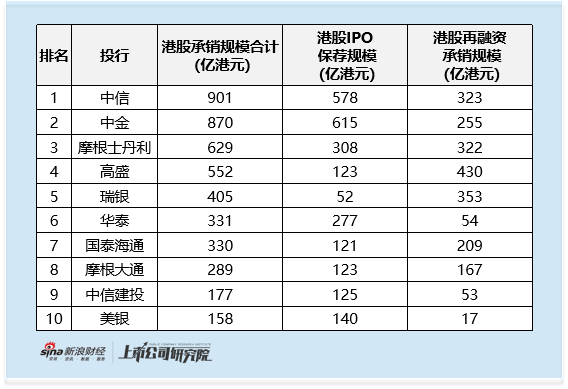
Core Viewpoint - The Hong Kong stock market in 2025 is characterized by a "dual-driven" capital active state of "IPO + refinancing," with both segments experiencing significant recovery, raising a total of 285.6 billion HKD in IPOs and 273.5 billion HKD in refinancing, indicating equal importance in the competition for underwriting strength in the Hong Kong equity financing market [1][7]. Group 1: Market Overview - The total IPO fundraising in the Hong Kong market reached 285.6 billion HKD as of January 16, 2026, while refinancing (including convertible bonds) amounted to 273.5 billion HKD, showing a balanced financing scale [1][7]. - The competition among major players such as CITIC, CICC, Morgan Stanley, and Goldman Sachs has led to distinct competitive paths, with domestic institutions focusing on the IPO track and foreign institutions concentrating on the refinancing track [1][7]. Group 2: Major Players and Their Strategies - CITIC Securities led the underwriting market with a total underwriting scale of 90.1 billion HKD, including 57.8 billion HKD in IPOs and 32.3 billion HKD in refinancing [2][8]. - Morgan Stanley achieved a total underwriting scale of 62.9 billion HKD, with nearly equal contributions from IPOs (30.8 billion HKD) and refinancing (32.2 billion HKD), making it one of the few firms excelling in both areas [3][9]. - Goldman Sachs focused heavily on the refinancing sector, leading with an underwriting scale of 43 billion HKD, primarily through large projects like BYD and Xiaomi, while only participating in 8 IPOs throughout the year [5][11]. Group 3: Project Highlights - Morgan Stanley's top IPO projects included Zijin Mining International (28.7 billion HKD), Hengrui Medicine (11.4 billion HKD), and Haitian Flavoring & Food (10.6 billion HKD) [4][10]. - Goldman Sachs' notable refinancing projects included BYD (43.5 billion HKD) and Xiaomi (42.6 billion HKD), which accounted for 90% of its refinancing scale [6][12].






2025年港股承销格局全景:中信再融资助力登顶港股股权融资承销榜第一 IPO之王中金憾失榜首
Xin Lang Cai Jing· 2026-01-16 09:12
Core Viewpoint - The Hong Kong stock market in 2025 is characterized by a "dual-driven" capital active state of "IPO + refinancing," with both sectors experiencing significant recovery, where IPO fundraising reached 285.6 billion HKD and refinancing (including convertible bonds) totaled 273.5 billion HKD, indicating equal importance in the competition for equity financing market underwriting [1][7]. Group 1: Market Overview - The total IPO fundraising in the Hong Kong market for 2025 was 285.6 billion HKD as of January 16, 2026, while refinancing reached 273.5 billion HKD, showing a balanced financing scale [1][7]. - Major players like CITIC, CICC, Morgan Stanley, and Goldman Sachs have adopted different competitive strategies, with domestic institutions focusing on the IPO sector and foreign institutions concentrating on refinancing [1][7]. Group 2: CITIC Securities Performance - CITIC Securities maintained a leading position in the Hong Kong market, with an IPO underwriting scale of 57.8 billion HKD, ranking second overall, supported by major projects like Zijin Mining International (28.7 billion HKD) and Sany Heavy Industry (15.3 billion HKD) [3][9]. - In the refinancing sector, CITIC ranked first among domestic brokers with an underwriting scale of 32.3 billion HKD, primarily driven by BYD's 43.5 billion HKD large-scale issuance, the largest equity financing project in the Hong Kong market [3][9]. Group 3: CICC Performance - CICC led the IPO market with an underwriting scale of 61.5 billion HKD, participating in seven of the top ten IPO projects, including major companies like CATL and Chery Automobile [5][11]. - In refinancing, CICC's scale was 25.5 billion HKD, ranking second among domestic brokers, but it faced challenges in maintaining competitiveness, as it did not participate in significant projects like BYD's large issuance [5][11]. Group 4: Top Projects - The top IPO projects for CITIC Securities included Zijin Mining International (28.7 billion HKD) and Sany Heavy Industry (15.3 billion HKD) [4][10]. - CICC's top IPO projects featured CATL (41.0 billion HKD) and Seres (14.3 billion HKD) [6][12].
强就业巩固利率走向预期,美股叙事转向哪里?
Sou Hu Cai Jing· 2026-01-16 07:33
Economic Indicators - The latest data shows that the number of initial jobless claims in the U.S. is 198,000, a decrease of 9,000 from the previous week, contrasting with market expectations of an increase to 215,000, marking the second-lowest level in two years [2] - Continuing claims for unemployment benefits fell by 19,000 to 1.884 million, aligning with market expectations and continuing a downward trend since October of the previous year, although still above the average level since 2022 [2] Currency and Commodities - The strengthening of the U.S. dollar index is noted, rising from 99.1 to 99.3 [4] - Oil prices have declined, with Brent crude futures dropping from $66.84 to approximately $63.63, a decrease of over 4.8% [7] - Gold prices have also retreated from above $4,630 to below $4,600 [7] Japanese Yen and Stock Market - Despite expectations of potential interest rate hikes by the Bank of Japan, the yen remains weak due to a significant fiscal deficit and market sentiment favoring a weaker yen for trade advantages [6][9] - Japanese stocks continue to rise, driven by the weak yen benefiting export-oriented companies, with speculation about potential early elections to push aggressive fiscal spending [9] AI and Technology Sector - TSMC reported strong Q4 2025 earnings driven by AI demand, with plans to invest $52-56 billion in capital expenditures for 2026, confirming the authenticity of AI demand through customer engagement [11] - Following TSMC's positive outlook, other suppliers in the semiconductor industry saw significant stock price increases, with Applied Materials up 5.69%, Lam Research up 4.16%, and ASML up 5.37% [12] - Wall Street's sentiment towards AI investments shifted from pessimism to optimism, with major tech stocks rebounding, influenced by TSMC's management affirming the real demand for AI [13] Investment Banking Performance - Investment banks like Morgan Stanley and Goldman Sachs reported strong earnings driven by trading activities, with Morgan Stanley's investment banking benefiting from a surge in M&A and IPO activities [13] - Goldman Sachs saw a 25% year-over-year increase in equity business revenue, with significant growth in fixed income, foreign exchange, and commodity trading [13]

金银比14年来首度跌破50,高盛疾呼:反手做多的时候到了
Feng Huang Wang· 2026-01-16 07:04
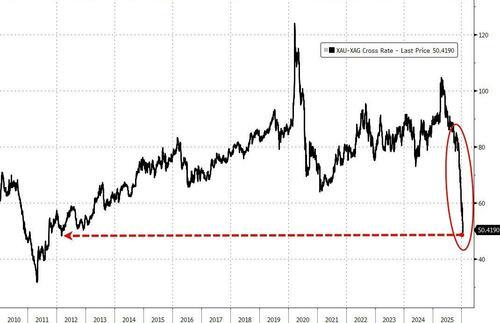
Core Viewpoint - The silver market is experiencing unprecedented interest and activity, driven by geopolitical tensions, record inflows from retail investors, and expectations of U.S. tariffs on silver, leading to significant price volatility and a historic drop in the gold-silver ratio [1][3][8]. Group 1: Market Dynamics - The gold-silver ratio has fallen below 50 for the first time in 14 years, indicating a shift in market dynamics favoring silver [1]. - Silver is at the center of trade tensions, with the U.S. listing it as a critical mineral and China imposing stricter export controls, which has heightened investor interest [3]. - Retail trading activity in silver is currently 2.1 times its three-month average, surpassing both gold and cryptocurrencies, suggesting a structural increase in demand rather than just short-term speculation [5]. Group 2: Investment Trends - Retail investors have injected a record $921.8 million into silver-related ETFs over the past 30 days, marking the largest buying spree in history [6]. - The iShares Silver Trust (SLV) has seen an unprecedented 169 consecutive days of net inflows from retail investors, indicating a fundamental shift in asset allocation strategies [6]. - The expectation of potential U.S. tariffs of up to 50% on silver has led to a concentration of silver in the U.S., causing liquidity pressures in the London market and amplifying price volatility [8]. Group 3: Comparative Analysis with Gold - Goldman Sachs notes that despite the current enthusiasm for silver, gold remains a preferred alternative investment for those seeking to diversify away from dollar risk, with a projected 67% performance increase by 2025 [10]. - Gold ETFs currently represent only 0.17% of the U.S. non-cash financial investment portfolio, indicating significant room for growth compared to the peak in 2012 [11]. - The ongoing demand for gold from central banks is expected to continue, with average monthly purchases projected to reach 70 tons by 2026, significantly higher than the 17 tons average in 2022 [11]. Group 4: Future Outlook - Goldman Sachs suggests that the current speculative behavior in silver, driven by physical market tightness, may not be sustainable, and once the excitement fades, the support for silver prices could weaken [14]. - The historical volatility of silver compared to gold suggests that while silver may outperform in certain conditions, the long-term outlook for gold remains strong due to continued central bank purchases and investor diversification [14].
高盛观点 | 2026年中国宏观经济展望
高盛GoldmanSachs· 2026-01-16 05:05
Economic Outlook - Goldman Sachs projects China's real GDP growth to reach 4.8% in 2026, surpassing the market consensus of 4.5% [1] - Structural challenges such as weak consumer spending and a sluggish labor market persist, although the drag from the declining real estate market is expected to lessen [1] - The firm anticipates that increased exports and a reduction in the negative impact of the real estate sector will lead to a faster-than-expected economic growth this year [1] Trade and Inflation - The forecast for Producer Price Index (PPI) inflation is -0.7%, slightly better than the consensus expectation of -1.0% [2] - The PPI has been in deflation for over three years, prompting the government to implement "anti-involution" policies to curb price competition among manufacturers [2] - Goldman Sachs expects the current account surplus to rise from 3.6% of GDP in 2025 to 4.2% in 2026, contrary to the consensus prediction of a decline to 2.5% [2] Export Dynamics - The resilience of Chinese exports is attributed to three factors: rapid expansion of exports to emerging markets, limited ability of other countries to impose trade barriers against China in key mineral sectors, and greater growth potential in high-tech exports [5] - The firm predicts that export prices, measured in USD, will turn positive in 2026, increasing from -2.7% last year to 0.7% [6] Consumer and Labor Market - The labor market in China has been weak, with employment indices at their lowest levels in a decade, and nominal wage growth expected to slow to 3.8% year-on-year by Q3 2025 [7] - Targeted government policies are anticipated in 2026 to alleviate labor market pressures and support income growth, including subsidies for labor-intensive services and increased minimum wages [7] - Despite a forecasted slowdown in household consumption growth, government consumption is expected to accelerate, balancing the overall contribution of consumption to GDP growth [7] Real Estate Market - The Chinese real estate sector is in its fifth year of decline, with most activity indicators down by 50%-80% from peak levels in 2020-2021 [8] - There are no signs of stabilization in the real estate market, with high housing inventory and severe financing conditions for major developers [11] - Goldman Sachs predicts that the drag from the real estate sector on GDP growth will decrease by 0.5 percentage points annually, although it will still negatively impact growth in the coming years [11] Risks to Growth Outlook - The growth forecast faces slight downward risks due to weaker-than-expected momentum and a lack of urgency for significant policy easing from decision-makers [12] - Potential risks include renewed tensions in US-China relations, increased trade barriers from major trading partners, and intensified financial pressures on local governments and banks [12]
中美AI竞争或于2030年迎来转折
Zhong Guo Dian Li Bao· 2026-01-16 03:09
据高盛此前发布的报告,当前,美国数据中心容量占全球的44%,已消耗美国约6%的电力,预计到 2030年,这一比例将上升至11%,而衡量电网可靠性的有效备用电力容量指标却从5年前的26%降至 19%。在全美13个区域电网中,8个已达到或低于该临界值,弗吉尼亚州等数据中心密集地区均出现电 价飙升现象。 据彭博社报道,当地时间1月7日,全球知名投行高盛表示,在数据中心用电需求迅猛增长的背景下,到 2030年,美国几乎所有电力电网都将面临备用容量不足的问题,或为中国在人工智能竞争中取得先发优 势提供机遇。 "如果电力约束持续存在,中国有可能在AI竞赛中实现反超。"高盛全球大宗商品研究联席主管Samantha Dart直言,美国的新增发电能力跟不上需求增长。按行业惯例,电网需要保持至少15%的备用裕度,才 能在峰值负荷与可用发电能力间形成安全空间。但目前,美国部分电网已低于这一水平,随着数据中心 持续拉动用电需求,备用不足的问题在未来几年只会进一步恶化。 与此形成鲜明对比的是,中国电力供应展现出强大韧性。高盛报告指出,预计到2030年,中国将拥有约 400吉瓦的备用电力容量,达到全球数据中心预期总需求的3倍以上。 ...