
电解铝

Search documents
天然气行业深度研究(二):为何油气价格大幅回落,欧洲能源CPI仍居高不下?
Guohai Securities· 2025-07-31 06:23
Investment Rating - The report does not provide a specific investment rating for the industry Core Insights - The report explores why European energy CPI remains high despite significant declines in energy prices, the lack of benefits from low-cost renewable energy for the public, and the impact of high electricity prices on commodities [5][11] Summary by Sections 1. European Energy CPI and Electricity Prices - European energy CPI reached a historical peak of 192.5 in October 2022, driven by extreme weather and geopolitical conflicts, despite a subsequent 82% drop in natural gas prices and a 40% drop in oil prices by June 2025 [5][11] - As of June 2025, the average household electricity price in Germany was 40.0 euro cents per kWh, translating to an annual cost of approximately 11,573 RMB for a typical family [11][12] 2. Factors Supporting High Electricity Prices - The high electricity prices are supported by five main factors: 1. The transition away from Russian energy sources has led to a doubling of procurement costs for LNG from the US [11][23] 2. Aging electricity infrastructure has resulted in rising grid costs, with distribution network costs increasing by 31.6% since 2019 [11][28] 3. Rising taxes and fees, which accounted for 38.4% of electricity costs in 2024, disproportionately burdening consumers [11][36] 4. Rigid renewable energy subsidies that add to end-user costs, despite a reduction in traditional subsidies [11][42] 5. High carbon emission costs, with EU-ETS prices reaching nearly 90 euros, contributing significantly to electricity costs [11][44] 3. Renewable Energy and Market Mechanisms - Despite an increase in renewable energy generation, with wind and solar accounting for 26.9% of total generation by June 2025, the benefits have not translated into lower consumer prices due to market structure issues [11][49] - The disconnect between wholesale and retail electricity markets has resulted in persistent high prices, as wholesale prices are often set by higher-cost fossil fuel generation [11][52] 4. Impact on Commodities and Manufacturing - High electricity prices have severely impacted energy-intensive industries, leading to reduced production in sectors like aluminum and fertilizers, while also diminishing the competitiveness of European manufacturing against countries like China [5][6]
策略对话金属:电解铝反内卷行情展望
2025-07-28 01:42
Summary of Key Points from the Conference Call on the Electrolytic Aluminum Industry Industry Overview - The electrolytic aluminum industry benefits from energy consumption restrictions, limited production capacity, and slow overseas production, maintaining a favorable state without excessive competition or policy intervention in recent reforms [1][2] - Historical experiences indicate that policy interventions and demand stimulation can effectively control supply and sustain market conditions, as seen in the capacity elimination from 2016 to 2018 and the economic recovery post-COVID-19 in 2021 [1][3] Core Insights and Arguments - Sustained market conditions require terminal demand stimulation, such as investments in hydropower stations and infrastructure projects, similar to past measures like real estate demand relaxation and automobile purchase tax incentives [1][4][5] - The electrolytic aluminum sector is viewed as a dividend-like stock due to its rigid supply, increasing dividend rates, and high yields, with recommendations to focus on companies with stable dividends and high yield rates [1][6] - Recent commodity price increases are primarily driven by rising demand and energy consumption controls, leading to a 10% to 15% average reduction in output for high-energy-consuming products like steel, aluminum, and copper, with many prices reaching new highs since 2007 [1][7] Factors Influencing Aluminum Performance - Aluminum performs well in the current economic environment due to its high energy consumption, with production requiring 13,500 kWh per ton, consuming over 7% of China's total electricity [1][8] - The high cost of production and the strict control of overproduction in the aluminum sector limit its elasticity, making it less susceptible to fluctuations compared to other cyclical products [1][9] - Demand for non-ferrous metals, including aluminum and copper, is expected to grow due to applications in new energy vehicles, grid upgrades, and other sectors, maintaining resilience even as real estate demand weakens [1][9] Future Outlook and Recommendations - Over the next 3 to 5 years, aluminum and copper are recommended as key investment targets, with optimal buying opportunities during periods of gradual interest rate cuts in the U.S. [1][10] - The aluminum sector is expected to show strong resilience, with a projected annual growth rate of about 3%, while supply remains constrained due to domestic controls and slow overseas production [1][11] - Key recommended stocks include high-dividend companies such as China Hongqiao, Hongshuang Holdings, Tianshan Aluminum, and Zhongfu Industrial, which have high dividend rates and significant value potential [1][11] Additional Important Insights - The aluminum sector has seen a rapid recovery in cash flow from 20 billion to over 80 billion to 100 billion, with debt ratios decreasing from 60-70% to 30-40%, indicating a favorable environment for dividends [1][11] - The current price-to-book ratio is approximately 1.5, with annual dividend rates increasing steadily by 10%, highlighting significant marginal changes and a favorable dividend timing [1][11]
长江大宗2025年8月金股推荐
Changjiang Securities· 2025-07-27 10:13
Group 1: Metal Sector - China Hongqiao's net profit forecast for 2024 is CNY 223.72 billion, with a PE ratio of 8.14[12] - Hualing Steel's net profit is projected to increase from CNY 20.32 billion in 2024 to CNY 28.54 billion in 2025, with a PE ratio of 19.72[12] - Xiamen Tungsten's net profit is expected to rise from CNY 17.28 billion in 2024 to CNY 21.01 billion in 2025, with a PE ratio of 22.97[12] Group 2: Construction and Transportation - Sichuan Road and Bridge's net profit is forecasted to grow from CNY 72.10 billion in 2024 to CNY 82.86 billion in 2025, with a PE ratio of 10.35[12] - YTO Express's net profit is expected to decrease from CNY 40.12 billion in 2024 to CNY 35.39 billion in 2025, with a PE ratio of 13.03[12] - China Merchants Highway's net profit is projected to be CNY 55 billion in 2025, with a PE ratio of 14.56[12] Group 3: Chemical and Energy Sector - Yara International's net profit is expected to rise from CNY 9.50 billion in 2024 to CNY 17.94 billion in 2025, with a PE ratio of 30.56[12] - Funiu Power's net profit forecast for 2025 is CNY 28.95 billion, with a PE ratio of 9.18[12] - Huajin's net profit is projected to recover to CNY 0.92 billion in 2025 after a loss of CNY 27.95 billion in 2024[12] Group 4: Strategic Metals and New Materials - Xiamen Tungsten's strategic metal segments are expected to contribute 79% to profits in 2024, with a focus on tungsten and rare earths[21] - Zhongcai Technology's special glass fiber is projected to see significant demand growth due to AI hardware requirements, with expected profits of CNY 0.2 billion in 2024[30] - The company anticipates a profit contribution from special glass fiber of CNY 7.2 billion by 2026[30]


这轮反内卷,有什么不一样?
天天基金网· 2025-07-25 12:37
Core Viewpoint - The article discusses the recent focus on "anti-involution" in various industries, emphasizing the need to eliminate homogeneous or low-end production capacities and restore a reasonable pricing system to optimize the competitive environment and enhance innovation capabilities in foundational industries [1][3]. Group 1: Background and Current Situation - The main goal of the current "anti-involution" initiative is to address severe homogenization in competition, which has led to a collapse of the overall pricing system due to excess supply and stagnant demand growth [3][4]. - Industries affected include renewable energy, particularly solar power, automotive sectors, and traditional industries like steel, cement, and electrolytic aluminum, all of which have experienced downward trends in the past two years [4][5]. - The phenomenon of "involution" is characterized by price wars driven by market share competition, resulting in deteriorating profitability for many companies, particularly in the solar and renewable energy sectors [4][10]. Group 2: Demand and Supply Dynamics - Demand for traditional industries like steel and cement is closely tied to macroeconomic factors, especially real estate, which has seen a decline affecting related sectors [5][6]. - The solar industry experienced rapid growth of 40%-50% from 2021, but demand may fluctuate in the coming months due to policy changes [6]. - The supply side of these industries shows a commonality in underlying technologies and business models, leading to homogenization, although some segments are witnessing continuous technological innovation and product differentiation [6][7]. Group 3: Historical Context and Comparisons - The current "anti-involution" measures are compared to previous supply-side reforms in 1998 and 2016, highlighting the evolution of reform strategies as the economic landscape changes [7]. - The 1998 reforms focused on state-owned enterprises, while the 2016 reforms involved both state and private enterprises, with the current adjustments primarily affecting emerging industries dominated by private players [7]. Group 4: Mechanisms of Involution and Future Outlook - The rapid expansion of homogeneous production capacities is driven by factors such as talent mobility, innovation, and capital flow, leading to significant fluctuations in profitability [9][10]. - Future competition may shift from price to product differentiation and performance, depending on the market's focus on cost versus innovation [11][12]. Group 5: Investment Opportunities - Investment opportunities are anticipated in sectors like steel and solar energy, where certain companies are demonstrating resilience and competitive advantages despite the overall market challenges [16][17]. - The lithium battery supply chain is highlighted, with a distinction between the midstream battery segment, which is experiencing a bifurcation in profitability, and the upstream materials segment facing oversupply issues [16][17].


国家能源局为绿电消费划硬性“KPI”,电解铝首迎强制消费考核
2 1 Shi Ji Jing Ji Bao Dao· 2025-07-25 11:56
Core Viewpoint - The recent notification from the National Development and Reform Commission and the National Energy Administration aims to expand the demand for green certificates, leading to an upward trend in green certificate prices, with expectations for further increases in the future [1][2][3] Group 1: Green Certificate Market Dynamics - The notification sets specific green electricity consumption ratios for key industries, including electrolytic aluminum, steel, cement, polysilicon, and data centers, with the electrolytic aluminum industry being the only one subject to mandatory assessment [1][4] - The green electricity consumption ratio for electrolytic aluminum, steel, cement, and polysilicon is set between 25.2% and 70%, while new data centers are required to achieve 80% [1][5] - The green certificate market has seen significant growth, with a reported 446 million green certificates traded in 2024, marking a 364% year-on-year increase [1] Group 2: Industry-Specific Implications - The electrolytic aluminum industry is highlighted as a major focus due to its high energy consumption and carbon emissions, with a target of 25% renewable energy usage by 2025 [4][6] - Data centers are recognized as rapidly growing energy consumers, with a specific requirement for 80% green electricity consumption, reflecting ongoing efforts to promote low-carbon development [6][7] - The notification allows for a monitoring phase for most industries, providing a buffer period for companies to adapt to the new policies before mandatory assessments begin [2][7] Group 3: Future Outlook and Strategies - The anticipated increase in green certificate prices is driven by factors such as international recognition of Chinese green certificates and adjustments in supply dynamics [2][3] - Companies in energy-intensive sectors are expected to explore various strategies to meet green electricity consumption targets, balancing economic considerations with sustainability goals [7] - The alignment of local renewable energy consumption responsibilities with industry-specific targets indicates a coordinated approach to enhancing green energy adoption across regions [6][7]
宋志平在光伏行业大会上“反内卷”讲话全文:商场不是战场,覆巢之下焉有完卵
经济观察报· 2025-07-25 11:50
Core Viewpoint - The core viewpoint emphasizes the need for the photovoltaic industry to overcome "involution" and establish a healthy ecosystem through five key recommendations [2][4]. Group 1: Recommendations for the Photovoltaic Industry - The first recommendation is to shift from competition to cooperation, enhancing industry self-discipline. It is crucial to distinguish between "good competition" that creates value and "bad competition" that destroys it [5][6][11]. - The second recommendation is to move from fragmentation to consolidation, increasing industry concentration. The ability to integrate resources is more important than merely creating them [15][16][19]. - The third recommendation is to transition from reducing output to reducing capacity, addressing both symptoms and root causes. The current global photovoltaic module capacity is 1200 GW, while annual usage is only 600 GW, necessitating output reduction [22][23][30]. - The fourth recommendation is to shift from quantity-based profit to price-based profit, emphasizing the importance of pricing strategies over mere sales volume [31][32][40]. - The fifth recommendation is to move from a "red ocean" to a "blue ocean" through innovation, categorized into four aspects: differentiation, segmentation, high-end positioning, and branding [41][42][45]. Group 2: Industry Insights and Examples - The experience from the electrolytic aluminum industry, which successfully established a production ceiling of 45 million tons, serves as a valuable reference for the photovoltaic sector [12][13][14]. - The Japanese cement industry restructured from 23 companies to 3, maintaining stable prices despite stagnant sales, illustrating the benefits of consolidation [18][19]. - The implementation of peak-shaving production in the cement industry led to significant profit increases, demonstrating the effectiveness of capacity management [28][30].






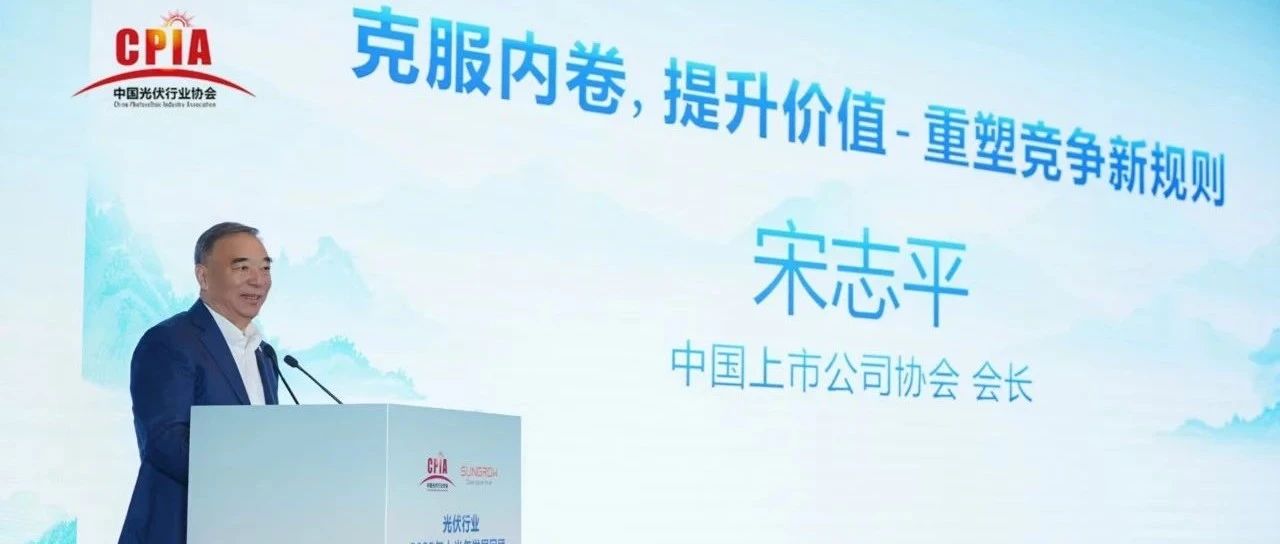
宋志平在光伏行业大会上“反内卷”讲话全文:商场不是战场,覆巢之下焉有完卵
Jing Ji Guan Cha Wang· 2025-07-25 11:24
Core Viewpoint - The core viewpoint emphasizes the need to rethink competition concepts in the photovoltaic industry, advocating for a shift from "competition" to "co-opetition" to foster a healthier industry ecosystem [2][3]. Group 1: Industry Self-Regulation - The market's essence is competition, but it can be categorized into "good competition" that creates value and "bad competition" that destroys it. The industry must recognize the dangers of "involution" competition [3][4]. - Industry associations should prioritize self-regulation, focusing on policy formulation, technological innovation, and combating unfair competition [6][5]. Group 2: Industry Consolidation - The industry should move from fragmentation to consolidation to increase concentration and combat involution. Mergers and acquisitions can help create industry leaders and improve market structure [7][8]. - Historical examples, such as the restructuring of Japan's cement industry, illustrate the benefits of consolidation followed by proportional capacity reduction [9]. Group 3: Capacity Management - The photovoltaic industry currently has a capacity of 1200 GW, while global demand is only 600 GW. The first step is to reduce output to stabilize prices and profits, followed by limiting capacity [10][12]. - Implementing production limits has proven beneficial, as seen in the cement industry, where profits significantly increased after capacity management [12]. Group 4: Pricing Strategy - Companies should focus on price-based profit rather than solely on volume and cost. Understanding the relationship between price, volume, and profit is crucial for effective management [15][18]. - Successful companies prioritize quality and service over aggressive pricing strategies, which can lead to long-term profitability [18][21]. Group 5: Innovation and Value Creation - To transition from a "red ocean" to a "blue ocean," companies must innovate and enhance core competitiveness through differentiation, segmentation, high-end products, and branding [19][20]. - The emphasis on brand value and premium pricing is essential for sustainable growth, encouraging companies to avoid price wars and focus on high-quality offerings [21].


开源晨会-20250724
KAIYUAN SECURITIES· 2025-07-24 14:59
Group 1 - The report highlights the ongoing "anti-involution" market phase, driven by high-level policies and clean industry chips, which are expected to support a rebound in certain sectors [8][10][11] - The chemical industry, particularly polyester filament, is identified as a leader in the "anti-involution" movement, with production capacity expansion reaching its peak and profit margins expected to improve [12][14] - The organic silicon industry is also noted for its recovery potential due to improved supply-demand dynamics and industry self-discipline, with limited new capacity expected in the near future [18][21] Group 2 - The report discusses Google's cloud services, which exceeded revenue expectations, indicating strong growth driven by AI investments, and an increase in capital expenditure for 2025 [24][25] - The food and beverage sector is experiencing a decline in fund allocation, with a significant reduction in holdings in traditional sectors like liquor, suggesting a cautious market outlook [29][30] - The medical sector, particularly the Chinese medicine chain Solidarity Hall, is positioned for growth due to favorable policies and increasing demand, with projected profit growth in the coming years [36][38] Group 3 - The home appliance sector, represented by companies like TCL and Zhao Chi, is expected to see profit improvements driven by high-value Mini LED products and production efficiency enhancements in Vietnam [40][46] - The non-ferrous metals industry, particularly Zhongfu Industrial, is anticipated to benefit from cost optimization and increased production capacity, leading to improved profitability [42][43] - The overseas market, particularly for Quan Feng Holdings, is showing resilience with expected profit growth due to strategic production relocation and favorable market conditions [51][52]
有色和贵金属每日早盘观察-20250724
Yin He Qi Huo· 2025-07-24 09:56
Report Industry Investment Rating No relevant content provided. Core Viewpoints of the Report The report analyzes the market conditions, important information, logical analysis, and trading strategies of various metals including precious metals, copper, alumina, electrolytic aluminum, cast aluminum alloy, zinc, lead, nickel, stainless steel, industrial silicon, polysilicon, and lithium carbonate. Overall, the uncertainty of US tariffs and policies will bring inflation rebound and economic slowdown, and the independence of the Federal Reserve is also unknown. Precious metals are expected to remain in a pattern of being easy to rise and difficult to fall. Other metals are affected by factors such as supply and demand, policies, and market sentiment, showing different trends and investment suggestions [4]. Summary by Relevant Catalogs Precious Metals - **Market Review**: London gold fell 1.3% to $3386.7 per ounce after three - day gains, London silver fell 0.12% to $39.216 per ounce. Affected by the external market, Shanghai gold futures fell 0.78% to 785.26 yuan per gram, and Shanghai silver futures fell 0.36% to 9431 yuan per kilogram. The US dollar index fell 0.18% to 97.214, the 10 - year US Treasury yield dropped to 4.39%, and the RMB exchange rate against the US dollar rose 0.21% to 7.1547 [3]. - **Important Information**: There are developments in trade negotiations between the US and other major economies, and the Federal Reserve's situation has eased market risk - aversion. The probability of the Federal Reserve maintaining interest rates unchanged in July is 97.4%, and the probability of a 25 - basis - point cut is 2.6%. In September, the probability of maintaining interest rates unchanged is 37.2%, and the probability of a cumulative 25 - basis - point cut is 61.2% [3]. - **Logical Analysis**: The uncertainty of US tariffs and policies will bring inflation rebound and economic slowdown, and the independence of the Federal Reserve is also unknown. Precious metals are expected to remain in a pattern of being easy to rise and difficult to fall [4]. - **Trading Strategy**: Consider holding long positions based on the 5 - day moving average for unilateral trading; hold a wait - and - see attitude for arbitrage and options [5][6][7]. Copper - **Market Review**: The night - session Shanghai copper 2509 contract closed at 79680 yuan per ton, down 0.16%, and the Shanghai copper index increased its positions by 1404 lots to 513,000 lots. The overnight LME copper closed at $9933.5 per ton, up 0.36%. The LME inventory decreased by 25 tons to 125,000 tons, and the COMEX inventory increased by 418 tons to 244,000 tons [9][10]. - **Important Information**: The output of Vale and MMG's copper mines increased. Kazakhstan plans to double copper production by 2030, and a Canadian mining company hopes its project will be put into production in 2030. The 232 tariff will be implemented on August 1st, with a 50% tariff rate [13][14][15]. - **Logical Analysis**: The short - term market has increased expectations for a new round of supply - side reform and anti - deflation, and copper prices are running strongly. Supply is high, and it is in the consumption off - season, with limited upside potential [15]. - **Trading Strategy**: Copper prices are expected to run strongly in the short - term for unilateral trading; hold a wait - and - see attitude for arbitrage and options [16]. Alumina - **Market Review**: The night - session alumina 2509 contract fell 53 yuan to 3366 yuan per ton. The spot price in the north rose, and the national weighted index also increased [18]. - **Important Information**: Policies to eliminate backward production capacity are about to be released. There were spot transactions in Shandong and Vietnam. The alumina warehouse receipts on July 23 were 6922 tons, unchanged from the previous day. The production of some factories in Shanxi has changed [19][20][21]. - **Logical Analysis**: The market has optimistic expectations for policies, but details are yet to be determined. The current warehouse receipts are at a low level. If the increase in warehouse receipts is limited, the alumina price will still be supported above the full cost of high - cost production capacity [22]. - **Trading Strategy**: Alumina prices will fluctuate widely in the short - term for unilateral trading; hold a wait - and - see attitude for arbitrage and options [23][24]. Electrolytic Aluminum - **Market Review**: The night - session Shanghai aluminum 2508 contract rose 70 yuan per ton to 20960 yuan per ton. The spot price of aluminum ingots in different regions increased. The price of thermal coal also rose [26]. - **Important Information**: The inventory of electrolytic aluminum in major markets increased, and the warehouse receipts of the Shanghai Futures Exchange decreased. The housing completion area decreased, and there were trade negotiations between the US and other countries. The output of some aluminum plants increased, and the export and import volume of aluminum products changed [27][30][31]. - **Logical Analysis**: The negotiation of tariffs has made progress, and the LME aluminum price has rebounded. Domestically, policies to eliminate backward production capacity are expected to boost aluminum prices. The aluminum rod production has decreased, and the inventory of aluminum ingots may increase slightly. The aluminum consumption off - season may not be too serious [31]. - **Trading Strategy**: Aluminum prices will run strongly in the short - term for unilateral trading; hold a wait - and - see attitude for arbitrage and options [32]. Cast Aluminum Alloy - **Market Review**: The night - session cast aluminum alloy 2511 contract fell 70 yuan to 20140 yuan per ton. The spot price in different regions remained unchanged [35]. - **Important Information**: The weighted average full cost of the casting aluminum alloy industry in June increased, and the profit margin narrowed. The weekly production of casting aluminum alloy increased [35]. - **Logical Analysis**: The supply of alloy ingot enterprises is restricted by the shortage of scrap aluminum, and the demand is affected by the off - season. The futures price is mainly affected by the cost and aluminum price. Pay attention to the arbitrage opportunity of buying spot and selling far - month futures [36]. - **Trading Strategy**: Cast aluminum alloy prices will fluctuate at a high level following the aluminum price for unilateral trading; consider arbitrage when the spot - futures price difference is above 300 - 400 yuan; hold a wait - and - see attitude for options [37][38]. Zinc - **Market Review**: The overnight LME zinc rose 0.23% to $2860 per ton, and the Shanghai zinc 2509 rose 0.15% to 22940 yuan per ton. The spot trading in Shanghai was light, and the spot premium and discount were weak [41]. - **Important Information**: The zinc production of some companies changed. From January to May, the global zinc concentrate production increased, while the refined zinc production decreased, and there was a cumulative surplus [42][43]. - **Logical Analysis**: Zinc prices may rebound in the short - term, but in the long - term, the supply of the mine end is sufficient, and the consumption is in the off - season, with the domestic social inventory likely to increase [44][45]. - **Trading Strategy**: Zinc prices are expected to be strong in the short - term, and profitable long positions can consider partial profit - taking; hold a wait - and - see attitude for arbitrage and options [46][47]. Lead - **Market Review**: The overnight LME lead rose 0.69% to $2028.5 per ton, and the Shanghai lead 2509 rose 0.03% to 16910 yuan per ton. The spot price remained unchanged, and the trading was light [49]. - **Important Information**: The supply of waste lead - acid batteries is stable, and the import and export volume of lead - acid batteries changed [49][50]. - **Logical Analysis**: In the short - term, the supply of lead ingots may improve, and the consumption of lead - acid batteries is not good but has peak - season expectations [51][52]. - **Trading Strategy**: Profitable long positions can leave the market temporarily, and try to go long lightly at low prices; hold a wait - and - see attitude for arbitrage and options [53]. Nickel - **Market Review**: The overnight LME nickel rose to $15575 per ton, and the inventory decreased. The Shanghai nickel rose to 123660 yuan per ton. The premium of spot nickel changed [55]. - **Important Information**: There was a project adjustment plan for nickel powder production. The third - round Sino - US trade negotiations will be held, and relevant work has been carried out for the problems of key enterprises in the non - ferrous metal industry [56]. - **Logical Analysis**: The market has optimistic expectations for policies, but nickel supply and demand are in surplus, and it is in the off - season. The short - term price follows the macro - sentiment [57]. - **Trading Strategy**: Follow the macro - atmosphere in the short - term for unilateral trading; hold a wait - and - see attitude for arbitrage; sell deep - out - of - the - money put options for options [58][59][60]. Stainless Steel - **Market Review**: The main stainless - steel SS2509 contract fell to 12900 yuan per ton, and the spot price of cold - rolled and hot - rolled stainless steel was reported [62]. - **Important Information**: The purchase price of high - carbon ferrochrome by Shanxi Taigang decreased, and the high - nickel pig iron in Indonesia was traded [63]. - **Logical Analysis**: The market has optimistic expectations for policies, but the actual demand is not good. The cost has changed, and the market pays attention to the overall atmosphere [64]. - **Trading Strategy**: Stainless - steel prices will be strong in a volatile manner for unilateral trading; hold a wait - and - see attitude for arbitrage [65][66]. Industrial Silicon - **Market Review**: The industrial silicon futures rose 0.58% after a sharp rise and fall, and the spot price rose [68][69]. - **Important Information**: A monomer enterprise in Shandong entered maintenance, and the supply decreased [70]. - **Logical Analysis**: The production of leading enterprises may decline in July, and there is a supply - demand gap before their resumption. The long - term trend depends on the resumption rhythm, and there is upward pressure in the short - term [71]. - **Trading Strategy**: Exit long positions for unilateral trading; hold put options for options; participate in reverse arbitrage for the 11th and 12th contracts and positive arbitrage for the 11th and 10th contracts for arbitrage [72]. Polysilicon - **Market Review**: The polysilicon futures rose 5.5% after a sharp callback, and the spot price increased [74]. - **Important Information**: The solar power generation capacity increased, but the new photovoltaic installation in June decreased [75]. - **Logical Analysis**: The increase in polysilicon prices can be transmitted to the downstream. The market has strong expectations for capacity integration, and the future trend depends on the number of warehouse receipts [76]. - **Trading Strategy**: Gradually exit long positions as the pressure on the market increases; buy protective put options for options; participate in reverse arbitrage for far - month contracts for arbitrage [77]. Lithium Carbonate - **Market Review**: The main lithium carbonate 2509 contract fell to 69380 yuan per ton, and the spot price increased [79]. - **Important Information**: The lithium concentrate export volume of Zimbabwe increased, and the Guangzhou Futures Exchange raised the trading fee [80]. - **Logical Analysis**: Observe whether the trend changes after the increase in fees and warehouse receipts. There are concerns about supply reduction, and pay attention to relevant factors in the future [80]. - **Trading Strategy**: Follow the short - term trend for unilateral trading; hold a wait - and - see attitude for arbitrage; sell deep - out - of - the - money put options for options [80][81][82].
A股三大指数开盘涨跌不一,创业板指高开0.37%
Feng Huang Wang Cai Jing· 2025-07-24 01:35
Group 1: Humanoid Robots Sector - The humanoid robot sector is entering a period of intensive catalysts, with improved sentiment following previous corrections and positive changes in the domestic and international robot industry chain [1] - Domestic manufacturers are achieving order breakthroughs, indicating that humanoid robots are gradually moving towards commercialization [1] - Major events such as the 2025 World Artificial Intelligence Conference and the 2025 World Robot Conference are expected to continuously catalyze the sector [1] Group 2: Hainan Free Trade Port and Tourism Industry - The Hainan Free Trade Port will officially start its full island closure on December 18, 2025, which will significantly benefit the tourism industry chain, including scenic spots, hotels, and travel retailers [2] - The continued implementation of offshore duty-free policies will maintain competitive advantages for duty-free operators, enhancing the overall development of Hainan's tourism retail market [2] - Leading commercial layouts and supply chain resources will support the competitive position of offshore duty-free operators in Hainan's retail market [2] Group 3: Electrolytic Aluminum Sector - The electrolytic aluminum sector is experiencing a strong fundamental outlook, with low inventory levels and a rebound in downstream operations [3] - The demand for electrolytic aluminum is expected to maintain high growth rates in sectors like photovoltaics, supporting price increases [3] - The outlook for the second half of 2025 indicates an expansion in profits for the electrolytic aluminum sector [3] Group 4: Securities Sector - Multiple factors are driving the upward trend in the securities sector's prosperity, including government policies aimed at stabilizing growth and boosting the capital market [4] - A moderately loose liquidity environment and improved capital market conditions are enhancing investor confidence and expectations for long-term capital expansion [4] - The overall improvement in the basic outlook for the securities sector is expected to continue [4]
