
矿产

Search documents
21专访|专访澳经济学家罗震:中国正成为一系列未来产业的全球枢纽,澳大利亚要深化对华经济关系
2 1 Shi Ji Jing Ji Bao Dao· 2025-06-10 12:42
Group 1 - Australia views China as a crucial economic partner, emphasizing that without China, true economic integration in the Asia-Pacific region is unattainable [1][5] - The Australia-China relationship is characterized by high economic complementarity, with Australia heavily reliant on China for minerals, energy, agriculture, education, and tourism [2][3] - Recent surveys indicate a positive outlook among Australian businesses regarding the bilateral relationship, with 86% of respondents expressing optimism and 76% believing that improved relations will positively impact their long-term development in China [1] Group 2 - The Australian government is committed to maintaining and expanding trade relations with China, with officials stating that trade with China is ten times more important than trade with the U.S. [4] - Australia has established a stable communication mechanism with China, with ongoing high-level political dialogues despite existing differences [2][3] - The potential for cooperation in emerging industries such as electric vehicles, renewable energy, and artificial intelligence is significant, with Australia needing to deepen its collaboration with China to secure a foothold in these sectors [9][10][12] Group 3 - The Chinese market is seen as a primary target for Australian businesses looking for future growth opportunities, particularly as Chinese households demand higher quality goods and services [9][12] - The recent improvement in China's business environment is viewed positively by Australian companies, with many expecting continued enhancements in the coming years [11] - The bilateral trade volume between China and Australia has reached 300 billion AUD, highlighting the importance of maintaining strong economic ties [14]
大为股份:湖南桂阳矿产储量评审备案获批!新能源业务布局的关键里程碑
Xin Lang Cai Jing· 2025-06-07 09:38
Group 1 - The core point of the article is that Dawi Co., Ltd. has received approval for the mineral resource reserves of the Dachongli mining area, which significantly boosts its development in the new energy sector [1][2] - The company has invested over 149 million yuan in its lithium battery new energy project, indicating a strong commitment to expanding its operations in this field [1] - The Dachongli mining area is rich in resources, with a total ore volume of 20.9533 million tons and associated lithium mineral resources of 32,370 tons, which will support the company's planned annual production of 40,000 tons of battery-grade lithium carbonate [1][2] Group 2 - The mining area features a stable and low-impurity ore body suitable for open-pit mining, and the company plans to use a combined "magnetic separation + flotation" process to recover lithium while minimizing environmental impact [2] - The company has successfully developed technology for separating quartz and feldspar from lithium tailings, enhancing its resource recovery capabilities [2] - The approval of the mining resource reserves is a key milestone for Dawi Co., Ltd., enabling the company to synergize its new energy and semiconductor storage businesses, driving innovation and industry chain upgrades [3]

中物联大宗商品分会:2025年5月中国大宗商品价格指数(CBPI)为110.3点 环比上涨0.3%
智通财经网· 2025-06-05 05:46
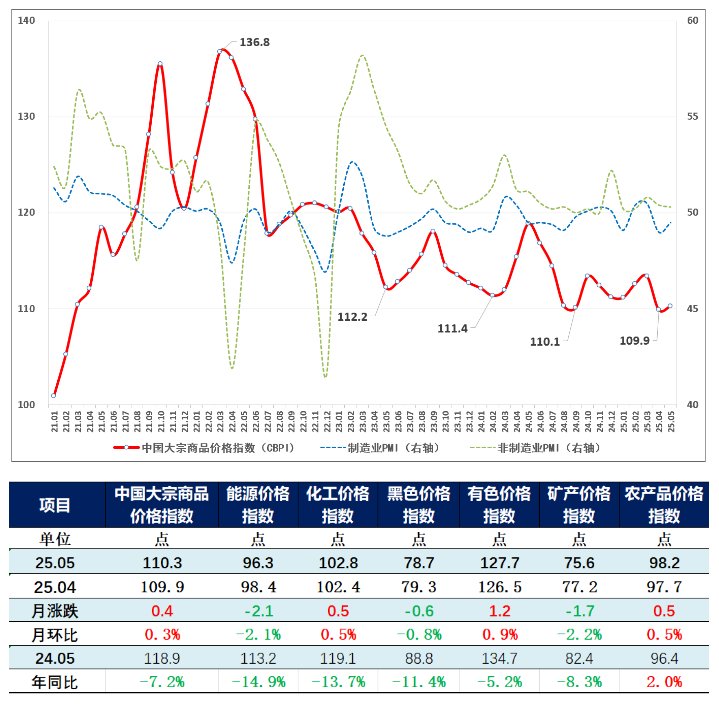
Core Insights - The China Commodity Price Index (CBPI) for May 2025 is reported at 110.3 points, reflecting a month-on-month increase of 0.3% but a year-on-year decrease of 7.2% [1][3] - The index shows signs of stabilization and improvement due to a temporary easing of US-China trade tariffs, which has restored some market confidence [1][3] - Despite the recovery in global commodity prices, external uncertainties and insufficient effective demand remain significant challenges for various industries [1][3] Price Index Summary - The CBPI increased from 109.9 points in April to 110.3 points in May, with a month-on-month rise of 0.4 points [3] - The energy price index decreased to 96.3 points, down 2.1% month-on-month and down 14.9% year-on-year [3][4] - The chemical price index rebounded to 102.8 points, with a month-on-month increase of 0.5% but a year-on-year decline of 13.7% [3][4] - The black metal price index fell to 78.7 points, down 0.8% month-on-month and down 11.4% year-on-year [3][4] - The non-ferrous metal price index rose slightly to 127.7 points, up 0.9% month-on-month but down 5.2% year-on-year [3][4] - The agricultural product price index increased to 98.2 points, with a month-on-month rise of 0.5% and a year-on-year increase of 2% [3][4] Commodity Price Movements - Among 50 monitored commodities, 32 (64%) saw price declines while 17 (34%) experienced price increases in May [5] - The top three commodities with price increases were PTA (up 9.5%), ethylene glycol (up 4.6%), and corn (up 4.3%) [5] - The largest price declines were observed in industrial silicon (down 10.2%), lithium carbonate (down 10%), and soybean meal (down 9.9%) [5]

【财经分析】5月中国大宗商品价格指数环比上涨 化工价格指数止跌反弹
Xin Hua Cai Jing· 2025-06-05 04:29
Core Insights - The May 2023 China Commodity Price Index (CCPI) stands at 110.3 points, reflecting a month-on-month increase of 0.3% but a year-on-year decrease of 7.2% [1][3] - The index indicates a stabilization trend in commodity prices, with specific sectors showing varied performance, such as a slight increase in non-ferrous metal prices and a rebound in chemical prices [1][6] Price Index Summary - The non-ferrous price index rose to 127.7 points, up 0.9% month-on-month but down 5.2% year-on-year [3][4] - The agricultural product price index increased to 98.2 points, with a month-on-month rise of 0.5% and a year-on-year increase of 2% [3][4] - The chemical price index rebounded to 102.8 points, up 0.5% month-on-month but down 13.7% year-on-year [3][4] - The black metal price index fell to 78.7 points, down 0.8% month-on-month and down 11.4% year-on-year [3][4] - The energy price index decreased to 96.3 points, down 2.1% month-on-month and down 14.9% year-on-year [3][4] - The mineral price index dropped to 75.6 points, down 2.2% month-on-month and down 8.3% year-on-year [3][4] Commodity Price Movements - Among 50 monitored commodities, 32 (64%) saw price declines while 17 (34%) experienced price increases [4][6] - The top three commodities with price increases were PTA (up 9.5%), ethylene glycol (up 4.6%), and corn (up 4.3%) [4][6] - The largest price declines were observed in industrial silicon (down 10.2%), lithium carbonate (down 10%), and soybean meal (down 9.9%) [4][6] Market Analysis - Analysts attribute the rise in non-ferrous prices to improved demand expectations due to easing US-China tariff policies [5][6] - The agricultural price index's increase is linked to stable downstream consumer demand, with corn prices rising due to increased market demand and short-term supply constraints [6][7] - The overall market sentiment remains cautious due to persistent external uncertainties and insufficient effective demand in certain sectors [1][7]

5月大宗商品价格指数微涨,信心初现
Huan Qiu Wang· 2025-06-05 02:49
Group 1 - The core viewpoint is that there is a mixed performance in the prices of major commodities in China, with some sectors showing recovery while others continue to decline [1][2][3] - In May, the China Commodity Price Index was reported at 110.3 points, reflecting a month-on-month increase of 0.3%, indicating a slight recovery in the market [3] - Among 50 monitored commodities, 17 showed a month-on-month price increase, with the non-ferrous price index at 127.7 points, up 0.9%, and the chemical price index rebounding by 0.5% [1] Group 2 - Agricultural product prices have risen for five consecutive months, demonstrating resilience in the agricultural sector and its role in stabilizing supply and prices [1] - Conversely, black, mineral, and energy price indices continue to decline, highlighting persistent issues of insufficient effective demand in certain industries [1] - Experts suggest that to solidify economic recovery, the government should increase public investment in infrastructure and services to boost market demand and enterprise orders [2]
乌克兰矿产真“没了”?欧洲终于看清现实,熟悉的美国回来了
Sou Hu Cai Jing· 2025-06-03 12:45
Group 1 - The U.S. Treasury announced a partnership with Ukraine to establish a reconstruction investment fund, allowing the U.S. to have preferential access to new investment projects in Ukraine's natural resources, including aluminum, graphite, oil, and natural gas [1] - The agreement specifies "no debt burden," indicating that Ukraine is not obligated to repay any debts to the U.S. related to this fund, which was a previous point of contention in negotiations [1] - The fund may also provide tax guarantees and potential new aid from the U.S., such as air defense systems for Ukraine [1] Group 2 - Ukraine possesses over 20,000 mineral deposits, with significant reserves of titanium (7% of global reserves) and combined manganese and lithium (10% of global reserves), valued at over $15 trillion [2] - The valuable mineral resources are primarily located in regions currently occupied by Russia, posing challenges for extraction [2] - Recent military actions have escalated, with Ukraine facing a record number of drone and missile attacks from Russia, impacting civilian infrastructure [2]

新华财经晚报:现货黄金本周开盘走高
Xin Hua Cai Jing· 2025-06-02 11:06
Domestic News - The Ministry of Commerce spokesperson stated that the U.S. has continuously provoked new trade frictions, increasing uncertainty and instability in bilateral economic relations, and has unjustly accused China of violating agreements from the Geneva trade talks [1] - From May 26 to June 1, national freight logistics operated in an orderly manner, with national railways transporting 77.638 million tons of goods, a decrease of 0.16% month-on-month; highway freight traffic reached 52.008 million vehicles, down 6.14%; monitored ports completed a cargo throughput of 277.418 million tons, an increase of 2.24%, while container throughput was 6.517 million TEUs, down 0.72% [1] - On June 2, the national railway is expected to send 17.9 million passengers, with 1,279 additional passenger trains planned [1] Strategic Mineral Control - Various regions in China are implementing measures to prevent the illegal outflow of strategic minerals, with the National Export Control Coordination Mechanism issuing a deployment plan for comprehensive control of strategic mineral exports [2] - Guizhou will strictly follow the deployment plan, while Hunan will conduct systematic inspections of local strategic mineral export enterprises and guide them to enhance compliance awareness [2] - Guangxi will intensify supervision of strategic mineral exploration and mining, cracking down on illegal mining activities [2] Real Estate Market - In May, the total transaction volume of new and second-hand housing in Shanghai reached 2.23 million square meters, a year-on-year increase of 17% [2] - The real estate market in Shanghai has shown characteristics of "increased volume and stable prices" from January to May this year [2]
全球稀土的真正战场不在地下,中国拥有无与伦比的优势
Hua Er Jie Jian Wen· 2025-06-01 09:34
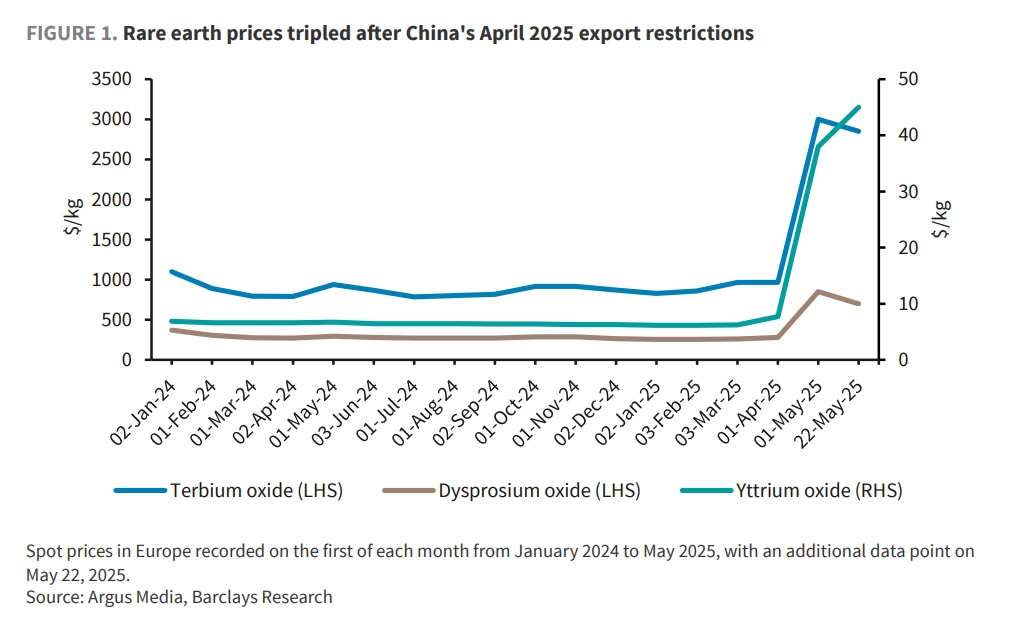
Core Insights - The true control of the global mineral supply chain lies not in ownership of underground resources but in the mastery of refining capabilities [1] - China's near-monopoly in the rare earth refining sector has been highlighted, with a significant price surge observed following export controls [1] Group 1: Market Concentration - Global rare earth mineral trade is extremely concentrated, with 89% of trade relationships relying on a few suppliers [3] - Specifically, 43% of trade relationships depend on five or fewer suppliers, while 46% rely on three or fewer suppliers [3] - Key emerging and developing economies dominate the extraction of critical raw materials, such as the Democratic Republic of Congo supplying 73% of cobalt ore and Guinea supplying 70% of aluminum ore [3] Group 2: China's Dominance in Refining - Despite the dispersion of raw material extraction across various countries, nearly all processing and refining stages are concentrated in China [3] - China supplies 65% of the world's refined lithium and nearly 80% of refined cobalt, controlling over 90% of global refined rare earth supply [3] Group 3: Geopolitical Factors - China's dominant position in the mineral supply chain has been systematically built over the past two decades, focusing on facilities and technologies for converting raw materials into usable inputs for batteries and green technologies [6] - Geopolitical tensions have intensified reliance on Chinese mineral supply chains, with over 90% of U.S. rare earth imports coming from China in 2023, up from 70% in 2013 [6] Group 4: Future Supply Chain Dynamics - The U.S.-Ukraine mineral agreement is strategically significant but unlikely to alter the global mineral supply landscape in the short term, as the bottleneck lies in refining capacity rather than extraction [7] - Ukraine possesses about 5% of global rare earth reserves and significant lithium and titanium reserves, but the increase in critical mineral supply remains a distant prospect [7] - Establishing rare earth refining in Ukraine will take years and may require a comprehensive overhaul of the global supply chain [7]
中企开拓南美市场 巴西双语人才紧俏
Zhong Guo Xin Wen Wang· 2025-06-01 05:01
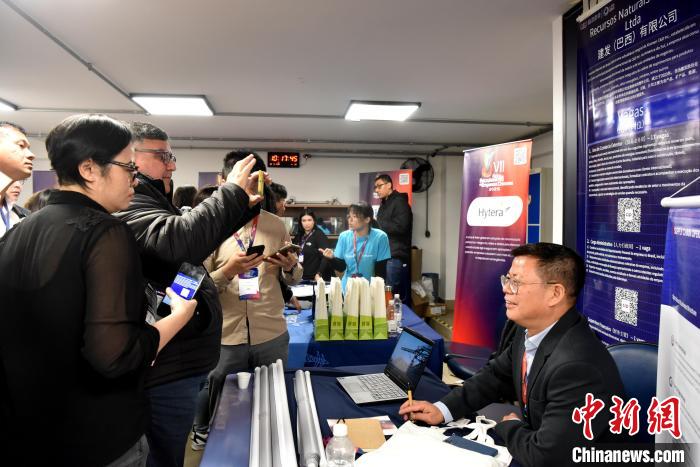
Core Insights - The demand for bilingual talent in Brazil is surging as Chinese enterprises expand their presence in the South American market, with over 2,100 job seekers attending the seventh China-Brazil Talent Recruitment Fair [1][3][4] - The fair featured 32 Chinese companies offering more than 400 quality job positions across various sectors, indicating a significant increase in recruitment activity [1][4] Group 1: Recruitment Trends - The number of participating companies has grown, with 32 firms covering industries such as engineering, telecommunications, manufacturing, agriculture, mining, retail, and the internet [4] - The number of job positions available has significantly increased, with over 400 positions that include technical research, project management, marketing, and bilingual services [4] - The number of applicants has reached a historical high, with over 2,100 job seekers, three times more than the previous year [4] Group 2: Industry Focus - Chinese companies are not only focusing on traditional sectors like agriculture and mining but are also actively exploring new areas such as green energy and digital economy [4] - Technical engineering positions remain the dominant focus at the recruitment fair, particularly in telecommunications, machinery, and energy sectors [4] - Financial and tax-related positions account for over 20% of the job offerings, indicating a push towards localization and compliance among Chinese enterprises in Brazil [4]
中矿资源:2024年报暨2025一季报点评:锂价下滑盈利承压,静待铜及小金属资源放量-20250528
Changjiang Securities· 2025-05-28 02:55
Investment Rating - The investment rating for the company is "Buy" and is maintained [7]. Core Views - The company's net profit attributable to shareholders for 2024 is 757 million yuan, a decrease of 66% year-on-year; the net profit after deducting non-recurring gains and losses is 603 million yuan, down 72% year-on-year [2][5]. - In Q1 2025, the company achieved a net profit of 135 million yuan, a decrease of 47% year-on-year and 36% quarter-on-quarter; the net profit after deducting non-recurring gains and losses is 43 million yuan, down 81% year-on-year and 77% quarter-on-quarter [2][5]. Summary by Sections Financial Performance - The company reported a total revenue of 5.364 billion yuan in 2024, with a gross profit of 1.757 billion yuan, resulting in a gross margin of 33% [14]. - The lithium segment generated revenue of 3.129 billion yuan, down 26% year-on-year, with a gross profit of 583 million yuan and a gross margin of 18.62%, a decrease of 39.15 percentage points year-on-year [11]. - The cesium and rubidium segment achieved revenue of 1.395 billion yuan, an increase of 24% year-on-year, with a gross profit of 1.092 billion yuan and a gross margin of 78.29%, an increase of 13.91 percentage points year-on-year [11]. Business Segments - The lithium segment's production volume increased by 138% year-on-year to 43,700 tons, while sales volume increased by 145% year-on-year to 42,600 tons [11]. - The cesium and rubidium segment maintained stable growth, with sales volume of 843.97 tons, down 16% year-on-year, but revenue increased significantly due to price hikes [11]. - In Q1 2025, the lithium sales volume was 9,000 tons, impacted by maintenance during the holiday period [11]. Future Outlook - The company is focusing on expanding its lithium production capacity and exploring new metal resources such as gallium and germanium [11]. - The copper segment is expected to enhance its production capacity with ongoing exploration and project developments [11].
