
化工业

Search documents
每日投行/机构观点梳理(2025-08-19)
Jin Shi Shu Ju· 2025-08-19 12:01
Group 1: Gold Price Forecast - UBS has raised its gold price target by $100 to $3,600 per ounce by the end of March 2026, and by $200 to $3,700 per ounce by the end of June 2026, maintaining the same forecast for September 2026 [1] Group 2: Federal Reserve Interest Rate Expectations - Russell Investments suggests that the upcoming Jackson Hole meeting may temper expectations for Federal Reserve rate cuts, with a possibility of a 25 basis point cut in September rather than 50 basis points [1] - CICC indicates that the Federal Reserve will remain cautious in its rate cut decisions, with internal divisions and external pressures suggesting that significant cuts are unlikely due to concerns over "stagflation" [4] Group 3: Impact of Tariffs on Inflation and Currency - Deutsche Bank warns that U.S. tariffs may increase inflation and weaken the dollar, as companies might pass on tariff costs to consumers, potentially leading to reduced consumer spending [2] - Canadian Imperial Bank of Commerce reports that U.S. tariffs on European and UK goods have caused government bond yield curves to steepen, as investors demand higher compensation for holding long-term bonds [1] Group 4: Economic Growth Risks - Fitch Ratings states that higher U.S. tariffs could threaten India's projected economic growth of 6.5% for the fiscal year, particularly affecting sectors like IT services and construction if tariffs remain elevated [3] - CICC notes that the overall valuation of A-shares is reasonable and not overvalued, with the Shanghai Composite Index's dynamic P/E ratio at around 12.2 times, indicating a moderate valuation compared to global markets [6] Group 5: Financial Market Trends - CITIC Securities reports a significant increase in bank wealth management products, with a growth of approximately 2 trillion yuan to 32.67 trillion yuan by the end of July 2025, driven by high-interest deposits maturing [8] - CITIC Securities also highlights that the price of rare earths is expected to stabilize and potentially increase, supported by strong demand from sectors like electric vehicles and consumer electronics [9]
内蒙古首例“蒙电通”专项电费贷款落地乌海
Nei Meng Gu Ri Bao· 2025-08-18 03:00
Core Insights - The first "Mengdian Tong" special electricity fee loan was successfully launched in Inner Mongolia, marking a significant step for small and micro enterprises in the region [1][2] - The loan product is designed to alleviate financial pressure on businesses by utilizing electricity usage data and payment records as credit assessment criteria, rather than relying on fixed asset collateral [1][2] Group 1 - The signing ceremony involved representatives from Inner Mongolia Electric Power Group, China Construction Bank, and Wuhai Changhong Mining Co., Ltd., which successfully secured a 2 million yuan loan to cover electricity fees [1] - The "Mengdian Tong" loan offers advantages such as low interest rates, long terms, quick approval, and flexible repayment methods, enhancing cash flow for enterprises and improving electricity fee recovery rates for the power supply department [1] - The initiative is seen as a win-win for the banking, electricity, and enterprise sectors, as it releases significant liquidity for businesses while ensuring better recovery of electricity fees [1] Group 2 - Thirteen small and micro enterprises, including Wuhai Hairong Mining Co., Ltd. and Inner Mongolia Baohong Chemical Technology Co., Ltd., have shown interest in the "Mengdian Tong" loan due to their stable electricity demand and strong credit profiles [2] - The "Mengdian Tong" initiative represents an innovative exploration by the power supply department to leverage electricity data, transforming intangible data into tangible credit, thus activating the financial value of electricity data [2] - This approach promotes the marketization of data elements in the inclusive finance sector, allowing businesses' operational records to serve as credit credentials for financing [2]
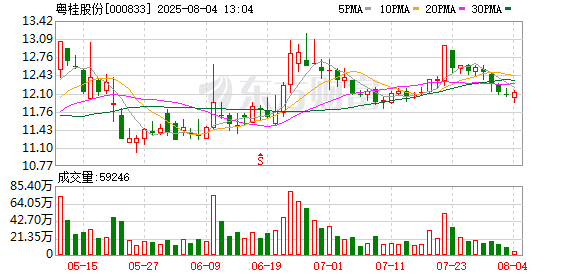
粤桂股份:聘任简轶为公司证券事务代表
Mei Ri Jing Ji Xin Wen· 2025-08-04 05:03
Group 1 - The company, Yuegui Co., Ltd. (SZ 000833), announced the appointment of Mr. Jian Yi as the securities affairs representative to assist the board secretary in fulfilling responsibilities [2] - For the fiscal year 2024, the revenue composition of Yuegui Co., Ltd. is as follows: mining industry accounts for 31.79%, sugar manufacturing for 19.37%, paper industry for 18.11%, chemical industry for 12.03%, trading for 10.7%, and other industries for 8.02% [2]


河南商丘:上半年经济增长7% 呈现稳中有进态势
Zhong Guo Chan Ye Jing Ji Xin Xi Wang· 2025-07-27 22:28
Economic Performance - The GDP of Shangqiu City reached 170.17 billion yuan in the first half of 2025, with a year-on-year growth of 7.0% [1] - The primary industry added value was 23.21 billion yuan, growing by 3.1%; the secondary industry added value was 63.09 billion yuan, growing by 6.2%; and the tertiary industry added value was 83.86 billion yuan, growing by 8.9% [1] Agricultural Production - The summer grain production in Shangqiu reached 9.05 billion jin, indicating a stable agricultural production situation [1] - Vegetable and edible fungus production was 4.32 million tons, growing by 3.2%; fruit production was 1.53 million tons, growing by 1.9%; and meat production from pigs, cattle, sheep, and poultry was 330,600 tons, growing by 3.0% [1] Industrial Growth - The added value of industrial enterprises above designated size grew by 8.7%, with 23 out of 34 industrial sectors experiencing growth, resulting in a growth coverage of 67.6% [1] - The added value of coal, chemical, and aluminum smelting industries grew by 13.0%, 13.2%, and 42.1% respectively, collectively contributing 5 percentage points to the overall industrial growth [1] Service Sector Expansion - The added value of the service sector grew by 8.9%, with wholesale and retail growing by 7.7%, transportation, storage, and postal services growing by 8.2%, accommodation and catering growing by 9.1%, and information transmission, software, and IT services growing by 11.2% [1] - From January to May, the operating income of the service sector above designated size increased by 10.3% [1] Investment and Consumption - Fixed asset investment in the city grew by 6.8%, with industrial investment growing by 24.8%, surpassing the overall investment growth by 18 percentage points [2] - Private investment increased by 9.9%, accelerating by 6.6 percentage points compared to the first quarter, and exceeding the overall investment growth by 3.1 percentage points [2] - The total retail sales of consumer goods reached 78.93 billion yuan, growing by 7.6%, with 17 out of 22 categories of goods experiencing growth, resulting in a growth coverage of 77.3% [2] - Notable growth in retail sales included home appliances and audio-visual equipment at 34.4%, communication equipment at 34.6%, and automotive products at 11.4%, indicating a clear trend of consumption upgrading [2]
美阵营突然闹翻?日本高官直言:特朗普欺人太甚!当着中方的面,岩屋毅称将认真对待历史
Sou Hu Cai Jing· 2025-07-15 12:53
Group 1 - The core issue revolves around President Trump's threat to impose tariffs on Japan, South Korea, and 12 other countries, with a specific mention of a potential 25% tariff aimed at reducing the trade deficit [1][3] - Japan's government is actively discussing countermeasures in response to the U.S. tariff threats, indicating the seriousness of the situation and the potential severe impact on Japan's economy if the tariffs are implemented [1][5] - The expansion of tariffs to cover "all goods" represents a significant systemic pressure test for Japan's economic structure, with potential far-reaching impacts across various industries, particularly in the automotive sector [5][6] Group 2 - Prime Minister Kishida's recent statements reflect a strong stance against perceived U.S. aggression, emphasizing the importance of national interests and the need for Japan to assert itself [3][6] - The relationship between Japan and China appears to be improving, with recent diplomatic engagements suggesting a desire for enhanced cooperation and communication, which may provide Japan with alternative economic partnerships amid U.S. tariff pressures [8]

5月CPI继续低位运行,PPI同比降幅有所扩大
Dong Fang Jin Cheng· 2025-06-09 11:08
Group 1: CPI Analysis - In May, the CPI decreased by 0.1% year-on-year, consistent with the previous month, resulting in a cumulative decline of 0.1% from January to May[1][4] - The core CPI, excluding volatile food and energy prices, remained below 1.0%, indicating a weak domestic price level primarily due to insufficient consumer demand[2][4] - The decline in CPI was influenced by a 6.1% year-on-year drop in energy prices, which contributed approximately 0.47 percentage points to the overall CPI decrease[5][4] Group 2: PPI Analysis - The PPI fell by 3.3% year-on-year in May, with the decline accelerating by 0.6 percentage points compared to the previous month, reflecting weakened pricing momentum and increased drag from base effects[2][9] - Month-on-month, the PPI decreased by 0.4%, maintaining the same decline rate as the previous two months[2][9] - Key sectors such as coal, steel, and cement experienced price declines due to weak domestic demand and ample supply, contributing to the overall PPI decrease[8][10] Group 3: Future Outlook - CPI is expected to hover around 0% in June, while the PPI year-on-year decline is projected to remain at approximately -3.3%[3][12] - The government aims to implement macroeconomic policies to promote reasonable price recovery in the second half of the year, which may include fiscal measures to boost consumption and further interest rate cuts by the central bank[3][12] - The impact of external economic fluctuations on consumer confidence and potential downward pressure from "export to domestic" shifts will be critical to monitor[7][12]
武汉助贷平台与贷款公司融资实战解析
Sou Hu Cai Jing· 2025-06-04 08:13
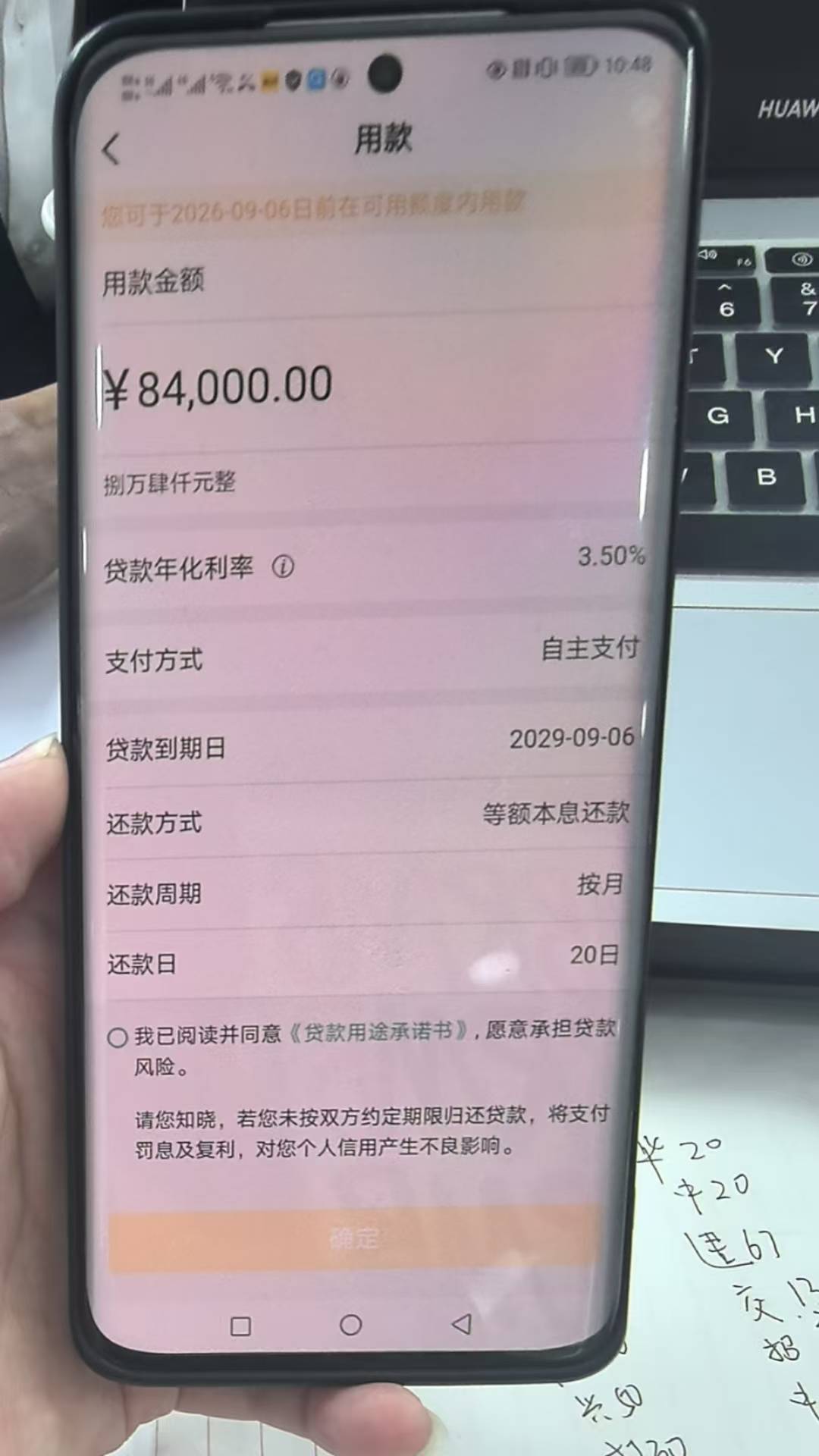
Core Insights - The financing market in Wuhan is evolving, with companies leveraging collaborative advantages of lending platforms and loan companies to overcome challenges related to credit thresholds and insufficient collateral [3][10] - Customized credit repair solutions and innovative guarantee models are breaking through traditional barriers, allowing businesses to present their growth potential proactively [3][10] - The integration of accounts receivable management systems with intelligent risk control frameworks is transforming dormant order data into valuable assets for banks [3] Financing Strategies - **Credit Repair Solutions**: Companies with credit record issues can enhance their approval chances by providing six months of performance data and third-party verification [3] - **Technological Upgrade Financing**: Manufacturing firms can utilize energy-saving assessment reports certified by relevant authorities to secure financing for equipment upgrades [3] - **Tiered Financing Structure**: This approach allows businesses to manage cash flow fluctuations by combining short-term loans with long-term financing, effectively reducing overall financing costs [7][10] Case Studies - A biotechnology company successfully obtained a green loan with a 15% interest rate reduction by presenting a photovoltaic renovation plan as a credit enhancement material [3] - A chemical company achieved a loan with an interest rate as low as 4.35% by optimizing carbon emission data and creating a green project packaging manual [5] - A manufacturing firm reduced its comprehensive financing cost by 23.6% through a phased financing strategy that linked interest rates to carbon emissions [7] Tools and Techniques - Utilizing property pledges and accounts receivable financing can activate dormant assets and leverage cash flow [7][8] - A recent client managed to lower their comprehensive interest rate from 9.8% to 7.5% by employing a tiered financing approach that prioritized property pledges [8] - The collaboration between lending platforms and loan companies is characterized by "precise disassembly and dynamic combination" strategies to enhance approval rates and reduce financing costs [10][11]
【财经分析】新加坡电子航运业4月表现突出 提前出货动能或延续至7月
Xin Hua Cai Jing· 2025-05-27 13:46
Core Viewpoint - Singapore's manufacturing sector continued its growth momentum in April, driven by early shipments in the electronics and aerospace engineering industries, with a year-on-year increase of 5.9% and a month-on-month increase of 5.3%, marking the tenth consecutive month of positive growth [1] Group 1: Manufacturing Performance - The manufacturing sector, excluding biomedical, saw a year-on-year growth of 8.1% in April, with the electronics sector experiencing a significant increase of 15.2% and aerospace engineering growing by 22.9% [1] - The growth in the electronics sector was primarily driven by strong export demand for communications and consumer electronics (up 67.8%), semiconductors (up 11.7%), and computer peripherals (up 11.3%) [1] - The aerospace sector was boosted by robust demand for commercial aviation maintenance, repair, and overhaul (MRO), which surged by 39.5% year-on-year [1] Group 2: Future Risks and Concerns - Despite the strong data, analysts express caution regarding future trends, noting that the current manufacturing growth is influenced by an "early shipment effect" that may not be sustainable, especially after the end of the "90-day tariff buffer window" [1] - OCBC Bank predicts that Singapore's manufacturing growth for the entire year of 2025 may only reach 0-2%, with the possibility of negative year-on-year growth in the second half of the year [2] - UOB warns that the significant growth in April was largely due to export companies rushing to ship products to avoid potential tariffs, and future trade disputes, particularly between the US and Europe, could severely impact Singapore's relevant industries [2] Group 3: Subsector Performance - Some manufacturing subsectors in Singapore showed weak performance, with biomedical manufacturing declining by 1.1%, chemicals down by 3.2%, and general manufacturing (including food, printing, and furniture) experiencing a decline of 15.2% [2] - The chemical industry faced challenges due to high inventories of refined oil and petrochemical products, compounded by raw material supply issues and maintenance activities, leading to continued output declines [2] - The biomedical sector's output was affected by changes in the product structure of active pharmaceutical ingredients (API), resulting in a year-on-year decrease in pharmaceutical output of 1.6% [2]
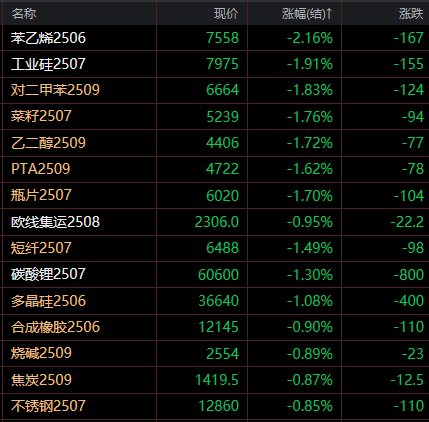
期货午评:碳酸锂、工业硅再创历史新低 化工板块集体下挫 苯乙烯大跌超2%
news flash· 2025-05-20 03:40
Group 1 - The commodity market shows mixed trends, with palm oil and aluminum oxide rising over 1%, while the chemical sector collectively declines, with styrene dropping over 2% and industrial silicon down by 2% [1] - Lithium carbonate and industrial silicon have reached historical lows [1] - The main contracts for styrene and industrial silicon have seen significant price drops, with styrene down 2.16% to 7558 and industrial silicon down 1.91% to 7975 [2] Group 2 - The People's Bank of China has lowered the one-year and five-year Loan Prime Rate (LPR) by 10 basis points to 3% and 3.5% respectively, indicating a shift in monetary policy [4] - The National Development and Reform Commission (NDRC) plans to implement most employment and economic stabilization policies by the end of June, aiming for high-quality development [4] Group 3 - The commercial inventory of the three major oils has increased to 1.86 million tons, with a week-on-week rise of 40,000 tons, and a year-on-year increase of 200,000 tons [5][6] - The inventory breakdown shows soybean oil stable at 640,000 tons, canola oil at 810,000 tons (up 10,000 tons week-on-week), and palm oil at 410,000 tons (up 30,000 tons week-on-week) [5][6] Group 4 - The chemical sector is experiencing a downturn, with styrene futures dropping to below 7600 yuan, influenced by supply and demand dynamics [7] - The market for styrene is currently balanced, with no significant supply reduction, and downstream demand remains stable despite minor fluctuations [7] Group 5 - The SCFIS European line index has decreased by 2.9% to 1265.30 points, reflecting a cooling market after previous macroeconomic optimism [8] - The market is expected to stabilize and return to fundamental valuation as the supply-demand balance is reassessed [8]
宏观策略周报:美国关税谈判有所进展,全球风险偏好整体升温-20250512
Dong Hai Qi Huo· 2025-05-12 09:50
1. Report Industry Investment Rating - Short - term, maintain a cautious long position for the four major stock index futures (IH/IF/IC/IM) in A - shares; maintain a cautious wait - and - see attitude for commodities and government bonds. The ranking is: stock index > government bonds > commodities. Among commodities, the ranking is: precious metals > non - ferrous metals > energy > black metals [2] 2. Core Viewpoints - Domestically, in April, China's exports increased by 8.1% year - on - year, far exceeding expectations, and the trade surplus was 96.81 billion US dollars, a year - on - year increase of 34%. China and the US will hold trade talks, and the central bank has unexpectedly cut the reserve requirement ratio by 0.5% and interest rates by 10BP, which will boost domestic risk appetite in the short term. Internationally, the US economic activities are still expanding steadily, the US - UK has reached a limited trade agreement, and the US - China trade negotiation has made progress. The Fed maintains the federal funds rate target range at 4.25% - 4.5%, and the dollar rebounds in the short term, leading to an overall increase in global risk appetite [2] 3. Summary by Directory 3.1 Last Week's Important News and Events - On May 5th, the US President announced to impose a 100% tariff on all foreign - made movies entering the US and will announce tariff measures on pharmaceutical products in the next two weeks. On May 6th, the US March trade deficit widened to a record 140.5 billion US dollars, and the US refused to cancel some tariffs on Japan. On May 7th, the Fed kept interest rates unchanged, and the US and the EU are in trade negotiations. On May 8th, the UK and the US reached a tariff trade agreement, and the EU announced a retaliatory list of 95 billion euros of US goods. On May 9th, the US President said that the US and China will conduct substantial trade negotiations this weekend, and the current 145% tariff on China will be lowered [3][4][5][6][10] 3.2 This Week's Important Events and Economic Data Reminders - From May 12th to May 16th, there will be a series of industrial data releases, including electrolytic aluminum inventory, iron ore shipping and arrival volume, etc., as well as important economic data such as the US CPI, PPI, and GDP data of various countries [11] 3.3 Global Asset Price Trends - Stock markets: Different stock indices in various countries have different price trends and changes. Bond markets: Yields of 10 - year bonds in different countries have different fluctuations. Commodity markets: Prices of various commodities such as steel, non - ferrous metals, and energy have different changes. Exchange rate markets: Exchange rates of major currencies have different degrees of fluctuations [12] 3.4 Domestic High - Frequency Macroeconomic Data - Upstream: Includes data on commodity price indices, energy prices, coal inventories, and iron ore prices. Mid - stream: Covers data on steel prices, production, and inventory, non - ferrous metal prices and inventory, building material prices and inventory, and chemical product prices and inventory. Downstream: Involves data on real estate transaction area, automobile sales, and agricultural product prices [13][42][71] 3.5 Domestic and Foreign Liquidity - Global liquidity: Shown by the US Treasury yield curve. Domestic liquidity: Reflected by central bank open - market operations, inter - bank lending rates, and bond yields [82][84] 3.6 Global Financial Calendar - From May 13th to May 16th, there are important economic data releases in the EU, the US, Germany, Japan, etc., including CPI, PPI, GDP, and other data [105]