锌

Search documents
有色钢铁行业周观点(2026年第4周):金银比突破50,贵金属有望带领工业金属加速上涨-20260126
Orient Securities· 2026-01-26 00:15
Investment Rating - The report maintains a "Positive" outlook on the non-ferrous metals industry [5] Core Insights - The gold-silver ratio has broken through 50, indicating that precious metals are likely to lead industrial metals in accelerating price increases. Recent significant price increases in silver reflect a broader trend of rising physical metal prices as a response to the weakening trust in fiat currency systems [7][12] - The long-term debt cycle is entering its late stage, with rising physical metal prices signaling a loss of confidence in existing fiat currency systems. This trend is expected to continue into 2026, with precious metals likely to set new historical price records [12] - Zinc is identified as an overlooked material in the context of de-globalization, with favorable supply-demand dynamics suggesting continued price increases. The report highlights the potential for increased demand from re-industrialization efforts in Asia, Africa, and Latin America [13] - The aluminum sector is expected to benefit from geopolitical concerns, with China's electrolytic aluminum industry poised to enjoy valuation premiums due to its supply chain security and competitive advantages [13] Summary by Sections Precious Metals - The report emphasizes the importance of precious metals in preserving wealth amid a declining trust in fiat currencies, recommending active investment in this sector [12] Zinc Sector - The report suggests that zinc, as a fundamental material for de-globalization, will see increased demand driven by infrastructure needs in emerging markets, despite current market skepticism [13] Aluminum Sector - The electrolytic aluminum industry in China is expected to benefit from enhanced supply chain security and competitive advantages, with a positive outlook for profitability and valuation [13] Steel Industry - The steel sector is currently facing weak fundamentals as it approaches the seasonal low around the Spring Festival, with expectations for policy measures to support the industry [14] - Steel production has seen a slight increase, but demand for rebar is weakening, indicating a mixed outlook for the sector [19] New Energy Metals - Lithium and carbonate prices have shown significant increases, with production levels rising sharply, indicating strong demand in the new energy vehicle sector [37][41] - The report notes a substantial increase in the production of lithium carbonate and hydroxide, reflecting the growing demand for electric vehicles [37] Industrial Metals - The report indicates that political risks and supply constraints are contributing to an overall increase in industrial metal prices, with copper production expected to rise despite declining refining fees [56][57]





有色早报-20260122
Yong An Qi Huo· 2026-01-22 02:16
Group 1: Report Industry Investment Rating - No relevant content provided Group 2: Report Core Views - For copper, the price pulled back in the second half of the week, and the market sentiment cooled. In the short - term, negative factors are released, but the price is expected to rise in the medium - term as the fundamentals feature limited supply and increasing demand [1] - For aluminum, the basis and downstream processing fees are low, with continuous inventory accumulation. Domestic demand has short - term support, and overseas active restocking may support the price [1] - For zinc, the domestic fundamentals are average, but the market is optimistic about its allocation flexibility, and attention should be paid to reverse arbitrage and positive arbitrage opportunities [2] - For nickel, the short - term fundamentals are weak, and there is a game between short - term policies and fundamentals [3] - For stainless steel, the fundamentals remain weak, and the price is mainly driven by nickel price in the short - term [3] - For lead, the price oscillates at a high level. Supply is expected to increase, demand is weakening, and the price is expected to oscillate between 17100 - 17600 next week [5] - For tin, the price fluctuates greatly, and is affected by capital sentiment. Short - term volatility may decline, and attention can be paid to internal - external positive arbitrage opportunities [8] - For industrial silicon, the supply - demand is balanced and loose. The price is expected to oscillate with cost in the short - term and at the bottom of the cycle in the medium - to long - term [11] - For lithium carbonate, the short - term supply - demand is close to balance. The absolute price is affected by futures market expectations and sentiment, and a spot - futures resonance market may occur [13] Group 3: Summary by Metal Copper - **Price and Inventory**: The copper price pulled back in the second half of the week. The LME inventory increased by 3100, and the SHFE warehouse receipts decreased by 2612 [1] - **Market Analysis**: US tariff issues and high inventories in the US triggered concerns. In the short - term, negative factors are released, and the inventory may accumulate faster before the Spring Festival but decline quickly after the festival. The medium - term outlook is positive [1] Aluminum - **Price and Inventory**: The aluminum price declined. The LME inventory increased by 24175, and the SHFE inventory remained unchanged [1] - **Market Analysis**: The basis and processing fees are low, and the inventory is accumulating. Domestic demand has short - term support from photovoltaic, and overseas active restocking may support the price [1] Zinc - **Price and Inventory**: The zinc price decreased. The LME inventory decreased by 450, and the SHFE inventory remained unchanged [2] - **Market Analysis**: Supply is affected by TC decline and smelter operations, and demand is weak. The market is optimistic about its allocation flexibility, and attention should be paid to arbitrage opportunities [2] Nickel - **Price and Inventory**: The nickel price dropped. The LME inventory decreased by 72 [3] - **Market Analysis**: Supply decreased slightly, demand is weak, and there is a game between short - term policies and fundamentals [3] Stainless Steel - **Price and Inventory**: The stainless steel price declined slightly. The inventory decreased slightly from a high level [3] - **Market Analysis**: Supply is high, demand is mainly for rigid needs. The price is mainly driven by nickel price in the short - term [3] Lead - **Price and Inventory**: The lead price oscillated at a high level. The inventory increased by 1.3 tons to 3.25 tons [5] - **Market Analysis**: Supply is expected to increase, demand is weakening, and the price is expected to oscillate between 17100 - 17600 next week [5] Tin - **Price and Inventory**: The tin price fluctuated greatly. The LME inventory increased by 250 [8] - **Market Analysis**: The price is affected by capital sentiment. Short - term volatility may decline, and attention can be paid to internal - external positive arbitrage opportunities [8] Industrial Silicon - **Price and Inventory**: The basis of different grades changed, and the warehouse receipts increased by 384 [11] - **Market Analysis**: Supply and demand are balanced and loose. The price is expected to oscillate with cost in the short - term and at the bottom of the cycle in the medium - to long - term [11] Lithium Carbonate - **Price and Inventory**: The price fluctuated. The warehouse receipts increased by 975 [13] - **Market Analysis**: The short - term supply - demand is close to balance. The absolute price is affected by futures market expectations and sentiment, and a spot - futures resonance market may occur [13]
《有色》日报-20260122
Guang Fa Qi Huo· 2026-01-22 01:52
Report Industry Investment Ratings No information about industry investment ratings is provided in the reports. Core Views Tin - Short - term tin prices are highly volatile due to market sentiment, so cautious participation is advised. In the medium - to - long - term, the supply side is gradually recovering, but considering the low elasticity of the supply side and the long - term narrative of the AI arms race, a low - buying strategy for tin prices is recommended [2]. Industrial Silicon - The spot price of industrial silicon is stable, and the futures price fluctuates, rising after a decline. The production in January and February is expected to decrease. The demand side is likely to decline slightly in January. The price of industrial silicon is expected to fluctuate, with the main price range between 8200 - 9200 yuan/ton. Attention should be paid to the changes in production on the demand side [3]. Polysilicon - The average spot price of polysilicon and the price of silicon wafers have declined. The demand expectation has improved, and component production may increase slightly, which is conducive to inventory digestion. However, polysilicon and silicon wafer prices are under pressure due to high inventory. The monthly average production in the first quarter is expected to drop to about 80,000 tons. The price may be supported at the 48,000 yuan/ton level, and even at 45,000 yuan/ton considering full - cost support [4]. Copper - Market speculative sentiment has eased, and copper prices fluctuated. Geopolitical factors affect market expectations of copper tariffs. The global visible inventory has reached a high level in recent years, and the return of COMEX copper inventory may ease the supply pressure in non - US regions. In the short term, copper prices may return to fundamental pricing, and in the long term, the price bottom center is expected to gradually rise. Attention should be paid to the CL premium and LME inventory changes, with support at 97500 - 98500 [5]. Zinc - Market speculative sentiment has eased, and zinc prices adjusted. The shortage of zinc ore supports prices, and the import window for zinc ore has opened. The supply pressure of refined zinc has been relieved. High zinc prices have suppressed demand, and the downstream operating rate has weakened. Zinc prices are expected to fluctuate in the short term, with support around 23,800. Attention should be paid to zinc ore TC and refined zinc inventory changes [9]. Aluminum - The alumina market showed a weak and volatile trend, with an oversupply situation. Alumina prices are expected to fluctuate widely around the industry's cash - cost line, with the main contract reference range of 2600 - 2900 yuan/ton. The aluminum market is in a high - level volatile pattern. Although macro and policy expectations are positive, the fundamentals are under pressure, with supply increasing and demand being suppressed. Aluminum prices are expected to remain volatile at a high level in the short term, with the main contract reference range of 23000 - 25000 yuan/ton [12]. Nickel - The nickel futures market was volatile. Macro factors and the situation of Indonesian nickel ore quotas affect the market. The overall spot transaction of refined nickel is average. The prices of nickel ore and nickel iron have increased. The demand for stainless steel in the off - season is weak, and the market cost is relatively limited. The inventory pressure has increased. The nickel price is expected to fluctuate widely, with the main contract reference range of 138000 - 148000 [13]. Aluminum Alloy - Cast aluminum alloy prices fluctuated at a high level, with cost being the main driving factor. The supply of scrap aluminum is still tight, and the fundamentals show a situation of weak supply and demand in the off - season. The social inventory has decreased slightly. The ADC12 price is expected to continue the high - level volatile pattern in the short term, with the main contract reference range of 22000 - 23500 yuan/ton [15]. Stainless Steel - Stainless steel prices showed a narrow - range fluctuation and then a late - session rally. Macro factors and raw material supply expectations affect the market. The raw material prices are expected to rise, the supply is relatively loose, and the demand is weak. The social inventory is decreasing, but the demand in the off - season is still insufficient. Stainless steel prices are expected to be strongly volatile in the short term, with the main contract reference range of 14200 - 15000 [16]. Lithium Carbonate - Lithium carbonate futures prices rose sharply. News about lithium concentrate auctions and mine supply fluctuations affected the market sentiment. The production is slightly increasing, and the supply is expected to decline during the pre - holiday maintenance period. The downstream demand shows certain resilience. Social inventory decreased last week. Lithium carbonate prices are expected to be strongly volatile in the short term, but chasing the rise requires attention to volatility and liquidity risks [20]. Summary by Directory Tin - **Spot Price and Basis**: SMM 1 tin rose 0.22% to 395,750 yuan/ton, and the LME 0 - 3 premium increased 14.82% to - 92.00 dollars/ton. The import loss was - 7117.93 yuan/ton, a decrease of 1.99% [2]. - **Monthly Fundamental Data**: In December, tin ore imports increased 16.81% to 17,637 tons, SMM refined tin production decreased 0.06% to 15,950 tons, and refined tin exports increased 41.84% to 2763 tons [2]. - **Inventory Changes**: SHEF inventory increased 37.69% to 9549.0 tons, and social inventory increased 36.07% to 10,175.0 tons [2]. Industrial Silicon - **Spot Price and Basis of Main Contracts**: The price of East China oxygen - passing SI5530 industrial silicon remained unchanged at 9250 yuan/ton, and the basis decreased 6.93% [3]. - **Monthly Fundamental Data**: National industrial silicon production decreased 1.15% to 39.71 million tons, and Xinjiang's production increased 6.46% to 25.29 million tons. The national operating rate decreased 0.35% to 64.59% [3]. - **Inventory Changes**: Xinjiang's factory - warehouse inventory increased 2.91% to 14.83 million tons, and social inventory increased 0.54% to 55.50 million tons [3]. Polysilicon - **Spot Price and Basis**: The average price of N - type granular silicon decreased 7.34% to 50,500 yuan/ton, and the N - type material basis increased 5.49% [4]. - **Monthly Fundamental Data**: Polysilicon production increased 0.79% to 11.55 million tons, and silicon wafer production decreased 19.26% to 43.90 million tons [4]. - **Inventory Changes**: Silicon wafer inventory decreased 5.53% to 24.78 million tons, and polysilicon warehouse receipts increased 1.54% to 4620.00 [4]. Copper - **Price and Basis**: SMM 1 electrolytic copper decreased 0.66% to 100,060 yuan/ton, and the LME 0 - 3 increased to 101.84 dollars/ton [5]. - **Fundamental Data**: In December, electrolytic copper production increased 6.80% to 117.81 million tons, and imports decreased 4.02% to 26.02 million tons. The domestic mainstream port copper concentrate inventory increased 7.81% to 69.04 million tons [5]. - **Inventory Changes**: Domestic social inventory increased 12.27% to 32.94 million tons, and SHFE inventory increased 18.26% to 21.35 million tons [5]. Zinc - **Price and Basis**: SMM 0 zinc ingot decreased 0.53% to 24,210 yuan/ton, and the import loss decreased to - 1851 yuan/ton [9]. - **Fundamental Data**: In December, refined zinc production decreased 7.24% to 55.21 million tons, and imports decreased 51.94% to 0.88 million tons [9]. - **Inventory Changes**: China's seven - region zinc ingot social inventory increased 3.13% to 12.20 million tons, and LME inventory decreased 0.40% to 11.2 million tons [9]. Aluminum - **Price and Spread**: SMM A00 aluminum increased 0.13% to 23,710 yuan/ton, and the alumina (Shandong) average price decreased 0.19% to 2560 yuan/ton [12]. - **Fundamental Data**: In December, alumina production decreased 1.08% to 743.94 million tons, and domestic electrolytic aluminum production decreased 3.97% to 363.66 million tons [12]. - **Inventory Changes**: China's electrolytic aluminum social inventory increased 2.60% to 74.90 million tons, and LME inventory increased 5.01% to 50.7 million tons [12]. Nickel - **Price and Basis**: SMM 1 electrolytic nickel decreased 0.99% to 144,900 yuan/ton, and the LME 0 - 3 decreased 2.15% to - 200 dollars/ton [13]. - **Cost and New - Energy Material Prices**: The cost of integrated MHP to produce electrowon nickel increased 1.09% to 112,237 yuan/ton, and the average price of battery - grade nickel sulfate decreased 0.22% to 33,375 yuan/ton [13]. - **Supply - Demand and Inventory**: China's refined nickel production increased 26.10% to 31,400 tons, and SHFE inventory increased 3.28% to 48,180 tons [13]. Aluminum Alloy - **Price and Spread**: The price of SMM aluminum alloy ADC12 remained unchanged at 23,850 yuan/ton, and the Foshan crushed primary aluminum scrap price difference increased 0.80% to 2509 yuan/ton [15]. - **Fundamental Data**: In December, the production of recycled aluminum alloy ingots decreased 6.16% to 64.00 million tons, and the production of primary aluminum alloy ingots increased 0.46% to 30.41 million tons [15]. - **Inventory Changes**: The weekly social inventory of recycled aluminum alloy ingots decreased 1.41% to 4.89 million tons [15]. Stainless Steel - **Price and Basis**: The price of 304/2B (Wuxi Hongwang 2.0 coil) increased 1.40% to 14,500 yuan/ton, and the price of Philippine laterite nickel ore 1.5% (CIF) increased 0.89% to 51 dollars/wet ton [16]. - **Fundamental Data**: China's 300 - series stainless steel crude steel production increased 0.92% to 176.32 million tons, and stainless steel imports increased 29.32% to 14.50 million tons [16]. - **Inventory Changes**: The 300 - series social inventory (Wuxi + Foshan) decreased 1.47% to 45.07 million tons [16]. Lithium Carbonate - **Price and Basis**: The average price of SMM battery - grade lithium carbonate increased 3.93% to 158,500 yuan/ton, and the average price of lithium spodumene concentrate CIF increased 2.52% to 2035 dollars/ton [20]. - **Fundamental Data**: In December, lithium carbonate production increased 4.04% to 99,200 tons, and demand decreased 2.50% to 130,118 tons [20]. - **Inventory Changes**: In December, lithium carbonate total inventory decreased 12.23% to 56,664 tons, and downstream inventory decreased 7.21% to 38,998 tons [20].
日度策略参考-20260121
Guo Mao Qi Huo· 2026-01-21 07:29
Report Industry Investment Ratings - Bullish: Palm oil, soybean oil [1] - Bearish: Industrial silicon [1] - Neutral: Most other industries are rated as "oscillating" [1] Core Views of the Report - Policy aims to achieve a "slow bull" in the stock market, with short - term oscillations in the stock index and long - term opportunities for long - position layout. Asset shortage and weak economy benefit bond futures, but short - term interest rate risks are signaled by the central bank [1]. - Different metals and commodities have various trends. For example, copper prices are in high - level oscillations, aluminum prices are falling from high levels, and nickel prices are in high - level oscillations with supply concerns and inventory constraints [1]. - Precious metals are supported by geopolitical and trade tensions, but the suspension of key - mineral tariff hikes by the US may cause price fluctuations. Platinum and palladium are expected to have wide - range oscillations in the short term, and a long - term strategy of buying platinum and shorting palladium can be considered [1]. - In the agricultural and energy - chemical sectors, different products are affected by factors such as supply - demand relationships, policies, and international situations, resulting in different price trends and investment strategies [1]. Summary by Related Catalogs Macro Finance - Stock index: Policy cools market speculation, with short - term oscillations and long - term opportunities for long - position layout [1] - Bond futures: Asset shortage and weak economy are beneficial, but short - term interest rate risks are signaled by the central bank, and the Japanese central bank's interest - rate decision should be monitored [1] Non - ferrous Metals - Copper: Downstream demand is under pressure, and with the suspension of key - mineral tariffs by the US, short - term copper - hoarding concerns are alleviated, and prices are in high - level oscillations [1] - Aluminum: Limited industrial drivers and weakening macro sentiment lead to aluminum prices falling from high levels [1] - Alumina: Supply exceeds demand in the domestic market, and prices are under pressure, but they are near the cost line and expected to oscillate [1] - Zinc: The cost center is stable, but inventory pressure is evident, and prices fluctuate within a range due to repeated macro sentiment [1] - Nickel: The 2026 RKAB target of Indonesian nickel ore is about 260 million wet tons, but the supply is still tight. Global nickel inventory accumulation may restrict price increases, and short - term prices are in high - level oscillations. Short - term long - position trading on dips is recommended, but over - chasing highs should be avoided [1] - Stainless steel: The price of raw - material nickel iron is rising, social inventory is slightly decreasing, and steel - mill production in January is increasing. Futures prices are in high - level oscillations, and short - term long - position trading on dips is recommended [1] - Tin: Short - term macro sentiment is repeated, and prices have corrected. However, due to the fragile supply of tin ore, there is still upward momentum, and low - buying opportunities should be monitored [1] Precious Metals and New Energy - Gold and silver: Geopolitical and trade tensions boost prices, and they are expected to be strong in the short term, but price fluctuations may be intense due to the suspension of key - mineral tariff hikes by the US [1] - Platinum and palladium: Geopolitical and trade tensions support prices, but the suspension of key - mineral tariff hikes by the US may suppress price drivers. Short - term wide - range oscillations are expected, and a long - term strategy of buying platinum and shorting palladium can be considered [1] Industrial and Building Materials - Industrial silicon: Production increases in the northwest and decreases in the southwest, and the planned production of polysilicon and organic silicon in December decreases [1] - Polysilicon: It is in the off - season for new energy vehicles, but energy - storage demand is strong, and there is a battery export rush with a large increase in price [1] - Lithium carbonate: Expectations are strong, but the spot market is weak, and the upward momentum is insufficient [1] - Rebar and hot - rolled coil: High production and inventory suppress price increases, and the transmission of futures price increases to the spot market is not smooth. Unilateral long positions should be closed, and cash - and - carry arbitrage can be considered [1] - Iron ore: There is obvious upward pressure, and chasing highs is not recommended [1] - Coke and coking coal: If the "capacity reduction" expectation continues to ferment, there may be room for price increases, but the actual increase is difficult to judge, and large fluctuations after a significant increase require caution [1] - Glass: Short - term market sentiment is warming, and supply - demand provides support, but medium - term supply exceeds demand, and prices are under pressure [1] - Soda ash: It follows glass prices, and medium - term supply - demand is looser, with prices under pressure [1] Agricultural Products - Palm oil: The purchasing rhythm of major consuming countries is starting, production areas are expected to reduce production and inventory, and with the possibility of biodiesel themes fermenting, prices are expected to oscillate strongly [1] - Soybean oil: It has a strong fundamental situation, and long - position allocation in oils is recommended, and a strategy of buying soybean oil and shorting other oils can be considered [1] - Rapeseed oil: Tariff - adjustment expectations for Canadian rapeseed and customs - clearance expectations for Australian rapeseed are bearish, but it is difficult to decline smoothly, and it is recommended to wait and see due to large recent price fluctuations [1] - Cotton: There is strong domestic new - crop production expectation, but the purchase price of seed cotton supports the cost of lint. Downstream operation rates are low, but yarn - mill inventory is not high, and there is rigid restocking demand. Future factors such as the central government's No.1 Document in the first quarter of next year, planting - area intentions, weather during the planting period, and peak - season demand should be monitored [1] - Sugar: There is a global surplus and an increase in domestic new - crop supply, and there is a consensus among short - sellers. If prices continue to fall, there is strong cost support, but there is a lack of continuous short - term fundamental drivers, and changes in the capital side should be monitored [1] - Corn: The grain - selling progress in Northeast China is fast, port inventory is low, and there is restocking demand before the festival. Short - term spot prices are firm, and futures prices are expected to oscillate within a range [1] - Soybeans: As the Brazilian harvest progresses, the CNF premium reflects the selling pressure of a bumper harvest. Dry weather in Argentina should be monitored, and short - term prices are expected to oscillate weakly [1] - Pulp: Affected by the decline in the commodity macro - environment, prices have fallen but remain within the oscillation range. Due to large short - term commodity - sentiment fluctuations, it is recommended to wait and see cautiously [1] - Logs: Spot prices have shown signs of bottom - rebounding, and the further decline in futures prices is limited. However, the January overseas offer has slightly decreased, and there is a lack of upward - driving factors, with prices expected to oscillate between 760 - 790 yuan/m³ [1] - Hogs: Spot prices are gradually stabilizing, demand provides support, and production capacity still needs to be further released [1] Energy and Chemicals - Crude oil: OPEC+ has suspended production increases until the end of 2026, the uncertainty of the Russia - Ukraine peace agreement, and US sanctions on Venezuelan oil exports affect prices [1] - Fuel oil: Short - term supply - demand contradictions are not prominent and follow crude - oil prices. The "14th Five - Year Plan" rush - work demand is likely to be falsified, and the supply of Marey crude oil is sufficient, with high asphalt profits [1] - Shanghai rubber: Raw - material cost support is strong, the futures - spot price difference has rebounded significantly, and mid - stream inventory has increased significantly [1] - BR rubber: There is a phased correction, high - price spot transactions are blocked, the cost of butadiene has strong bottom - support, overseas cracking - unit production capacity is cleared, and the domestic market is expected to benefit in the long term. The market will return to fundamental - driven in the short term [1] - PTA: The PX market has risen rapidly, and the market is expected to tighten in 2026. Domestic PTA maintains high - level operation, and the high gasoline spread supports aromatics [1] - Ethylene glycol: Two sets of MEG plants in Taiwan, China, plan to shut down next month. Prices have rebounded rapidly due to supply - side news, and downstream polyester operation rates are above 90% [1] - Short - fiber: Prices continue to closely follow cost fluctuations [1] - Styrene: The supply - demand fundamentals have improved, futures prices have rebounded rapidly, the Asian market has stabilized, and the price difference between styrene and benzene has widened, with inventory being depleted [1] - Urea: Export sentiment has eased, there is limited upward space due to insufficient domestic demand, and there is support from anti - involution and cost [1] - PVC: Global production is expected to be low in 2026, but the current fundamentals are poor. The cancellation of export tax - rebates may lead to a rush to export, and differential electricity prices in the northwest may force out inefficient production capacity [1] - LPG: The February CP is expected to rise, the cost of imported gas is strongly supported, the geopolitical conflict in the Middle East has cooled, inventory is being depleted, domestic PDH maintains high - level operation but is in deep loss, and the heating market is expected to start [1] Others - Container shipping on the European route: It is expected to peak in mid - January, pre - festival restocking demand still exists, and airlines are still cautious in their trial re - flights [1]
广发早知道:汇总版-20260121
Guang Fa Qi Huo· 2026-01-21 00:59
1. Report Industry Investment Rating No relevant content provided. 2. Core Viewpoints of the Report The report comprehensively analyzes various sectors including financial derivatives, precious metals, shipping, and multiple commodity futures. It points out the supply - demand situations, price trends, and investment strategies for each sector. For instance, in the financial derivatives sector, A - share markets are expected to be volatile, and investors are advised to control risks; in the commodity futures sector, different commodities face different supply - demand pressures and price trends, and corresponding investment strategies are proposed accordingly [2][3][4]. 3. Summary by Directory 3.1 Daily Selections - **Alumina**: The market is in a surplus situation with supply increasing and demand weakening. The price lacks upward momentum and is expected to fluctuate between 2600 - 2900 yuan/ton [2]. - **Ethylene Glycol**: Seasonal inventory accumulation is expected, and the price in January is under pressure. Strategies such as EG5 - 9 anti - arbitrage are recommended [3]. - **Coking Coal**: The spot price is strong before the Spring Festival, but the futures price has over - anticipated the increase. After the festival, the market is expected to be loose, and the price is expected to fluctuate between 1000 - 1150 [4]. - **Palm Oil**: Driven by export growth, it attempts to break through resistance levels. Domestically, it may try to break through 8750 yuan and may briefly reach 9000 yuan [5]. - **Gold**: Geopolitical conflicts boost safe - haven demand, and the price is expected to be strong in the long - term. Hold long positions above the 20 - day moving average [6]. 3.2 Financial Futures 3.2.1 Stock Index Futures - **Market Situation**: A - share major indices declined, and the four major stock index futures contracts also fell. The market is divided, and small and medium - sized indices corrected [7][8]. - **News**: The government will implement more active fiscal and monetary policies to promote economic growth and price recovery [8]. - **Funding**: Trading volume increased slightly, and the central bank had a net capital withdrawal. - **Operation Suggestion**: Control portfolio risks, reduce long positions, and wait for re - entry opportunities [9]. 3.2.2 Treasury Bond Futures - **Market Performance**: Treasury bond futures rose, and bond yields generally declined [10][11]. - **Funding**: The central bank had a net capital withdrawal, and the inter - bank market liquidity was generally stable [11]. - **Policy**: The fiscal policy in 2026 will be more active to support economic stability [11]. - **Operation Suggestion**: The bond market may fluctuate in the short - term. Adopt range - bound operations and pay attention to basis - widening strategies [12]. 3.3 Precious Metals - **Market Review**: Geopolitical and trade conflicts led to the selling of US and Japanese bonds, a decline in the US dollar and US stocks, and the precious metals market remained strong [13][14][15]. - **Outlook**: Gold is expected to be strong in the long - term due to geopolitical and trade risks. Silver is expected to have a rising price center, and platinum and palladium will follow gold with narrowed fluctuations [15][16]. 3.4 Shipping Index (European Line) - **Index**: The SCFIS European line index and the SCFI composite index declined [17]. - **Fundamentals**: Container shipping capacity increased, and the demand in the eurozone and the US showed different trends [17]. - **Logic**: The futures price is under pressure from the downward trend of spot prices [17]. - **Operation Suggestion**: Expect short - term fluctuations [17]. 3.5 Non - ferrous Metals 3.5.1 Copper - **Spot**: The spot discount widened, and the inventory continued to accumulate [18][21]. - **Macro**: The US is promoting negotiations on key minerals, which affects the tariff expectations for copper [19][22]. - **Supply**: The copper concentrate TC decreased, and the electrolytic copper production showed different trends in December and is expected to decline slightly in January [19]. - **Demand**: The downstream copper processing industry's operating rate was low, and the terminal demand was weak [20]. - **Logic**: The copper price may return to fundamental pricing, and attention should be paid to the CL premium and LME inventory changes [22]. - **Operation Suggestion**: Wait and observe, and enter long positions after adjustment. Pay attention to the support at 97500 - 98500 [23]. 3.5.2 Alumina - **Spot**: The spot price declined, and the inventory increased weekly by 7.9 tons [23][24]. - **Supply**: The production may decrease slightly in January due to some enterprises' losses [24]. - **Logic**: The market is in surplus, and the price lacks upward momentum. It is expected to fluctuate between 2600 - 2900 yuan/ton [25]. - **Operation Suggestion**: Short at high prices within the range of 2600 - 2900 [25]. 3.5.3 Aluminum - **Spot**: The spot price declined, and the transaction was cold [25]. - **Supply**: The production is expected to increase slightly, and the aluminum - water ratio may continue to decline [26]. - **Demand**: The downstream processing industry's operating rate was low, and the demand was weak [26]. - **Logic**: The price is expected to fluctuate widely between 23000 - 25000 yuan/ton in the short - term [28]. - **Operation Suggestion**: Do not chase high prices. Enter long positions after a pullback within the range of 23000 - 25000 [29]. 3.5.4 Aluminum Alloy - **Spot**: The spot price declined, and the market maintained rigid demand [29]. - **Supply**: The production is expected to decline slightly in January due to raw material shortages [29][30]. - **Demand**: The demand is in a mild recovery, but the terminal demand transmission is not smooth [30]. - **Logic**: The price is expected to fluctuate between 22000 - 24000 yuan/ton in the short - term [31]. - **Operation Suggestion**: Long AD03 and short AL03 for arbitrage within the range of 22000 - 24000 [31]. 3.5.5 Zinc - **Spot**: The spot price declined, and the transaction was general [32]. - **Supply**: The zinc ore supply is tight, and the refined zinc production decreased in December [33]. - **Demand**: The downstream processing industry's operating rate declined, and the demand was weak [34]. - **Logic**: The price is expected to fluctuate, and attention should be paid to the zinc ore TC and refined zinc inventory changes [35][36]. - **Operation Suggestion**: Pay attention to the support at 23800, and hold long positions in the long - term. Hold cross - market anti - arbitrage [36]. 3.5.6 Tin - **Spot**: The spot price increased, and the transaction was general [36]. - **Supply**: The tin ore and tin ingot import and export showed different trends in December [37]. - **Demand**: The downstream tin - soldering industry's operating rate declined, and the terminal demand was divided [38]. - **Logic**: The price is affected by market sentiment and is expected to be volatile. Consider low - buying after the sentiment stabilizes [39]. - **Operation Suggestion**: Wait and observe [39]. 3.5.7 Nickel - **Spot**: The spot price increased, and the transaction was weak [39]. - **Supply**: The refined nickel production increased, and the market supply was sufficient [40]. - **Demand**: The demand in different sectors showed different trends, and the stainless - steel demand was general [40]. - **Logic**: The price is expected to fluctuate widely between 138000 - 148000 [42]. - **Operation Suggestion**: Conduct range - bound operations [42]. 3.5.8 Stainless Steel - **Spot**: The spot price was stable, and the basis declined [43]. - **Raw Materials**: The prices of nickel ore and ferronickel increased, and the price of ferrochrome was firm [43]. - **Supply**: The production is expected to increase in January, and the supply is relatively loose [44]. - **Logic**: The price is expected to fluctuate between 13800 - 14600, and attention should be paid to the ore news and downstream inventory [45]. - **Operation Suggestion**: Operate within the range of 13800 - 14600 [46]. 3.5.9 Lithium Carbonate - **Spot**: The spot price increased, and the market sentiment was boosted [46][47]. - **Supply**: The production is expected to decline in January due to pre - holiday maintenance [47]. - **Demand**: The demand is expected to be optimistic, but the 1 - month demand may decline [48]. - **Logic**: The futures price increased sharply due to supply - side speculation. The price is expected to be strong in the short - term [49]. - **Operation Suggestion**: Wait and observe in the short - term, and enter long positions at low prices in the medium - term [50]. 3.5.10 Polysilicon - **Spot Price**: The spot price increased slightly [50]. - **Supply**: The production is expected to decline in January and the first quarter of 2026 [50]. - **Demand**: The demand may be improved by export demand, and the silicon wafer inventory decreased [51]. - **Logic**: The price is expected to be supported at 48000 yuan/ton. Wait and observe and consider hedging [52]. - **Operation Suggestion**: Wait and observe at high - level fluctuations [52]. 3.5.11 Industrial Silicon - **Spot Price**: The spot price was stable [53]. - **Supply**: The production is expected to decline in January and February [53]. - **Demand**: The demand is expected to decline in January, and attention should be paid to the polysilicon production [53]. - **Logic**: The price is expected to fluctuate between 8200 - 9200 yuan/ton, and attention should be paid to the demand changes [55]. - **Operation Suggestion**: Wait and observe at low - level fluctuations and pay attention to the production cut [55]. 3.6 Ferrous Metals 3.6.1 Steel - **Spot**: The spot price declined, and the basis of rebar strengthened [56]. - **Cost and Profit**: The cost decreased, and the profit increased. The profit order is billet > hot - rolled coil > rebar [56]. - **Supply**: The production is expected to decline seasonally [56][57]. - **Demand**: The demand declined seasonally, and the post - holiday demand elasticity is limited [57]. - **Logic**: The steel price may decline due to cost reduction. The rebar and hot - rolled coil are expected to fluctuate within certain ranges [57]. - **Operation Suggestion**: Exit long positions on the steel - ore ratio at high prices and hold long positions on the hot - rolled coil - rebar spread [57]. 3.6.2 Iron Ore - **Spot**: The spot price declined [58]. - **Supply**: The global iron ore shipment decreased, and the port inventory increased [58][59]. - **Demand**: The steel mill's demand was weak, and the iron - making production declined [58]. - **Logic**: The price is expected to be weak, and attention should be paid to the pre - holiday restocking [59]. - **Operation Suggestion**: Conduct range - bound operations within the range of 770 - 830 [60]. 3.6.3 Coking Coal - **Spot**: The Shanxi coal price increased more than it decreased, and the Mongolian coal price declined [61][63]. - **Supply**: The coal mine production increased slightly, and the port inventory decreased slightly [63]. - **Demand**: The steel mill's demand for replenishment increased, and the coking plant's profit declined [63]. - **Logic**: The price is expected to be weak after the holiday, and the price is expected to fluctuate between 1000 - 1150 [63]. - **Operation Suggestion**: Consider short - term weakness and operate within the range of 1000 - 1150 [63]. 3.6.4 Coke - **Spot**: The mainstream coke enterprises started to raise prices, and the port price declined [64][65]. - **Supply**: The production decreased slightly, and the coking plant's profit was under pressure [64][65]. - **Demand**: The steel mill's demand increased, and the iron - making production increased [65]. - **Logic**: The price is expected to be weak after the holiday, and the price is expected to fluctuate between 1600 - 1750 [65]. - **Operation Suggestion**: Consider short - term weakness and operate within the range of 1600 - 1750 [65]. 3.6.5 Ferrosilicon - **Spot**: The spot price was stable [66]. - **Cost and Profit**: The cost was stable, and the profit was negative [66]. - **Supply**: The production decreased slightly, and the output was at a low level [66][67]. - **Demand**: The demand from the steel industry and non - steel industries declined [67]. - **Logic**: The price is expected to fluctuate between 5300 - 5800, and attention should be paid to macro and policy factors [67]. - **Operation Suggestion**: Wait and observe and pay attention to the price range of 5300 - 5800 [67]. 3.6.6 Manganese Silicon - **Spot**: The spot price declined slightly [69]. - **Cost**: The cost was relatively high, and the profit was negative [69]. - **Supply**: The production decreased slightly, and the output was at a low level [70][71]. - **Demand**: The demand from the steel industry declined, and the inventory was high [71]. - **Logic**: The price is expected to fluctuate between 5600 - 6000, and attention should be paid to macro and policy factors [71]. - **Operation Suggestion**: Wait and observe and pay attention to the price range of 5600 - 6000 [71]. 3.7 Agricultural Products 3.7.1 Meal - **Spot Market**: The soybean meal price was stable, and the rapeseed meal price increased [72]. - **Fundamentals**: Brazilian soybean production and export are affected by weather and other factors [73]. - **Outlook**: The domestic soybean and soybean meal supply is sufficient, and the price is expected to fluctuate around 2700 [74]. 3.7.2 Live Pigs - **Spot Situation**: The spot price declined slightly [75]. - **Market Data**: The breeding profit improved, and the slaughter weight increased [75]. - **Outlook**: The market is in a game between supply and demand, and the price is expected to fluctuate at the bottom [76]. 3.7.3 Corn - **Spot Price**: The price was stable in most areas [77]. - **Fundamentals**: The grain inventory in Guangzhou Port increased [78]. - **Outlook**: The price is supported by supply shortage and pre - holiday demand but limited by policy supply. It is expected to fluctuate at a high level [79]. 3.7.4 Sugar - **Analysis**: The international sugar supply is sufficient, and the domestic market is in the pre - holiday stocking period. The price is expected to be weak [80]. - **Fundamentals**: The Indian sugar production increased, and the Brazilian sugar production decreased [80]. - **Operation Suggestion**: Wait and observe in the short - term [80]. 3.7.5 Cotton - **Analysis**: The ICE cotton price is under pressure, and the domestic cotton supply is sufficient. The price is expected to be adjusted [82]. - **Fundamentals**: The US cotton inspection progress is behind, and the domestic cotton commercial inventory is increasing [82]. - **Outlook**: The price is expected to continue to be adjusted [82]. 3.7.6 Eggs - **Spot Market**: The price was stable in most areas, and the supply and demand were balanced [84]. - **Supply**: The inventory of laying hens is stable, and the inventory pressure is relieved [84]. - **Demand**: The trader's purchasing is cautious, and the inventory has increased [84]. - **Outlook**: The price is expected to fluctuate within a range [84]. 3.7.7 Oils - **Analysis**: The palm oil price is boosted by exports, and the soybean oil and rapeseed oil prices are affected by multiple factors. The prices are expected to fluctuate [85][87][88]. - **Fundamentals**: The Malaysian palm oil export and reference price change, and the US soybean oil supply is sufficient [86][88]. - **Outlook**: The palm oil may break through resistance levels, and the
商品日报(1月19日):贵金属再现强势国内外金价齐创历史新高 情绪降温沪锡连续第二日大幅回调
Xin Lang Cai Jing· 2026-01-19 08:58
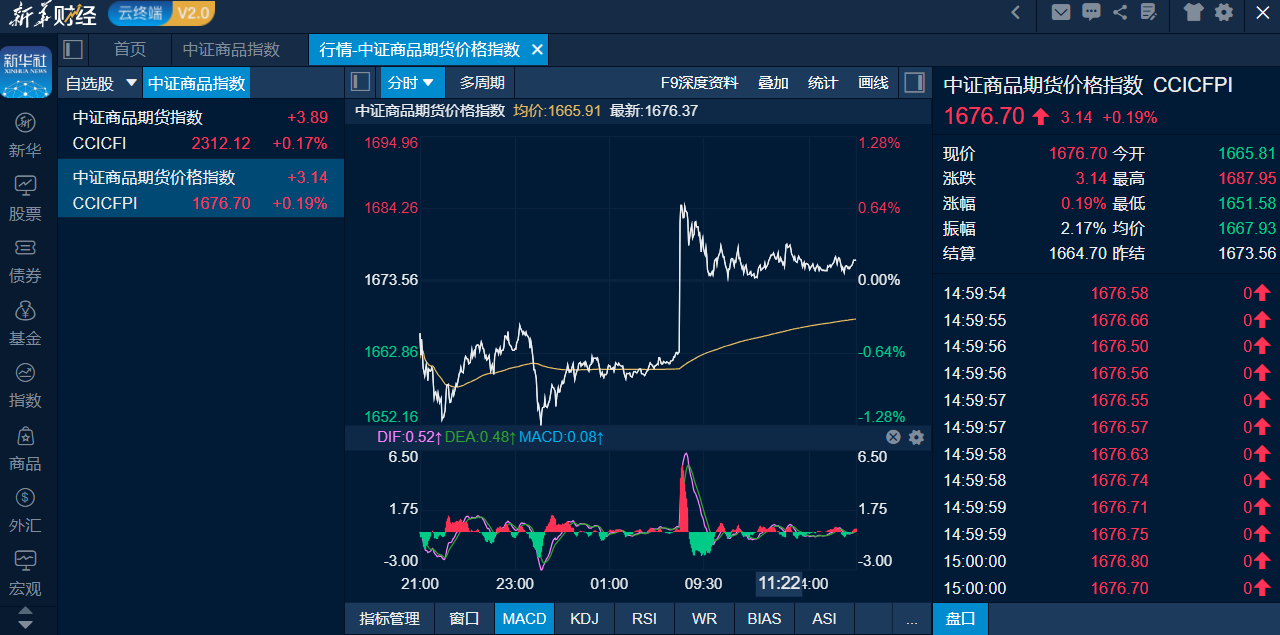
Market Overview - The domestic commodity futures market experienced a weak trend on January 19, with significant differentiation among sectors, resulting in most varieties closing lower. The China Securities Commodity Futures Price Index closed at 1676.70 points, up 3.14 points or 0.19% from the previous trading day, while the China Securities Commodity Futures Index closed at 2312.12 points, up 3.89 points or 0.17% [1]. Precious Metals - The precious metals sector was notably active, with international gold and silver prices reaching historical highs, which boosted domestic gold and silver futures. Shanghai gold hit a new historical high, while Shanghai silver rose nearly 3% by the end of the day [1][3]. Chemical Sector - In the chemical sector, pure benzene and styrene showed strong performance, closing up 3.48% and 1.84% respectively, leading the chemical sector. The strong performance of styrene is attributed to multiple maintenance shutdowns and export factors, which have increased its profitability [4]. Industrial Metals - The industrial metals sector faced widespread pressure, with Shanghai tin leading the decline, falling 5.98% after a significant drop of over 6% the previous Friday. The market sentiment cooled rapidly, leading to a correction in tin prices after reaching historical highs [5]. Other major industrial metals, including copper, aluminum, and zinc, also saw declines ranging from 0.39% to 2.33% [5]. Agricultural Products - The agricultural products sector, particularly rapeseed meal and oil, experienced significant declines, with rapeseed meal dropping 2.37% and rapeseed oil falling 1.50%. Concerns over potential increases in supply due to improved Sino-Canadian relations contributed to this downturn [6]. The overall weak supply-demand dynamics are expected to keep rapeseed meal prices under pressure [6].

日度策略参考-20260119
Guo Mao Qi Huo· 2026-01-19 05:27
Industry Investment Ratings - Macrofinance: Index (Long-term bullish, short-term shock adjustment), Treasury bonds (Shock), Copper (Shock), Aluminum (Shock), Alumina (Shock), Zinc (Shock), Nickel (High-level shock), Stainless steel (High-level shock), Tin (Potential for increase), Precious metals (High-level wide-range shock), Industrial silicon and polysilicon (Bearish), Lithium carbonate (No clear rating), Rebar (Shock), Iron ore (Shock), Coke (Shock), Coking coal (Bullish), Anthracite (Bullish), Palm oil (Shock), Soybean oil (Bullish), Rapeseed oil (Bearish), Cotton (Shock), Sugar (Bearish), Corn (Shock), Soybeans (Bearish), Pulp (Shock), Logs (Shock), Live pigs (Shock), Fuel oil (Shock), Bitumen (Shock), BR rubber (Bullish), PTA (Shock), Ethylene glycol (Shock), Styrene (Bearish), Urea (Shock), PF (Shock), PVC (Shock), LPG (Bullish), Container shipping European line (Shock) [1] Core Views - The policy aims for a "slow bull" in the stock index rather than suppressing the market. The short-term shock adjustment space is expected to be limited, and long-term bulls can choose opportunities to layout. Asset shortages and a weak economy are beneficial to bond futures, but the central bank has recently warned of interest rate risks. The downstream demand is relatively pressured, and with the US suspending the tax on key minerals, the short-term concern about copper hoarding has eased, causing copper prices to fall from high levels. The supply of nickel ore remains tight, but the continuous accumulation of global nickel inventories may restrict the rise of nickel prices. The prices of precious metals are expected to shift to high-level wide-range shocks. The prices of industrial silicon and polysilicon are bearish. The prices of black metals are affected by weak reality and strong expectations. The prices of agricultural products are affected by various factors such as supply and demand, policies, and weather. The prices of energy and chemical products are affected by factors such as supply and demand, geopolitical situations, and cost support [1] Summary by Directory Macrofinance - Index: The stock index rose strongly in the first half of the week and then adjusted with policy regulation. The short-term shock adjustment space is limited, and long-term bulls can choose opportunities to layout [1] - Treasury bonds: Asset shortages and a weak economy are beneficial to bond futures, but the central bank has recently warned of interest rate risks. Pay attention to the interest rate decision of the Bank of Japan [1] Non-ferrous Metals - Copper: The downstream demand is relatively pressured, and with the US suspending the tax on key minerals, the short-term concern about copper hoarding has eased, causing copper prices to fall from high levels [1] - Aluminum: The recent industrial drive is limited, and the macro sentiment has weakened, causing aluminum prices to fall from high levels [1] - Alumina: The alumina production capacity still has a large release space, and the industrial side weakens the price. However, the current price is basically near the cost line, and the price is expected to fluctuate [1] - Zinc: The cost center of the zinc fundamentals is stable, but the inventory pressure is obvious. The current price has insufficient fundamental support, and the zinc price fluctuates in a range under the repeated macro sentiment [1] - Nickel: The supply of nickel ore remains tight, but the continuous accumulation of global nickel inventories may restrict the rise of nickel prices. The short-term nickel price fluctuates at a high level and is still affected by the resonance of the non-ferrous metal sector. It is recommended to pay attention to the policy changes in Indonesia, the macro sentiment, and the futures positions [1] - Stainless steel: The price of raw material nickel iron continues to rise, the social inventory of stainless steel decreases slightly, and the steel mill's production schedule in January increases. Pay attention to the actual production situation of the steel mill. The stainless steel futures fluctuate at a high level, and it is recommended to go long at low levels in the short term [1] - Tin: The short-term macro sentiment is repeated, and the tin price has corrected. However, the supply vulnerability of tin ore still exists, and it still has the driving force to rise. Pay attention to the opportunity of low absorption [1] - Precious metals: The geopolitical situation has cooled down, and the rise of precious metal prices has slowed down. The silver price has fallen under pressure. The short-term gold and silver prices are expected to shift to high-level wide-range shocks. In the long term, it is recommended to allocate platinum at low levels or choose the arbitrage strategy of [long platinum, short palladium] [1] Black Metals - Rebar: The expectation is strong, but the spot is weak, and the sentiment transmission to the spot is not smooth. The continuous rise kinetic energy is insufficient. Unilaterally long orders should leave the market and wait and see; participate in the positive arbitrage position in the spot and futures [1] - Iron ore: The sector rotates, but the upper pressure of iron ore is obvious. It is not recommended to chase long at this position. The weak reality and strong expectation are intertwined. The actual supply and demand continue to be weak, and the energy consumption double control and anti-involution may disturb the supply [1] - Coke: The short-term market sentiment warms up, and the supply and demand are supported, but the medium-term supply and demand continue to be surplus, and the price is under pressure [1] - Coking coal: If the expectation of "capacity reduction" continues to ferment and the spot replenishes the inventory before the Spring Festival, coking coal may still have room to rise, but the actual rise space is difficult to judge, and the volatility increases after a large rise. It is necessary to be cautious [1] - Anthracite: The logic is the same as that of coking coal [1] Agricultural Products - Cotton: The domestic new crop production expectation is strong, but the purchase price of seed cotton supports the cost of lint. The downstream start-up maintains a low level, but the yarn mill inventory is not high, and there is a rigid replenishment demand. The cotton market is currently in a situation of "supported but no driving force." Pay attention to the tone of the No. 1 Central Document on direct subsidy prices and cotton planting areas in the first quarter of next year, the intention of cotton planting areas next year, the weather during the planting period, and the peak season demand from March to April [1] - Sugar: The global sugar is in surplus, and the domestic new crop supply increases. The short consensus is relatively consistent. If the disk continues to fall, the lower cost support is strong, but the short-term fundamentals lack continuous driving force. Pay attention to the changes in the capital side [1] - Corn: The grain sales progress of Northeast corn is relatively fast, the port inventory is low, and the middle and lower reaches have a certain replenishment demand before the festival. The short-term spot is still relatively strong, and the disk is expected to fluctuate in a range [1] - Soybeans: With the progress of the Brazilian harvest, the Brazilian CNF premium is expected to reflect the selling pressure of the soybean harvest. Coupled with the pressure on the rapeseed sector from the Sino-Canadian easing, the MO5 is expected to be under pressure, and the MO5 - M09 is expected to be in a reverse arbitrage [1] - Pulp: The pulp fell today due to the decline of the commodity macro. The overall did not break through the shock range. The short-term commodity sentiment fluctuates greatly. It is recommended to wait and see cautiously [1] - Logs: The spot price of logs has recently shown a certain sign of bottoming out and rebounding. It is expected that the further decline space of the futures price is limited. However, the external quotation in January still shows a slight decline, and the spot and futures markets of logs lack driving factors for rising. It is expected to fluctuate in the range of 760 - 790 yuan/m³ [1] - Live pigs: The spot and futures of live pigs gradually stabilize. The demand support and the unsold slaughter weight, and the production capacity still needs to be further released [1] Energy and Chemical Products - Fuel oil: OPEC+ suspends production increase until the end of 2026. The uncertainty of the Russia-Ukraine peace agreement affects. The US sanctions the Venezuelan crude oil export. The short-term supply and demand contradiction is not prominent, and it follows the crude oil. The demand for the 14th Five-Year Plan rush work is likely to be falsified, and the supply of Ma Rui crude oil is not short. The asphalt profit is high [1] - Bitumen: The raw material cost support is strong. The spot-futures price difference rebounds greatly. The intermediate inventory increases [1] - BR rubber: The disk position decreases, and the new warehouse receipts increase. The BR increase slows down periodically. The spot leads the rise to repair the basis, and the BR continues to pay attention to the upward driving force above 12,000. The BD/BR listing price continues to be raised, and the processing profit of butadiene rubber narrows. The overseas cracking device capacity is cleared, which is beneficial to the long-term export expectation of domestic butadiene. The naphtha tax also has a positive support for the butadiene price. Fundamentally, butadiene rubber maintains high operation and high inventory, and the transaction center is average. Styrene-butadiene rubber is relatively better than butadiene rubber [1] - PTA: The PX market has experienced a rapid rise, and this round of rise is not due to a fundamental change. The PX fundamentals are indeed supported, and the market is expected to continue to tighten in 2026, driven by the new PTA production capacity in India and the organic growth of demand. The domestic PTA maintains high operation. The gasoline price difference is still at a high level, which supports the aromatics [1] - Ethylene glycol: The market spreads the news that two sets of MEG devices in Taiwan, China, with a total annual production capacity of 720,000 tons, plan to stop production next month due to efficiency reasons. Ethylene glycol rebounded rapidly during the continuous decline due to the stimulation of supply-side news. The current polyester downstream start-up rate maintains above 90%, and the demand performance slightly exceeds expectations [1] - Styrene: The Asian styrene market is generally stable. The suppliers are reluctant to reduce prices due to continuous losses, while the buyers insist on pressing prices due to the weak downstream polymer demand and profit compression. Although the downstream demand is weak, the domestic market has a bullish sentiment due to the export support. The market is in a weak balance state, and the short-term upward driving force needs to pay attention to the drive of the overseas market [1] - Urea: The export sentiment eases slightly, and the domestic demand is insufficient. The upper space is limited. The lower has the support of anti-involution and the cost side [1] - PF: The geopolitical conflict intensifies, and the crude oil has a rising risk. The maintenance decreases, and the operation load is at a high level. The long-distance arrival increases the supply. The downstream demand operation weakens. The price returns to a reasonable range [1] - PVC: There is less global production in 2026, and the future expectation is optimistic. The fundamentals are poor. The export tax rebate is cancelled, and there may be a phenomenon of rushing to export later. The differential electricity price in the northwest region is expected to be implemented, forcing the PVC production capacity to be cleared [1] - LPG: The January CP rises unexpectedly, and the cost support of imported gas is strong. The geopolitical conflict in the Middle East escalates, and the short-term risk premium rises. The EIA weekly C3 inventory accumulation trend slows down, and it is expected to gradually turn to destocking. The domestic port inventory also decreases [1] - Container shipping European line: It is expected to peak in mid-January. The airlines are still cautious in their tentative re-navigation. The pre-festival replenishment demand still exists [1]
有色钢铁行业周观点(2026年第3周):持续关注工业金属的战略机会-20260119
Orient Securities· 2026-01-19 01:02
Investment Rating - The report maintains a "Positive" outlook for the non-ferrous and steel industry in China [6] Core Views - Continuous focus on strategic opportunities in industrial metals is emphasized, with a recommendation to concentrate on the industrial metal sector as the market sentiment cools and volatility increases [9][14] - The zinc sector is highlighted as an overlooked foundational material in the context of de-globalization, with expectations for price increases due to improving supply-demand dynamics [9][14] - The copper sector is viewed positively in the medium term, with expectations for price and smelting fee improvements despite short-term fluctuations [9][15] - The aluminum sector is expected to benefit from supply chain security and competitive advantages, leading to potential valuation premiums [9][16] Summary by Sections Industrial Metals - The report suggests that industrial metals are entering a favorable strategic allocation period as copper prices approach 100,000 [9][14] - Zinc is expected to see price increases driven by demand from re-industrialization in Asia, Africa, and Latin America, despite domestic construction concerns [9][14] - Copper prices are anticipated to improve due to supply constraints, with significant copper mines expected to resume production in 2026 [9][15] - The aluminum sector is projected to experience steady profit growth due to enhanced supply chain security and rising aluminum prices [9][16] Steel Industry - The steel industry is facing a weak fundamental outlook as it approaches the seasonal low around the Spring Festival, with expectations for policy measures to support the sector [17] - Weekly rebar consumption increased by 8.79% week-on-week, indicating a marginal strengthening in demand [22] - Steel production saw a slight decrease, with iron output down by 0.65% and rebar production down by 0.39% [19][22] - Steel prices have shown a slight increase, with the overall steel price index rising by 0.15% [36] New Energy Metals - Lithium carbonate production in December 2025 saw a significant year-on-year increase of 69.09%, indicating strong supply growth [40] - The demand for new energy vehicles remains robust, with production and sales showing substantial year-on-year growth [44] - Prices for lithium and cobalt have risen significantly, reflecting strong market demand [49][51]
有色金属周报-20260116
Jian Xin Qi Huo· 2026-01-16 13:09
1. Report Information - Report Title: Non-ferrous Metals Weekly Report [1] - Date: January 16, 2026 [2] - Researcher: Zhang Ping, Yu Feifei, Peng Jinglin [3][4] 2. Industry Investment Ratings - Not provided in the report. 3. Core Views - Copper prices are expected to enter a high - level adjustment in the short term due to the dual pressure of short - term demand and a strong US dollar, but the medium - term demand is still positive [7]. - The downward space of lithium carbonate futures prices is limited, considering the limited growth of supply and the recovery of short - term demand [28]. - Aluminum prices have a downward adjustment demand in the short term due to the cooling of the macro - market sentiment and the large increase in the early stage [41][44]. - The operating center of nickel prices is expected to gradually rise, but the long - term space depends on the demand side, and investors need to pay attention to the Indonesian policy [77][78]. - Zinc prices are supported by macro - sentiment and a tight industrial pattern, but high prices have suppressed consumption, and there is a risk of a high - level callback [103][104]. 4. Summary of Each Metal Copper Market Review and Operation Suggestions - The main contract of Shanghai copper fluctuated between 100,060 and 105,650 this week, with a 5.3% decrease in total positions. The price first rose and then fell. LME copper also fluctuated in a certain range, and the overseas funds' enthusiasm for going long decreased [7]. - In the short term, high copper prices suppress downstream consumption, and the inventory accumulation accelerates. However, the medium - term demand is positive, such as the increase in the State Grid's fixed - asset investment and TSMC's capital expenditure. It is expected that copper prices will enter a high - level adjustment in the short term [7]. Fundamental Analysis - **Supply**: The import TC of copper concentrates continues to decline, but the supply of cold materials is abundant. The production of smelters in January is expected to decrease slightly. The import window of refined copper is closed [7][10][13]. - **Demand**: The operating rates of waste copper rods and refined copper rods have rebounded, but the downstream purchasing sentiment is still cautious. The operating rate of wire and cable has decreased slightly, and the operating rate of enameled wire has increased [14][15][16][17]. - **Spot**: The domestic inventory has increased, and the LME + COMEX market has also increased. It is expected that the inventory may decline next week [18][20]. Lithium Carbonate Market Review and Operation Suggestions - The futures price of lithium carbonate first rose and then fell this week, with a 17% decrease in total positions. The spot price also fluctuated. The downstream has stocked up in advance, and the social inventory has started to decline [27]. - The supply growth is limited, and the demand is expected to recover. It is expected that the downward space of futures prices is limited [28]. Fundamental Analysis - **Supply**: Lithium ore prices have risen significantly this week. The weekly production of lithium carbonate has increased slightly, but it is expected to decline in January. The production cost has also increased [31]. - **Demand**: The prices of ternary materials, lithium iron phosphate, cobalt acid lithium, and lithium batteries have all risen. The demand for cathode materials is expected to recover [32][33][34]. - **Spot**: The price difference between battery - grade and industrial - grade lithium carbonate is at a low level, and the inventory has decreased [35][36]. Aluminum Market Review and Operation Suggestions - Aluminum prices fluctuated at a high level this week, reaching new highs and then falling. The market sentiment cooled down, and the import window was closed. The inventory increased, and the spot premium was in a certain range [41]. - The supply pressure is expected to increase slightly in the short term, and the demand may be stimulated by the decline in aluminum prices. It is expected that aluminum prices will have a downward adjustment in the short term [44]. Fundamental Changes - **Bauxite**: The domestic bauxite production is gradually recovering, and the overseas market is trading lightly. The price of domestic bauxite is stable, and the price of imported bauxite has declined slightly [45]. - **Alumina**: The price has adjusted downward this week, and the import window is open. The domestic alumina plant is operating at a high level [49][50]. - **Electrolytic Aluminum**: The profit of the smelting industry remains at a high level. The import window of aluminum ingots is closed, and the net import in November has declined. The operating rate of downstream processing has increased slightly due to pre - holiday stocking, but it is expected to be weak in the short term. The inventory of aluminum ingots has increased significantly [55][62][65][70]. Nickel Market Review and Operation Suggestions - Nickel prices fluctuated widely at a high level this week, rising first and then falling. The spot trading was light, and the import window was closed [74][77]. - Nickel prices are affected by Indonesian policies. Although the short - term surplus pressure still exists, the operating center is expected to rise. Investors need to pay attention to the final quota of Indonesia [77][78]. Fundamental Changes - **Nickel Ore**: The price of Philippine nickel ore is stable, the price of Indonesian wet - process nickel ore has decreased, and the price of pyrometallurgical nickel ore is stable. The import volume of nickel ore in November 2025 decreased month - on - month [79]. - **Ferronickel**: The production of domestic and Indonesian ferronickel has decreased. The market has some activity, but there is still a difference between the upstream and downstream [86]. - **Electrolytic Nickel**: The production capacity of electrowon nickel is rapidly releasing. The production in December has increased, and the import and export volumes have changed [91]. - **Nickel Sulfate**: The price of nickel salts has risen significantly this week. The production in December has decreased, and the industry's operating load is at a certain level [96]. - **Stainless Steel**: The inventory of the stainless steel market has decreased, and the pattern of low inventory and strong expectation will continue, but there are potential risks [99]. Zinc Market Review and Operation Suggestions - Zinc prices fluctuated this week, reaching a new high and then falling back. The import window is not fully open, and the premium has declined [101][102]. - The short - term bullish funds are loose, the supply pressure is limited, and the demand is weak. It is necessary to be vigilant against the high - level callback of zinc prices [103][104]. Fundamental Analysis - **Supply**: The domestic zinc ore supply is tight, the import processing fee continues to decline, and the import window is open but the trading is light. The zinc ingot production in January is expected to increase slightly [109][110][111]. - **Demand**: The operating rates of galvanizing, die - casting zinc alloy, and zinc oxide have all decreased. It is expected that the operating rates will rise slightly next week, but the recovery is limited [112][113]. - **Spot Market**: The domestic zinc inventory has increased slightly, and the LME zinc inventory has decreased [114].
「午报」三大指数全线调整,商业航天、AI应用双双熄火,高位人气股集体退潮
Sou Hu Cai Jing· 2026-01-15 07:37
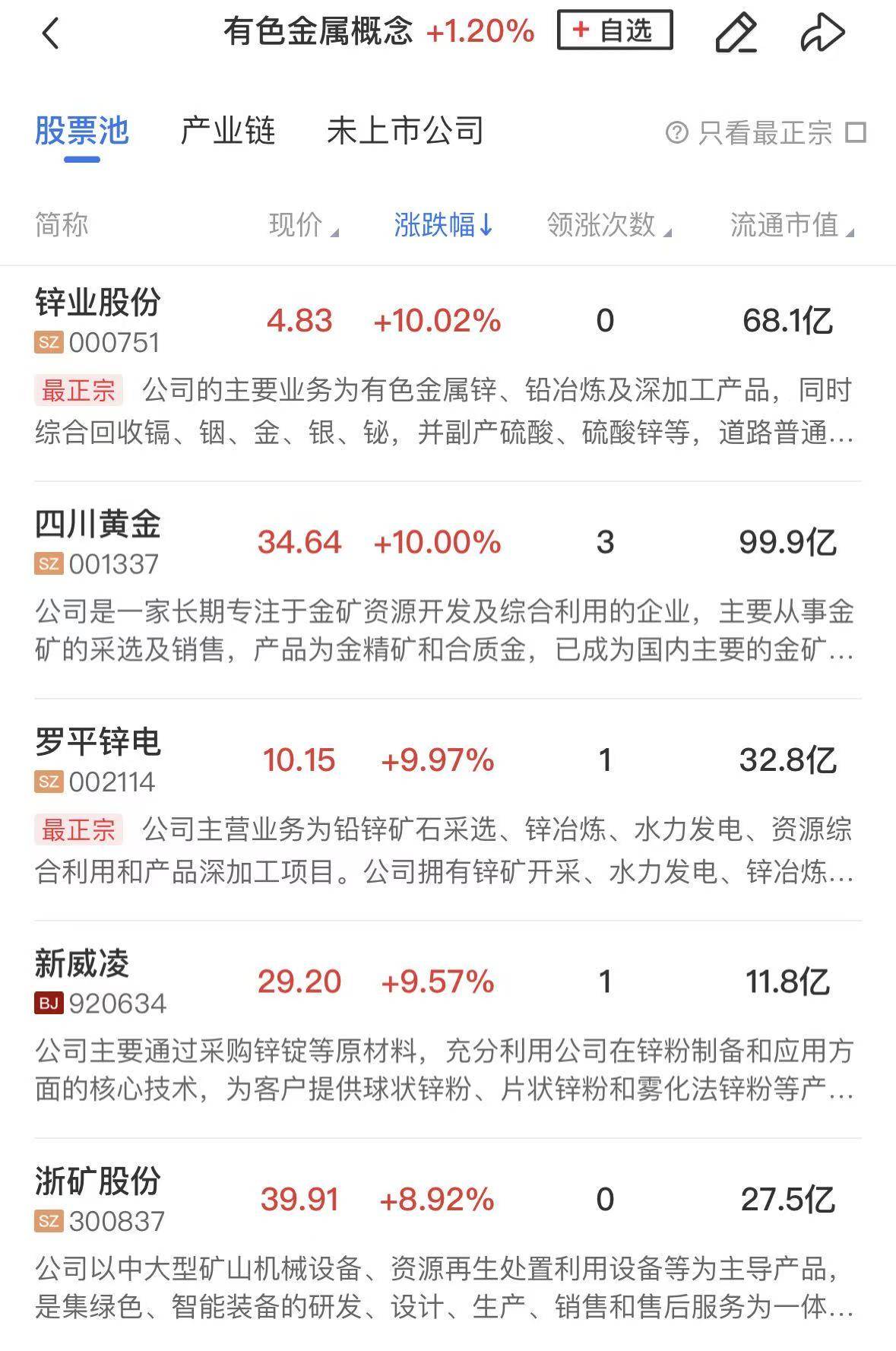
Market Overview - The market experienced a pullback after an early surge, with the ChiNext Index dropping over 1% and the STAR 50 Index falling more than 2% [1] - The total trading volume in the Shanghai and Shenzhen markets was 1.87 trillion yuan, a decrease of 347.2 billion yuan compared to the previous trading day [1] - Over 3,600 stocks in the market declined, indicating a broad-based downturn [1] Sector Performance - The tourism and hotel sector showed strong activity, with stocks like Zhongxin Tourism and Shaanxi Tourism hitting the daily limit [1] - The non-ferrous metals sector also rose, with stocks such as Sichuan Gold and Luoping Zinc Electric reaching the daily limit [1] - The commercial retail sector saw some gains, with Xinhua Department Store and Xinhua Du both achieving consecutive gains [1] Individual Stock Highlights - A total of 32 stocks hit the daily limit today, with a limit-up rate of 62% [1] - Notable stocks with consecutive gains include Bofei Electric (4 consecutive limits) and Waifu Holdings (3 consecutive limits) [1] - In the non-ferrous metals sector, stocks like Sichuan Gold and Luoping Zinc Electric were among the top gainers [1] Precious Metals and Lithium Battery Sector - Recent trends show that spot silver prices surged over 7%, reaching a historic high of $93 per ounce, while gold prices also hit a record high of $4,643 per ounce [3][12] - The rise in precious metals and non-ferrous metals is driven by market risk aversion and expectations regarding monetary policy [3] - The lithium battery sector remained strong, with companies like Keheng Co., Liwang Co., and Xiamen Tungsten rising significantly [3] Commercial Space and AI Applications - The commercial space and AI application sectors faced significant declines, with high-profile stocks like Shengguang Group and Zhejiang Wenhuan hitting the daily limit [8] - The overall sentiment in these sectors has cooled, indicating a potential shift in investor interest [8] Regulatory Developments - Ctrip is under investigation by the State Administration for Market Regulation for alleged monopolistic practices, which has impacted the tourism sector positively [20] - The Ministry of Finance has increased support for integrated ecological protection and restoration projects, which may benefit related industries [32]