
新消费

Search documents
对话管清友:中国到了科技创新的爆发期
Xin Lang Cai Jing· 2025-09-14 00:39
Group 1 - The 21st Summer Annual Meeting of the Yabuli Entrepreneurs Forum will be held in Guangzhou on September 12-13, 2025, focusing on the theme "Forging Ahead Steadily - Corporate Development in the New Global Context" [1] - The current market activity is attributed to multiple factors including abundant liquidity, the onset of the Federal Reserve's interest rate cuts, geopolitical factors creating investment opportunities, and the catalytic effect of AI technology [3] - There is a recognition of a technology innovation explosion, with rapid development across various stages from foundational computing algorithms to industry applications [3] Group 2 - Concerns about market bubbles exist, but the transition of technological advancements into corporate profitability is expected to be more solid than in previous market cycles [3] - To stimulate domestic demand, two approaches are suggested: providing financial support to low- and middle-income groups and implementing structural reforms to adjust the distribution system [3] - The growth potential for new consumption sectors, such as Pop Mart, remains significant, with high valuations driven by the ability to create new intellectual properties [4]


大摩吹响“买中国”号角:外资对中国资产兴趣创2021年新高,资金流入一触即发!
美股IPO· 2025-09-13 00:05
Core Viewpoint - Morgan Stanley indicates that over 90% of investors expressed willingness to increase their investment exposure to the Chinese market during a recent 1.5-week marketing roadshow in the U.S., suggesting a significant influx of capital is anticipated as U.S. investors begin reallocating funds [1][2][6]. Investment Themes - Investors are advised to focus on A-shares, particularly in sectors such as biopharmaceuticals, artificial intelligence/semiconductors, humanoid robotics, and new consumption [1][3]. Drivers of Increased Interest - Four key drivers have been identified for the surge in investor interest: 1. **Technological Leadership**: U.S. investors recognize China's global dominance in humanoid robotics and biopharmaceuticals, making participation in the Chinese market essential [4]. 2. **Improving Policy Environment**: Gradual measures by Chinese policymakers to stabilize the economy and support the stock market have bolstered investor confidence, suggesting that the worst may be over [4]. 3. **Improved Liquidity Conditions**: The liquidity situation in the Chinese market is significantly improving, which supports a longer-lasting stock market rebound and provides better entry and exit mechanisms for investors [7]. 4. **Rising Diversification Needs**: There is an increasing demand among U.S. investors for diversified investments, as their asset allocation has been overly concentrated in the U.S. market, presenting new opportunities in the Chinese stock market [7]. Market Preferences - Historically, U.S. investors primarily focused on ADRs due to time zone limitations, but there is a shift towards greater attention on themes and sectors in the Hong Kong and A-share markets, including biopharmaceuticals, AI/semiconductors, humanoid robotics, and new consumption [8]. - The preferred trading sequence for U.S. investors remains ADRs, followed by Hong Kong stocks and A-shares, indicating a gradual shift in focus [8]. - Despite the heightened interest, the reallocation of funds by U.S. investors to China is still in its early stages, with many needing time to conduct due diligence on individual stocks, especially in humanoid robotics/automation and new consumption themes [8].

大摩吹响“买中国”号角:外资对中国资产兴趣创2021年新高,资金流入一触即发!
Hua Er Jie Jian Wen· 2025-09-12 11:59
Core Insights - U.S. investors' interest in the Chinese stock market has reached its highest level since 2021, with over 90% of investors indicating a willingness to increase their exposure to the market [1][2] - This shift is driven by China's leading position in humanoid robotics, AI technology, and biomedicine, along with government efforts to stabilize the economy and support the stock market [1][2] Group 1: Key Drivers of Increased Investor Interest - **Technological Leadership**: U.S. investors recognize China's global dominance in specific technology sectors such as humanoid robotics and biomedicine, making participation in the Chinese market a necessary choice [2] - **Improving Policy Environment**: Gradual measures by Chinese policymakers to stabilize the economy and support the stock market have enhanced investor confidence, suggesting that the worst may be over [2] - **Improved Liquidity Conditions**: Significant improvements in market liquidity are supporting a longer-lasting stock market rebound, providing better entry and exit mechanisms for investors [2] - **Rising Diversification Needs**: There is an increasing demand among U.S. investors for diversified investments, as their asset allocation has been overly concentrated in the U.S. market, creating new opportunities in the Chinese stock market [2] Group 2: Expansion of Investment Scope - **Focus on A-shares**: Historically, U.S. investors primarily focused on ADRs due to time zone limitations, but there is a growing interest in themes and sectors in the Hong Kong and A-share markets, including AI, semiconductors, humanoid robotics, and new consumption [3] - **Investment Strategies**: Quantitative and macro funds view trading Chinese stocks through A-share ETFs and index futures as a quick and direct way to participate in the market when lacking time or resources for bottom-up stock selection [3] - **Initial Stage of Fund Reallocation**: Despite heightened interest, the reallocation of funds by U.S. investors towards China is just beginning, with many needing time to conduct research on specific stocks, particularly in humanoid robotics and new consumption themes [3] - **Current Fund Flows**: Recent data indicates that among U.S. managed portfolios, only the Asia-ex-Japan portfolio has seen a significant reduction in underweight positions, suggesting that global and emerging market portfolios are expected to increase their allocations to China [3]
港股收盘|三大指数集体回调 泰格医药领跌相关个股
Sou Hu Cai Jing· 2025-09-11 08:45
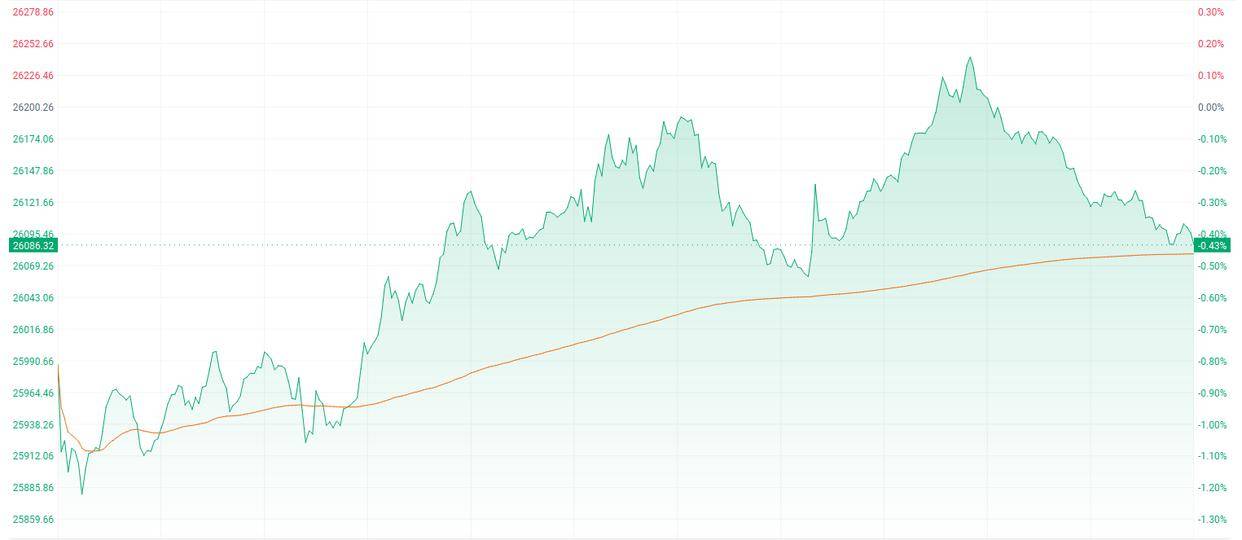
Market Overview - The Hong Kong stock market experienced a collective pullback, with the Hang Seng Index down 0.43% to 26,086.32 points, the Tech Index down 0.24% to 5,888.77 points, and the National Enterprises Index down 0.73% to 9,260.25 points [1][2]. Semiconductor Sector - The semiconductor sector led the market with notable gains, including InnoCare (02577.HK) up 9.25%, SMIC (00981.HK) up 4.97%, and Shanghai Fudan (01385.HK) up 5.37% [4][5]. - TSMC reported a revenue of NT$335.77 billion for August 2025, marking a year-on-year increase of 33.8% and a quarter-on-quarter increase of 3.9%, boosting market expectations for AI infrastructure development [6]. Telecommunications Equipment - Telecommunications equipment stocks also saw strong performance, with ZTE (00763.HK) up 7.50%, and China Tower (00788.HK) up 3.19% [8]. Nonferrous Metals - Nonferrous metal stocks were buoyed by interest rate cut expectations, with Jinli Permanent Magnet (06680.HK) up 6.04% and Luoyang Molybdenum (03993.HK) up 4.79% [9][10]. - Minsheng Securities noted that industrial metal supply remains constrained while domestic demand remains resilient, suggesting a potential upward trend in metal prices [11]. Cement Sector - The cement sector benefited from price increases, with Huaxin Cement (06655.HK) up 4.94% and China National Building Material (03323.HK) up 3.38% [12][13]. - Research indicated that cement prices in the Pearl River Delta region are expected to rebound due to seasonal demand and reduced supply [14]. Pharmaceutical Sector - Pharmaceutical stocks faced downward pressure, with Tigermed (03347.HK) down 9.36% and Zai Lab (06160.HK) down 5.87% [15][16]. - Market rumors about potential restrictions on innovative drugs from China to the U.S. have not significantly altered long-term expectations for these companies [17][18]. New Consumption Sector - New consumption stocks showed weakness, with Maogeping (01318.HK) down 4.73% and Laopu Gold (06181.HK) down 3.51% [19][20]. - Despite the current underperformance, institutions remain optimistic about the growth potential of new consumption companies, driven by changing consumer behaviors among the Z generation [21]. Individual Stock Movements - China Gold International (02099.HK) rose 2.70% amid increasing expectations for U.S. interest rate cuts [22]. - Tenghong Precision (06088.HK) surged 12.79% following the announcement of new Apple products, including new iPhones and AirPods [23][24].


大摩最新发声:美国投资者对中国市场兴趣创2021年以来新高
Zhong Guo Ji Jin Bao· 2025-09-11 08:08
Core Insights - Morgan Stanley reports that U.S. investor interest in the Chinese stock market has reached its highest level since 2021, with over 90% of investors willing to increase their allocation to China [1][2] Group 1: Reasons for Increased Interest - The first reason is China's leading position in global technology, particularly in humanoid robots, automation, biotechnology, and drug development, which has gained global recognition [2] - The second reason is positive policy signals from the Chinese government, which aims to stabilize the economy and support the capital market, suggesting that the worst may be over [2] - The third reason is the significant improvement in liquidity conditions in the Chinese market, which supports a longer-lasting market rally [3] - The fourth reason is the rising demand for diversified asset allocation among global investors, as U.S. portfolios are highly concentrated in domestic markets, making diversification into Chinese assets a necessary choice [3] Group 2: Investment Preferences and Strategies - U.S. investors are particularly interested in sectors such as artificial intelligence, semiconductors, humanoid robots, automation, and new consumption [3] - Morgan Stanley notes that quantitative and macro funds have mentioned the convenience of participating in the Chinese market through A-share ETFs and index futures, especially when lacking resources for individual stock research [3] - The preferred order of investment for U.S. investors is American Depositary Receipts (ADRs), Hong Kong stocks, and A-shares [3] Group 3: Current Status of Capital Flow - Despite the increased interest, the process of U.S. capital flowing back into the Chinese market has just begun, with only slight increases in allocations to China from certain funds [4] - The report indicates that global and emerging market investors are primarily engaging with the Chinese market, suggesting potential for further increases in allocations [4] Group 4: Areas of Focus for Investors - Investors are advised to monitor inflation data and the real estate market, as it may take 10 to 12 months to digest the excess inventory in China's primary housing market [5] - The direction of policies is crucial, with a focus on stabilizing prices and promoting economic rebalancing, in addition to technology and high-end manufacturing [5] - The availability of hedging tools is essential for macro and quantitative funds to increase their participation in the A-share market [5] - Investors express a desire for greater participation in China's capital market activities, particularly in A-share IPOs, although foreign investors currently cannot participate in IPOs through the stock connect mechanism [6] Group 5: Geopolitical Considerations - Geopolitical factors, particularly U.S.-China relations, remain significant in influencing market volatility, with U.S. policy uncertainties potentially exacerbating market fluctuations [6] - Morgan Stanley assesses that the likelihood of more U.S. administrative orders is low, but any related news causing market declines could present buying opportunities for Chinese assets [6]
港股午评:恒指跌0.29%止步4连升,创新药大跌,半导体芯片股走强!歌礼制药跌13%,英诺赛科涨超10%,中芯国际涨6%
Ge Long Hui· 2025-09-11 04:56
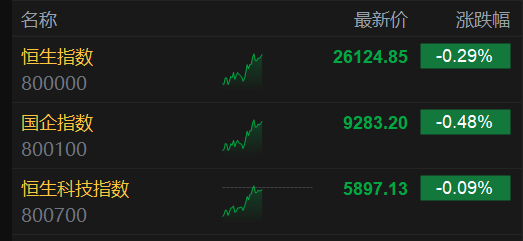
Market Overview - The Hong Kong stock market experienced a collective decline in the morning session, with the Hang Seng Index falling by 0.29% to 26,124.85, the State-Owned Enterprises Index dropping by 0.48% to 9,283.20, and the Hang Seng Tech Index decreasing by 0.09% to 5,897.13. This marks a halt to a four-day upward trend, indicating a shift towards cautious market sentiment after reaching new highs [1]. Sector Performance - Major technology stocks showed weak performance, with Meituan down nearly 4%, Baidu down 2.38%, JD.com down 1.8%, and Xiaomi down over 1%. Tencent remained flat, while Alibaba and NetEase saw slight increases [3]. - The biopharmaceutical sector faced significant declines, particularly in innovative drug companies, with companies like Gilead Sciences dropping nearly 13% and Hansoh Pharmaceutical falling over 9% [3]. - Conversely, semiconductor stocks saw notable gains, led by InnoCare Pharma with an increase of over 10%, and SMIC rising by 6%. Other sectors such as non-ferrous metals, Chinese brokerage firms, heavy machinery, military, education, coal, and Apple-related stocks also experienced upward movements [3]. Notable Stock Movements - The top gainers included InnoCare Pharma (up 10.75%), Nakamura International (up 6.05%), and End Class Non-Semiconductor (up 5.77%). Other notable performers were Chip Intelligence Holdings (up 5.62%) and Shanghai Fuzhi (up 5.60%) [2].

促消费政策有望加码,关注港股消费ETF(513230)布局机遇,聚焦人工智能+消费、IP+消费等消费新业态
Mei Ri Jing Ji Xin Wen· 2025-09-11 02:39
Group 1 - The Hang Seng Index opened down 212.77 points, a decline of 0.81%, at 25,987.49 points, while the Hang Seng Tech Index fell by 57.31 points, down 0.97%, at 5,845.38 points, and the National Enterprises Index decreased by 95.54 points, a drop of 1.02%, at 9,232.62 points [1] - The Hong Kong stock consumer sector, which has been active recently, opened lower and continued to fluctuate, with the Hong Kong Consumer ETF (513230) dropping to around 1%, opening a low-position layout channel [1] - Policies to expand service consumption are set to be introduced, which are expected to further boost domestic demand [1] Group 2 - The Hong Kong Consumer ETF (513230) tracks the CSI Hong Kong Stock Connect Consumer Theme Index, packaging leading internet e-commerce companies and new consumption sectors, covering various fields of Hong Kong consumption [2] - The ETF includes leading new consumption companies such as Pop Mart, Lao Pu Gold, and Miniso, as well as internet e-commerce giants like Tencent, Kuaishou, Alibaba, and Xiaomi, highlighting its technology and consumption attributes [2]

华宝基金胡洁:政策发力供需平衡,消费布局正当时
Xin Lang Ji Jin· 2025-09-11 02:23
Group 1 - Recent market trends show a shift in risk appetite, with funds moving away from previously popular tech sectors like AI and seeking undervalued potential in the consumer sector [1][2] - The consumer sector is seen as a favorable investment opportunity, whether through traditional stable consumption or new consumption models, as current policies support consumption recovery [1][2] - The A-share market's long-term positive trend remains intact, with a focus on corporate earnings becoming increasingly important for market performance [1][2] Group 2 - Traditional consumer sectors have experienced significant declines, with the leading consumer ETF (516130) seeing a nearly 60% drop from its peak, currently close to a 50% decline [2] - The current price-to-earnings ratio (PE) of the consumer index is approximately 18 times, which is lower than 88% of the past five years, while the return on equity (ROE) remains above 20%, indicating strong asset characteristics [2] - The performance of the consumer sector is expected to improve as policies stimulate consumption and market focus shifts to profitability [2] Group 3 - New consumption opportunities driven by new demographics and technologies are emerging, with funds like the Huabao CSI Hong Kong-Shenzhen New Consumption Index Fund (A: 017434; C: 017435) covering a broad range of new consumption stocks [3] - Historical performance of the new consumption index shows significant gains during bull markets, outperforming other indices, indicating potential for higher returns if the consumer sector strengthens [3]
美国8月PPI低于预期,南向资金连续14日加仓阿里巴巴
Mei Ri Jing Ji Xin Wen· 2025-09-11 01:13
【热点消息】 【市场复盘】 9月10日,港股三大指数集体走强。截至收盘,恒生指数涨1.01%,报26200.26点;恒生科技指数涨 1.27%,报5902.69点;国企指数涨0.93%,报9328.16点。盘面上,金融、地产业续涨,新消费行业普 跌。热点个股方面,哔哩哔哩涨超7.5%,美团涨超2%,快手涨超1.5%,腾讯控股涨超1%。热点ETF方 面,恒生科技指数ETF(513180)收涨1.79%。 【南向资金】 9月10日,南向资金净买入港股75.66亿港元,阿里巴巴获大幅净买入45亿港元;截至9月10日,南向资 金已连续14个交易日净买入阿里巴巴;截至9月10日,今年以来南向资金累计净买入10465.6亿港元。 【隔夜美股】 隔夜美股三大股指涨跌不一,道指跌0.48%,标普500指数涨0.3%,纳指涨0.03%。纳指与标普500指数 再创新高。赛富时、亚马逊、苹果均跌超3%,领跌道指。甲骨文大涨36%,创纪录新高,市值超9200 亿美元。英伟达涨近4%。美国科技七巨头指数跌0.31%,脸书跌1.79%。中概股方面,纳斯达克中国金 龙指数跌0.95%,蔚来跌超8%,爱奇艺跌超6%。恒生指数ADR下跌,按比 ...

牛市整理期的市场特征——“策略周中谈”
2025-09-10 14:35
Summary of Conference Call Records Industry or Company Involved - The discussion primarily revolves around the stock market, particularly focusing on the AI computing sector, TMT (Technology, Media, and Telecommunications) sector, and various emerging industries such as renewable energy, new consumption, innovative pharmaceuticals, non-bank financials, and basic chemicals. Core Points and Arguments 1. **Market Sentiment and Trends** - Market sentiment is currently in an exuberant phase but has not peaked, similar to early 2015 and March-April 2019, indicating a potential for either a peak reversal or sideways consolidation [1][2][4] - The trading structure has deteriorated, with the AI computing sector experiencing overcrowding, while the communication and electronics sectors have seen transaction volume ratios of 99.6% and 95.6% respectively [2][5] 2. **Historical Patterns of Market Consolidation** - Historical analysis of 11 previous consolidation periods shows they typically last 1-2 months, with maximum index drawdowns of 7%-9% [3][9] - A trading volume turnover rate exceeding 2% signals overheating, with a potential for significant corrections if it reaches 3% [3][5] 3. **Investment Opportunities Post-Consolidation** - After the current consolidation phase, the market is expected to continue its upward trend, with a focus on emerging sectors such as AI computing, renewable energy, new consumption, innovative pharmaceuticals, and non-bank financials [4][19] - The AI computing sector remains a core investment theme despite recent cooling [14] 4. **Current Market Downturn Causes** - The market downturn is attributed to trading overheating and structural deterioration, with significant transaction volume in the TMT sector nearing 40% [5][6] - Investor risk appetite has decreased, contributing to market adjustments [2][5] 5. **Sector Focus and Fund Flow Trends** - Current high interest in the electric equipment and renewable energy sectors, with notable increases in transaction volume for biopharmaceuticals and consumer sectors [6] - Attention should be paid to fund flows and rotation opportunities among sectors, especially as AI computing cools down [6] 6. **Short-term Risks in TMT and AI Computing Sectors** - The TMT and AI computing sectors are not expected to face significant short-term declines, with potential for continued investment opportunities [7] - The market sentiment remains high, influenced by expectations of Federal Reserve interest rate cuts [7] 7. **Investment Strategy During Market Consolidation** - Focus on mid-cap and large-cap growth stocks, as small-cap valuations are considered too high [11][12] - Emphasis on stocks that have underperformed but show potential for recovery during the consolidation phase [12] 8. **Key Sectors for Future Investment** - Renewable energy, particularly energy storage and solid-state batteries, are highlighted as key areas for investment [15][16] - New consumption sectors are also deemed worthy of attention, especially with upcoming holidays potentially boosting consumer spending [17] 9. **Impact of Federal Reserve Rate Cuts** - Federal Reserve rate cuts are expected to benefit sectors such as innovative pharmaceuticals and precious metals, with implications for non-bank financials and technology stocks [18] Other Important but Possibly Overlooked Content - The need for a comprehensive evaluation of industry conditions, policy directions, and sector performance to ensure a robust investment portfolio during periods of market volatility [12] - The potential for significant shifts in investment focus as market conditions evolve, particularly in response to macroeconomic trends and investor sentiment [19]