半导体

Search documents
马斯克自建全球最大芯片厂,要把80%算力送上太空
21世纪经济报道· 2026-03-24 04:55
Core Viewpoint - Tesla, in collaboration with SpaceX and xAI, announced the TeraFab project aimed at achieving an annual production capacity of 1 terawatt (1 trillion watts) of AI computing power, establishing the world's largest chip manufacturing facility [1][4]. Group 1: TeraFab Overview - TeraFab will be a vertically integrated chip factory covering the entire process from chip design to manufacturing, packaging, and testing [1][4]. - The factory is planned to be located in Austin, Texas, and will focus on advanced 2nm process technology [4][5]. - TeraFab aims to produce 100 billion to 200 billion AI and storage chips annually, with the first mass-produced chip, AI5, expected to launch in 2027 [5]. Group 2: Production and Applications - 20% of TeraFab's chip production will be allocated for Tesla vehicles and the Optimus robot, while 80% will support large-scale computing clusters in space [5]. - The first space computing chip, named D3, will be designed for space environments, featuring radiation protection and unique thermal management strategies [4][5]. Group 3: Challenges and Industry Perspectives - The feasibility of TeraFab is questioned due to the high investment required (estimated between $20 billion and $40 billion) and the long construction timeline of 3 to 5 years [8][9]. - Analysts highlight the challenges of building an advanced chip manufacturing facility, emphasizing the need for decades of engineering and technological expertise [8][9]. - The project is seen as a potential reversal of the semiconductor industry's trend towards specialization, consolidating various processes under one roof [11].


超4500股上涨
第一财经· 2026-03-24 03:47
Market Overview - The Shanghai Composite Index rose by 0.95% to 3849.34, with a trading volume of 591.68 billion [4][5] - The Shenzhen Component Index increased by 0.26%, while the ChiNext Index fell by 0.79% [3][4] - The total trading volume in the Shanghai and Shenzhen markets reached 1.32 trillion, a decrease of 143.2 billion compared to the previous trading day [5] Sector Performance - The shipping, electricity, gold, and chemical fiber sectors showed significant gains, while lithium mining, GPU, deep-sea technology, cross-border e-commerce, innovative pharmaceuticals, computing power leasing, and AI application themes were active [4][12] - The banking sector experienced a rebound, with Qingdao Bank rising over 4% and several other banks increasing by over 3% [6][12] - The military industry sector saw a short-term surge, with Longcheng Military Industry hitting the daily limit [8] Notable Stocks - Hunan Development and Huaguang Huaneng reached their daily limit, while several other stocks in the green energy sector also performed well [5] - In the computing power chip sector, Muxi Co. rose over 10%, with other related stocks following suit [6] - Storage chip stocks mostly declined, with Puran Co. dropping over 10% [6][10] Opening Trends - The A-share market opened higher, with the Shanghai Composite Index up 0.95%, the Shenzhen Component Index up 1.27%, and the ChiNext Index up 0.98% [11][12] - The Hang Seng Index opened 1.55% higher, with notable gains in stocks like Old Puhuang and WuXi AppTec [13][14]

国元证券晨会纪要-20260324
Guoyuan Securities2· 2026-03-24 03:38
Core Insights - The report highlights the potential for a U.S.-Iran agreement within five days, which could impact geopolitical stability and market sentiment [4] - The Federal Reserve's stance remains dovish, with no immediate need for interest rate hikes, suggesting a continued accommodative monetary policy [4] - Goldman Sachs has raised the probability of a U.S. recession to 30%, indicating growing economic concerns [4] Economic Data Summary - The Baltic Dry Index closed at 2056.00, down 0.05%, reflecting slight changes in shipping costs [5] - The Nasdaq Index increased by 1.38% to close at 21946.76, while the Dow Jones Industrial Average also rose by 1.38% to 46208.47 [5] - Crude oil prices (ICE Brent) fell significantly by 10.81% to $100.06, indicating volatility in energy markets [5] - The U.S. dollar index decreased by 0.35% to 99.16, suggesting a weakening dollar against other currencies [5] - The Hang Seng Index dropped by 3.54% to 24382.47, reflecting bearish sentiment in the Hong Kong market [5] - The Shanghai Composite Index fell by 3.63% to 3813.28, indicating a downturn in mainland Chinese equities [5]
刘煜辉最新发声:美伊进入类似“胆小鬼博弈”场景,中国资产是全球最确定的安全资产
对冲研投· 2026-03-24 03:35
Group 1 - The core argument of the article emphasizes that "safety" has become the most critical variable in global capital markets, replacing "efficiency" as the most scarce asset, with "safety premium" expected to be the most significant factor in asset pricing in the future [1][7][11] - The ongoing conflict has highlighted the systemic collapse of the old U.S.-centric order based on oil dollars, while China has strategically prioritized safety in its development plans, indicating a shift towards a new order [2][10][49] - China's strategic resource allocation towards safety has resulted in a robust supply chain advantage, positioning it favorably in the global market amidst the turmoil [3][5][56] Group 2 - The article outlines three potential scenarios regarding the U.S.-Iran conflict, with the first being a quick resolution leading to a return to normal oil prices, the second involving a prolonged conflict that disrupts oil supply, and the third being a "chicken game" where neither side backs down [14][27][30] - The potential for a significant supply shock exists if the Strait of Hormuz is blocked, which could lead to a drastic revaluation of oil prices, as the current overcapacity of 250 million tons could turn into a severe shortage [21][22][47] - The article warns that if the conflict continues for another ten days, a physical disruption in oil production could occur, leading to a critical supply gap in the market [43][48] Group 3 - The article discusses the implications of rising oil prices on the AI and semiconductor supply chains, highlighting the vulnerability of these sectors due to their reliance on energy from the Gulf region [30][32][38] - A significant disruption in the semiconductor supply chain could lead to a reevaluation of the market capitalizations of major U.S. tech companies, potentially triggering liquidity crises within the financial system [39][63] - The current high inflation and interest rates in the U.S. could exacerbate the situation, leading to a classic stagflation scenario if supply chain disruptions occur [62][71][75] Group 4 - The article posits that Chinese assets are becoming the most reliable safe assets globally, as the U.S. dollar system faces significant challenges due to the ongoing conflict and its implications for global credit [76][78][89] - The shift towards prioritizing safety over efficiency in global economic dynamics is seen as a fundamental change, with China positioned to benefit from this new paradigm [78][88] - The article concludes that the competition between major powers will ultimately favor China, as its supply chain advantages will reshape global asset pricing and order [87][89]

中期选举如何影响美国战争与外交行为:环球市场动态2026年3月24日
citic securities· 2026-03-24 03:35
Market Overview - Asian stock markets faced significant declines, with the A-share index dropping 3.63% to 3,813.28 points, and over 5,200 stocks falling[16] - The Hang Seng Index fell 3.54% to 24,382.47 points, marking an eight-month low, with the technology sector down 3.28%[12] - U.S. markets showed recovery, with the Dow Jones rising 1.38% to 42,567.12 points, and the S&P 500 up 1.15%[10] Oil and Commodity Markets - Oil prices plummeted, with NYMEX crude oil down 10.28% to $88.13 per barrel, and Brent crude down 10.92% to $99.94 per barrel[27] - Gold prices narrowed their losses, while silver rebounded amid easing market fears[27] - Asian oil prices rebounded over 3% in early trading following reports of U.S. and Israeli attacks on Iranian energy infrastructure[4] Fixed Income Market - U.S. Treasury yields fell by approximately 3-5 basis points, with the 10-year yield at 4.34%[30] - Asian bond markets showed weakness, with spreads widening by 3-10 basis points due to increased selling pressure[30] Political and Economic Factors - Trump's announcement of a five-day pause in attacks on Iranian energy infrastructure aimed to ease market tensions, although Iran denied any negotiations[27] - The upcoming U.S. midterm elections may significantly influence U.S. foreign policy and military actions, particularly regarding Iran[6] Sector Performance - In the A-share market, coal stocks surged due to rising oil prices, with Yunnan Coal Energy and Liaoning Energy hitting their daily limits[16] - The semiconductor and precious metals sectors faced significant declines, with stocks like Chifeng Jilong Gold and Sichuan Gold hitting their daily limits down[16]



2万字|黄仁勋近期最精彩的一场对话,许多看法与市场共识不一样……
聪明投资者· 2026-03-24 03:34
Core Insights - Huang Renxun emphasizes that Nvidia is not just about computing power but is defining a set of principles for accelerating everything, addressing questions about entering new industries and the potential market size being underestimated by Wall Street analysts [3][5][6] - The acquisition of Groq for $20 billion is seen as a strategic move to complement Nvidia's "accelerated computing" vision [3][6] - Huang expresses optimism about AI commercialization, believing that the emergence of intelligent agents will lead to systemic acceleration across various industries, contrary to the belief that they will destroy the software industry [6][96] Market Concerns - Key questions raised include whether AI revenue can keep pace with capability growth, the competitive strength of China in models and supply chains, and the impact of geopolitical conflicts on the AI race [5][8] - Huang's views on China's contributions to AI, including recognition of companies like DeepSeek and Kimi, highlight China's significant role in open-source contributions and talent reserves [7][8] AI and Intelligent Agents - Huang believes that the market underestimates the impact of intelligent agents, which will not only enhance existing software tools but also make them more critical due to increased usage [6][96] - The transition from "large language model processing" to "intelligent agent processing" signifies a shift in computational demands, with the need for diverse models in data centers [10][19] Strategic Decisions and Market Position - Huang outlines the strategic decision-making process at Nvidia, focusing on defining vision and strategy while leveraging insights from technical experts [30][31] - The company aims to expand its total addressable market (TAM) significantly, potentially increasing it by one-third to one-half due to new technologies and acquisitions [19][66] Open Source and Ecosystem Development - The importance of open-source tools and community-driven innovation is highlighted, with a belief that both proprietary and open-source models are necessary for the future of AI [101][102] - Nvidia's investment in open-source ecosystems is seen as a way to ensure access to cutting-edge models while allowing for cost reduction and specialization [107][108] Global Market Dynamics - Huang notes that Nvidia has lost significant market share in China, dropping from 95% to 0%, and emphasizes the need for the U.S. to regain its competitive edge in AI technology [111][112] - The company is committed to maintaining a presence in the Middle East despite geopolitical tensions, viewing the region as critical for future AI investments [120][122] Future of AI and Automation - Huang envisions a future where every engineer will have multiple intelligent agents to enhance productivity, fundamentally changing the nature of work and creativity [92][94] - The potential for AI to transform industries, including the automotive sector, is underscored, with Nvidia focusing on providing the necessary computational infrastructure for automation [128][130]
黄仁勋深度访谈:“Token经济”爆发,AI计算占GDP比重将翻百倍,英伟达10万亿是必然
Hua Er Jie Jian Wen· 2026-03-24 03:22
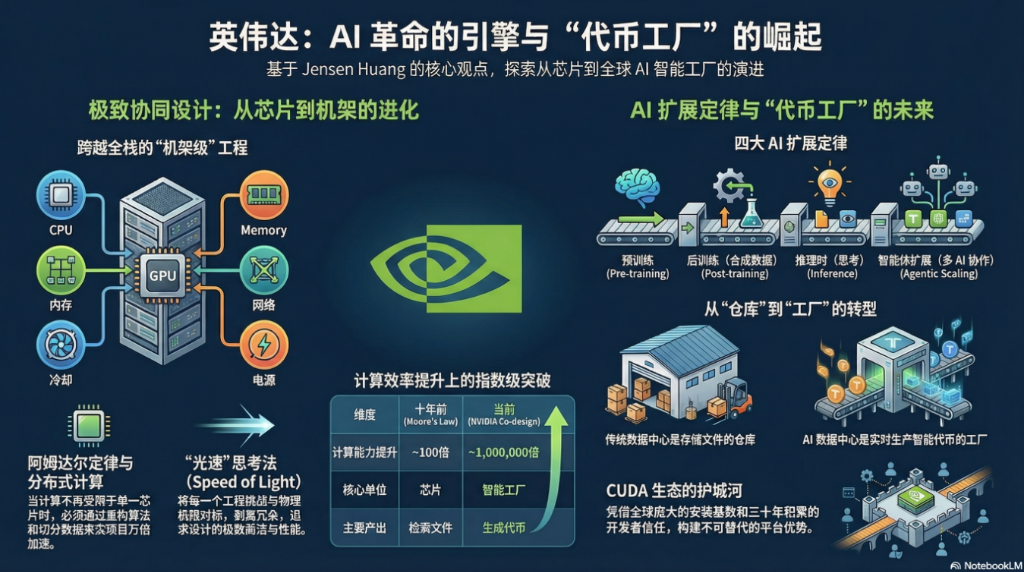
Core Insights - The essence of computing has fundamentally shifted from a "storage system" to a "generative system" with context-awareness capabilities, transforming computers from profit centers to factories directly linked to revenue generation [3][4]. - The concept of "Token" as a new commodity produced by AI factories is emerging, with significant value across various audiences, indicating a potential market where people are willing to pay substantial amounts for these tokens [3][4]. - The global GDP share attributed to computing is expected to increase by a factor of 100 in the future, driven by productivity enhancements [4]. - The company is confident in its growth trajectory, with a potential to reach a market valuation of $10 trillion, viewing this as an inevitable outcome [4]. Energy and Efficiency - Energy is a significant concern for AI expansion, but it is not the only issue; improving energy efficiency and acquiring more power are both critical paths forward [6]. - The efficiency metric emphasized is "tokens per watt per second," with a focus on extreme collaborative design to enhance energy efficiency [6]. - The current power grid is designed for peak demand, leaving much idle capacity that can be utilized by changing contracts between cloud providers and power companies to allow for "graceful degradation" of data centers during power shortages [6]. Supply Chain and Memory - The company is not worried about potential bottlenecks in AI production due to supply chain constraints, having established relationships with around 200 suppliers and advanced planning for high bandwidth memory (HBM) usage [7][8]. - The traditional assembly model for data centers has been replaced by a pre-assembly approach in the supply chain, requiring significant power reserves for testing before shipment [7]. AI Scaling Laws - The CEO outlines four scaling laws for AI expansion: pre-training, post-training, testing time expansion, and agentic scaling [9][10]. - The concern over "data exhaustion" is addressed by emphasizing the continued growth of training data, much of which will be synthetic, indicating that training is now limited by computational power rather than data availability [9][10]. Competitive Advantage and Future Outlook - The company's greatest competitive advantage lies in the extensive deployment of CUDA and the trust built within its ecosystem, supported by a large developer community [11]. - The exploration of deploying data centers in space is acknowledged, but significant physical challenges remain, with a current focus on optimizing energy use on Earth [11]. - The potential for AI to disrupt employment is discussed, with a prediction that the number of programmers could grow from 30 million to 1 billion, as AI becomes integrated into various professions [12][13].
中安半导体邀您共赴SEMICON China 2026,见证新品重磅发布!
半导体行业观察· 2026-03-24 03:20
Core Viewpoint - The global semiconductor industry is entering a critical phase of advanced process iteration by 2026, where traditional detection methods face limitations due to the evolution of device architecture from 2D to 3D integration, making measurement technology a core determinant of yield success [1][6]. Group 1: Event Overview - The "SEMICON China 2026 Offline Special Release Conference" hosted by the company will take place on March 26 at the Jumeirah Himalayas Hotel in Shanghai, focusing on the breakthrough paths for domestic equipment in advanced processes [1]. - The conference will address three main topics: extreme detection for advanced processes, 3D measurement for advanced packaging, and substrate measurement solutions [5]. Group 2: Technological Innovations - The company aims to break through technical monopolies through independent algorithm innovation and has achieved a best sensitivity of 10.5nm in defect detection technology for advanced nodes [6]. - A high-precision predictive model for complex bonding processes will be shared, demonstrating superior correlation compared to traditional industry solutions [6]. - The latest equipment will monitor wafer flatness and thickness uniformity at the sub-nanometer level, showcasing advancements in cutting, double-sided grinding, polishing, and epitaxial growth processes [6]. Group 3: Company Profile - The company specializes in high-precision measurement and detection solutions for silicon wafer manufacturers, IC fabs, and equipment manufacturers, leading in domestic installation volume for morphology measurement equipment [8]. - The particle detection product system has achieved a minimum detection sensitivity breakthrough from 26nm to 10.5nm, meeting core demands for yield improvement and process optimization in both traditional and advanced processes [8]. - Future plans include launching measurement solutions for even more advanced process nodes, continuously expanding technological boundaries to provide higher precision and efficiency in detection and measurement support for the integrated circuit industry [8].
HBM,竞争激烈
半导体行业观察· 2026-03-24 03:20
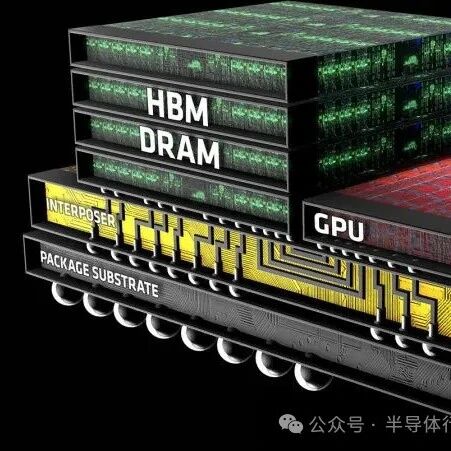
Core Viewpoint - The explosive growth in artificial intelligence (AI) demand is driving the importance of high-performance high-bandwidth memory (HBM), leading to intensified competition in logic chips that serve as the foundation for HBM [2][3][4]. Group 1: HBM Market and Competition - The HBM4E market is expected to officially launch next year, with the significance of foundational chip strategies anticipated to increase [2]. - Samsung Electronics has begun mass production of HBM4, achieving data processing speeds of up to 11.7 Gbps, with support for a maximum of 13 Gbps [3][7]. - SK Hynix is considering using TSMC's 3nm process for HBM4E logic chips, aiming to enhance performance to compete with Samsung [3][4]. Group 2: Technological Advancements - Samsung's HBM4E will utilize a 4nm process for its foundational chips, while SK Hynix plans to adopt a 10nm sixth-generation (1c) DRAM process for its core chips [5][9]. - The trend towards customized HBM solutions is expected to open the market significantly, as clients seek tailored products to improve efficiency and performance [3][5]. Group 3: Future Developments - Samsung plans to use a 2nm process for the foundational chips of HBM5, while the core chips will be based on the 10nm sixth-generation (1c) process [9]. - HBM4E is projected to achieve speeds of up to 16 Gbps, representing a 23% increase over HBM4, while maintaining the same power consumption [8][9].
黄仁勋三万字采访:展望10万亿市值,3万亿营收
半导体行业观察· 2026-03-24 03:20
Core Viewpoint - NVIDIA is recognized as one of the most influential companies in human history and a driving force behind the AI revolution, largely due to the leadership and innovative decisions of Jensen Huang [2]. Group 1: Extreme Collaborative Design - NVIDIA's success is attributed to its extreme collaborative design approach, which integrates various components such as GPU, CPU, memory, and networking to solve complex computational problems [3][4]. - The challenges of collaborative design include distributing workloads across multiple computers while ensuring efficient communication and data management [3][4]. - A key aspect of NVIDIA's design philosophy is optimizing the entire software stack, from architecture to applications, to achieve better performance than simply increasing the number of computers [4][5]. Group 2: Evolution of Business Focus - Initially, NVIDIA started as a specialized accelerator company but recognized the need to broaden its scope to enhance its impact in the computing field [6][7]. - The introduction of programmable pixel shaders and the development of CUDA were pivotal steps in transitioning from a narrow focus to a broader computing company [7][8]. - CUDA became a foundational technology for AI infrastructure, significantly expanding the range of applications for NVIDIA's GPUs [8][10]. Group 3: Scaling Laws and Future Challenges - NVIDIA believes in the importance of scaling laws, which dictate that the amount of data and computational power directly influences AI capabilities [15][16]. - Future challenges include ensuring sufficient computational power and addressing the complexities of data generation and processing, particularly in the context of AI agents [19][20]. - The company is focused on improving energy efficiency and reducing token costs to overcome potential bottlenecks in AI scaling [28][29]. Group 4: Supply Chain and Energy Management - NVIDIA emphasizes the importance of a robust supply chain to support its growth, engaging with CEOs across the industry to align on future needs and investments [29][30]. - The company is exploring innovative energy solutions, such as modular nuclear power plants, to address the increasing power demands of AI computing [28][34]. - Effective energy management strategies are being developed to utilize excess power from the grid, ensuring that data centers can operate efficiently without compromising reliability [34][35].