调味品

Search documents
海天味业今日大宗交易平价成交26.4万股,成交额1000.3万元
Xin Lang Cai Jing· 2026-01-09 09:38
Group 1 - On January 9, Haitai Flavor Industry conducted a block trade of 264,000 shares, with a transaction amount of 10.03 million yuan, accounting for 2.45% of the total transaction amount for the day [1][2] - The transaction price was 37.89 yuan, which was flat compared to the market closing price of 37.89 yuan [1][2]


预见味来:2026成都糖酒会,解锁调味品行业十大新“味”来趋势
Sou Hu Cai Jing· 2026-01-09 04:16
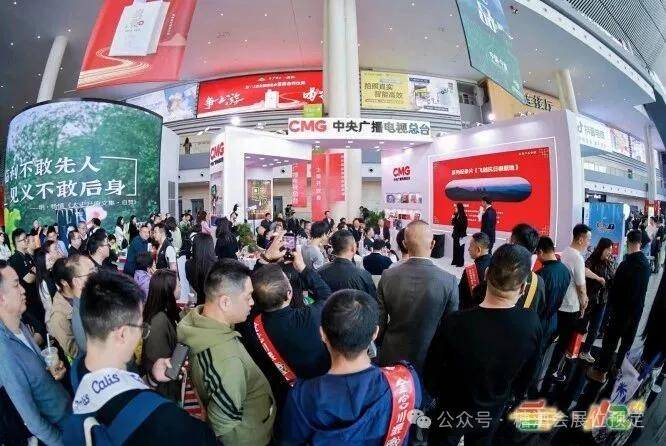
Core Insights - The article highlights the evolution and growth of the condiment industry in China, showcasing its transformation from basic products to a diverse range of modern and international flavors [1][2] - The 114th National Sugar and Wine Fair is set to be the largest yet, with an exhibition area of 325,000 square meters and an expected participation of 6,500 exhibitors and 400,000 professional visitors [3] - The fair serves as a crucial platform for industry networking, marketing, and information dissemination, significantly impacting the food and beverage sector [16][19] Industry Trends - **Health Functionalization Upgrade**: There is a rising demand for low-sodium, reduced-sugar, and additive-free products, with 2026 expected to see a surge in functional condiments like probiotic soy sauce and nutrient-rich salts [5] - **Precision in Compound Seasonings**: The market is moving towards more tailored compound seasonings that cater to specific dining scenarios and regional tastes [6] - **Localization of International Flavors**: Global flavors such as Japanese bonito soy sauce and Thai chili sauce are being adapted to suit local Chinese consumer preferences [7] - **Standardization for Pre-prepared Dishes**: The growth of the pre-prepared food sector is driving demand for standardized and convenient seasoning solutions [8] - **Clean Labeling as a Standard**: Increasing consumer demand for ingredient transparency is making "clean labels" a basic requirement across the industry [9] - **Sustainable Packaging Innovations**: The industry is adopting eco-friendly packaging solutions, including biodegradable materials and refillable designs [10] - **Smart Manufacturing Integration**: Digital and intelligent technologies are enhancing efficiency and quality control in condiment production [11] - **Rise of Regional Brands**: Local specialty condiment brands are expanding their reach nationally, capitalizing on unique regional flavors [12] - **Accelerated Retailization of Dining**: The lines between dining and retail are blurring, with standardized seasoning packs and chef collaborations becoming more common [12] - **Reconstruction of Multi-channel Marketing**: New sales channels like live e-commerce and community group buying are reshaping the condiment sales landscape [13] Fair Significance - The National Sugar and Wine Fair is a vital platform for connecting producers with distributors, retailers, and food service buyers, facilitating significant business opportunities [16] - It serves as a core venue for industry learning and exchange, featuring thousands of products and numerous forums for knowledge sharing [18] - The fair is recognized as a key information hub for the condiment industry, providing insights into market trends, policy directions, and technological advancements [19] - It is an ideal venue for brand marketing and product launches, attracting extensive media coverage [20] - The fair has become a prominent platform for investment and financing opportunities within the condiment sector [21] Event Details - The 114th National Sugar and Wine Fair will take place in Chengdu from March 26-28, 2026, featuring a new "Future Condiment Innovation Zone" focused on emerging trends [25][26] - The fair will include various activities such as the "China Condiment Innovation Competition" and forums on international flavor integration [25]
2025年第53周:食品饮料行业周度市场观察
艾瑞咨询· 2026-01-09 00:05
Group 1: Industry Trends - The condiment industry is seeing a surge in companies going public, focusing on overseas markets to combat rising costs and intense competition, with the industry expected to reach a scale of 498.1 billion yuan by 2024 [2][3] - The popularity of turmeric drinks is rising among young consumers, driven by health trends, with sales strong despite higher prices, and social media engagement showing over 13.2 million views on platforms like Xiaohongshu [4] - The food waste issue is prompting the emergence of the Upcycled Food industry, which is projected to reach a market size of 74.8 billion USD by 2029, utilizing innovative technologies to convert waste into high-value products [6][7] Group 2: Consumer Behavior - A survey indicates that 97.2% of young people have tried "light health" practices, with dietary health and fragmented exercise being the most popular methods, highlighting a shift towards more manageable health solutions [8] - The rise of health-conscious beverages, including sugar-free teas and functional drinks, is attributed to increased consumer awareness and the psychological need for immediate satisfaction in fast-paced lifestyles [10] - The trend of "punk health" in the health liquor sector is attracting younger consumers, with sales of health liquor on e-commerce platforms surging by 75.8% in the first eight months of 2025 [15] Group 3: Market Innovations - The introduction of cooking robots in restaurants is rapidly expanding, with the market expected to exceed 3.7 billion yuan by 2025, driven by AI technology and efficiency improvements [9] - The flavored water market is projected to grow from 22.1 billion USD in 2025 to 57.3 billion USD by 2035, with a compound annual growth rate of 10%, driven by health trends and innovative flavors [16] - The bottled water industry is facing intensified competition, with brands needing to diversify their product offerings and improve supply chain efficiency to maintain market share [17] Group 4: Brand Dynamics - The brand "Guozi Shule" is expanding its product line in the sugar-free tea market and has seen significant growth in its large bottle sales, indicating a strategic shift towards channel expansion [19] - "Tai Er" is undergoing a brand upgrade to focus on fresh ingredients and new dishes, responding to market changes and performance pressures, with a notable decline in revenue [20] - Danone's beverage brand "Pulse" is expected to reach nearly 7 billion yuan in revenue by 2025, with plans to expand into health drinks and face competitive pressures [21]





吴晓波的科技人文秀,是一场大众向的AI认知普及
Sou Hu Cai Jing· 2026-01-08 20:00
Core Insights - The core theme of the article is the concept of "generalization" in the AI industry, as articulated by Wu Xiaobo, suggesting that by 2025, AI will permeate various sectors beyond technology, impacting factories, individuals, and writing [1][3] Group 1: AI's Impact on Industries - AI is initiating a new development cycle, with 2025 being a pivotal year for its evolution, prompting businesses and individuals to integrate AI into their growth strategies [1][6] - Companies are encouraged to adopt a digital foundation and technological mindset to leverage AI effectively, as seen in the advancements of Chinese factories utilizing machine vision, deep learning, and AI management systems [10][12] - The trend towards customized production is emerging, with AI enabling more refined control over manufacturing processes, leading to product innovation and differentiation [12][13] Group 2: AI's Influence on Individuals - The new AI cycle presents opportunities for individuals to become "super individuals," where one person can leverage AI tools to perform tasks traditionally requiring a team [13][15] - The availability of AI applications is breaking down barriers to creativity, allowing individuals to generate content and automate tasks at a low cost [13][15] - However, the rapid advancement of AI may lead to the obsolescence of certain skills, necessitating a reevaluation of personal capabilities in the face of AI advancements [15]

幺麻子三闯IPO
Xin Lang Cai Jing· 2026-01-08 16:56
Core Viewpoint - The company, Yao Mazi Food Co., Ltd., is attempting to list on the Beijing Stock Exchange (BSE) after previous unsuccessful attempts on the Shenzhen Stock Exchange (SSE) due to regulatory issues and reliance on a single product, pepper oil, which poses risks for its IPO success [1][3][4]. Group 1: IPO Journey - Yao Mazi initially submitted a listing application to the Sichuan Securities Regulatory Bureau in September 2020, aiming for the SSE's ChiNext board, but later shifted to the SSE main board [3]. - After two years of review, the company withdrew its application in December 2023, citing strategic adjustments and regulatory warnings regarding undisclosed related-party transactions [3][4]. - In June 2024, Yao Mazi applied for listing on the New Third Board and subsequently on the BSE, with its application recently accepted [3][4]. Group 2: Financial Performance - The company aims to raise 568 million yuan for projects including the production of 35,000 tons of pepper oil and other seasoning oils, as well as technology and marketing initiatives [4]. - Yao Mazi has shown steady revenue growth, with revenues of 450 million yuan, 545 million yuan, 625 million yuan, and 332 million yuan for the years 2022 to 2025 (first half) respectively, and net profits of 81.1 million yuan, 98.7 million yuan, 157 million yuan, and 105 million yuan for the same periods [6]. - The company heavily relies on pepper oil, which accounted for over 80% of its main business revenue during the reporting period, indicating a significant dependency on a single product [6][7]. Group 3: Market Position and Competition - Yao Mazi is a leading player in the pepper oil market, holding a 30% market share in 2024, and has ranked first in similar product categories for several years [6]. - The pepper oil market is growing but remains fragmented, with competitors like Wanfo, Wufeng Lihong, and major brands like Jinlongyu and Haitian entering the space, increasing competitive pressure [7]. - Analysts suggest that to maintain its leading position, Yao Mazi should diversify its product offerings and strengthen its supply chain management [7][8]. Group 4: Inventory Concerns - The company has high inventory levels, with net inventory amounts of 266 million yuan, 261 million yuan, 245 million yuan, and 254 million yuan from 2022 to the first half of 2025 [7][8]. - High inventory can lead to increased financial costs and risks of obsolescence, especially if market demand fluctuates or if there are inefficiencies in inventory management [8].

依赖单一产品、存货规模高企,幺麻子三闯IPO
Bei Jing Shang Bao· 2026-01-08 13:12
Core Viewpoint - Company "Yao Mazi" is attempting to list on the Beijing Stock Exchange (BSE) after previous unsuccessful attempts on the Shenzhen Stock Exchange (SSE) due to regulatory issues and reliance on a single product, Sichuan pepper oil, which poses risks for its IPO success [1][3][4]. Group 1: Listing Journey - Yao Mazi initially aimed to list on the SSE's ChiNext in September 2020, later shifting to the SSE main board, but withdrew its application in December 2023 after two years of review, citing strategic adjustments [3]. - The company faced multiple regulatory warnings from the SSE for failing to disclose related party information in its IPO documents [3]. - In June 2024, Yao Mazi applied for listing on the New Third Board, targeting the BSE, and its application has recently been accepted [3][4]. Group 2: Financial Performance - Yao Mazi plans to raise 568 million yuan for projects including the production of 35,000 tons of Sichuan pepper oil and other seasoning oils, as well as for building a technology center and marketing network [4]. - The company has shown steady revenue growth, with revenues of 450 million yuan, 545 million yuan, 625 million yuan, and 332 million yuan for the years 2022 to 2025 (first half) respectively, and net profits of 81.1 million yuan, 98.7 million yuan, 157 million yuan, and 105 million yuan for the same periods [5]. Group 3: Product Dependency - Over 80% of Yao Mazi's revenue comes from Sichuan pepper oil, with the proportion of seasoning oil revenue being 94.07%, 93.15%, 93.63%, and 93.31% from 2022 to 2025 (first half) [6]. - The company is recognized as a leader in the Sichuan pepper oil market, holding a 30% market share in 2024, but faces competition from other brands and larger companies entering the market [5][6]. Group 4: Inventory Risks - Yao Mazi's inventory levels are high, with net inventory amounts of 266 million yuan, 261 million yuan, 245 million yuan, and 254 million yuan from 2022 to 2025 (first half) [7]. - High inventory levels can lead to increased financial costs and potential risks of inventory impairment if market demand changes or if there are issues with storage management [7][8].
海天“小粉盖·为爱特调”公益计划助力乡村学子健康成长
Zhong Guo Jin Rong Xin Xi Wang· 2026-01-08 08:19
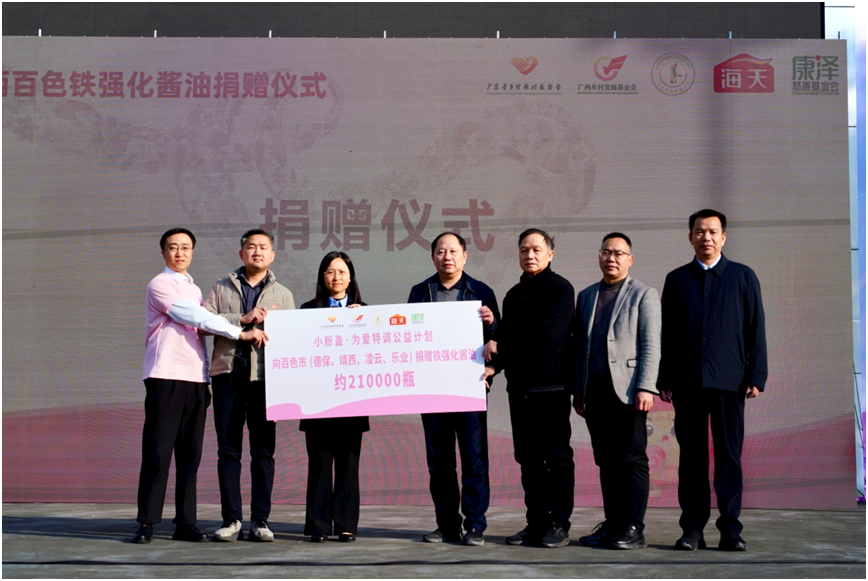
Core Viewpoint - The "Little Powder Cap · Special Adjustment for Love" public welfare program initiated by Haitian Flavor Industry and the Kangze Charity Foundation aims to improve the nutritional health of rural students through the donation of iron-fortified soy sauce, impacting nearly 100,000 students in Baise City, Debao County [3][4]. Group 1: Program Overview - The program is a response to the national student nutrition improvement policy and exemplifies East-West collaboration, addressing the nutritional needs of rural students through a multi-faceted approach involving government, society, and enterprises [4]. - In 2022, the Ministry of Education and six other departments outlined a plan to scientifically provide meals through food fortification and nutritional optimization, which Haitian Flavor Industry has actively supported by donating materials to 1,421 schools, benefiting 650,000 people [4]. - The initiative has historical roots dating back to 2002 when Haitian became a pilot enterprise for the iron-fortified soy sauce project, leading to the sale of approximately 167 million bottles and benefiting over 27.94 million people over 23 years [4]. Group 2: Product Development and Community Engagement - The "Little Powder Cap" has evolved into a public welfare symbol for Haitian, with a commitment to donate 1 yuan for every bottle sold from this series to combat iron deficiency anemia among rural students [6]. - The program emphasizes precision in addressing specific dietary needs, offering a range of products including gluten-free and sugar-free soy sauces, tailored to various health requirements [6]. - Haitian actively engages with the community to understand the needs of special groups, utilizing media to share stories and promote healthy eating habits, thereby enhancing public awareness and participation in the initiative [9]. Group 3: Sustainable Development and Feedback Mechanism - The program integrates corporate social responsibility with national health strategies, supporting the "Healthy China" initiative by ensuring that rural students receive adequate nutrition through targeted donations [10]. - Haitian collects public feedback through various channels to refine the execution of the program, creating a cycle of participation, feedback, and optimization that enhances the sustainability of the initiative [10]. - The collaborative effort among multiple stakeholders demonstrates the potential for small needs to aggregate into significant change, embodying the essence of public welfare [10].
山东省烟台市市场监督管理局发布知识产权(商标)领域行政执法典型案例
Zhong Guo Zhi Liang Xin Wen Wang· 2026-01-08 06:46
Core Viewpoint - The article highlights the enforcement actions taken by the Yantai Market Supervision Administration against various businesses for trademark infringement, emphasizing the importance of protecting intellectual property rights in the market. Group 1: Trademark Infringement Cases - A seafood restaurant in Zhaoyuan was found selling white wine that infringed on the "Gujingting" trademark, leading to administrative penalties [2] - Yantai Shengcai Paper Products Packaging Co., Ltd. was penalized for printing materials containing the "Guangongpai" trademark without authorization [3] - A tea shop in Laiyang was caught selling counterfeit "Wuliangye" liquor, which was identified as a fake product by the rights holder [4] - Shandong Keten Waterproof Technology Co., Ltd. was penalized for selling products that infringed on the "CKS" trademark, as confirmed by the rights holder [4] - A shop in Laizhou was found selling counterfeit "Yunnan Baiyao" toothpaste, which was identified as a fake product [5] - A lubricating oil wholesale business in Qixia was penalized for selling counterfeit "Changcheng Zhuoli" hydraulic oil [7] - A clothing store in Laishan was found selling products that infringed on the "Arc'teryx" trademark [8] - A seasoning wholesale business in Longkou was penalized for selling counterfeit "Xinghu" ethyl maltol [10] Group 2: Enforcement Actions - The Yantai Market Supervision Administration has increased efforts to combat intellectual property violations, ensuring the protection of both consumer rights and business interests [1] - Administrative penalties were consistently applied across various cases, demonstrating a strict enforcement of the Trademark Law and Administrative Penalty Law [3][4][6][7][9][10]
2025年广东上市公司分红规模再创历史新高
Zhong Zheng Wang· 2026-01-08 05:57
Core Insights - The Guangdong Securities Regulatory Bureau has implemented measures to enhance cash dividend supervision and improve investor returns since 2025, leading to a significant increase in both the number of companies and the total amount of dividends declared [1][4] Group 1: Dividend Performance - In 2025, 403 companies in the Guangdong region declared dividends totaling 129.5 billion yuan, marking a historical high in both the number of companies and the total dividend amount [2] - Among these, 219 companies have paid dividends for three consecutive years, and 162 companies for five consecutive years, indicating a substantial improvement in the sustainability and stability of cash dividends [2] - Leading companies such as Midea Group and Gree Electric Appliances announced a combined dividend of over 47 billion yuan, accounting for 36.5% of the total dividends declared in the region [2] Group 2: Mid-Year Dividend Trends - The mid-year dividend performance in 2025 was also impressive, with 110 companies declaring mid-year dividends totaling 29.2 billion yuan, representing increases of 57% and 78% compared to 2024 [3] - Several leading companies, including Gree Electric Appliances and Midea Group, paid over 1 billion yuan in mid-year dividends, while 20 companies had a dividend payout ratio exceeding 50% in the first three quarters of 2025 [3] - A positive atmosphere for regular dividends is forming, with many companies implementing mid-year dividends for the first time [3] Group 3: Regulatory Support and Investor Focus - The new "National Nine Articles" emphasizes the need for stable, sustainable, and predictable cash dividends, with regulatory guidelines encouraging companies to detail profit distribution arrangements in their articles of association [4] - The Guangdong Securities Regulatory Bureau has conducted over 10 training sessions to interpret policy requirements and promote an investor-centric business philosophy among listed companies [4] - The bureau plans to continue monitoring the execution of dividend policies and guide companies to enhance shareholder return mechanisms through cash dividends and share buybacks [4]
年度复盘丨2025年零售圈十大IPO事件
Sou Hu Cai Jing· 2026-01-08 03:57
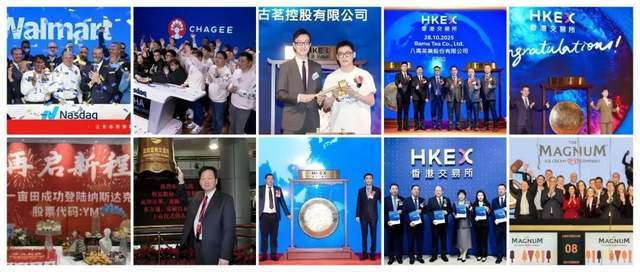
Group 1: IPO Trends in Hong Kong - In 2025, Hong Kong saw a surge in IPOs from retail and consumer companies, with over 23 listings by the end of November, making it the leading sector for IPOs [2][3] - Notable companies that went public include Mixue Group, Shuhang Ayi, and Bama Tea, with Mixue Group setting a record with a frozen capital scale of HKD 1.84 trillion [2] - Despite the IPO excitement, market volatility is evident, with companies like Bama Tea experiencing significant stock price drops shortly after their listings [2][3] Group 2: Performance of Key Companies - Mixue Group reported a closing price increase of over 40% on its first trading day, achieving a market capitalization exceeding HKD 100 billion [2] - Bama Tea's stock price fell dramatically, reaching around HKD 30 by December 30, 2025, reflecting a "roller coaster" performance since its IPO [2][19] - The financial performance of these companies shows mixed results, with Mixue Group achieving a net profit of CNY 3.5 billion in the first nine months of 2024, a 42.3% increase year-on-year [10] Group 3: Market Dynamics and Challenges - The retail and consumer sector in Hong Kong is characterized by a strong IPO presence but lower fundraising amounts compared to other sectors, with the retail sector raising HKD 36.9 billion, ranking fourth overall [3] - The competitive landscape for new beverage brands is intensifying, with many companies facing challenges such as declining same-store sales and increased competition [14][20] - The overall market for tea beverages is highly fragmented, with the top five brands holding only about 5.6% market share, indicating significant competition and challenges for brand differentiation [20] Group 4: Strategic Moves by Major Players - Walmart's transition from the NYSE to NASDAQ marks a significant strategic shift towards a technology-driven retail model, with a stock price increase of 1.32% on its first day on NASDAQ [6][7] - The company aims to enhance its market valuation by aligning itself with technology-focused retail giants like Amazon, leveraging automation and AI in its operations [6][7] - Other companies, such as Anjuke Foods and Haitian Flavor, are also pursuing dual listings to enhance their capital structure and market presence [21][25] Group 5: Future Outlook - The IPO market in Hong Kong is expected to remain active, with projections of 180-200 listings in 2026, potentially raising HKD 350 billion [41][43] - However, the increasing focus on profitability and growth metrics may pose challenges for retail and consumer companies seeking to go public [43] - Regulatory concerns regarding the quality of IPO applications have been raised, indicating a need for companies to demonstrate strong financial health and growth potential [43]