公用事业

Search documents
AI与电力、新药研发、中国经济复苏.....一文读懂高盛行研团队2026年十大投资主题
Hua Er Jie Jian Wen· 2026-01-03 02:54
Group 1: AI Infrastructure and Investment Trends - The AI infrastructure investment is entering a new phase, with traditional leaders like Nvidia, Microsoft, and Amazon seeing stagnant stock prices since last summer, while new entrants like Broadcom are emerging [1][2] - Investors are shifting focus to companies that can support global computing power regardless of chip type, with memory producers like Micron experiencing significant stock price increases [2] - The "power sector" within AI infrastructure is also transforming, with utility stocks stagnating while gas turbine suppliers like GE Vernova continue to rise [2] Group 2: Pharmaceutical Sector Developments - The GLP-1 weight loss drug market is undergoing a notable transition, with Eli Lilly outperforming the market while Novo Nordisk's stock has lost nearly half its value, leading to a 33% downward revision in earnings expectations for 2026 [3] - Investment focus is shifting towards new weight loss products expected to be approved next year, as the biopharmaceutical sector transitions from obesity drugs to a "Cardiology Renaissance" [3] Group 3: Retail Industry Evolution - The boundaries between offline sales, online commerce, and advertising are increasingly blurring, with analysts highlighting opportunities for e-commerce platforms to generate revenue through advertising and marketing agreements [4] - Retailers are exploring alternative revenue sources such as media and membership models, emphasizing the importance of delivery speed and value propositions [4] Group 4: Chinese Economic Growth - Goldman Sachs economists predict that China's economic growth will exceed market consensus, driven by technological advancements and a strong export position, even amidst tariff challenges [6] Group 5: Productivity and Profit Growth - The rise in technology-driven productivity is expected to support economic growth, although there is a risk of "jobless expansion" due to labor shortages caused by immigration restrictions [7] - Long-term productivity improvements are seen as essential to offset the impacts of an aging workforce and declining birth rates [7] Group 6: Alternative Investments - The private credit market is expected to outperform private equity in 2025, continuing to attract retail investor funds, while the cryptocurrency market is expanding with companies like Coinbase and Robinhood positioned favorably [8] Group 7: Military and Defense Sector - The defense sector is experiencing an evolving militarization, with the U.S. Space Force favoring innovators in drone and satellite technology, and Europe potentially needing up to $160 billion in investments over the next five years to enhance military capabilities [9] Group 8: Robotics and Autonomous Vehicles - Advancements in technology are enhancing the capabilities of humanoid robots and autonomous vehicles, with significant profit growth anticipated for industrial tech companies like Tesla [10] - China is actively building capacity in the humanoid robot supply chain and is leading in the autonomous vehicle sector, with projections indicating a $47 billion market for Robotaxis by 2035 [10] Group 9: Nuclear Energy and Rare Earths - The demand for clean energy is reviving interest in nuclear power, which had been sidelined due to past accidents, as it is seen as a potential source of electricity for the AI revolution [11] - Rare earth metals are becoming critical components in technology, with China currently dominating this sector, presenting supply chain opportunities [11] Group 10: Policy Uncertainty - Policy is expected to play a significant role in market dynamics entering 2026, with debates around the Federal Reserve's next steps and leadership potentially dominating market sentiment [13] - Key catalysts affecting market direction include Supreme Court rulings on tariffs, upcoming Federal Reserve meetings, and significant political events [13]
恒指公司:2025年恒指上升27.8% 为2017年以来最佳表现
智通财经网· 2025-12-31 12:07
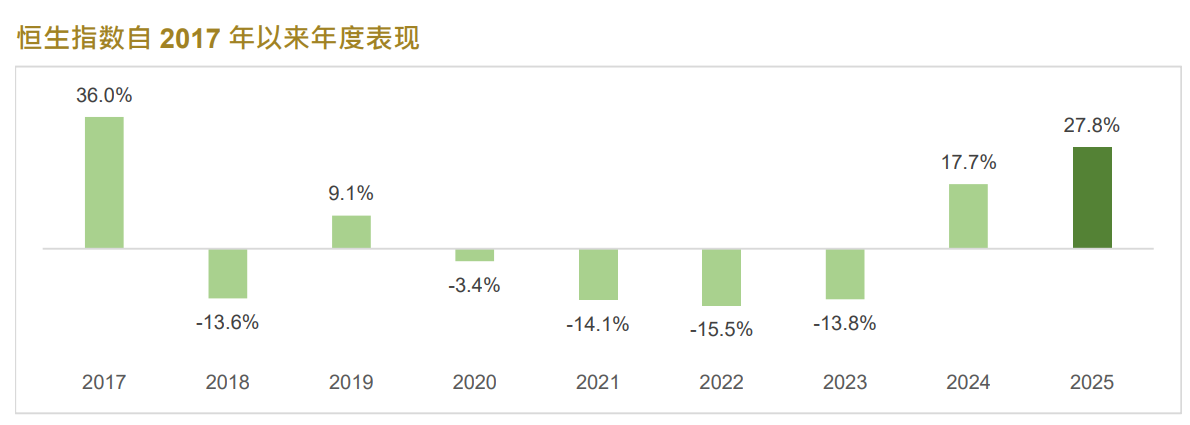
Group 1 - The Hang Seng Index (HSI) rose by 27.8% in 2025, marking its best performance since 2017, following a 17.7% increase in 2024 [1] - The rise in the HSI was driven by record capital inflows from the Hong Kong Stock Connect, optimism about the future of artificial intelligence, and interest rate cuts [1] - The HSI outperformed two other flagship indices: the Hang Seng China Enterprises Index (up 22.3%) and the Hang Seng Tech Index (up 23.5%) [1] Group 2 - The Hang Seng Composite Index (HSCI) increased by 31.0% in 2025, with mid-cap stocks leading the gains at 31.6%, followed by large-cap stocks at 30.8% and small-cap stocks at 28.8% [2] - Among industry indices in the HSCI, the materials sector had the best performance, rising by 161.3%, while utilities had the worst performance with a 5.7% increase [2] - The Hang Seng High Dividend Yield 30 Index led the high dividend indices with a rise of 38.1% in 2025 [2] Group 3 - The Hang Seng Climate Change 1.5°C Target Index performed well, with an annual increase of 31.2% [3]

滨海投资(02886)12月31日耗资35.5万港元回购30.4万股
智通财经网· 2025-12-31 10:28
Group 1 - The company Binhai Investment (02886) announced a share buyback plan, spending HKD 355,000 to repurchase 304,000 shares by December 31, 2025 [1]
滨海投资(02886.HK)与恒安标准人寿订立2026年雇员医疗保险协议
Ge Long Hui· 2025-12-31 10:24
Group 1 - The core point of the article is that Binhai Investment (02886.HK) has announced a new employee medical insurance agreement with Heng An Standard Life, effective from January 1, 2026, to December 31, 2026 [1] - The total insurance premium covered under the 2026 employee medical insurance agreement amounts to RMB 2,819,420, which will be paid by Binhai Investment Tianjin [1]
2025年A股再融资数据盘点:电子行业项目数量位列全行业第一(40个) 银行业募资额高居榜首(5200亿元)
Xin Lang Cai Jing· 2025-12-31 08:01
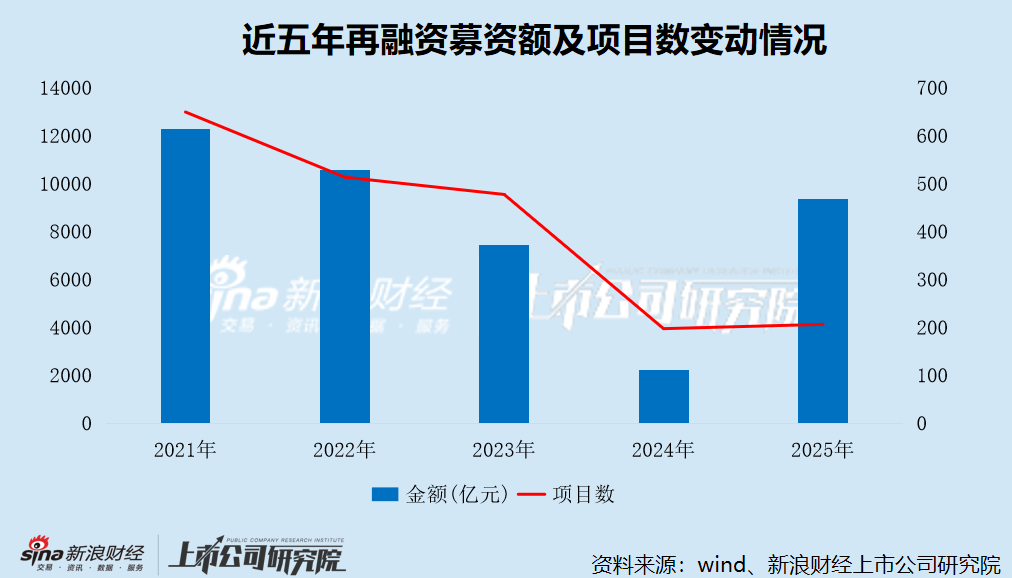
Core Insights - The A-share market in 2025 marked a significant milestone with the index crossing a decade threshold, market capitalization exceeding one trillion, and record trading volumes, driven by policy incentives and liquidity [1][8] Group 1: Overall Market Performance - The total refinancing scale reached 950.865 billion, a year-on-year increase of 326.17% [3][10] - The majority of the refinancing growth came from private placements, which totaled 887.732 billion, reflecting a 412.99% increase year-on-year [3][10] - The number of refinancing applications accepted was 251, with a 100% approval rate across all listed sectors [3][10] Group 2: Specific Financing Types - The total amount raised through convertible bonds was 63.133 billion, marking a 30.77% increase year-on-year [7][14] - No funds were raised through rights issues or preferred shares during the year [3][10] Group 3: Industry Breakdown - The banking sector led in fundraising through private placements, raising 520 billion, accounting for 58.58% of the total [5][12] - The electronics industry had the highest number of private placement projects at 30 [5][12] - The top five industries in terms of total fundraising included banking, electronics, non-bank financials, public utilities, and defense, collectively raising 708.618 billion, which is 79.82% of the total [5][12] Group 4: Convertible Bonds Industry Breakdown - The electronics sector also led in the number of convertible bond projects with 10 [7][14] - The real estate sector raised 13.3 billion through convertible bonds, representing 21.07% of the total [7][14] - The top five industries for convertible bond fundraising included public utilities, power equipment, electronics, and machinery, raising a total of 475.72 billion, which is 75.35% of the total [7][14]



每日报告精选(2025-12-30 09:00——2025-12-31 15:00)-20251231
国泰海通· 2025-12-31 07:53
Group 1: Strategy Observation - The report highlights that prices of cyclical resources are rising, driven by supply constraints and strong downstream demand in sectors like basic chemicals, new energy materials, and industrial metals [3] - The AI industry trend continues, with domestic electronic industry demand significantly boosted, leading to an increase in storage prices and sustained high growth in PCB exports [3][4] - Service consumption shows marginal improvement, with tourism in Hainan experiencing a price index increase due to travel demand, and pig prices stabilizing and rising towards the year-end [3] Group 2: Industry Tracking - Electronics - Mini LED technology is entering a rapid development phase, with increasing penetration in mid-to-high-end TV markets and expanding into lower-end markets and automotive applications [17] - The report anticipates that by 2025, Mini LED TV shipments in China will reach 9.23 million units, a year-on-year increase of 122%, with a penetration rate exceeding 25% [20] Group 3: Industry Monthly Report - Aviation - The Chinese aviation industry is expected to turn profitable in 2026, driven by a recovery in public and business demand, with significant growth in passenger traffic projected for 2025 [21][30] - The report suggests that the upcoming New Year holiday will see strong travel demand, with expectations for improved pricing and passenger volume [33] Group 4: Industry Deep Dive - Cultural Communication - The report emphasizes the ongoing progress of native large model companies in Hong Kong, highlighting the potential investment opportunities arising from the commercialization of AI technology [35] - Companies involved in AI algorithms and applications are recommended, including Meitu and Zhejiang Shuju, as they are well-positioned to benefit from the AI trend [35][36] Group 5: Industry Tracking - Automotive - The report notes the continuation of the "old-for-new" policy for automobiles in 2026, which includes subsidies for scrapping and replacing vehicles, aimed at boosting consumption [46][48] - The policy supports consumers who scrap their vehicles and purchase new energy or low-emission vehicles, with specific subsidy percentages outlined [49]




金价,涨了!银价,暴涨!美联储,大消息
Sou Hu Cai Jing· 2025-12-31 04:15
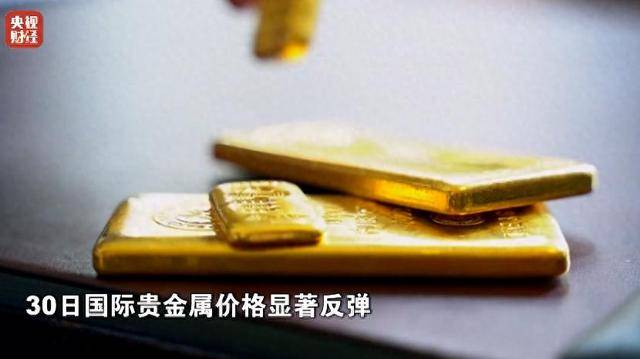
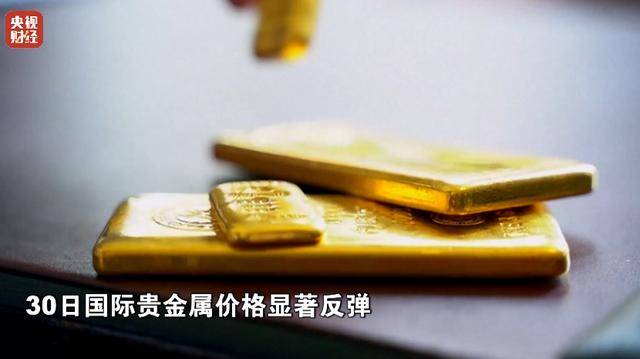
分析人士指出,贵金属期价未来短期仍面临大幅波动风险。明年1月,彭博商品指数与标普高盛商品指 数将陆续对各类大宗商品的权重进行调整。因贵金属价格过去近两年时间里显著上涨,在上述两个指数 中的权重过高,外界预计随着两大指数下调贵金属权重,跟踪以上两个指数的被动型基金将卖出黄金和 白银期货头寸,带来技术性下跌压力。 当地时间周二,随着年末临近,大量散户投资者仍处于休假状态,美国股市交易量低迷。美联储当天公 布的本月议息会议纪要显示,货币政策制定者内部就未来降息路径的分歧加剧,外界判断美联储明年初 将谨慎对待进一步降息。受会议纪要影响,长期美债收益率小幅上行,令高成长股承压,市场延续保守 交易策略,资金流向防御型的公用事业板块,科技、金融等板块下跌,美国三大股指周二集体收跌。截 至收盘,道指跌0.20%,标普500指数跌0.14%,纳指跌0.24%。重点公司方面,脸书母公司Meta周一宣 布收购中国团队创立的AI智能体初创公司Manus,外界预计Meta将会加速把Manus的高级AI代理技术整 合到脸书和Instagram等应用端,Meta周二收涨1.1%,领跑美股七大科技巨头。 30日国际贵金属价格显著反弹 贵金属 ...
融资余额创新高,股指震荡修复
Hua Tai Qi Huo· 2025-12-31 03:26
1. Report Industry Investment Rating - No relevant content provided 2. Core Viewpoints - The high - level has listed expanding domestic demand as the primary strategic task, and the national subsidy policy will continue to advance next year. The domestic financing balance has reached a new high again, market risk appetite is gradually warming up, and the market is expected to maintain a volatile repair trend on the last trading day before the holiday [2] 3. Summary by Directory 3.1 Market Analysis - **Macro - policy**: In 2026, the national subsidy policy continues. The National Development and Reform Commission and the Ministry of Finance issued a notice on implementing large - scale equipment renewal and consumer goods trade - in policies and allocated the first batch of 62.5 billion yuan to support consumer goods trade - in. The subsidy objects in 2026 include new smart products like smart glasses and smart home, and exclude home decoration and electric bicycles. New car purchase subsidies are 12% or 10% of the car price with the same upper limits as in 2025. The scope of home appliance subsidies is narrowed to 6 categories, and the subsidy ratio for first - level energy - efficiency home appliances drops from 20% to 15%, with the maximum subsidy per appliance decreasing from 2,000 yuan to 1,500 yuan. Overseas, the Fed's December meeting minutes show that FOMC agreed to cut interest rates, but officials had significant differences [1] - **Index performance**: In the spot market, the three major A - share indexes fluctuated. The Shanghai Composite Index slightly declined to close at 3,965.12 points, while the ChiNext Index rose 0.63%. Among industries, petroleum and petrochemical, automobile, non - ferrous metals, and machinery equipment industries led the gains, while commerce and retail, real estate, and public utilities industries led the losses. The trading volume of the Shanghai and Shenzhen stock markets exceeded 2 trillion yuan. Overseas, the three major US stock indexes closed slightly lower, with the Nasdaq down 0.24% to 23,419.08 points [1] - **Futures market**: In the futures market, the basis of stock index futures declined on the day. In terms of trading volume and open interest, the trading volume and open interest of IH, IC, and IM increased simultaneously [1] 3.2 Strategy - The high - level has listed expanding domestic demand as the primary strategic task, and the national subsidy policy will continue to advance next year. The domestic financing balance has reached a new high again, market risk appetite is gradually warming up, and the market is expected to maintain a volatile repair trend on the last trading day before the holiday [2] 3.3 Macro Economic Charts - The charts include the relationship between the US dollar index and A - share trends, the relationship between US Treasury yields and A - share trends, the relationship between the RMB exchange rate and A - share trends, and the relationship between US Treasury yields and A - share style trends [11][7] 3.4 Spot Market Tracking Charts - **Stock index performance**: On 2025 - 12 - 30, the Shanghai Composite Index closed at 3,965.12 points with a daily change of + 0.00%, the Shenzhen Component Index at 13,604.07 points with a + 0.49% change, the ChiNext Index at 3,242.90 points with a + 0.63% change, the CSI 300 Index at 4,651.28 points with a + 0.26% change, the SSE 50 Index at 3,036.55 points with a + 0.06% change, the CSI 500 Index at 7,458.94 points with a + 0.38% change, and the CSI 1000 Index at 7,597.30 points with a + 0.04% change [13] - Other charts show the trading volume of the Shanghai and Shenzhen stock markets and the financing balance [14] 3.5 Futures Market Tracking Charts - **Trading volume and open interest**: The trading volume and open interest data of IF, IH, IC, and IM are provided. For example, the trading volume of IF is 94,429 (a change of - 1,730), and the open interest is 281,129 (a change of + 5,274) [15] - **Basis**: The basis data of different contracts (current month, next month, current quarter, and next quarter) for IF, IH, IC, and IM are presented. For instance, the current - month contract basis of IF is - 8.57 (a change of - 8.33) [40] - **Inter - delivery spread**: The inter - delivery spread data for different contract combinations (such as next month - current month, next quarter - current month, etc.) of IF, IH, IC, and IM are given. For example, the next - month minus current - month spread of IF is - 10.00 (a change of + 5.00) [44]
金价,涨了!银价,暴涨!美联储,大消息→
Sou Hu Cai Jing· 2025-12-31 03:22
Group 1: U.S. Stock Market - Retail investors are on vacation, leading to low trading volumes in the U.S. stock market as the year-end approaches [1] - The Federal Reserve's meeting minutes indicate increasing internal disagreements on future interest rate cuts, suggesting a cautious approach in early next year [1] - Major U.S. stock indices closed lower, with the Dow Jones down 0.20%, S&P 500 down 0.14%, and Nasdaq down 0.24% [1] Group 2: Company News - Meta, the parent company of Facebook, announced the acquisition of AI startup Manus, founded by a Chinese team, which is expected to accelerate the integration of advanced AI technology into Facebook and Instagram [1] - Following the announcement, Meta's stock rose by 1.1%, leading gains among seven major tech companies in the U.S. [1] Group 3: Precious Metals Market - After a significant sell-off, international precious metal prices rebounded due to technical buying by investors [4] - Analysts remain optimistic about the outlook for precious metals, anticipating increased investment demand driven by the Fed's potential interest rate cuts and the global push for green industries [4] - Gold prices rose to over $4,400 per ounce, silver prices surged over 10%, and platinum prices closed above $2,200 per ounce [4] Group 4: Commodity Prices - As of the close, gold futures for February delivery were at $4,386.3 per ounce, up 0.98%; silver futures for March delivery were at $77.919 per ounce, up 10.59%; and platinum futures for February delivery were at $2,240.8 per ounce, up 5.69% [6] - Analysts warn of potential volatility in precious metal prices due to upcoming adjustments in commodity index weights, which may lead to selling pressure from passive funds [6] Group 5: European Stock Market - European stock indices collectively rose, driven by a rebound in precious metal prices and buying interest in defense and military stocks [8] - The UK stock market increased by 0.75%, France by 0.69%, and Germany by 0.57%, with the German DAX index showing a 23.01% increase for the year, the largest annual gain since 2019 [8] Group 6: Oil Market - U.S. commercial crude oil inventories increased by 405,000 barrels, contrary to market expectations of a significant decrease, indicating weak oil consumption demand [10] - As of the close, light crude oil futures for February delivery were at $57.95 per barrel, down 0.22%, and Brent crude futures for February delivery were at $61.92 per barrel, down 0.03% [10]
手握创纪录“现金弹药”! 市场憧憬巴菲特接班人阿贝尔续写“伯克希尔神话”
智通财经网· 2025-12-31 02:18
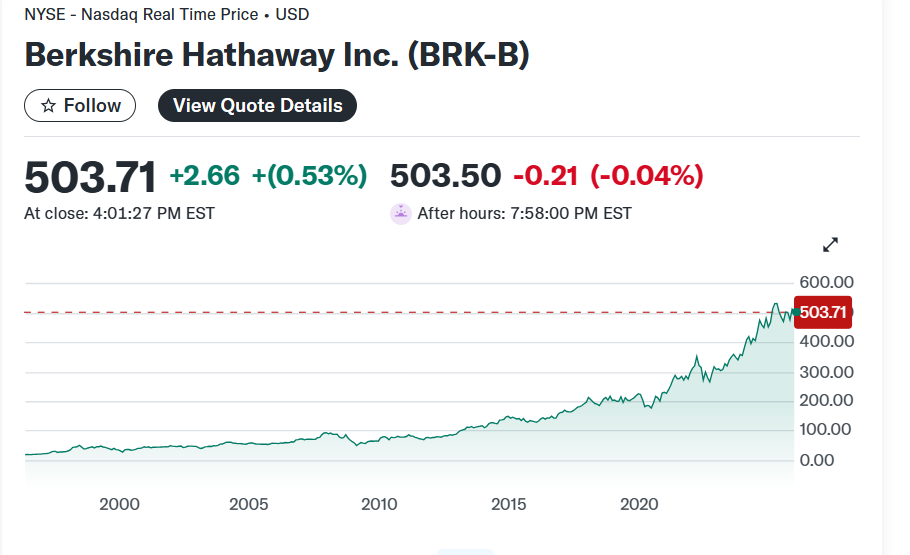
Core Viewpoint - Warren Buffett, known as the "Oracle of Omaha," will officially retire this week, passing the leadership of Berkshire Hathaway to his designated successor, Greg Abel, marking a new era for the company [1][8]. Group 1: Company Overview - Berkshire Hathaway has transformed from a struggling textile manufacturer into a massive conglomerate, with its stock price exceeding $750,000 per share [1]. - Buffett has donated over $60 billion in the past 20 years, yet his personal wealth from Berkshire stock remains around $150 billion [1]. - The company has consistently outperformed the S&P 500 index over the decades [1]. Group 2: Investment Strategy - Buffett has acquired stock assets worth hundreds of billions, achieving significant returns from long-term bets on companies like American Express, Coca-Cola, and Apple [2]. - Despite recent challenges in maintaining strong growth due to its size, Berkshire made a $9.7 billion acquisition of Occidental Petroleum's OxyChem, which may not significantly impact profits [2]. - Investors are keen to see how Abel will manage Berkshire's extensive stock portfolio and whether any major changes will occur [2]. Group 3: Leadership Transition - Abel has been managing all non-insurance operations since 2018 and is expected to implement some adjustments to the management style, although the decentralized structure will remain [3][4]. - Recent leadership changes include the departure of Geico CEO Todd Combs and the retirement of CFO Marc Hamburg, with Abel appointing Adam Johnson to oversee consumer, service, and retail businesses [4]. - Abel faces pressure to find productive uses for Berkshire's $382 billion cash reserves, which could lead to dividend payments or stock buybacks if not effectively utilized [5]. Group 4: Financial Performance - Berkshire's cash reserves reached a record high of $381.7 billion, with significant stock sales exceeding purchases by $6 billion in the third quarter [8][11]. - The company has not repurchased any stock in the last five quarters, indicating a strategic shift under Buffett's leadership [11]. - Analysts believe that Abel's leadership, combined with the substantial cash reserves, could restore investor confidence and potentially lead to increased investment activities or stock buybacks [12].