
电信

Search documents
宏观周报(2025/11/10-11/14):美国政府停摆结束,市场降息预期骤降-20251117
Guoxin Securities Hongkong· 2025-11-17 06:33
要点摘要 【上周焦点】 国信证券(香港)·宏观周报 宏观周报(2025/11/10-11/14):美国政府停摆结 束,市场降息预期骤降 【宏观经济概览】 【观点及配置建议】 2025 年 11 月 17 日 宏观周报 主要股市指数近一年表现 主要利率近一年表现 主要商品指数近一年表现 主要汇率近一年表现 黄金及比特币近一年表现 数据日期:2025 年 11 月 14 日 资料来源:万得,国信证券(香港)财富研 究部整理 JIANG CHAOYI SFC CE No.: BWT372 +852 62345097 jadejiang@guosen.com.hk 注:以上数据均来官方披露、公司资料,国信证券(香港)研究部整理,请务必阅读正文之后的信息披露及其项下所有内容。 ⚫ 美国:市场在宏观政策不确定性、科技股剧烈波动以及市场 情绪快速转向中度过。全周行情呈现出典型的"事件驱动" 特征,市场先因政府停摆结束而欢腾,后因对人工智能泡沫 和美联储政策的担忧而陷入调整。 ⚫ 中国:宏观政策持续发力,政策面聚焦于培育长期增长新动 能。而资本市场则呈现出明显的结构性机会,A股创阶段性 新高后震荡分化,尤其是成长板块内部的高 ...
全球投资仍未走出低谷
Jing Ji Wang· 2025-11-17 01:39
Global Investment Trends - Global investment conditions remain sluggish in the first half of 2025, with foreign direct investment (FDI) declining by 3%, marking the third consecutive year of decline [1][2] - Geopolitical tensions, trade frictions, and companies reassessing supply chain risks contribute to cautious investment sentiment [1][2] Greenfield Investment - Greenfield investment, a key indicator of new capital expenditure and future production capacity, has seen a significant decline, with a 17% drop in global projects [2] - Developed and developing countries experienced declines of 20% and 12% respectively, contrasting with the recovery period from 2023 to 2024 [2] - Manufacturing greenfield projects decreased by 26%, particularly in sectors related to global supply chains such as electronics, machinery, automotive, and textiles [2] International Project Financing - International project financing, primarily in infrastructure sectors like energy and transportation, has sharply decreased due to high interest rates and rising geopolitical risks [3] - Renewable energy projects saw a 9% decline, while other electricity projects experienced a 38% drop in project numbers and a 52% decrease in investment amounts [3] - Domestic project financing has increased by 39% in number and 29% in amount, indicating a shift as local capital attempts to fill the gap left by international capital withdrawal [3] Cross-Border Mergers and Acquisitions - Cross-border M&A activity has significantly decreased, with total deal value dropping from $448 billion in 2024 to $172 billion in 2025 [4] - The U.S. and U.K. saw declines of 33% and 59% respectively, with overall European M&A activity down by approximately 1% [4] - There is an increase in divestitures and withdrawals, leading to instability in M&A activities in developing countries [4] Sustainable Development Goals Impact - The weak international investment climate negatively affects the achievement of sustainable development goals, with related project numbers declining by 10% and investment amounts down by 7% [4] - This trend indicates a reduction in both the number of projects and the average size of individual projects, further weakening capital formation capabilities in developing countries [4] Future Investment Landscape - The global investment landscape is expected to become more "regionalized" and "friend-shored," with investments favoring politically friendly countries [5] - Manufacturing related to supply chains will continue to face pressure, with developed countries likely to repatriate critical manufacturing processes [5] - Digital economy and artificial intelligence are projected to be the only bright spots for global investment growth, driven by strategic emphasis on AI and semiconductor development [5]
格林大华期货早盘提示-20251117
Ge Lin Qi Huo· 2025-11-17 01:32
Morning session notice 早盘提示 更多精彩内容请关注格林大华期货官方微信 格林大华期货研究院 证监许可【2011】1288 号 2025 年 11 月 17 日 星期一 | 板块 | 品种 | 多(空) | 推荐理由 【行情复盘】 | | --- | --- | --- | --- | | | | | 受外部市场下跌影响,周五两市主要指数低开走弱,油气板块走强。两市成交额 1.95 万亿元,稍有缩量。沪深 300 指数收 4628,跌 73 点,跌幅-1.57%;上证 50 指数收 | | | | | 3038 点,跌 35 点,跌幅-1.15%;中证 500 指数收 7235 点,跌 119 点,跌幅-1.63%; | | | | | 中证 1000 指数收 7502 点,跌 87 点,跌幅-1.16%。行业与主题 ETF 中涨幅居前的 | | | | | 是油气资源 ETF、科创板新能源 ETF、石油天然气 ETF、中药 ETF、石油 ETF,跌幅 | | | | | 居前的是中韩半导体 ETF、创业板人工智能 ETF 国泰、信创 ETF 易方达。两市板块 | | | | | 指数中 ...

企业发生与生产经营有关的手续费及佣金支出如何税前扣除?
蓝色柳林财税室· 2025-11-17 01:14
欢迎扫描下方二维码关注: 、手续费及佣金支出如何扣除 根据《财政部 国家税务总局关于企业手续费 及佣金支出税前扣除政策的通知》(财税 (2009) 29号)规定,一、企业发生与生产经营有关的手续 费及佣金支出,不超过以下规定计算限额以内的 部分, 准予扣除; 超过部分, 不得扣除。 2.其他企业: 按与具有合法经营资格中介服务 机构或个人 (不含交易双方及其雇员、代理人和代 表人等)所签订服务协议或合同确认的收入金额 的5%计算限额。 二、特殊行业的手续费及佣金支出扣除有何规定? 1、根据《国家税务总局关于企业所得税应纳 税所得额若干税务处理问题的公告》(国家税务总 局公告2012年第15号) 规定, 从事代理服务、主营 业务收入为手续费、佣金的企业 (如证券、期货、 保险代理等企业),其为取得该类收入而实际发生 的营业成本(包括手续费及佣金支出),准予在企 1.7 业所得税前据实扣除。 2、根据《财政部 税务总局关于保险企业手续 费及佣金支出税前扣除政策的公告》(财政部 税 务总局公告2019年第72号) 规定,保险企业发生 与其经营活动有关的手续费及佣金支出,不超过 当年全部保费收入扣除退保金等后余额的1 ...


联合国贸发会议报告显示——全球投资仍未走出低谷
Jing Ji Ri Bao· 2025-11-16 22:07
Core Insights - Global investment conditions remain sluggish in the first half of 2025, with foreign direct investment (FDI) declining by 3% for the third consecutive year, influenced by escalating global trade tensions, geopolitical risks, and corporate reassessment of supply chain vulnerabilities [1][2] Group 1: Greenfield Investment - Greenfield investment, a key indicator of new capital expenditure and future production capacity, has significantly contracted, with a 17% decrease in global projects. Developed and developing countries saw declines of 20% and 12%, respectively [2] - Manufacturing greenfield projects experienced the most substantial drop, with a 26% reduction, particularly in sectors related to global supply chains such as electronics, machinery, automotive, and textiles [2] - The decline in greenfield investment is attributed to rising U.S. tariff barriers, which have adversely affected manufacturing investments in countries like Vietnam, India, Brazil, and South Africa [2] Group 2: International Project Financing - International project financing, primarily in infrastructure sectors like power, renewable energy, transportation, and communication, has seen a significant decline due to high global interest rates and increased geopolitical risks [3] - Renewable energy project numbers fell by 9%, while other power projects saw a 38% drop in quantity and a 52% decrease in value, indicating a weak performance across various sectors [3] - Domestic financing is replacing international financing, with domestic project financing increasing by 39% in quantity and 29% in value, highlighting a shift as international capital withdraws [3] Group 3: Cross-Border Mergers and Acquisitions - Cross-border M&A activity has decreased sharply, with total deal value dropping from $448 billion in 2024 to $172 billion in the first half of 2025. The U.S. and U.K. experienced declines of 33% and 59%, respectively [4] - Service and manufacturing sectors saw significant reductions in M&A activity, with service sector deals down by 25% and manufacturing by 12% [4] - The increase in divestitures and withdrawals has led to greater instability in M&A activities in developing countries [4] Group 4: Sustainable Development Goals - Investment related to the United Nations Sustainable Development Goals has faced pressure, with project numbers declining by 10% and investment amounts down by 7% in key areas such as renewable energy, infrastructure, and health [4] - The shrinking number of projects and the reduced average size of individual projects further weaken the capital formation capacity of developing countries in critical sustainable development sectors [4] Group 5: Future Investment Trends - The global investment landscape is expected to become more "regionalized" and "friendshored," with investments increasingly flowing between politically friendly nations, shifting from a globalized to a group-based approach [5] - Manufacturing sectors related to supply chains will continue to face challenges, with developed countries likely to repatriate critical manufacturing processes [5] - Digital economy and artificial intelligence are projected to be the only bright spots for global investment growth, driven by strategic emphasis on AI and semiconductor development, as well as intensified technological competition among nations [5]
资产配置周报:宏观流动性确认边际收敛-20251116
Huaxin Securities· 2025-11-16 15:16
1. Report Industry Investment Rating No relevant content provided. 2. Core Viewpoints of the Report - The marginal convergence of macro - liquidity has been confirmed, and the subsequent basic assumption is a fundamental combination of stable profits, converging macro - liquidity, and declining risk appetite. The cost - performance ratio of stocks and bonds favors bonds, and the equity style favors value. The recommended allocation combination is long - term bonds plus value - type equity assets. Specifically, the Shanghai Composite 50 Index (80% position) and the 30 - year Treasury Bond ETF (20% position) are recommended [8][24]. - China is in a marginal de - leveraging process. The liability growth rate of the real - sector is expected to decline, and the government's liability growth rate will also trend downwards. The economy on the asset side needs to be observed for signs of stabilization or marginal upward movement [2][17]. 3. Summary by Directory 3.1 National Balance Sheet Analysis 3.1.1 Liability Side - In October 2025, the liability growth rate of the real - sector was 8.6%, down from 8.8% previously, with a larger - than - expected decline. It is expected to drop slightly to around 8.5% in November and continue to decline, returning to the de - leveraging phase. By the end of the year, it is expected to fall to around 8.3% [2][17]. - The financial sector's liquidity marginally converged last week. The high - point of liquidity in November is estimated to have occurred on the 6th, and the probability of marginal convergence of macro - liquidity is relatively high in the future [2][17]. - The government's liability growth rate was 13.9% at the end of October 2025, down from 14.5% previously, and is expected to decline to around 13.0% in November and by the end of the year [3][18]. 3.1.2 Fiscal Policy - Last week, the net increase in government bonds (including national and local bonds) was 476.1 billion yuan, higher than the planned 264.8 billion yuan. Next week, the planned net increase is 228.3 billion yuan [3][18]. 3.1.3 Monetary Policy - Last week, the average weekly trading volume of funds decreased, the price of funds increased, and the term spread slightly decreased. The yield of one - year Treasury bonds fluctuated narrowly, closing at 1.41% at the weekend. The lower limit of the one - year Treasury bond yield is estimated to be around 1.3%, with a central value of around 1.4%. The term spread between ten - year and one - year Treasury bonds slightly decreased to 40 basis points. The future fluctuation ranges of ten - year and thirty - year Treasury bond yields are estimated to be around 1.6% - 1.9% and 1.8% - 2.3% respectively [3][18]. 3.1.4 Asset Side - In October, the physical quantity data continued to weaken compared to September. The annual real economic growth target for 2025 is around 5%, and the nominal economic growth target is around 4.9%. It is necessary to observe whether this nominal economic growth rate will become the central target for China's nominal economic growth in the next 1 - 2 years [4][19]. 3.2 Stock - Bond Cost - Performance and Stock - Bond Style - Last week, the liquidity marginally converged, and the high - point of liquidity in November is estimated to have occurred on the 6th, with a high probability of subsequent marginal convergence of macro - liquidity. Stocks performed poorly, and bonds were stable. The value style in the equity market continued to dominate. The cost - performance ratio of stocks and bonds slightly favored bonds. The ten - year Treasury bond yield remained stable at 1.81%, the one - year Treasury bond yield increased by 1 basis point to 1.41%, the term spread slightly decreased to 40 basis points, and the thirty - year Treasury bond yield decreased by 1 basis point to 2.15% [6][21]. - The broad - based rotation strategy outperformed the CSI 300 Index by 1.1 percentage points last week. Since its establishment in July 2024, the broad - based rotation strategy has underperformed the CSI 300 Index by - 6.62 percentage points, with a maximum drawdown of 12.1% (compared to the CSI 300's maximum drawdown of 15.7%) [6][21]. 3.3 Industry Recommendation 3.3.1 Industry Performance Review - This week, the A - share market declined slightly. Among the Shenwan primary industries, the top - performing sectors were comprehensive, textile and apparel, commercial retail, beauty care, and pharmaceutical biology, with weekly increases of 7%, 4.4%, 4.1%, 3.7%, and 3.3% respectively. The sectors with the largest declines were communication, electronics, computer, machinery and equipment, and national defense and military industry, with weekly changes of - 4.8%, - 4.8%, - 3%, - 2.2%, and - 2.2% respectively [29]. 3.3.2 Industry Crowding and Trading Volume - As of November 14, the top five crowded industries were power equipment, electronics, pharmaceutical biology, basic chemicals, and non - ferrous metals, with crowding levels of 15.6%, 14.5%, 7.2%, 7.1%, and 6% respectively. The bottom five were beauty care, comprehensive, steel, social services, and petroleum and petrochemicals, with levels of 0.2%, 0.5%, 0.8%, 0.8%, and 0.8% respectively [31]. - This week, the top five industries with increased crowding were pharmaceutical biology, commercial retail, food and beverage, real estate, and banks, with increases of 2.4%, 0.6%, 0.6%, 0.4%, and 0.3% respectively. The bottom five with decreased crowding were power equipment, automobiles, computers, electronics, and machinery and equipment, with changes of - 1.6%, - 1.3%, - 0.9%, - 0.5%, and - 0.5% respectively [31]. - The average daily trading volume of the entire A - share market was 2.04 trillion yuan this week, slightly higher than last week's 2.01 trillion yuan. The industries with the highest year - on - year growth in trading volume were food and beverage, comprehensive, commercial retail, basic chemicals, and beauty care, with volume changes of 59.1%, 35.2%, 35%, 34.7%, and 19.7% respectively. The industries with the smallest increases in trading volume were media, computer, steel, banks, and coal, with volume changes of - 21.7%, - 21.6%, - 20%, - 13%, and - 10.4% respectively [33]. 3.3.3 Industry Valuation and Profitability - This week, among the Shenwan primary industries, the sectors with the largest increases in PE(TTM) were comprehensive, commercial retail, beauty care, textile and apparel, and basic chemicals, with changes of 5.3%, 5.1%, 4.9%, 4.6%, and 4.3% respectively. The sectors with the smallest increases were communication, electronics, national defense and military industry, machinery and equipment, and computer, with valuation changes of - 2.4%, - 1.9%, - 1.7%, - 1.3%, and - 1.2% respectively [36]. - As of November 14, 2025, industries with high full - year profit forecasts in 2024 and relatively low current valuations compared to history include banks, insurance, petroleum and petrochemicals, transportation, beauty care, new energy, and consumer electronics [38]. 3.3.4 Industry Prosperity - Externally, there was a marginal recovery. In October, the global manufacturing PMI rose from 50.7 to 50.8, and the PMIs of major economies showed mixed changes. The CCFI index increased by 3.4% week - on - week in the latest week. Port cargo throughput declined. South Korea's export growth rate dropped to 3.6% in October and rose to 6.4% in the first 10 days of November. Vietnam's export growth rate slightly decreased from 25.3% in September to 18.2% in October [40]. - Domestically, second - hand housing prices fell in the latest week, and quantity indicators showed mixed changes. Highway truck traffic declined. The capacity utilization rate of ten industries, which had been rising from May to August 2025, declined from September to October and slightly rebounded in November but remained at a historical low. Automobile trading volume was at a relatively high level compared to the same period in history, new - home sales remained at a historical low, and second - hand housing sales declined seasonally compared to history. As of November 9, the national urban second - hand housing listing price index decreased by 0.39% week - on - week. As of October 31, the producer price index increased by 0.3% week - on - week [40]. 3.3.5 Public Fund Market Review - In the second week of November (November 10 - 14), most active public equity funds outperformed the CSI 300. The 10%, 20%, 30%, and 50% weekly performance levels were 2.3%, 1.1%, 0.5%, and - 0.5% respectively, while the CSI 300 declined by 1.1% weekly [53]. - As of November 14, the net asset value of active public equity funds was estimated to be 3.89 trillion yuan, slightly higher than 3.66 trillion yuan in Q4 2024 [53]. 3.3.6 Industry Recommendations - In the de - leveraging cycle, the cost - performance ratio of stocks and bonds only slightly favors equities, and the value style is more likely to dominate. Dividend - type stocks are expected to have three characteristics: no balance - sheet expansion, good profitability, and survival. Combining these characteristics with the under - allocation in the public fund's quarterly report, an A + H dividend portfolio of 13 stocks and an A - share portfolio of 20 stocks are recommended, mainly concentrated in industries such as banks, telecommunications, petroleum and petrochemicals, and transportation [59].
又有巨头,大裁员
中国基金报· 2025-11-15 00:26
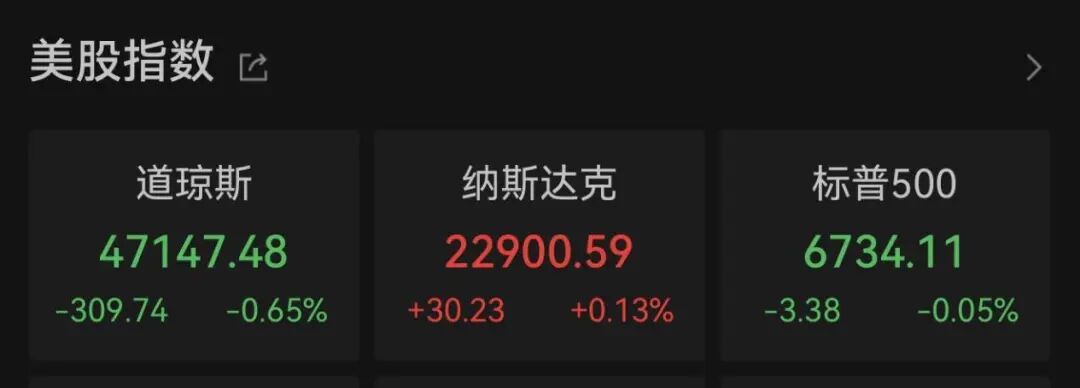
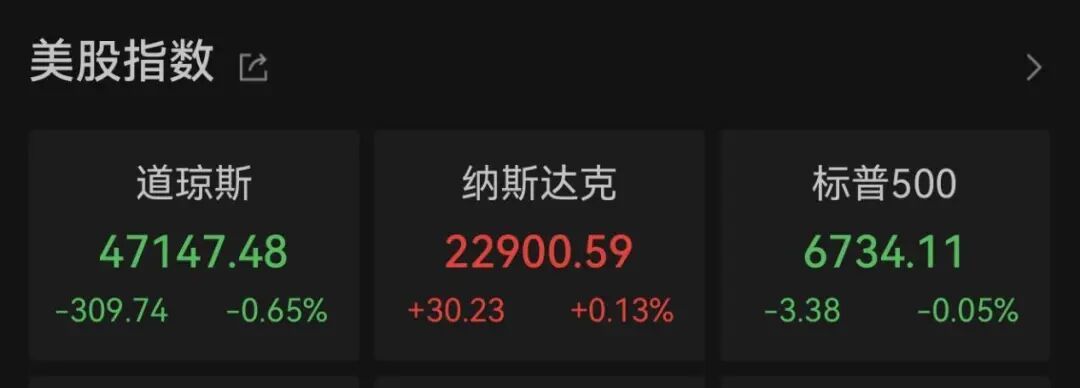
Market Overview - The three major U.S. stock indices closed mixed, with the Dow Jones down 0.65% at 47,147.48 points, the S&P 500 down 0.05% at 6,734.11 points, and the Nasdaq up 0.13% at 22,900.59 points [4] - For the week, the Dow Jones rose 0.34%, the S&P 500 rose 0.08%, while the Nasdaq fell 0.45% [6] Employment and Economic Data - The U.S. Labor Department postponed the release of the September employment report to November 21, which will include inflation-adjusted wage data [6] - Initial jobless claims decreased slightly from 228,900 to 227,500, indicating a stable labor market, which may support the Federal Reserve in maintaining interest rates [6] - Kansas City Fed President Esther George indicated that further rate cuts could exacerbate inflation risks rather than effectively support the labor market [6] Corporate Layoffs - Verizon Communications is planning to announce a layoff affecting approximately 15,000 to 20,000 employees, marking the largest layoff in the company's history [8] - This layoff is part of a corporate transformation strategy under new CEO Daniel Schulman, potentially reducing the workforce by up to 20% from around 100,000 employees as of February [8] Oil Price Movements - Oil prices increased due to geopolitical tensions, including an attack on a key Russian oil port by Ukraine and the seizure of a tanker by Iran [14] - WTI crude oil for December delivery rose 2.39% to $60.09 per barrel, while January Brent crude increased 2.19% to $64.39 per barrel [14] Technology Sector Performance - Major tech stocks showed mixed performance, with Nvidia and Microsoft both rising over 1%, while Amazon and Google fell by more than 1% [10] - Google is willing to adjust its ad tech policies to comply with EU antitrust requirements but has refused to sell parts of its ad tech business, citing potential disruptions for publishers and advertisers [11] Chinese Stocks Performance - The Nasdaq Golden Dragon China Index fell by 1.61%, with notable declines in stocks such as Futu Holdings down over 7% and JD Group down over 4% [16]

又有巨头 大裁员
Zhong Guo Ji Jin Bao· 2025-11-15 00:13
Market Overview - The three major U.S. stock indices closed mixed, with the Dow Jones down 0.65% at 47,147.48 points, the S&P 500 down 0.05% at 6,734.11 points, and the Nasdaq up 0.13% at 22,900.59 points [1] - For the week, the Dow rose 0.34%, the S&P 500 rose 0.08%, while the Nasdaq fell 0.45% [3] Employment and Economic Data - The U.S. Labor Department postponed the release of the September employment report to November 21, affecting the economic data timeline [3] - Initial jobless claims are estimated to have slightly decreased from 228,900 to 227,500, indicating a stable labor market [3] - Kansas City Fed President Esther George expressed concerns that further rate cuts could exacerbate inflation risks rather than support the labor market [3] Corporate Layoffs - Verizon Communications is planning to announce a layoff affecting approximately 15,000 to 20,000 employees, marking the largest layoff in the company's history [5] - This layoff is part of a corporate transformation strategy under new CEO Daniel Schulman, potentially reducing the workforce by up to 20% from around 100,000 employees as of February [5] Oil Prices and Geopolitical Risks - Oil prices increased due to heightened geopolitical risks, with WTI crude rising 2.39% to $60.09 per barrel and Brent crude up 2.19% to $64.39 per barrel [9] - The rise in oil prices was influenced by Ukraine's attack on a key Russian oil port and Iran's seizure of a tanker in the Strait of Hormuz [9] - Energy stocks saw collective gains, with ExxonMobil up over 1%, Chevron up over 1%, and ConocoPhillips up over 2% [9][10] Technology Sector Performance - Major tech stocks showed mixed performance, with Nvidia and Microsoft both rising over 1%, while Amazon and Google fell by over 1% and 0.78% respectively [7] - Google is adjusting its advertising strategy to comply with EU antitrust requirements, opting not to sell parts of its ad tech business [8]
又有巨头,大裁员
Zhong Guo Ji Jin Bao· 2025-11-15 00:01
Market Overview - The three major U.S. stock indices closed mixed, with the Dow Jones down 0.65% at 47,147.48 points, the S&P 500 down 0.05% at 6,734.11 points, and the Nasdaq up 0.13% at 22,900.59 points [2] - For the week, the Dow Jones rose 0.34%, the S&P 500 rose 0.08%, while the Nasdaq fell 0.45% [4] Employment and Economic Data - The U.S. Labor Department postponed the release of the September employment report to November 21, which will include adjusted wage data [4] - Initial jobless claims are estimated to have slightly decreased from 228,900 to 227,500, indicating a stable labor market [4] - Kansas City Fed President Esther George expressed concerns that further rate cuts could exacerbate inflation risks rather than support the labor market [4] Corporate Layoffs - Verizon Communications is planning to announce a layoff of approximately 15,000 to 20,000 employees, marking the largest layoff in the company's history [5] - This layoff is part of a corporate transformation strategy under new CEO Daniel Schulman, potentially reducing the workforce by up to 20% from around 100,000 employees as of February [5] Oil Price Movements - Oil prices increased due to geopolitical tensions, including an attack on a key Russian oil port by Ukraine and the seizure of a tanker by Iran [9] - WTI crude oil for December delivery rose 2.39% to $60.09 per barrel, while Brent crude for January delivery increased 2.19% to $64.39 per barrel [9] - Energy stocks saw collective gains, with ExxonMobil up over 1%, Chevron up over 1%, and ConocoPhillips up over 2% [9][10] Technology Sector Developments - Google is adjusting its advertising strategy to comply with EU antitrust requirements, opting not to sell parts of its ad tech business [6] - Major tech stocks showed mixed performance, with Nvidia and Microsoft both rising over 1%, while Amazon and Google saw declines of over 1% [6] Chinese Stocks Performance - Chinese stocks listed in the U.S. mostly declined, with the Nasdaq Golden Dragon China Index down 1.61% [11] - Notable declines included Futu Holdings down over 7% and JD.com down over 4%, while some companies like Canadian Solar and Tuya Smart saw gains [11]



投机主题都在抛!高盛交易台:周四美股动量交易创DeepSeek冲击以来最大跌幅
美股IPO· 2025-11-14 23:10
Core Viewpoint - The recent sell-off in the market, particularly affecting high-beta momentum trading strategies and AI-related stocks, is attributed to multiple pressure factors, including profit-taking ahead of Nvidia's earnings report, concerns over AI infrastructure investment returns, hawkish comments from the Federal Reserve, corporate layoffs, and year-end portfolio adjustments [1][7][9]. Group 1: Market Performance - The Nasdaq 100 index fell over 2% on Thursday, marking a decline in five out of the last six trading days, with market sentiment shifting towards a defensive stance [2][4]. - High-beta momentum trading (GSPRHIMO) experienced a 7% drop, the largest single-day decline since the DeepSeek event, indicating significant pressure on speculative sectors like AI and cryptocurrency-related stocks [1][4][5]. Group 2: Contributing Factors - Five key factors triggered the recent market downturn: profit-taking before Nvidia's earnings, concerns about inflated power demand in data centers related to AI, hawkish statements from Federal Reserve officials, corporate cost-cutting measures, and the seasonal pressure of year-end portfolio adjustments [9][10][11]. - The market is currently awaiting clearer signals, such as Nvidia's earnings performance and the Federal Reserve's monetary policy direction, to assess when the sell-off might stabilize [7][11]. Group 3: Investment Strategies - High-beta momentum strategies are currently showing a significant correlation with high short interest and high residual volatility, while their correlation with high-quality factors is notably lower than usual [12][14]. - Goldman Sachs' momentum strategy has shifted towards high-beta and cyclical sectors while shorting healthcare, making it particularly vulnerable during this sell-off [14][15]. - The skepticism surrounding AI is increasing, with notable events such as Oracle's credit default swaps widening and SoftBank selling Nvidia shares, impacting the AI thematic basket [15].
