超市

Search documents
伊藤洋华堂“不闭店”改造;天猫双11现货开卖
Sou Hu Cai Jing· 2025-10-20 18:18
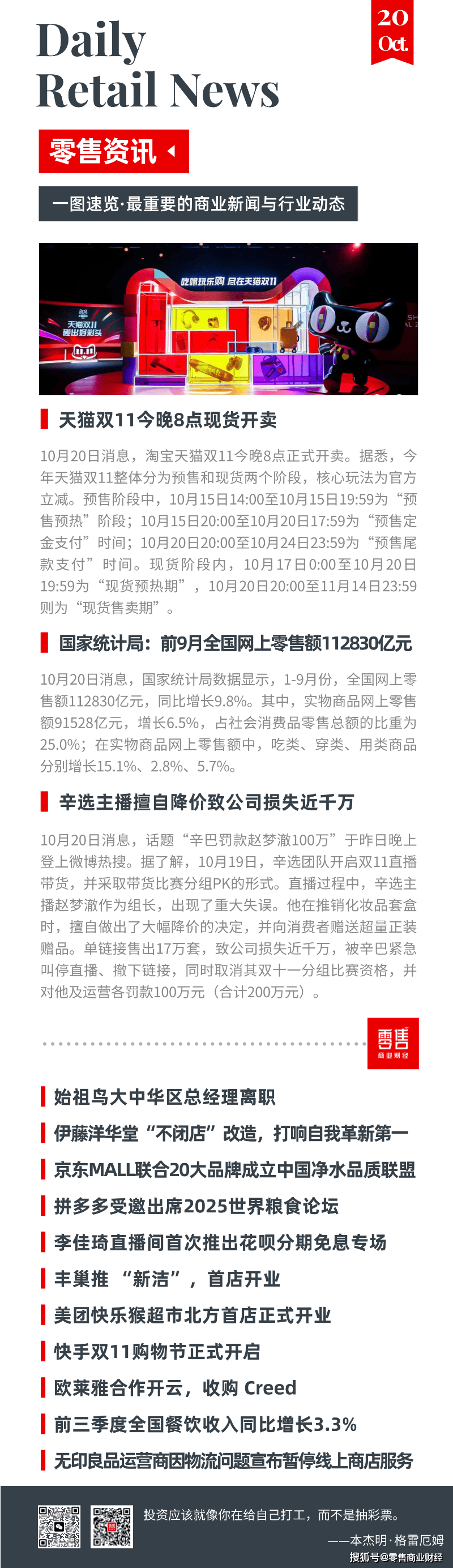
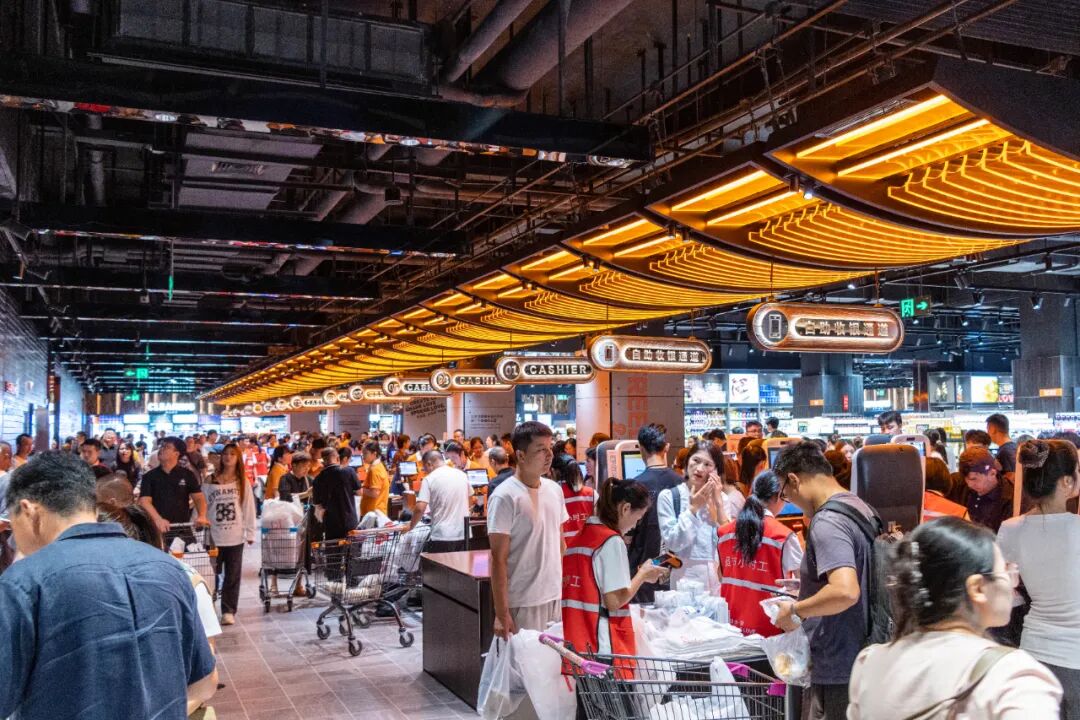
Group 1: E-commerce and Retail Trends - Tmall's Double 11 sales event officially starts tonight at 8 PM, featuring both pre-sale and real-time sales phases, with significant discounts as a core strategy [3][7] - In the first nine months of the year, China's online retail sales reached 1,128.3 billion yuan, a year-on-year increase of 9.8%, with physical goods online retail sales at 915.3 billion yuan, growing by 6.5% [4][10] - The online retail sales of food, clothing, and daily necessities saw respective growth rates of 15.1%, 2.8%, and 5.7% [10] Group 2: Company-Specific Developments - A significant incident occurred during a live-streaming event where a host from XinXuan made unauthorized price cuts, resulting in nearly 10 million yuan in losses for the company, leading to penalties for the host and the team [5][11] - Arcteryx's General Manager for Greater China has left the company, with the position temporarily filled by the regional president, indicating potential shifts in management strategy [12] - Ito Yokado is undergoing a non-closure renovation strategy at its Chengdu store, focusing on enhancing product offerings and customer experience while optimizing resource allocation [13] Group 3: Strategic Partnerships and Initiatives - JD Mall has launched a "China Water Quality Alliance" with 20 major brands to promote water purification standards and consumer awareness [15] - Pinduoduo was invited to the 2025 World Food Forum, showcasing its contributions to digital agriculture innovation [17] - L'Oréal has reached a strategic cooperation agreement with Kering Group, involving the acquisition of the Creed brand and a long-term partnership in the beauty and fragrance sector, valued at 4 billion euros [25]


8年!从管培生到CEO,永辉超市为什么敢把命交到一个90后的手里?
Sou Hu Cai Jing· 2025-10-20 15:01
Core Insights - The appointment of Wang Shoucheng as CEO of Yonghui Supermarket at the age of 34 signals a strong desire for change within the company, aiming to embrace new transformations and break away from traditional management practices [1][3][7] Company Performance - In the first half of 2025, Yonghui Supermarket reported revenue of 29.948 billion yuan, a year-on-year decrease of 20.73%, with a net profit attributable to shareholders of -241 million yuan [3] - Under Wang Shoucheng's leadership, the "Fat Donglai Model" has begun to show results, with an average increase of 80% in customer traffic and over 60% of stores achieving their highest profitability in the past five years [3][4] Leadership Background - Wang Shoucheng joined Yonghui in 2017 as a management trainee and has held various positions, including business assistant to the CEO, cluster operations partner, and regional general manager, before becoming CEO [4] - His successful implementation of the "Fat Donglai Model" in 100 stores within a year demonstrates his capability to drive significant change in a struggling company [4][6] Strategic Shift - Wang Shoucheng is leading a strategic transformation towards a "product-centered" approach, aiming to develop 100 billion-yuan-level products within three years and increase the number of private label products from 60 to 500 by 2029 [9] - The traditional supermarket model of merely selling shelf space is deemed outdated, prompting Yonghui to establish a unique competitive advantage through its own brands [9][10] Market Context - The Chinese retail market is undergoing profound changes, characterized by a "new normal" of single-digit growth, while instant retail is experiencing significant growth, projected to exceed 1 trillion yuan by 2025 [10][11] - Yonghui is simultaneously renovating and closing stores, having opened 93 new locations while shutting down 227 underperforming ones in the first half of 2025, aiming to streamline operations in a competitive market [11]

刺痛家长!山姆FILA滑板车被检出窒息风险,98件儿童床品复检仍不合格
Guo Ji Jin Rong Bao· 2025-10-20 13:57
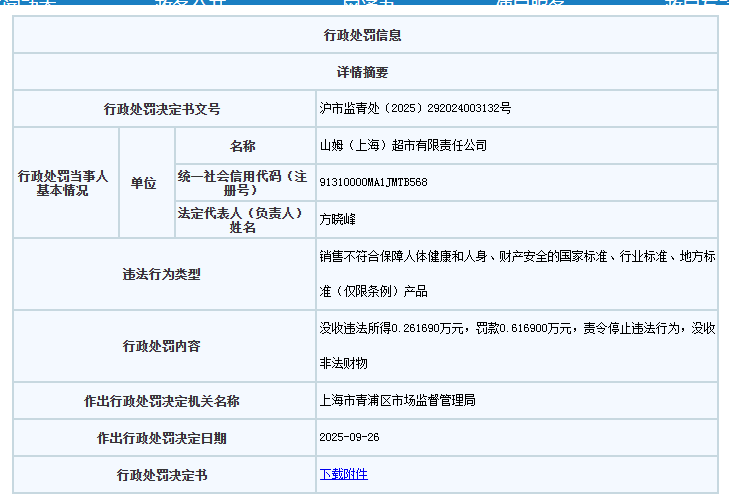
Core Viewpoint - Sam's Club (Shanghai) faced administrative penalties due to quality issues with two children's products, raising concerns about its product safety standards and brand reputation in the market [1][4]. Group 1: Administrative Penalties - On September 26, 2025, the Shanghai Qingpu District Market Supervision Administration issued penalties against Sam's Club for selling products that did not meet national safety standards, including a fine of 616,900 yuan and confiscation of illegal gains totaling 261,690 yuan [2]. - The first incident involved a FILA scooter that failed safety tests, with 61 out of 64 units sold, totaling a value of 12,338 yuan [1][4]. - The second incident involved a Lenzing Tencel children's bedding set, which had colorfastness issues, leading to the sale of 12 out of 98 units, with a total value of 22,530.2 yuan [3][4]. Group 2: Brand Reputation and Consumer Trust - The penalties contrast sharply with Sam's Club's established image as a "high-quality membership supermarket," raising questions about its quality control systems [4][5]. - The company has over 9 million paid members in China, generating significant revenue, which increases consumer expectations for product quality and safety [4][5]. - Recent quality control issues, including food safety concerns, have eroded consumer trust and brand reputation, highlighting the pressures on Sam's supply chain and internal management processes [6][7].
假如没有胖东来,许昌会成网红吗?
3 6 Ke· 2025-10-20 03:29
Core Insights - The article highlights the significant impact of the "胖东来" supermarket on the city of 许昌, transforming it into a popular tourist destination and a "网红城市" despite its previous obscurity [3][8][12] - The success of 胖东来 is attributed to its exceptional service and customer-centric approach, which has set a new standard for local businesses and influenced the overall service culture in 许昌 [11][12] Group 1: 胖东来的 Impact - 胖东来天使城 has become a "6A级景区," attracting large crowds even during adverse weather conditions, demonstrating its strong draw as a tourist attraction [1][3] - The supermarket's popularity has led to a significant increase in tourism, with 许昌 receiving 512.2 million visitors during the recent holiday, generating a tourism revenue of 40.2 billion [8] - The local government has recognized the need to improve infrastructure, as evidenced by the recent expansion of roads around 胖东来 to alleviate traffic congestion [9][11] Group 2: Historical Context of 许昌 - 许昌's historical significance dates back to the Eastern Han Dynasty, where it served as a political and cultural center under the influence of figures like 曹操 [5][7] - The city has a rich cultural heritage, with over 80 historical sites related to the 三国 period, contributing to its identity and appeal [5][7] - The city experienced a resurgence in recognition due to its association with the hairpiece industry, becoming known as the "World Capital of Wigs" [8] Group 3: Service Culture Transformation - The service philosophy of 胖东来 has inspired local businesses to adopt similar customer-focused practices, leading to a city-wide initiative to enhance service quality across various sectors [11][12] - The local government has implemented a plan to optimize the business environment by promoting the "胖东来式" service model, aiming to improve customer satisfaction and service standards [11][12] Group 4: Local Sentiment and Lifestyle - Despite the influx of tourists, some locals express concerns about traffic and infrastructure challenges that have arisen due to 胖东来’s popularity [18] - The article also notes that while 胖东来 attracts many visitors, the city retains a quieter, more traditional lifestyle that appeals to some residents and visitors seeking a slower pace [15][16]
中国7~9月GDP增速放缓至4.8%
日经中文网· 2025-10-20 03:22
Group 1 - The actual GDP growth rate for July to September 2025 is 4.8%, which is a slowdown from 5.2% in April to June, primarily due to weak real estate affecting domestic demand [2][4] - Fixed asset investment decreased by 0.5% in the first three quarters, indicating negative growth, while infrastructure investment grew by 1.1% [4] - The retail sales of consumer goods increased by 4.5% in the first three quarters, a decline from 5.0% in the first half of the year, with restaurant revenue growing by 3.3% [4] Group 2 - Industrial added value for large-scale industries grew by 6.2% in the first three quarters, but the growth rate slowed from 6.4% in the first half [4] - Exports (in USD) increased by 6.6% in July to September, with a trade surplus growing by 12% year-on-year, despite a decrease in exports to the US [5]
10.20犀牛财经早报:基金三季报披露拉开帷幕 金价上涨后50克金条订单被拦截
Xi Niu Cai Jing· 2025-10-20 01:36
Group 1 - The third quarter fund reports have begun to be disclosed, showing strong performance in equity funds due to the robust A-share market, while bond funds are focusing on maintaining stable returns amid market pressures [1][2] - New public funds are increasingly adopting a strategy of limiting initial fundraising sizes, with several well-known fund managers setting lower caps for their new products, leading to rapid completion of fundraising [1][2] Group 2 - The number of private equity firms with over 10 billion yuan in assets continues to grow, reaching 96, with quantitative strategies being the most prevalent among these firms [2] - The introduction of eSIM technology marks a significant shift towards a "no card" era in mobile communications, with advantages such as flexibility and space-saving, although security risks remain a concern [2] Group 3 - Sany Heavy Industry has announced its IPO price range for H-shares, set between 20.30 and 21.30 HKD per share, with a total issuance of approximately 580 million shares [5] - Wintime Technology has faced operational disruptions due to a system shutdown affecting its semiconductor division, prompting a focus on domestic supply chain management [5] - Zhongding Holdings has launched a series of liquid cooling systems for energy storage, leveraging its expertise in thermal management systems [5]
三季度业绩前瞻及投资策略
2025-10-19 15:58
Summary of Key Points from Conference Call Records Industry Overview 1. Baijiu Industry - The Baijiu industry experienced a seasonal sales decline of approximately 20% during the Mid-Autumn Festival, with high-end brands like Moutai, Wuliangye, and Fenjiu performing relatively well. Inventory levels have not significantly decreased, and a slight upward trend is expected in the future [1][3][4] - Strong brand power and good sales performance are crucial for companies in this sector, with companies like Moutai and Wuliangye maintaining advantages. Companies with flexible operations, such as Zhenjiu and Laojiao, are also worth monitoring [5] 2. Consumer Goods - The consumer goods sector saw a slowdown in growth during Q3 2025, with beverage and dairy products showing improvement from a low base, while condiments maintained steady growth. Leading companies like Dongpeng, Nongfu Spring, and Yanjing Beer performed well and are recommended for investment [1][6] 3. Beauty Industry - The beauty industry showed overall good performance with no significant slowdown in growth. Some companies even exceeded their Q2 growth rates. High-growth companies like Ruoyuchen and Shanghai Jahwa are recommended for investment [1][7] 4. Gold and Jewelry Sector - Leading companies in the gold and jewelry sector continued to grow rapidly, benefiting from rising gold prices and price increase strategies. Companies like Laofengxiang and Zhouliufu reported impressive growth, with Laofengxiang's single-store revenue reaching up to 200% growth in September [1][8] 5. Trendy Toys and Supermarket Reform - In the trendy toy sector, Pop Mart remains in a high growth phase, while Miniso's Q3 report showed promising data. In the supermarket reform sector, companies like Bubugao and Huijia Times are experiencing performance releases, and ATO's rapid growth in bedding products is noteworthy [1][9] 6. Pork Industry - Pork prices saw a slight decline this week, but demand for secondary fattening is increasing, stabilizing prices at the bottom. Companies with cost advantages, such as Wens Foodstuffs and Muyuan, are expected to seize more opportunities as breeding sow capacity continues to decrease [1][18][17] Home Appliance Sector - The home appliance sector faced challenges in Q3 due to the gradual withdrawal of subsidies, leading to a less optimistic outlook for domestic demand. However, white goods showed stable performance, with leading companies like Haier and Midea expected to achieve near double-digit revenue growth [2][13] Other Notable Trends - The light industry, particularly the paper industry, is expected to see a turning point in Q4, with potential price increases in packaging and cultural paper [14] - The agricultural sector is focusing on the pork industry, with ongoing capacity reduction impacting future supply and price trends [17] - The pet sector is showing strong growth, with companies like Zhongchong and Guibao Pet expected to perform well [20] This summary encapsulates the key insights and trends across various industries as discussed in the conference call records, highlighting potential investment opportunities and risks.






商贸零售行业周报:双11大促开启,玩法化繁为简,国货品牌增长分化-20251019
KAIYUAN SECURITIES· 2025-10-19 13:55
Investment Rating - The investment rating for the retail industry is "Positive" (maintained) [1] Core Insights - The report highlights the commencement of the Double 11 e-commerce promotion, emphasizing a trend of simplifying promotional strategies, extending sales cycles, and seeking new growth avenues. This shift allows consumer demand to take precedence and encourages brands to focus on long-term value building [23][24] - The report identifies a significant increase in the performance of domestic brands during the Double 11 event, with a notable presence in the beauty and skincare categories, indicating that domestic brands are no longer just supplementary to international brands [25][29] Summary by Sections Retail Market Review - The retail industry index closed at 2277.78 points, down 0.45%, outperforming the Shanghai Composite Index, which fell by 1.47% [5][12] - The supermarket sector showed the highest increase this week, with a growth rate of 1.75% [15][18] - Year-to-date, the jewelry sector has led with a growth of 30.14% [15][18] Retail Perspectives - The Double 11 e-commerce promotion has officially started, with key trends including simplification of promotional strategies, extended sales cycles, and strategic exploration for new growth [23][24] - Domestic brands are increasingly strengthening their market presence, with significant sales performance noted in live-streaming events [25][29] Investment Recommendations - Investment focus areas include: 1. **Gold and Jewelry**: Recommend brands with differentiated product offerings and consumer insights, such as Laopuhuang and Chaohongji [30][32] 2. **Offline Retail**: Highlighting companies that adapt to trends, such as Yonghui Supermarket and Aiyingshi [30][32] 3. **Cosmetics**: Emphasizing strong domestic brands during the Double 11 event, including Porcelain and Maogeping [30][32] 4. **Medical Aesthetics**: Focusing on companies with differentiated product lines, such as Aimeike and Kedi-B [30][32]



从物质到情绪,消费变迁隐含投资密码
Shang Hai Zheng Quan Bao· 2025-10-19 12:31
Core Insights - The article discusses the transformation of consumer behavior in China, highlighting a shift from material consumption to emotional consumption, driven by changes in individual preferences and social dynamics [2][3] Group 1: Consumer Trends - During the recent National Day and Mid-Autumn Festival holiday, domestic travel reached 888 million trips, an increase of 123 million trips compared to the previous year, representing a year-on-year growth of 16.1% [2] - Total spending during the holiday amounted to 809 billion yuan, up 108.2 billion yuan from the previous year, with a year-on-year growth of 15.4% [2] - Young consumers are increasingly opting for budget travel experiences, such as camping and unique local experiences, instead of traditional high-end hotels and tour packages, indicating a structural change in the consumption market [2] Group 2: Emotional Consumption - Emotional consumption is emerging as a significant trend, influenced by changes in family structures and the need for emotional connections, as seen in the popularity of pet-related products and plush toys [3] - The rise of virtual communities, facilitated by the internet, has transformed social interactions, allowing young people to form connections based on shared interests and values, which reinforces emotional consumption as a marker of group identity [3] Group 3: Investment Strategies - Investment strategies should focus on "emotional value" and "value-for-money" as key drivers of consumer growth and investment returns, moving beyond traditional categories [3] - Companies that can provide emotional resonance and community identity through their offerings are likely to dominate in the new wave of consumer trends [3] - The emphasis on supply chain efficiency and product quality, rather than brand premium or channel advantages, is crucial for success in the evolving market [3]
6家消费公司拿到新钱;老铺黄金年内第三次涨价;古茗发放200万张2.9元低价咖啡券|创投大视野
36氪未来消费· 2025-10-18 08:37
Group 1: Investment and Financing Activities - Elbi Catering completed a Series A financing round of 50 million RMB, focusing on operational management services in coffee, tea, desserts, and light meals [3][4] - Velotric announced the completion of a Series B financing round, led by Shunwei Capital, to enhance its electric bike product lines for daily commuting and outdoor adventures [5] - Twelve Yao secured 10 million RMB in angel financing, aimed at upgrading non-heritage food research and expanding its smart production base and market channels [6] - Zunyan Supermarket completed a Series C financing round of several billion RMB, focusing on digital technology applications in supermarket operations [7] - Zhenhua Capital invested over 100 million RMB in Shuaike Pet Products, a comprehensive supplier in the pet food industry [8] - Zhefu Customization completed an angel financing round of 3 million RMB to enhance technology development and market expansion in the custom clothing sector [9] Group 2: Market Trends and Consumer Insights - The cycling economy is emerging as a significant market opportunity, with the number of bicycle-related enterprises in China reaching approximately 4.68 million, showing a continuous growth trend over the past decade [23] - Dong Yuhui's live streaming event during the "Double Eleven" shopping festival generated sales of 300 million RMB in just three days, attracting nearly 70 million viewers [24] - Japan's rice prices are nearing historical highs, with the retail price of 5 kg of rice reaching 4,205 yen (approximately 196 RMB), impacting household consumption and restaurant operations [25] - China's express delivery business volume has surpassed 1.5 billion packages this year, indicating a robust growth in the logistics sector and supporting online consumption [26] Group 3: Company Developments - Laopuyuan announced its third price adjustment of the year, with gold prices reaching approximately 1,290 RMB per gram, reflecting the ongoing increase in domestic gold jewelry prices [10] - Guangzhou Yujian Xiaomian submitted its IPO application to the Hong Kong Stock Exchange, reporting a revenue of 703 million RMB for the first half of 2025, a year-on-year increase of 33.8% [11] - Fat Donglai's founder revealed that the company has 4.1 billion RMB in cash with no loans, emphasizing a focus on social responsibility and employee well-being [12]